This post may contain affiliate links. If you click and buy, we may earn a small commission at no extra cost to you. Learn more.
Afrohemian style sits at the intersection of African craft traditions and bohemian ease — a layered aesthetic built on warmth, texture, and personal history rather than rigid design rules. It’s not about recreating specific rooms from a catalog. It’s about pulling from diverse African textile traditions, wood craftsmanship, natural materials, and global bohemian influences to create bedrooms that feel collected rather than purchased.
What makes these spaces compelling is their emotional weight. Carved wood meets woven textiles. Earthy terracottas sit beside deep indigos. Brass and copper catch light against dark wood. These bedrooms don’t announce themselves loudly — they unfold gradually as you notice the layers: a mudcloth pillow, a wooden stool that’s clearly been used, a basket that serves a purpose beyond decoration.
The best Afrohemian bedrooms resist perfectionism. They allow for evolution, asymmetry, and the kind of personal curation that happens when you bring things home over time because they mean something, not because they match. Wood anchors these spaces — often in dark, rich tones like mahogany or walnut — but it’s the textiles, patterns, and handmade objects that give them soul.
This approach works in small urban apartments and larger homes alike. It adapts to different budgets and personal histories. The core principle remains the same: build slowly, choose pieces with stories, and let the room breathe.
Contents
- 1 What you’ll find here:
- 2 1. Carved Dark Wood Bed with Layered Earth-Tone Textiles
- 3 2. Light Wood Furniture with Bold African Print Textiles
- 4 3. Monochrome Palette with Textural Contrast
- 5 4. Canopy Bed with Flowing Natural Linen
- 6 5. Terracotta Walls with Warm Wood and Brass Accents
- 7 6. Low Platform Bed with Floor Seating and Layered Rugs
- 8 7. Gallery Wall of African Masks and Woven Art Above a Minimal Bed
- 9 8. Indigo and Wood: A Cooler-Toned Afrohemian Bedroom
- 10 9. Wooden Slat Headboard with Macramé and Hanging Plants
- 11 10. Maximalist Mix: Layered Patterns and Carved Wood Furniture
- 12 11. Minimalist Afrohemian: One Statement Textile, Everything Else Restrained
- 13 12. Bedroom with a Reading Nook Built Around a Carved Wooden Chair
- 14 13. Rust and Charcoal: A Moody Afrohemian Bedroom
- 15 14. Natural Linen Canopy with African Print Accent Pillows
- 16 15. Bedroom Centered on a Large Woven Wall Hanging
- 17 16. Symmetrical Layout with Matching Carved Nightstands
- 18 17. Bedroom with Exposed Wooden Beams and Woven Pendant Lights
- 19 18. Afro Boho Bedroom with Vintage Finds and Handmade Textiles
- 20 19. Light and Airy with Whitewashed Wood and Soft Textiles
- 21 20. Platform Bed with Built-In Storage and African Print Textiles
- 22 21. Dark Walls, Light Wood, and Pops of Copper
- 23 Styling Tips to Pull the Look Together
- 24 Conclusion
What you’ll find here:
- Distinct bedroom concepts rooted in Afrobohemian style
- Inspiration you can adapt gradually
- Complete looks that balance wood, textiles, and cultural elements
- Ideas that suit different tastes and room sizes
1. Carved Dark Wood Bed with Layered Earth-Tone Textiles
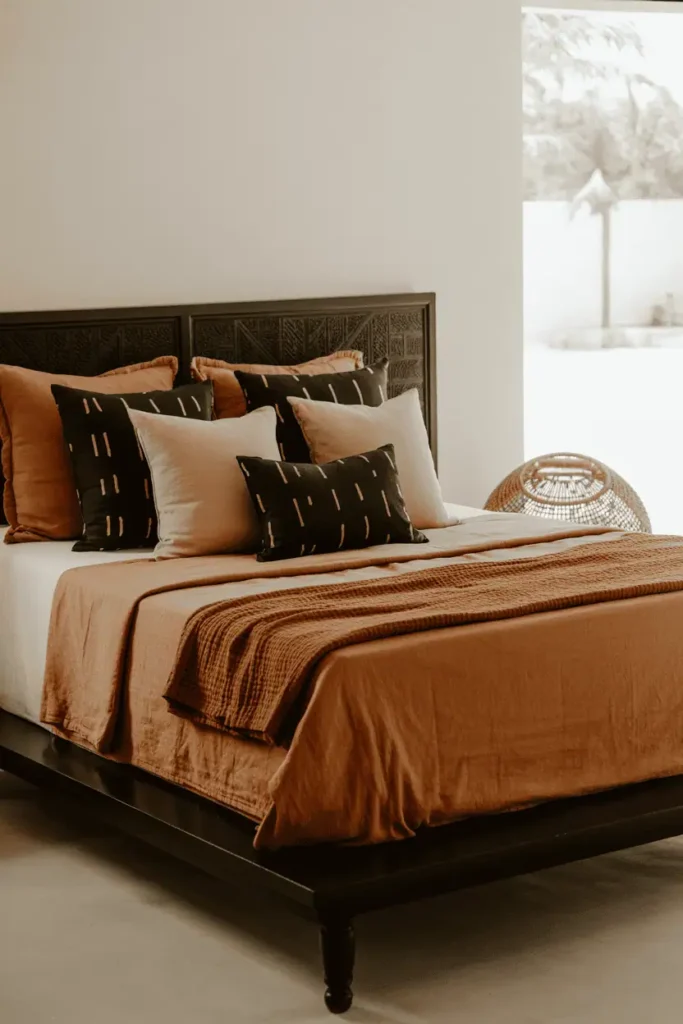
This bedroom centers on a low platform bed in dark carved wood — mahogany or walnut with subtle geometric detailing at the headboard. The textiles layer gradually: a rust-colored linen duvet, mudcloth pillows in black and cream, a woven throw in burnt orange. The walls remain white or off-white to prevent the dark wood from feeling too enclosed.
The mood here is grounded and warm without being heavy. Natural light softens the dark wood during the day, and low ambient lighting at night makes the room feel cocooning. This works best when you resist the urge to add too many patterns. Let the mudcloth be the primary pattern; everything else should be solid or subtly textured.
Design note: A single large woven basket at the foot of the bed adds function and reinforces the natural material palette without cluttering the floor.
2. Light Wood Furniture with Bold African Print Textiles
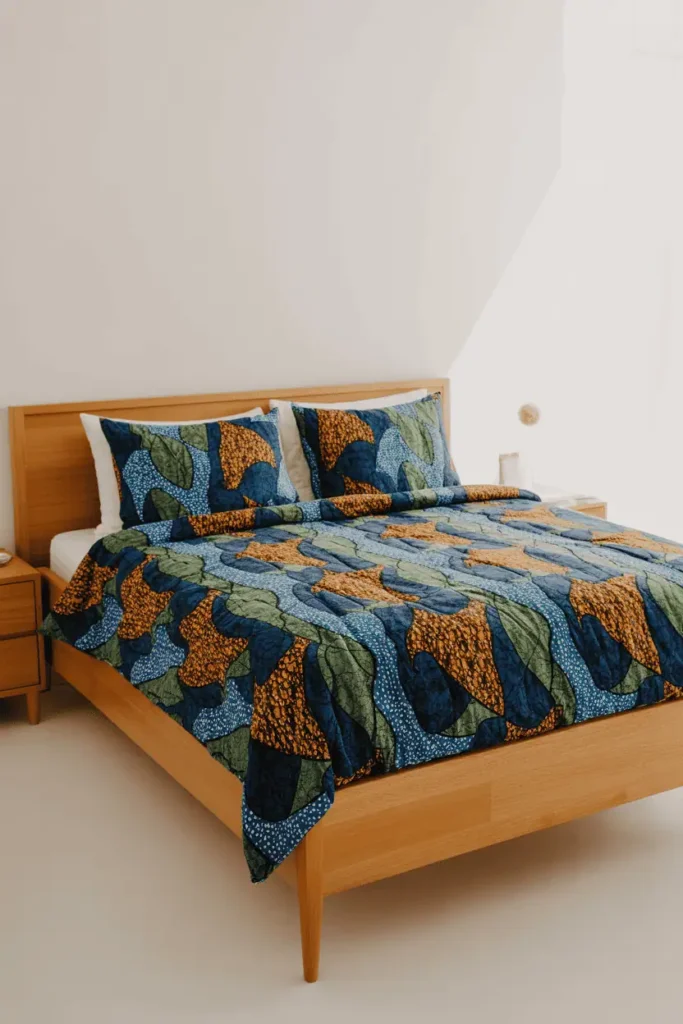
The opposite approach: a bedroom built on light-toned wood — blonde oak or light teak — paired with vibrant African wax print textiles in deep blues, greens, and oranges. The bed frame is simple and minimal, allowing the textiles to dominate visually. A wax print duvet cover or large throw becomes the room’s focal point.
This feels energetic and personal, suited to someone who wants color without sacrificing the natural material foundation. The light wood keeps the room from feeling too saturated, and white walls let the prints breathe. This tends to fall flat if you mix too many different print styles — choose one or two print families and repeat them across pillows, throws, or wall hangings.
3. Monochrome Palette with Textural Contrast
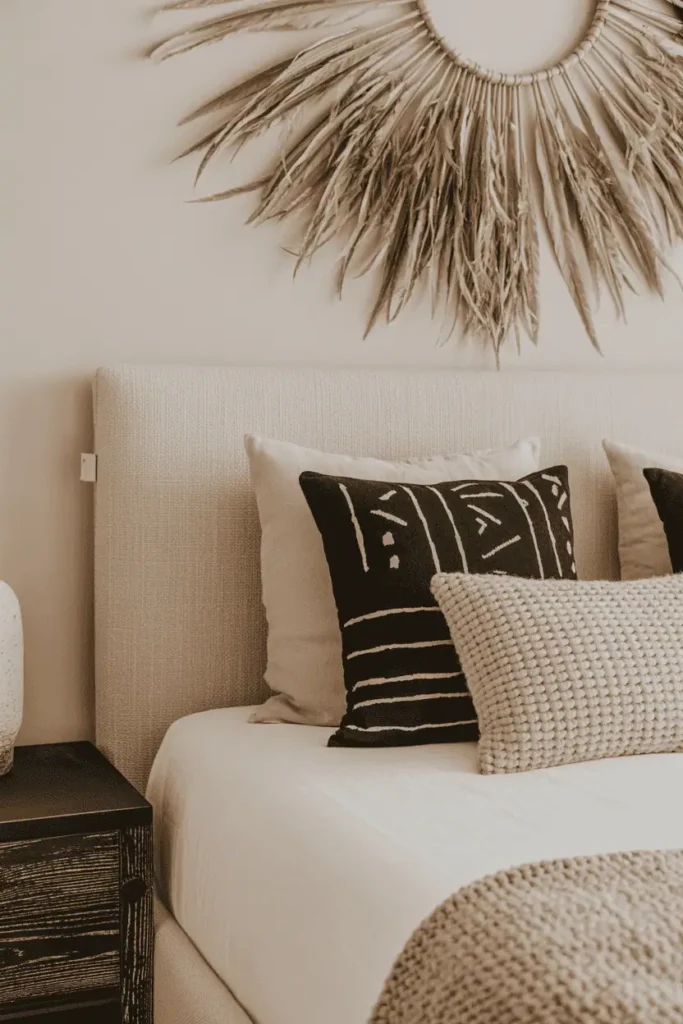
An Afrohemian bedroom that restrains color entirely: cream, beige, black, charcoal, warm white. The bed is upholstered in natural linen. A large Bamileke feather juju hat hangs above the headboard as the primary wall art. Mudcloth pillows in black and white geometric patterns add graphic interest without color.
Wood appears in darker tones — a black-stained wooden nightstand, a carved three-legged stool used as a plant stand. The room’s interest comes entirely from texture: woven raffia, smooth linen, carved wood, feathered juju hat, chunky knit throw. This concept suits minimalists who still want cultural depth and warmth.
Style note: Keep metallics to aged brass or blackened iron. Shiny metals disrupt the matte, earthy quality this room depends on.
4. Canopy Bed with Flowing Natural Linen
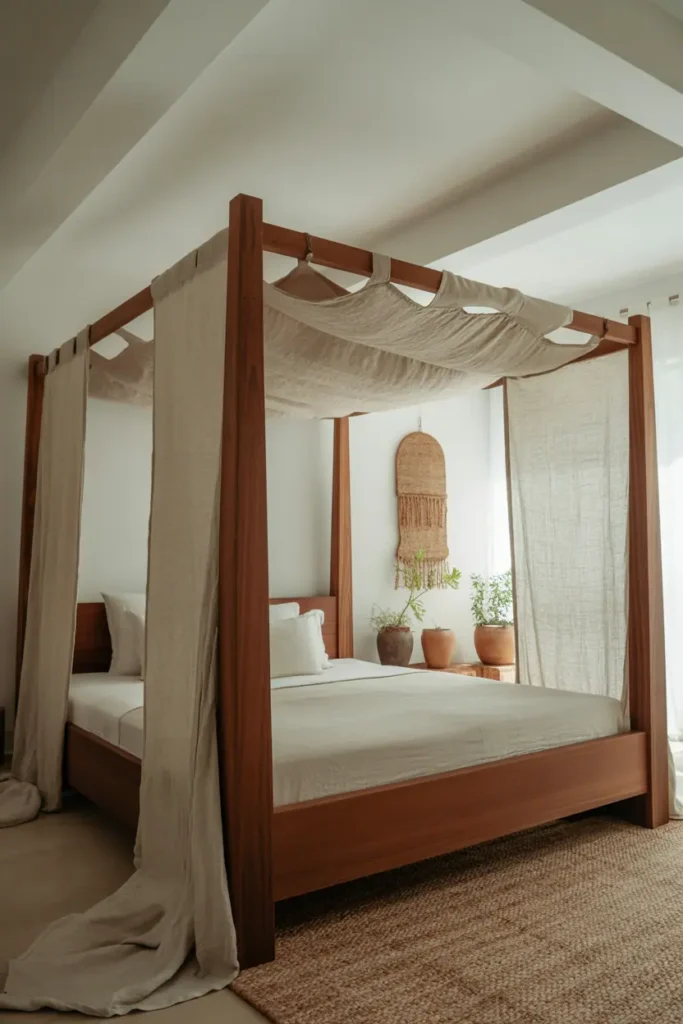
A four-poster wooden bed with a soft canopy made from unbleached linen or gauze. The wood posts are thick and substantial — dark mahogany or teak — but the fabric keeps the bed from feeling too formal. The canopy doesn’t fully enclose; it drapes loosely on two sides, filtering light and adding softness.
The rest of the room layers in Afrocentric elements: a woven wall hanging above a low dresser, terracotta pots with trailing plants, a jute rug underfoot. The canopy creates an intimate sleeping zone within the larger room, and the natural linen keeps it from reading as overly romantic or precious. This approach feels strongest in rooms with high ceilings where the canopy has space to breathe.
5. Terracotta Walls with Warm Wood and Brass Accents
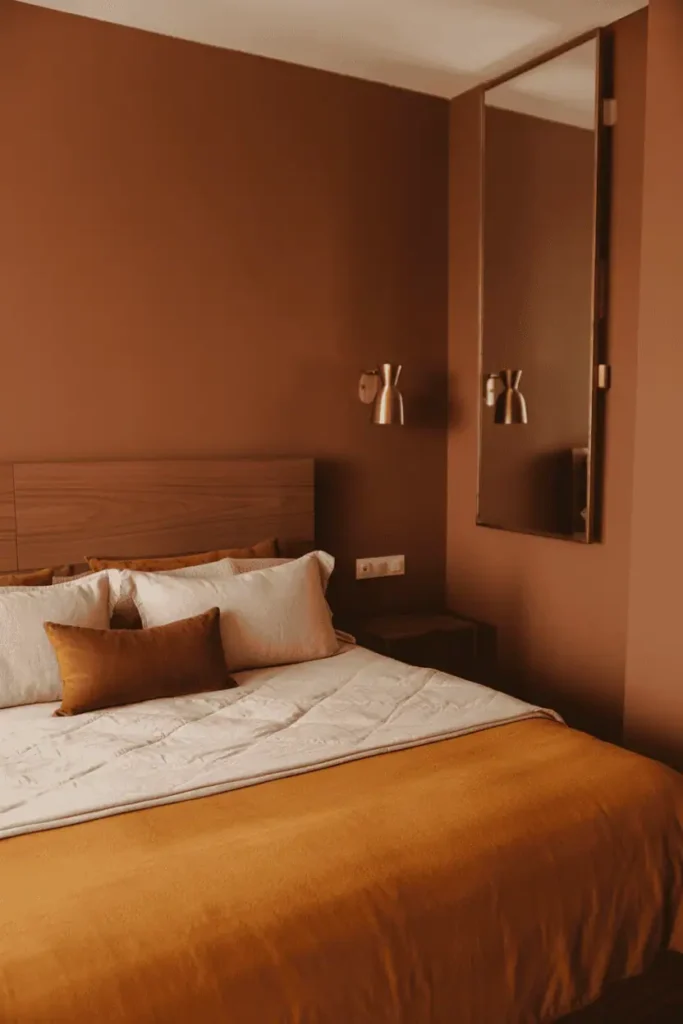
The walls are painted a warm terracotta or clay color, immediately shifting the room’s temperature. The bed is a simple wooden frame in medium-toned walnut. Brass appears in small doses: a wall-mounted sconce, mirror frame, or candle holders on the nightstand. Textiles stay neutral — cream, beige, rust — to avoid competing with the wall color.
This concept works because the terracotta provides the warmth, allowing the wood and textiles to stay relatively restrained. It’s suited to someone willing to commit to a bolder wall color but who doesn’t want pattern overload. The brass catches and reflects the terracotta tone throughout the day, creating subtle shifts in how the room feels.
6. Low Platform Bed with Floor Seating and Layered Rugs
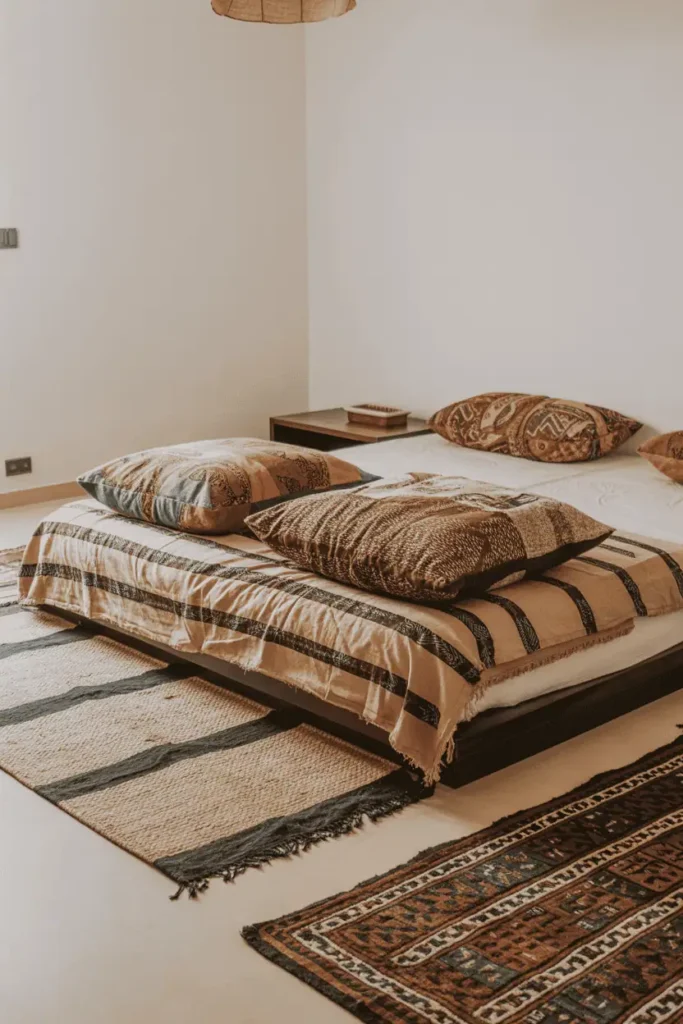
This bedroom sits low to the ground: a platform bed with no legs, large floor cushions covered in African print fabric or mudcloth, and layered rugs starting with jute as a base and a smaller patterned rug on top. A low wooden coffee table or carved stool serves as a bedside surface.
The effect is casual, global, and lived-in. It suits someone who wants their bedroom to feel like a gathering space, not just a place to sleep. Walls stay white, and the room’s visual interest comes from floor-level layers. This tends to work better in warmer climates or homes where floor-level living feels natural rather than forced.
The room reads as intentionally low, not like furniture is missing — that distinction matters.
At this stage, the bedrooms begin to shift from wood-dominant to textile-forward, though wood remains the foundational material holding each concept together.
7. Gallery Wall of African Masks and Woven Art Above a Minimal Bed
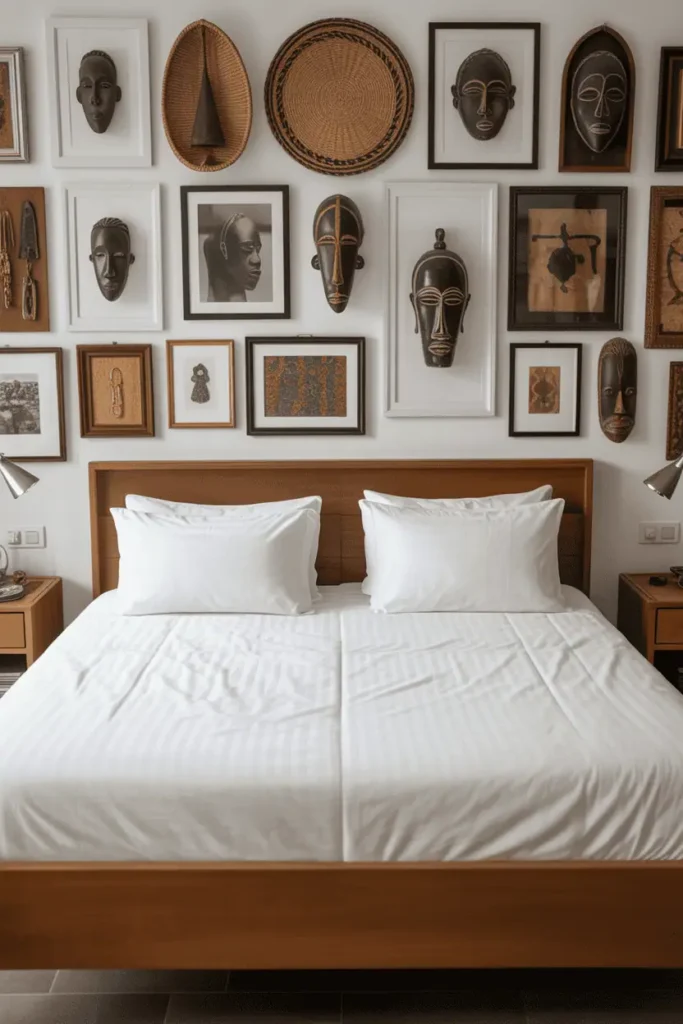
A simple wooden bed — mid-toned, clean lines — paired with an entire wall dedicated to framed African masks, woven baskets arranged as art, and small textile pieces in shadow boxes. The gallery wall becomes the room’s statement, and everything else supports it quietly.
Bedding stays white or cream. The nightstands are minimal. Lighting is directional, highlighting the wall art rather than flooding the room evenly. This concept suits collectors or anyone with meaningful pieces they want to display prominently. It works best when the objects have variation in size and material but share a tonal range — all warm woods, natural fibers, and aged metals.
8. Indigo and Wood: A Cooler-Toned Afrohemian Bedroom
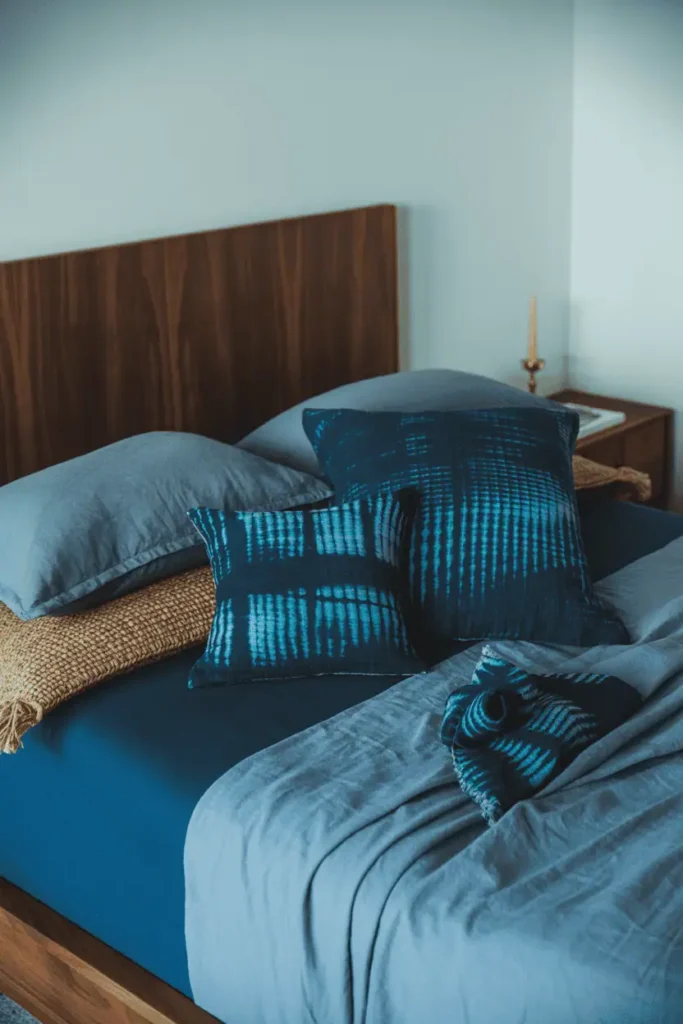
Most Afrohemian bedrooms skew warm, but this one centers on indigo: indigo-dyed textiles, navy mudcloth, deep blue wax prints. The wood stays medium to dark — walnut or mahogany — but the cool blue tones shift the room’s mood from earthy to calm and slightly more formal.
White walls and natural jute elements keep the indigo from feeling too heavy. A single piece of brass or copper adds a warm accent. This approach works for someone drawn to Afrobohemian style but who prefers cooler palettes. The indigo provides cultural specificity without relying on warm terracotta tones.
Design note: Indigo fades beautifully over time, so textiles that show wear actually enhance the room’s character rather than diminishing it.
9. Wooden Slat Headboard with Macramé and Hanging Plants
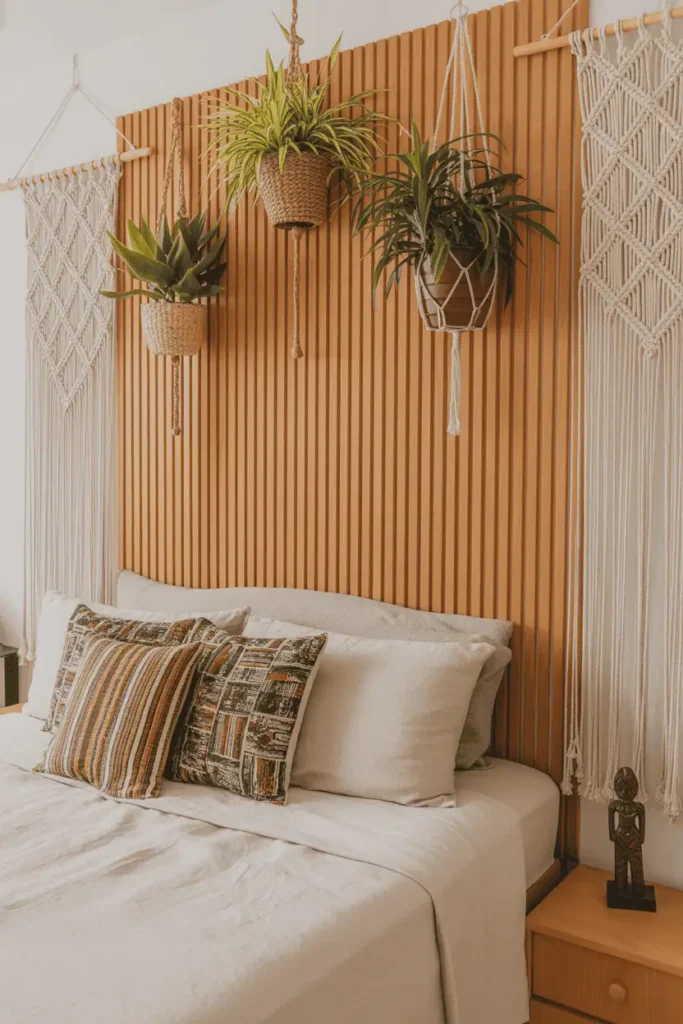
A bedroom where the headboard is constructed from vertical wooden slats in a warm honey tone. Macramé wall hangings flank the bed, and hanging plants in woven planters add greenery at varying heights. The bedding is simple — white linen or light cotton — letting the textural elements dominate.
This feels lighter and more bohemian than some of the darker wood concepts, but it retains Afrocentric elements through the choice of woven planters, African print throw pillows, and maybe a small carved wooden sculpture on the nightstand. It’s suited to smaller bedrooms where dark wood might feel too heavy, and it works especially well in spaces with good natural light.
10. Maximalist Mix: Layered Patterns and Carved Wood Furniture
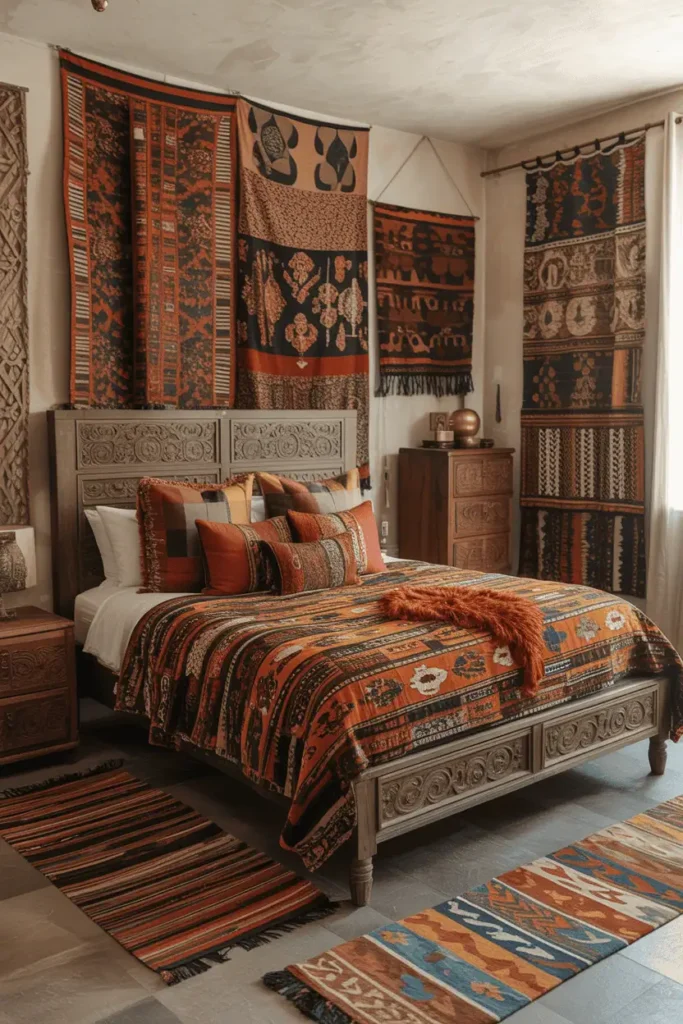
For those who want more rather than less: a bedroom that layers multiple African print patterns, a heavily carved wooden bed and dresser, woven wall hangings, patterned rugs, and colorful textiles all in one space. The key is keeping the color palette cohesive even as patterns vary — everything stays within earthy reds, oranges, blacks, creams, and browns.
This approach requires confidence and editing. Not every pattern can be bold; some need to be subtle. Not every surface can hold objects; some need to stay clear. When this works, it feels abundant and joyful. When it doesn’t, it reads as chaotic. The carved wood furniture grounds the room and provides visual weight that balances the busy textiles.
11. Minimalist Afrohemian: One Statement Textile, Everything Else Restrained
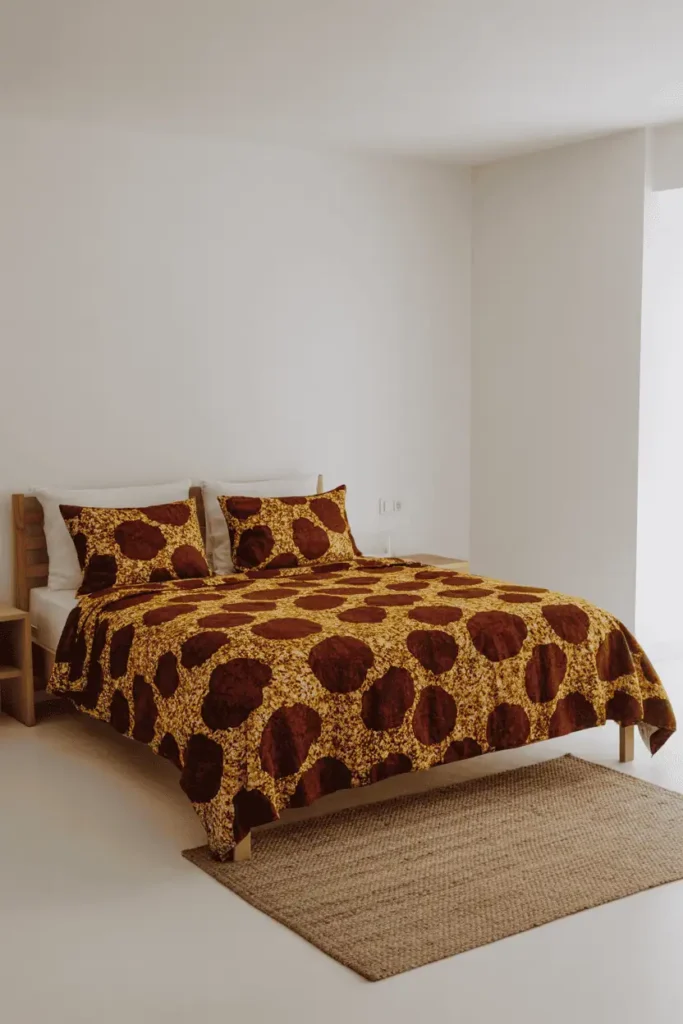
The opposite of maximalism: a bedroom where one large piece sets the tone — maybe a king-sized wax print duvet cover or a massive woven wall hanging — and everything else is neutral and minimal. The bed is simple wood or upholstered in linen. The walls are white. The floor is bare or has a plain jute rug.
This concept proves that Afrohemian style doesn’t require layering everything at once. One meaningful textile can carry the entire room if it’s given space to be seen. This suits someone who wants cultural specificity without visual complexity, and it works especially well in small bedrooms where too many elements compete.
12. Bedroom with a Reading Nook Built Around a Carved Wooden Chair
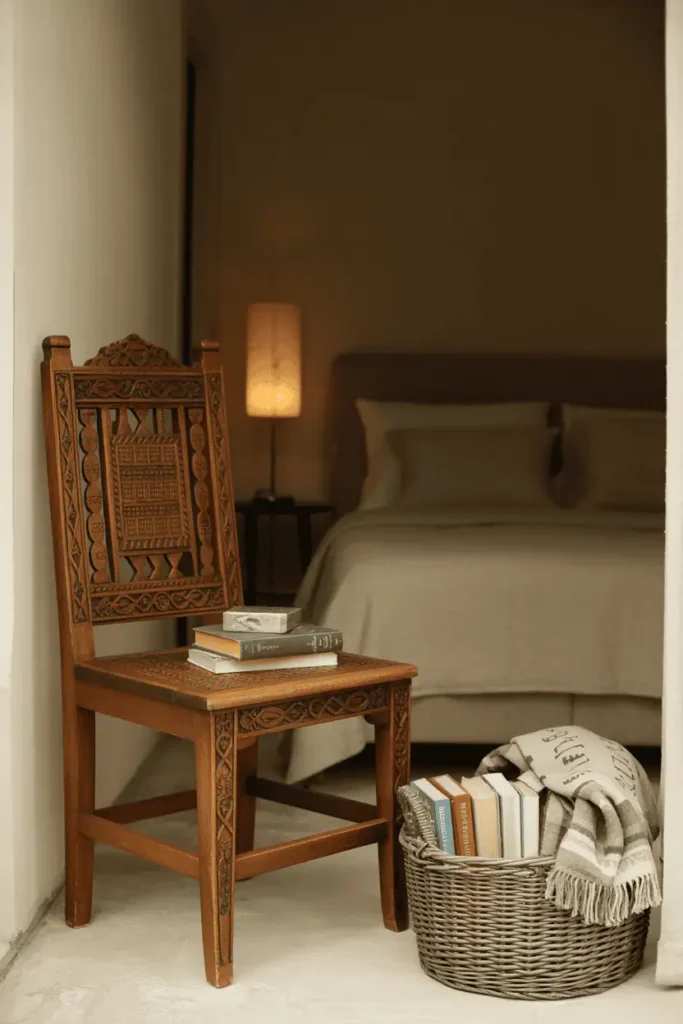
A bedroom where a corner is dedicated to a carved wooden chair — something substantial, maybe with geometric patterns or an intricate backrest — paired with a small side table, a floor lamp, and a woven basket holding books or blankets. The bed itself stays simple, but this reading corner becomes a second focal point.
The rest of the room supports both zones: neutral bedding, a simple rug, maybe one textile wall hanging. The carved chair doesn’t need to match the bed; in fact, slight variation in wood tone creates interest. This approach works for anyone who uses their bedroom as more than just a sleeping space.
The rooms are starting to feel less like design exercises and more like places where people actually live — where function and beauty overlap naturally.
13. Rust and Charcoal: A Moody Afrohemian Bedroom
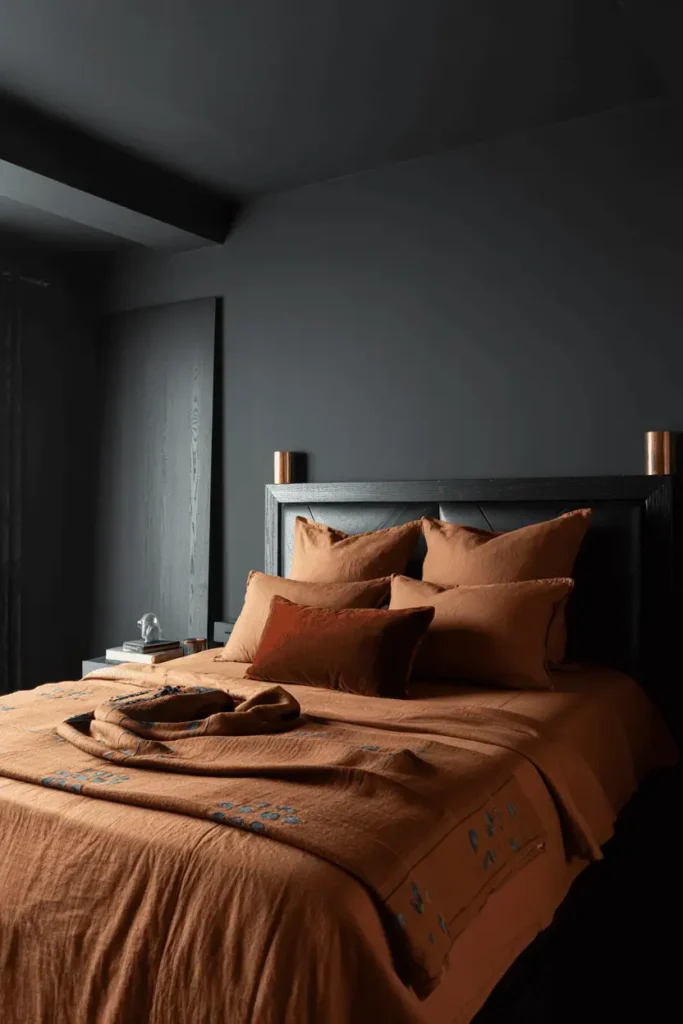
Walls painted charcoal gray. Bedding in rust, burnt orange, and deep terracotta. Dark wooden furniture — bed frame, nightstands, dresser — in espresso or black-stained wood. Brass accents catch light against the dark walls. A single large mudcloth throw draped at the foot of the bed.
This feels dramatic and cocooning, suited to someone who wants their bedroom to feel like a retreat. The dark walls work only with sufficient lighting — a combination of ambient overhead light and focused task lighting. This concept falls flat in rooms without windows or natural light; it needs that contrast between dark walls and bright daylight to avoid feeling cave-like.
14. Natural Linen Canopy with African Print Accent Pillows
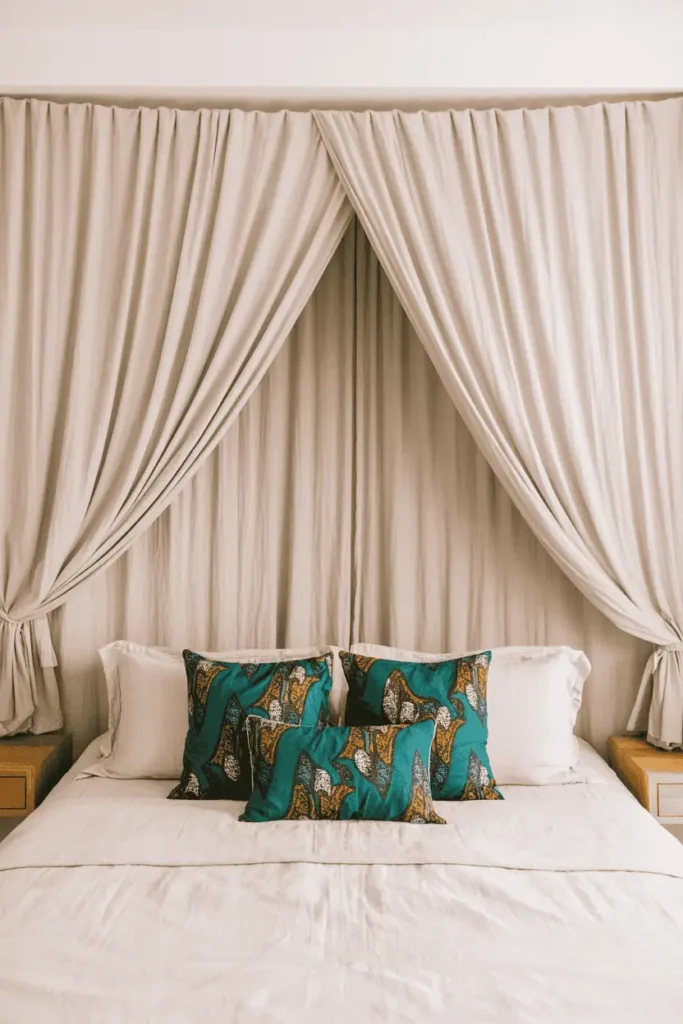
A bed with a simple linen canopy — just fabric draped from a single point above the bed or loosely tied to a wooden frame. The bedding is white or cream linen, but the pillows introduce African wax prints in jewel tones: emerald, sapphire, gold. Wooden nightstands in light oak or ash keep the palette from going too dark.
This feels soft and approachable, less formal than the darker carved wood concepts. It works in bedrooms where you want Afrobohemian influence without committing to bolder wall colors or heavier furniture. The canopy adds romance without fuss, and the print pillows provide just enough pattern to signal the style direction.
15. Bedroom Centered on a Large Woven Wall Hanging
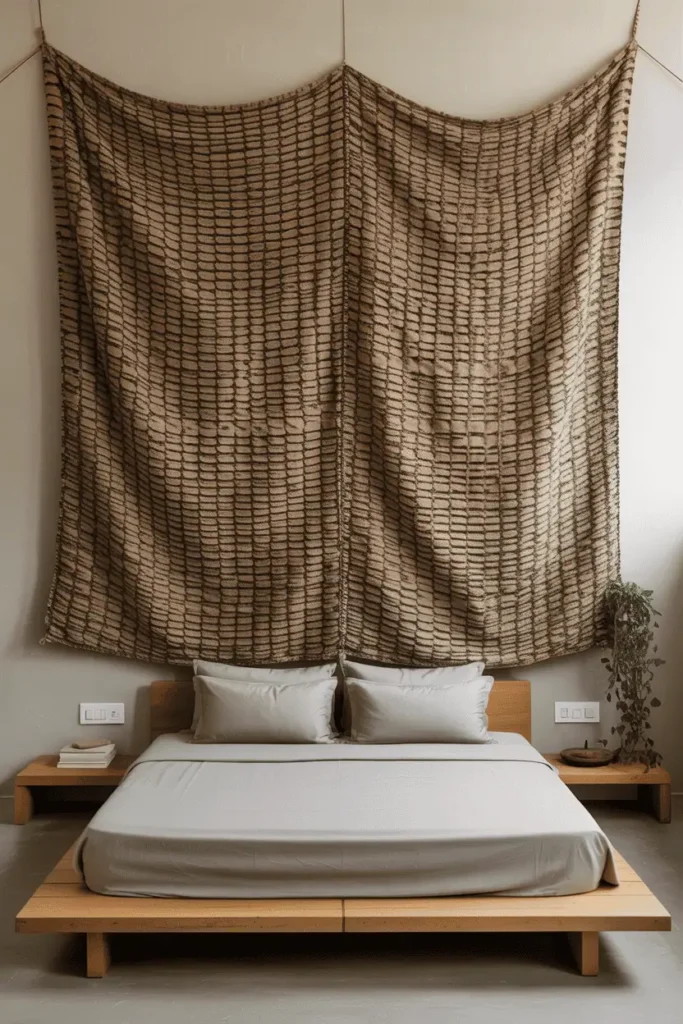
The wall behind the bed holds a large-scale woven textile or tapestry — something in natural fibers with geometric patterns. The bed itself is minimal: a low wooden frame or even just a mattress on a platform. The textile does all the visual work, and everything else recedes.
Bedding stays solid and neutral. Nightstands are small and unobtrusive. Maybe a single trailing plant in one corner. This concept suits renters or anyone who can’t paint walls or install permanent features. The wall hanging transforms the room without requiring structural changes, and it can move with you.
Style note: The wall hanging should be large enough to fill the space above the bed — too small, and it looks like an afterthought rather than a focal point.
16. Symmetrical Layout with Matching Carved Nightstands
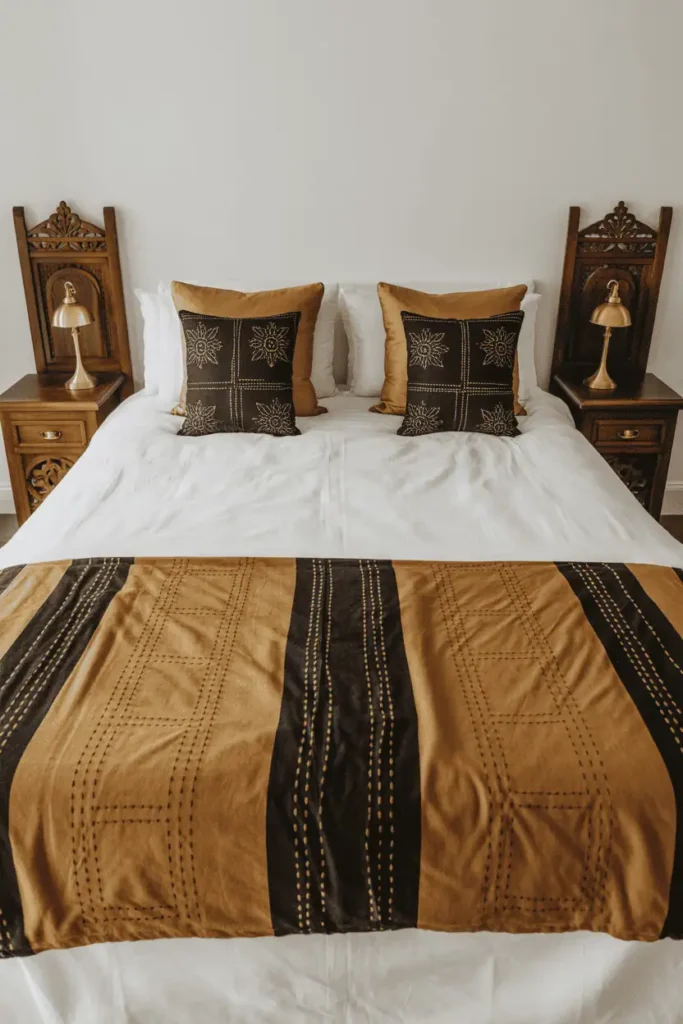
A more traditional approach: the bed centered on one wall, flanked by matching carved wooden nightstands, each topped with a brass lamp. The symmetry creates calm and order. African print pillows and a mudcloth throw introduce pattern without disrupting the balanced layout.
This works for someone who prefers classic bedroom arrangements but wants to bring in Afrocentric elements through textiles and accessories. The carved nightstands provide enough cultural specificity that the room doesn’t read as generic, even with its symmetrical bones. Avoid making everything match beyond the nightstands; let the textiles vary slightly to keep the room from feeling too staged.
17. Bedroom with Exposed Wooden Beams and Woven Pendant Lights
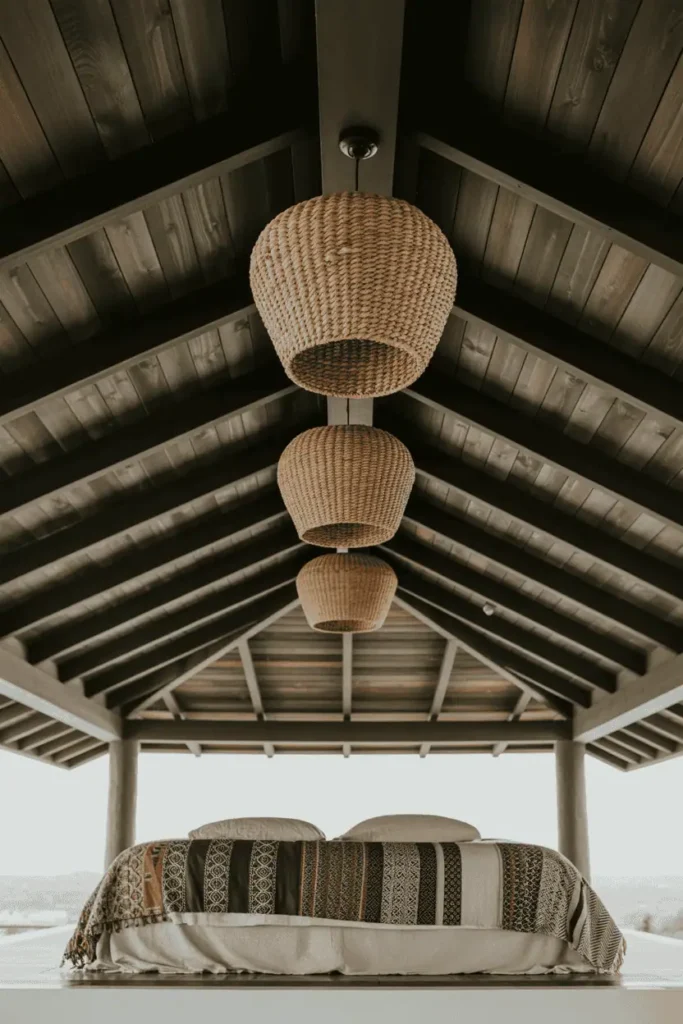
If the architecture allows: exposed wooden ceiling beams left natural or stained dark, paired with woven seagrass or rattan pendant lights hanging at varying heights. The bed is simple and low, letting the ceiling become the room’s architectural feature. Textiles in mudcloth and African prints layer on the bed.
This concept relies on existing or added architectural elements, so it’s not universally adaptable. But in the right space — something with high ceilings or a lofted feel — it creates a strong sense of place. The woven lights soften the hard lines of the beams and connect the ceiling to the room’s textile layers below.
18. Afro Boho Bedroom with Vintage Finds and Handmade Textiles
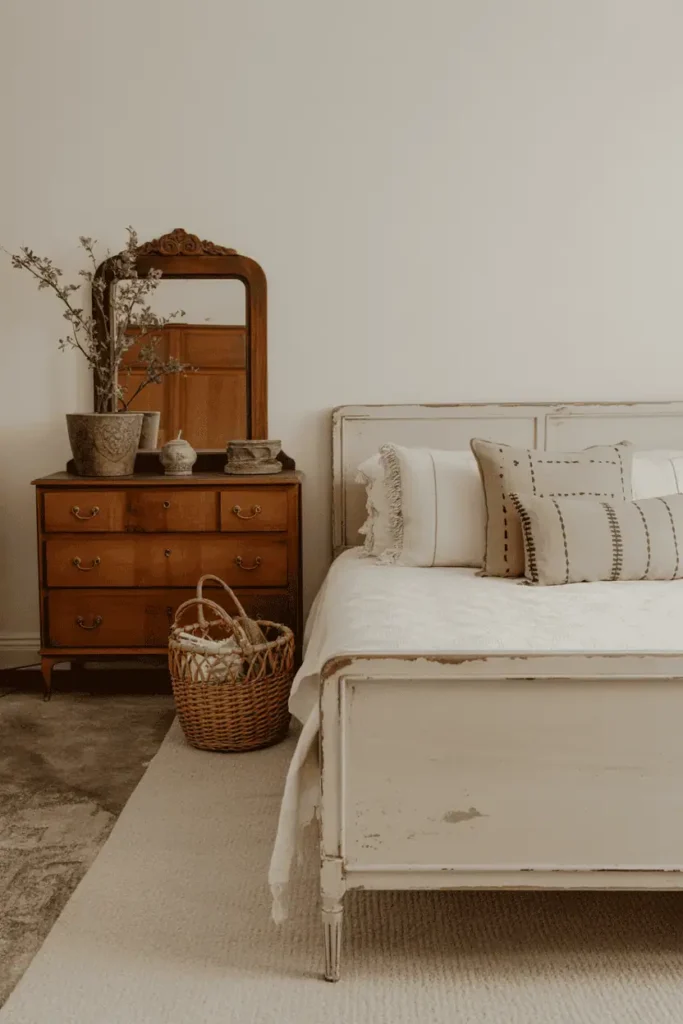
A bedroom that feels genuinely collected: a vintage wooden dresser with brass hardware, a secondhand bed frame repainted or left with worn finish, handmade mudcloth pillows, a thrifted mirror with a carved frame, a basket found at a market. Nothing matches, but everything relates through material, tone, and craftsmanship.
This is the hardest concept to execute because it requires time and curation. You can’t buy this room in one shopping trip. It has to accumulate. But it’s also the most personal and least replicable. The room tells a story about where you’ve been and what you value, and that specificity is what makes it work.
19. Light and Airy with Whitewashed Wood and Soft Textiles
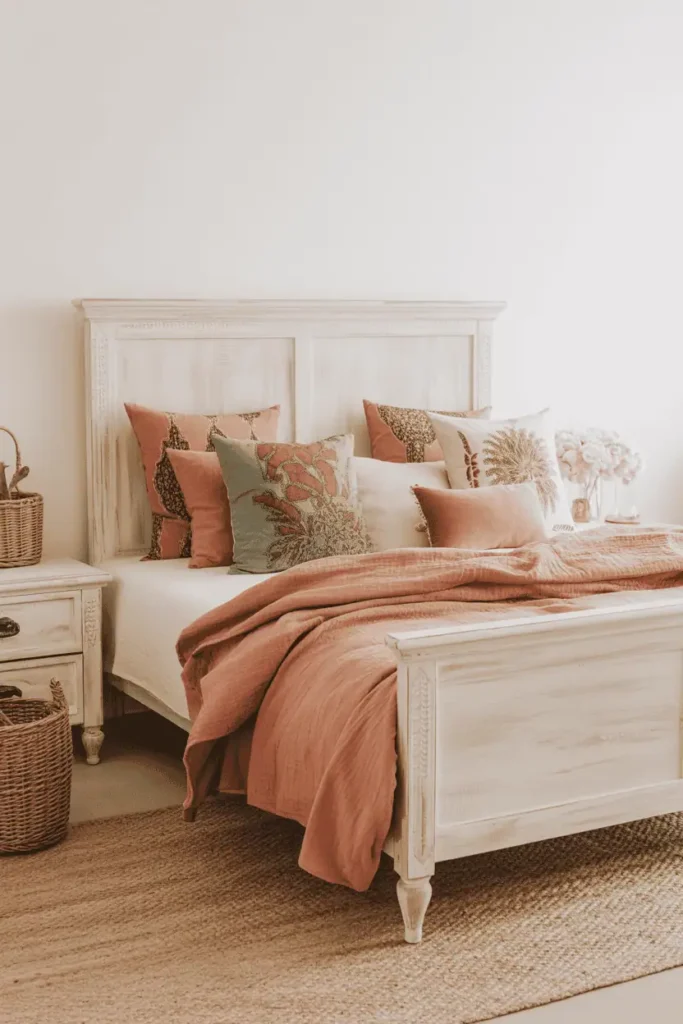
A bedroom where the wood furniture is whitewashed or painted soft cream rather than stained dark. The overall effect is lighter and more Scandinavian-meets-Afrobohemian. African prints appear in muted tones — dusty rose, sage, soft terracotta — rather than saturated colors. Woven baskets, jute rugs, and linen bedding keep it natural.
This approach works in spaces with limited natural light or where you want warmth without visual weight. It’s Afrohemian style filtered through a softer lens, suitable for someone drawn to the aesthetic but who prefers lighter, airier interiors. The cultural elements are still present; they’re just delivered more quietly.
20. Platform Bed with Built-In Storage and African Print Textiles
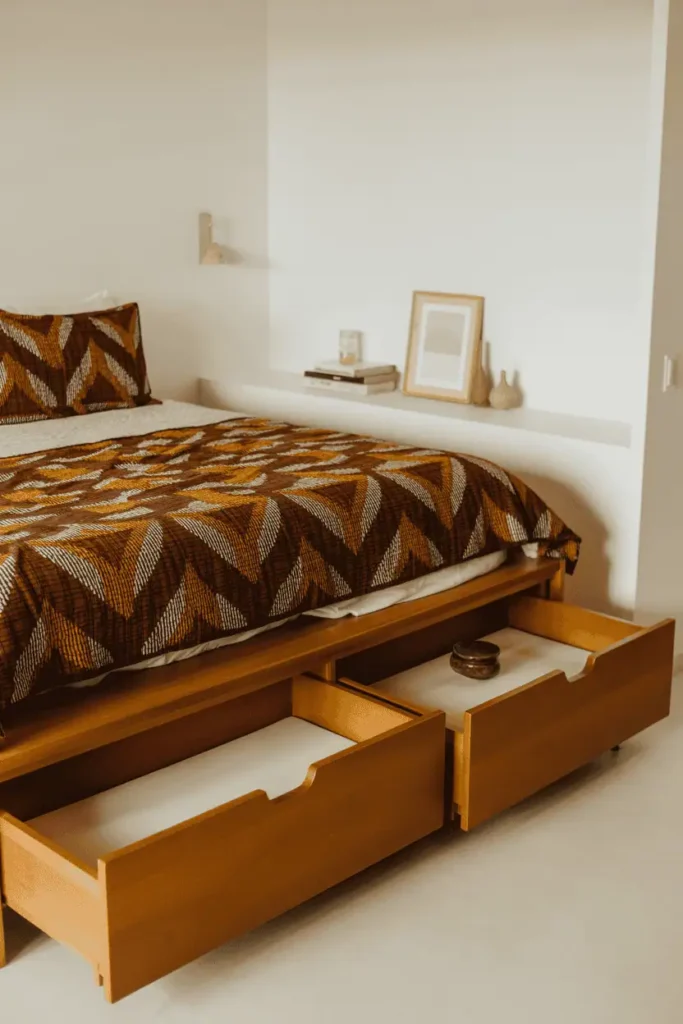
A functional approach: a platform bed with built-in drawers underneath for storage, keeping the room uncluttered. The bed frame is solid wood in a medium tone. On top, African wax print bedding in bold geometric patterns. The walls stay white, and additional furniture is minimal — maybe just one floating shelf with a few objects.
This concept suits smaller bedrooms or anyone prioritizing function alongside style. The platform bed provides necessary storage without requiring separate dressers or bins. The bold textiles ensure the room doesn’t read as overly practical or sterile. It’s Afrohemian style adapted to real-world space constraints.
21. Dark Walls, Light Wood, and Pops of Copper
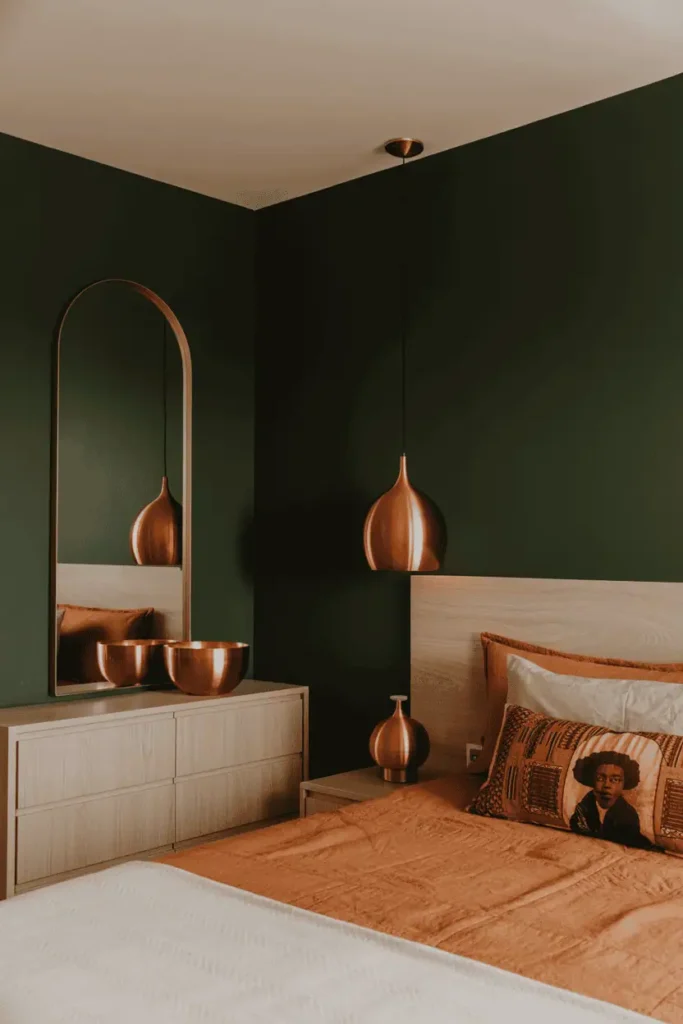
The inversion of earlier concepts: walls painted deep forest green or charcoal, furniture in light ash or blonde oak, and copper accents throughout — copper bowls on the dresser, a copper-framed mirror, copper pendant lights. African print pillows in warm tones bridge the dark walls and light wood.
This feels modern and slightly unexpected, moving away from the more traditional dark-wood-on-light-walls formula. The copper adds warmth that brass sometimes lacks, and it pairs especially well with green-toned walls. This approach works for someone comfortable with bolder color choices and who wants their Afrohemian bedroom to feel contemporary rather than referencing historical or traditional aesthetics.
By now, the range should feel clear: Afrohemian bedrooms can skew warm or cool, maximalist or minimal, traditional or modern. The through-line is always wood, textiles, handmade objects, and personal curation.
Styling Tips to Pull the Look Together
- Start with wood as your foundation — let the tone (light, medium, or dark) guide your textile and wall color choices
- Layer textiles gradually: one patterned duvet, add mudcloth pillows over time, introduce a throw later
- Repeat one material at least three times: if you choose brass, use it for hardware, lighting, and one decorative object
- Balance pattern with solid textiles — not everything can be African print or mudcloth; some surfaces need visual rest
- Incorporate handmade or vintage elements whenever possible; new mass-produced items rarely carry the same presence
- Let walls breathe: white or neutral walls allow darker woods and bold textiles to stand out without competing
- Prioritize objects with stories over items chosen purely for aesthetics; the room will feel more genuine
Conclusion
Afrohemian bedrooms don’t happen overnight. They build slowly, piece by piece, as you find textiles that speak to you, wood furniture that feels right, objects that carry meaning. The rooms that work best are the ones that resist the urge to complete everything at once — they leave space for evolution, for the next meaningful addition, for things to shift as your taste refines.
Start with one decision: maybe it’s a carved wooden bed, or a single bold textile, or a wall color that warms the room immediately. Build from there. Add slowly. Let the room tell you what it needs rather than forcing a predetermined vision. The best Afrohemian spaces feel intuitive, like they grew naturally rather than being designed in a weekend.
Save the concepts that resonate. Come back to them when you’re ready to make a change. Your bedroom will develop its own character over time, shaped by what you bring home and what you choose to keep. That’s the point — not perfection, but authenticity.

To bring you cozy inspiration more efficiently, we sometimes use AI to assist in content creation — but every word and idea is carefully shaped by our team. See our AI Disclosure for more info.