This post may contain affiliate links. If you click and buy, we may earn a small commission at no extra cost to you. Learn more.
There’s a quiet kind of confidence that comes from living with furniture you built yourself. Not the loud, tool-covered workshop energy people often associate with woodworking — but the calm satisfaction of knowing a piece fits your space, your needs, and your style perfectly.
DIY furniture isn’t about becoming a professional woodworker. It’s about creating pieces that feel intentional, practical, and personal. And despite what many people think, you don’t need advanced skills, a garage full of tools, or years of experience to get started.
With simple designs, thoughtful planning, and clear measurements, you can build furniture that looks polished and considered — the kind of pieces people assume you bought from a boutique store.
Below are DIY furniture projects you can realistically build at home, even if you’re a beginner. These are projects that Pinterest users save because they feel achievable, not intimidating.
Contents
- 1 Why DIY Furniture Feels So Approachable Right Now
- 2 1. A Simple Wooden Bench (Entryway, Bedroom, or Dining)
- 3 2. A Slim Console Table for Small Spaces
- 4 3. Open Shelving That Feels Solid and Permanent
- 5 4. A Small Storage Cabinet or Bedside Table
- 6 5. Plant Stands and Accent Tables (Perfect Confidence Builders)
- 7 A Gentle Word About Plans (and Why They Matter)
- 8 Start With One Piece, Not Everything
Why DIY Furniture Feels So Approachable Right Now
Before jumping into the projects, it helps to understand why DIY furniture has become so popular — especially among people who never considered themselves “handy.”
- Store-bought furniture is expensive and often poorly made
- Many homes need specific sizes that stores don’t offer
- DIY allows you to choose wood tones that match your space
- Simple furniture designs don’t require complex techniques
Most beginner projects rely on straight cuts, basic assembly, and patience — not strength or technical expertise. The key difference between a stressful build and an enjoyable one usually comes down to having a clear plan from the start.
1. A Simple Wooden Bench (Entryway, Bedroom, or Dining)
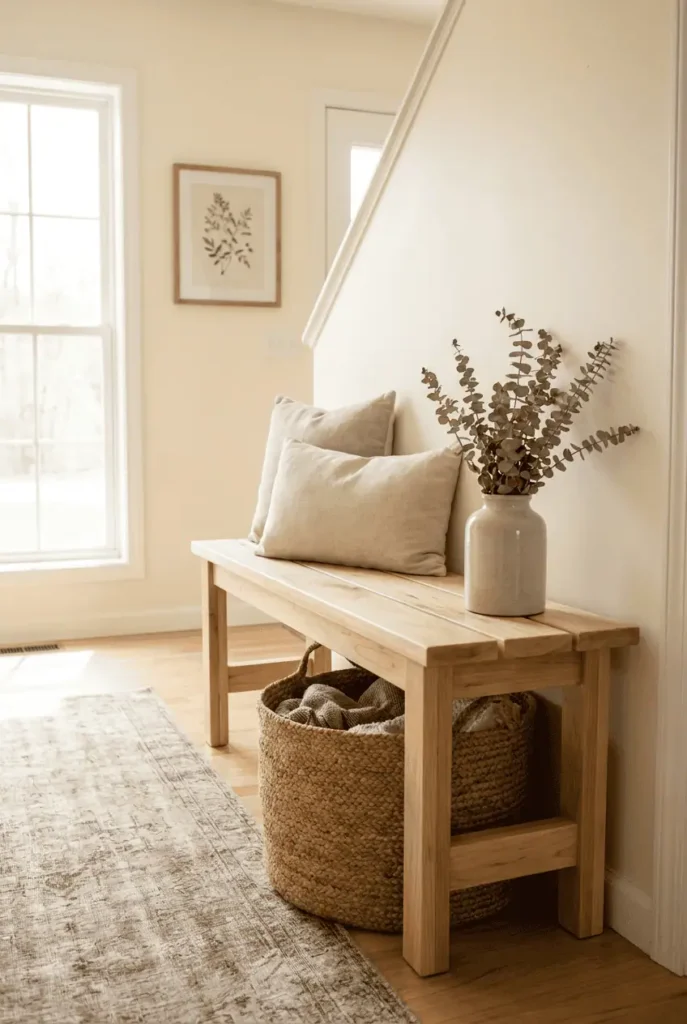
A wooden bench is often the best first piece of DIY furniture because it’s incredibly versatile and forgiving. It works in almost any room and adapts easily to different styles.
You can place a bench:
- In an entryway for shoes and bags
- At the foot of a bed for blankets
- Under a window for extra seating
- At a dining table for a relaxed look
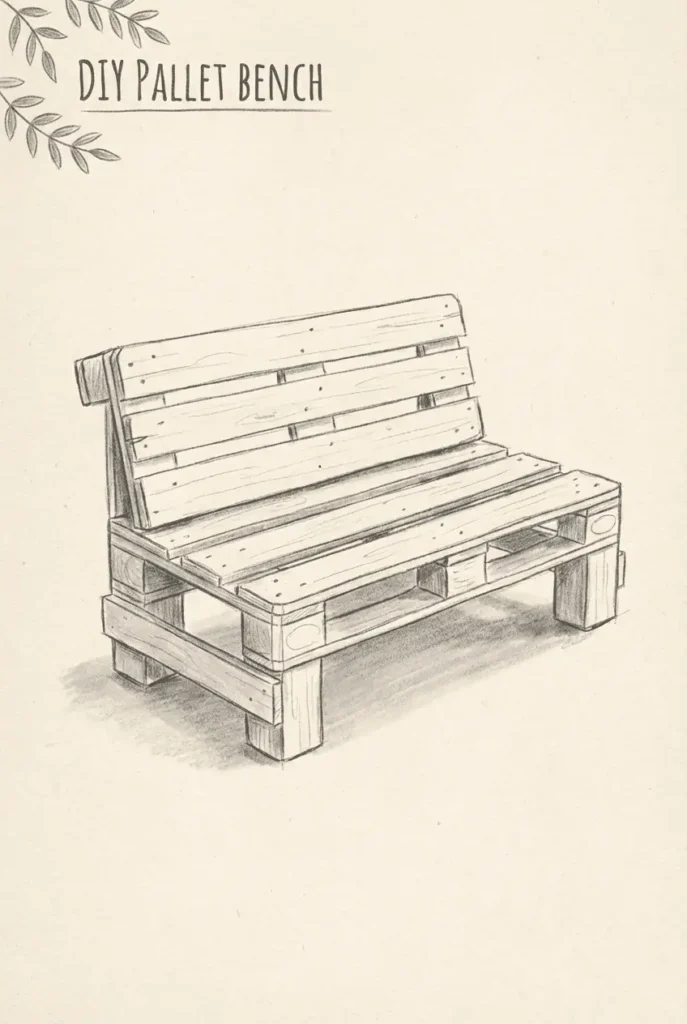
From a building perspective, benches are approachable because the structure is simple. Most designs involve a seat, legs, and support rails — no drawers, no doors, no complicated angles.
What makes the difference is proportion. Seat height, leg placement, and spacing matter more than fancy details. This is where beginners often hesitate, which is why starting with measured diagrams can remove a lot of uncertainty.
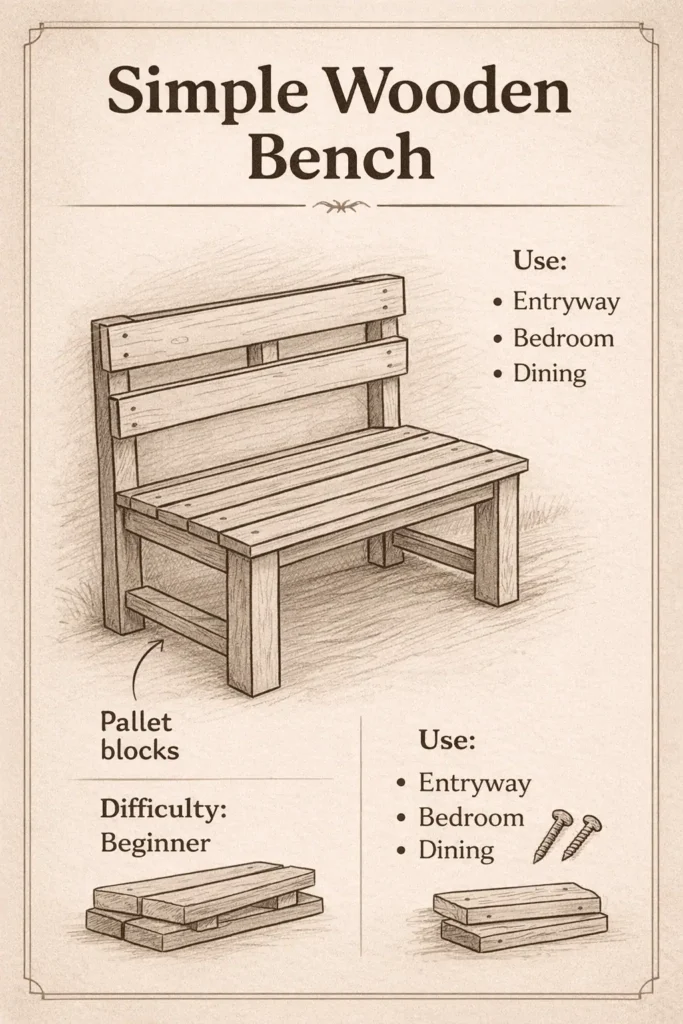
A well-built bench instantly makes your home feel more grounded and lived-in — like it belongs there.
2. A Slim Console Table for Small Spaces
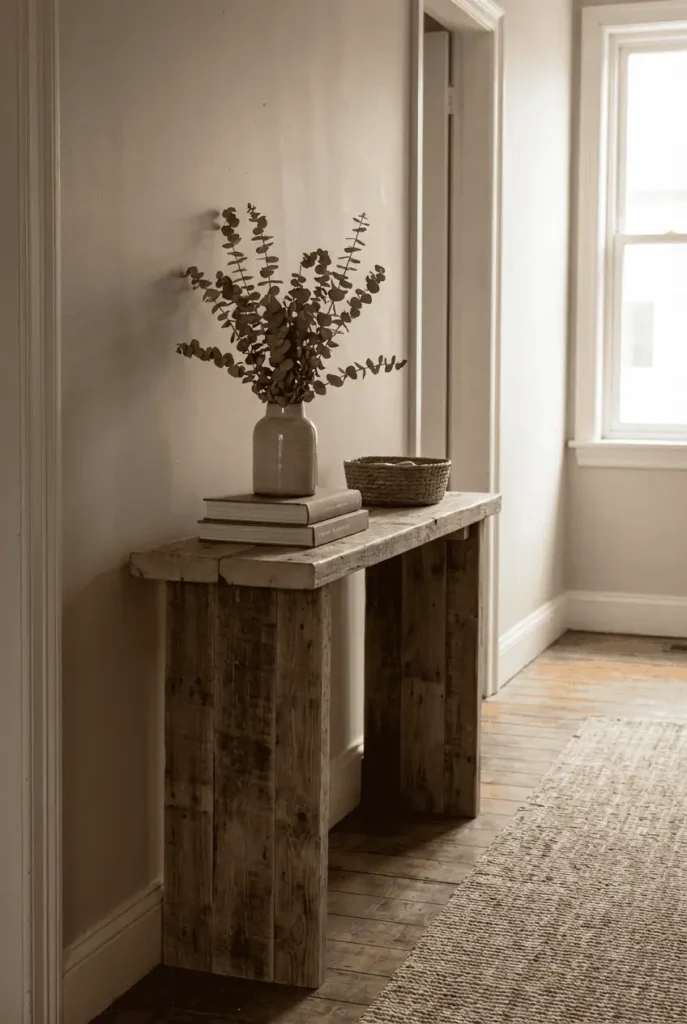
Slim console tables are one of those pieces people assume are complicated — but they’re actually very beginner-friendly when broken down properly.
They’re ideal for:
- Narrow entryways
- Hallways that feel empty
- Behind a sofa
- Small apartments where every inch counts
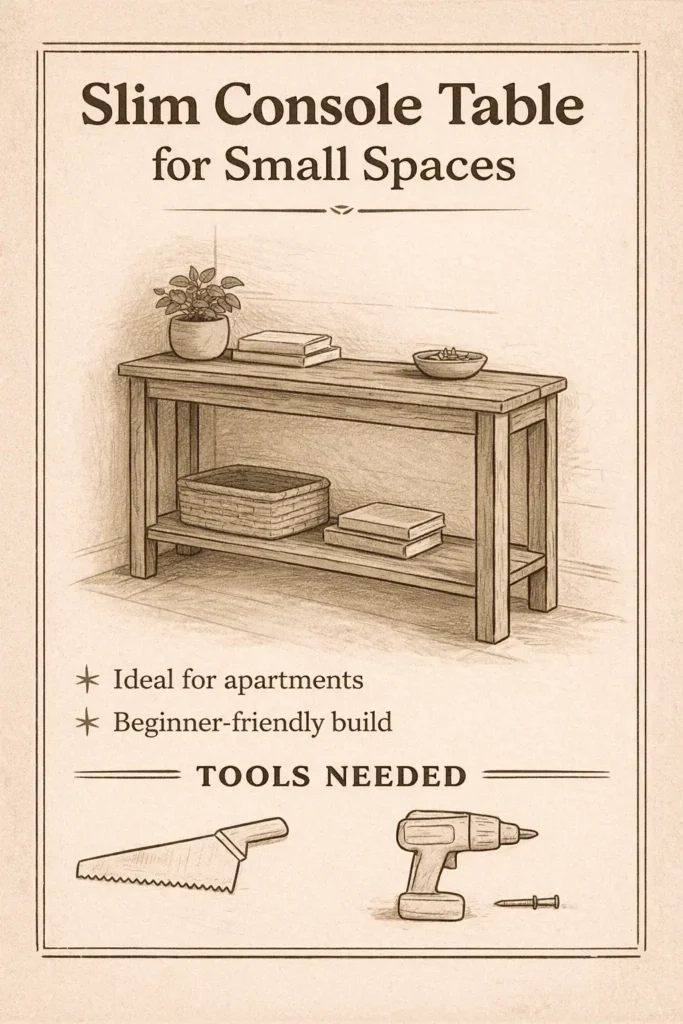
Because console tables are long and shallow, accuracy matters. Even a small measurement error can throw off the balance or cause wobbling. That’s why this type of project feels much easier when you’re not designing it from scratch.
Once built, console tables become a styling anchor. A lamp, a mirror, a basket underneath — suddenly the space feels intentional instead of forgotten.
3. Open Shelving That Feels Solid and Permanent
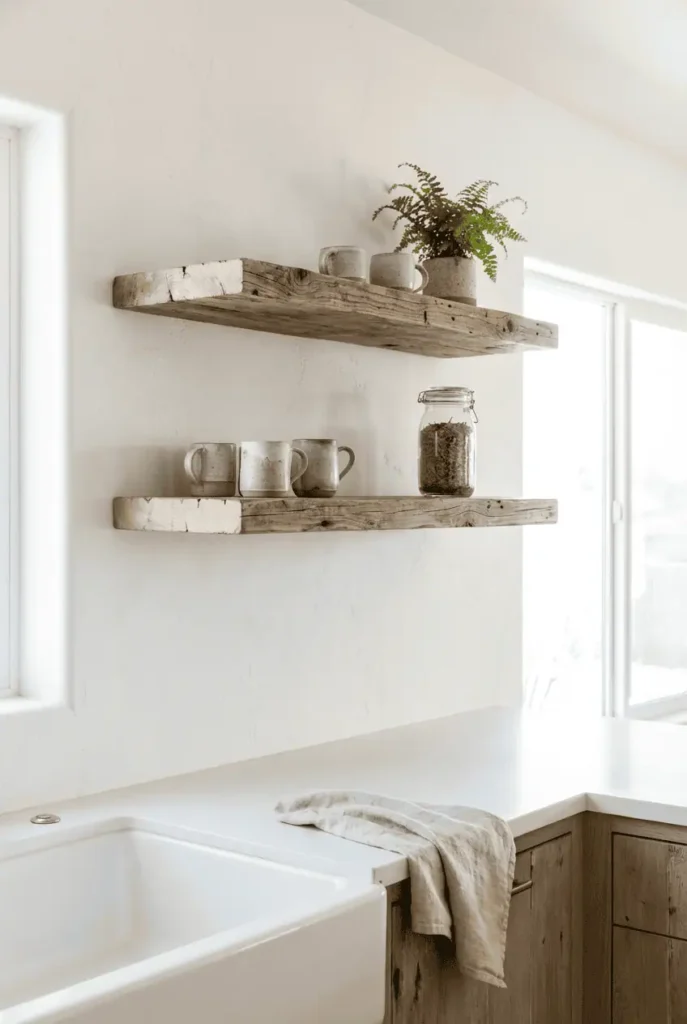
Open shelves are one of the most saved DIY ideas on Pinterest, especially for kitchens, bathrooms, and living rooms. They make spaces feel lighter and more curated — but only if they’re built well.
Beginner-friendly shelf projects include:
- Floating shelves with hidden supports
- Thick plank shelves with brackets
- Short stacked shelves for vertical interest
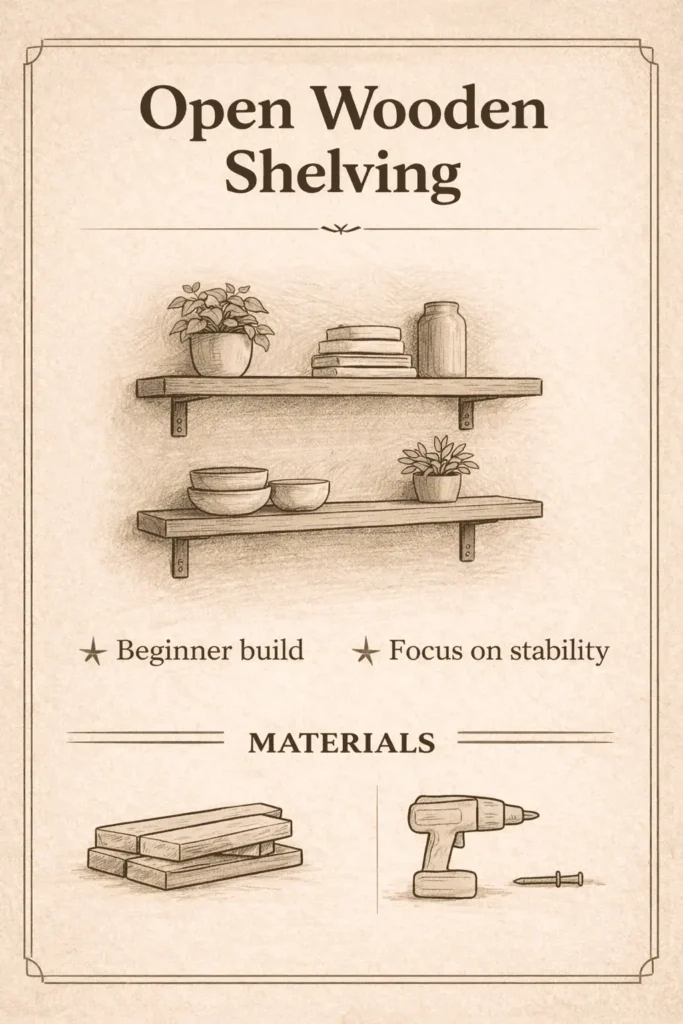
The most common mistake with shelves isn’t aesthetics — it’s strength. Shelves that sag or feel unstable quickly become frustrating. This is why shelf thickness, spacing, and support placement matter more than decorative details.
When you follow a proven design, you avoid trial and error and end up with shelves that feel permanent, not temporary.
4. A Small Storage Cabinet or Bedside Table
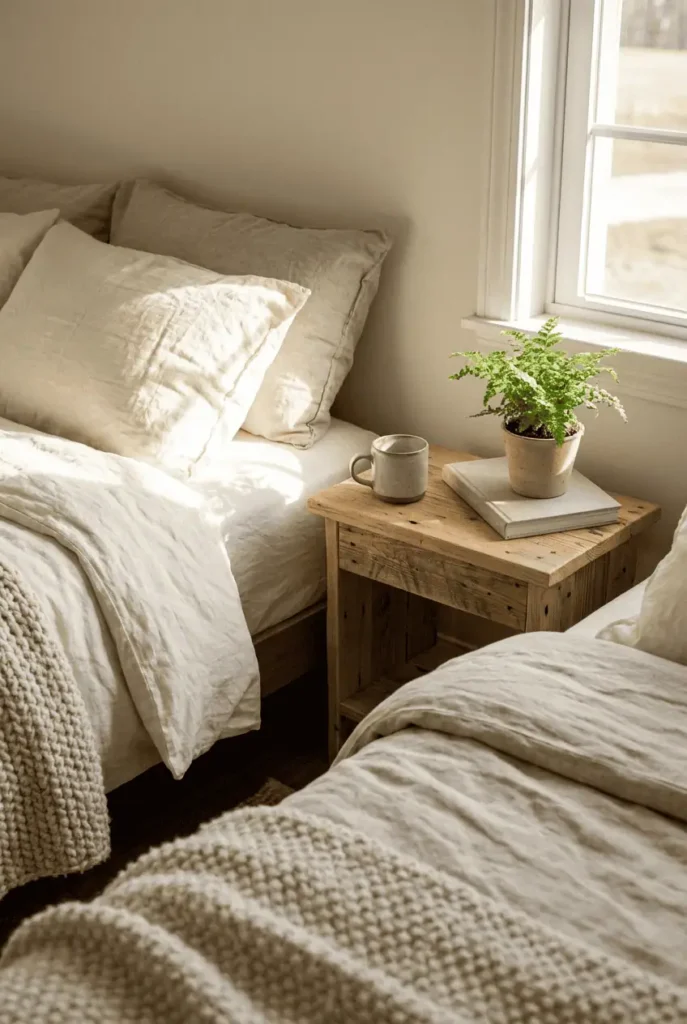
If you want a project that feels like a real step up, a small cabinet or bedside table is a beautiful next move.
These projects work well because they’re:
- Compact
- Extremely useful
- Visually impactful
Think of pieces like:
- A bedside table with hidden storage
- A small cabinet for towels or linens
- A side table that hides clutter
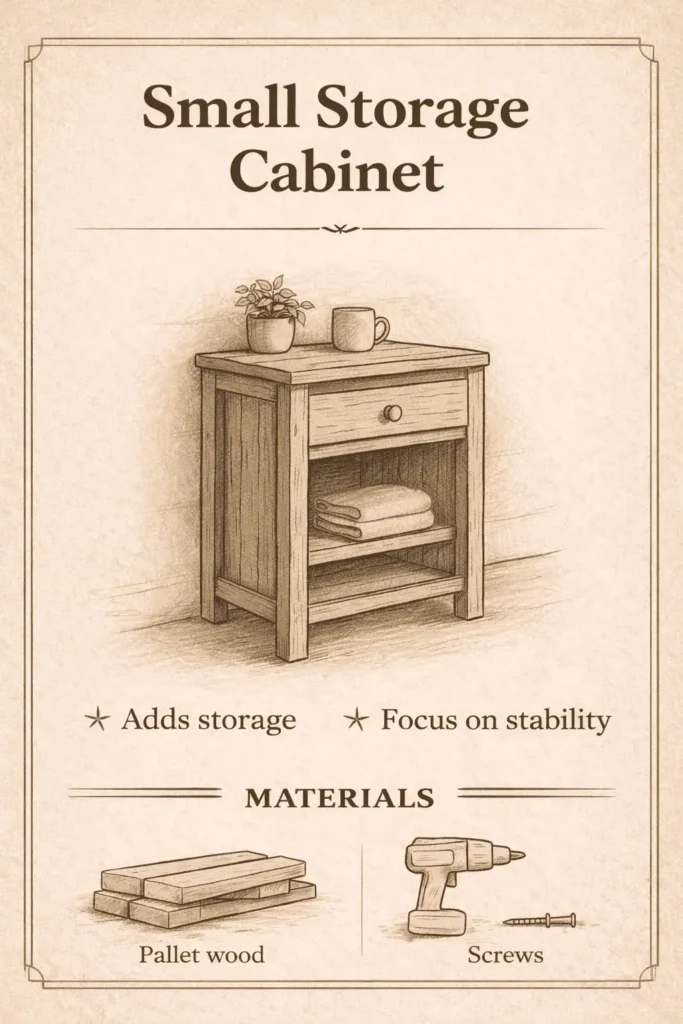
These builds introduce panels, internal spacing, and sometimes drawers — which sounds intimidating until you realize that most designs are still made from straightforward cuts and repetition.
Clear plans are especially helpful here, because guessing drawer sizes or interior spacing can turn a fun project into a frustrating one. When everything is laid out clearly, the process feels calm and controlled.
5. Plant Stands and Accent Tables (Perfect Confidence Builders)
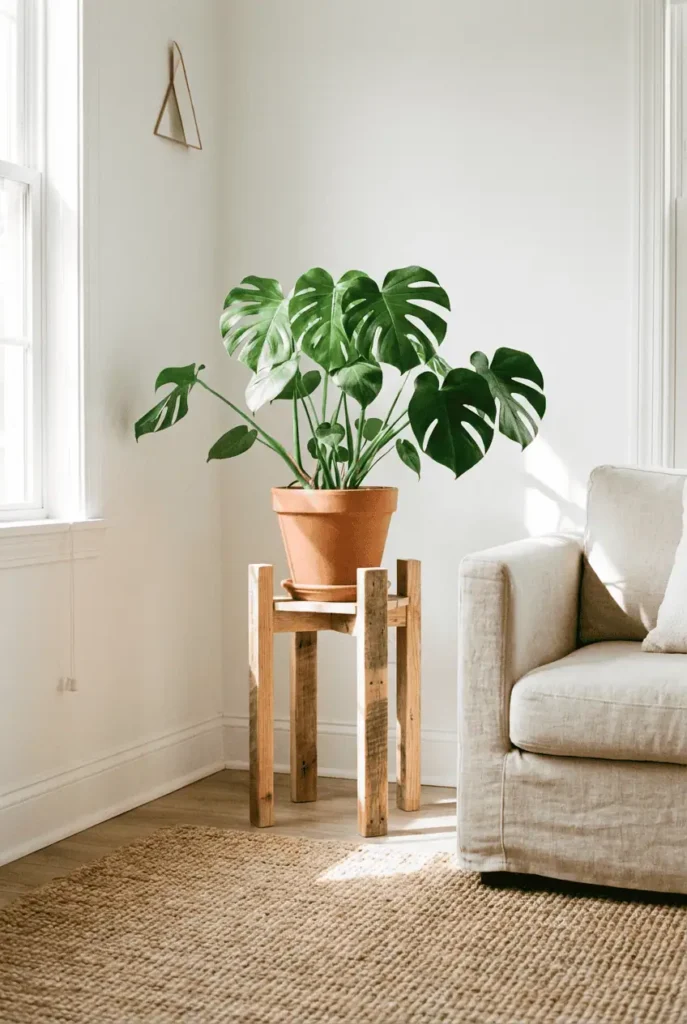
Plant stands are one of the most satisfying DIY furniture projects because they’re small, flexible, and instantly rewarding.
They’re ideal if:
- You want a quick weekend project
- You’re short on space
- You want to practice before building larger pieces
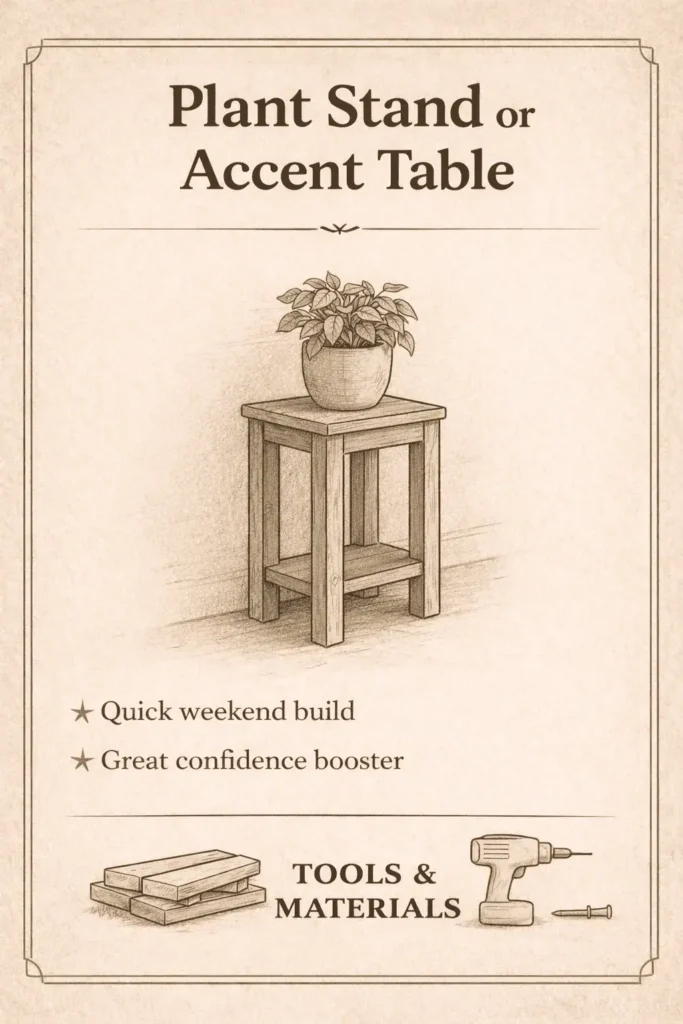
You can experiment with height, shape, and finish without committing to something permanent. And because plant stands are often lightweight, they don’t require heavy materials or advanced tools.
Many people start here, gain confidence, and then move on to larger furniture projects feeling much more capable.
A Gentle Word About Plans (and Why They Matter)
One of the biggest myths about DIY furniture is that you need to design everything yourself. In reality, many people enjoy DIY more when they’re not constantly second-guessing measurements.
Plans don’t take creativity away — they remove stress.
If you like starting with:
- Clear diagrams
- Exact measurements
- Step-by-step guidance
…then having access to a full library of beginner-friendly furniture plans can make the process far more enjoyable.
👉 You can explore a complete collection of step-by-step DIY furniture plans HERE
For many people, this turns DIY from “overwhelming” into something relaxing and satisfying.
Start With One Piece, Not Everything
You don’t need to build an entire room at once. Start with one piece that solves a real need in your home. Let that project teach you what you enjoy and what feels manageable.
DIY furniture is less about skill and more about patience, planning, and confidence — and those grow quickly once you begin.
Your home doesn’t need to look perfect. It just needs to feel like it belongs to you.

To bring you cozy inspiration more efficiently, we sometimes use AI to assist in content creation — but every word and idea is carefully shaped by our team. See our AI Disclosure for more info.