This post may contain affiliate links. If you click and buy, we may earn a small commission at no extra cost to you. Learn more.
Indian bedrooms carry a particular depth. The wood isn’t just furniture—it’s carved headboards, jali screens, low platforms, ceiling beams. It’s teak darkened with age, sheesham left natural, rosewood polished to a quiet sheen. The rooms feel grounded because they evolved slowly, often across generations.
What makes these spaces compelling is the balance between ornamentation and restraint. There’s carving, but it’s contained. There’s color, but it’s often pulled from textiles rather than walls. The wood becomes the constant, anchoring brass accents, block-printed fabrics, and terracotta details.
These bedrooms work because they prioritize longevity over trends. They’re built around proportion, material honesty, and a respect for craft that predates mass production. That sensibility translates surprisingly well to contemporary homes, even outside India.
The ideas here pull from traditional homes, regional variations, and modern interpretations that keep the essence without replicating everything. They’re meant to inspire adaptation, not exact duplication.
Contents
- 1 What you’ll find here:
- 2 1. Carved Sheesham Platform Bed with Jali Headboard
- 3 2. Pale Teak Four-Poster with Sheer Cotton Draping
- 4 3. Rosewood Bed with Inlaid Brass Details
- 5 4. Low Diwan-Style Bed with Built-In Storage
- 6 5. Whitewashed Wood Ceiling with Exposed Beams
- 7 6. Carved Wooden Swing Bed Suspended from Beams
- 8 7. Reclaimed Teak Headboard with Metal Accents
- 9 8. Jali Screen as Room Divider Behind Bed
- 10 9. Dark Wood Paneling with Painted Accents
- 11 10. Carved Wooden Doors as Headboard
- 12 11. Teak Bed Frame with Cane Webbing Headboard
- 13 12. Low Takhat-Style Sleeping Platform
- 14 13. Carved Wooden Armoire as Statement Piece
- 15 14. Whitewashed Wood with Colorful Textiles
- 16 15. Carved Wooden Mandir Niche Built Into Wall
- 17 16. Single Carved Wooden Mirror Above Simple Bed
- 18 17. Exposed Brick with Teak Window Frames
- 19 18. Lattice Wood Ceiling Panel Above Bed
- 20 19. Contemporary Platform Bed with Vintage Wooden Trunk
- 21 Styling Tips to Pull the Look Together
- 22 Conclusion
What you’ll find here:
- Distinct bedroom concepts rooted in real homes
- Inspiration you can adapt gradually
- Complete looks, not isolated details
- Ideas that suit different tastes and room sizes
1. Carved Sheesham Platform Bed with Jali Headboard
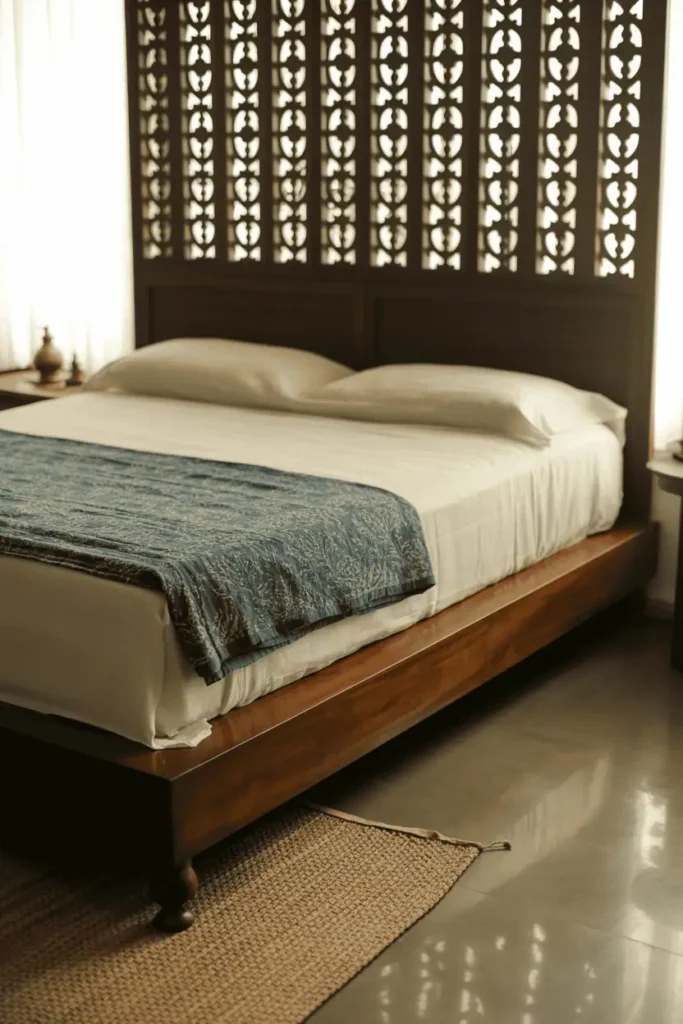
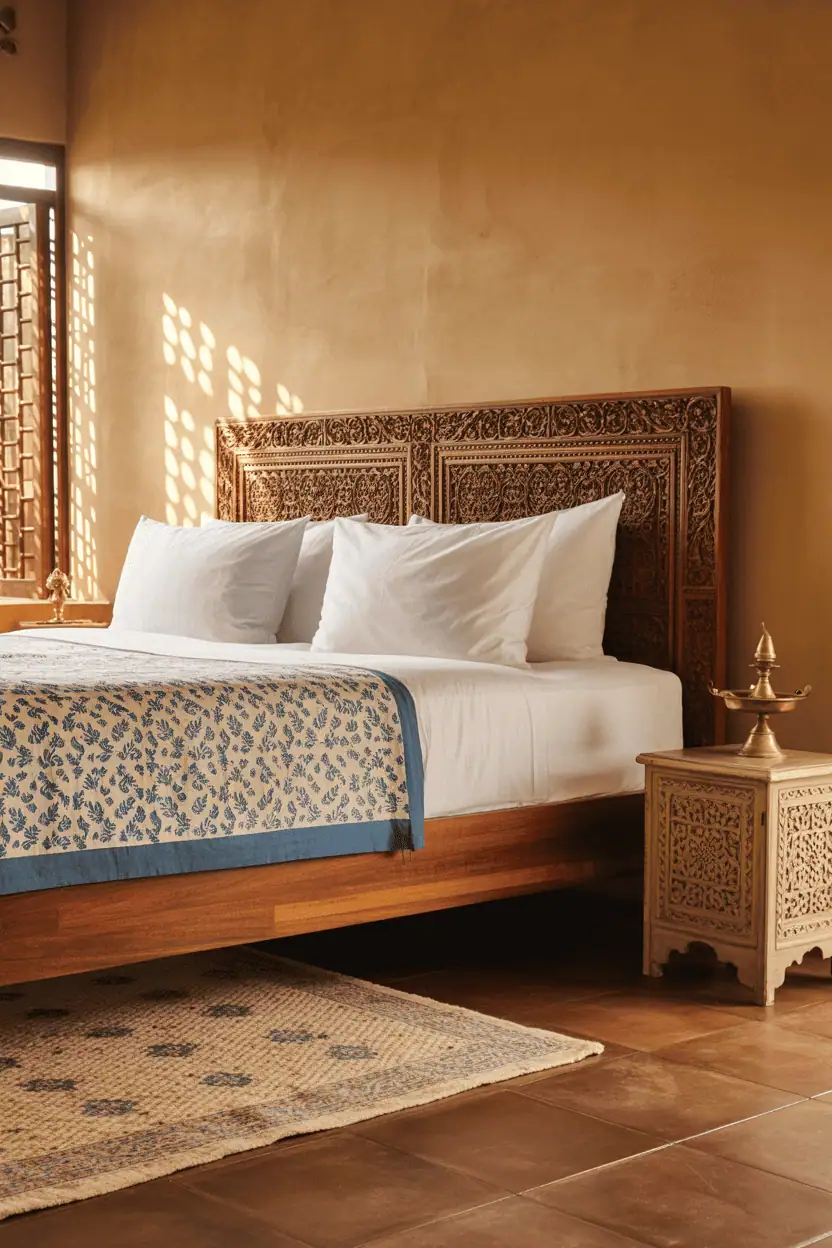
The bed sits low, built from dark sheesham with a carved jali headboard that reaches nearly to the ceiling. Intricate geometric cutwork allows light to filter through from a window behind. The bedding is simple—white cotton with a single block-printed quilt in indigo. The floor is polished concrete with a handwoven dhurrie in natural fiber.
The jali becomes the room’s focal point, providing pattern without requiring layered textiles. This works best in rooms with strong natural light where the screen can cast shifting shadows throughout the day. The dark wood grounds the white walls and prevents the simplicity from feeling stark.
Design note: Keep accessories minimal—a brass diya on a side table, perhaps a single carved wood stool.
2. Pale Teak Four-Poster with Sheer Cotton Draping
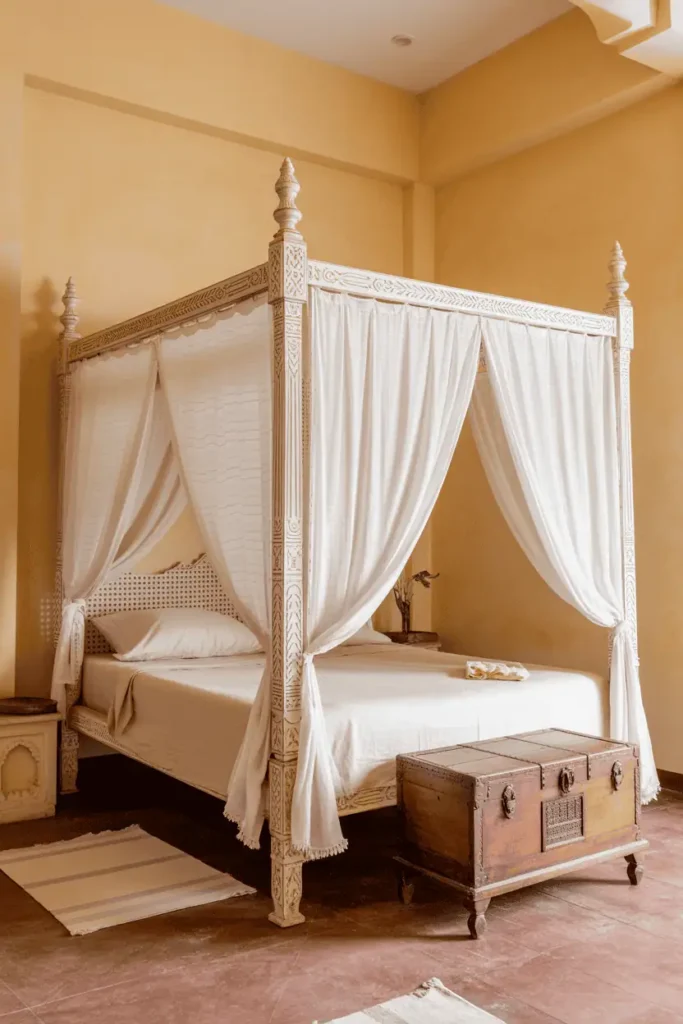
A traditional charpai-inspired four-poster in pale teak, left unstained to show the natural grain. Sheer white cotton is draped loosely across the top and sides—functional for mosquitoes but also softening the room’s edges. The walls are ochre plaster. A carved wooden trunk sits at the foot of the bed, and the floor is terracotta tile with scattered cotton rugs.
This feels like a haveli bedroom adapted for modern comfort. The pale wood keeps the space cool visually. The draping adds privacy without heaviness. It suits warm climates and bedrooms where airflow matters as much as aesthetics.
3. Rosewood Bed with Inlaid Brass Details
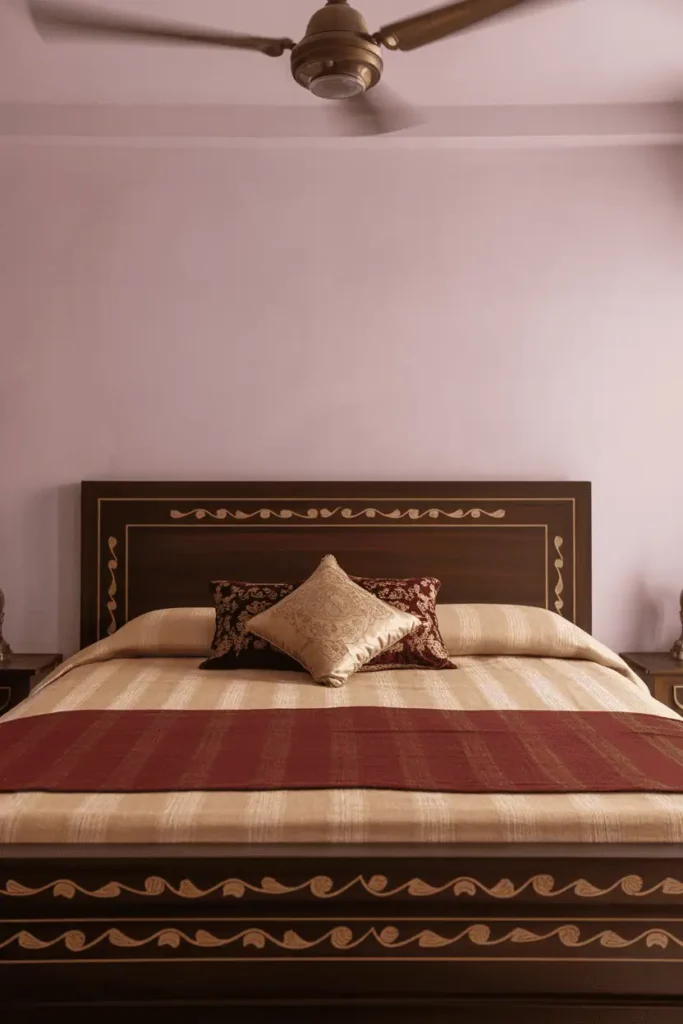
The bed frame is dark rosewood with thin brass inlay forming traditional paisley patterns along the headboard and footboard. The bedding is layered: a base of cream cotton, a silk throw in deep maroon, embroidered cushions in gold and burgundy. The walls are soft pink plaster, and a vintage brass ceiling fan hangs overhead.
This is a more formal approach, suited to those who want richness without overwhelming the space. The brass inlay catches light subtly. The darker wood requires balance—lighter walls, restrained accessories. This tends to fall flat in small rooms or those with limited natural light.
4. Low Diwan-Style Bed with Built-In Storage
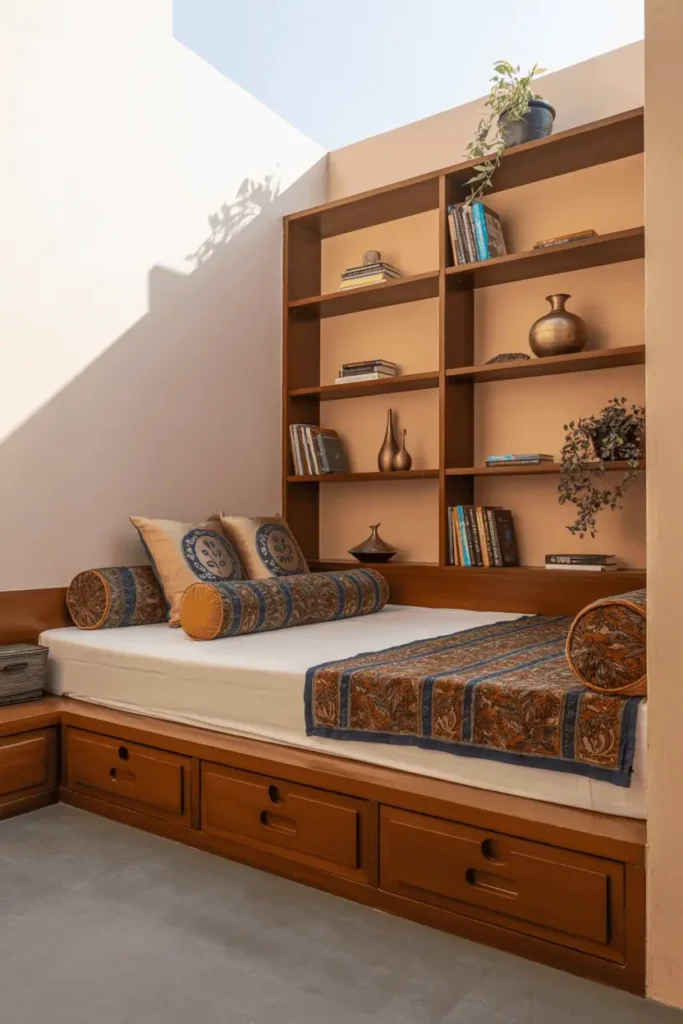
A low platform bed built along one wall, inspired by traditional diwan seating but scaled for sleeping. The base is constructed from mango wood with built-in drawers. During the day, it’s styled with bolster cushions and block-printed textiles. At night, bedding is simple. The opposite wall has open wooden shelving holding books and brass vessels.
This maximizes small spaces while maintaining cultural reference. The low height makes the ceiling feel taller. The built-in storage eliminates the need for additional furniture. It works particularly well in urban apartments where space is constrained.
5. Whitewashed Wood Ceiling with Exposed Beams
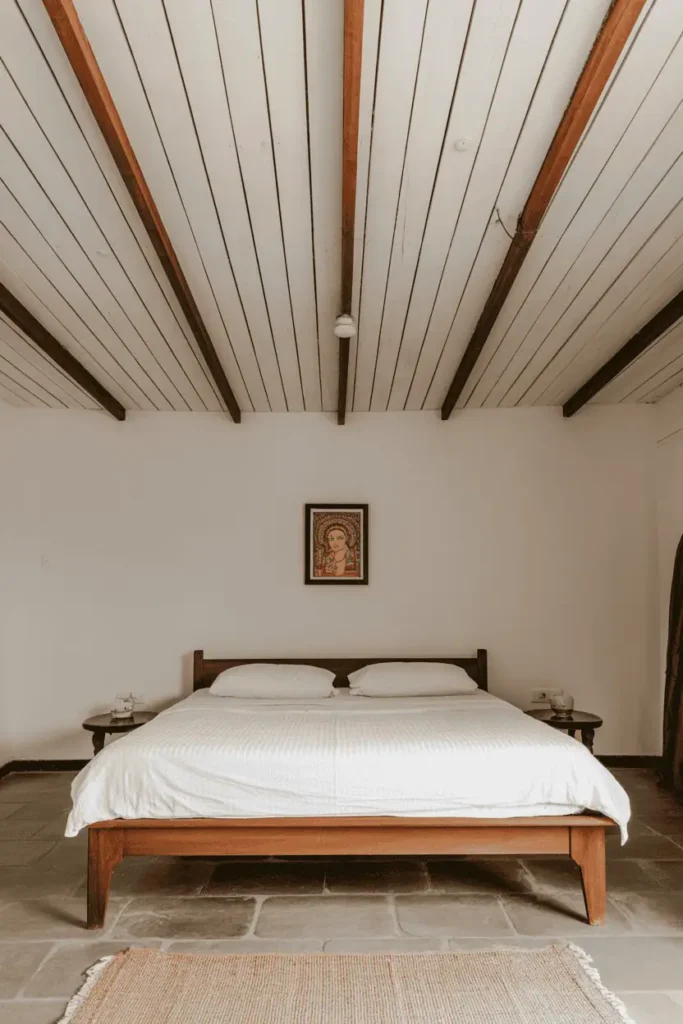
The ceiling dominates here—whitewashed wood planks with darker exposed beams running perpendicular. The bed is simple: a low teak frame with white linens. The walls are bare except for a single framed Madhubani painting. The floor is polished stone with a single large cotton dhurrie.
This approach lets architecture do the work. The wood ceiling adds warmth without requiring ornate furniture. It feels restful and uncluttered, suited to those who prefer visual calm over layered decoration.
At this point, the bedrooms begin to shift between traditional and adapted. The wood remains constant, but its treatment changes the entire mood.
6. Carved Wooden Swing Bed Suspended from Beams
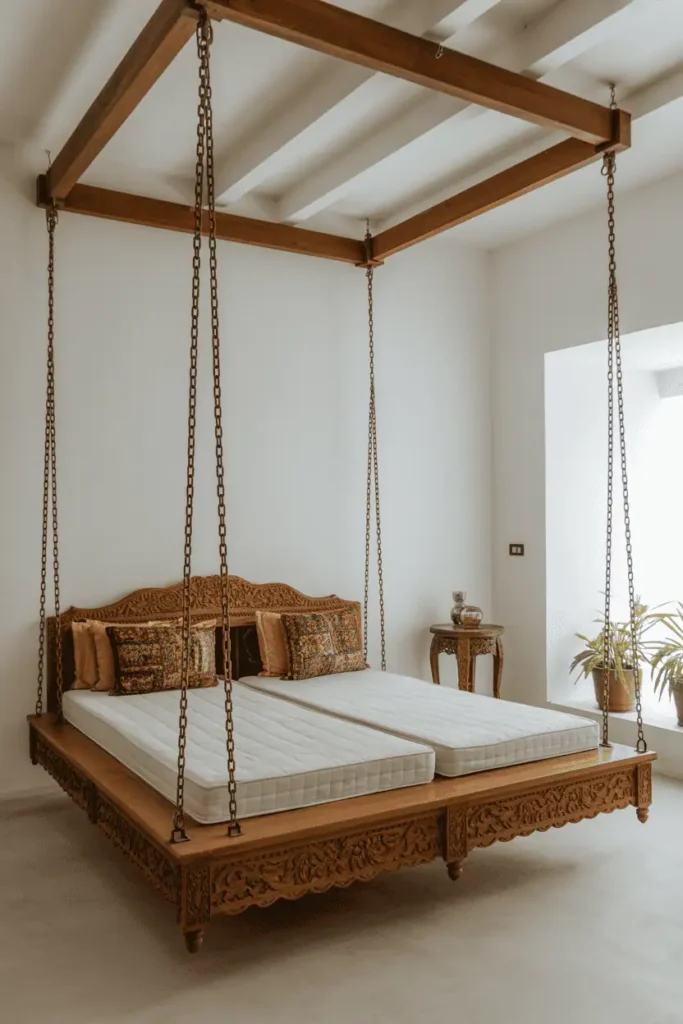
A jhoola-style swing bed made from carved wood, suspended by thick chains from ceiling beams. The bed has a low back and sides, cushioned with white cotton mattresses and colorful embroidered cushions. The room is otherwise minimal—white walls, a single carved side table, potted plants near the window.
The swing bed becomes both functional and sculptural. It introduces movement and playfulness while maintaining craft tradition. This works best in rooms with high ceilings and strong structural support. It’s not for everyone, but those who commit to it find it transformative.
7. Reclaimed Teak Headboard with Metal Accents
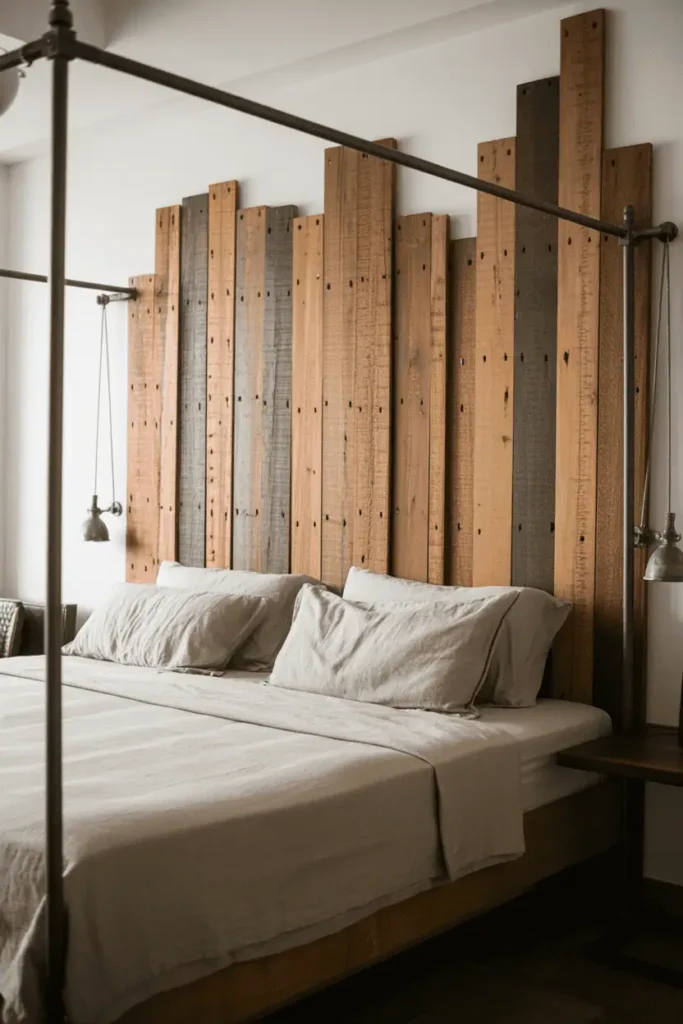
A headboard constructed from reclaimed teak planks—varied widths, visible nail holes, natural patina. The planks are arranged vertically and framed with minimal black metal brackets. The bed itself is contemporary with a low metal frame. Bedding is neutral linen. The walls are white, and industrial pendant lights hang on either side.
This blends Indian material tradition with contemporary aesthetic. The reclaimed wood provides history and texture. The metal adds edge. It feels urban and grounded at once, suited to loft-style spaces or modern apartments where rustic and minimal coexist.
8. Jali Screen as Room Divider Behind Bed
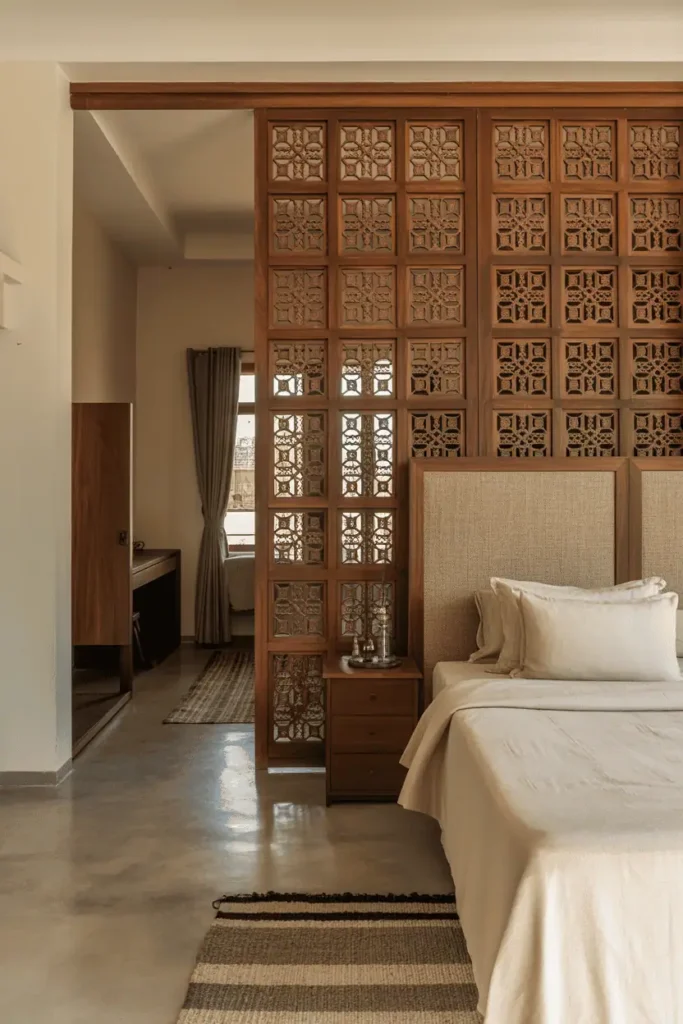
The bedroom opens into a dressing area, separated by a floor-to-ceiling jali screen in walnut. The screen sits directly behind the bed’s headboard, creating depth and privacy without closing off the space. The bed is upholstered in natural linen. The floor is polished concrete with layered rugs.
The jali provides pattern, filters light, and creates spatial distinction. It references traditional architecture without requiring period furniture throughout. This approach works in open-plan homes or master suites where you want zones without walls.
9. Dark Wood Paneling with Painted Accents
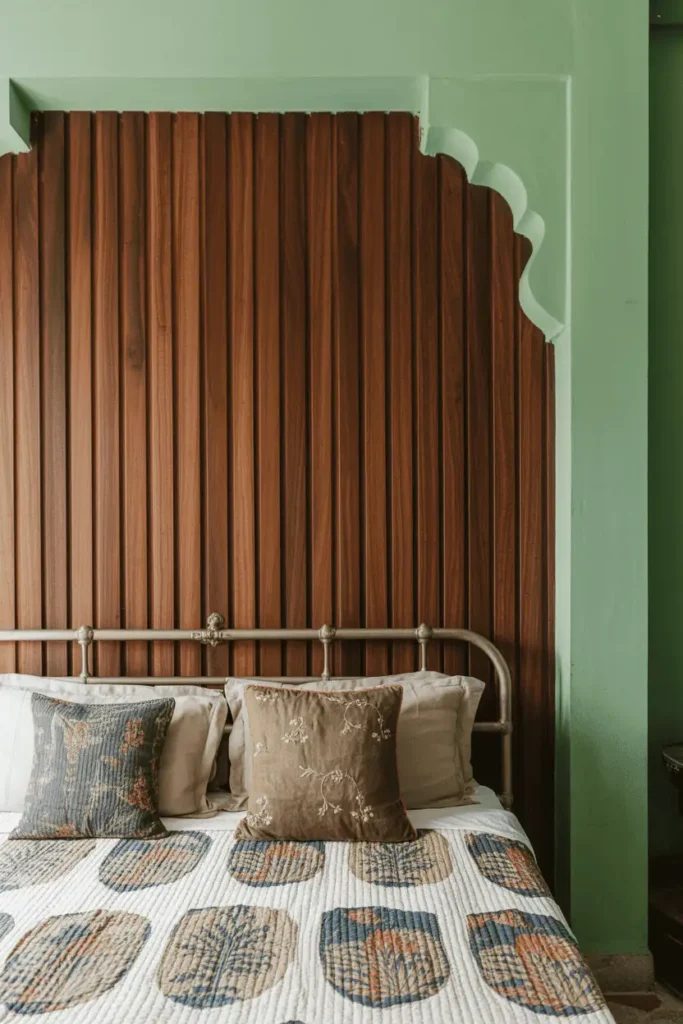
The wall behind the bed is covered in dark wood paneling—tongue-and-groove in walnut or teak. The remaining walls are painted a soft sage green. The bed frame is simple metal. Textiles introduce pattern: block-printed quilts, embroidered cushions, a vintage kantha throw.
The wood paneling adds weight and warmth. The painted walls keep the room from feeling too dark. This suits cooler climates or rooms that naturally receive a lot of light. The contrast between wood and color creates visual interest without requiring complex furniture.
10. Carved Wooden Doors as Headboard
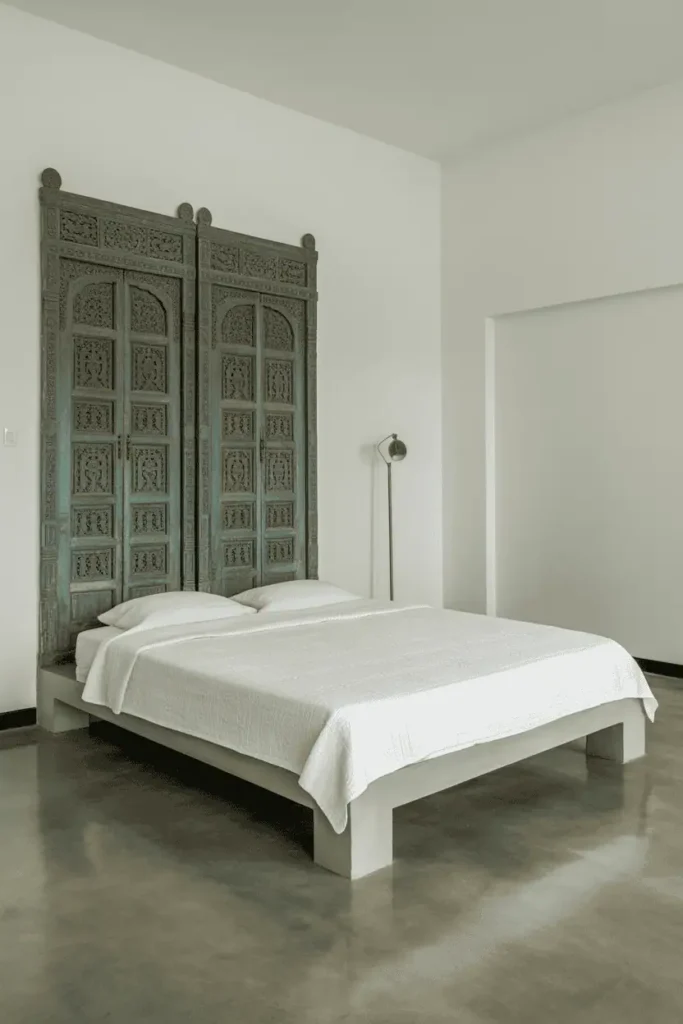
A pair of vintage Indian doors—tall, intricately carved, painted in faded teal—mounted horizontally on the wall as a headboard. The doors are positioned above a simple low platform bed with white bedding. The rest of the room is minimal: concrete floors, white walls, a single brass floor lamp.
The doors provide all the cultural reference and pattern needed. The rest of the room recedes. This works for those who want Indian character in a contemporary setting. It’s also practical for renters or anyone unwilling to commit to heavy wooden furniture.
The balance here is becoming clearer. The rooms that feel most successful aren’t trying to recreate a traditional Indian bedroom exactly—they’re borrowing specific elements and building around them.
11. Teak Bed Frame with Cane Webbing Headboard
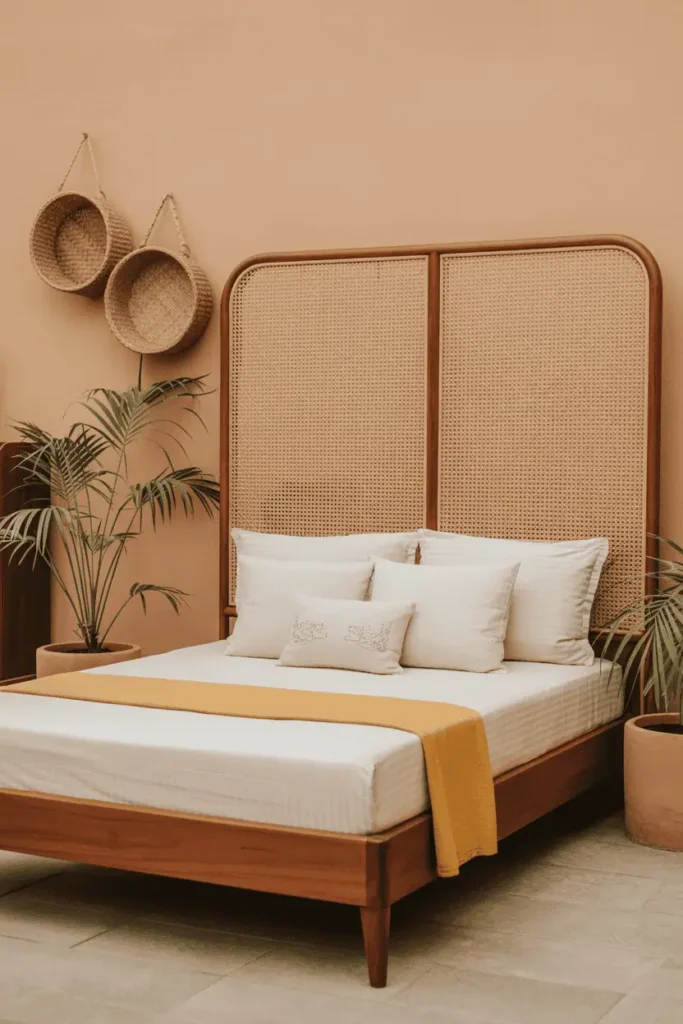
A mid-century modern influenced bed frame in teak with a tall headboard made from cane webbing stretched across a wooden frame. The bedding is simple—white cotton with a single mustard throw. The walls are warm terracotta. Woven baskets hang as wall decor, and potted palms sit in terracotta planters.
The cane adds texture without heaviness. It references traditional Indian furniture making—charpais, chairs, screens—without being literal. This feels light and breathable, suited to warm climates and smaller bedrooms where heavy wood furniture might overwhelm.
12. Low Takhat-Style Sleeping Platform
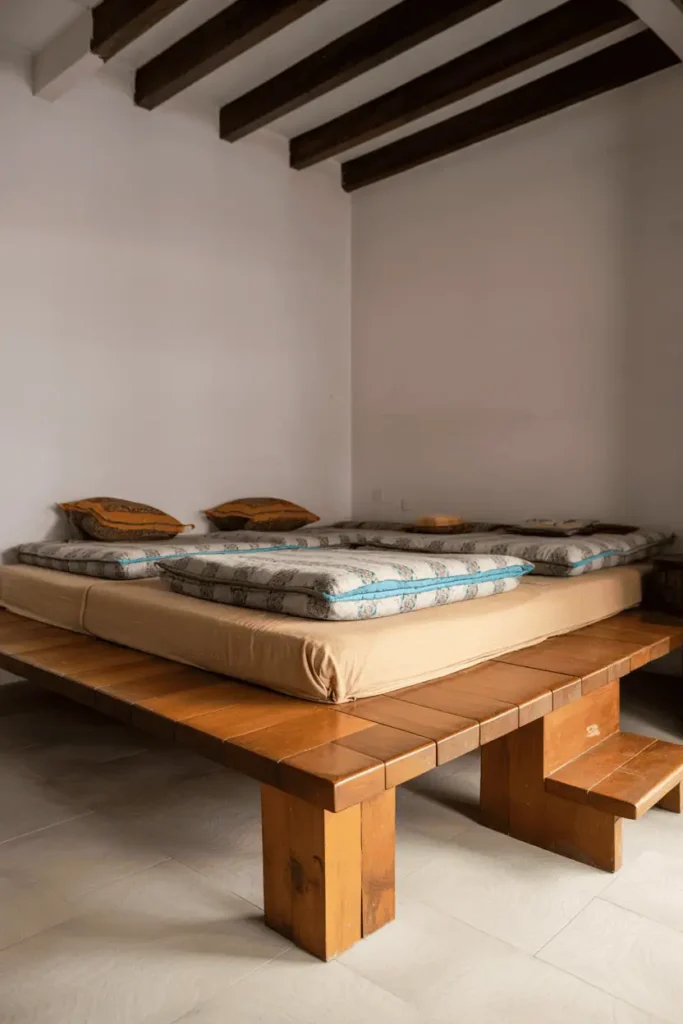
Inspired by traditional takhats, this is a wide, low wooden platform that sits directly on the floor, constructed from solid mango wood with minimal legs. Mattresses and cushions are layered on top during use. The platform extends slightly beyond the sleeping area to function as seating. Walls are white with exposed wood beams overhead.
This challenges Western bed norms but feels deeply rooted in Indian tradition. It maximizes floor space and creates multifunctionality. It works best for those willing to embrace a different relationship with sleeping height and willing to style it daily.
13. Carved Wooden Armoire as Statement Piece
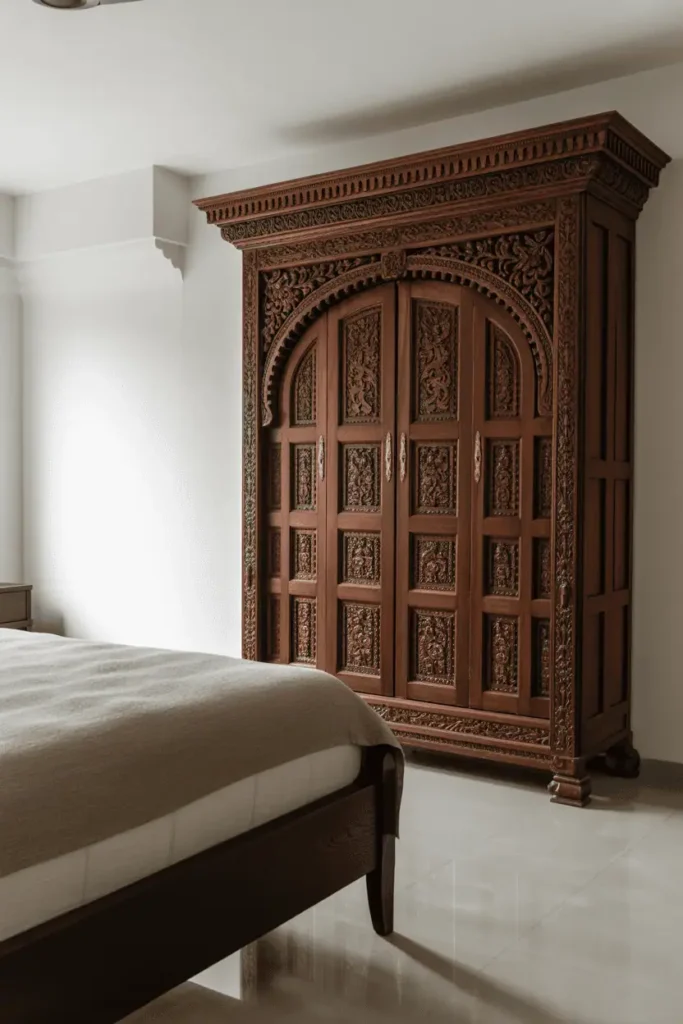
The bedroom is kept deliberately simple so a single massive carved wooden armoire can hold attention. The armoire is antique or antique-style—elaborate carving across doors and crown, dark finish, brass hardware. The bed is contemporary with neutral linens. Walls are white, floors are polished.
When one piece has this much presence, everything else must recede. The armoire becomes both functional and sculptural. This works in modern bedrooms where you want one traditional anchor rather than attempting to furnish entirely with heritage pieces.
14. Whitewashed Wood with Colorful Textiles
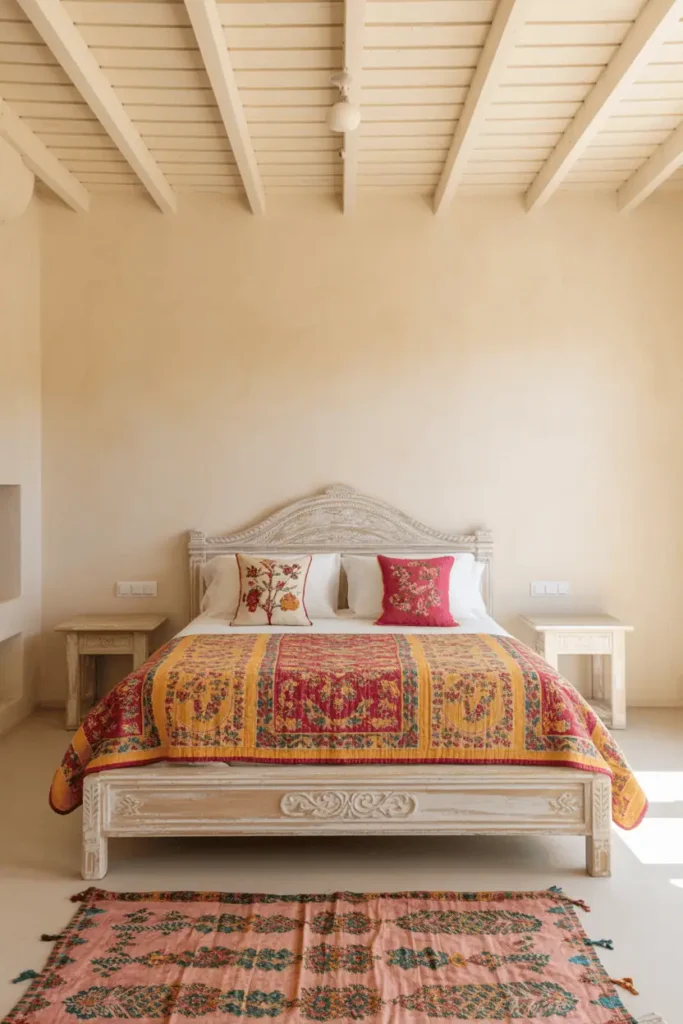
All the wood—bed frame, side tables, ceiling beams—is whitewashed or naturally pale. The walls are soft cream. The color comes entirely from textiles: a vibrant Rajasthani quilt, embroidered cushions in pink and orange, a hand-blocked dhurrie in geometric patterns.
This inverts the typical approach. The wood provides structure but stays quiet. The textiles bring the Indian aesthetic. It’s suited to those who want flexibility—textiles can be changed seasonally or as taste evolves, while the wood remains a neutral foundation.
15. Carved Wooden Mandir Niche Built Into Wall
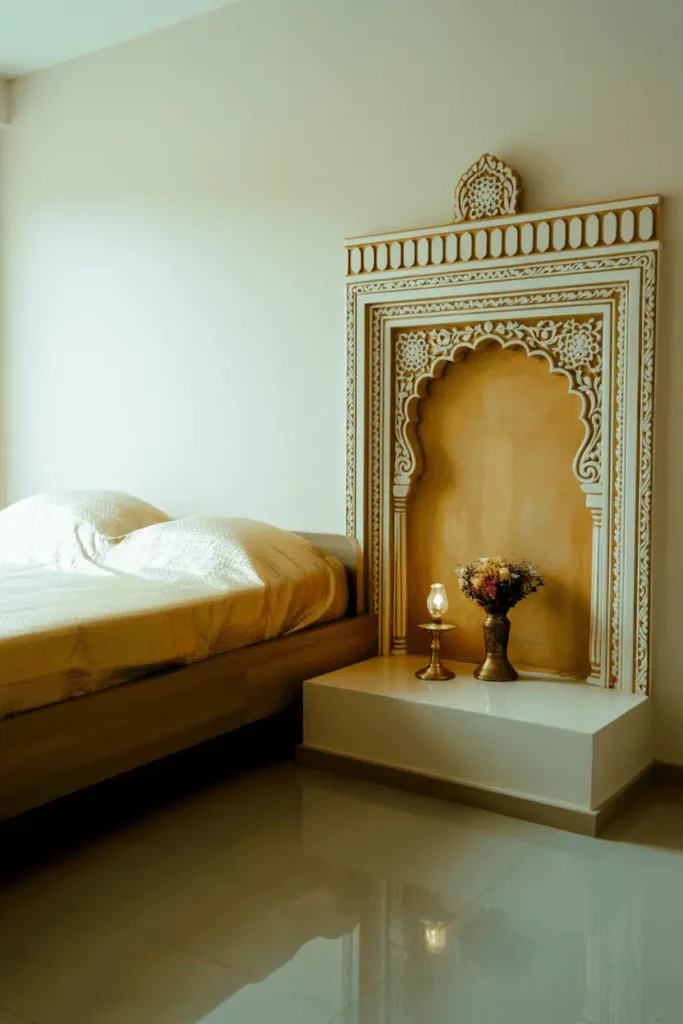
A small carved wooden mandir is built into the wall—a traditional prayer alcove with carved details, painted in soft gold and white. It sits beside the bed at eye level when seated. The bedroom itself is minimal: simple wooden bed, white walls, polished floor. A brass lamp sits in the mandir, and fresh flowers are often placed there.
This introduces cultural and spiritual practice into the bedroom in an architecturally integrated way. It’s personal and functional. The carving adds detail without requiring it throughout the room. This works for those who want tradition embedded rather than applied.
The shift now is toward restraint. These next rooms prioritize one or two Indian wood elements rather than layering everything.
16. Single Carved Wooden Mirror Above Simple Bed
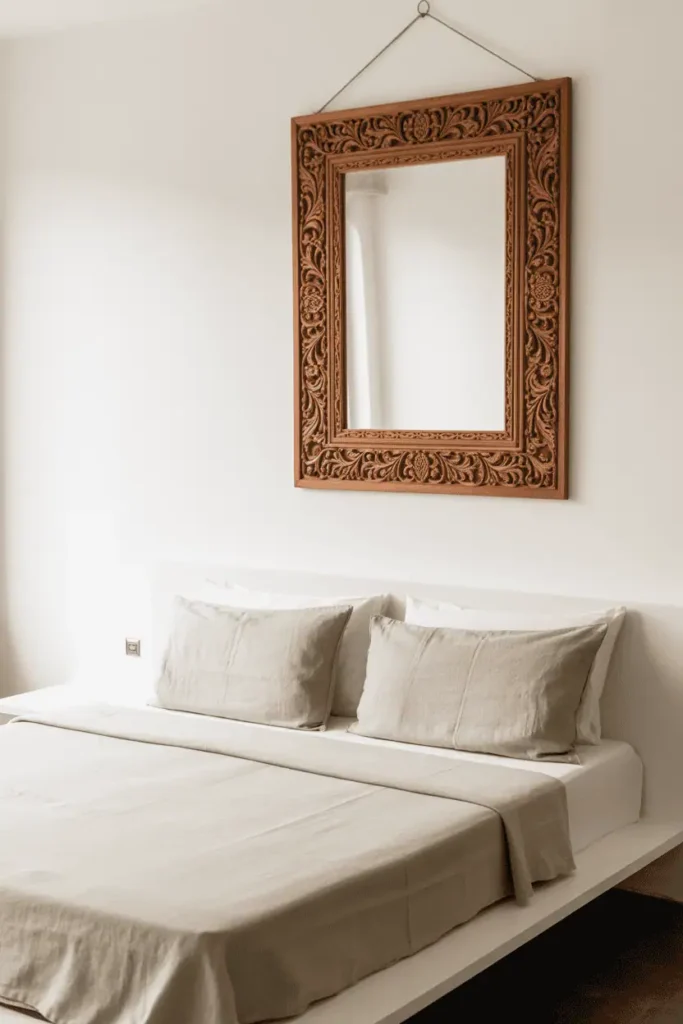
The room is almost entirely minimal: white walls, pale wood platform bed, natural linen bedding. The only carved element is a large wooden mirror frame—traditional design with floral and geometric carving—hanging above the bed. The frame is teak or rosewood, polished but not overly dark.
This is minimalism with intention. The mirror provides cultural reference and visual interest without requiring a full suite of carved furniture. It works in contemporary homes where you want a nod to Indian craft without committing to a traditional aesthetic.
17. Exposed Brick with Teak Window Frames
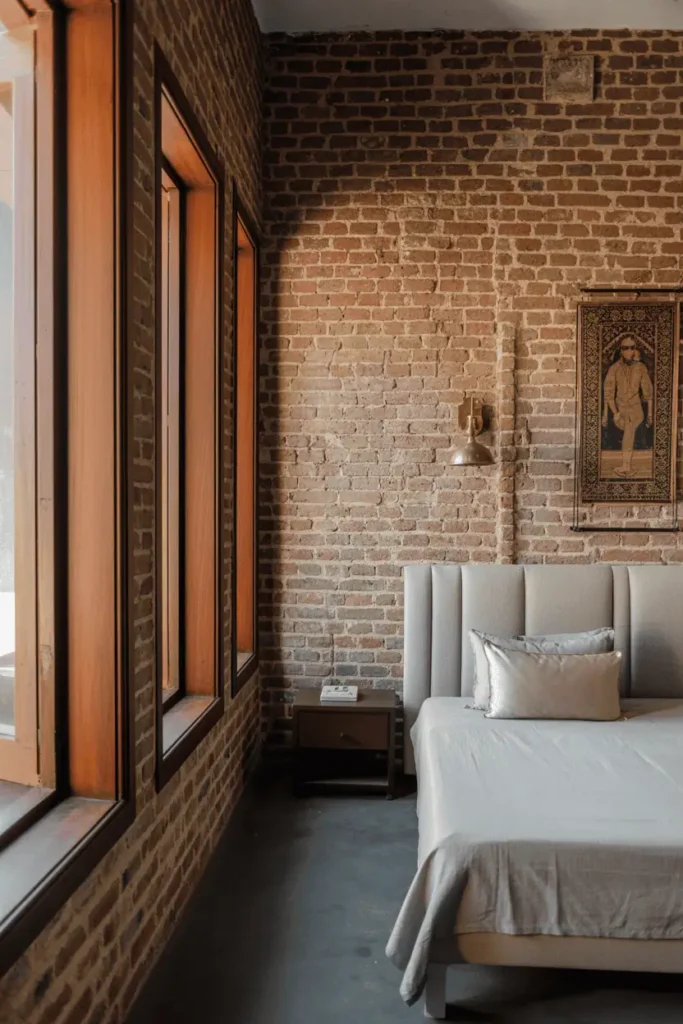
The walls are exposed brick—old or intentionally left bare—and all the window frames and trim are teak with minimal carving along the edges. The bed is contemporary with a linen upholstered headboard. Brass sconces provide lighting. A vintage block-printed textile hangs as wall art.
This feels like a converted haveli or heritage home adapted for modern use. The brick provides texture, the teak trim provides warmth and cultural reference. It works in urban settings or renovated buildings where original materials are being honored.
18. Lattice Wood Ceiling Panel Above Bed
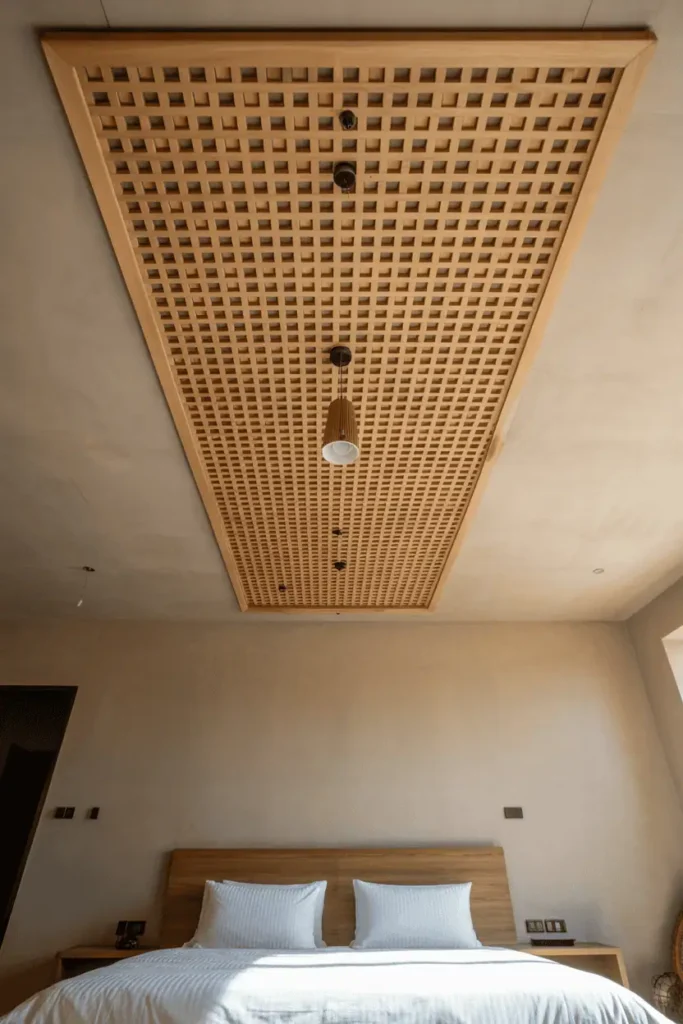
A single section of geometric lattice woodwork installed on the ceiling directly above the bed. The rest of the ceiling is plain plaster. The lattice is in light-toned wood—possibly pine or whitewashed teak. A simple pendant light hangs through it. The room below is minimal with contemporary furniture.
The lattice draws the eye upward and creates shadow patterns that shift with light. It’s an architectural detail that references jali tradition without requiring it throughout the room. This works in bedrooms with adequate ceiling height.
19. Contemporary Platform Bed with Vintage Wooden Trunk
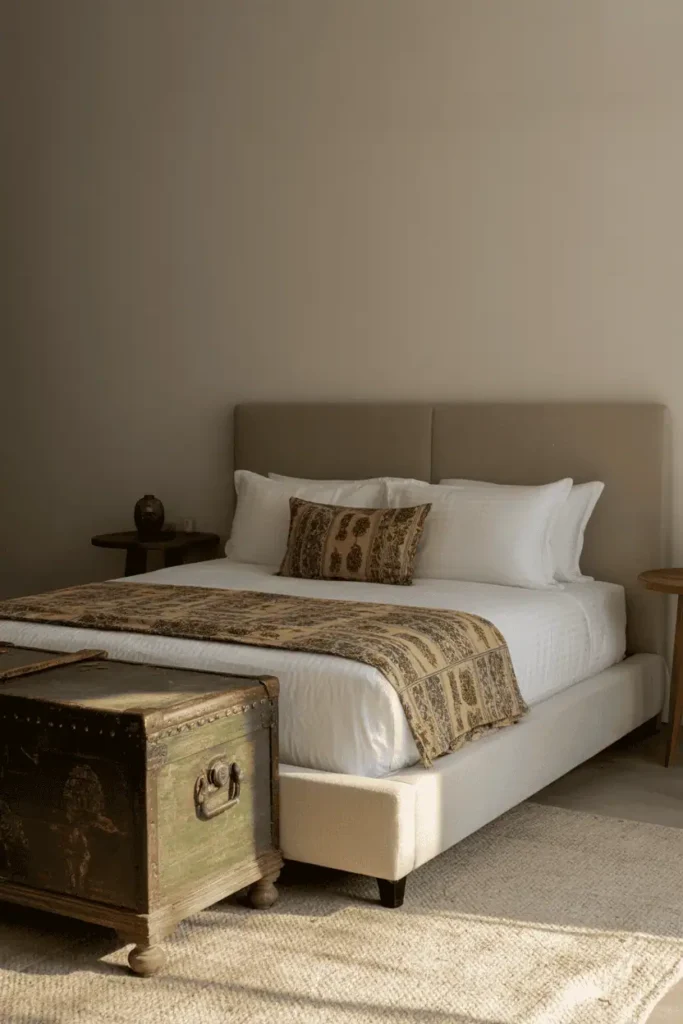
The room blends timelines. The bed is contemporary—low profile, upholstered headboard, neutral fabric. At the foot sits a vintage carved wooden trunk—campaign style or traditional Indian storage, showing age and patina. Block-printed textiles layer the bed. Simple wooden side tables bridge old and new.
This is where Indian elements support modern living rather than define it. The trunk and textiles provide character and history. The contemporary bed provides comfort. It’s flexible, personal, and doesn’t require committing fully to one aesthetic. This works in most homes because it adapts to what you already have.
Styling Tips to Pull the Look Together
- Start with one wood element—bed, ceiling, or storage—and let it guide your choices
- Keep textiles simple if the wood is ornate; layer pattern if the wood is plain
- Repeat one wood tone throughout the room rather than mixing too many species
- Balance warm wood with cool-toned walls or vice versa for visual relief
- Let natural light interact with carved details—they look best with changing light
- Don’t over-accessorize—Indian bedrooms gain strength from restraint as much as richness
- Mix vintage and contemporary rather than making everything match
Conclusion
These bedrooms don’t require starting from scratch or sourcing everything from India. Most work by introducing one or two authentic elements—a carved bed, a jali screen, reclaimed wood—and building around them gradually.
You don’t need to fill the room immediately. Start with one piece of carved furniture or one architectural detail, live with it, see what it needs. These spaces evolved slowly in their original contexts, and they translate better when you allow the same gradual build.
Save the ideas that align with your space and preferences. Come back to them when you’re ready to add, not all at once. That’s how these bedrooms stay grounded rather than staged

To bring you cozy inspiration more efficiently, we sometimes use AI to assist in content creation — but every word and idea is carefully shaped by our team. See our AI Disclosure for more info.