This post may contain affiliate links. If you click and buy, we may earn a small commission at no extra cost to you. Learn more.
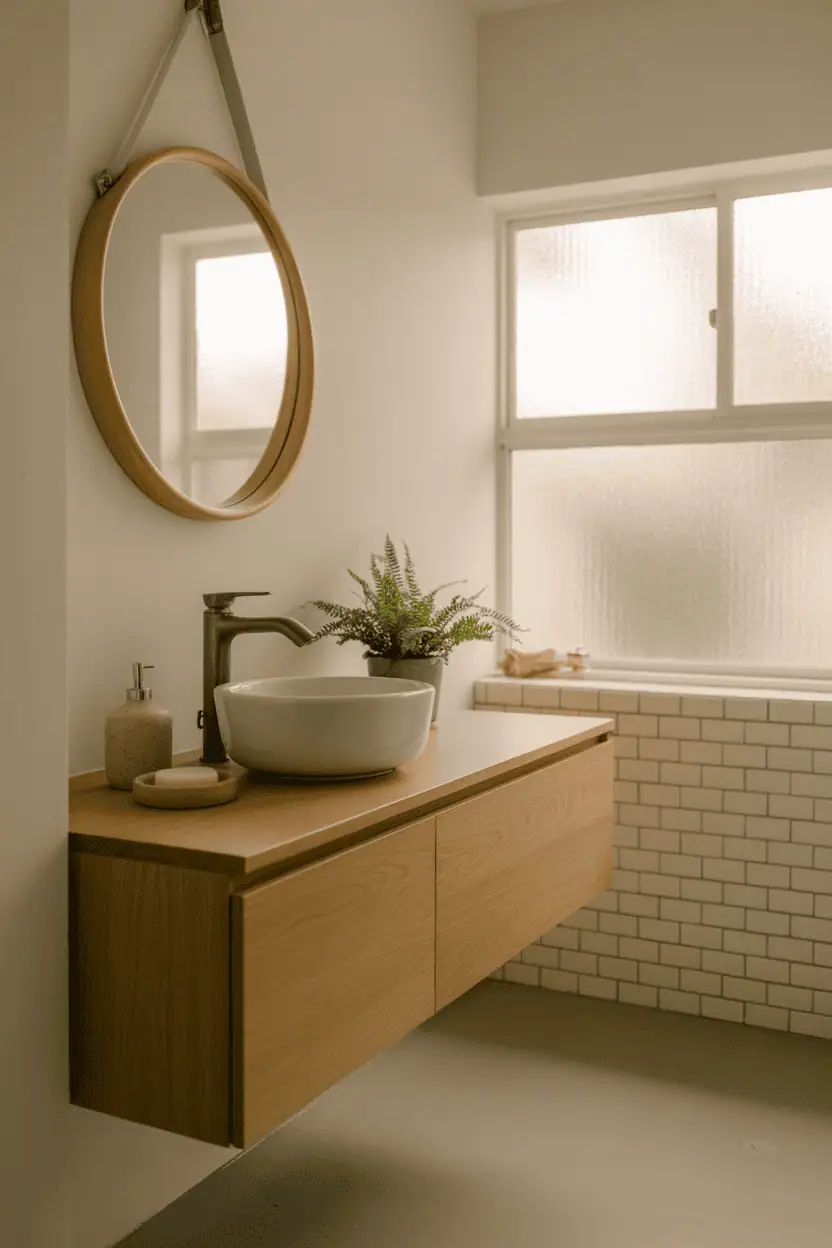
A Japandi bathroom doesn’t announce itself. It settles in quietly, with warm wood against white tile, soft linen next to stone, and just enough open space to let the room breathe. The aesthetic pulls from Japanese minimalism and Scandinavian warmth, creating a bathroom that feels clean without being cold, simple without being sparse.
What makes this approach work is restraint. Not every surface needs decoration. Not every corner needs storage. The materials themselves — wood, stone, ceramic, cotton — carry the visual weight, so the design can stay light. A single wood vanity, a neutral floor, a bit of greenery, and the room already feels more intentional.
The style adapts easily to small bathrooms and larger ones. In a tight space, Japandi principles help avoid clutter and make the most of natural light. In a bigger bathroom, the same restraint keeps the room from feeling too busy or overdone. Either way, the goal is the same: a space that feels calm, functional, and quietly beautiful.
Used thoughtfully, wood becomes the thread that ties everything together — vanity, shelving, mirror frame, stool. It warms up the neutrals, softens the hard surfaces, and gives the bathroom a tactile quality that tile and paint alone can’t deliver.
What you’ll find here:
Visual inspiration rooted in real homes
Practical ideas you can apply gradually
Furniture and decor concepts that support browsing and shopping
Looks that work across room sizes and styles
Contents
- 1 1. A Floating Wood Vanity with Clean Lines
- 2 2. White Subway Tile with Natural Wood Accents
- 3 3. A Stone or Concrete Floor for Texture
- 4 4. Open Wood Shelving for Towels and Essentials
- 5 5. A Hinoki Wood Bath Tray
- 6 6. A Round Mirror with a Thin Wood Frame
- 7 7. Matte Black Fixtures for Subtle Contrast
- 8 8. A Low Wood Stool for Seating or Storage
- 9 9. A Wabi-Sabi Inspired Ceramic Soap Dish
- 10 10. Natural Linen or Cotton Towels in Neutral Tones
- 11 11. A Skylight or Large Window for Natural Light
- 12 12. A Slim Wood Ladder for Towel Storage
- 13 13. Pebble Tile in the Shower for Texture
- 14 14. A Sliding Wood Door for the Bathroom Entrance
- 15 15. A Stone Vessel Sink on a Wood Vanity
- 16 16. A Small Potted Plant for Softness
- 17 17. Recessed Shelving in the Shower
- 18 18. A Teak Bath Mat for Warmth Outside the Shower
- 19 19. Soft Pendant Lighting Above the Vanity
- 20 20. A Minimalist Toilet with Concealed Tank
- 21 21. A Freestanding Soaking Tub in Natural Stone or Wood
- 22 Styling Tips to Pull the Look Together
- 23 Conclusion
1. A Floating Wood Vanity with Clean Lines
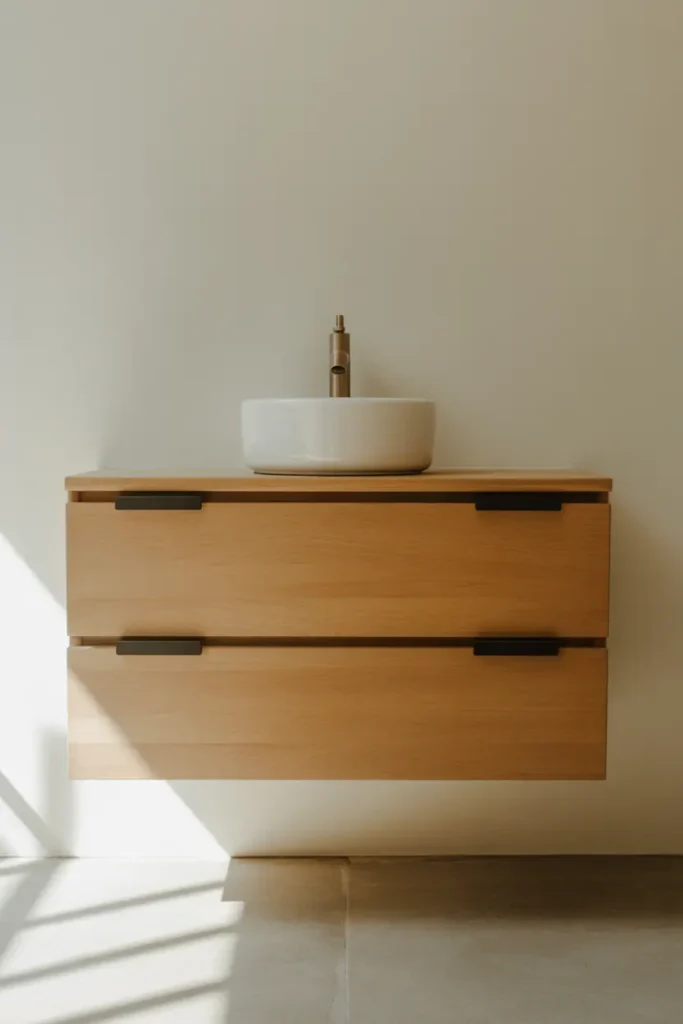
A floating wood vanity in light oak or ash creates the foundational piece in a Japandi bathroom. The grain is visible but not loud, the form is simple, and the floating mount makes the floor feel more open. Emotionally, it reads as grounded but light — functional without heaviness.
Practical guidance
This works best when the vanity runs along one wall without crowding the door or shower. Keep the depth shallow if the bathroom is narrow; 18 to 20 inches is usually enough. It tends to fail if the hardware is too ornate or shiny — stick with matte black pulls or recessed handles. Mount it 32 to 34 inches from the floor for comfortable use.
Styling & product direction
Pair with a simple white ceramic vessel sink or an integrated stone basin. Add a round or rectangular mirror with a thin wood frame above. Soft linen hand towels, a small ceramic tray for soap, and a single potted plant keep the vanity top minimal.
Design tip: If the wood grain is too pale, it can disappear against white walls. Choose a slightly warmer tone or add contrast through dark hardware.
2. White Subway Tile with Natural Wood Accents
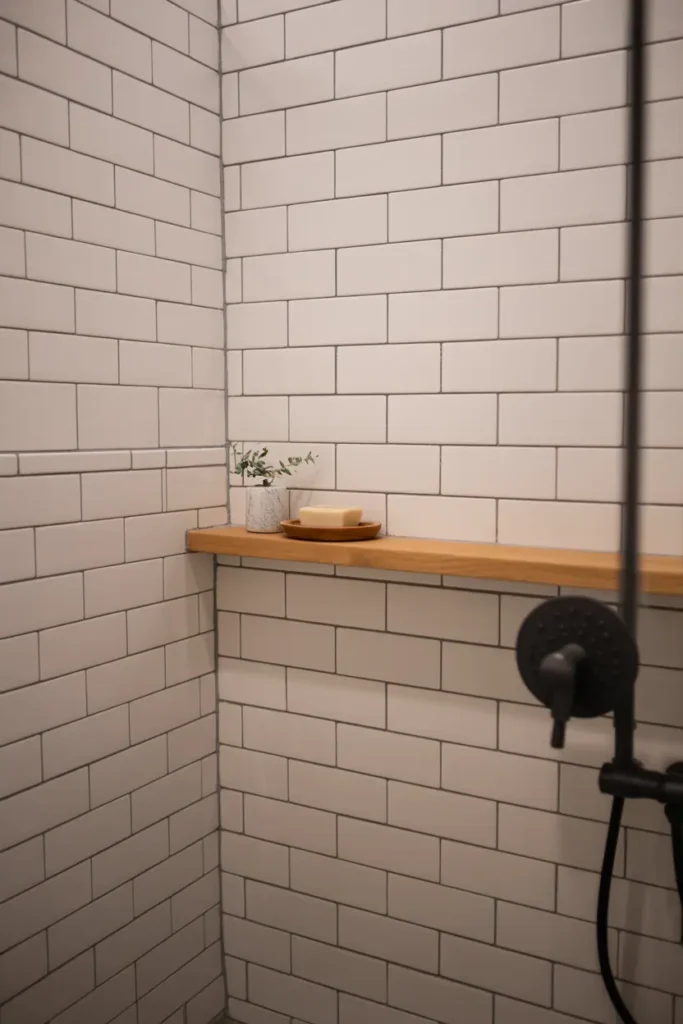
White subway tile creates a clean, timeless backdrop that lets wood accents stand out without competing. The tile can run floor to ceiling in the shower or just halfway up the wall, with painted plaster or limewash above. The simplicity of the tile keeps the room feeling open, while the wood adds warmth.
Practical guidance
This works best when the grout is light gray or white to maintain the minimal look. Dark grout can feel too graphic and break the calm. It tends to fail if the tile is installed with too much pattern or diagonal layouts — keep it simple, horizontal or stacked. Use matte or satin-finish tile rather than high gloss to avoid a sterile look.
Styling & product direction
Combine with a wood vanity, wood shelving, or a wood stool. Add matte black or brushed brass fixtures for subtle contrast. Soft cotton bath mats, ceramic soap dispensers, and a few rolled towels in neutral tones complete the look.
3. A Stone or Concrete Floor for Texture
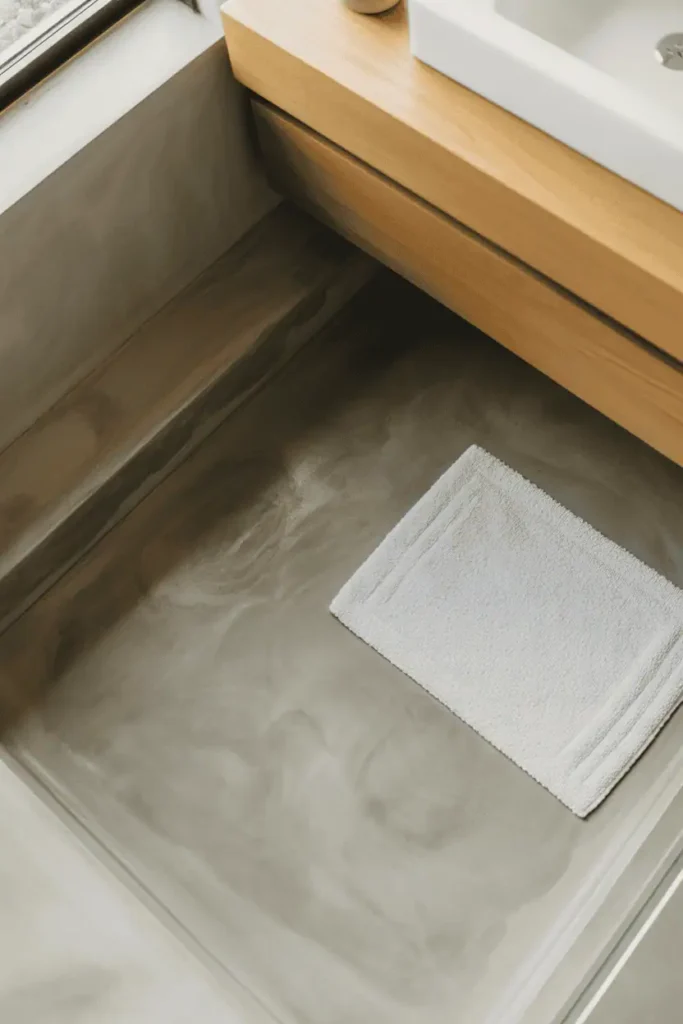
A stone or concrete floor adds quiet texture underfoot and grounds the room in natural materials. The surface is cool, smooth, and minimal, which balances the warmth of wood elsewhere. Visually, it creates a strong horizontal plane that anchors the space.
Practical guidance
This works best in bathrooms with radiant floor heating or in warmer climates. Stone and concrete can feel cold in winter without it. Seal the surface properly to avoid water stains and maintain the matte finish. It tends to fail if the stone has too much veining or pattern — keep it simple and monochromatic.
Styling & product direction
Pair with light wood vanities, woven baskets for storage, and soft cotton or linen rugs near the tub or sink. Matte black fixtures, ceramic accessories, and minimal greenery keep the palette cohesive.
Style note: If concrete feels too industrial, choose limestone or honed marble for a softer, warmer finish.
4. Open Wood Shelving for Towels and Essentials
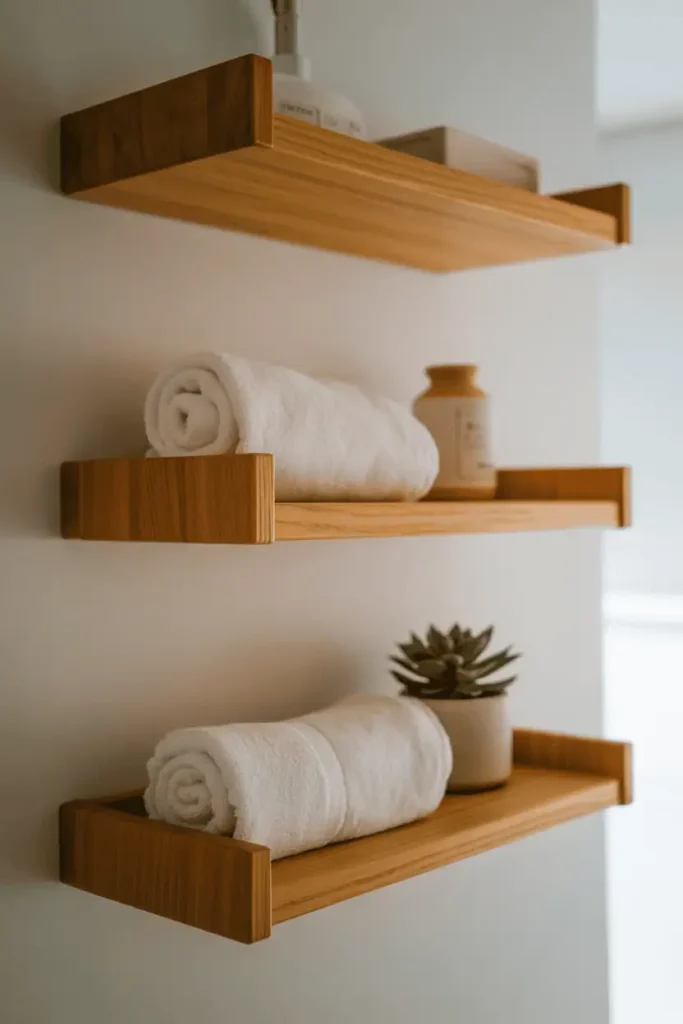
Open wood shelving in light oak or walnut provides storage without the visual weight of closed cabinets. Folded towels, stacked washcloths, and a few simple ceramics sit on display, which encourages keeping things tidy and minimal. The wood shelves echo the vanity and create material continuity.
Practical guidance
This works best when the shelves are shallow — four to six inches deep — so they don’t project too far into the room. Mount them at varying heights to create rhythm, not a rigid grid. It tends to fail if the shelves are overloaded; stick to three to five items per shelf.
Styling & product direction
Use for rolled towels in white, beige, or soft gray. Add small ceramic jars for cotton swabs or bath salts, a single plant in a simple pot, or a wood tray to corral smaller items. Avoid plastic bottles; decant into glass or ceramic containers.
5. A Hinoki Wood Bath Tray
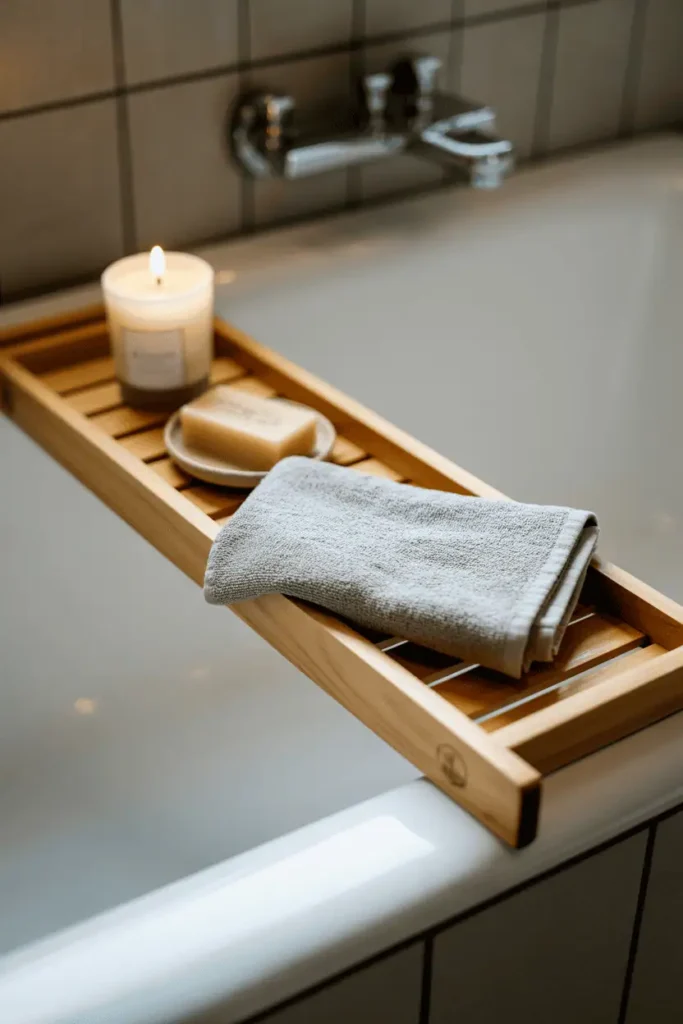
A simple wood bath tray across the tub brings a spa-like quality to the bathroom. Hinoki or teak are traditional choices — both resist water and age beautifully. The tray holds a book, a candle, a small plant, or a bar of soap, turning the bath into a more intentional ritual.
This doesn’t need elaborate explanation. Find a tray that fits the tub width, keep it lightly styled, and let the wood patina develop over time. It’s one of the simplest ways to introduce warmth and function in a Japandi bathroom.
At this point, the bathroom should already feel quieter — not because of one statement piece, but because the materials are beginning to relate to each other.
6. A Round Mirror with a Thin Wood Frame
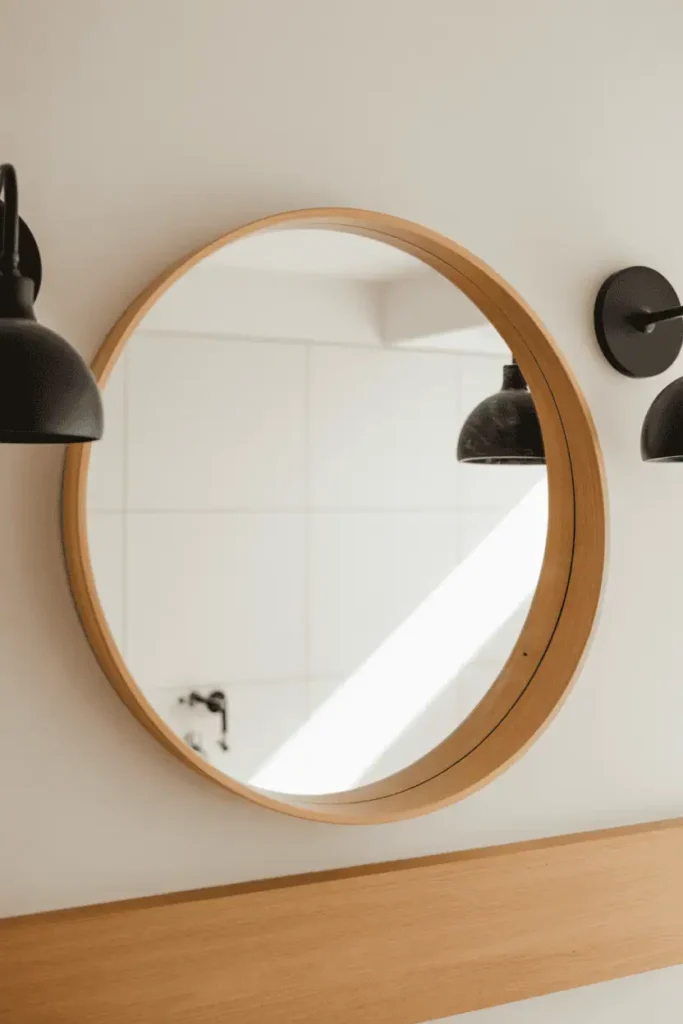
A round mirror with a minimal wood frame softens the rectangular lines of tile, vanity, and shelving. The curve feels gentler, more organic, and the thin wood frame keeps the focus on the reflection rather than the object itself. It’s a small detail that shifts the room’s mood.
Practical guidance
This works best when the mirror diameter is proportional to the vanity width — about half to two-thirds the width of the vanity below. Hang it centered above the sink, roughly six to eight inches above the faucet. It tends to fail if the frame is too thick or ornate; keep it simple and let the wood grain show.
Styling & product direction
Pair with matte black or brass sconces on either side for balanced lighting. A simple wood vanity, white walls, and minimal accessories keep the mirror from competing with other elements.
7. Matte Black Fixtures for Subtle Contrast
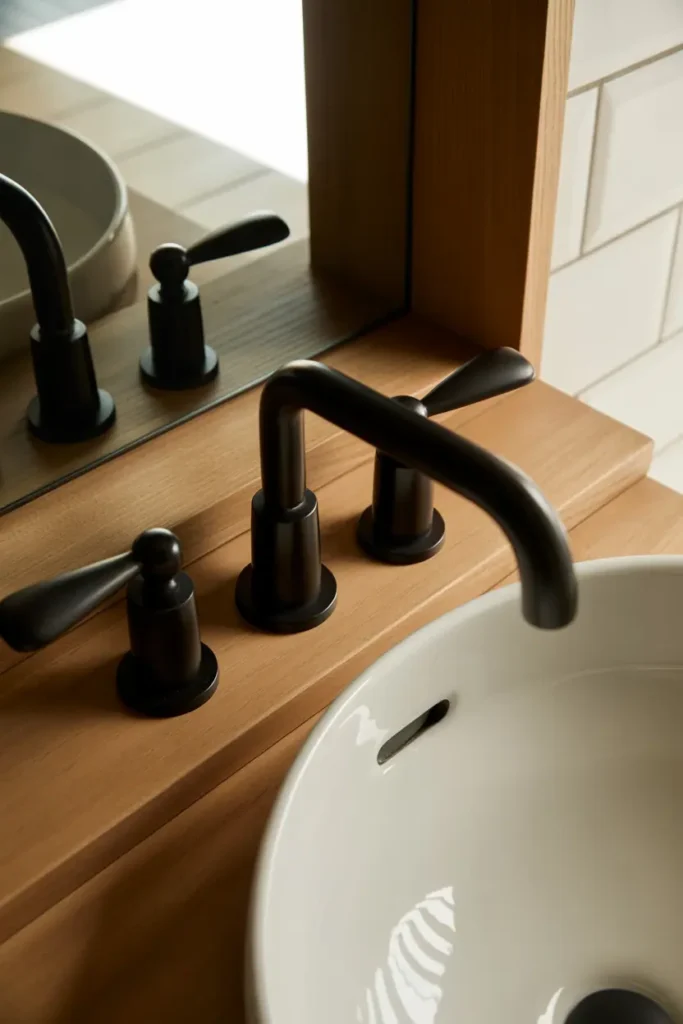
Matte black faucets, showerheads, and towel bars create quiet contrast against white tile and light wood. The black is soft, not shiny, so it reads as a shadow rather than a statement. Visually, it anchors the room and adds definition without heaviness.
Practical guidance
This works best when all the black fixtures match in finish — switching between matte and glossy breaks the cohesion. Keep the forms simple and geometric. It tends to fail if there’s too much black; use it sparingly on faucets, handles, and rails, not on every surface.
Styling & product direction
Combine with light wood vanities, white or neutral tile, and soft textiles. A black ladder towel rack, black shelf brackets, or a black framed mirror can extend the material thread without overdoing it.
8. A Low Wood Stool for Seating or Storage
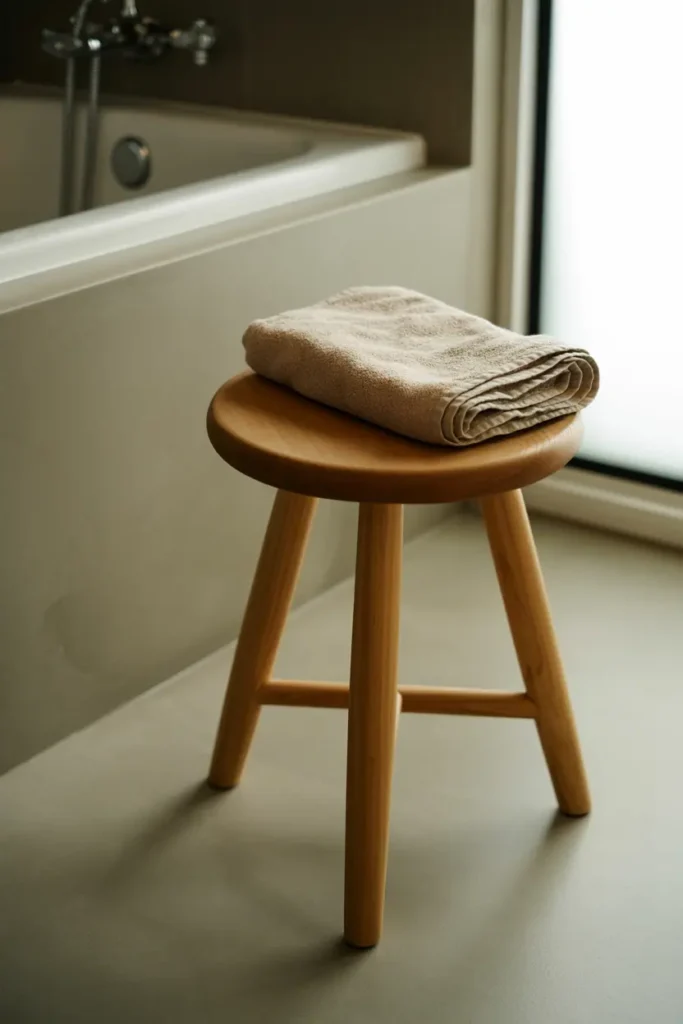
A simple wood stool in the bathroom serves as a place to sit while drying off, a surface for a folded towel, or a plant stand. The form is minimal — often just three or four legs and a round or square seat. Emotionally, it makes the bathroom feel more lived-in and less utilitarian.
Practical guidance
This works best in bathrooms with a bit of floor space — not crammed into a corner where it becomes an obstacle. Choose a stool in a wood tone that echoes the vanity or shelving. It tends to fail if the stool is too tall or too ornate; keep it low and simple.
Styling & product direction
Look for stools in teak, oak, or ash with natural finishes. Use it near the tub, under a window, or beside the vanity. A folded linen towel, a small ceramic dish, or a potted plant on top keeps it styled but functional.
9. A Wabi-Sabi Inspired Ceramic Soap Dish
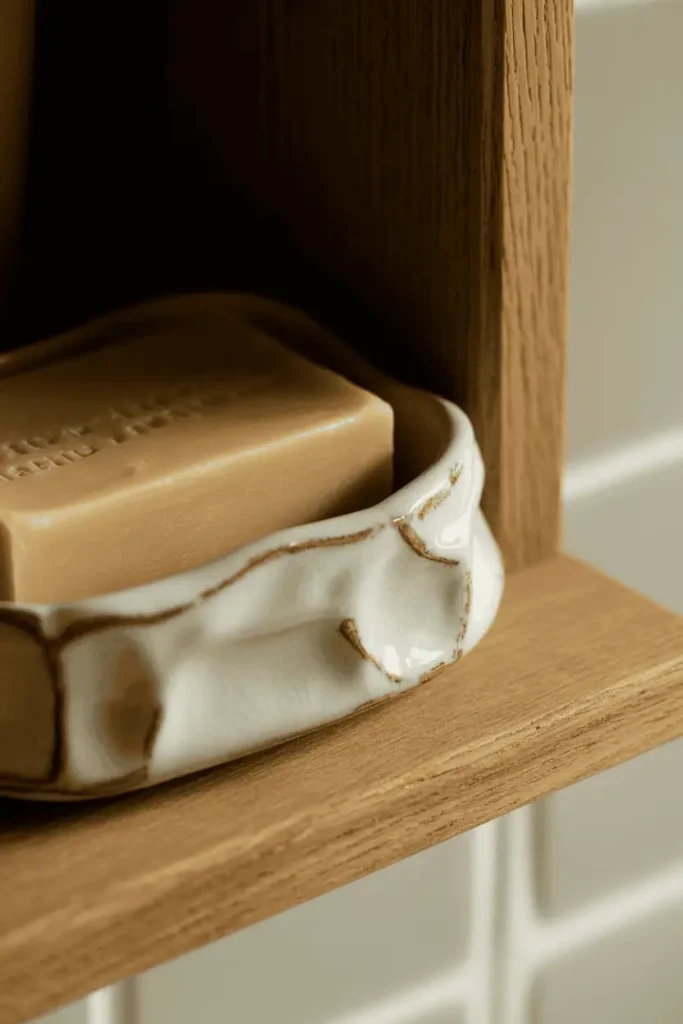
A handmade ceramic soap dish with irregular edges, subtle glaze variation, or a rough texture brings wabi-sabi into the Japandi bathroom. It’s imperfect, tactile, and human. Placed beside the sink or on a shelf, it quietly reinforces the idea that beauty doesn’t require perfection.
This is a small gesture, but it matters. The soap dish becomes a moment of texture and craft in a room that could otherwise feel too clean. Choose earthy tones — cream, sand, gray — and let the imperfection be the point.
10. Natural Linen or Cotton Towels in Neutral Tones
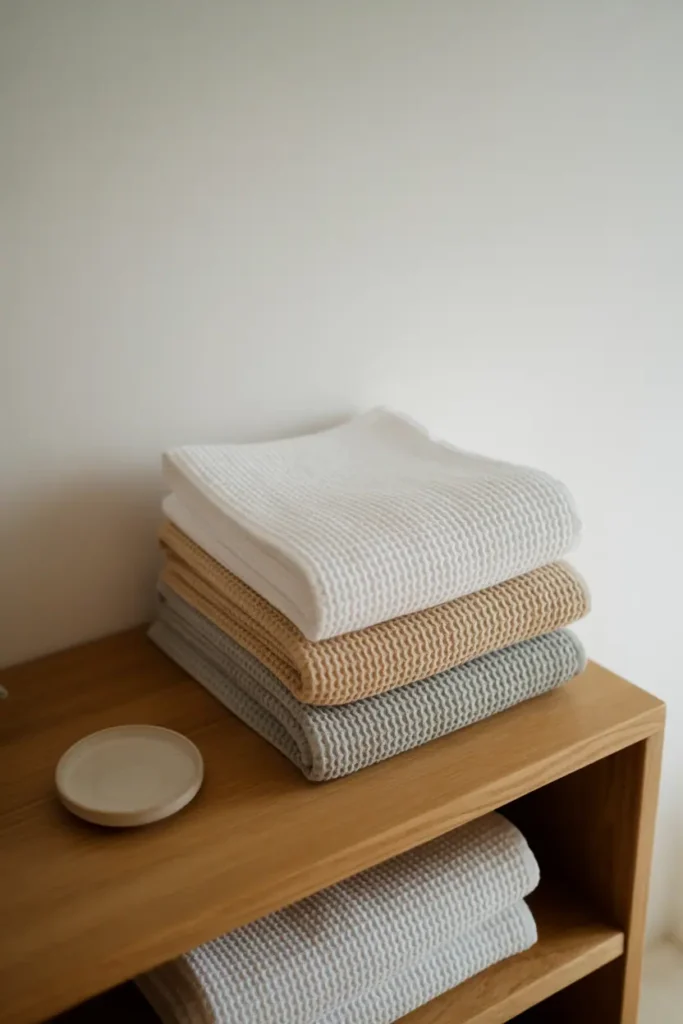
Soft linen or cotton towels in white, beige, oat, or soft gray replace bright colors and busy patterns. The texture is natural, the palette is calm, and the towels become part of the room’s visual rhythm rather than an afterthought. Folded neatly on shelves or hung on simple hooks, they contribute to the overall sense of order.
Practical guidance
This works best when towels are kept to two or three coordinating tones rather than a rainbow of colors. Avoid logos, patterns, or overly plush textures that feel too hotel-like. It tends to fail if towels are left in a heap; the Japandi aesthetic depends on tidiness.
Styling & product direction
Look for waffle weave, stonewashed linen, or Turkish cotton towels. Pair with wood shelving, matte black hooks, or a simple towel ladder. Keep a small stack visible, the rest stored out of sight.
By now, the bathroom should feel less like a functional box and more like a space where materials, light, and restraint are working together.
11. A Skylight or Large Window for Natural Light
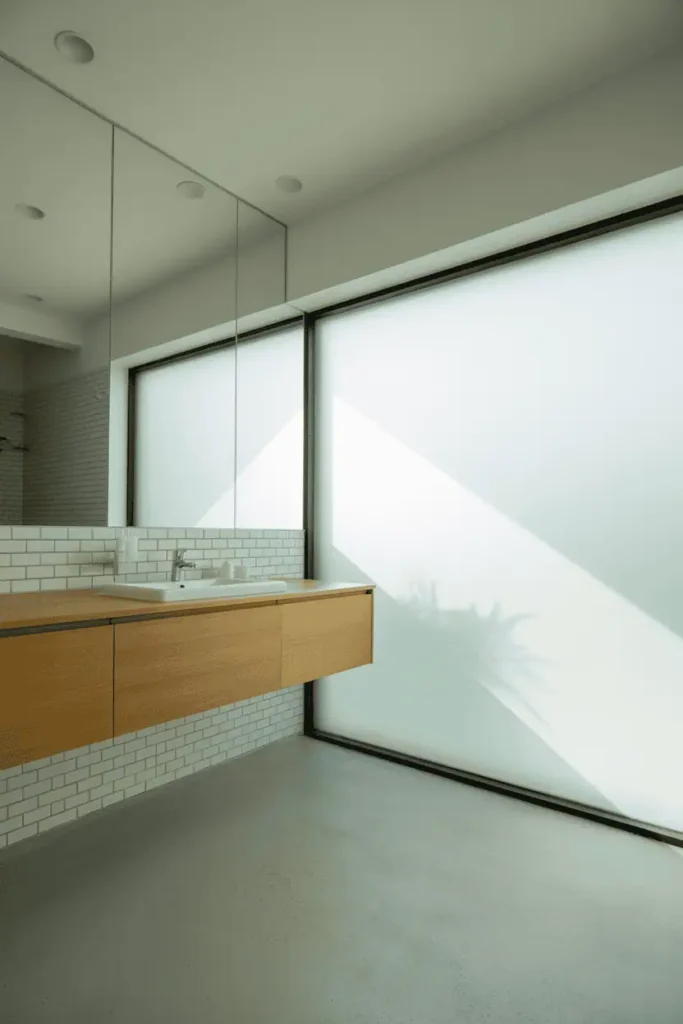
Natural light transforms a Japandi bathroom from minimal to serene. A skylight, a large frosted window, or even a narrow vertical window brings in daylight without sacrificing privacy. The light softens the hard surfaces, highlights the wood grain, and makes the room feel more spacious.
Practical guidance
This works best when the window placement doesn’t compromise privacy — frosted glass, textured glass, or high placement solve this. It tends to fail if the window lets in harsh direct sun that creates glare on tile or mirrors; diffused light is ideal. Add a simple linen or cotton shade for control.
Styling & product direction
Pair with white or light gray walls to reflect the natural light. Keep window treatments minimal — a simple roller shade in white or linen, or no treatment at all if privacy isn’t an issue.
12. A Slim Wood Ladder for Towel Storage
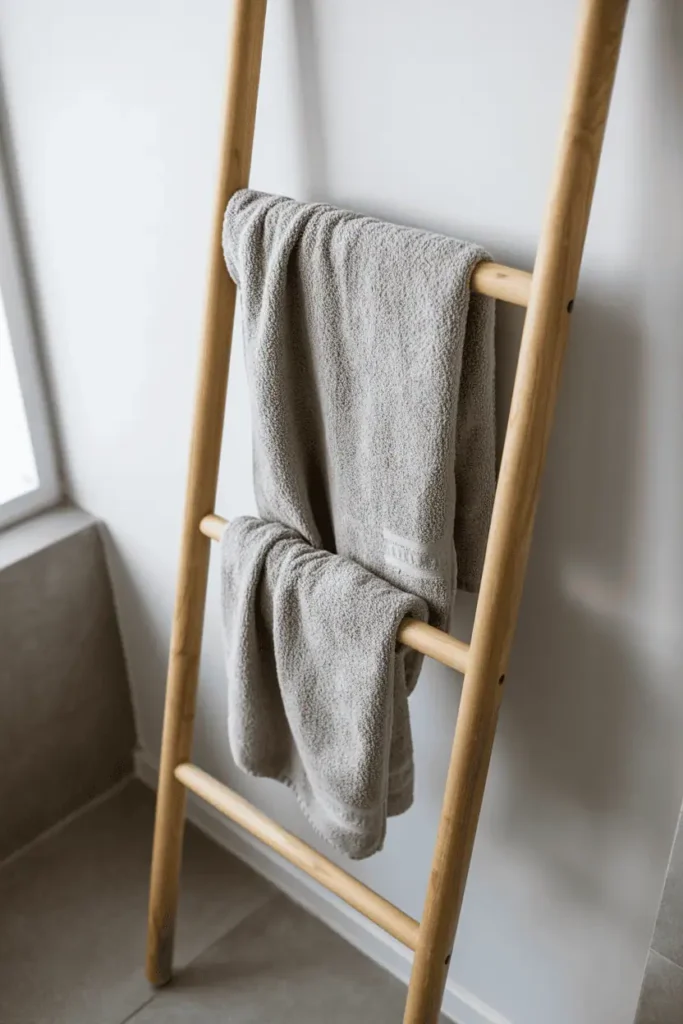
A leaning wood ladder against the wall provides towel storage without drilling or mounting hardware. The ladder is slim, lightweight, and easy to move. Visually, it adds vertical interest and reinforces the warm wood thread running through the room.
Practical guidance
This works best in bathrooms with at least a small section of free wall space. The ladder should lean at a safe angle — not too steep or it tips, not too shallow or it takes up too much floor space. It tends to fail in very small bathrooms where every inch of floor matters.
Styling & product direction
Look for ladders in teak, ash, or oak with simple rungs and no ornament. Drape towels, hang a small basket, or leave a few rungs empty. Pair with a nearby stool, wood shelving, or a wood-framed mirror.
13. Pebble Tile in the Shower for Texture
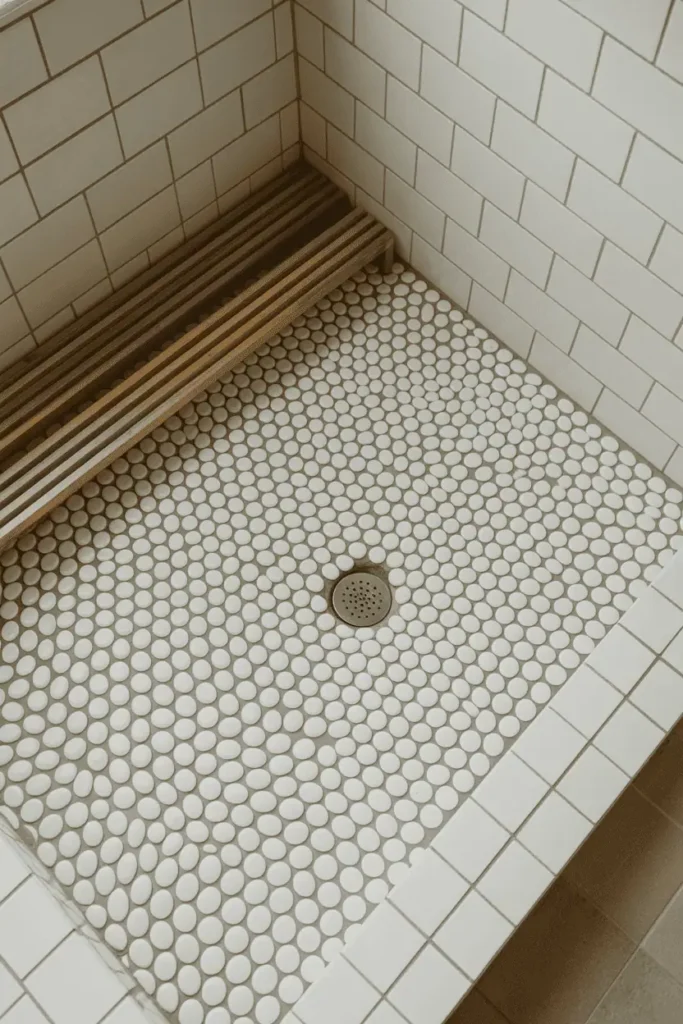
Pebble tile on the shower floor adds organic texture underfoot and introduces a natural, spa-like quality. The stones are smooth, varied in tone, and create a subtle pattern that feels grounding. Paired with white subway tile or smooth plaster walls, the contrast is quiet but effective.
Practical guidance
This works best when the pebbles are sealed properly to avoid mildew buildup in the grout. Keep the color palette neutral — white, gray, beige — to maintain the calm Japandi aesthetic. It tends to fail if the pebbles are too large or uneven; comfort matters here.
Styling & product direction
Combine with matte black or brass shower fixtures, a simple glass enclosure, and a wood stool or teak mat outside the shower. Avoid busy tile patterns elsewhere in the bathroom; let the pebbles be the texture moment.
14. A Sliding Wood Door for the Bathroom Entrance
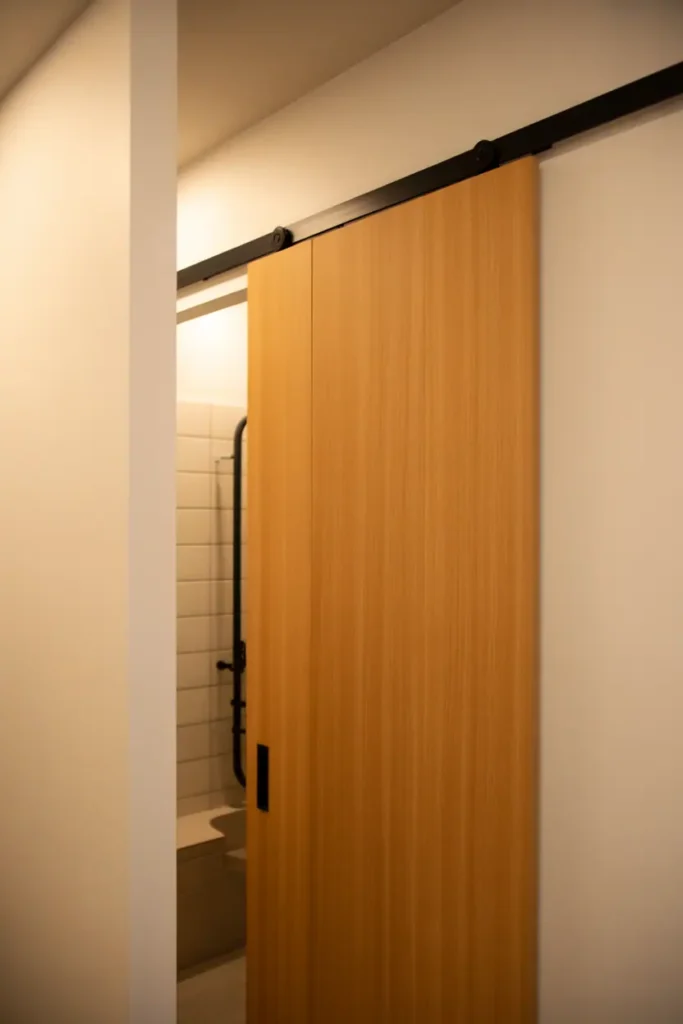
A sliding wood door in light oak or ash saves space and introduces a clean, Japanese-inspired element. The door glides along a simple track, and the wood grain adds warmth to the hallway and bathroom entrance. Emotionally, it feels intentional and crafted.
Practical guidance
This works best in tight spaces where a swinging door would block a vanity or toilet. The track hardware should be minimal — black or brushed metal, nothing ornate. It tends to fail if the door is too heavy or the track is poorly installed; smooth operation is essential.
Styling & product direction
Pair with simple recessed or surface-mount handles in matte black. The door can be solid wood or include frosted glass panels for light transmission. Keep the wood tone consistent with other elements in the bathroom.
15. A Stone Vessel Sink on a Wood Vanity
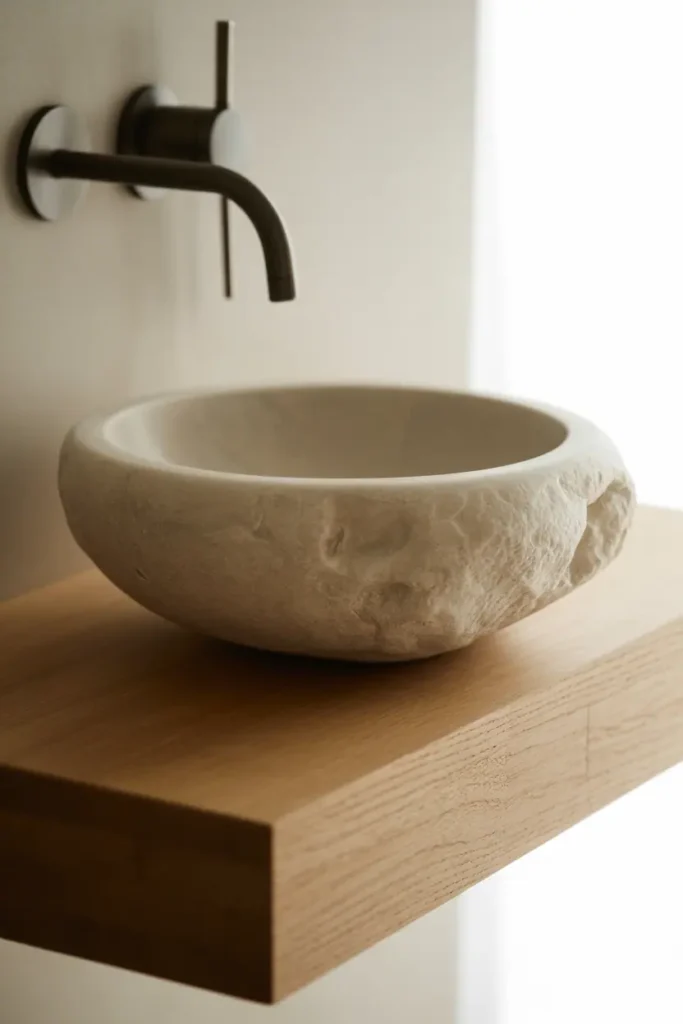
A stone vessel sink — in honed marble, limestone, or concrete — sits on top of a wood vanity and creates a strong material pairing. The stone is cool and smooth, the wood is warm and textured, and the combination feels balanced and grounded. Visually, it’s a focal point without being loud.
Practical guidance
This works best when the sink is proportional to the vanity — not too large or it overwhelms the surface. Keep the faucet simple and wall-mounted or tall enough to clear the vessel rim. It tends to fail if the stone is too veined or busy; honed, matte finishes work better than polished.
Styling & product direction
Pair with a simple wood vanity, matte black or brass faucet, and minimal accessories. A wood-framed mirror above and open wood shelving nearby continue the material rhythm.
Design tip: Leave space on either side of the sink for a soap dish, small plant, or hand towel — don’t fill the entire vanity surface.
At this point, the bathroom should feel complete without feeling full — each element in conversation with the others, nothing competing for attention.
16. A Small Potted Plant for Softness
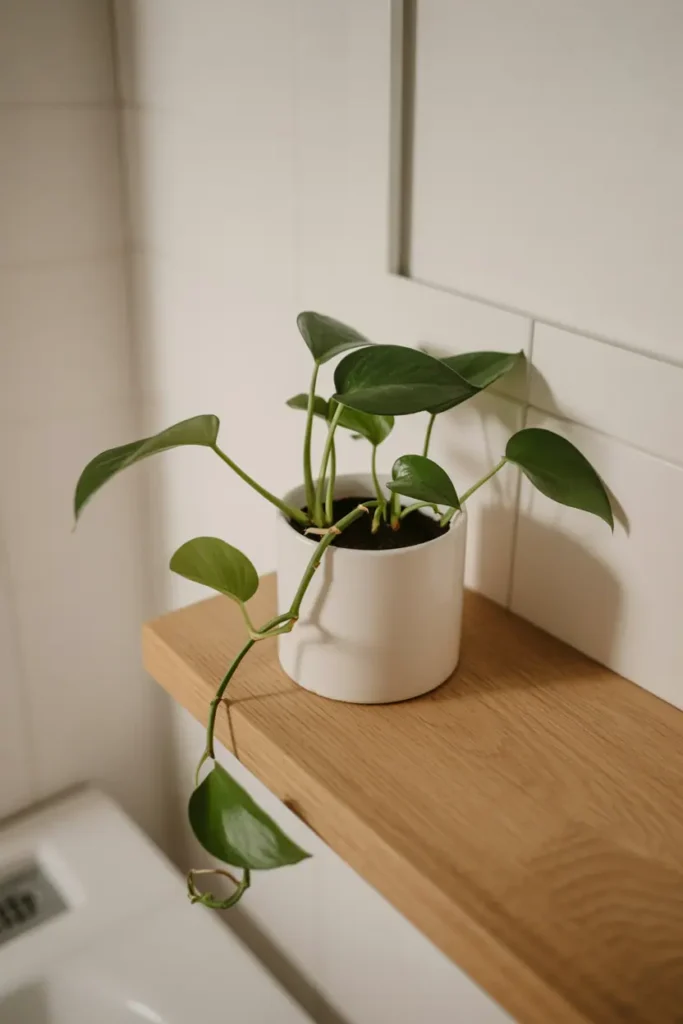
A single potted plant — a fern, snake plant, or pothos — adds life and softness to the hard surfaces of a bathroom. The green contrasts gently with white tile and wood, and the organic form breaks up the geometric lines. Emotionally, it makes the room feel less sterile and more human.
This doesn’t need much explanation. Choose a plant that tolerates bathroom humidity and light conditions, place it on a shelf, stool, or vanity, and let it grow.
17. Recessed Shelving in the Shower
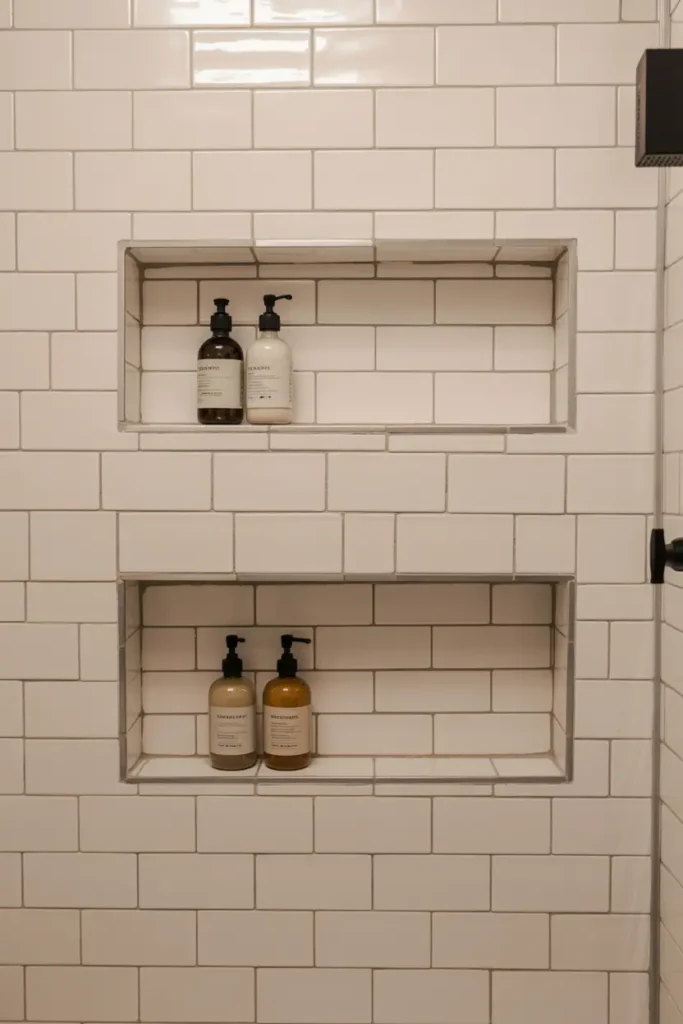
Recessed shelving carved into the shower wall keeps shampoo, soap, and washcloths organized without adding clutter. The shelves sit flush with the tile, maintaining the clean lines of the wall. Visually, it’s streamlined and intentional.
Practical guidance
This works best when planned during construction or renovation — retrofitting is harder. Keep the shelves shallow and horizontal, not stacked vertically in a tower. It tends to fail if too many shelves are added; two or three niches are usually enough.
Styling & product direction
Tile the niches in the same material as the shower walls for continuity. Use the shelves for minimal, decanted products in simple glass or ceramic bottles. Avoid bright plastic bottles that break the calm palette.
18. A Teak Bath Mat for Warmth Outside the Shower
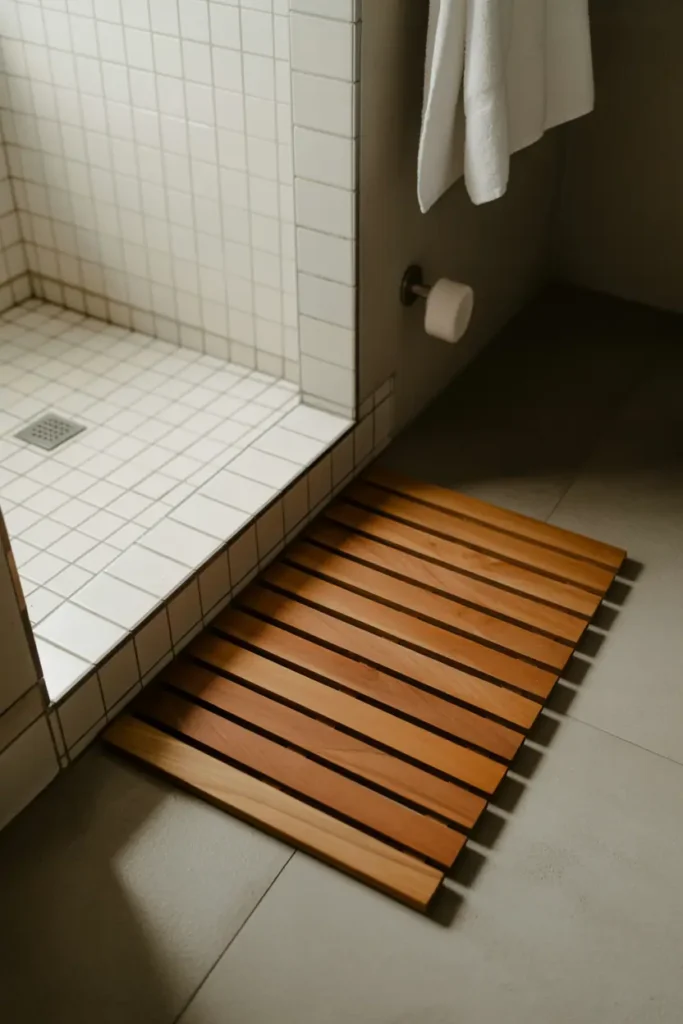
A teak bath mat outside the shower or tub adds warmth underfoot and introduces another layer of natural wood. The slats allow water to drain, the material resists moisture, and the simple form fits the Japandi aesthetic. Emotionally, it’s a small luxury that feels spa-like.
Practical guidance
This works best on stone or tile floors where water drainage isn’t an issue. Let the mat dry between uses to prevent mildew. It tends to fail if placed on carpet or in a very small bathroom where it becomes a tripping hazard.
Styling & product direction
Look for mats in teak, bamboo, or cedar with simple slatted designs. Pair with a wood stool, wood ladder, or wood vanity to reinforce the material thread.
19. Soft Pendant Lighting Above the Vanity
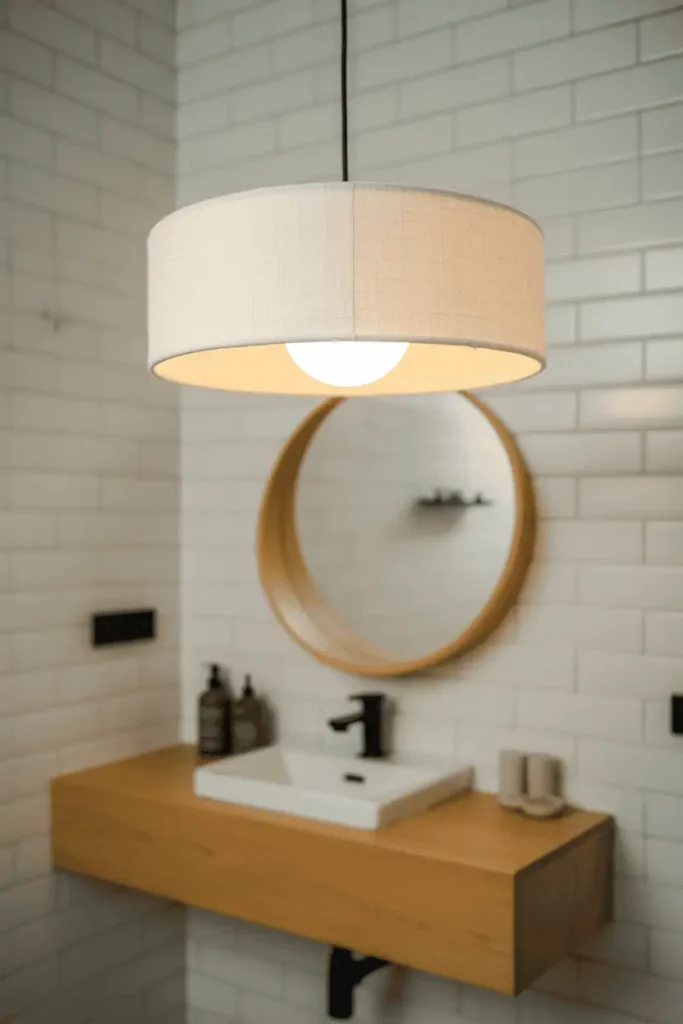
A simple pendant light with a paper, linen, or ceramic shade hung above or beside the vanity adds soft, diffused light. The form is minimal, the light is warm, and the fixture becomes a quiet design element rather than a purely functional one. Visually, it softens the hard edges of mirrors and tile.
Practical guidance
This works best when the pendant hangs at least 30 inches above the vanity surface to avoid head-bumping. Keep the shade neutral — white, cream, or soft gray. It tends to fail if the pendant is too large or ornate; simplicity is key.
Styling & product direction
Pair with a wood-framed mirror, matte black or brass hardware, and soft linen towels. A second pendant on the other side of the mirror creates symmetry, or use sconces for more traditional side lighting.
20. A Minimalist Toilet with Concealed Tank
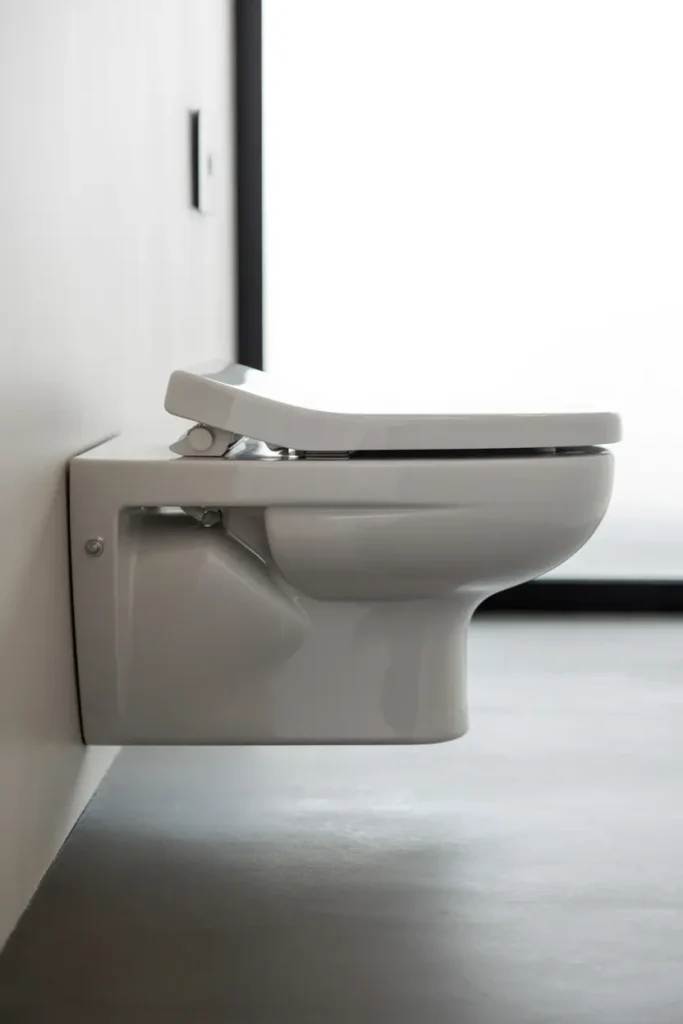
A wall-hung or concealed-tank toilet keeps the floor clear and maintains the minimal aesthetic. The form is simple, the lines are clean, and the lack of visible plumbing creates a lighter, more open feeling. Functionally, it also makes cleaning easier.
Practical guidance
This works best in new construction or major renovations where plumbing can be planned into the wall. Retrofitting is possible but more complex. It tends to fail if the wall isn’t thick enough to conceal the tank; check dimensions carefully.
Styling & product direction
Choose a white or matte finish to blend with the rest of the bathroom. Pair with simple wood shelving, white tile, and matte black flush plates or buttons.
21. A Freestanding Soaking Tub in Natural Stone or Wood
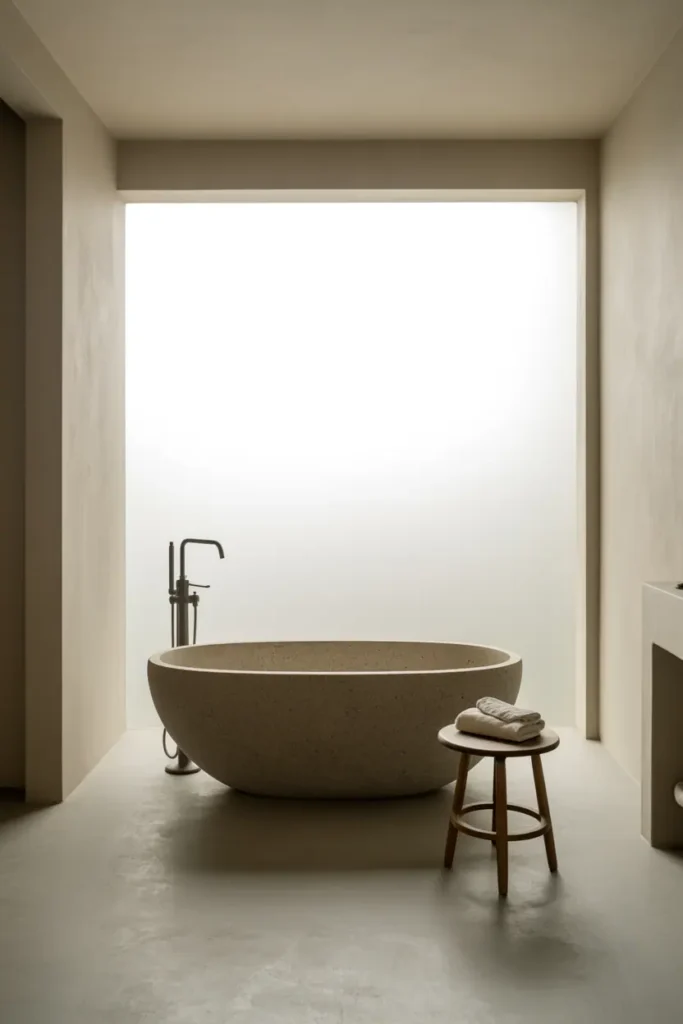
A freestanding tub in honed stone or wood becomes the centerpiece of a larger Japandi bathroom. The form is sculptural but simple, the material is natural, and the tub invites slow, intentional bathing. Emotionally, it transforms the bathroom into a retreat.
Practical guidance
This works best in bathrooms with enough space for the tub to sit away from the wall. The floor needs to support the weight — stone and wood tubs are heavy, especially when filled. It tends to fail in small bathrooms where the tub overwhelms the room.
Styling & product direction
Pair with a simple floor-mounted tub filler in matte black or brass. A wood bath tray, a low stool, and soft linen towels nearby complete the look. Keep the surrounding area minimal — a single plant, a candle, nothing more.
Styling Tips to Pull the Look Together
- Use warm, diffused lighting — pendants, sconces, or recessed lights with dimmer switches.
- Repeat wood tones across the vanity, shelving, mirror frame, and accessories.
- Balance hard surfaces like stone and tile with soft textiles like linen and cotton.
- Leave some surfaces empty — counters, shelves, walls — to let the room breathe.
- Keep the color palette neutral with one or two natural accent tones like green from plants.
- Avoid mixing too many materials; stick to wood, stone, ceramic, and glass.
- Edit ruthlessly — if it doesn’t serve a function or add beauty, it doesn’t belong.
Conclusion
Start with one or two foundational pieces — a wood vanity, a simple mirror, or open shelving — and let the bathroom grow from there. Japandi design rewards patience and restraint. You don’t need to fill every corner or add every idea at once.
The most successful Japandi bathrooms are the ones that feel unfinished in the best way — room to add, room to breathe, room to shift things over time. The materials will age, the wood will darken slightly, and the space will settle into itself.
Save what resonates. Come back when you’re ready to make a change. The bathroom will still be there, quiet and waiting.

To bring you cozy inspiration more efficiently, we sometimes use AI to assist in content creation — but every word and idea is carefully shaped by our team. See our AI Disclosure for more info.