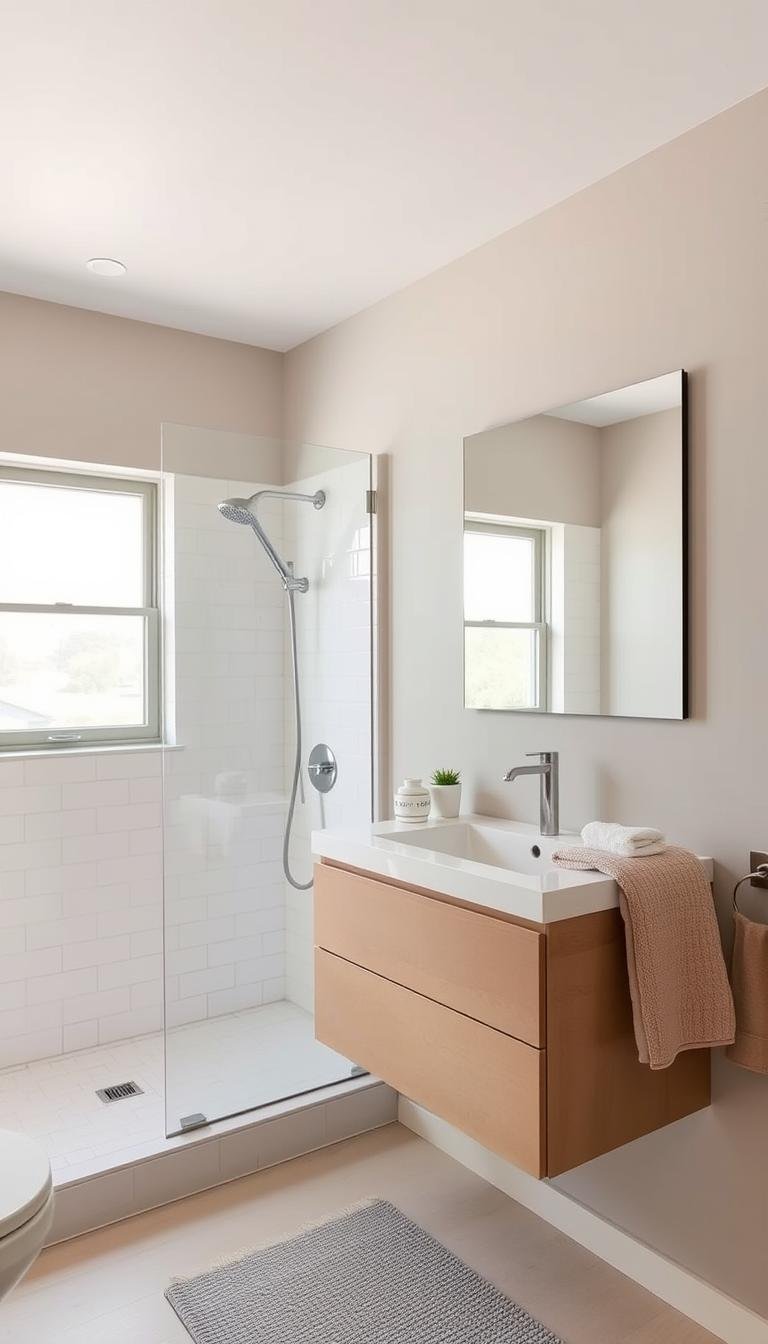
This post may contain affiliate links. If you click and buy, we may earn a small commission at no extra cost to you. Learn more.
I’m excited to share a guide on creating a serene and elegant living space. It’s inspired by Zen decor and minimalist interior design. If you love adding thoughtful design elements to your home, you’ll find this guide helpful.
Making your home peaceful is simpler than you might think. By following the principles of Japanese Home Decor, you can make a calming and beautiful space. This space will help you relax and feel serene.
In this guide, we’ll look at the philosophy behind this design. We’ll also give you practical tips to add its elements to your life. Let’s explore the beauty of minimalist living together!
Contents
- 1 The Philosophy Behind Japanese Design
- 2 Essential Elements of Japanese Home Decor
- 3 Creating a Japanese-Inspired Living Room
- 4 Japanese Bedroom Design for Tranquility
- 5 Zen-Inspired Bathroom Transformations
- 6 The Japanese Kitchen and Dining Experience
- 7 Bringing Nature Indoors: Plants in Japanese Decor
- 8 Lighting Techniques in Japanese Interior Design
- 9 Conclusion: Integrating Japanese Aesthetics into Your Home
The Philosophy Behind Japanese Design
Japanese design is rooted in a deep philosophy. It aims to create serene and elegant spaces. This philosophy is unique and sets Japanese design apart.
Wabi-Sabi: Embracing Imperfection and Authenticity
Wabi-Sabi celebrates the beauty of imperfection and impermanence. It values the authenticity of natural materials and the passage of time. This approach makes spaces feel warm, inviting, and unique.
Ma: The Power of Negative Space
Ma is about the pause between elements, creating calm and balance. It’s a key part of Japanese design. By using Ma, we can make our spaces feel harmonious and tranquil.
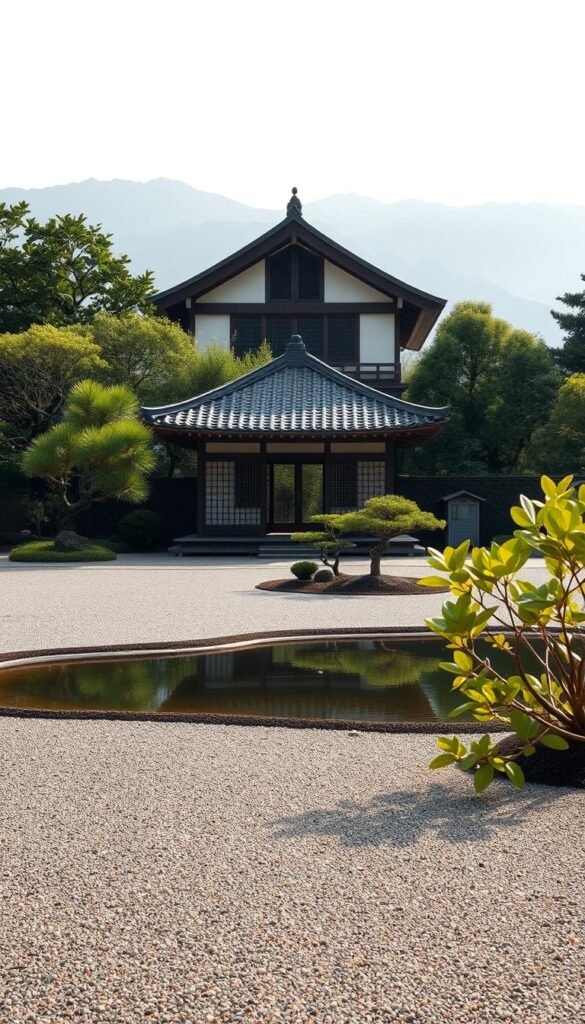
Kanso: Simplicity and Clutter Elimination
Kanso focuses on simplicity and eliminating clutter. It helps us create a calm and clear environment. By applying Kanso, our spaces can feel peaceful and serene.
Practical Applications in Modern Homes
How can we use these principles in our homes? Start by using natural materials like wood and stone. This brings in Wabi-Sabi. Use negative space for Ma and simplify decor for Kanso. This way, our homes can feel calm, elegant, and Japanese.
Essential Elements of Japanese Home Decor
To create a peaceful and elegant Japanese-inspired living space, focus on key elements. These elements help bring tranquility and visual harmony. Japanese home decor combines natural materials, soft colors, and thoughtful design.
Natural Materials: Wood, Bamboo, and Paper
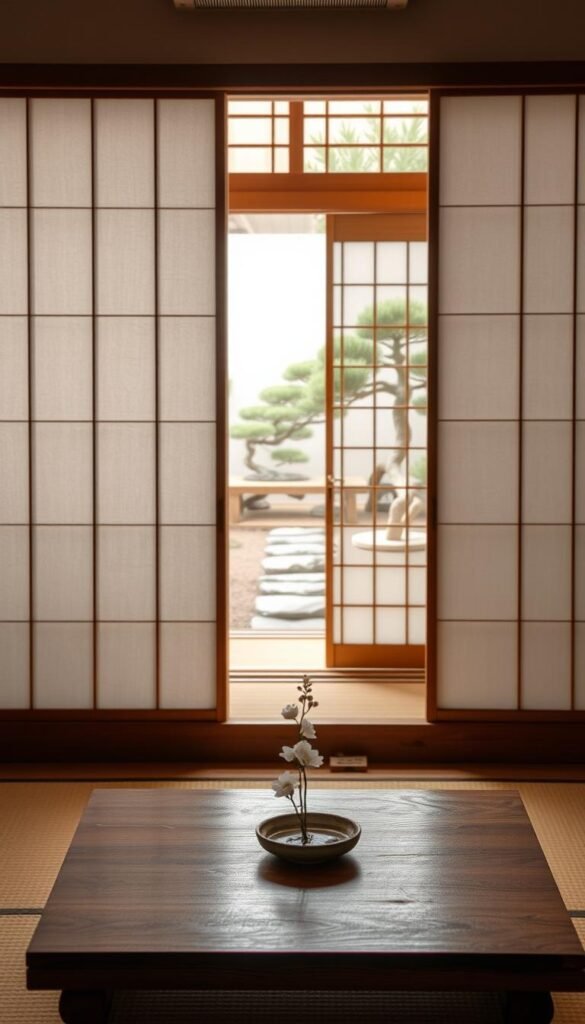
I enjoy using natural materials like wood, bamboo, and paper in my designs. They make the space feel warm and welcoming. These materials connect us to nature, a core part of Japanese beauty. For instance, shoji screens with rice paper and wood add elegance to any room.
Neutral Color Palettes and Earth Tones
Neutral colors and earth tones are key in Japanese decor. They help create a calm and serene atmosphere. Soft grays, beige, and taupe are favorites because they soothe the mind. A limited color palette brings balance and harmony to your space.
Asymmetrical Balance and Visual Harmony
Asymmetrical balance is a core principle in Japanese design. It adds interest without clutter. By placing furniture and decor thoughtfully, you achieve harmony and balance. This design encourages a smooth flow and peace in the space.
Sourcing Authentic Materials in America
Looking for authentic Japanese materials in America? Check out local craft fairs or online Japanese imports. You can also find local artisans who make traditional Japanese crafts. Using authentic materials adds depth and authenticity to your decor.
Creating a Japanese-Inspired Living Room
Turning your living room into a Japanese-inspired space is simpler than you might think. It’s all about simplicity, natural beauty, and creating a calm atmosphere.
Low-Profile Furniture Selection and Placement
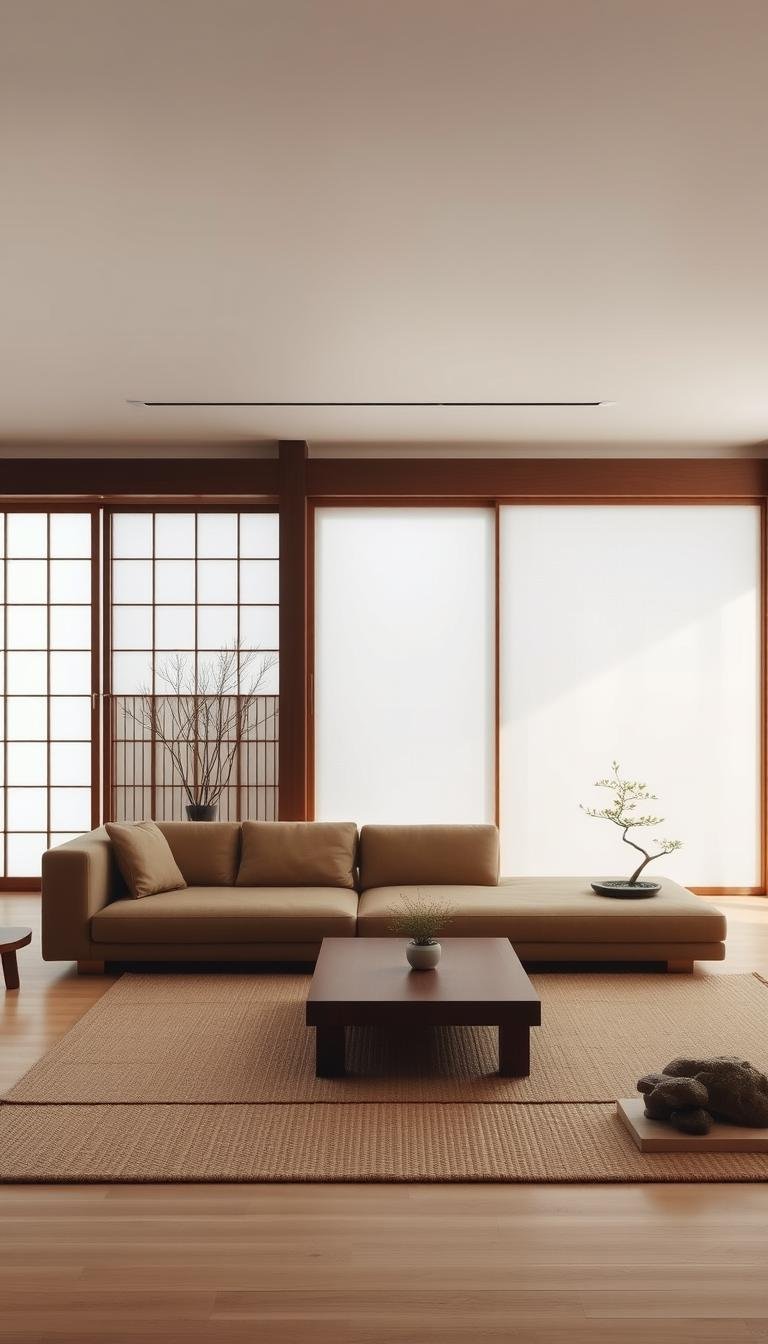
Low-profile furniture is key in a Japanese-inspired living room. It makes the room feel open and encourages cozy seating. Think about a low sofa or a simple platform bed.
Place your furniture in an asymmetrical way to add interest. This makes the room feel more dynamic.
- Choose furniture with clean lines and minimal ornamentation.
- Opt for natural materials like wood or bamboo.
- Consider the flow of the room and leave some space between pieces.
Shoji Screens and Movable Room Dividers
Shoji screens are a traditional Japanese touch. They’re made of rice paper or wood and filter light beautifully. They can also divide spaces or add elegance.
Use movable room dividers to section off areas. This helps create different spaces within your living room.
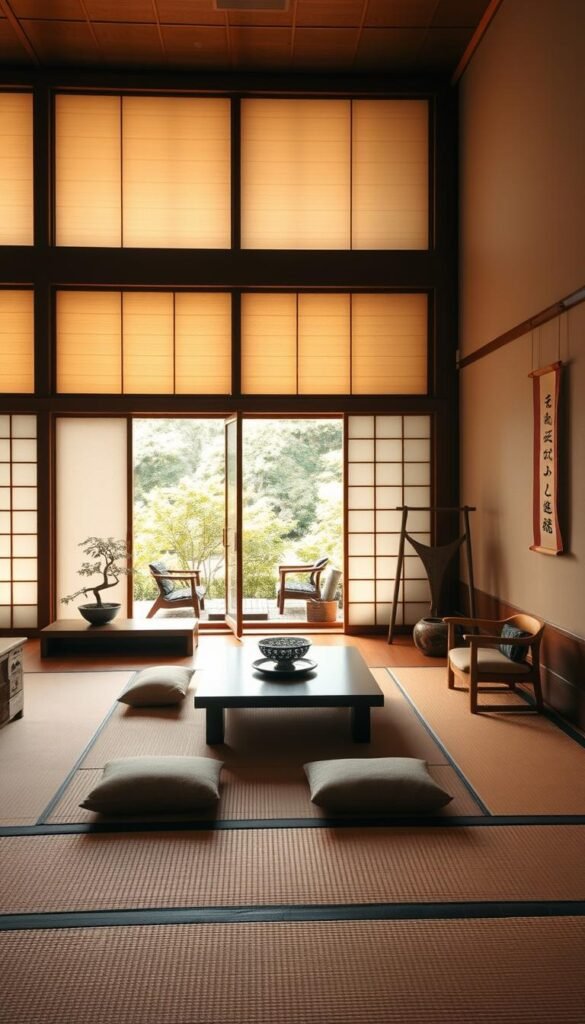
Tatami Mats and Zabuton Floor Cushions
Tatami mats and Zabuton floor cushions add warmth and texture. Tatami mats are traditional Japanese flooring, while Zabuton cushions are for floor seating. They make your room cozy and inviting.
Modern Adaptations for Western Homes
Traditional Japanese design is beautiful but might not fit modern homes. Adapt these elements to suit your lifestyle. Use modern Shoji screens or incorporate Tatami mats into your flooring.
By using these elements, you can make a Japanese-inspired living room that’s both peaceful and stylish. The goal is to find a balance between beauty and practicality, creating a space that’s both lovely and functional.
Japanese Bedroom Design for Tranquility
To get a peaceful bedroom, think about Japanese design. A calm bedroom is key for good sleep. Japanese design can make your room feel serene.
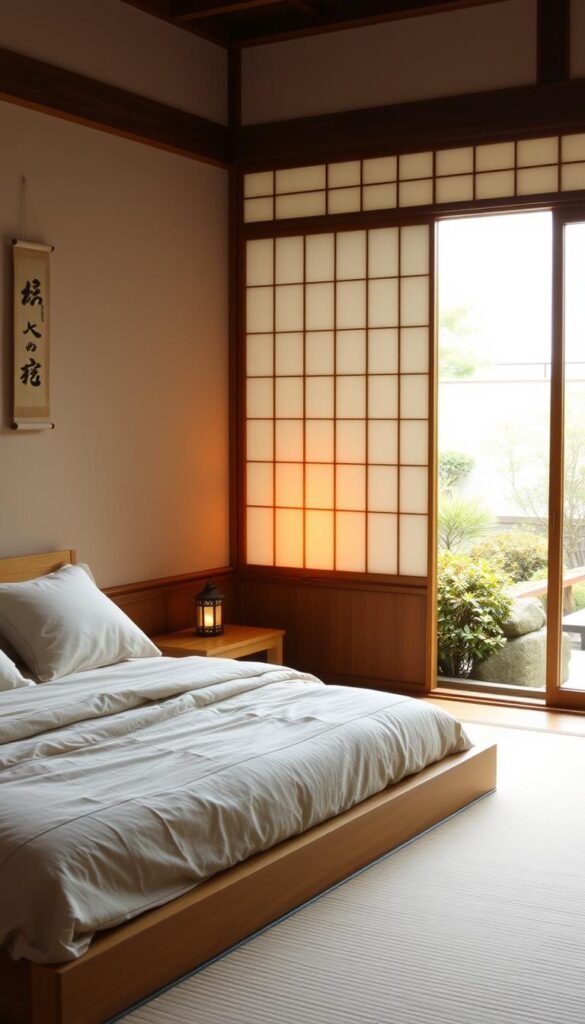
Futon Beds vs. Platform Beds with Minimalist Bedding
In Japanese bedroom design, the bed choice matters a lot. Futon beds are traditional and can sit on the floor or a low frame. Or, platform beds with minimalist bedding can also make your room calm. The goal is to keep bedding simple and tidy.
“Simplicity is the ultimate form of sophistication,” says Japanese culture about bedding.
Built-In and Concealed Storage Solutions
Clutter can mess up your bedroom’s calm. For a peaceful space, use built-in storage or concealed storage. Think about built-in drawers or shelves that fit right into your room’s look.
Creating a Peaceful Sleep Environment
A calm sleep area is vital for restful nights. Here are some decluttering techniques for your bedroom:
- Get rid of anything you don’t need in your bedroom.
- Let natural light in during the day to brighten it up.
- Add plants like lavender or snake plants for calm vibes.
Decluttering Techniques for Bedroom Spaces
Decluttering is key for a peaceful sleep area. Begin by sorting items into groups. Then, decide what to keep, give away, or throw away. Regular cleaning keeps your bedroom calm.
By using these Japanese design tips, you can make a bedroom that’s not just pretty but also a place for rest and calm.
Zen-Inspired Bathroom Transformations
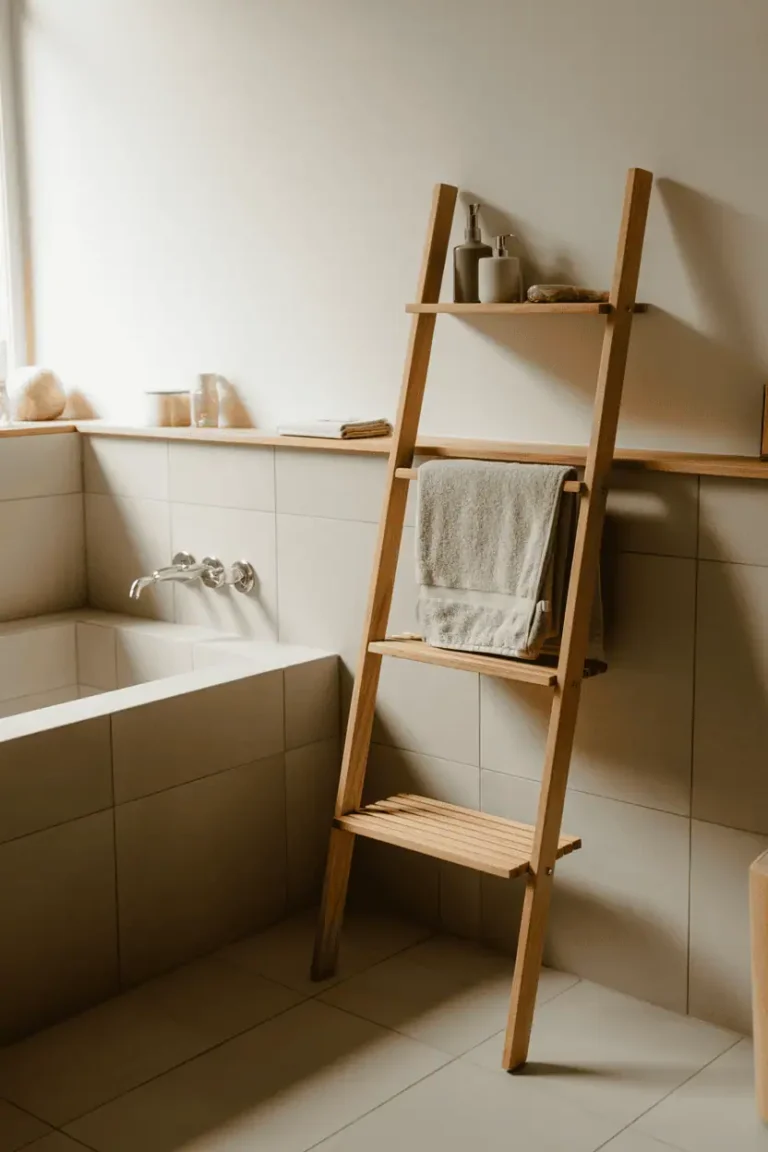
A Zen-inspired bathroom is a perfect place for relaxation and rejuvenation. I’m excited to share how to make it happen. By adding Japanese design elements, you can create a space that’s not just beautiful but also calming and well-being promoting.
Ofuro Soaking Tubs and Shower Designs
The Ofuro soaking tub is a key feature of a Zen-inspired bathroom. These tubs are made for deep relaxation. Pairing them with a simple shower design makes your bathroom both useful and peaceful. Use natural materials like stone or wood for the tub surround to add warmth and texture.
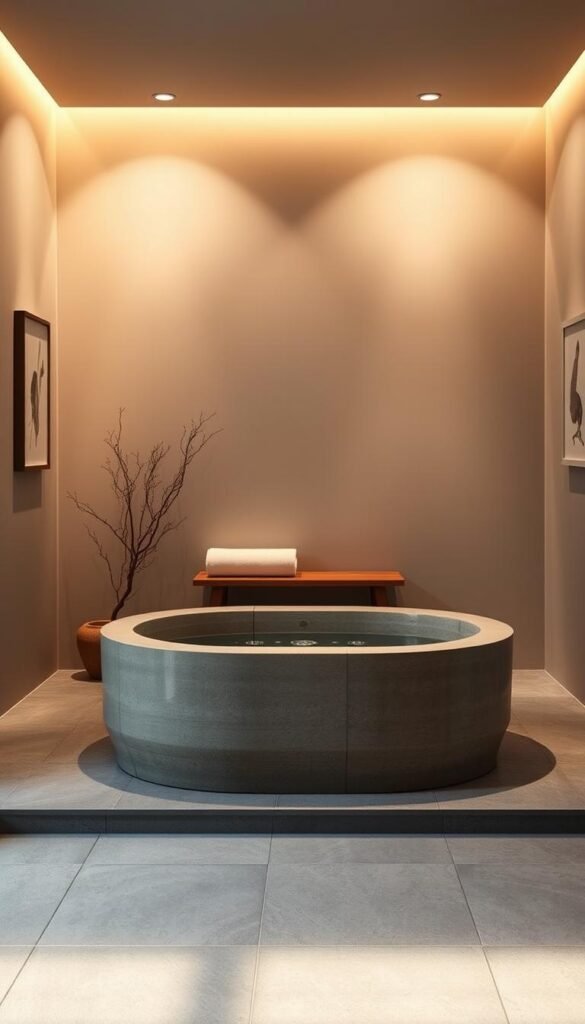
Incorporating Stone, Wood, and Bamboo Elements
Natural materials are key in Japanese design. Adding them to your bathroom brings tranquility. Think about using stone for floors or walls, wood for cabinets or accents, and bamboo for texture and interest.
Minimalist Fixtures and Accessories
To keep your Zen-inspired bathroom calm, use minimal fixtures and accessories. Choose minimalist fixtures that are both useful and pretty. Avoid clutter and keep surfaces clean to enhance calmness.
Water Conservation in Japanese Bathroom Design
Water conservation is vital in Japanese design. There are many ways to save water in your bathroom. Install low-flow showerheads and toilets to use less water. Also, consider rain showerheads or handheld showerheads with low-flow options for a luxurious feel while saving water.
The Japanese Kitchen and Dining Experience
In Japanese homes, the kitchen and dining areas show simplicity and mindfulness. They blend function and beauty, creating a space for connection and community.
Functional Minimalism in Kitchen Layout
A Japanese kitchen focuses on functional minimalism. Each item has a purpose. The layout is designed for efficiency and to avoid clutter, making cooking a calm activity. I find it fascinating how this design boosts creativity and efficiency!
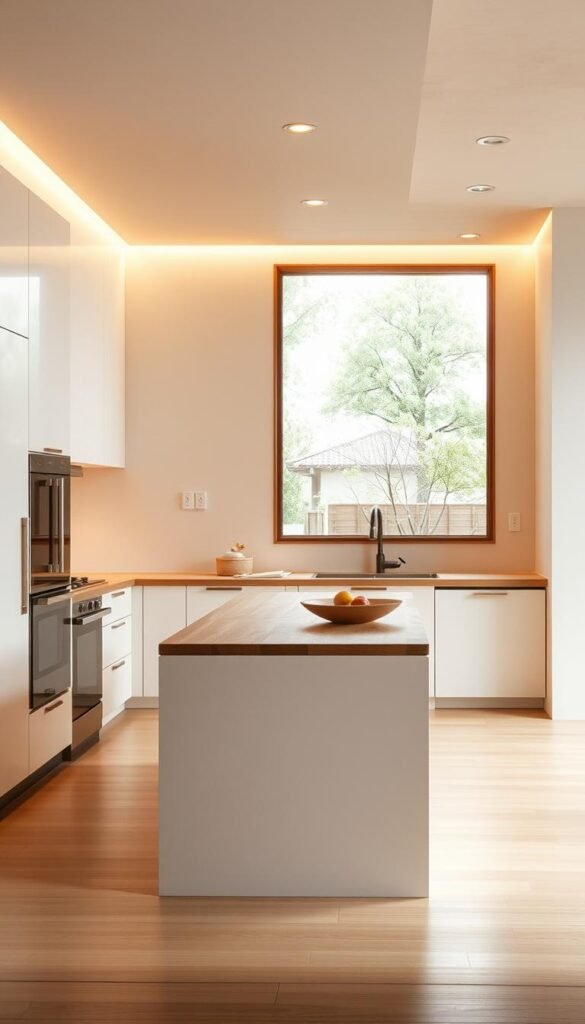
Traditional Chabudai Tables and Zaisu Chairs
The dining area often has Chabudai tables and Zaisu chairs. These low-seating setups foster togetherness and deep conversations. They make meals a special time.
Ceramic Dishware and Serving Elements
Ceramic dishware and serving items add natural beauty to dining. Their simplicity and elegance warm the atmosphere, making it inviting.
Tea Ceremony Spaces in Modern Homes
Some homes have a space for the traditional tea ceremony. This peaceful area honors Japan’s culture. It brings tranquility to modern homes.
By incorporating these elements, you can create a Japanese-inspired kitchen and dining area. It’s both beautiful and functional. Whether you prefer minimalism or appreciate Japanese design, this blend will inspire your home.
Bringing Nature Indoors: Plants in Japanese Decor
The art of bringing nature indoors is key in Japanese decor. Plants help create a calm and connect us to the outdoors. This not only makes our homes look better but also improves our well-being.
Bonsai Cultivation and Display
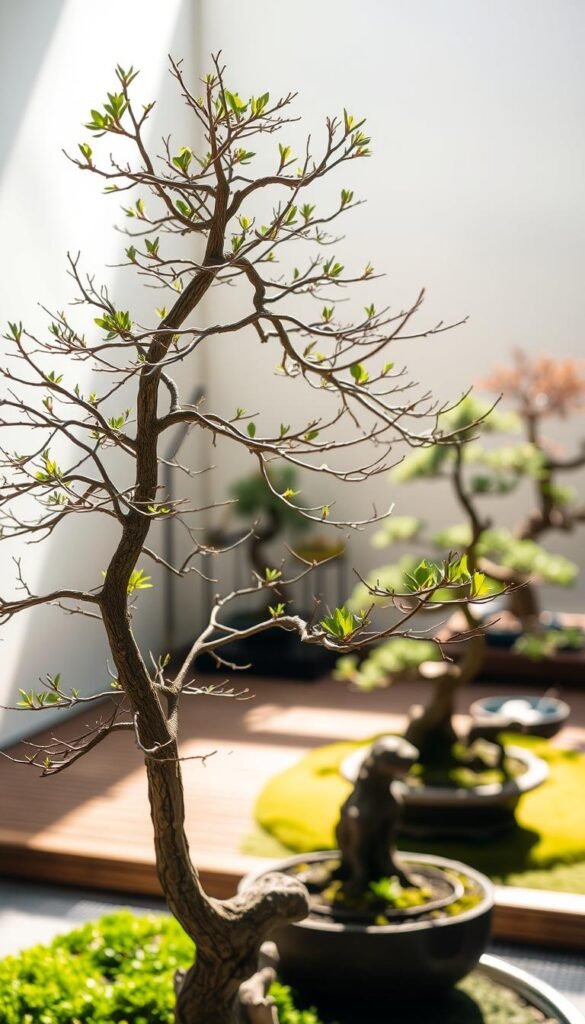
Bonsai trees are loved in Japanese homes for their beauty and meaning. They symbolize harmony and patience. To grow a bonsai, one must carefully prune and train the tree, making it a small version of nature. A bonsai in a special pot can make any room peaceful.
Ikebana: The Art of Mindful Flower Arrangement
Ikebana, or Japanese flower arrangement, brings nature inside. It’s more than just putting flowers together; it’s a mindful act. By picking seasonal flowers and arranging them thoughtfully, one can make a beautiful and calming display.
“Ikebana is more than just arranging flowers; it’s a spiritual practice that connects us with nature and ourselves.”
Miniature Zen Gardens and Water Features
Miniature Zen gardens and water features also bring nature indoors. They create a calm atmosphere, great for relaxing and meditating.
Seasonal Plant Selections and Care
To keep your indoor garden alive, choose plants that fit the season. Regular care, like watering and pruning, keeps your plants healthy and lively all year.
- Select plants that are appropriate for the current season.
- Provide regular care, including watering and pruning.
- Consider using pots that complement your interior decor.
By adding these elements, you can make a peaceful and serene living space. It will reflect the beauty of Japanese decor.
Lighting Techniques in Japanese Interior Design
In Japanese interior design, lighting is more than just light. It’s an art that brings calm and beauty. Good lighting can make a space feel cozy and peaceful.
Andon and Chochin Paper Lanterns
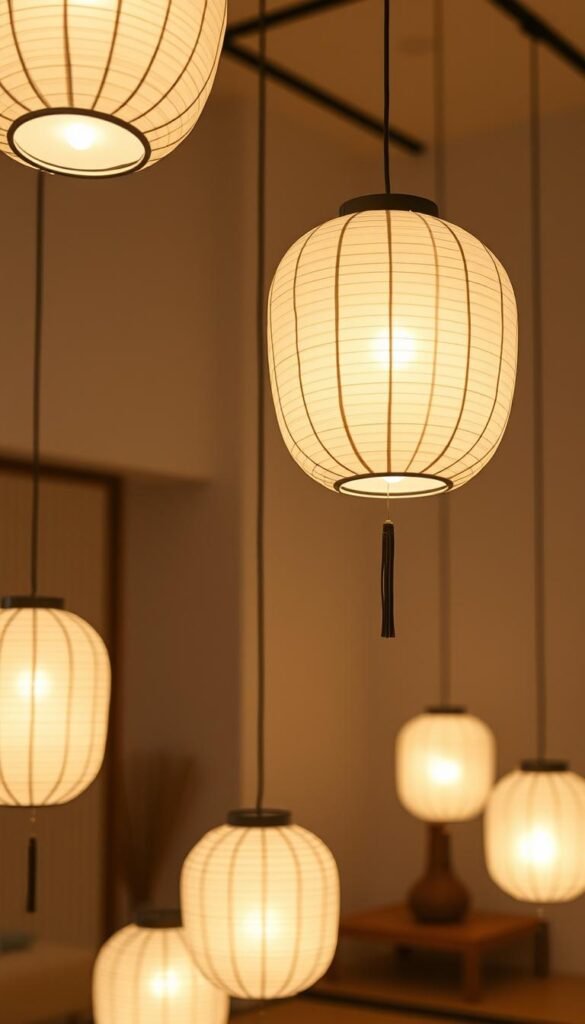
Japanese lighting is famous for its Andon and Chochin paper lanterns. These lanterns are beautiful and practical. Andon lanterns create a cozy glow. Chochin lanterns are foldable and great for outdoor events.
- Use Andon lanterns as centerpieces or table lamps.
- Hang Chochin lanterns in outdoor spaces or entryways.
Creating Layered, Ambient Lighting
Layered lighting is key in Japanese design. It uses many light sources for a warm feel. This mix includes overhead lights, table lamps, and floor lamps.
- Begin with a main light source, like a ceiling light.
- Add secondary lights, like table or floor lamps.
- Use accent lights to focus on certain spots.
Maximizing and Filtering Natural Light
Natural light is precious in Japanese design. It makes spaces feel brighter and more open. Use light-colored curtains or sliding doors made of paper or glass to let in more light.
To soften natural light, try:
- Shoji screens to spread out sunlight.
- Bamboo blinds to control light levels.
Energy-Efficient Lighting Solutions
Choosing energy-efficient lighting is good for the planet and your wallet. Use LED bulbs or solar lanterns to cut down on energy use.
Conclusion: Integrating Japanese Aesthetics into Your Home
I love how Japanese aesthetics can turn a living space into a serene oasis. By embracing simplicity, natural materials, and mindfulness, you can make a beautiful, authentic Japanese-inspired home. The key is to find a balance between form and function.
To get this look, use natural materials like wood and bamboo in your decor. Stick to neutral colors and earth tones for a calm feel. Try out minimalist design elements, like shoji screens and tatami mats, to add depth and interest.
By following these tips, you’ll create a peaceful, elegant space that promotes relaxation and well-being. I’m sure you’ll enjoy bringing Japanese aesthetics into your home and the benefits of minimalist design.

To bring you cozy inspiration more efficiently, we sometimes use AI to assist in content creation — but every word and idea is carefully shaped by our team. See our AI Disclosure for more info.