This post may contain affiliate links. If you click and buy, we may earn a small commission at no extra cost to you. Learn more.
There’s a certain quiet charm to a simple wood crate. Not the polished, styled-to-death version, but the kind that looks like it has moved between homes, picked up new stories, and settled in again. Rustic wood crates carry that feeling into a room without trying too hard. They sit on the floor, under a console, beside a sofa, and the room immediately feels softer.
These pieces work because they don’t insist on being the center of attention. They hold blankets, books, plants, records, and yet they still read as objects with history. They suggest that the space has grown slowly, rather than being assembled in one afternoon.
What makes rustic crates interesting is how adaptable they are. They can lean more farmhouse, more primitive, more European, or more industrial depending on what they sit near. Over time, they can shift roles — from side table to book stack to planter base — without feeling out of place.
Used thoughtfully, they add weight and age where newer furniture feels a bit light. The goal isn’t to cover the room in them, but to let a few well-chosen crates anchor the quieter corners.
What you’ll find here:
Visual inspiration rooted in real homes
Practical ideas you can apply gradually
Furniture and decor concepts that support browsing and shopping
Looks that work across room sizes and styles
Contents
- 1 1. A Single Crate Beside the Sofa
- 2 2. Stacked Crates as a Makeshift Console
- 3 3. Under-the-Bench Storage in the Entry
- 4 4. Crates as a Low Coffee Table Cluster
- 5 5. A Crate Filled with Vintage Books
- 6 6. Crates as a Plant Stand Trio
- 7 7. Rustic Crate Nightstand in the Bedroom
- 8 8. Crate Stack for Vinyl Records and Speakers
- 9 9. Crates Layered on Open Shelving
- 10 10. Outdoor Crates on a Covered Porch
- 11 Styling Tips to Pull the Look Together
- 12 Conclusion
1. A Single Crate Beside the Sofa
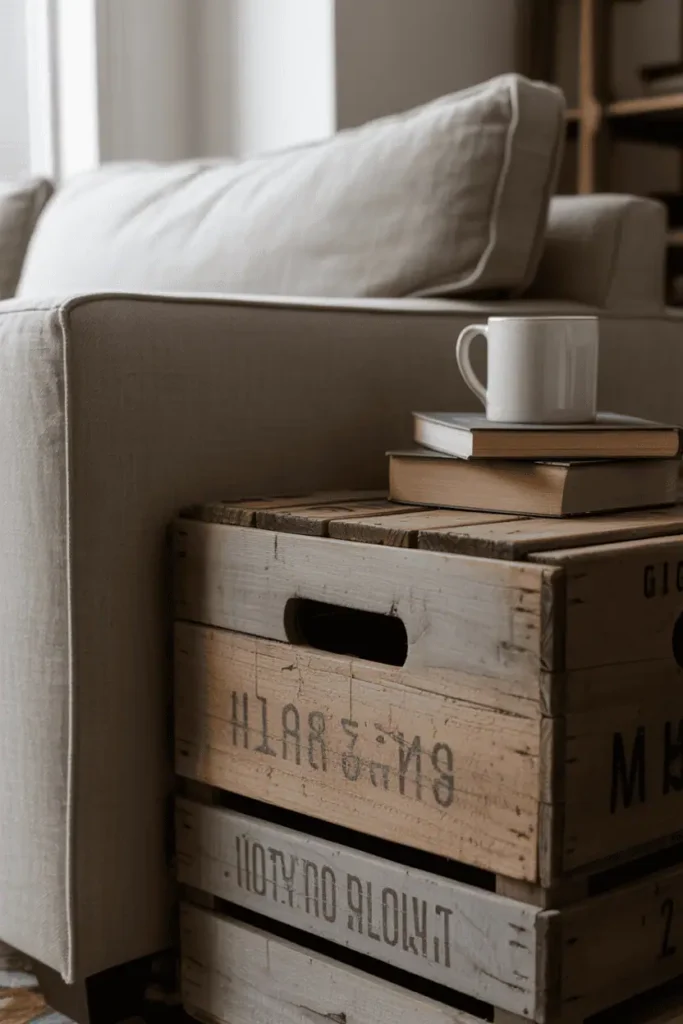
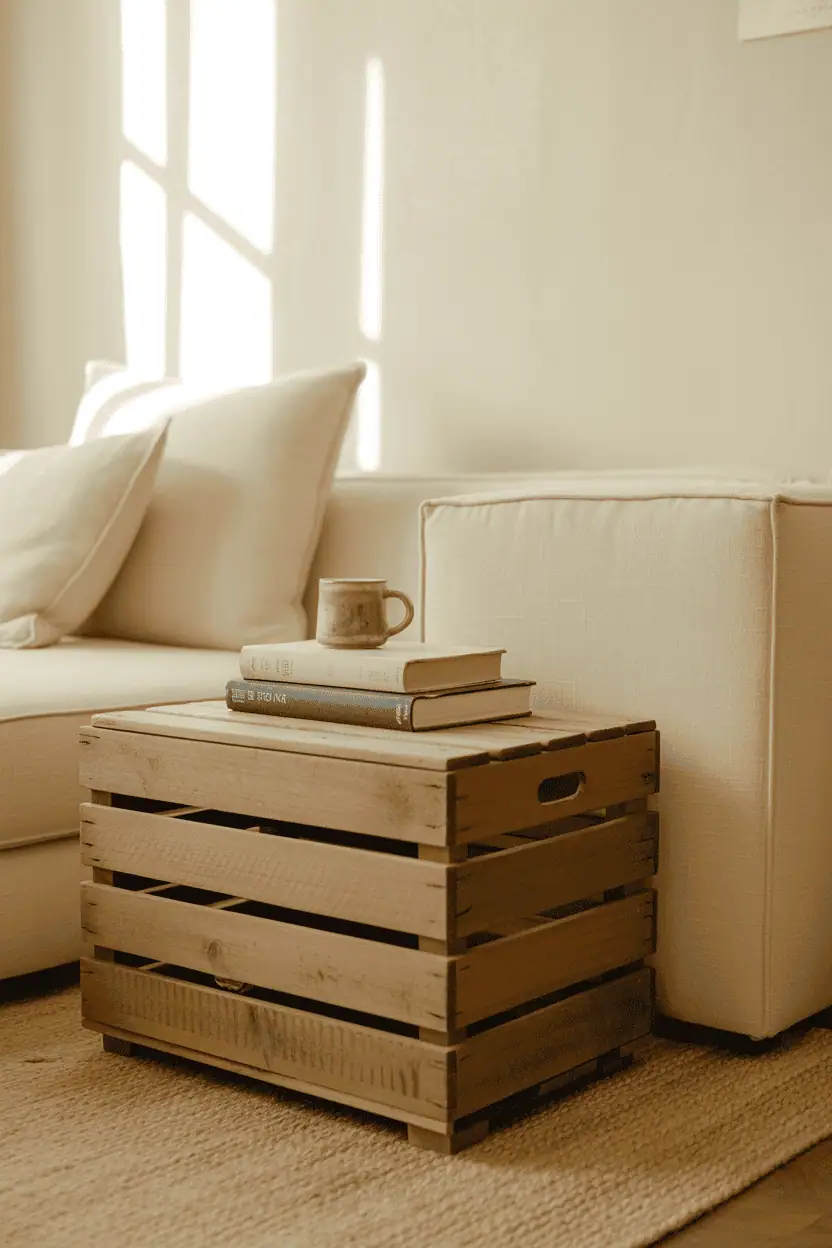
A single, low crate next to the sofa immediately feels more relaxed than a formal side table. The slats, the worn edges, the hint of old lettering — all of it adds quiet character near the seating area. Emotionally, it softens the edge of the sofa and keeps the room from feeling too polished.
Practical guidance
This works best when the crate sits just below or slightly under the sofa arm, not taller than it. Too high and it competes with the armrest; too low and it feels lost. Keep the surface simple: a small stack of books, a ceramic mug, maybe a candle. It tends to fail if the crate is overloaded or stacked with too many objects.
Styling & product direction
Look for crates with visible grain and slightly rounded corners. Layer with a small table lamp, a stone coaster, or a linen napkin as a soft surface. Upholstered seating, textured rugs, and woven baskets nearby help the crate feel integrated rather than random.
2. Stacked Crates as a Makeshift Console
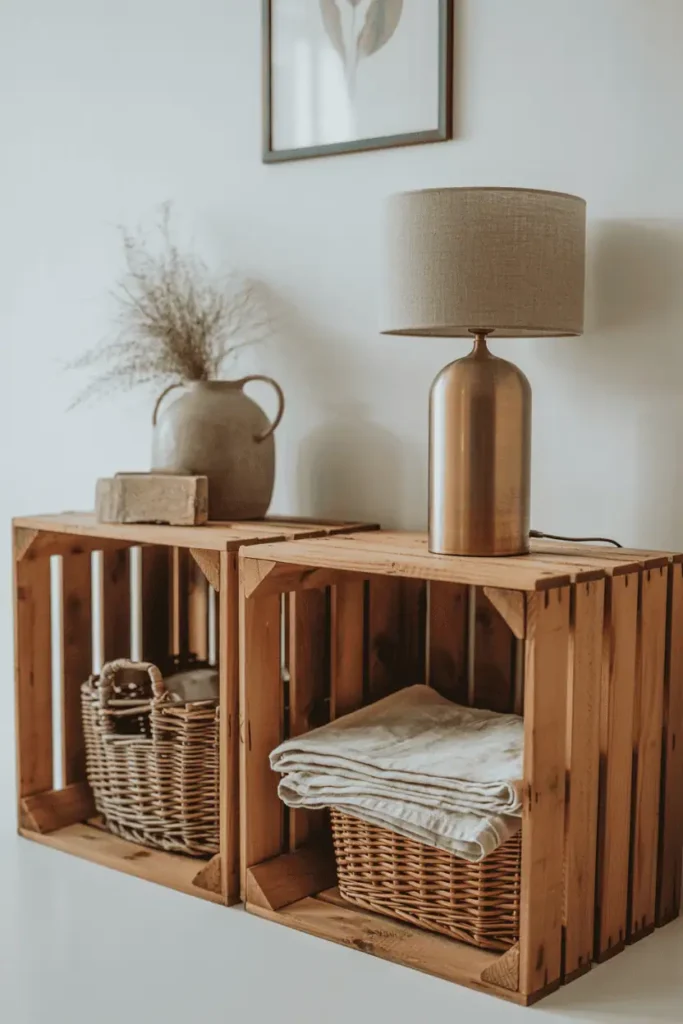
Stacking two or three crates to form a low console brings a quiet, improvised energy to a wall. The open fronts make room for books, baskets, or folded throws, and the top becomes a place for lamps and objects. Visually, it reads as intentional but not overly designed — as if it grew over time.
Practical guidance
This works best on a wall that isn’t already carrying heavy furniture. Keep the stack to two or three crates high; anything taller can feel unstable or overwhelming. Anchor the vignette with art or a mirror above, but leave some wall showing so it can breathe. Avoid mixing too many crate sizes in one stack; the rhythm gets messy quickly.
Styling & product direction
Pair with soft-shaded table lamps, ceramic vases, framed prints, and linen-covered books. Solid wood coffee tables, wool rugs, and simple upholstered chairs nearby keep the look cohesive.
Design tip: Keep the crates in similar tones — all mid-brown, all gray-washed — and let variety come from what’s inside them, not from a jumble of finishes.
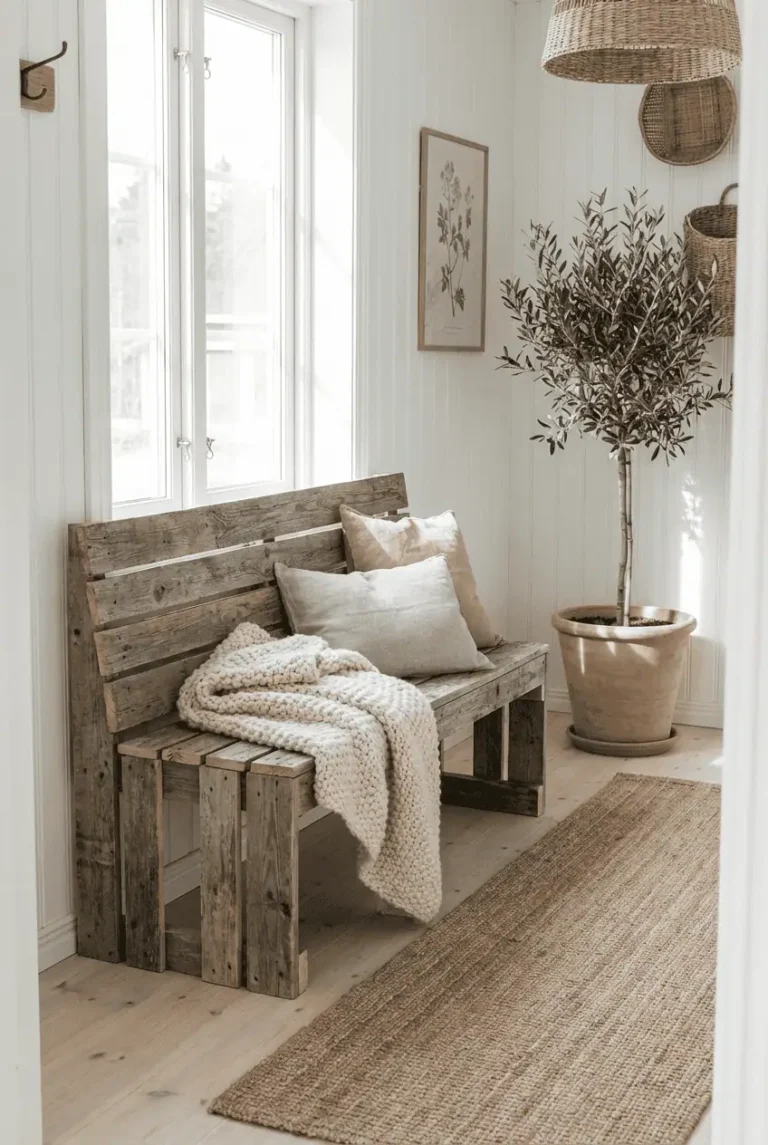
3. Under-the-Bench Storage in the Entry
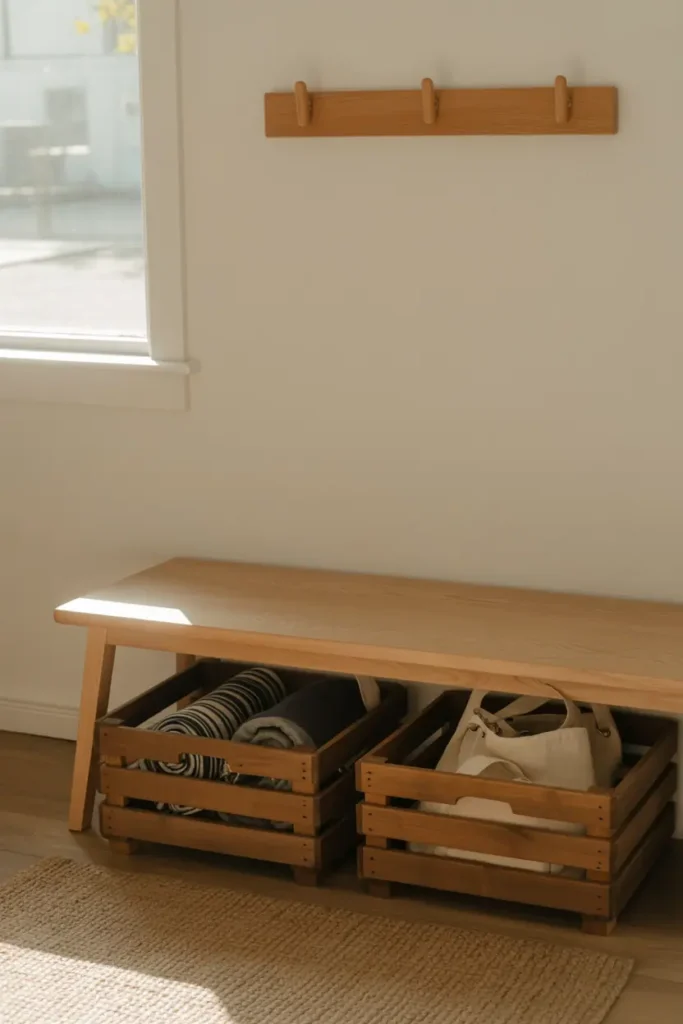
In an entryway, crates under a bench feel both practical and quietly nostalgic. They give shoes, scarves, and bags a place to land without introducing modern plastic storage. Emotionally, it sets the tone as soon as you walk in: lived-in, grounded, and slightly old-world.
Practical guidance
This works best when the bench has open space beneath it and the crates slide in and out easily. Leave at least a small gap on either side so the bench still feels airy. It tends to fail if the crates are so deep you can’t see what’s in them — the area starts to feel like a dark void.
Styling & product direction
Look for crates with hand holes or slats so the contents show just enough. Pair with simple wood or upholstered benches, natural fiber rugs, and a few hooks above. Baskets, umbrellas, and a small tray on the bench keep the space feeling complete without crowding it.
4. Crates as a Low Coffee Table Cluster
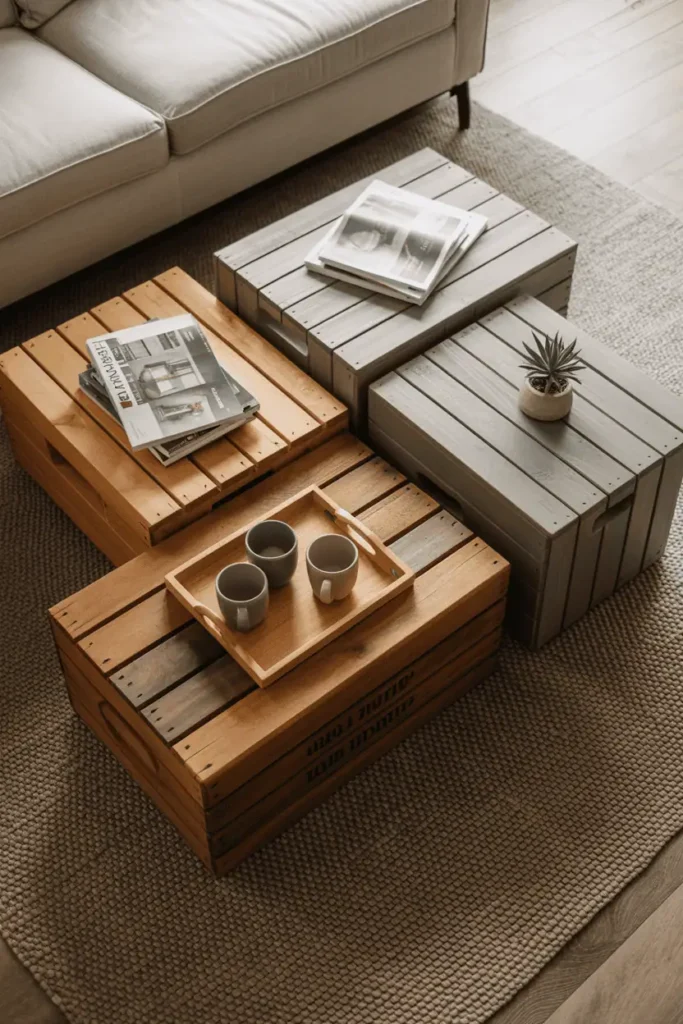
Three or four low crates grouped together can stand in for a coffee table, especially in more relaxed living rooms. The slatted sides and worn surfaces feel casual, and the individual volumes can be shifted to suit how the room is being used. It invites floor seating, stretched-out legs, and stacks of magazines.
Practical guidance
This works best in rooms where soft seating wraps around the crates. Keep the height roughly level with the sofa seat or slightly lower. It tends to fail if the crates wobble or are vastly different heights — the coffee-table function disappears. Add a tray or two on top to create flat, stable surfaces for drinks.
Styling & product direction
Combine with a deep, comfortable sofa, layered throw blankets, and a large area rug that anchors all of it. Ceramics, wooden bowls, and a single low vase of greenery are enough. Skip sharp-edged, high-gloss furniture nearby; it fights the relaxed mood.
At this point, the room should feel less like it was “decorated” and more like it was gently assembled, with crates acting as the quiet workhorses in the background.
5. A Crate Filled with Vintage Books
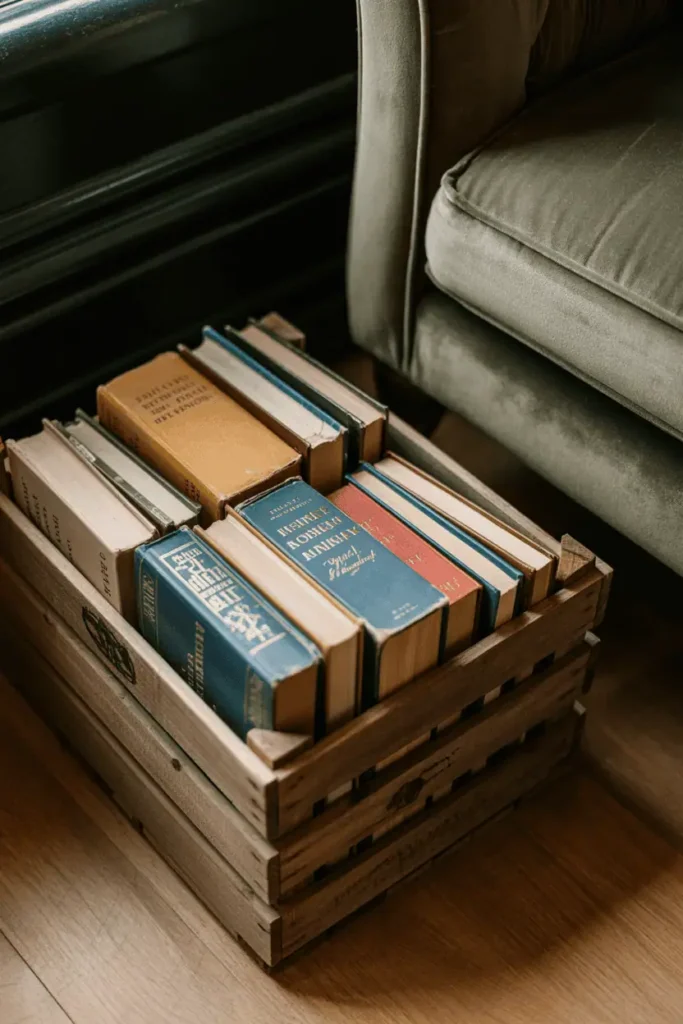
A single crate filled with old hardcovers tucked under a console or next to a lounge chair feels deeply settled. The spines, the faded colors, the uneven heights — visually, it’s a kind of grounded pattern. Emotionally, it suggests time spent reading, even if the books are mostly decorative.
Practical guidance
This works best when the crate isn’t completely full. Leave some breathing room so the books can tilt and layer. It tends to fail if the books are too new or glossy; the crate starts to feel like storage instead of atmosphere. Keep it on the floor, not on top of furniture — that grounded placement is part of its charm.
Styling & product direction
Pair with linen or velvet upholstery, a floor lamp with a soft shade, and a small side table for a drink. Search for crates with low sides so the book spines are visible, and keep the color story quiet: tans, browns, muted blues and greens.
6. Crates as a Plant Stand Trio
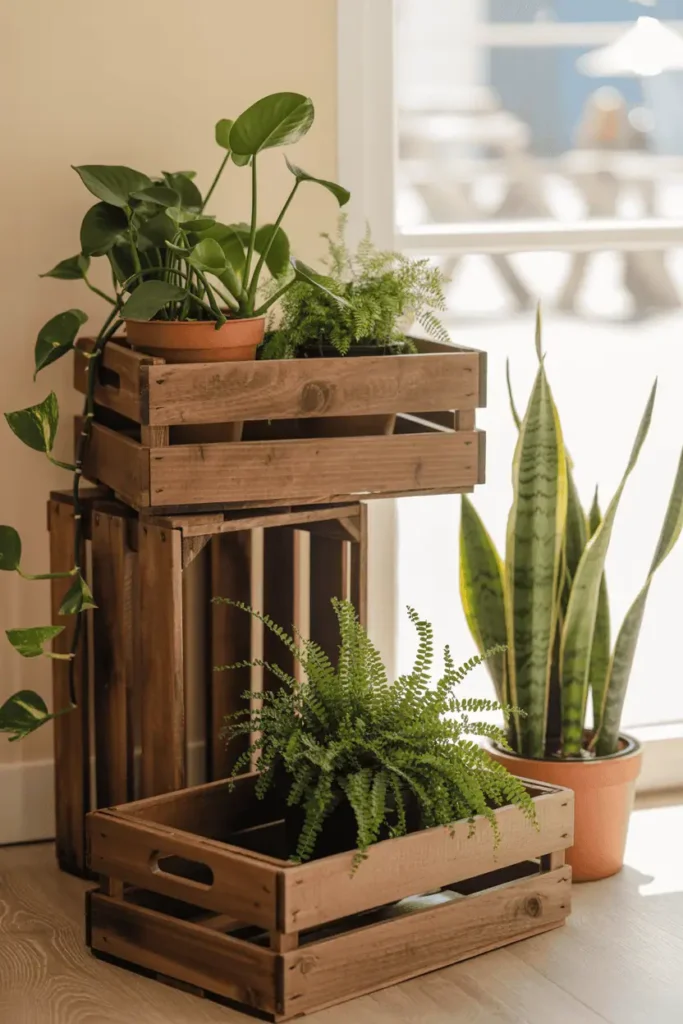
Different crate heights can make a simple plant corner more dimensional. One crate on its side, one upright, one stacked — each holds a plant at a different level. The rough wood against green leaves creates a quiet contrast that always reads well in a living room.
Practical guidance
This works best near a window with good natural light where plants would live anyway. Protect the crate surfaces with trays or saucers; water damage here ruins the patina, not enriches it. It tends to fail if every plant is large and heavy — the grouping becomes visually top-heavy. Mix trailing plants with smaller pots.
Styling & product direction
Pair with terracotta pots, ceramic planters, and woven baskets. A nearby chair or floor cushion keeps the corner from feeling like a separate “plant station” and instead makes it part of the room.
7. Rustic Crate Nightstand in the Bedroom
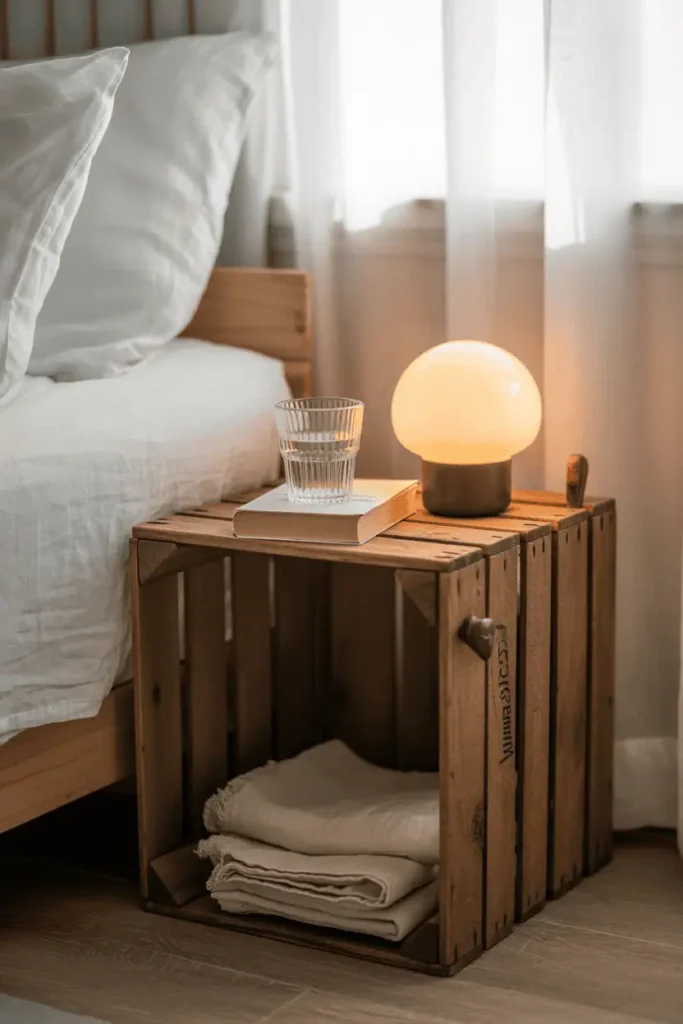
In a bedroom, a crate as a nightstand brings a gentler, more informal note next to a neatly made bed. The open sections can hold books, a basket, or folded linens, while the top handles a lamp and glass of water. Emotionally, it interrupts the typical matching furniture set and makes the room feel more personal.
Sometimes, this idea works best when the rest of the room is fairly quiet — simple bedding, soft curtains, minimal art. Let the crate carry the texture and age.
8. Crate Stack for Vinyl Records and Speakers
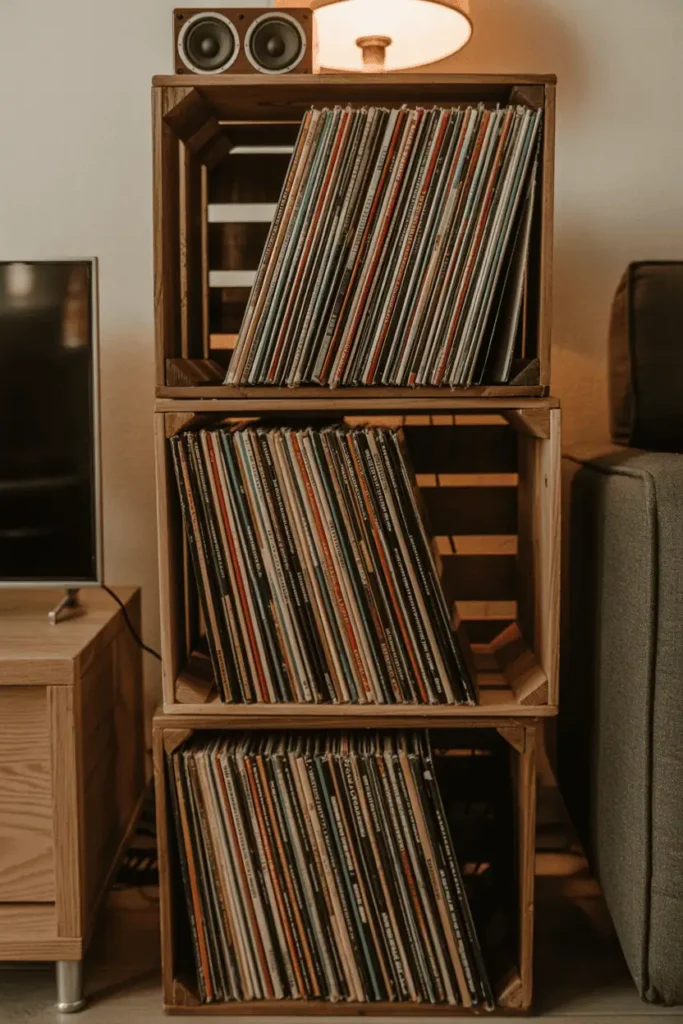
If there’s a record player in the living room, stacking crates for vinyl creates a satisfying mix of nostalgia and utility. Records slide into the open fronts, while a small speaker or even the turntable itself can sit on the top. The repetition of spines and slats feels visually rhythmical.
Practical guidance
This works best when crates are sturdy and uniform in size so the stack is stable. Keep the height to waist level at most. It tends to fail if cords and electronics spill out everywhere — hide cables where you can, or choose a wall where they’re less visible.
Styling & product direction
Combine with a nearby lounge chair, a small floor lamp, and art or a mirror above. Wood tones in the records, frames, and crate all echo each other, which keeps the area cohesive even if it’s busy.
9. Crates Layered on Open Shelving
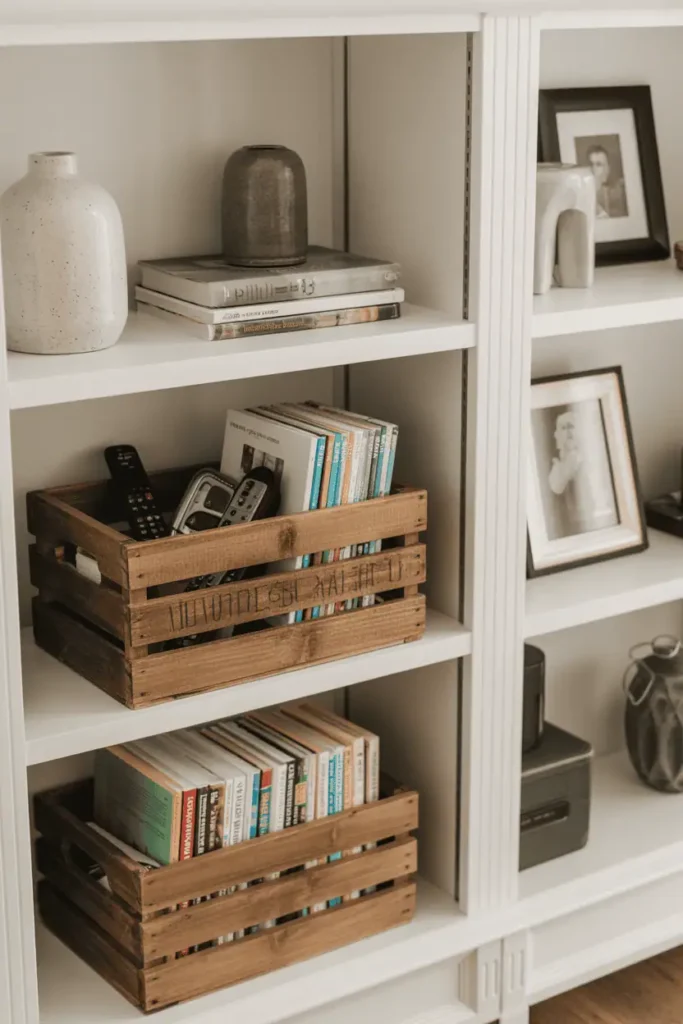
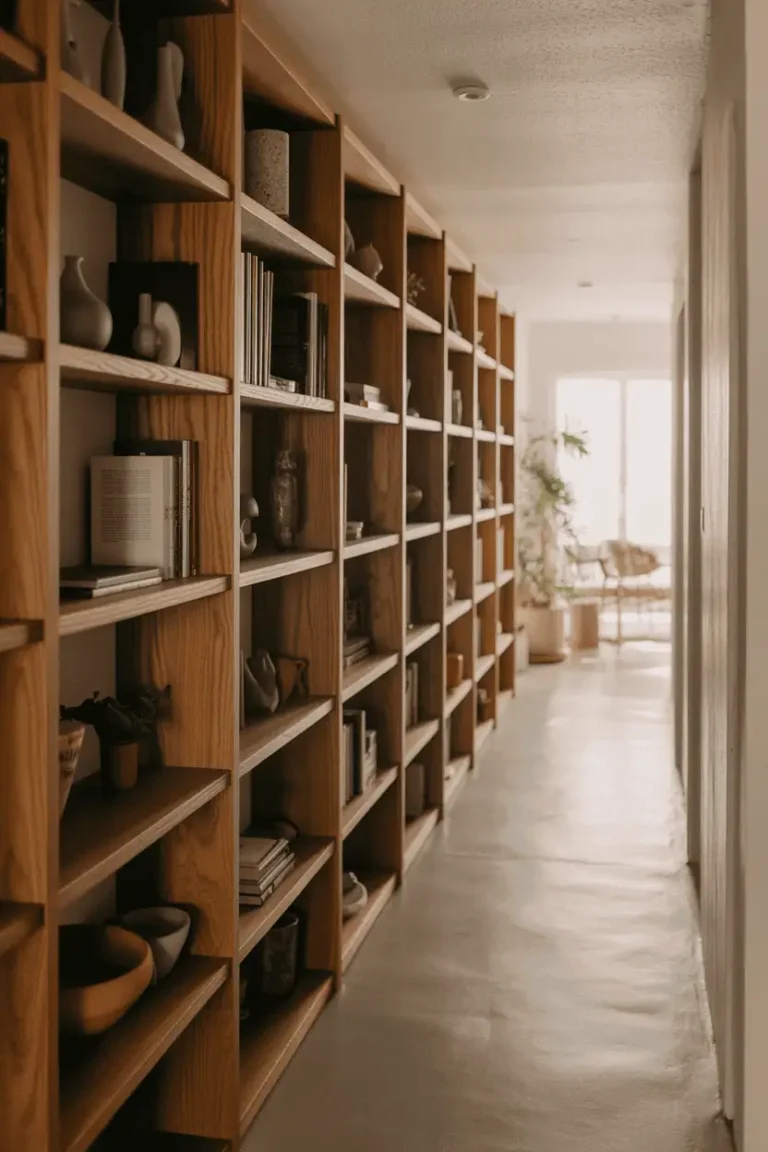
Using one or two crates inside a larger shelving unit can calm down the visual noise. Instead of every shelf being exposed, a crate holds loose items — magazines, remotes, chargers — so the eye gets a rest. It makes the storage feel more intentional and less like a catchall.
Practical guidance
This works best when the crate color is close to the shelf color, or a deliberate contrast. It tends to fail if every cubby gets a crate; the unit starts to feel heavy and blocky. Leave some open shelves for bare books, vases, and negative space.
Styling & product direction
Pair with simple wood or painted shelving, a mix of ceramic and glass objects, and a few framed photos. The crate becomes one texture in a mix, not the only story.
10. Outdoor Crates on a Covered Porch
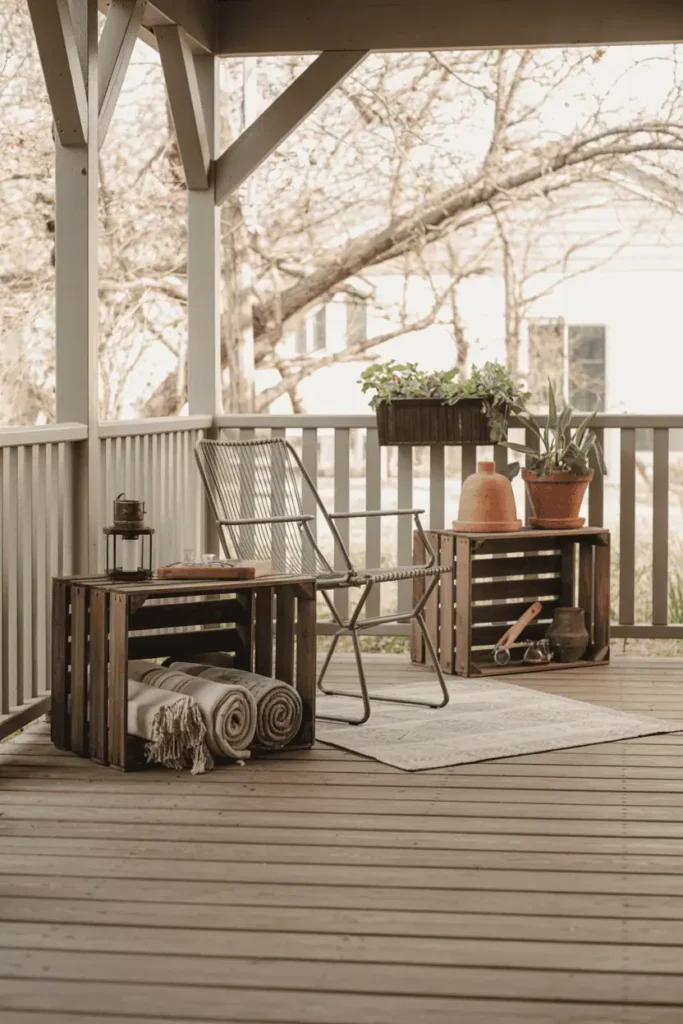
On a covered porch or balcony, crates holding blankets, gardening tools, or lanterns can make the space feel like another room rather than leftover exterior space. Worn wood fits naturally with outdoor materials — brick, stone, siding, plants.
Practical guidance
This works best if the area is protected from heavy rain. Even rustic crates will deteriorate quickly if constantly soaked. It tends to fail if the crates are left empty; they start to look abandoned rather than styled. Keep them lightly filled with pieces you actually use outside.
Styling & product direction
Combine with outdoor chairs, a small side table, layered outdoor rugs, and potted plants. Lanterns, throw blankets, and a few spare cushions help the crates feel part of the seating area.
By now, the crates aren’t just “storage boxes” in the room — they’re quietly stitching together corners that might otherwise feel unfinished, adding weight where the newer pieces feel a little too light.
Styling Tips to Pull the Look Together
- Keep the number of crates modest; one to three per room is usually enough.
- Repeat wood tones so crates relate to at least one other piece — a frame, a table, or shelving.
- Balance rough textures (aged wood, slats) with softer ones like linen, wool, and cotton.
- Let some surfaces stay partially empty so the eye can rest.
- Use warm, diffused lighting — table lamps, floor lamps, and candles rather than only overhead light.
- Avoid mixing heavily branded or glossy plastic storage with rustic crates in the same sightline.
- When stacking, keep heights low and compositions simple to maintain a calm, grounded feel.
Conclusion
The most successful use of rustic wood crates rarely comes from buying a dozen at once. One or two pieces brought into the room, lived with, and slowly rearranged will tell you more about what the space actually needs than a fully planned scheme ever could.
Crates can shift function over time — from side table to book holder to plant stand — and the room will accept those changes easily. Let them move, let them age, and let them carry small parts of the home’s story.
Save the ideas that feel closest to how you already live. Revisit them when the room starts to feel a little too sharp, a little too new. A single worn crate in the right place can do more for atmosphere than a whole new piece of furniture.

To bring you cozy inspiration more efficiently, we sometimes use AI to assist in content creation — but every word and idea is carefully shaped by our team. See our AI Disclosure for more info.