This post may contain affiliate links. If you click and buy, we may earn a small commission at no extra cost to you. Learn more.
Rustic wood shelving has a way of making a space feel settled. Not styled. Not staged. Just grounded. The kind of storage that looks like it belongs, even when it’s holding everyday clutter.
What sets rustic shelving apart isn’t roughness for the sake of it. It’s the combination of solid wood, visible grain, and honest construction. These shelves don’t try to disappear into the wall. They add warmth, texture, and a sense of permanence that lighter or more decorative shelving often lacks.
This style works especially well in homes that need storage to feel intentional rather than utilitarian. Kitchens, mudrooms, garages, offices, and living spaces all benefit when storage also contributes to the atmosphere of the room.
Rustic shelving doesn’t require perfection. In fact, slight imperfections are part of what makes it appealing. Knots, uneven grain, and simple joinery all add character rather than detract from it.
This guide focuses on practical rustic shelving ideas that balance function with visual weight — shelving that holds real items, supports daily use, and still looks good doing it.
What you’ll find here:
- Rustic wood shelving ideas that work in real homes
- Guidance on choosing the right scale and materials
- Storage-first designs that still feel warm and intentional
- Ideas that support both DIY builds and ready-made options
Contents
- 1 1. Thick Wood Shelves with Visible Grain
- 2 2. Open Rustic Shelving That Feels Honest
- 3 3. Wood and Metal for Structure
- 4 4. Rustic Shelving Built Close to the Wall
- 5 5. Reclaimed Wood for Character
- 6 6. Rustic Shelves for Baskets and Bins
- 7 7. Wide Spacing for Everyday Items
- 8 8. Rustic Wall-to-Wall Shelving
- 9 9. Rustic Shelves in Utility Spaces
- 10 10. Let the Hardware Stay Visible
- 11 11. Darker Wood for Heavier Storage
- 12 12. Rustic Shelving with Mixed Depths
- 13 13. Shelving That Prioritizes Strength Over Style
- 14 14. Allowing Imperfections to Show
- 15 15. Rustic Shelving That Evolves with Use
- 16 Styling Tips to Make Rustic Shelving Feel Intentional
- 17 Conclusion
1. Thick Wood Shelves with Visible Grain

Rustic shelving starts with the wood itself. Thick shelves with visible grain immediately feel substantial and grounded.
This works best when the wood is allowed to speak for itself. Avoid overly polished finishes that flatten the texture. A matte or lightly sealed surface keeps the grain visible and tactile.
These shelves are ideal for holding heavier items — baskets, books, cookware — without looking strained.
2. Open Rustic Shelving That Feels Honest

Open shelves are common, but rustic versions feel different. They don’t aim for lightness. They aim for usefulness.
This style works when shelves are spaced generously and not overfilled. Let heavier items sit comfortably without crowding.
Rustic open shelving feels best when it looks used, not curated.
3. Wood and Metal for Structure

Pairing rustic wood with metal brackets or supports adds strength and visual clarity. The contrast helps the shelves feel intentional rather than improvised.
This tends to fail when the metal is too decorative. Simple, sturdy brackets work best.
The wood should remain the focus, with metal quietly doing the supporting work.
4. Rustic Shelving Built Close to the Wall

Shelves that sit close to the wall feel more architectural and less like furniture.
This works well in kitchens, pantries, and workspaces where storage needs to stay practical. Deeper shelves can quickly feel bulky.
Keeping shelves visually tight helps the room feel organized rather than crowded.

At this point, the shelving should already feel dependable. Rustic storage isn’t about lightness — it’s about trust.
5. Reclaimed Wood for Character

Reclaimed wood brings instant history. Scratches, nail holes, and weathering add layers that new wood can’t replicate.
This works best when the rest of the space stays simple. Too much texture everywhere can feel chaotic.
Let reclaimed shelves be the character element, not one of many.
6. Rustic Shelves for Baskets and Bins

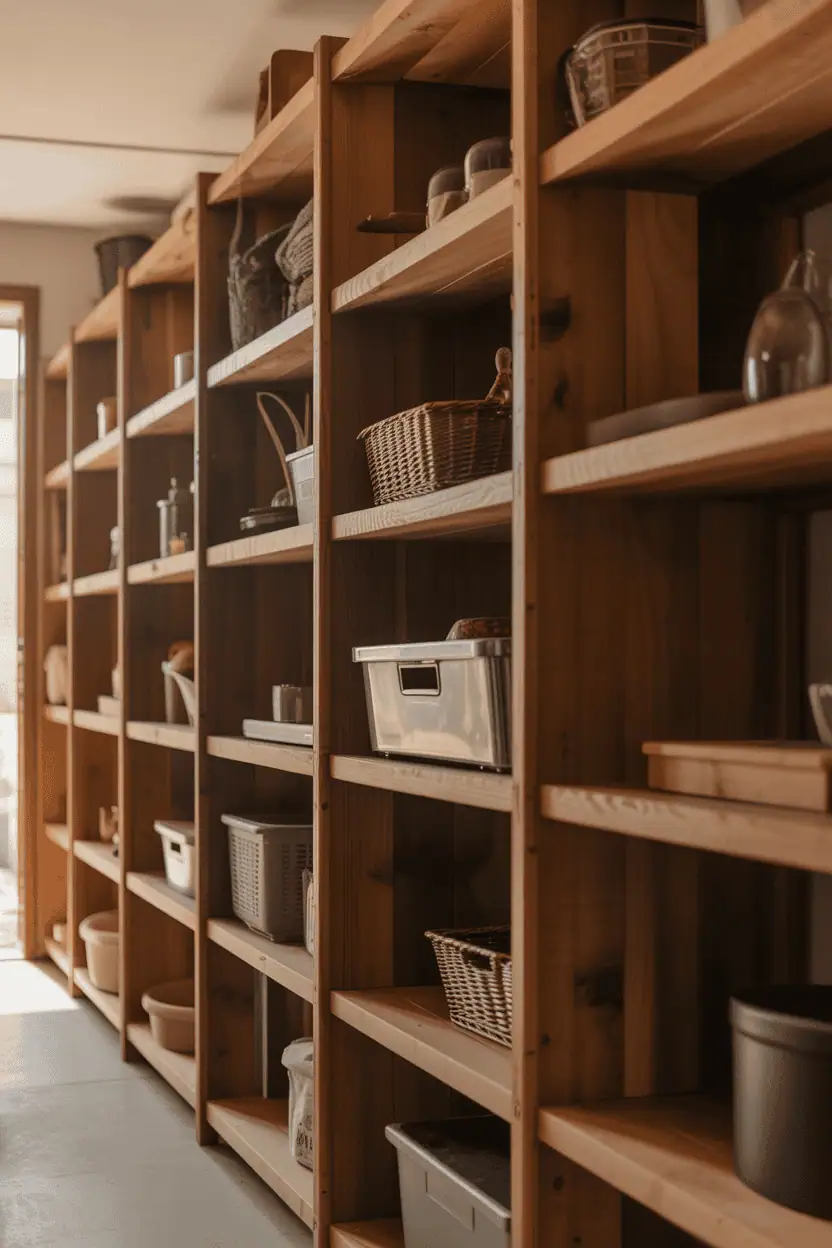
Rustic shelving pairs naturally with baskets, crates, and bins. The combination feels practical and visually cohesive.
This setup works especially well in entryways, mudrooms, and laundry areas. The shelves hold the weight; the baskets organize the mess.
Choose baskets that match the scale of the shelf to avoid a cluttered look.
7. Wide Spacing for Everyday Items

Rustic shelving benefits from breathing room. Wider spacing allows larger items to sit comfortably without forcing awkward stacking.
This tends to fail when shelves are packed too tightly together. Function matters more than fitting everything in.
Generous spacing makes storage feel calmer and more usable.
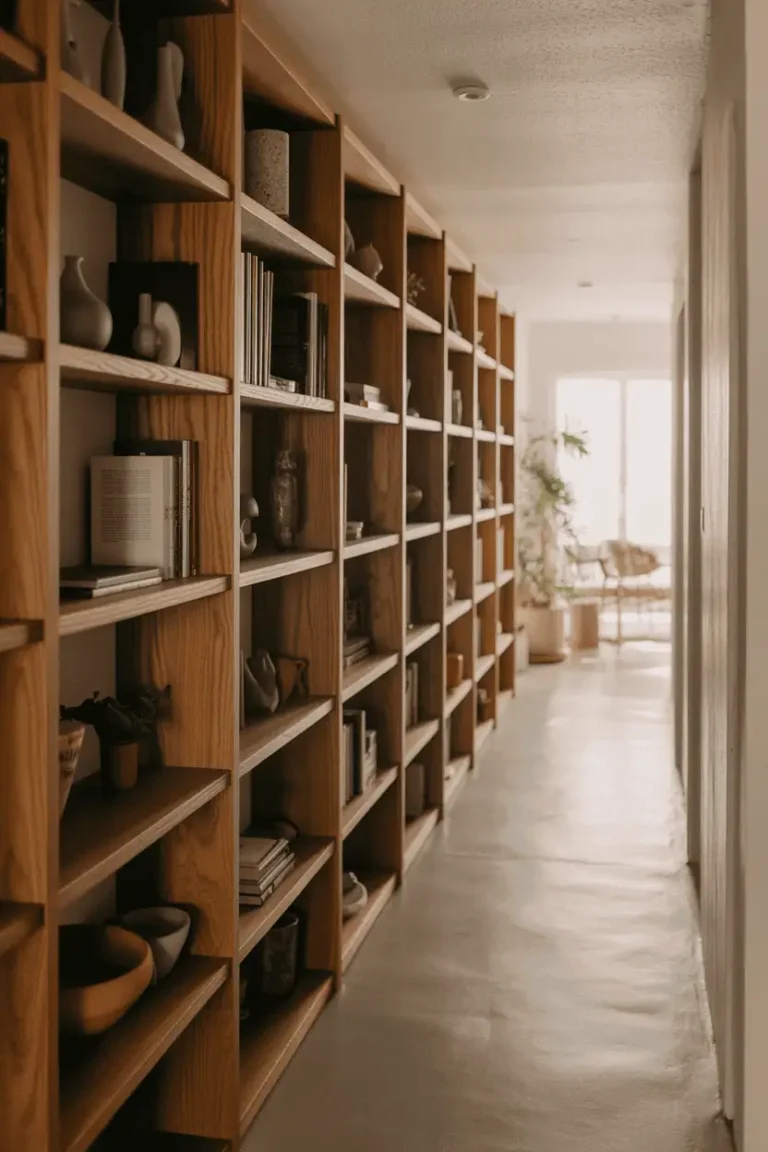
8. Rustic Wall-to-Wall Shelving

Wall-to-wall shelving creates a sense of permanence. It feels built-in, even when it isn’t.
This works best when shelves follow a consistent height and depth. Irregular spacing can feel messy in rustic setups.
Wall-to-wall shelving is ideal for workshops, offices, and storage-heavy rooms.

By now, the shelving should feel like part of the structure of the home — not an add-on.
9. Rustic Shelves in Utility Spaces

Garages, laundry rooms, and storage rooms are perfect places for rustic shelving. These spaces benefit from durability more than decoration.
Thick wood shelves handle weight and wear without complaint. Scratches only add to the look.
This is where rustic shelving feels most honest.
10. Let the Hardware Stay Visible

Unlike minimalist shelving, rustic styles don’t need to hide hardware. Screws, brackets, and supports can stay visible.
This works when the hardware feels intentional and sturdy. Cheap-looking fasteners break the illusion.
Visible structure reinforces the sense of durability.
11. Darker Wood for Heavier Storage

Darker wood tones add visual weight and work well when shelves are holding a lot.
This approach suits offices, libraries, and storage walls. Light wood can feel underpowered in these situations.
Balance darker shelves with lighter walls to avoid heaviness.
12. Rustic Shelving with Mixed Depths

Not everything needs the same shelf depth. Mixing deeper shelves with shallower ones adds flexibility.
This works well when deeper shelves are placed lower and shallower ones higher.
It keeps the storage functional without overwhelming the wall.

Rustic shelving isn’t about filling space. It’s about using space well.
13. Shelving That Prioritizes Strength Over Style

Rustic shelves don’t need decorative edges or details. Strength is the aesthetic.
Straight cuts, solid supports, and simple construction often look best.
If something feels too refined, it probably doesn’t belong here.
14. Allowing Imperfections to Show

Perfectly smooth wood often looks out of place in rustic settings. Small imperfections add warmth.
This works best when imperfections feel natural, not forced.
Let the material age naturally over time.
15. Rustic Shelving That Evolves with Use

The best rustic shelving doesn’t stay pristine. It changes as you use it.
Scuffs, wear, and shifting contents become part of the story.
This is storage meant to live with you, not perform for guests.
Styling Tips to Make Rustic Shelving Feel Intentional
- Keep finishes matte or lightly sealed
- Mix storage items with open space
- Use baskets to soften heavier wood
- Repeat materials for cohesion
- Avoid over-styling — use matters more than appearance
Conclusion
Rustic wood storage shelving works because it’s honest. It holds weight, handles wear, and adds warmth without asking for attention.
You don’t need a perfect setup or expensive materials. Start with one solid shelf. Let it do its job. Build from there if needed.
Over time, rustic shelving becomes part of the home’s structure — something you rely on without thinking about it. And that quiet reliability is exactly what makes it so appealing.

To bring you cozy inspiration more efficiently, we sometimes use AI to assist in content creation — but every word and idea is carefully shaped by our team. See our AI Disclosure for more info.