This post may contain affiliate links. If you click and buy, we may earn a small commission at no extra cost to you. Learn more.
Wooden benches are one of those pieces that quietly earn their place in a home. They’re not flashy. They don’t demand attention. And yet, once you add one, it’s hard to imagine the space without it.
A simple wooden bench works because it’s flexible. It can sit in an entryway one year, move to the foot of a bed the next, and later end up along a dining wall or under a window. The design doesn’t lock it into one role, which is exactly what makes it useful.
What defines a good bench isn’t decoration. It’s proportion, material, and restraint. Clean lines, solid wood, and a shape that feels easy to live with. When a bench is simple enough, it blends into the room while still adding warmth and structure.
This guide focuses on wooden benches that feel natural in real homes. Not overdesigned. Not precious. Just well-made pieces that support everyday life and age gracefully over time.

What you’ll find here:
- Simple wooden bench ideas for different rooms
- Guidance on choosing the right size and style
- Practical placement ideas that actually make sense
- Benches that support both function and calm design
Contents
- 1 1. Entryway Benches That Stay Uncomplicated
- 2 2. Benches at the Foot of the Bed
- 3 3. Simple Benches Along Dining Walls
- 4 4. Let the Wood Be the Design
- 5 5. Benches with Straight, Stable Legs
- 6 6. Low Benches for a Grounded Feel
- 7 7. Slim Benches for Smaller Spaces
- 8 8. Benches That Tuck Away Easily
- 9 9. Simple Benches in Living Spaces
- 10 10. Matte Finishes Over Gloss
- 11 11. Benches Without Built-In Storage
- 12 12. Let Space Around the Bench Breathe
- 13 13. Benches with Slightly Rounded Edges
- 14 14. Simple Benches That Age Gracefully
- 15 15. Choosing Fewer, Better Benches
- 16 Styling Tips to Make Simple Wooden Benches Feel Intentional
- 17 Conclusion
1. Entryway Benches That Stay Uncomplicated
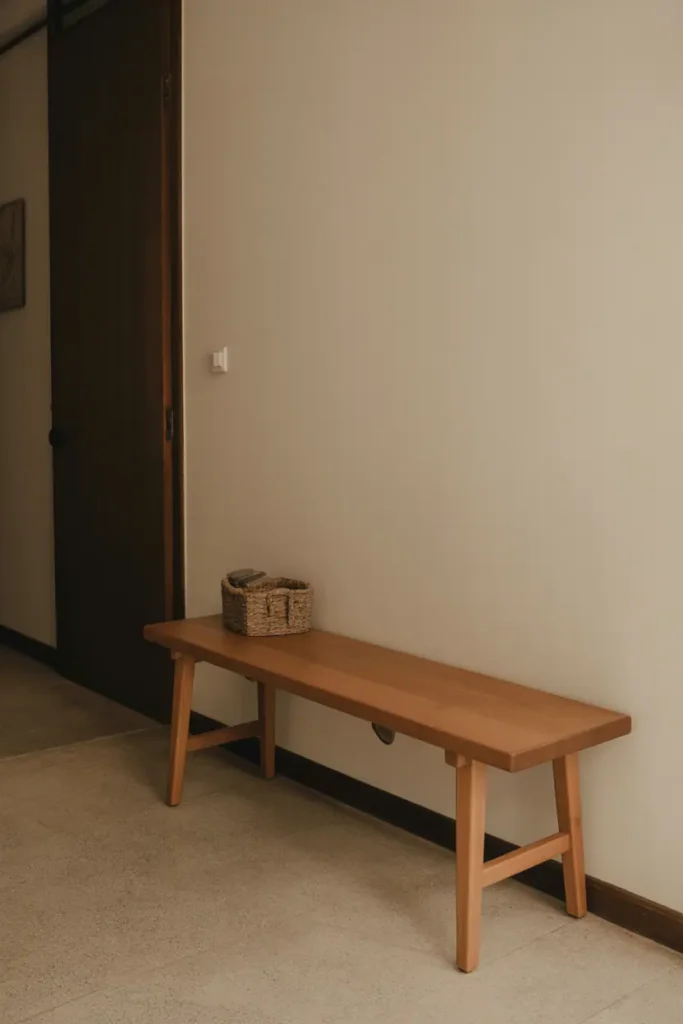
In an entryway, a bench should feel welcoming, not bulky. Simple wooden benches work best when they’re narrow enough to keep walkways clear but sturdy enough for daily use.
This setup works when the bench stays visually light. Avoid thick backs or heavy arms that crowd the space. A flat seat and clean legs are often enough.
Entryway benches earn their keep by being easy to use, not by trying to stand out.
2. Benches at the Foot of the Bed
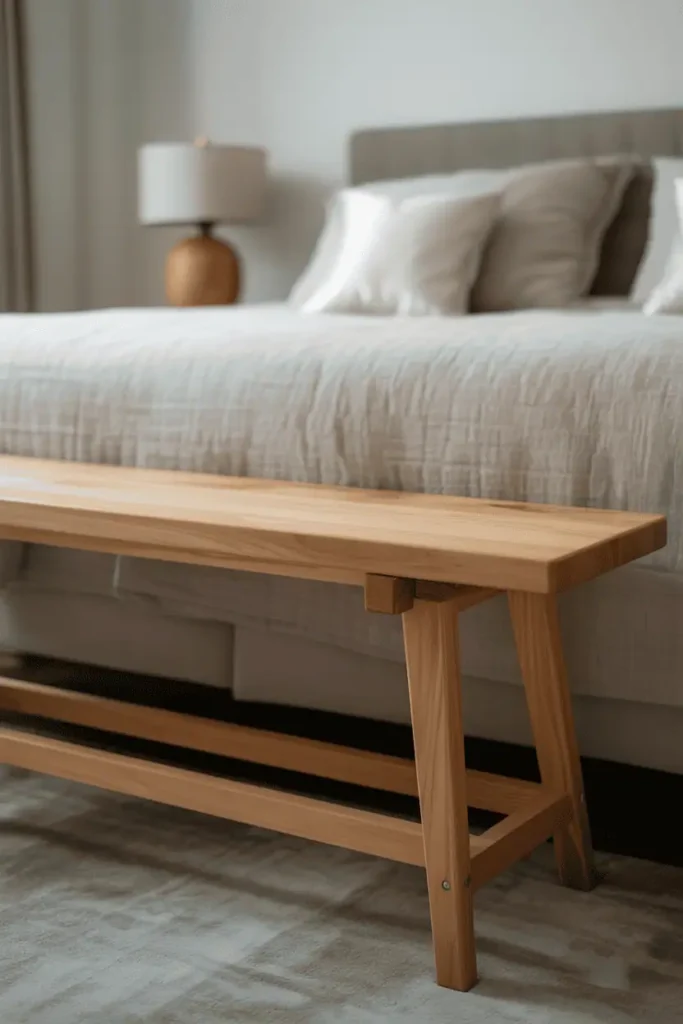
A wooden bench at the foot of the bed adds structure without softness competing with bedding. It’s a visual anchor that keeps the room feeling grounded.
This works best when the bench is slightly lower than the mattress and not upholstered. Wood keeps the look clean and calm.
Use it for folded blankets or simply leave it mostly empty.
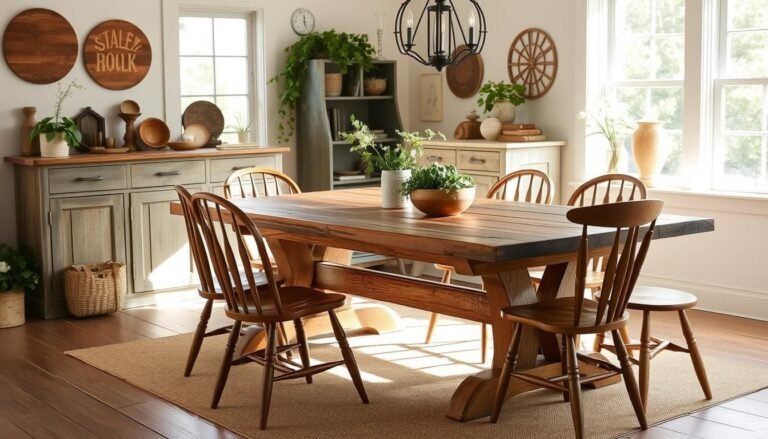
3. Simple Benches Along Dining Walls
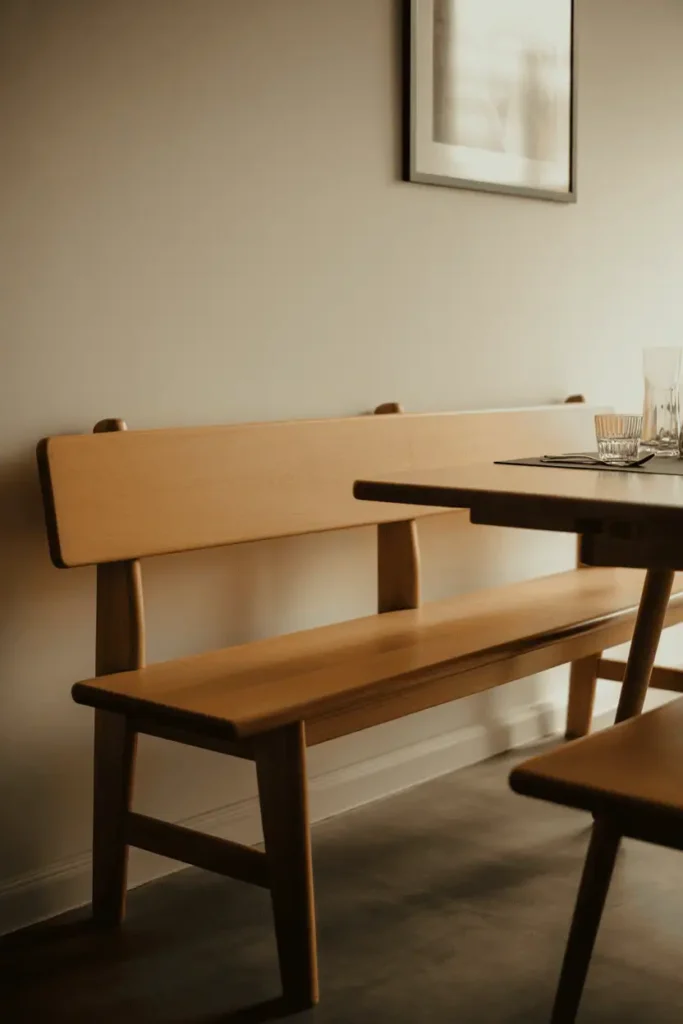
Benches along dining walls feel relaxed and informal. They soften the room without turning it into a seating-heavy space.
This works well in smaller dining areas where chairs might feel crowded. A simple wood bench keeps the layout flexible.
It’s especially useful when seating needs change often.
4. Let the Wood Be the Design
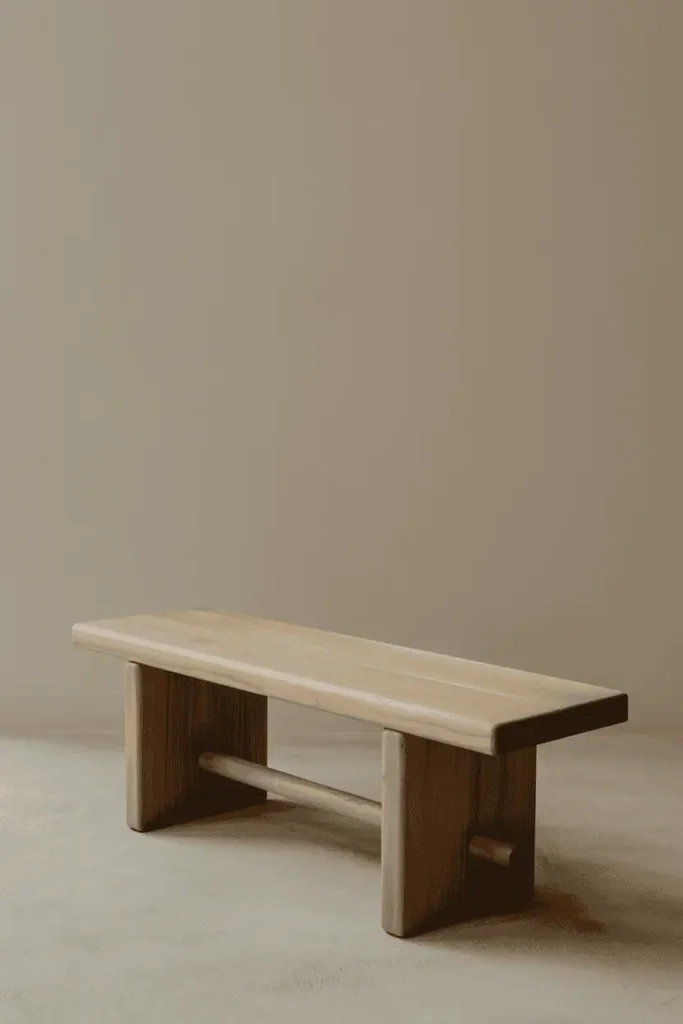
Simple benches don’t need decorative details. The wood itself should be the feature.
Visible grain, honest joinery, and clean edges do more than carved details ever could. Overworking the design usually makes benches feel less timeless.
Design tip: if you notice the details first, the bench may be doing too much.
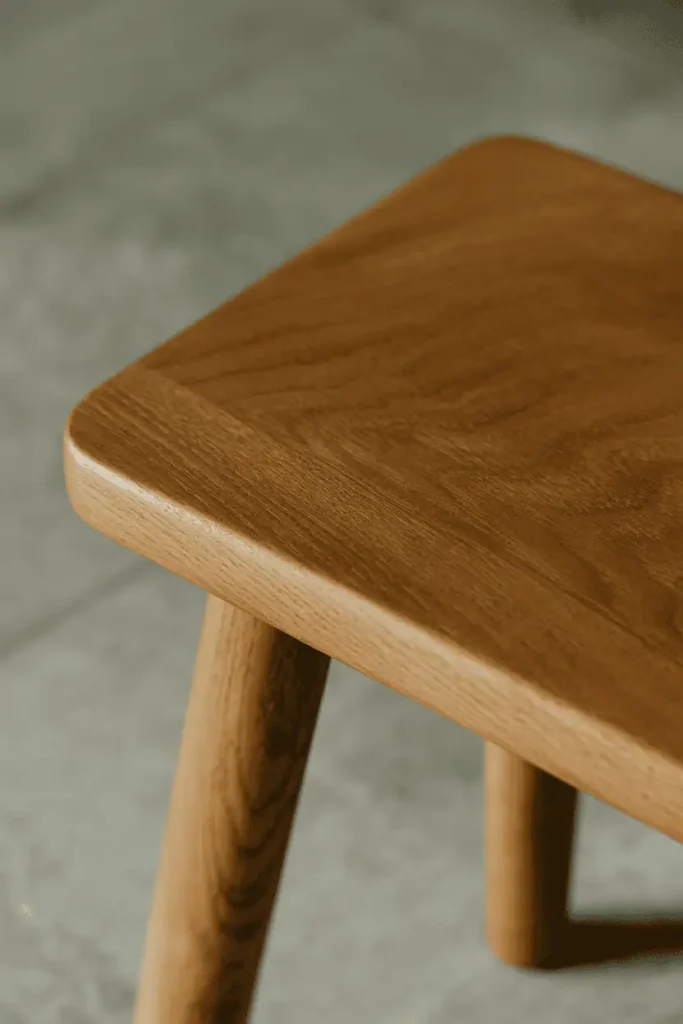
By now, it should be clear that simplicity isn’t a limitation. It’s what allows these benches to move easily between rooms and uses.
5. Benches with Straight, Stable Legs
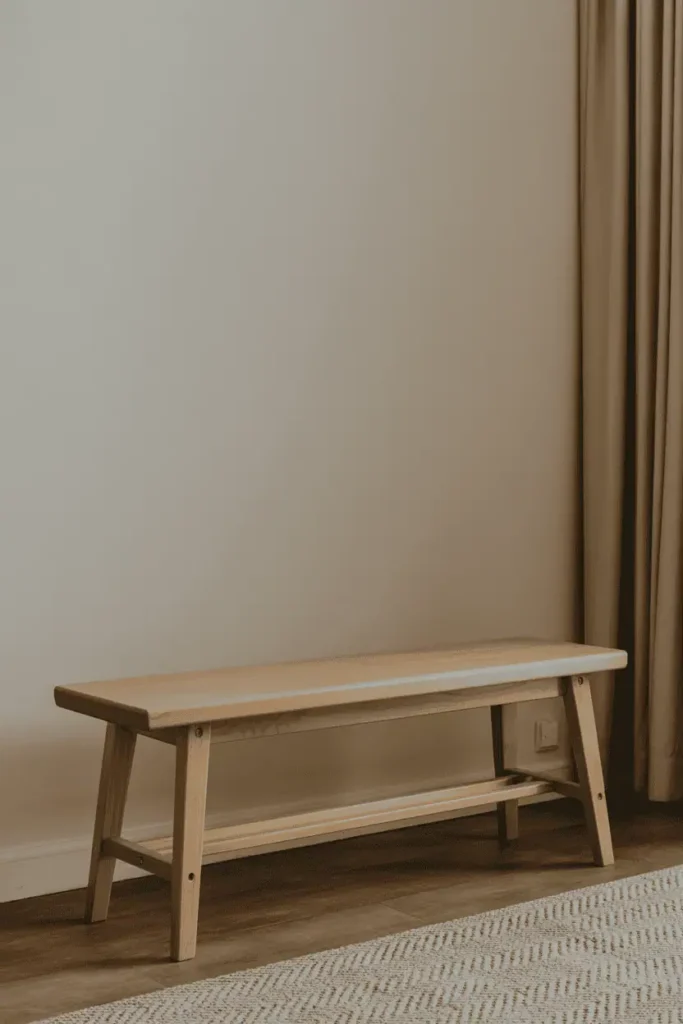
Straight legs keep a bench visually quiet. Angled or sculptural legs can look beautiful, but they draw attention.
In simple interiors, stability reads as calm. The bench feels reliable rather than decorative.
This is especially important in shared or high-traffic spaces.
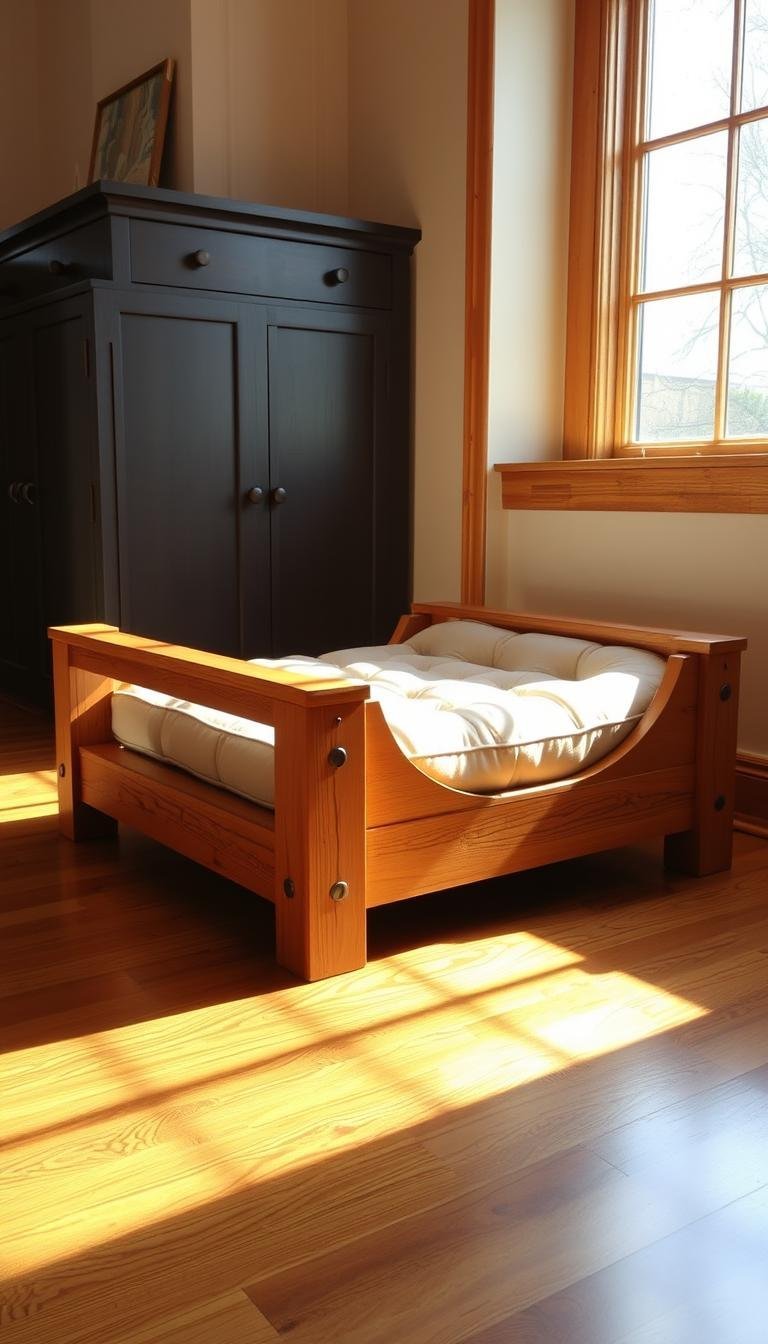
6. Low Benches for a Grounded Feel
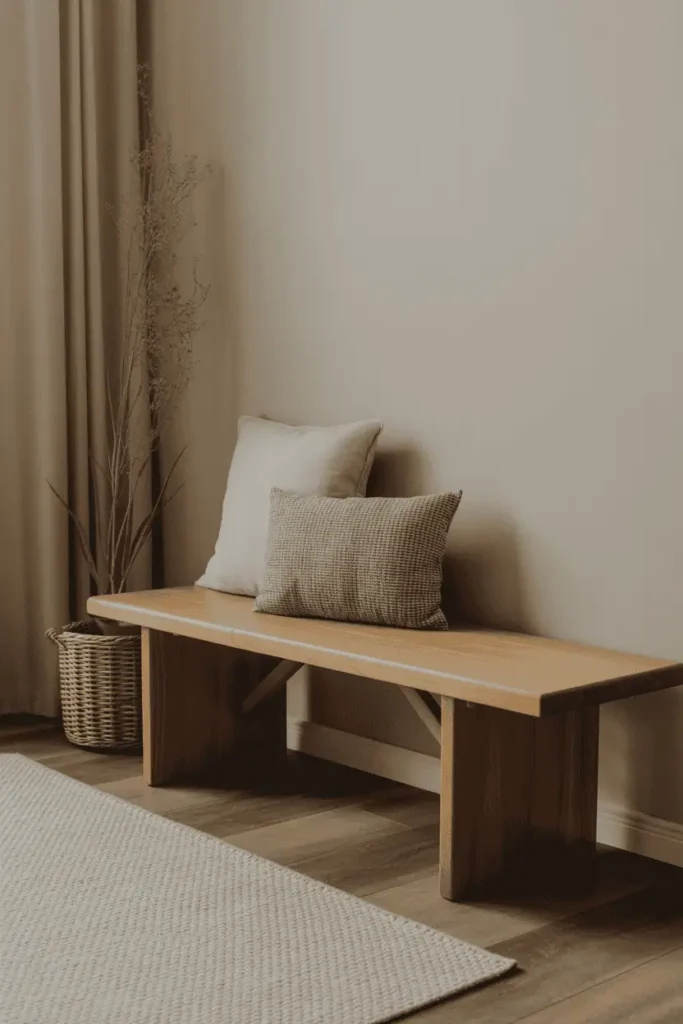
Lower benches help rooms feel more relaxed. They sit closer to the floor and reduce visual height.
This works particularly well in bedrooms, hallways, and living rooms where calm matters more than formality.
Avoid benches that sit too high unless they’re paired with tables or counters.
7. Slim Benches for Smaller Spaces
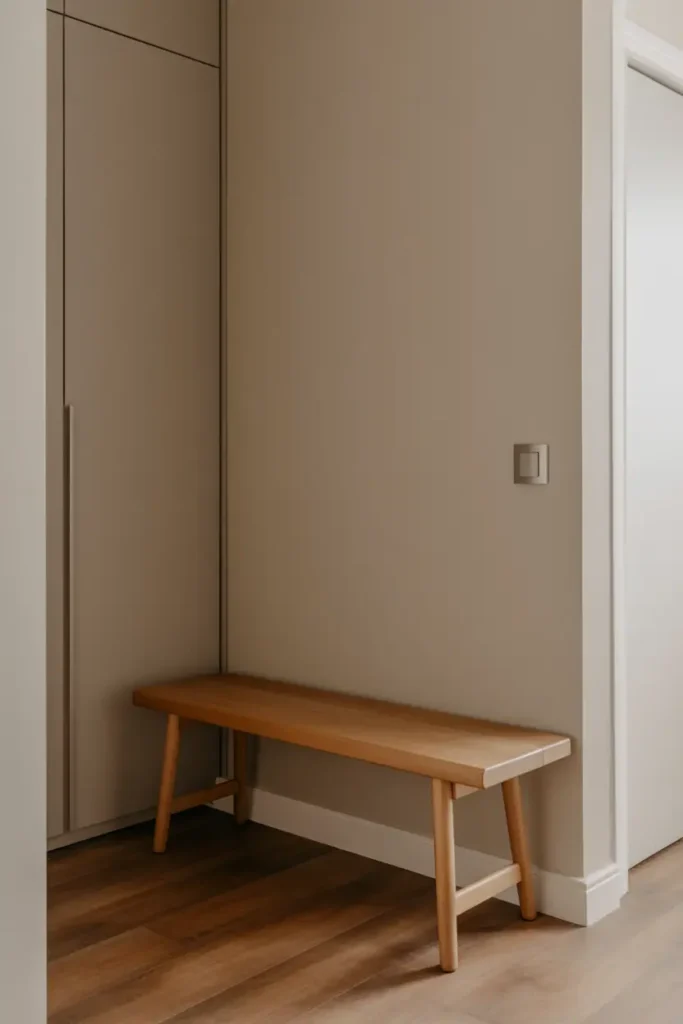
Not every bench needs presence. Slim-profile benches work well in narrow spaces where function matters more than scale.
They’re easier to place, easier to move, and less visually demanding.
This is often the safest choice for apartments or tight layouts.
8. Benches That Tuck Away Easily
Simple benches are easiest to live with when they can slide under tables, consoles, or windowsills.
This keeps the room adaptable and avoids permanent visual clutter.
Look for benches without backs or arms for maximum flexibility.
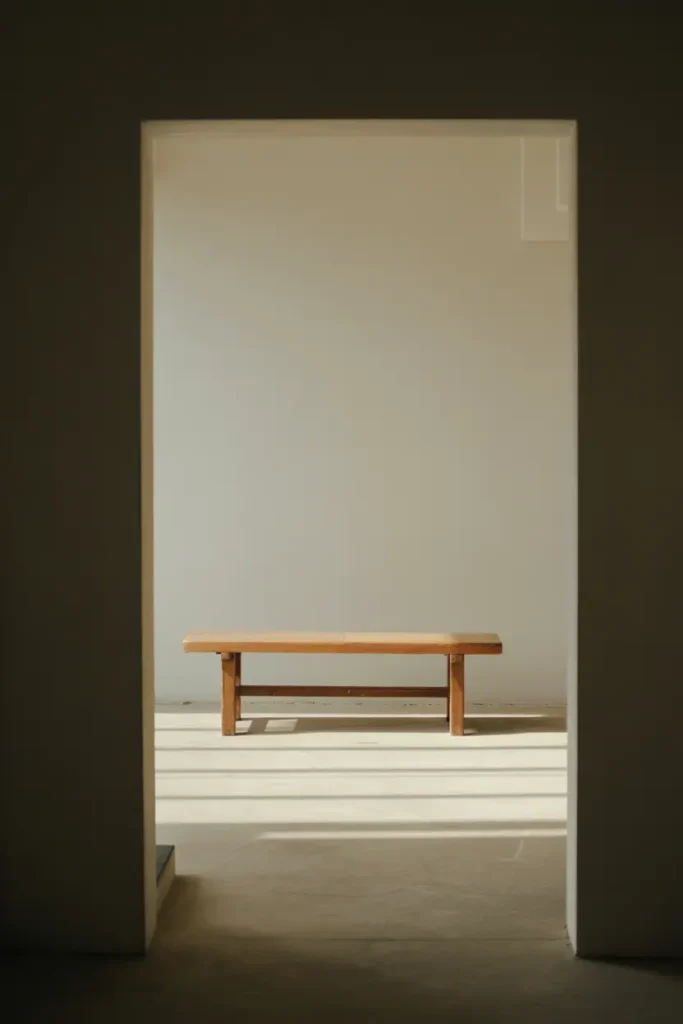
At this point, the pattern should feel clear: the best benches don’t insist on a single role.
9. Simple Benches in Living Spaces
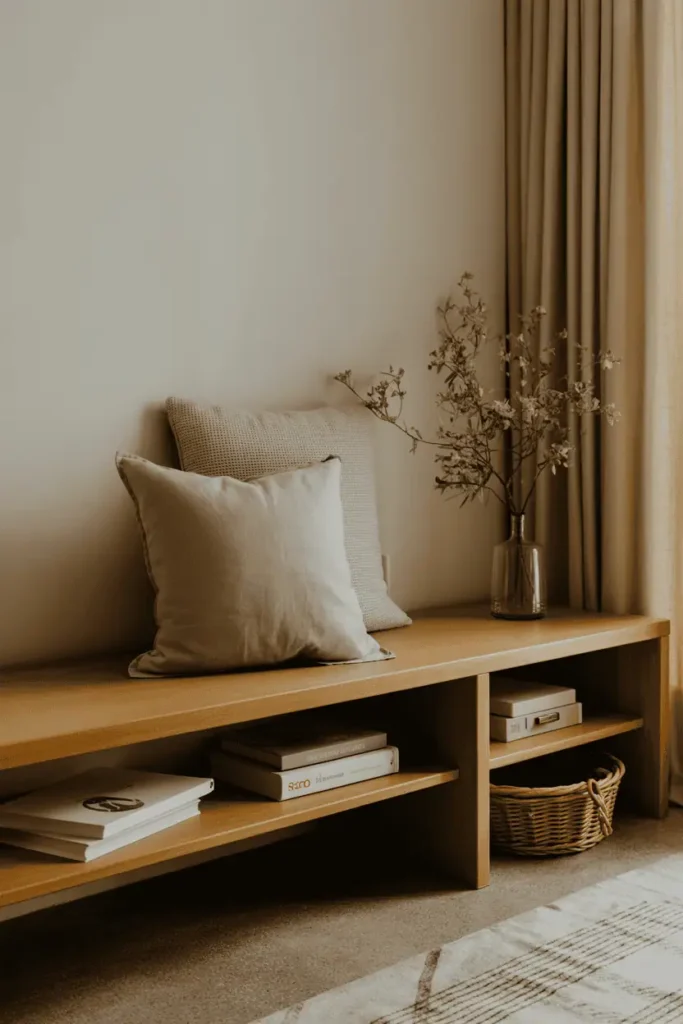
In living rooms, wooden benches work best when they act as secondary seating or subtle surfaces.
They shouldn’t compete with sofas or chairs. Instead, they fill gaps — under windows, behind sofas, along walls.
Keep styling minimal to avoid turning them into clutter magnets.
10. Matte Finishes Over Gloss
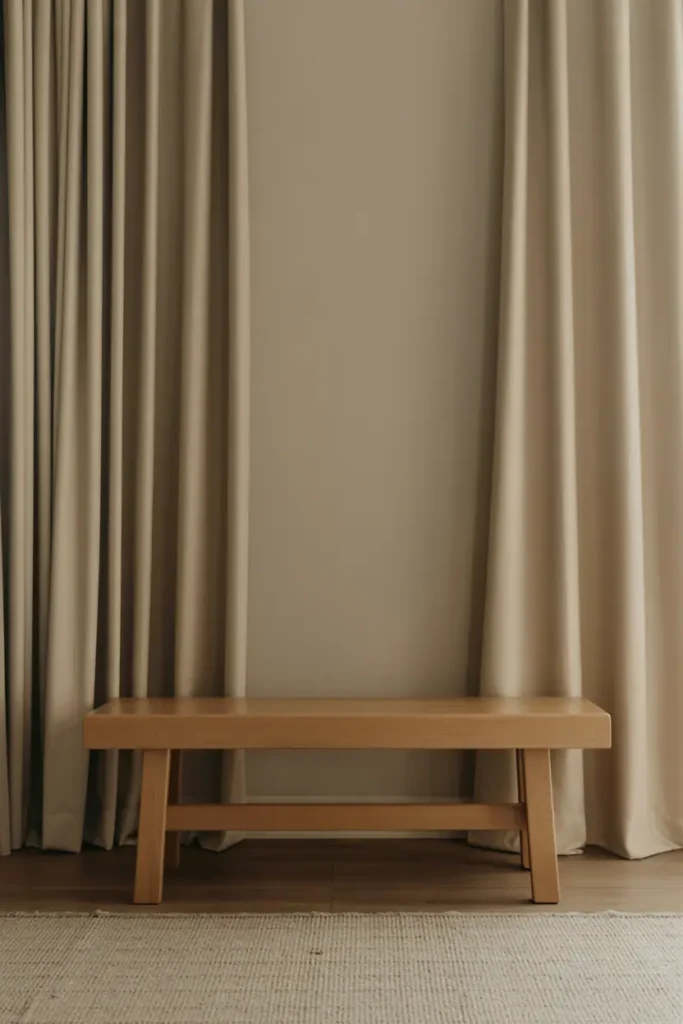
Glossy finishes make benches feel formal and fragile. Matte or lightly sealed wood feels more relaxed and forgiving.
This also helps hide wear over time. Small marks add character instead of standing out.
A bench that looks better with age is always the right choice.
11. Benches Without Built-In Storage
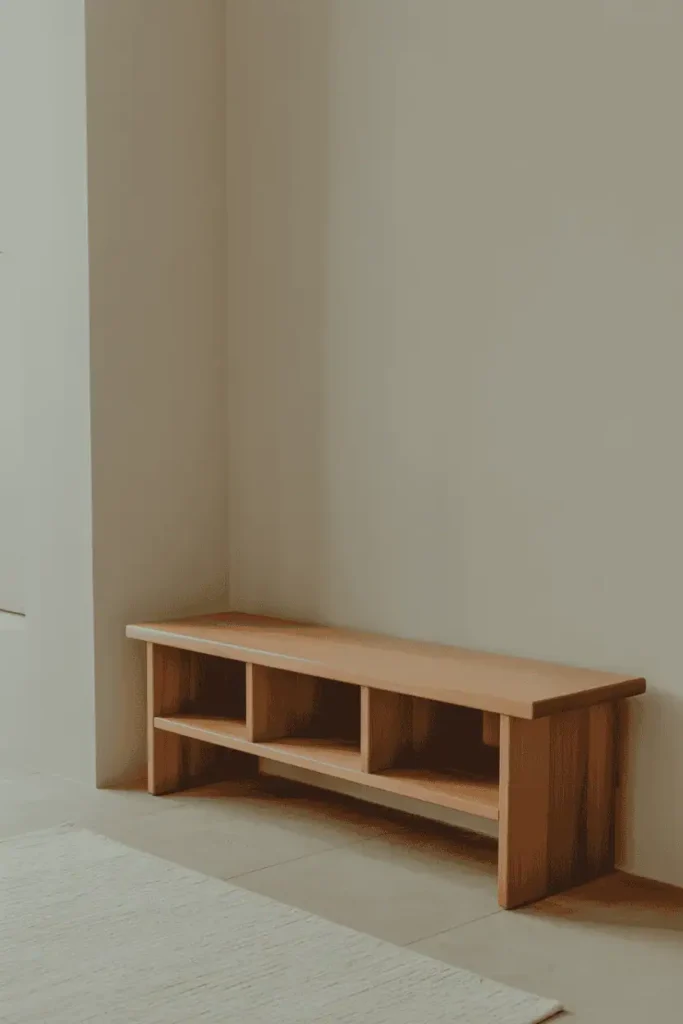
While storage benches are tempting, simplicity often suffers. Open, solid benches feel lighter and more adaptable.
They’re easier to move and easier to style. Storage can come from baskets placed nearby instead.
Style note: not every piece needs to multitask.
12. Let Space Around the Bench Breathe
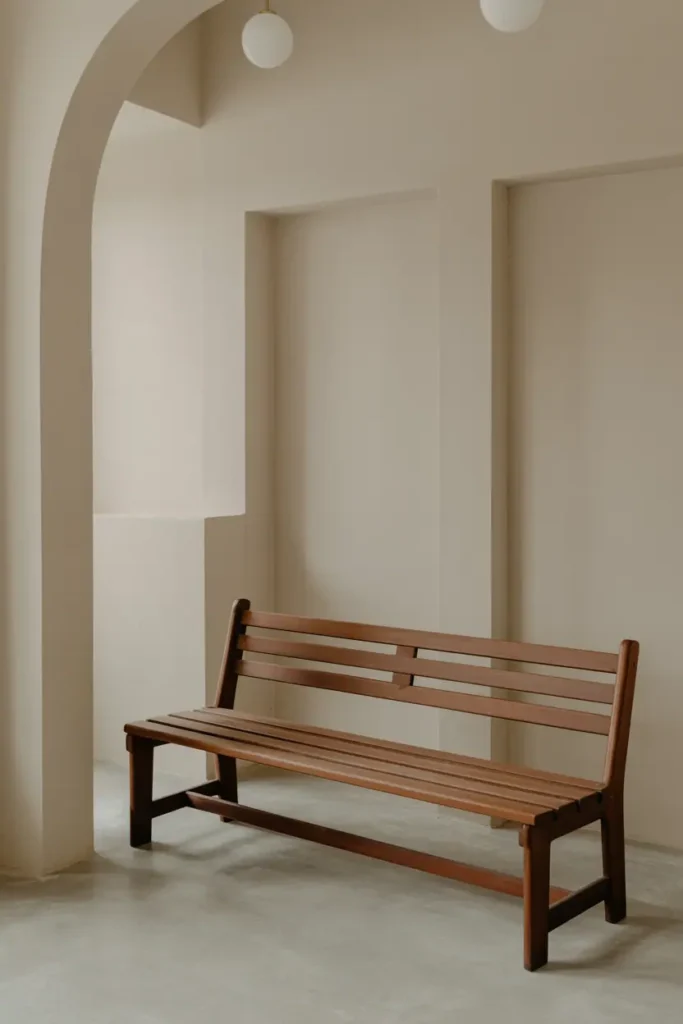
A bench needs negative space to work well. Cramming it between furniture makes it feel accidental.
Give it room on at least one side. Let it read as intentional, not leftover.
This small adjustment often makes a big difference.
Good benches don’t announce themselves. They simply feel right where they are.
13. Benches with Slightly Rounded Edges
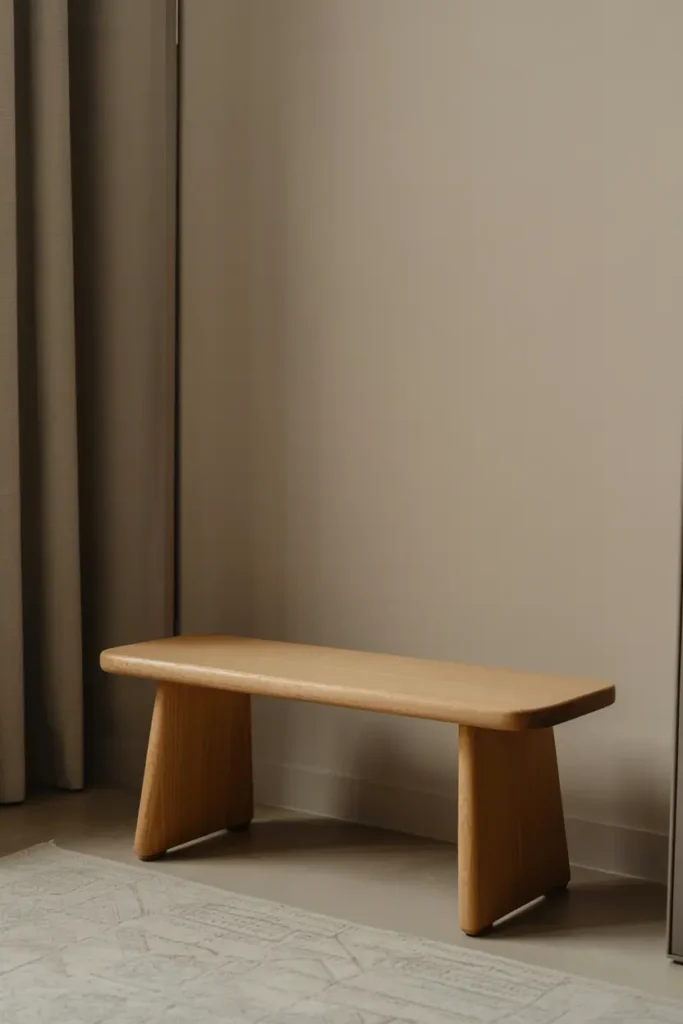
Sharp edges can feel harsh in calm interiors. Slightly softened edges keep benches feeling approachable.
This detail is subtle but noticeable over time, especially in family homes.
Comfort often lives in the details you don’t consciously notice.
14. Simple Benches That Age Gracefully
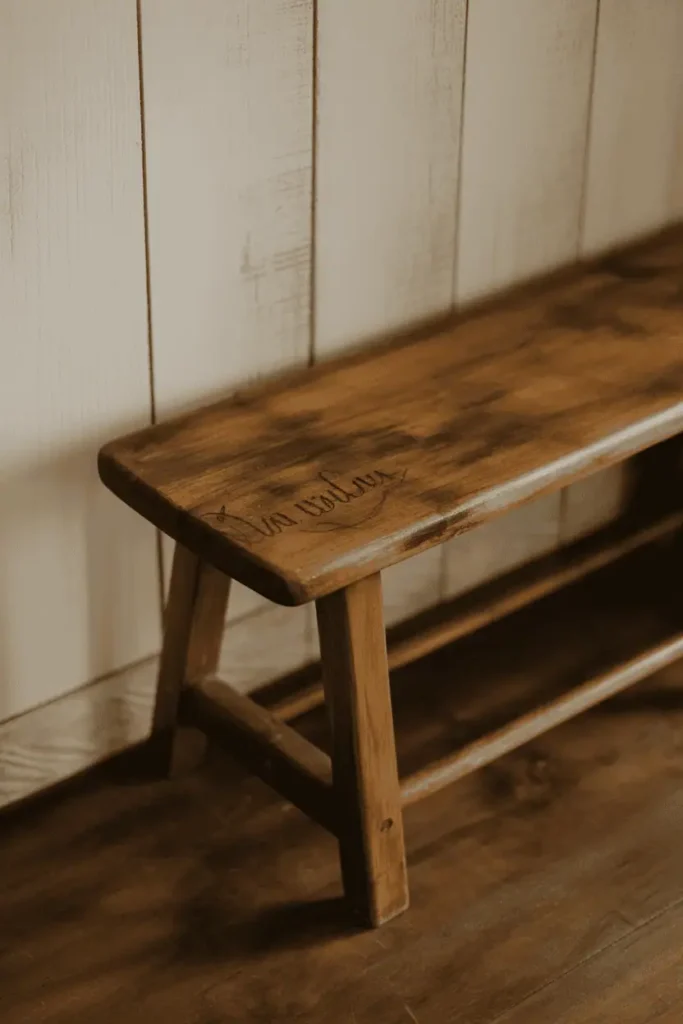
The best wooden benches don’t look perfect forever — and that’s a good thing.
Scratches, wear, and subtle changes in color add depth. A bench that tells a story feels more at home.
Avoid finishes that try too hard to stay pristine.
15. Choosing Fewer, Better Benches

One well-chosen bench does more than several average ones. Overfurnishing weakens the impact.
Take time choosing the right size and wood tone. Let it settle before adding another.
Restraint is what makes simplicity work.
Styling Tips to Make Simple Wooden Benches Feel Intentional
- Keep styling minimal and purposeful
- Let wood grain remain visible
- Avoid crowding benches with decor
- Use benches to anchor quiet zones
- Allow wear to add character over time
Conclusion
Simple wooden benches work because they don’t try to do too much. They offer flexibility, warmth, and function without demanding attention.
You don’t need a perfect spot right away. Try one where it feels useful now, and move it later if needed. That adaptability is part of the appeal.
Save the ideas that feel right. Revisit them when your space changes. A good wooden bench isn’t tied to a trend or a room — it’s something you live with, adjust, and rely on quietly over time.

To bring you cozy inspiration more efficiently, we sometimes use AI to assist in content creation — but every word and idea is carefully shaped by our team. See our AI Disclosure for more info.