This post may contain affiliate links. If you click and buy, we may earn a small commission at no extra cost to you. Learn more.
Small entryways demand clarity. There’s no room for decorative ambiguity or furniture that doesn’t earn its place. Wood anchors these spaces because it brings warmth without bulk—a narrow console, a wall-mounted shelf, a bench that doubles as storage. The material itself provides visual interest through grain and tone, which means you need fewer objects to make the space feel considered.
What separates a functional small entryway from a cluttered one is restraint. One mirror, not three. A single hook rail, not a coat rack that crowds the wall. Maybe a basket underneath a bench, but not a stack of them. The wood elements provide structure while everything else—keys, mail, seasonal items—has a designated but hidden place.
These concepts work in apartments with narrow hallways, older homes with tiny foyers, and houses where the front door opens directly into living space. The challenge is always the same: create a moment of arrival without sacrificing floor space or making the area feel cramped. Wood helps because it reads as intentional and warm rather than makeshift.
The best small entryways feel like they’ve been edited down to essentials, not like they’re missing something. They’re the result of choosing carefully rather than filling automatically.
Contents
- 1 What you’ll find here:
- 2 1. Floating Walnut Shelf with Single Large Mirror Above
- 3 2. Slim Bench in Light Oak with Woven Basket Storage Underneath
- 4 3. Wall-Mounted Console in Natural Pine with Single Drawer
- 5 4. Narrow Hallway with Floor-to-Ceiling Wood Slat Accent Wall
- 6 5. Small Front Entryway with Corner Bench and L-Shaped Storage
- 7 6. Tiny Entryway with Wall-Mounted Pegboard in Wood Finish
- 8 7. Small Hallway with Built-In Niche and Recessed Wood Shelving
- 9 8. Minimal Entryway with Single Live-Edge Wood Shelf
- 10 9. Small Foyer with Wood Console Table and Vertical Mirror
- 11 10. Small Entrance with Wall-Mounted Coat Rack and Lower Wood Shelf
- 12 11. Small Entry Way with Bench and Overhead Storage Cubbies
- 13 12. Tiny Entryway with Fold-Down Wood Table
- 14 13. Small Entrance Hall with Wood Mirror Frame and Floating Drawer
- 15 14. Small Space Entryway with Ladder-Style Coat Rack and Basket
- 16 15. Minimal Small Entryway with One Statement Wood Piece
- 17 Styling Tips to Pull the Look Together
- 18 Conclusion
What you’ll find here:
- Distinct small entryway concepts using wood strategically
- Inspiration you can adapt to narrow hallways and tight foyers
- Complete looks that balance function with visual calm
- Ideas that work whether you have 2 feet or 6 feet of wall space
1. Floating Walnut Shelf with Single Large Mirror Above
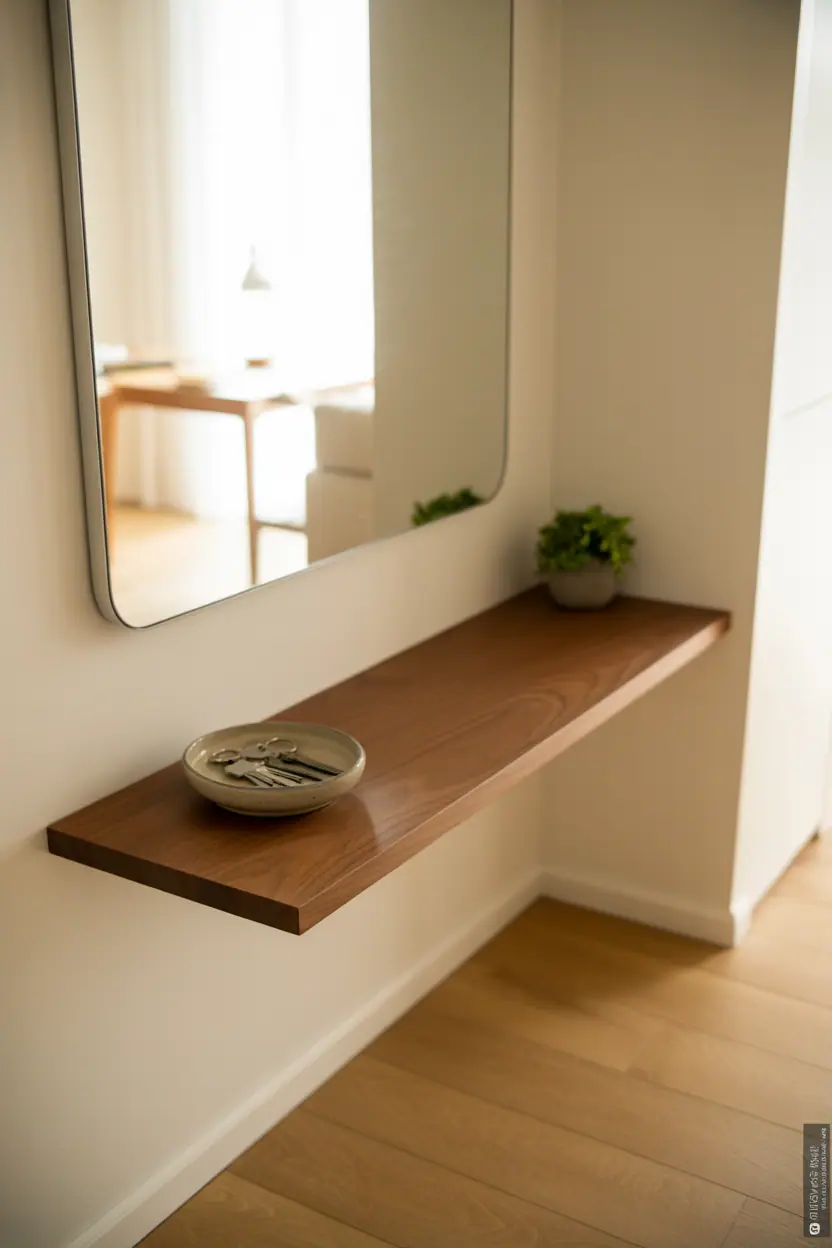
A narrow floating shelf in dark walnut mounted at waist height, maybe 8-10 inches deep, running 3-4 feet along the wall. Above it, one large rectangular mirror in a simple wood frame reaches nearly to the ceiling. Below the shelf, nothing—the floor stays completely clear. A small ceramic tray sits on the shelf for keys and a single sculptural object.
This works because the vertical emphasis draws the eye up, making the narrow space feel taller rather than more compressed. The floating shelf provides function without visual weight at floor level. This concept suits extremely tight entryways—those 2-3 foot wide hallways where traditional furniture simply won’t fit. The dark walnut grounds the space while the mirror reflects light.
Design note: The shelf needs to stay narrow (under 10 inches) or it will crowd the walkway. Any deeper, and people will bump into it.
2. Slim Bench in Light Oak with Woven Basket Storage Underneath
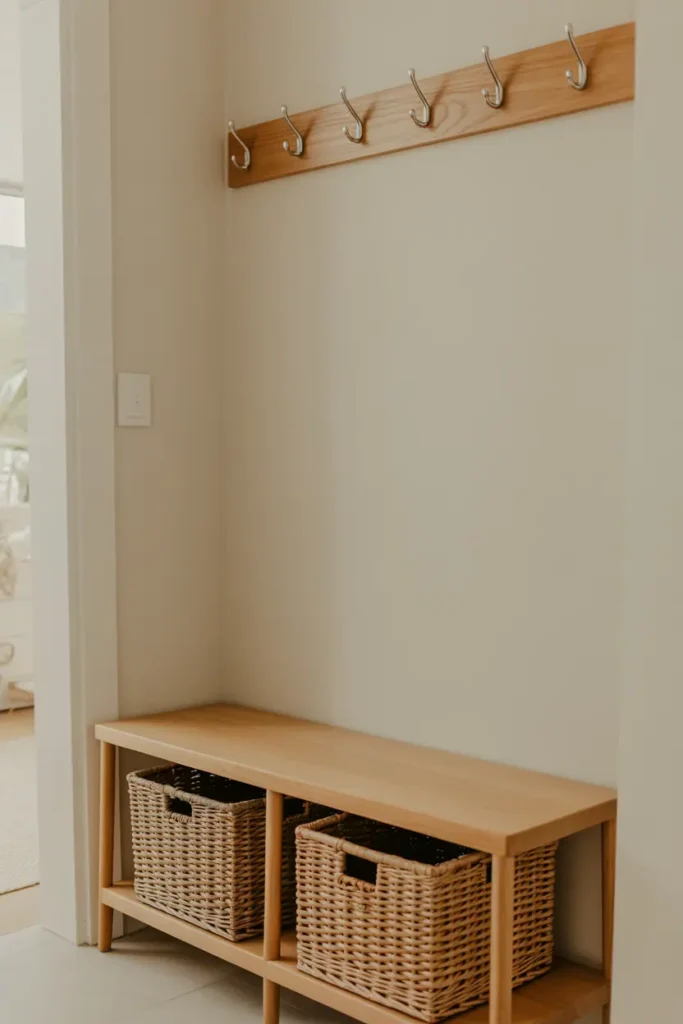
A bench no deeper than 12 inches in light oak, positioned against the longest available wall. The bench has open space underneath where two flat woven baskets slide in to hold shoes, scarves, or bags. Above the bench, a simple coat hook rail in the same light oak. White walls keep everything bright.
The palette stays neutral—light wood, white walls, natural fiber baskets. This approach works for entryways that are narrow but have enough wall length for a bench (at least 4 feet). The light oak doesn’t visually crowd the space the way darker woods might, and the storage stays mostly hidden. This suits families or anyone who needs practical storage but doesn’t want clutter visible.
3. Wall-Mounted Console in Natural Pine with Single Drawer
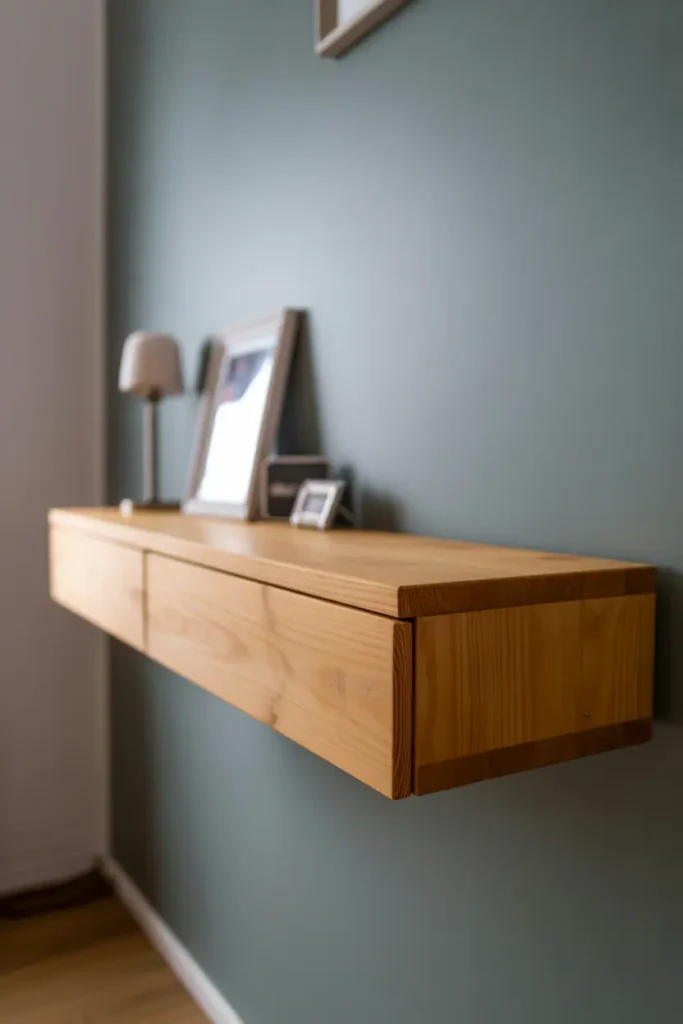
A wall-mounted console in natural pine, 6-8 inches deep with one narrow drawer for keys, mail, and small items. The console appears to float because it’s mounted on hidden brackets. A small table lamp sits on top, and maybe one framed photo. The wall behind is painted a soft gray to create subtle contrast with the pine.
This concept works in entryways where floor space is at a premium but wall space exists. The single drawer keeps essentials contained, and the shallow depth means the console doesn’t intrude into walking space. The pine’s natural finish keeps the tone warm without going dark. This approach feels strongest when you commit to keeping the surface mostly clear—the lamp and one object, nothing more.
4. Narrow Hallway with Floor-to-Ceiling Wood Slat Accent Wall
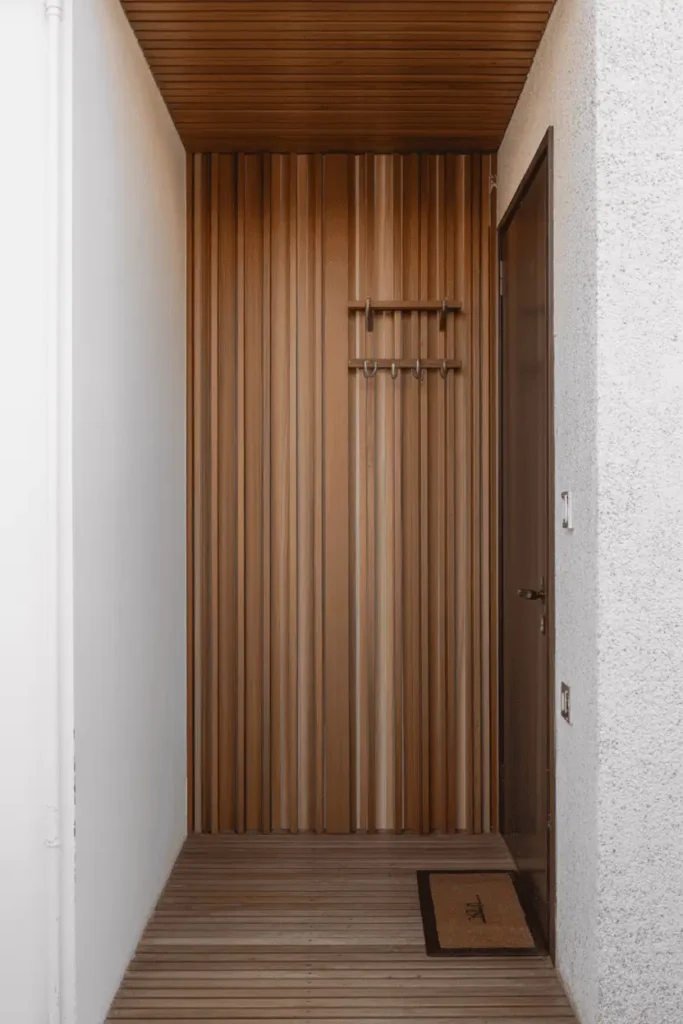
For a very small entryway with no room for furniture, the wood becomes architectural. One wall—usually the first wall visible from the front door—gets vertical wood slats in a medium tone, running floor to ceiling. Three or four simple metal hooks attach to the slats for coats and bags. The opposite wall stays white, and the floor remains completely clear.
This transforms the constraint into the design. Without space for a console or bench, the wood wall provides visual warmth and texture while the hooks offer function. This works in apartment hallways and narrow entryways where traditional furniture would block traffic flow. The slats add depth through shadow and repetition without taking up any floor space.
The slats need to run vertically to emphasize height; horizontal slats would make the narrow space feel more compressed.
5. Small Front Entryway with Corner Bench and L-Shaped Storage
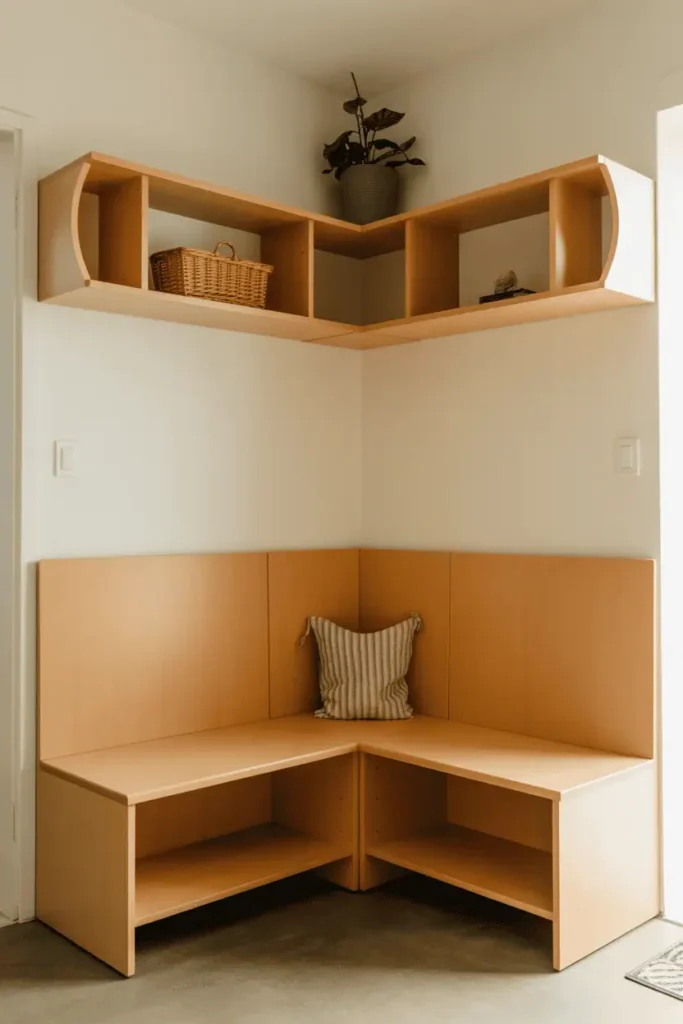
In a compact foyer, a small corner bench in light wood—maybe birch or ash—fits into the 90-degree angle where two walls meet. The bench has lift-up storage inside. Above it, an L-shaped shelf wraps the corner at about shoulder height, providing space for a small basket and one plant. The corner placement leaves the center of the entryway open for movement.
This works when you have a defined entryway space (not just a hallway) but it’s small—maybe 4×4 feet or 5×5 feet. Using the corner efficiently means the center stays clear. The light wood keeps it from feeling too enclosed. This concept suits homes where the entryway is a distinct small room rather than a transitional hallway.
At this point, the pattern should be clear: small entryways need wood that provides warmth without mass, and every element must justify its presence through function.
6. Tiny Entryway with Wall-Mounted Pegboard in Wood Finish
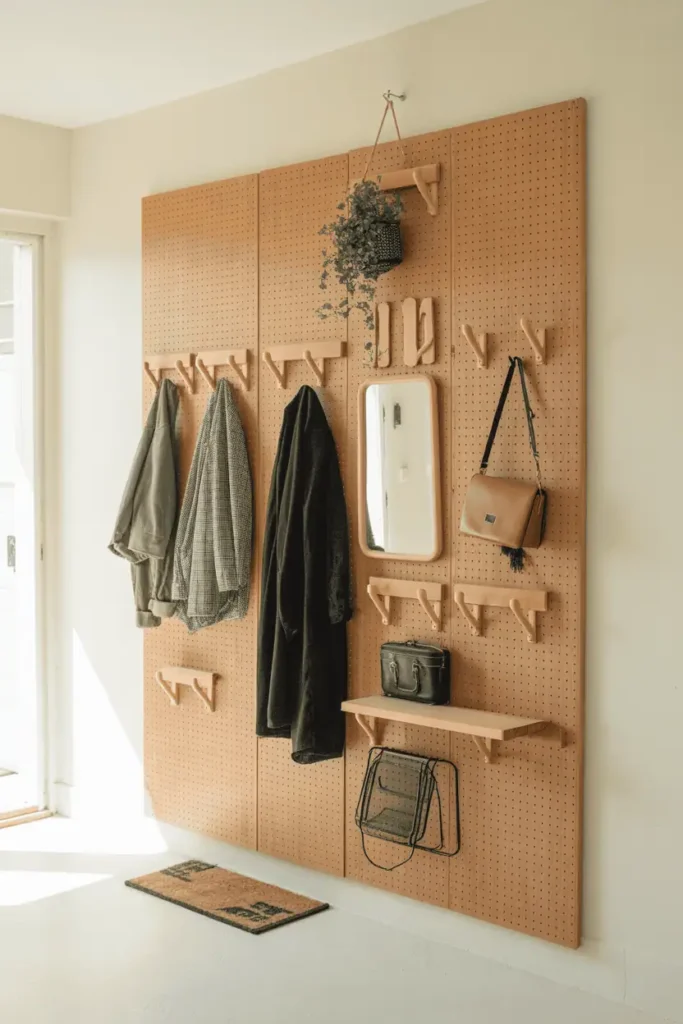
A pegboard panel in natural wood finish (or wood-toned laminate) mounted on the wall, about 2 feet wide and 4 feet tall. Wooden pegs hold coats, bags, a small mirror, and one small hanging plant. Everything stays on the wall. The floor has only a small doormat, nothing else. The pegboard provides visible organization without requiring any floor space.
This approach works for renters or anyone who wants flexibility. The pegs can be rearranged as needs change. It’s more casual than a formal console setup, suited to young adults, families with kids, or anyone prioritizing function over formality. The wood tone keeps it from looking too utilitarian or garage-like. This tends to fall flat in more traditional or formal homes where pegboard reads as too industrial.
7. Small Hallway with Built-In Niche and Recessed Wood Shelving
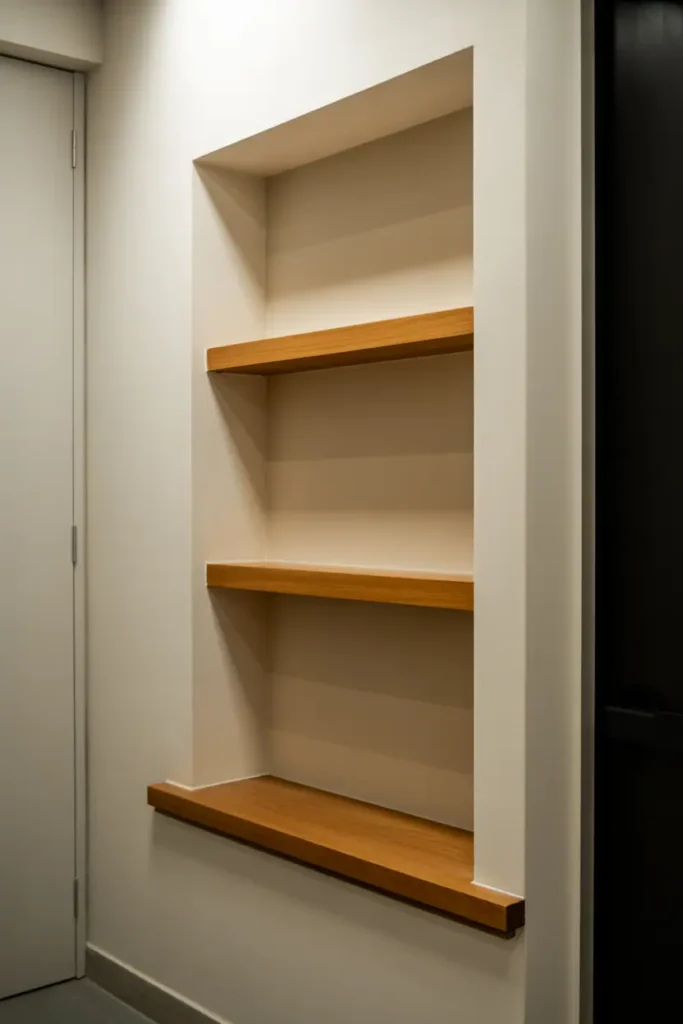
If the architecture allows, a small recessed niche carved into the wall (or built out slightly) with three narrow wood shelves in warm oak. The shelves are shallow—4-6 inches—just enough for keys, mail, a small vase. Below the niche, a narrow wood ledge at seating height serves as a perch but doesn’t project far enough to be called a bench. Everything stays within the wall plane or just slightly proud of it.
This requires construction or renovation, so it’s not universally adaptable. But in the right space—a narrow hallway in an older home being updated, or new construction—it provides storage without sacrificing walkway width. The wood shelves and ledge add warmth to what would otherwise be just painted walls. This concept suits homeowners willing to invest in built-ins for a permanent solution.
8. Minimal Entryway with Single Live-Edge Wood Shelf
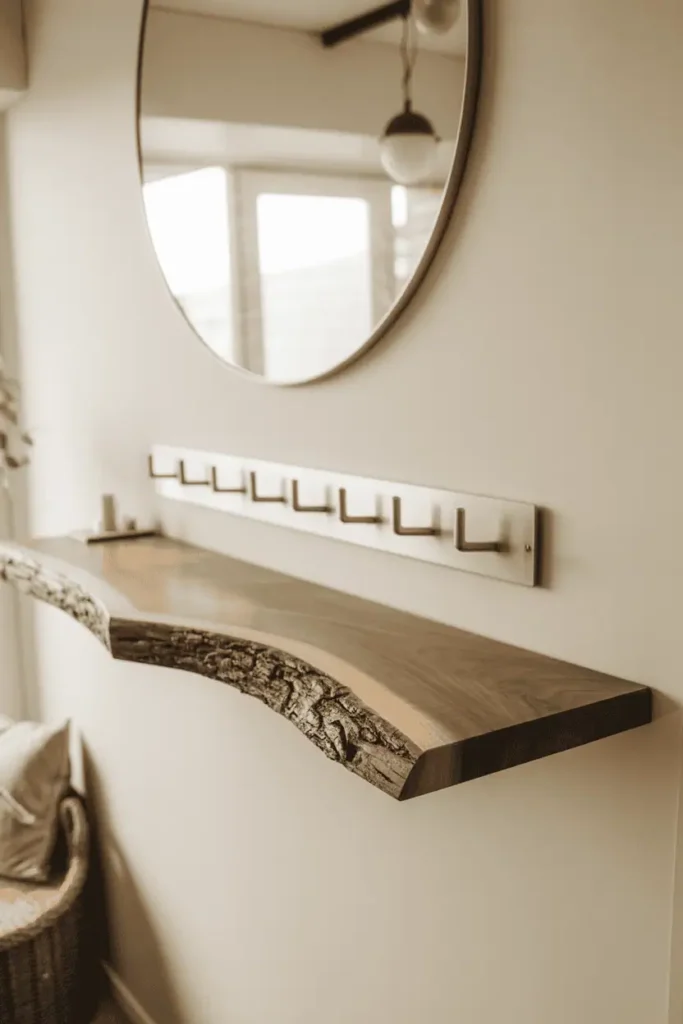
One piece of live-edge wood—walnut or oak with natural edge intact—mounted as a floating shelf. It’s the only wood element in the entryway. Below it, a simple metal hook strip. Above it, a round mirror. The live-edge shelf provides organic warmth and becomes a small sculptural moment in an otherwise minimal white entryway.
This works when you want wood presence without committing to lots of wood furniture. The live edge makes the single shelf feel intentional rather than insufficient. This approach suits modern or contemporary homes where too much wood would feel out of place, but some natural material is wanted. The shelf should be substantial enough (at least 2 inches thick) to read as a piece, not just functional storage.
9. Small Foyer with Wood Console Table and Vertical Mirror
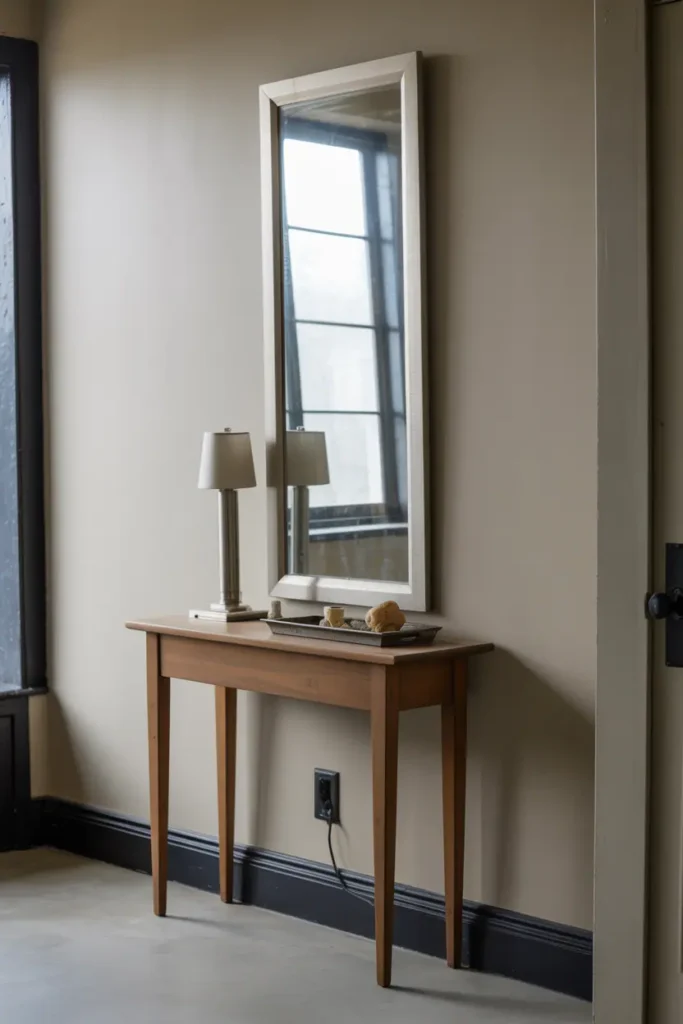
A very narrow console—10-12 inches deep maximum—in medium-toned wood, positioned against the main wall. Above it, a tall vertical mirror (at least 4-5 feet tall, narrow width) that emphasizes height. One table lamp on the console, a small tray for keys, nothing more. The vertical mirror visually extends the space upward while the narrow console provides just enough surface without crowding.
This is the most traditional small entryway approach, adapted through proportion. The key is keeping the console genuinely narrow and the mirror vertical rather than horizontal. This works in small foyers that have at least one clear wall (4-5 feet minimum). The wood tone should relate to any visible flooring or trim to create visual continuity.
10. Small Entrance with Wall-Mounted Coat Rack and Lower Wood Shelf
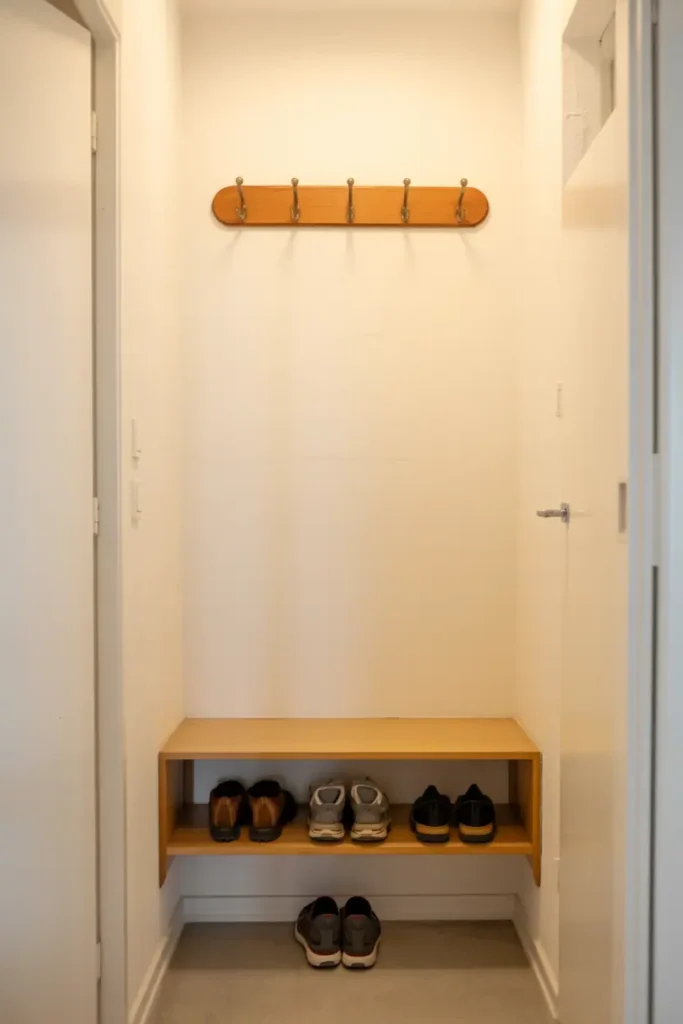
A simple wall-mounted coat rack in wood with 4-5 hooks at eye level. Below it, about 2 feet down, a narrow wood shelf (6-8 inches deep) for shoes, mounted at floor level but not sitting on the floor. The gap underneath makes cleaning easier and keeps the space feeling less cluttered. White walls, minimal styling.
This two-tier wall approach provides coat storage and shoe storage without any furniture taking up floor space. It works in the narrowest hallways—those 2-3 foot wide spaces where nothing can sit on the floor without creating an obstacle. The wood elements (coat rack and shelf) should match in tone to feel cohesive. This suits practical households prioritizing storage over aesthetics, though it can look refined if executed simply.
The most functional small entryways are often the simplest—one or two wood elements doing multiple jobs, and nothing extra.
11. Small Entry Way with Bench and Overhead Storage Cubbies
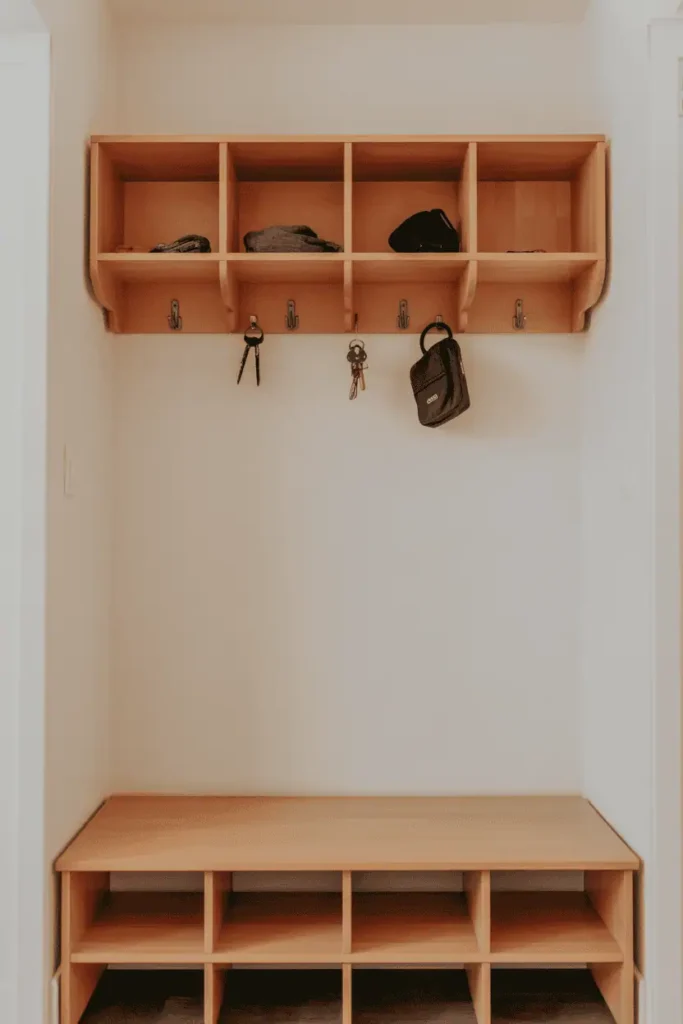
A narrow bench in light wood with a shallow shelf mounted on the wall directly above it, divided into 3-4 cubbies for individual storage (one per family member, for example). The bench itself has no storage—it’s just a simple seat. The cubbies hold keys, sunglasses, mail. Below the bench, the floor stays clear or has one low basket.
This vertical organization system works in small entryways that have wall height to utilize. The bench provides a place to sit while putting on shoes, and the cubbies keep small items organized and assigned. This approach suits families or roommates who need defined storage zones. The light wood keeps it from feeling too heavy, and the open design prevents it from reading as bulky furniture.
12. Tiny Entryway with Fold-Down Wood Table
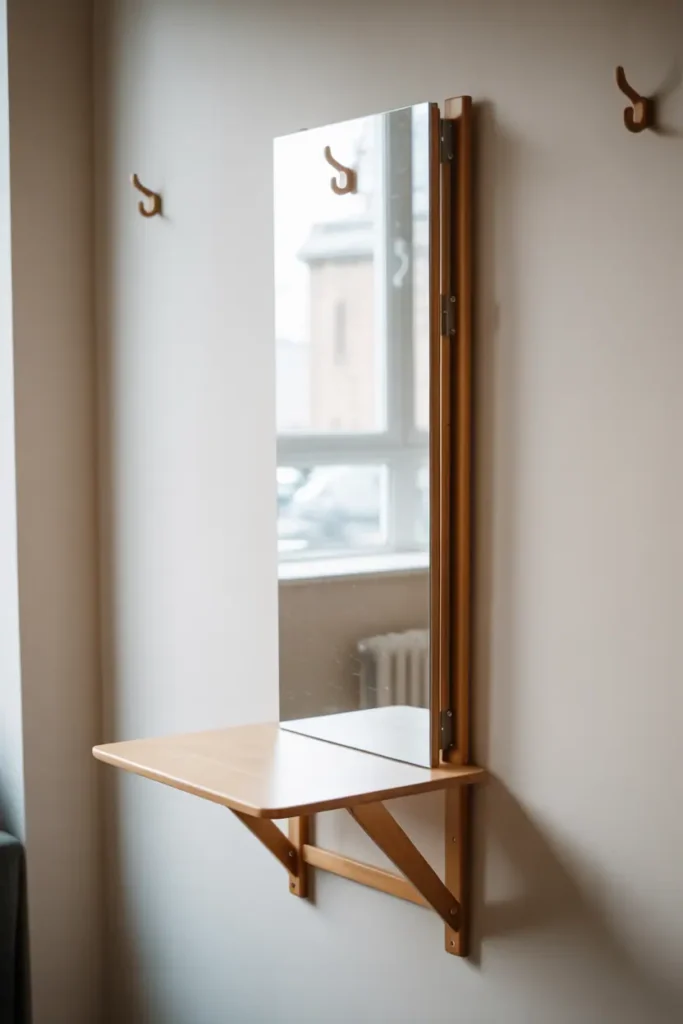
A wall-mounted fold-down table in wood that stays flat against the wall when not in use. When lowered, it provides a small surface for setting down bags, packages, or mail. When folded up, it’s just a narrow wood panel on the wall, maybe with one hook. This provides function on demand without permanently occupying space.
This works in extremely tight entryways where even a narrow console would be too much. The fold-down table offers occasional surface space when needed (receiving deliveries, setting down groceries while unlocking the door) without being a permanent obstruction. This concept suits urban apartments, narrow hallways, or anyone who needs flexibility. The wood should be durable—at least 3/4 inch thick—to support weight when lowered.
13. Small Entrance Hall with Wood Mirror Frame and Floating Drawer
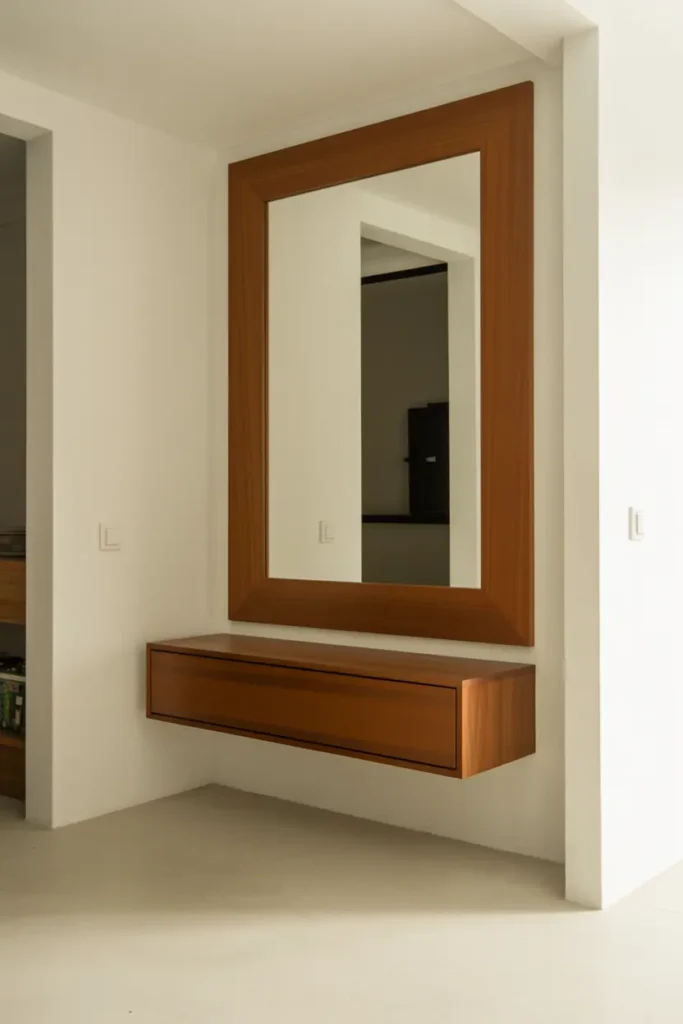
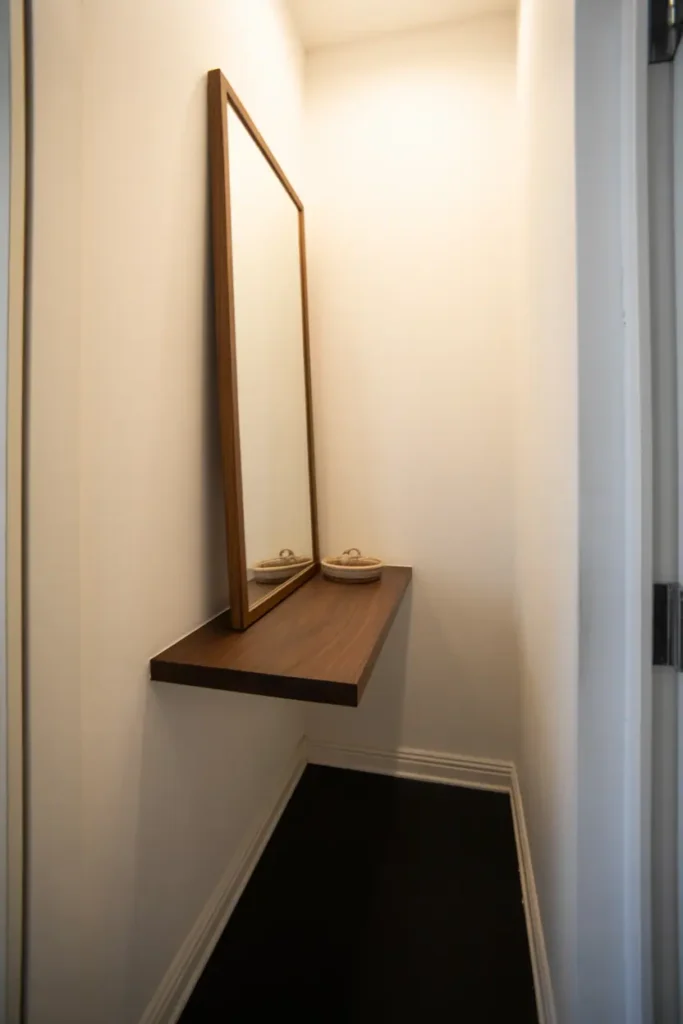
A large mirror in a chunky wood frame serves as the visual anchor. Below it, a single floating drawer in matching wood—just a drawer box mounted to the wall with no legs or visible support. The drawer holds keys, mail, and small items. No other furniture. The floor stays completely open.
This creates storage and function through just two elements: the framed mirror and the single drawer. It works in small entrance halls where you have one clear wall but need to maintain walking space. The substantial wood frame on the mirror and the matching drawer create enough wood presence to warm the space without adding furniture mass. This approach feels strongest in modern or contemporary homes.
14. Small Space Entryway with Ladder-Style Coat Rack and Basket
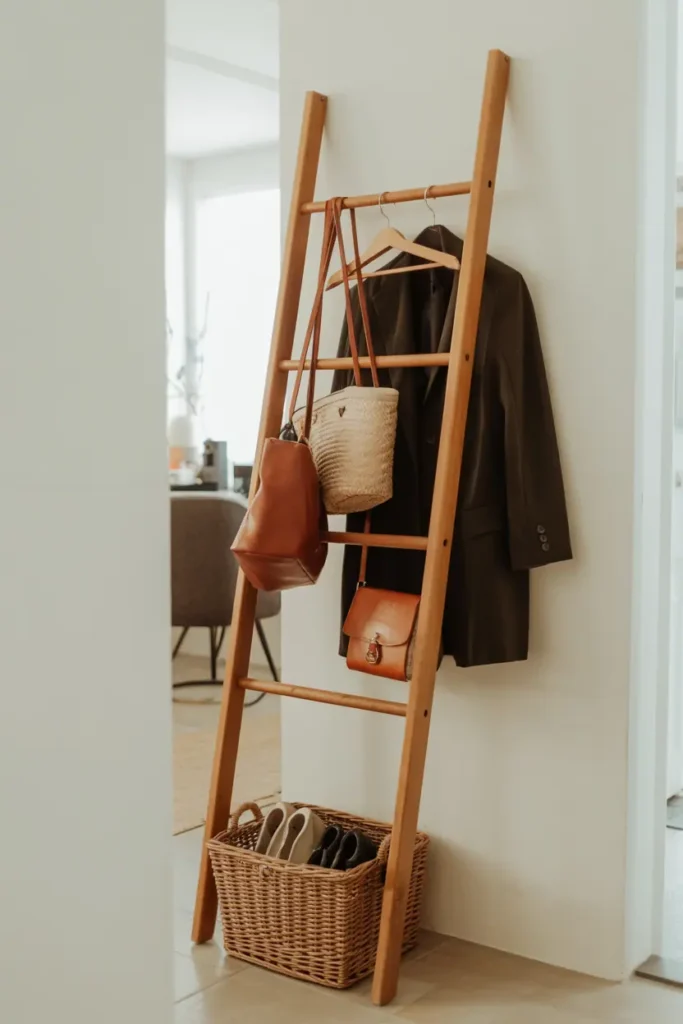
A wooden ladder-style coat rack leaning against the wall—the kind with rungs at intervals where coats and bags hang. At the base, one woven basket for shoes or accessories. Nothing else in the space. The ladder takes up minimal floor footprint (maybe 18 inches from wall at base, less at top) while providing vertical storage.
This works in casual, bohemian, or Scandinavian-style homes. It’s less formal than a traditional coat rack but more considered than hooks alone. The wood ladder adds warmth and provides multiple hanging heights. This concept suits renters (it’s not permanent), small spaces, or anyone who wants flexibility—the ladder can move if needed. It tends to fall flat in formal traditional homes where it might read as too casual.
15. Minimal Small Entryway with One Statement Wood Piece
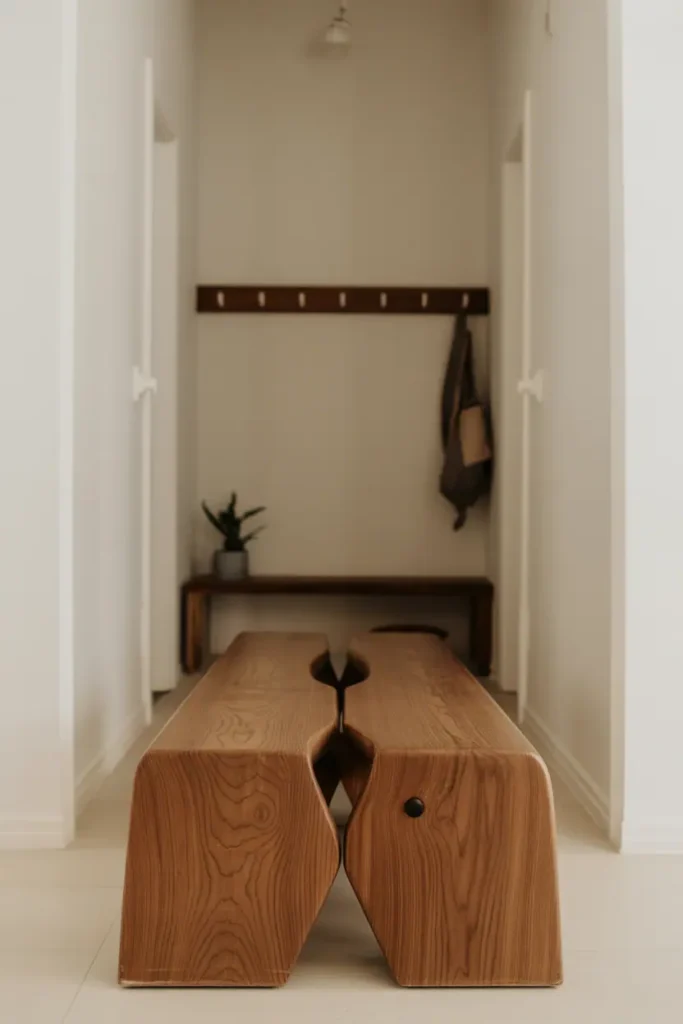
The entire entryway strategy centers on one substantial wood piece: either a sculptural wood bench with visible joinery, a handcrafted console with interesting leg design, or a large wood-framed mirror with distinctive grain. Everything else in the space—hooks, lighting, small accessories—stays minimal and lets that one wood piece carry the design weight.
This approach requires choosing that one piece carefully. It should be visually interesting enough to anchor the space but functional enough to justify its presence. This works in small entryways where you have room for one piece of furniture and want it to matter. The surrounding elements stay deliberately simple—white walls, maybe one small plant, simple lighting. This suits anyone who wants their entryway to have personality without clutter.
Styling Tips to Pull the Look Together
- Choose one wood tone and repeat it across all elements rather than mixing multiple wood finishes in a small space
- Maximize vertical space through tall mirrors, upper shelves, or hooks placed high to draw the eye upward
- Keep the floor as clear as possible—only a doormat and maybe one low basket should touch the ground
- Use white or light-colored walls to maximize light reflection and prevent the small space from feeling darker with wood
- Limit decorative objects to one or two pieces maximum; small entryways can’t absorb visual clutter
- Install adequate lighting—a small pendant, wall sconce, or table lamp prevents the space from feeling cave-like
- Choose multi-functional pieces whenever possible: benches with storage, mirrors that also reflect light, shelves that organize
Conclusion
Small entryways improve through subtraction as much as addition. Start with one wood element—maybe it’s a floating shelf, a narrow bench, or just a simple coat rack. See how it functions for a few weeks. Add storage only where you consistently notice items piling up, not preemptively.
The most successful small entryways are the ones that adapt to real use patterns rather than following a predetermined plan. You might think you need a bench, but if you never sit down to remove shoes, a simple hook rail and wall shelf might serve better. The wood elements should support how you actually move through the space, not how you imagine it should work.
Save the ideas that address your specific constraints—whether that’s width, wall space, or storage needs. Come back to them when you’re ready to refine. Your entryway will evolve gradually into something that works efficiently without feeling cramped, and that balance is always the goal.

To bring you cozy inspiration more efficiently, we sometimes use AI to assist in content creation — but every word and idea is carefully shaped by our team. See our AI Disclosure for more info.