This post may contain affiliate links. If you click and buy, we may earn a small commission at no extra cost to you. Learn more.
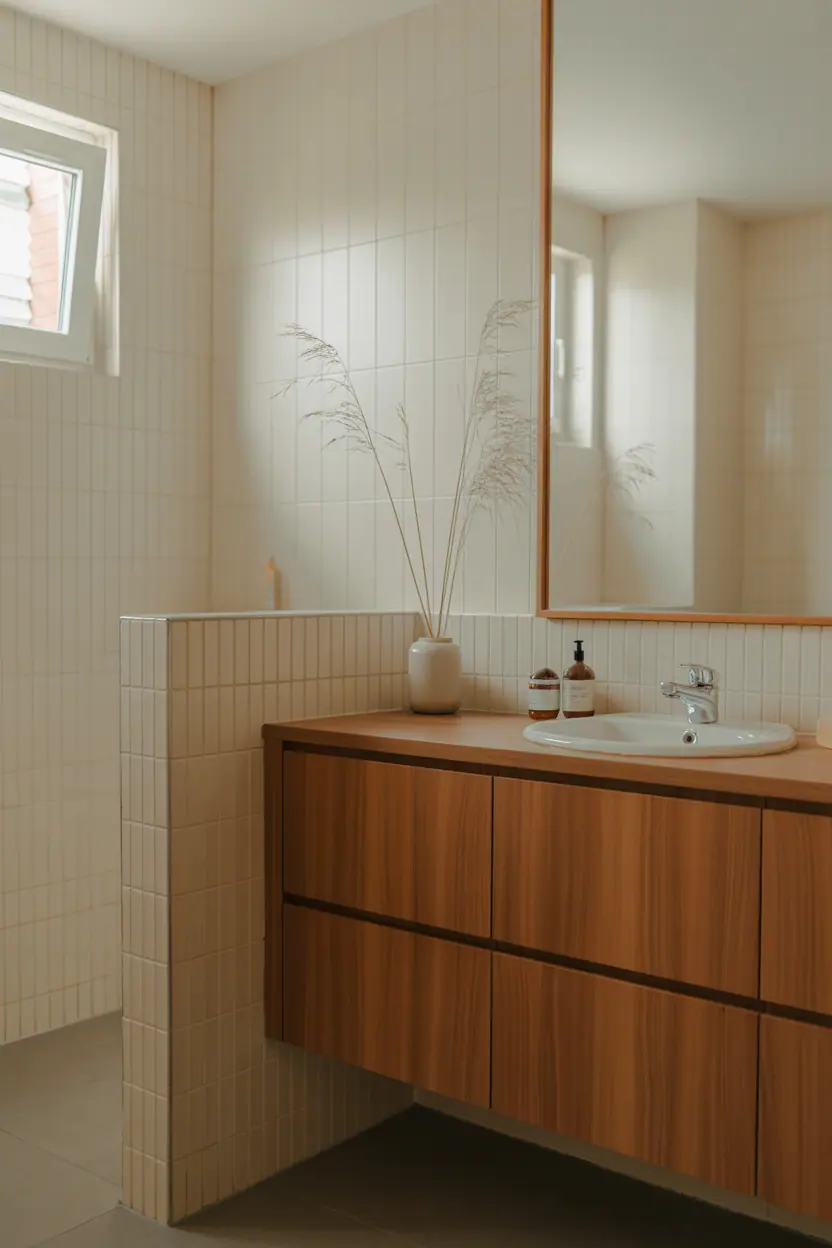
Bathrooms are often designed around function first. Tile, fixtures, and surfaces tend to take priority, while warmth is treated as an afterthought. That’s where wood makes a real difference.
Warm wood bathroom decor isn’t about turning a bathroom into a spa showroom or adding decorative pieces that don’t belong. It’s about softening hard materials, creating balance, and making the space feel lived-in rather than clinical. Even small touches of wood can change how a bathroom feels — visually and emotionally.
This style works especially well in modern and minimalist homes, where bathrooms can feel overly sharp or cold. Wood introduces texture and variation, helping the space feel calmer without sacrificing cleanliness or practicality. When used thoughtfully, it holds up well to daily routines.
The key is restraint. Warm wood works best when it supports the room rather than dominates it. Scale, placement, and finish matter more here than quantity.
This guide focuses on practical warm wood bathroom decor ideas that work in real homes — ideas that are easy to live with, visually grounded, and designed to age well over time.
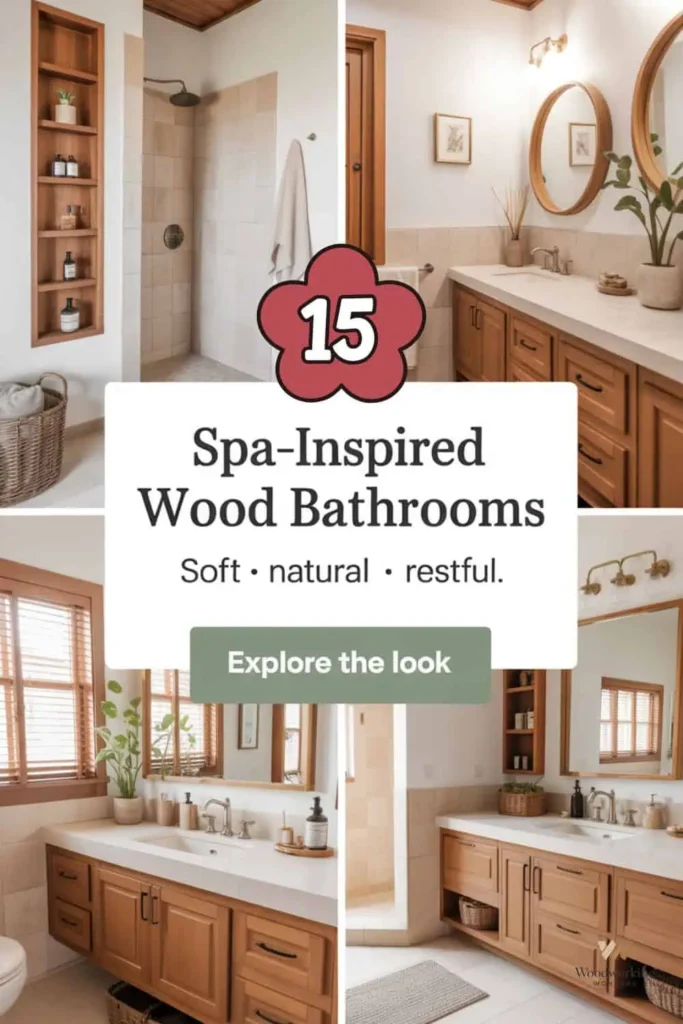
What you’ll find here:
- Warm wood decor ideas that soften bathroom spaces
- Guidance on placement, scale, and finishes
- Practical ways to balance wood with tile and fixtures
- Looks that work in both small and spacious bathrooms
Contents
- 1 1. Wooden Vanities That Feel Grounded
- 2 2. Open Wood Shelving for Everyday Items
- 3 3. Wood Used as an Accent, Not a Statement
- 4 4. Balancing Wood with Light-Colored Tile
- 5 5. Wood Near the Sink, Used Carefully
- 6 6. Wooden Mirrors to Soften Reflections
- 7 7. Warm Wood in Small Bathrooms
- 8 8. Wood Tones That Complement Fixtures
- 9 9. Wood Accessories That Feel Useful
- 10 10. Keeping Wood Low in the Space
- 11 11. Matte Finishes Over High Gloss
- 12 12. Letting Wood Age Naturally
- 13 13. Mixing Wood with Textiles
- 14 14. Avoiding Over-Decorating
- 15 15. Designing for Daily Comfort
- 16 Styling Tips to Make Warm Wood Bathrooms Feel Intentional
- 17 Conclusion
1. Wooden Vanities That Feel Grounded
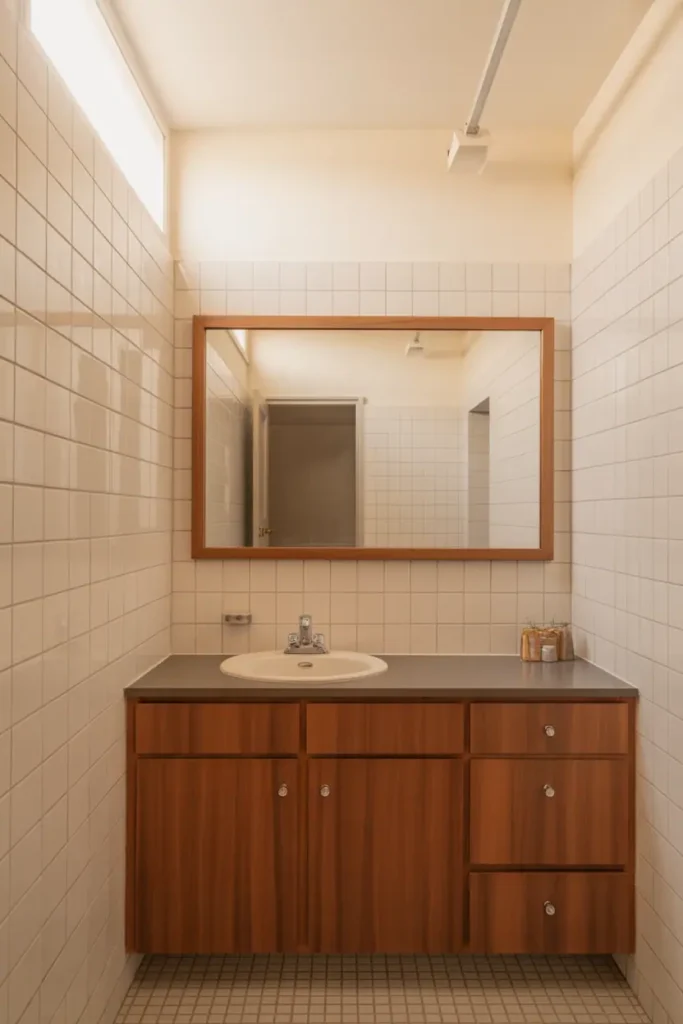
A wooden vanity is often the strongest way to introduce warmth. It anchors the room and gives the eye something natural to rest on.
This works best when the wood tone is warm but not overly dark. Mid-tone oak, walnut, or similar finishes add depth without making the room feel heavy. Clean lines keep the vanity from feeling bulky.
Avoid overly glossy finishes, which tend to fight against the calm effect wood is meant to bring.
2. Open Wood Shelving for Everyday Items
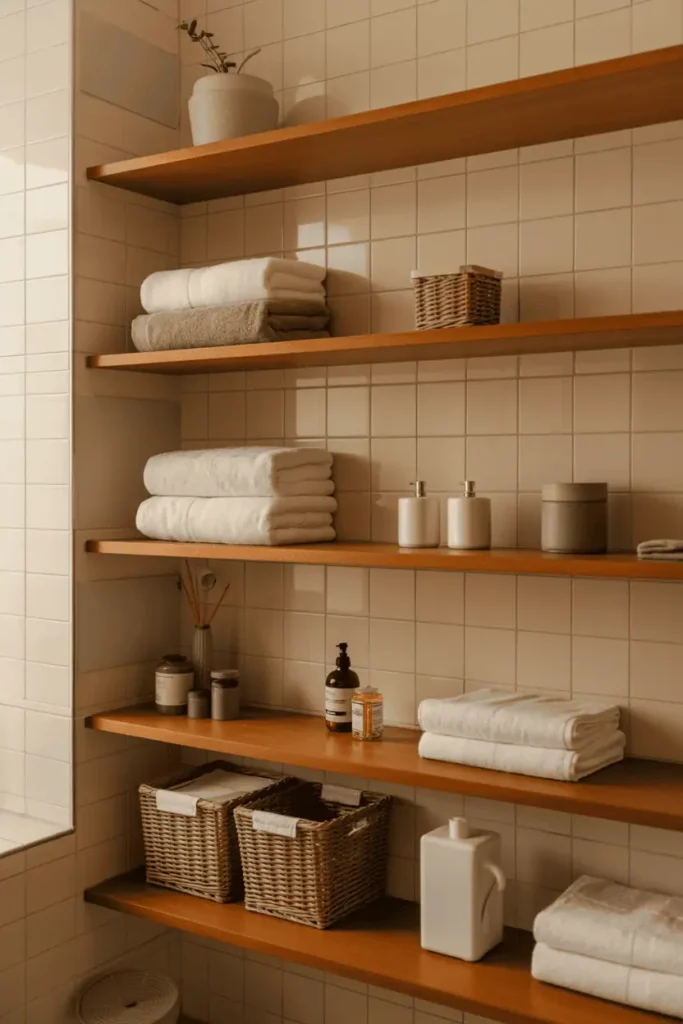
Open shelving in wood adds warmth without closing the space in. It also encourages a lighter approach to storage.
This works well when shelves are used intentionally — towels, baskets, or a few daily-use items. Overloading shelves quickly undermines the calm look.
Keep shelf depth modest so the wood feels integrated rather than dominant.
3. Wood Used as an Accent, Not a Statement
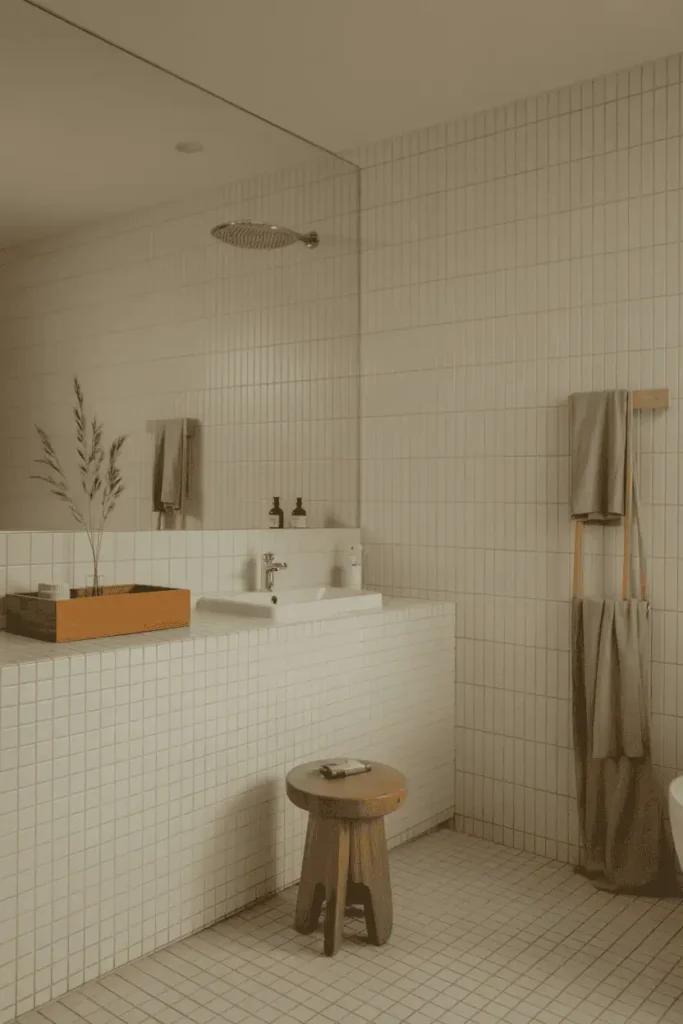
Warm wood doesn’t need to be the star. In many bathrooms, it works best as a quiet accent.
This might mean a wooden tray, a small stool, or a framed mirror. These elements soften the space without overwhelming it.
Design tip: if wood is competing with tile patterns or bold finishes, there’s probably too much happening.
4. Balancing Wood with Light-Colored Tile
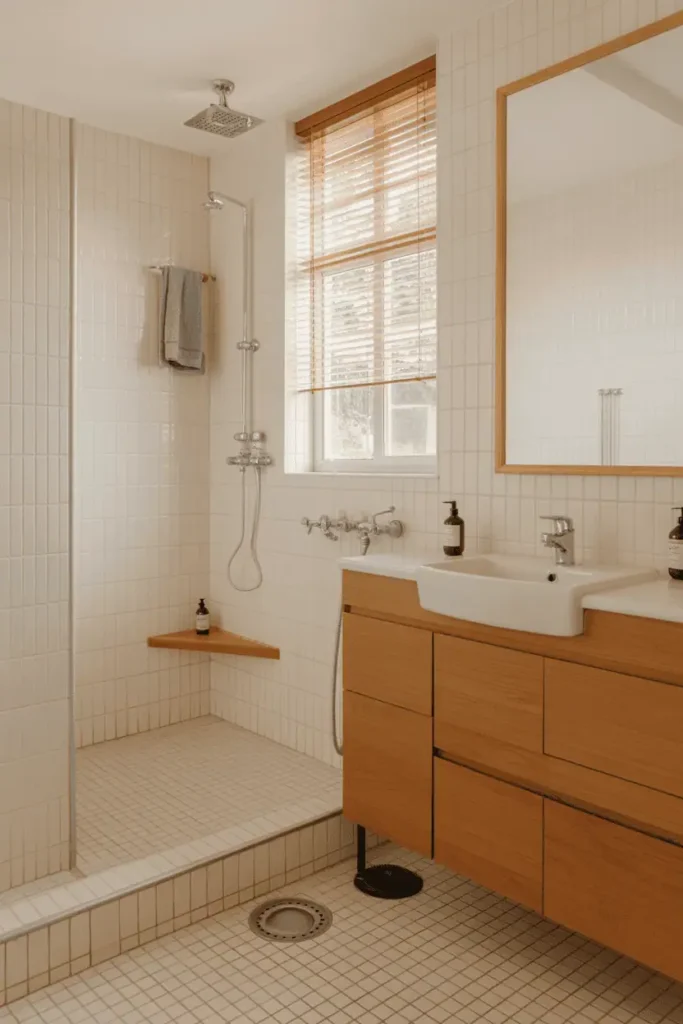
Light tile and warm wood are natural partners. Tile keeps the space clean and bright, while wood adds contrast and texture.
This combination works especially well in smaller bathrooms, where darker materials can feel oppressive. Pale tile allows the wood to stand out without shrinking the room.
Consistency matters — repeating the same wood tone helps the space feel intentional.
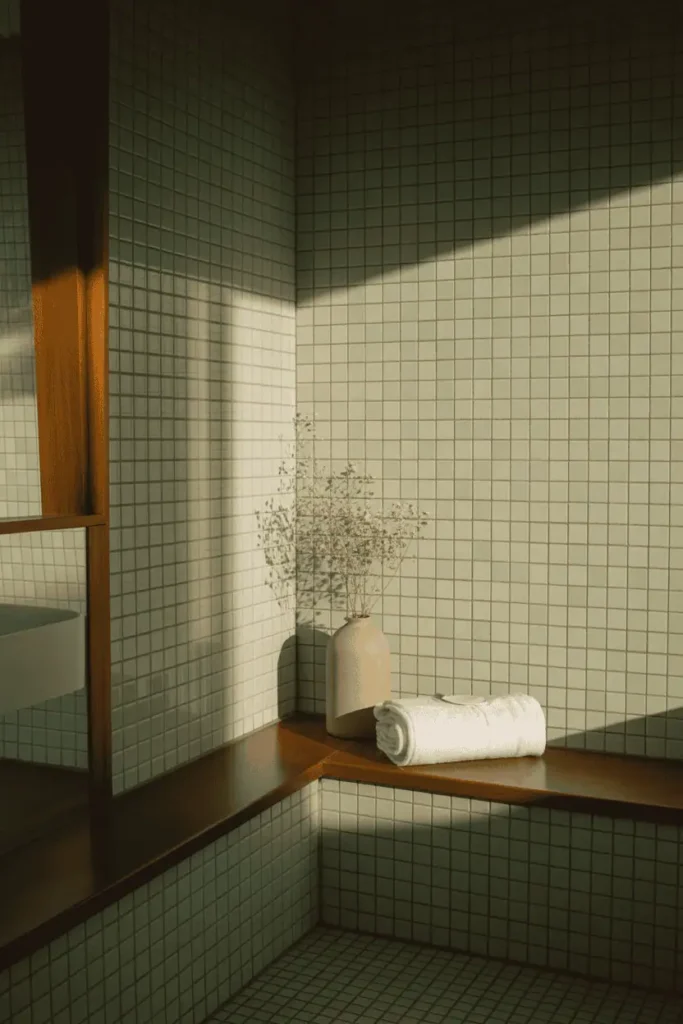
By now, the bathroom should already feel less rigid. Not styled — just more comfortable.
5. Wood Near the Sink, Used Carefully
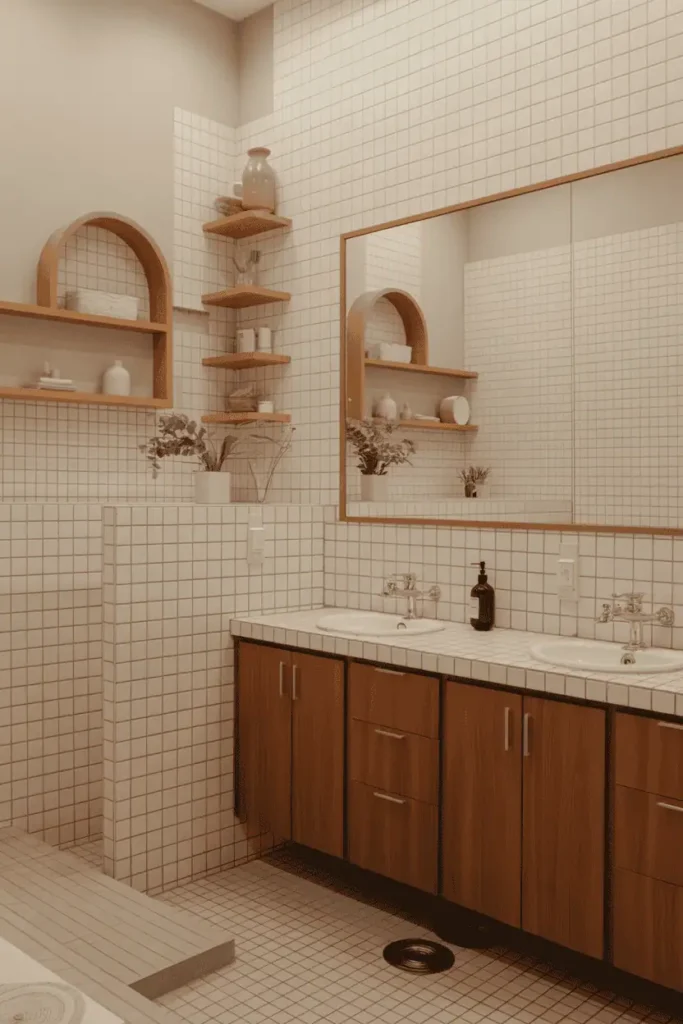
Wood near water requires thoughtful placement. Vanities, shelves, and accessories near the sink should be well-finished and easy to wipe down.
This tends to fail when raw or untreated wood is used too close to splash zones. Moisture protection is essential.
Well-sealed wood ages gracefully and becomes part of the room’s character rather than a problem.
6. Wooden Mirrors to Soften Reflections
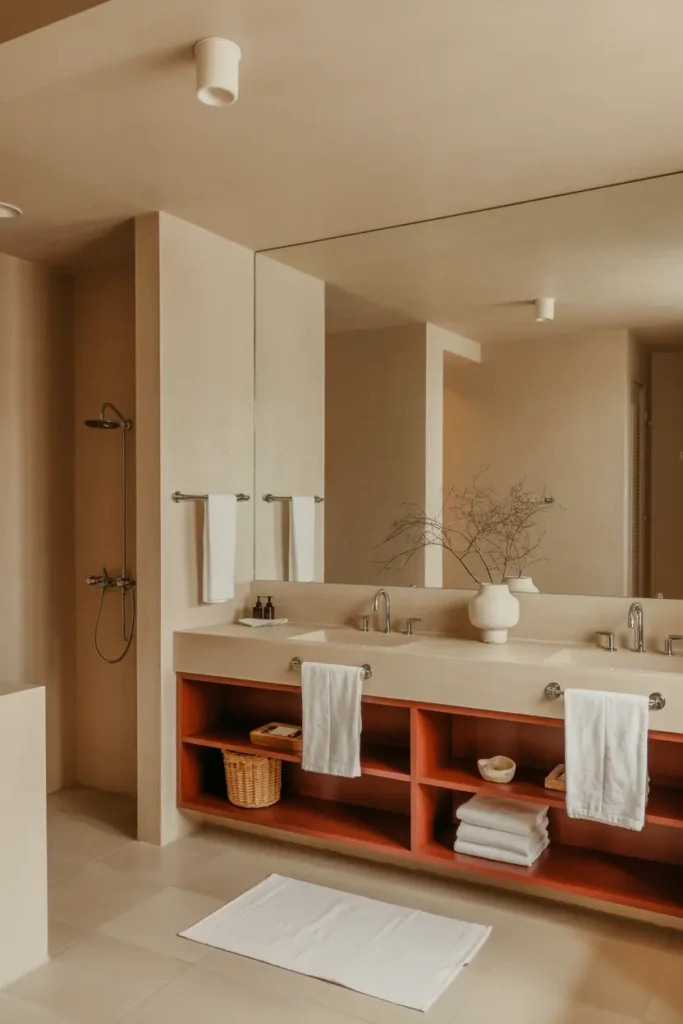
Mirrors framed in wood instantly soften the sharpness of glass and tile.
This works best with simple frames and visible grain. Ornate designs can feel out of place in calm bathrooms.
A wooden mirror often does more for warmth than multiple smaller accessories.
7. Warm Wood in Small Bathrooms
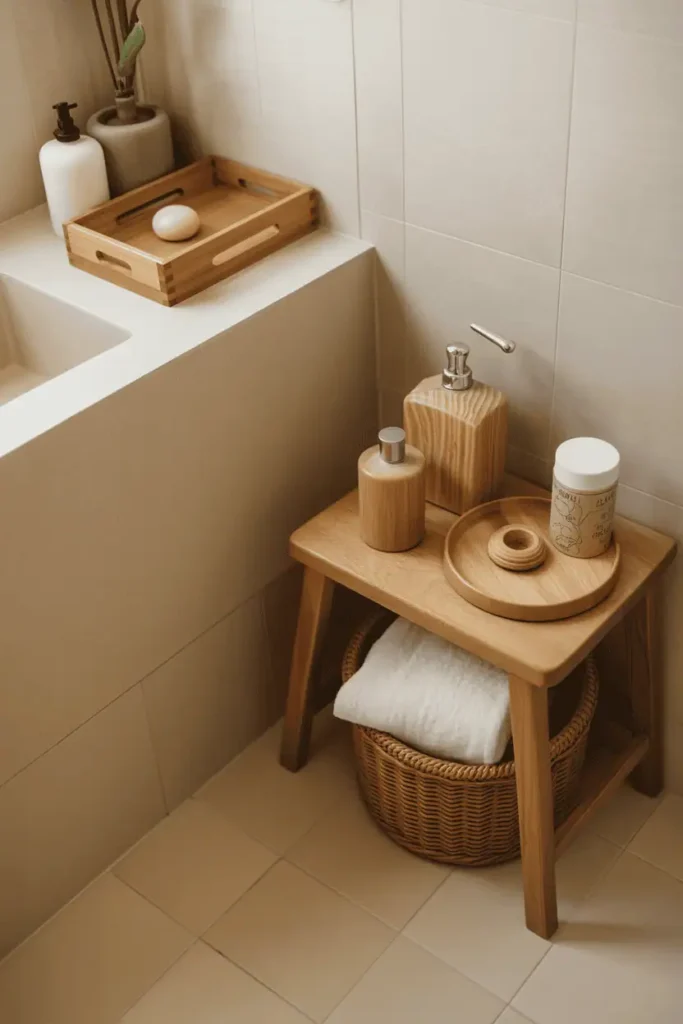
In small bathrooms, restraint matters even more. One or two wooden elements are usually enough.
This might be a vanity and a shelf, or a mirror and a small stool. Too much wood can crowd the space visually.
Lighter wood tones help maintain an open feel while still adding warmth.
8. Wood Tones That Complement Fixtures
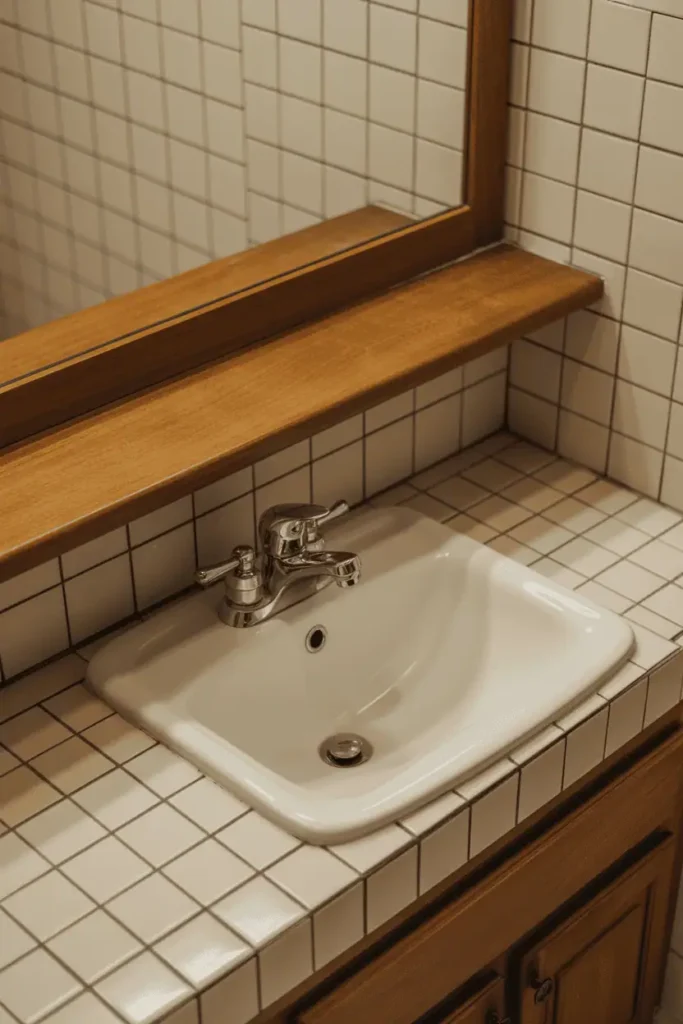
Warm wood pairs well with brushed metals and matte finishes. Chrome-heavy bathrooms can still work, but softer finishes feel more cohesive.
This is where subtle coordination helps. You don’t need everything to match — just relate.
Avoid mixing too many wood tones in a small space.
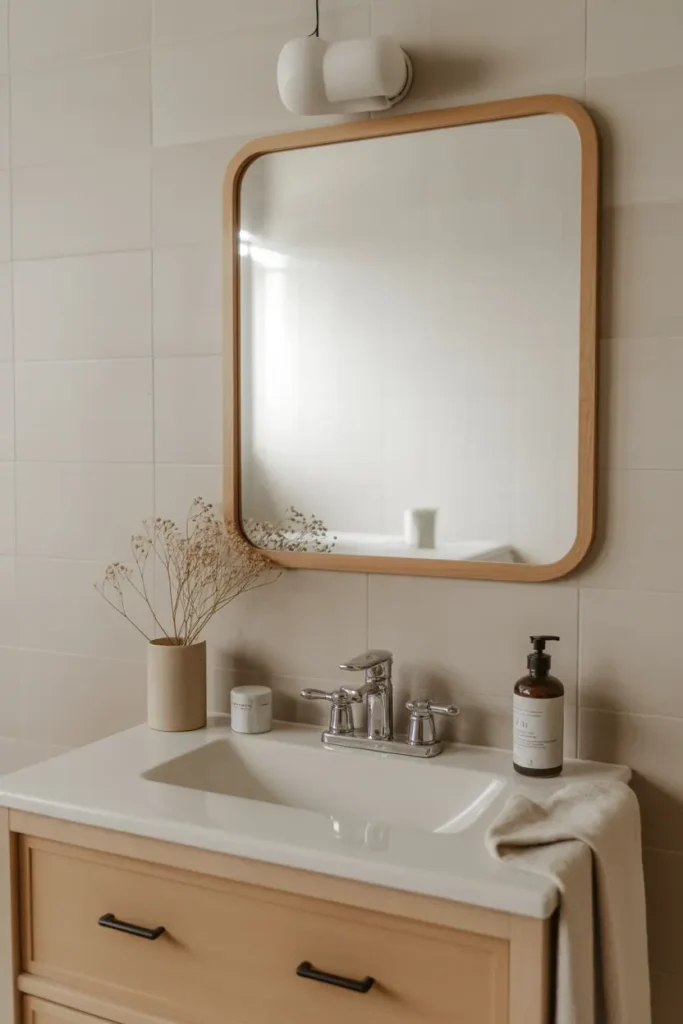
At this stage, the bathroom should feel balanced — not decorative, not cold.
9. Wood Accessories That Feel Useful
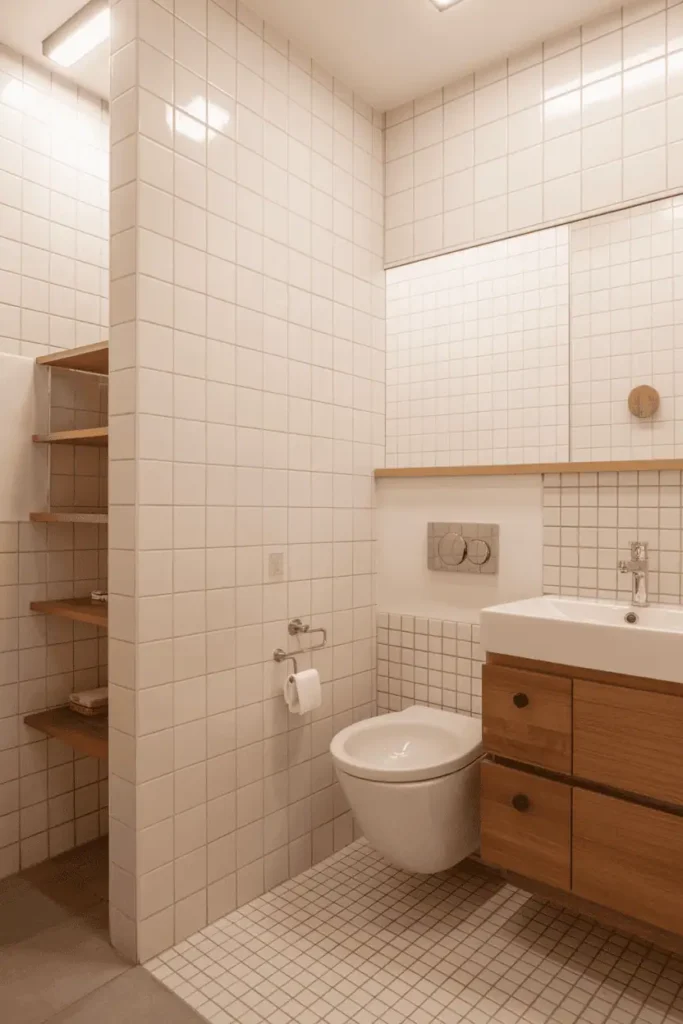
Accessories work best when they serve a purpose. Trays, stools, and small storage pieces add warmth without clutter.
This approach keeps decor feeling intentional rather than staged. If an item doesn’t earn its place, it usually shows.
Wood accessories should support daily routines, not interrupt them.
10. Keeping Wood Low in the Space
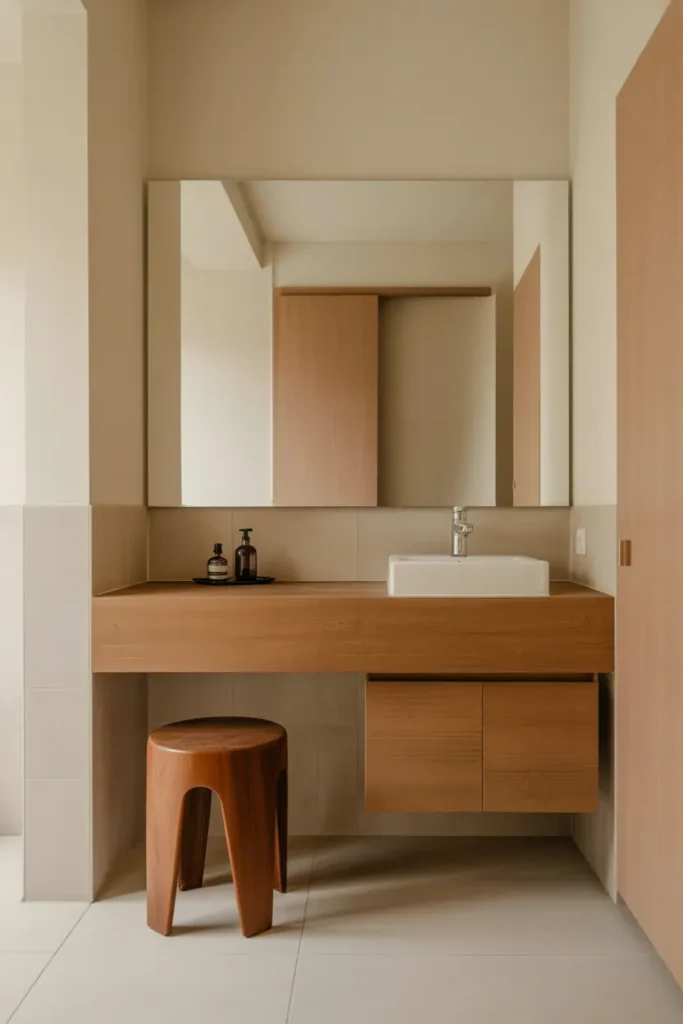
Heavier wood elements work best lower in the room. Vanities, stools, and shelving closer to the floor help ground the space.
This prevents the bathroom from feeling top-heavy or visually busy.
Lighter elements can stay higher, leaving wood to anchor the layout.
11. Matte Finishes Over High Gloss
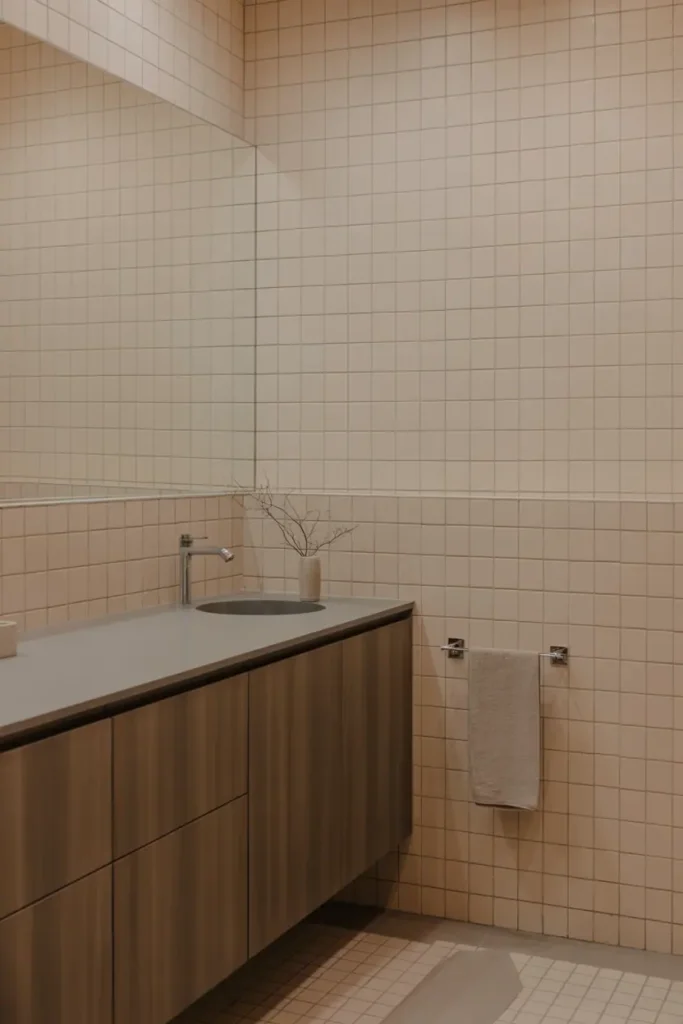
Matte or satin finishes feel calmer and more forgiving in bathrooms. They also hide water marks better than glossy surfaces.
This applies to both wood and surrounding materials. The overall effect should feel soft, not reflective.
A bathroom that’s too shiny often feels more stressful than serene.
12. Letting Wood Age Naturally
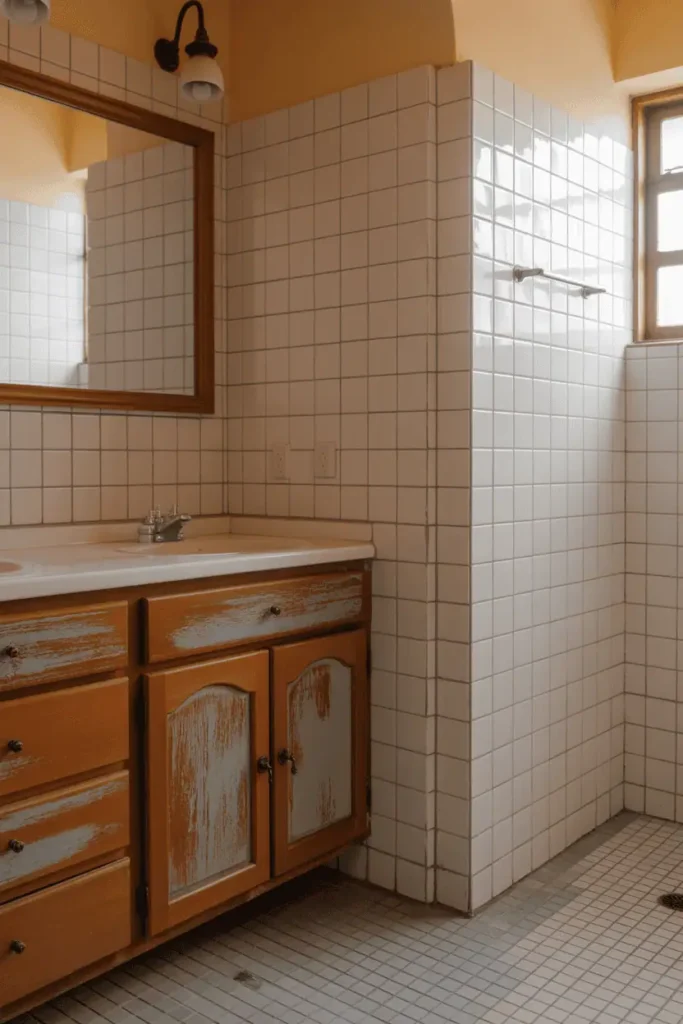
Warm wood doesn’t need to stay perfect. Small changes over time add character.
Scratches, subtle color shifts, and wear tell a story. This works best when the wood was chosen for durability from the start.
Avoid finishes that promise perfection forever.
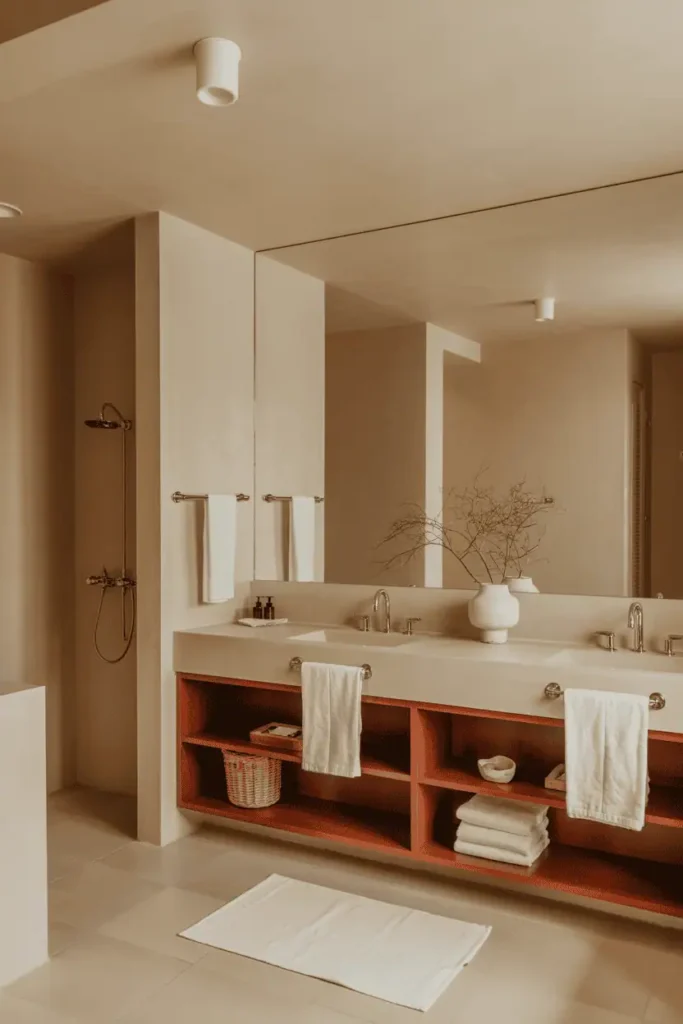
Warm wood bathrooms aren’t about control. They’re about ease.
13. Mixing Wood with Textiles
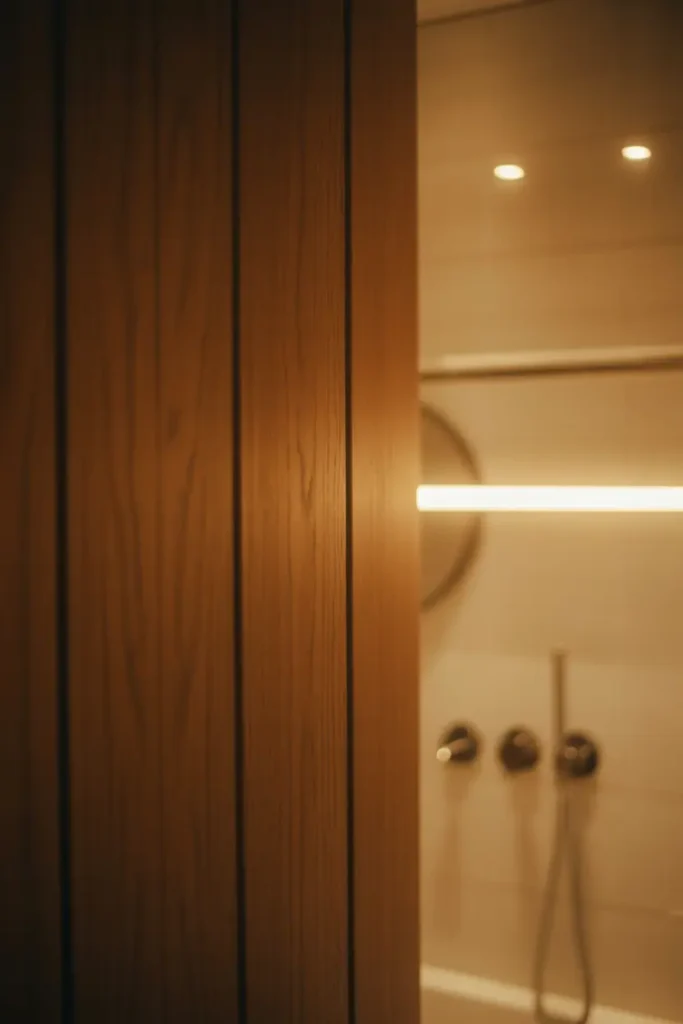
Textiles help bridge the gap between wood and tile. Towels, bath mats, and curtains soften transitions.
Choose neutral or earthy tones that relate to the wood. Loud colors disrupt the calm effect.
The goal is cohesion, not contrast.
14. Avoiding Over-Decorating
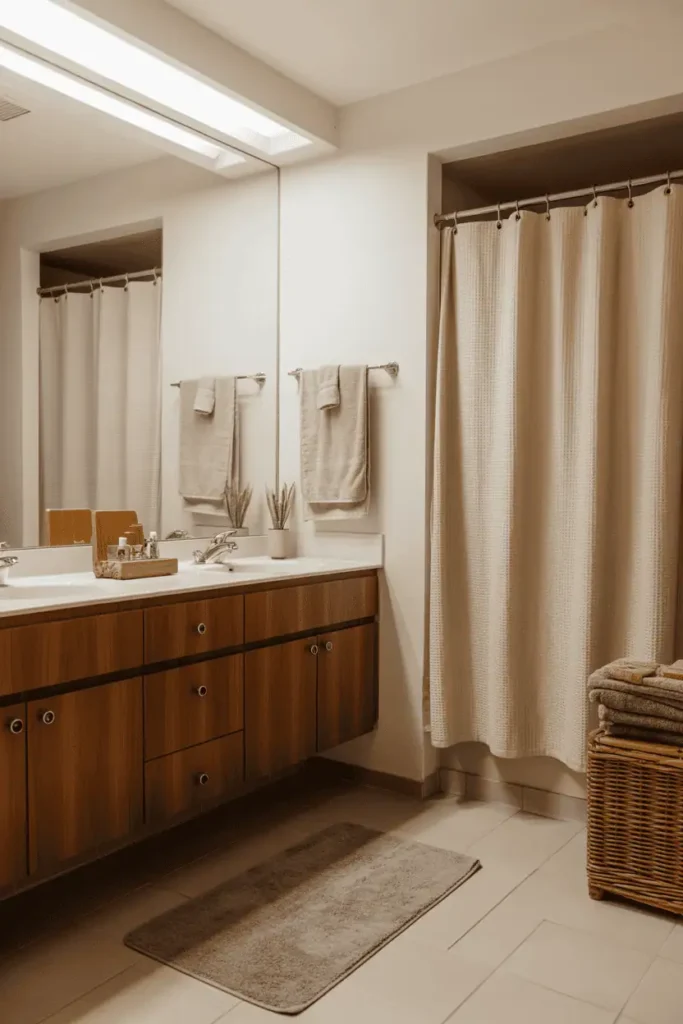
Bathrooms don’t need much decor. Wood already adds visual interest.
Over-decorating weakens the impact of the materials and makes cleaning harder. Simplicity always wins here.
One strong wooden element often does more than several small ones.
15. Designing for Daily Comfort
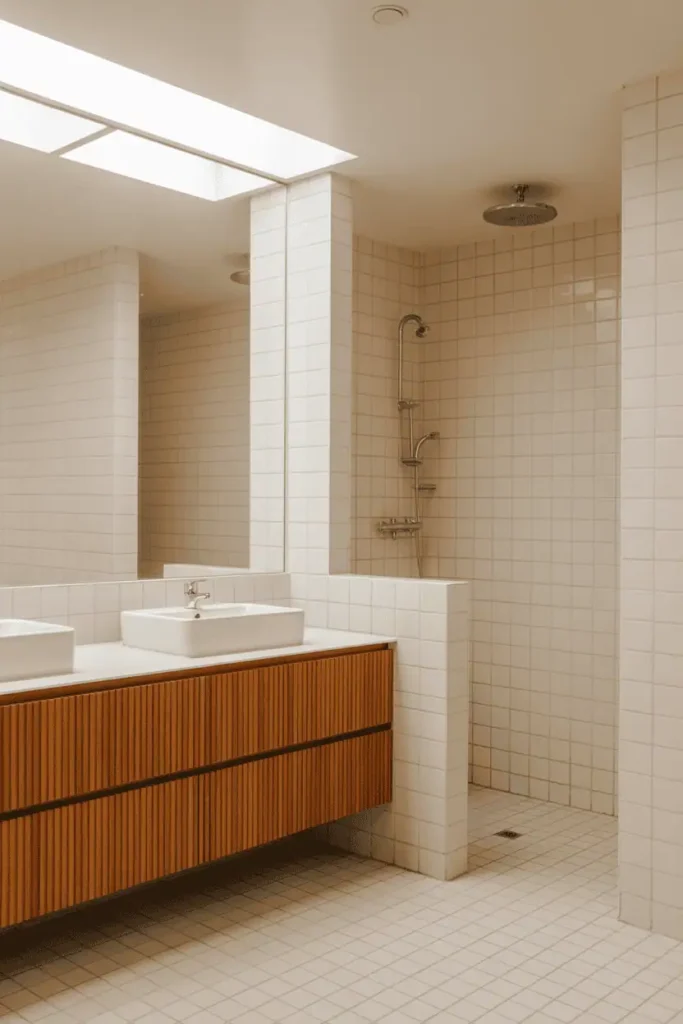
At its best, warm wood bathroom decor supports daily routines quietly.
You should feel relaxed using the space, not worried about maintaining it. Practical decisions always lead to better long-term results.
When the bathroom feels easy to use, the design has done its job.
Styling Tips to Make Warm Wood Bathrooms Feel Intentional
- Use one main wood tone and repeat it subtly
- Keep wood finishes matte or lightly sealed
- Balance wood with light tile and neutral walls
- Limit accessories to useful pieces
- Let the space breathe — not every surface needs decor
Conclusion
Warm wood bathroom decor works because it humanizes a space that’s often overly functional. It adds comfort without sacrificing clarity.
You don’t need to renovate everything at once. Start with one element that makes sense — a vanity, a shelf, a mirror. Let it settle into the space before adding more.
Save the ideas that feel right. Revisit them as your bathroom evolves. Warm wood isn’t about trends — it’s about creating a space that feels good to use, every single day.

To bring you cozy inspiration more efficiently, we sometimes use AI to assist in content creation — but every word and idea is carefully shaped by our team. See our AI Disclosure for more info.