This post may contain affiliate links. If you click and buy, we may earn a small commission at no extra cost to you. Learn more.
There’s something quietly stabilizing about wood in a bedroom. Not the loud, carved statement pieces that announce themselves immediately, but the kind of wood presence that settles a room without dominating it. Indian wood bedroom design has always understood this balance — using teak, sheesham, rosewood, and mango wood not as decoration, but as structure that ages well and holds visual weight without trying.
This isn’t about recreating a specific aesthetic. It’s about borrowing principles that make rooms feel intentional: contrast between dark wood and light walls, repetition of warm tones, furniture that sits low and close to the ground. These are ideas that work in small apartments and larger homes alike, and they don’t require a complete overhaul.
What makes these spaces work is restraint. One carved headboard doesn’t need matching nightstands. A low wooden bed frame doesn’t require heavy drapes. The goal is accumulation over time — pieces that relate to each other without matching, materials that repeat without overwhelming.
The rooms that feel most complete are often the ones that started with just two or three deliberate choices and built slowly from there.
Contents
- 1 What you’ll find here:
- 2 1. A Low Wooden Bed Frame with Visible Grain
- 3 2. Carved Wooden Headboard as the Only Statement
- 4 3. Wooden Nightstands with Open Shelving
- 5 4. Woven Cane or Jute Accents to Soften the Wood
- 6 5. Brass or Aged Metal Hardware on Wooden Furniture
- 7 6. A Wooden Writing Desk or Vanity Near the Window
- 8 7. Vertical Wooden Slat Wall or Partial Paneling
- 9 8. A Low Wooden Trunk at the Foot of the Bed
- 10 9. Wooden Ceiling Beams or a Single Exposed Beam
- 11 10. Textured Wooden Wall Art or Carved Panels
- 12 11. Wooden Shelving with Minimal Styling
- 13 12. A Wooden Ladder for Throws or Textiles
- 14 13. Natural Fiber Rug to Balance the Wood’s Hardness
- 15 14. Wooden Mirror Frame in a Simple Shape
- 16 15. Wooden Storage Boxes or Baskets on Open Shelving
- 17 16. A Single Wooden Stool as a Side Table or Plant Stand
- 18 Styling Tips to Pull the Look Together
- 19 Conclusion
What you’ll find here:
- Visual inspiration rooted in real homes
- Practical ideas you can apply gradually
- Furniture and decor concepts that support browsing and shopping
- Looks that work across room sizes and styles
1. A Low Wooden Bed Frame with Visible Grain
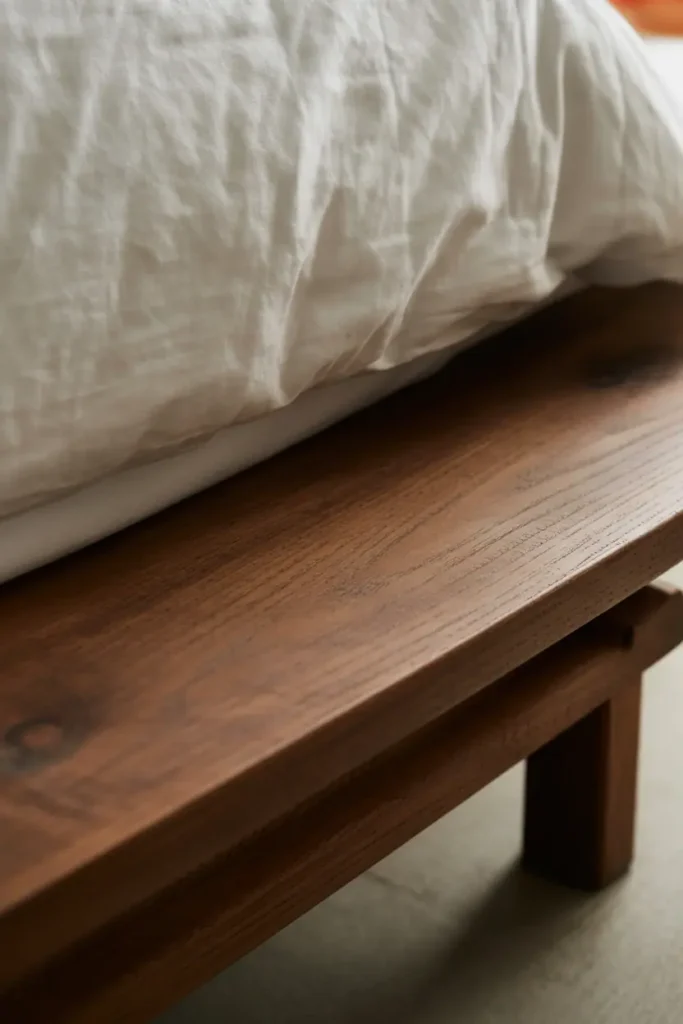
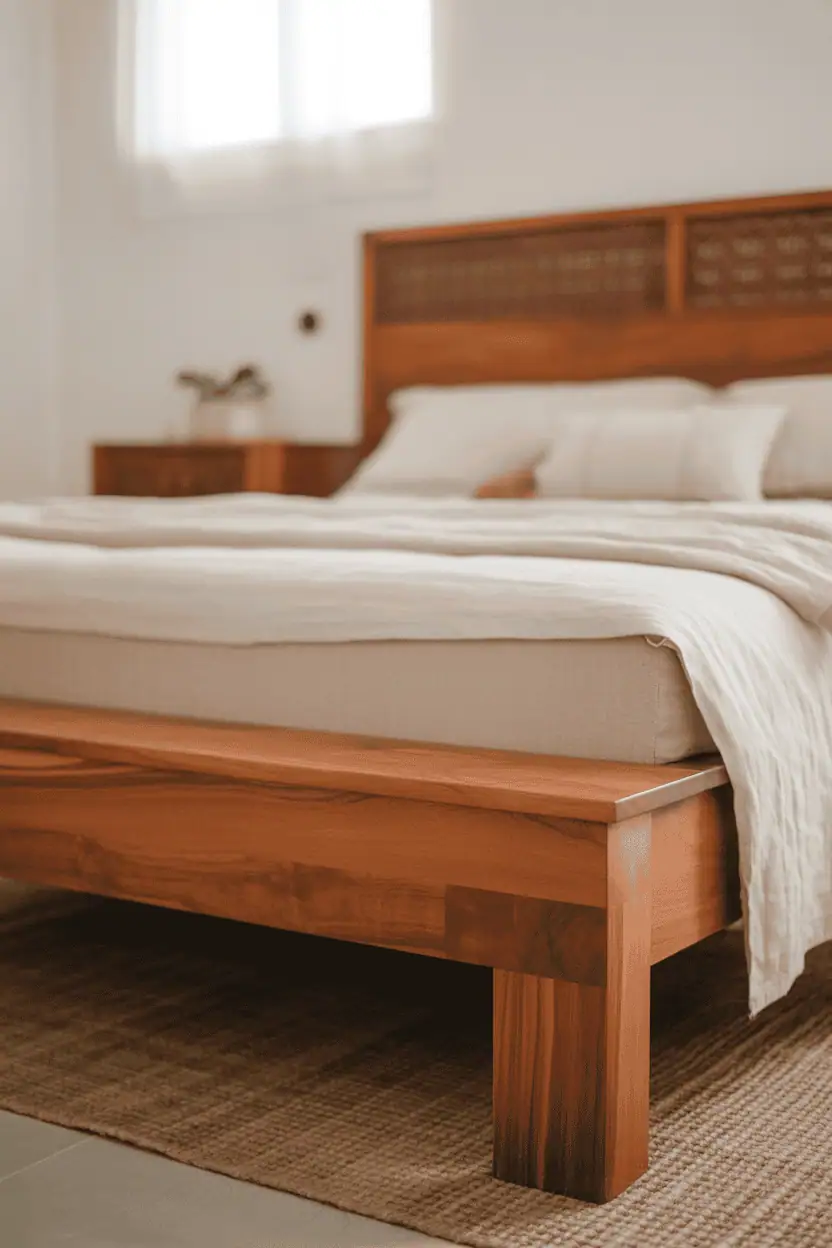
The bed sets the room’s baseline, and a low-profile wooden frame with visible grain immediately lowers the visual center. Teak and sheesham both age with character, darkening slightly and developing patina in high-touch areas like the footboard and side rails.
This works best when the frame is simple — no elaborate carvings, no tall posts. The grain itself becomes the detail. Pair it with white or off-white bedding to create contrast without adding pattern. The wood reads warmer when it’s not competing with busy textiles.
Style note: If the frame feels too spare, add a single wooden bench at the foot of the bed instead of textiles. It extends the wood presence without cluttering the sightline.
2. Carved Wooden Headboard as the Only Statement
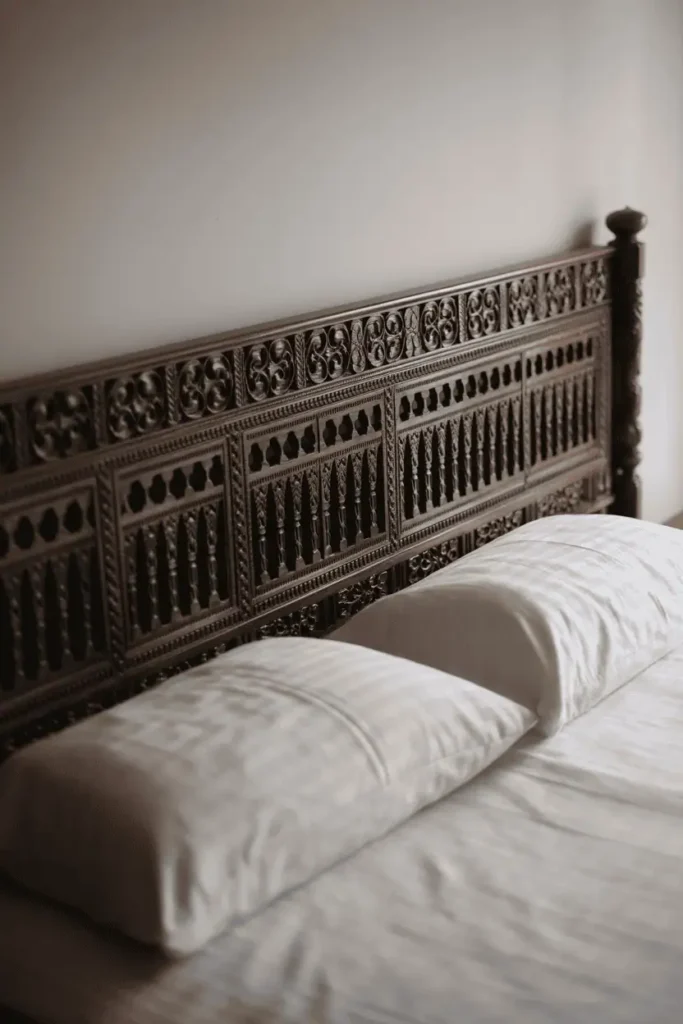
A carved headboard — something with geometric jali work or low-relief floral motifs — can anchor the entire room if you let it stand alone. This tends to fail if you then add carved mirrors, carved nightstands, and carved frames. One piece of detailed woodwork is enough.
The rest of the room should support it: plain walls, minimal art, simple bedding. The headboard becomes the texture, and everything else becomes breathing room. Choose darker woods like rosewood or walnut for this approach, as lighter woods don’t hold the same visual authority.
A carved headboard doesn’t need to match the bed frame — in fact, slight variation in tone keeps the room from feeling too matched.
3. Wooden Nightstands with Open Shelving
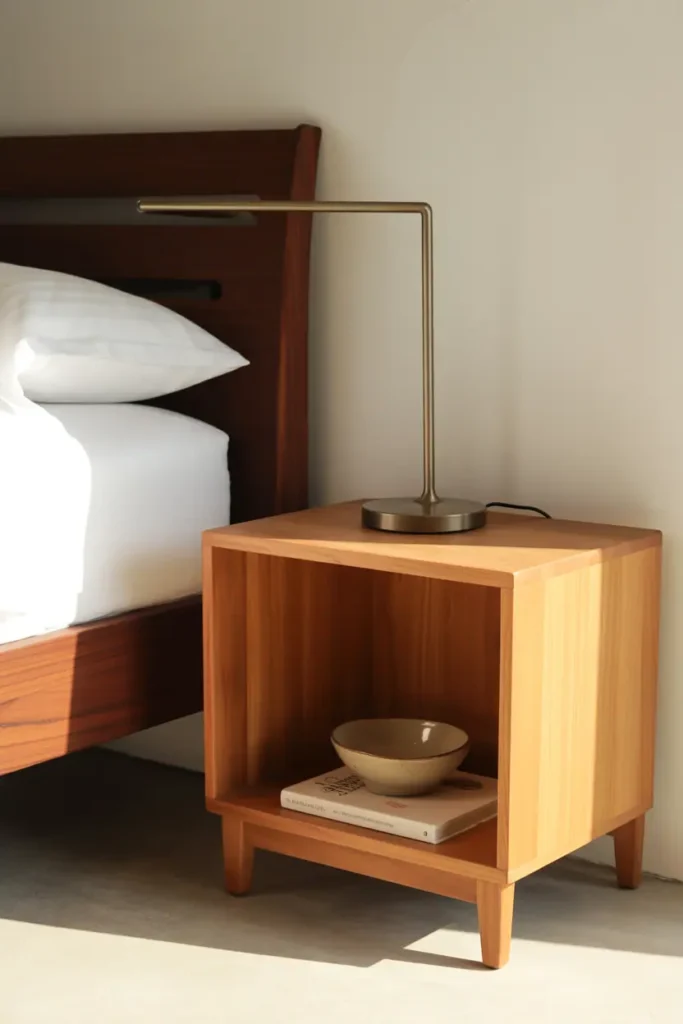
Closed nightstands create visual heaviness, especially in smaller bedrooms. Open wooden nightstands — whether floating shelves with visible brackets or low tables with a single shelf beneath — keep the floor visible and the room lighter.
This works when you treat the open space intentionally. Display one or two objects, not a collection. A small ceramic vase, a single book, or a wooden tray. The point is to show restraint, not fill every surface.
Design tip: If the nightstands are light-toned mango wood and the bed is dark teak, that contrast actually helps define the room’s layers. Don’t force everything to match.
4. Woven Cane or Jute Accents to Soften the Wood
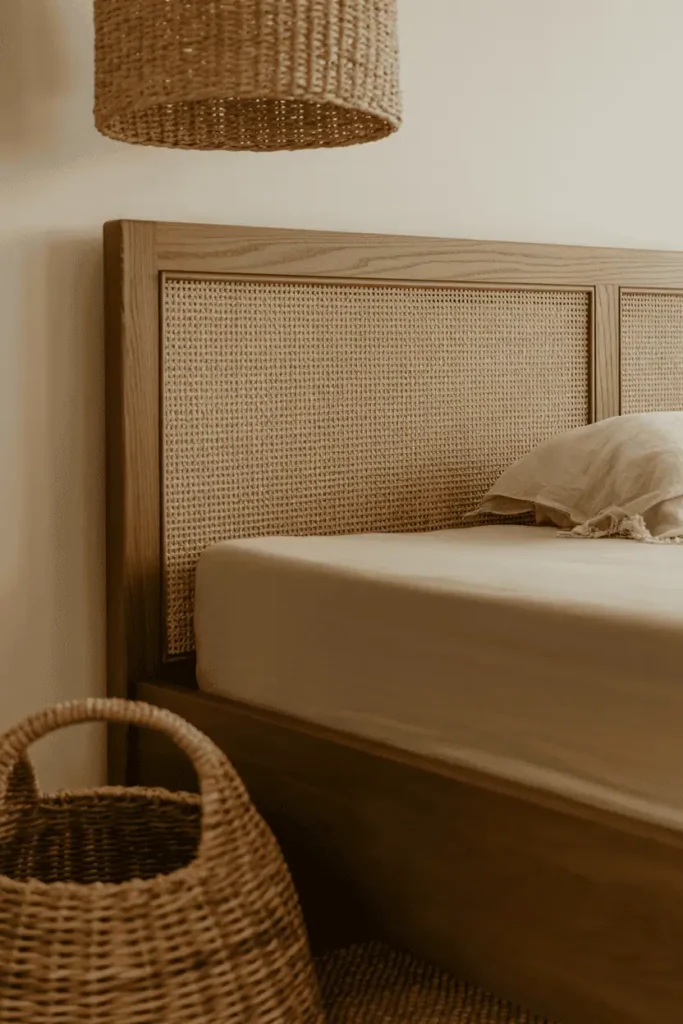
Wood alone can read as too solid, especially when it’s dark. Cane, jute, and woven seagrass break that up without introducing synthetic materials. A cane headboard insert, jute pendant light, or woven storage baskets all add texture that complements wood rather than competing with it.
The key is keeping the palette neutral. Natural cane tones sit between light and dark wood, bridging the two without needing additional color. This approach works especially well in bedrooms where you want warmth but not weight.
5. Brass or Aged Metal Hardware on Wooden Furniture
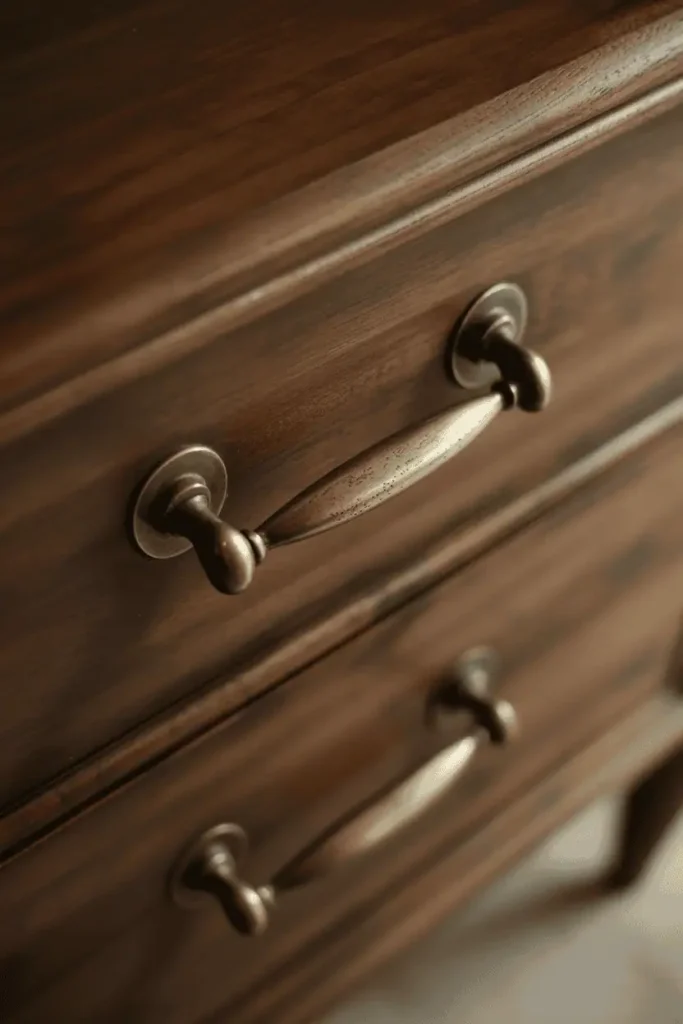
Small brass pulls, aged iron hinges, or oxidized metal drawer handles add just enough contrast to wooden furniture without disrupting the overall warmth. This is a detail that doesn’t announce itself but elevates the furniture subtly over time.
Avoid shiny, polished brass — it reads too formal. Look for antique brass, blackened iron, or naturally aged finishes that feel lived-in rather than installed yesterday. The metals should look like they’ve been touched, not displayed.
Practical guidance: If you’re replacing hardware on existing wooden furniture, choose one finish and use it consistently across all pieces in the room. Mixing metals here tends to look unintentional rather than curated.
6. A Wooden Writing Desk or Vanity Near the Window
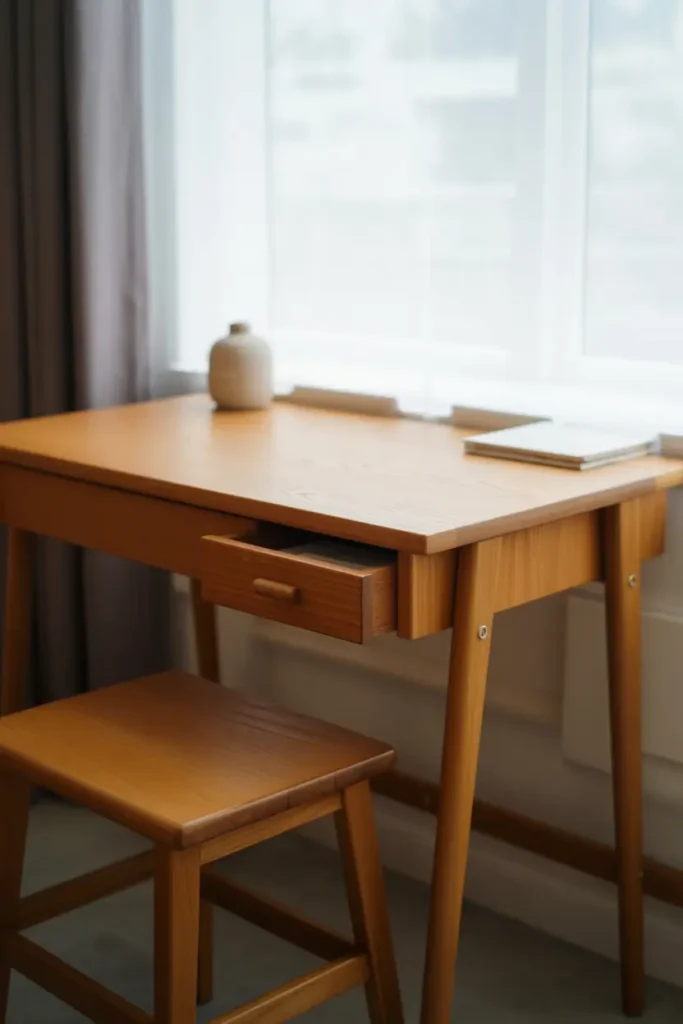
A simple wooden desk or vanity positioned near natural light serves dual purposes: it’s functional workspace and it ties wood into a second area of the room. Choose something with clean lines and minimal ornamentation — a single drawer, straight legs, maybe a lower shelf.
This works when the desk doesn’t try to be the second focal point. It should feel like an extension of the room’s logic, not a separate furniture moment. Pair it with a simple wooden stool or a woven chair, and leave the desktop mostly clear.
At this point, the room should already feel quieter — not because of one statement piece, but because the materials are beginning to relate to each other.
7. Vertical Wooden Slat Wall or Partial Paneling
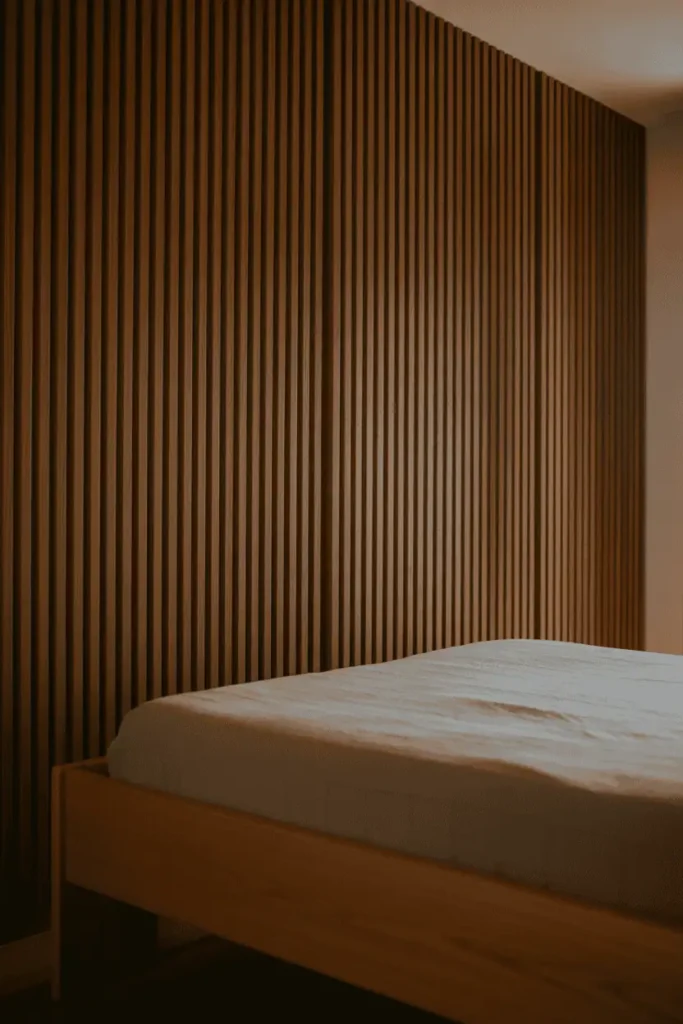
Wooden slats installed vertically behind the bed create depth without adding furniture. The slats can run floor-to-ceiling or just behind the headboard, and they work in both light and dark finishes depending on the room’s existing palette.
This approach adds architectural interest in a way that paint alone can’t. The slats cast small shadows throughout the day, changing the wall’s appearance as light shifts. It’s subtle movement without pattern.
Style note: If full slatting feels too permanent, consider a removable wooden panel system or just three or four wide planks mounted horizontally at shoulder height. You get the texture without committing to a full wall treatment.
8. A Low Wooden Trunk at the Foot of the Bed
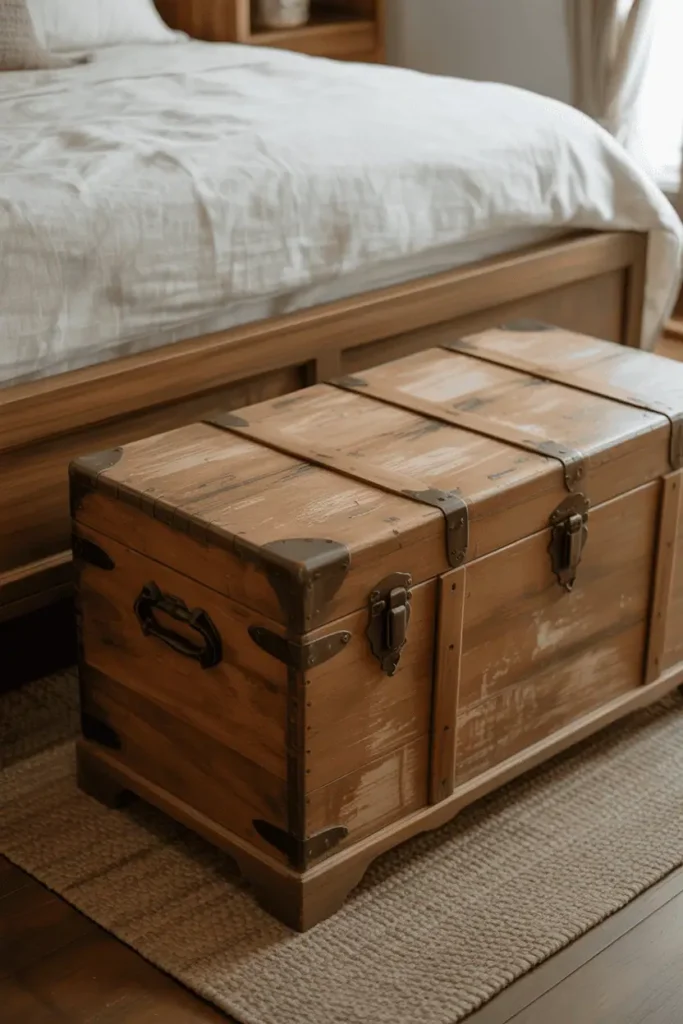
A traditional wooden trunk — the kind with metal corners and a slightly worn finish — functions as storage, seating, and visual anchor. Place it at the foot of the bed to extend the wood’s presence without blocking sightlines.
Choose one with visible wear: scratches, patina, slight unevenness in the finish. New trunks made to look old rarely succeed. Vintage or secondhand pieces carry the right kind of history. Use it to store extra blankets, out-of-season textiles, or anything that doesn’t need daily access.
9. Wooden Ceiling Beams or a Single Exposed Beam
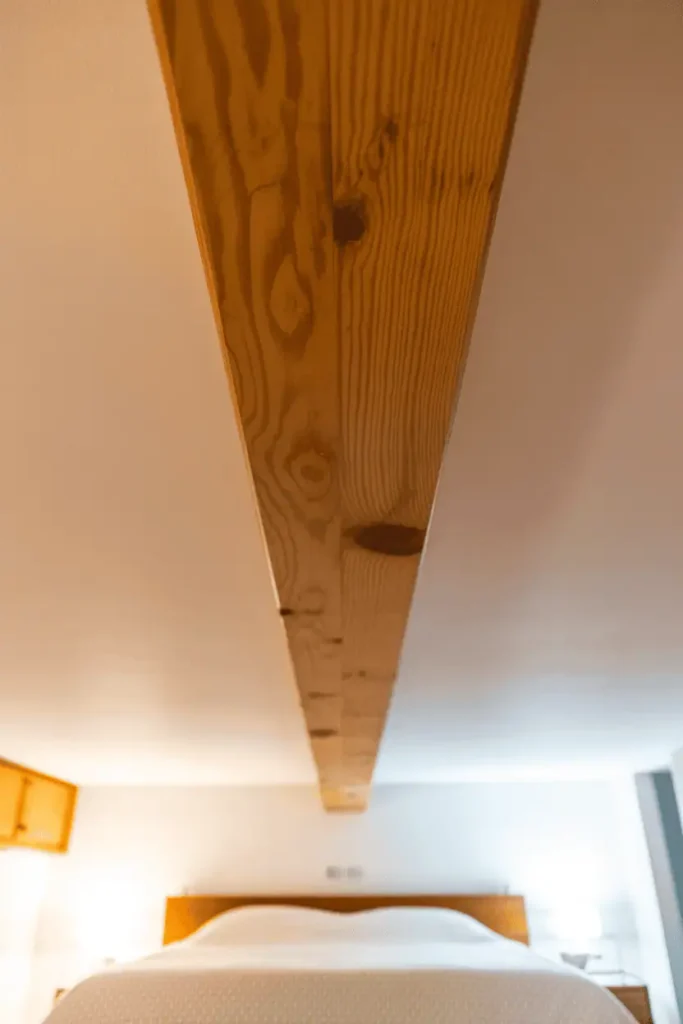
If the bedroom has exposed wooden beams, let them remain visible rather than painting them white. Even a single beam running lengthwise over the bed adds grounding without lowering the ceiling visually.
For rooms without original beams, adding faux beams only works if they’re proportional to the room and installed with restraint. One or two beams in a warm wood tone are enough. Three or more starts to feel overdone, especially in bedrooms under 12 feet wide.
The beam doesn’t need to match the bed frame. In fact, a slightly lighter or darker tone creates layering rather than matching.
10. Textured Wooden Wall Art or Carved Panels
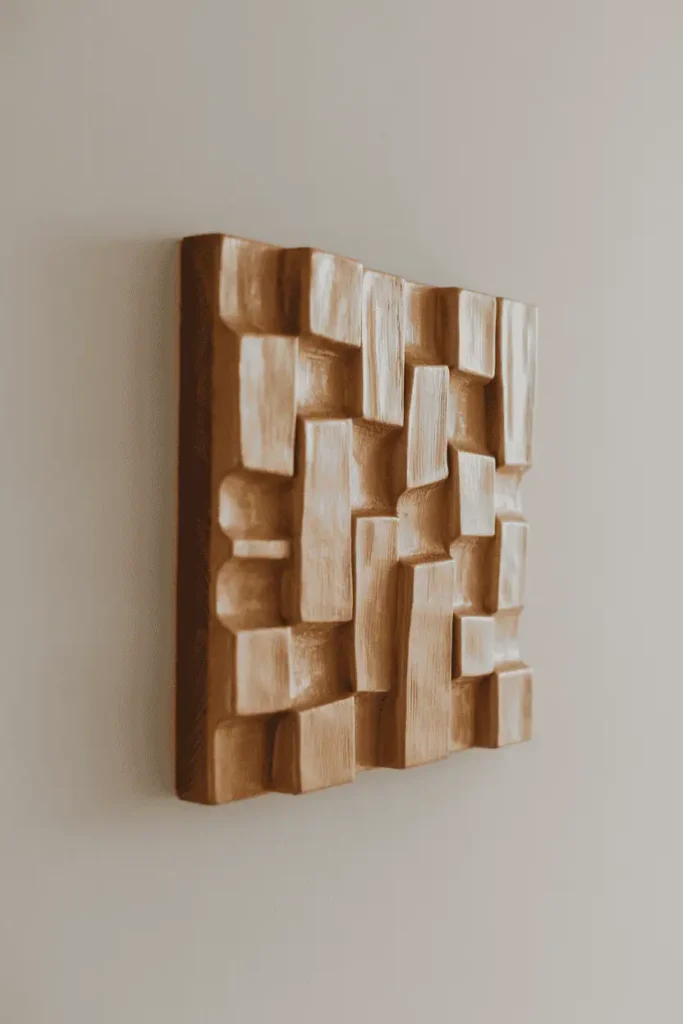
A single piece of carved wooden wall art — something abstract or geometric rather than literal — adds texture without pattern. Look for pieces with depth: layered wood, relief carving, or assembled wood blocks in varying tones.
This works best on the wall opposite the bed, where it’s visible but not the first thing you see when entering. It should feel discovered rather than announced. Avoid groupings of multiple wooden pieces on one wall; the texture becomes busy rather than calming.
11. Wooden Shelving with Minimal Styling
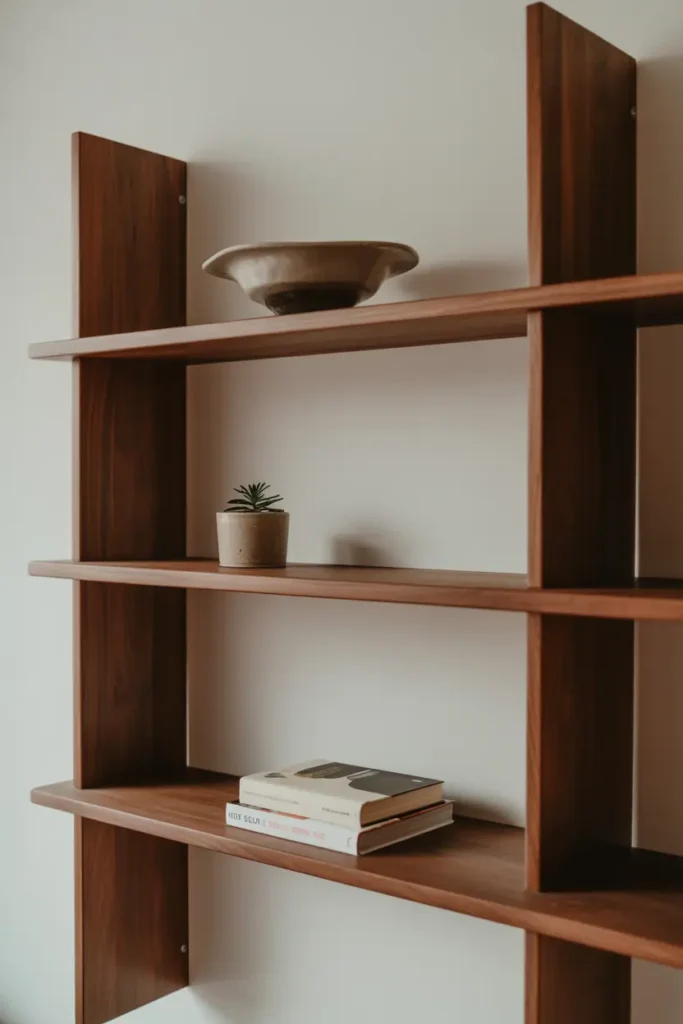
Open wooden shelving — whether floating or bracketed — only succeeds when it’s edited. Two or three objects per shelf: a ceramic bowl, a small plant, a stack of books. The wood itself is the material; the objects are just punctuation.
Darker shelves work against white walls. Lighter shelves work against earth-toned or terracotta walls. The contrast matters more than the specific finish. Leave some shelves partially empty to maintain breathing room.
Design tip: If the shelves feel too stark, add one trailing plant that softens the hard edge without covering the wood.
12. A Wooden Ladder for Throws or Textiles
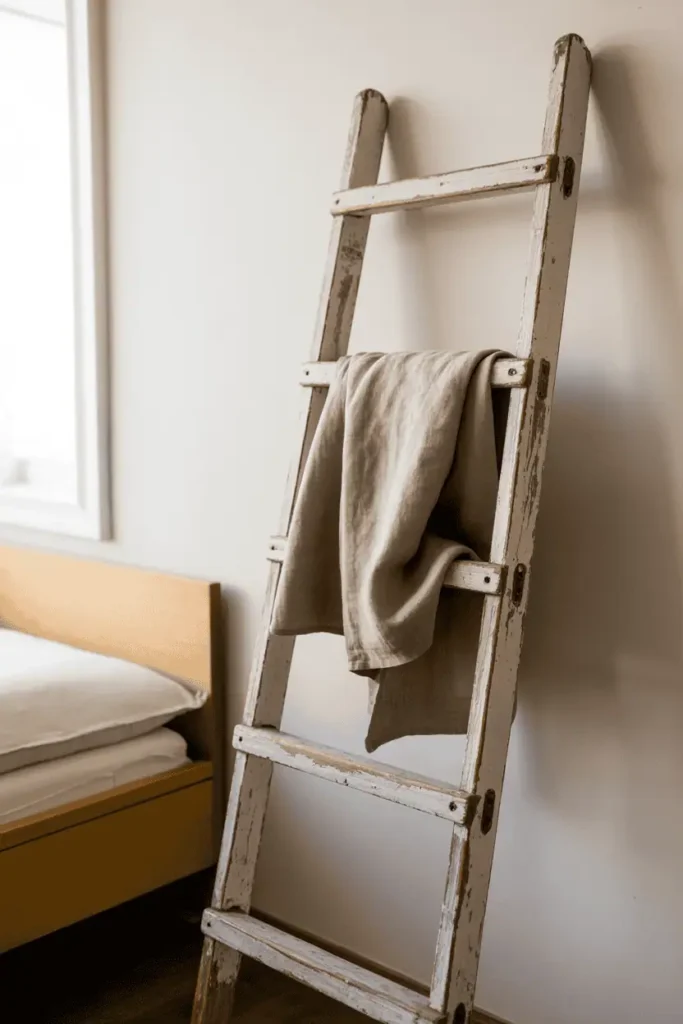
A simple wooden ladder leaning against the wall holds throws, blankets, or a lightweight quilt without requiring a storage piece. It’s functional, sculptural, and it doesn’t take up floor space in the way a chair or basket would.
Choose a ladder with visible wear — something reclaimed or weathered. New ladders look intentionally decorative rather than naturally functional. Place it in a corner or next to the bed, and drape just one or two textiles. More than that, and it becomes a laundry pile.
The room should now feel like it has enough wood to ground it, but not so much that it reads as heavy or overly themed.
13. Natural Fiber Rug to Balance the Wood’s Hardness
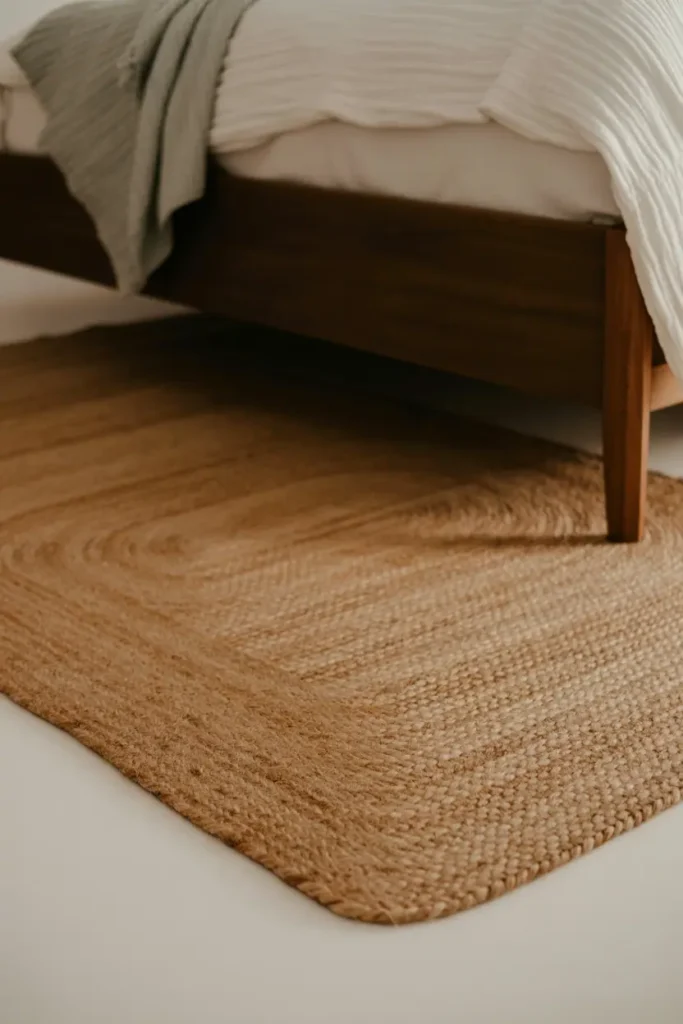
A jute, sisal, or seagrass rug under the bed softens the floor without introducing synthetic texture. These materials work with wood rather than against it — both are natural, both age visibly, both warm up over time.
Avoid rugs with patterns or colors that compete with the wood. The goal is texture, not contrast. A flat-weave rug in natural tones keeps the room grounded while maintaining visual simplicity. Layer a smaller sheepskin or wool rug on top if you want softness underfoot without covering the jute entirely.
14. Wooden Mirror Frame in a Simple Shape
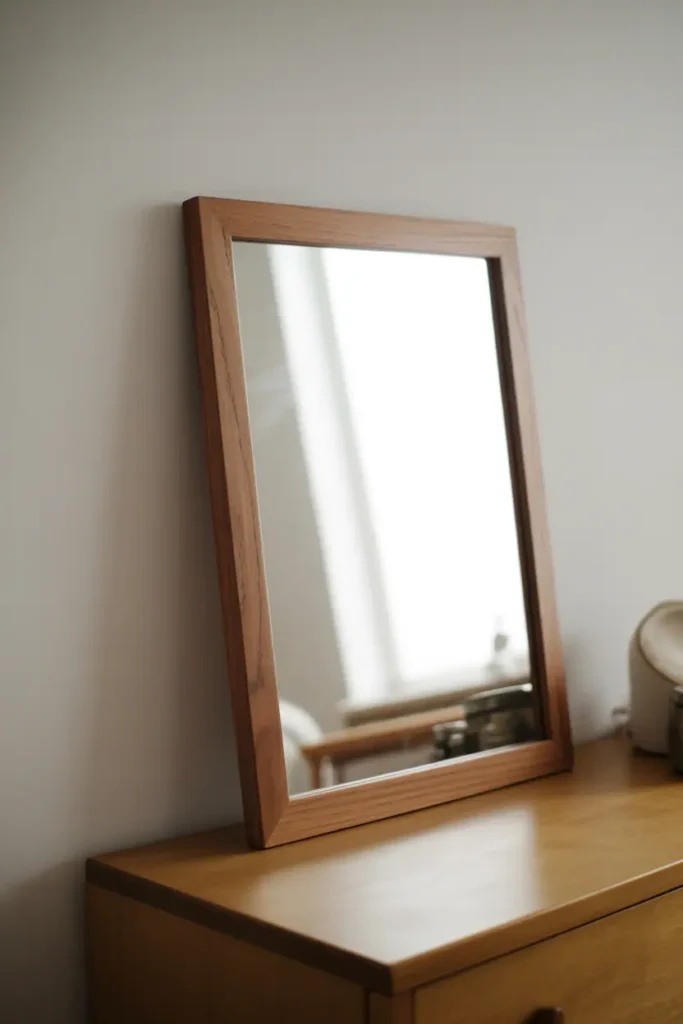
A mirror in a solid wooden frame — rectangular or oval, nothing ornate — reflects light without adding visual clutter. The frame should be proportional: not so thick it dominates, not so thin it disappears. Two to three inches is usually right.
Place it where it catches natural light from a window, either leaning against a wall or hung just above a dresser. The wooden frame ties it back to the bed, the nightstands, or the shelving without needing an exact match.
Practical guidance: If the room already has dark wood furniture, consider a lighter wood frame to keep the room from reading too heavy. The variation creates layers.
15. Wooden Storage Boxes or Baskets on Open Shelving
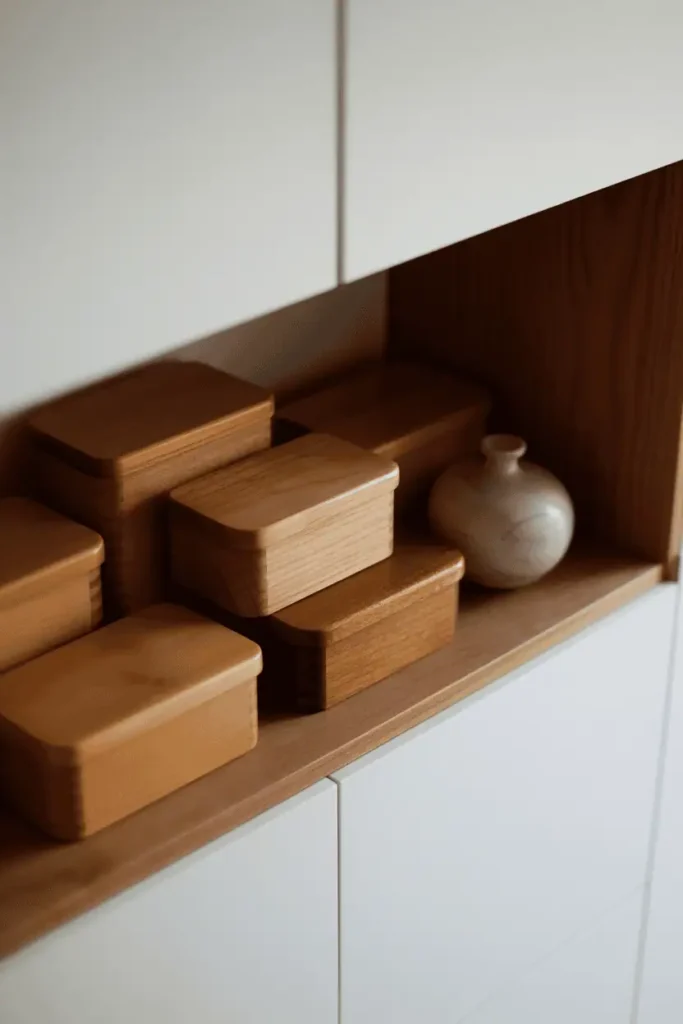
Small wooden boxes with lids — the kind used for jewelry, stationery, or loose items — add function and visual consistency to open shelving. They contain clutter without introducing plastic or metal storage solutions.
Choose boxes in varying sizes but similar finishes. Stack two or three on a shelf, or place them individually with space between. They should feel like objects, not organization systems.
16. A Single Wooden Stool as a Side Table or Plant Stand
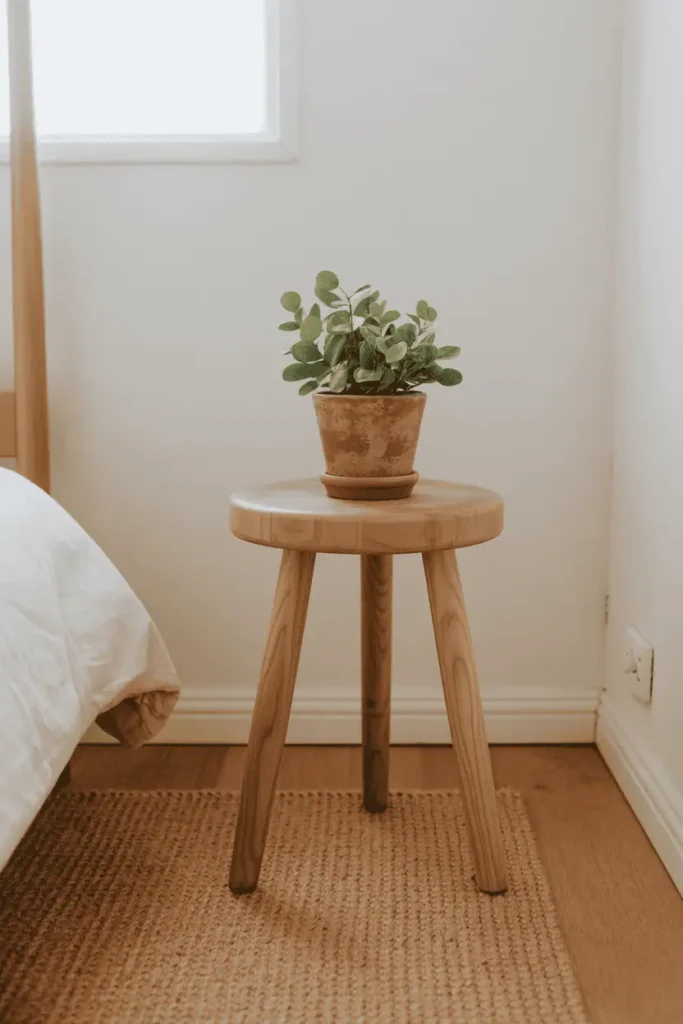
A low wooden stool — something simple, three-legged or cylindrical — works as an occasional side table, a plant stand, or a place to set a water glass at night. It’s adaptable, movable, and it reinforces wood as the room’s primary material without requiring permanent placement.
This works when the stool is slightly irregular: hand-carved, asymmetrical, or visibly aged. Mass-produced stools don’t carry the same presence. Place it where it’s useful but not central — next to a chair, in a corner, or beside the bed.
Styling Tips to Pull the Look Together
- Layer light sources at different heights: a low wooden lamp on the nightstand, a jute pendant overhead, and natural light from the window
- Repeat one wood tone at least three times in the room to create visual rhythm without monotony
- Use white or off-white walls to prevent dark wood from feeling too enclosed
- Limit decorative objects to one or two per surface — wood furniture already provides visual interest
- Add greenery in ceramic or terracotta pots rather than plastic to keep the material palette consistent
- Prioritize furniture with visible legs rather than pieces that sit flush to the floor; it lightens the room visually
- Let textures vary: smooth wood, woven cane, rough linen, soft wool — each one supports the others
Conclusion
Rooms like this don’t happen all at once. You start with the bed, add a nightstand, introduce a shelf. Each piece adjusts the room slightly, and over time the wood begins to feel like the room’s structure rather than its decoration.
The best approach is to choose wood furniture that can age with the room — pieces that develop patina, that show wear in the right places, that don’t need to be replaced when your taste shifts slightly. Indian wood bedroom design works because it’s built on this kind of longevity. The materials don’t go out of style because they were never trying to be trendy.
Save the ideas that feel most relevant to your space. Come back to them when you’re ready to make a change. The room will evolve naturally, not because you followed a checklist, but because you added pieces that made sense as you found them.

To bring you cozy inspiration more efficiently, we sometimes use AI to assist in content creation — but every word and idea is carefully shaped by our team. See our AI Disclosure for more info.