This post may contain affiliate links. If you click and buy, we may earn a small commission at no extra cost to you. Learn more.
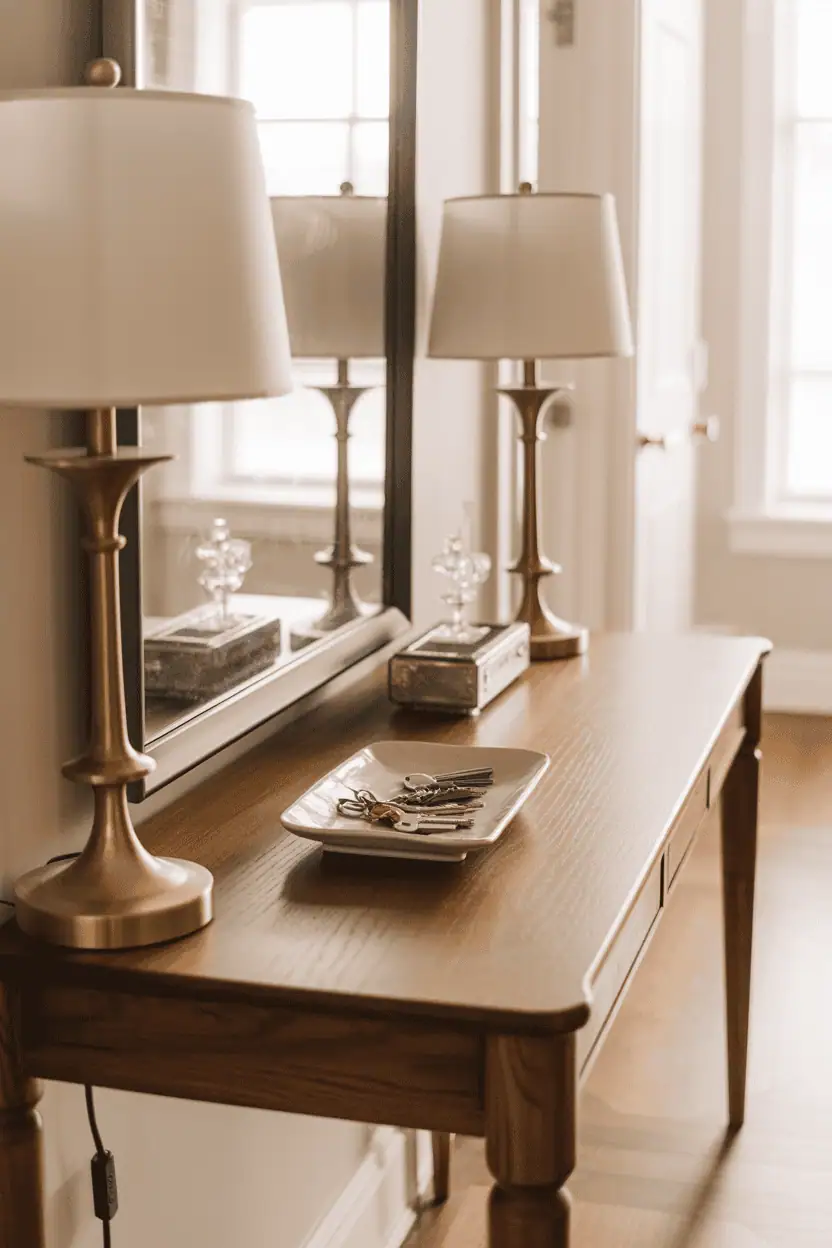
Console table styling is where restraint meets intention. The table itself—whether walnut, oak, or pine—provides the foundation, but what sits on it determines whether the entryway feels considered or cluttered. The best styled consoles look like they evolved gradually rather than being arranged in a single afternoon. A lamp that actually provides light. A tray that holds keys. Maybe one object that has no function beyond being beautiful.
What separates good console styling from overwrought styling is the ability to stop. Not every console needs a mirror above it. Not every surface needs three objects arranged by height. Sometimes a wooden console with a single sculptural vase and good lighting is enough. The wood grain itself provides visual interest; your job is to support it, not compete with it.
These concepts work across different console sizes, wood finishes, and entryway types. Some favor symmetry and traditional elegance. Others lean minimal and modern. A few embrace maximal styling with multiple objects and layers. The through-line is always that the console serves a purpose beyond looking decorated—it welcomes, organizes, and sets the tone for the home beyond.
The entryways that feel most resolved are the ones where every object on the console could justify its presence if asked.
Contents
- 1 What you’ll find here:
- 2 1. Symmetrical Traditional: Matching Lamps and Central Mirror
- 3 2. Minimal Modern: Single Sculptural Object and Task Light
- 4 3. Layered Casual: Books, Plants, and Organic Objects
- 5 4. Luxury Console Approach: Marble Accessories and Statement Lighting
- 6 5. Rustic Warm: Natural Wood Elements and Woven Textures
- 7 6. Entrance Console Design with Vertical Storage
- 8 7. Hall Console Table with Seasonal Styling Rotation
- 9 8. Wood Entry Table with Gallery Wall Above
- 10 9. Simple Console Table with Single Statement Mirror
- 11 10. Entry Way Console Table with Dual Function Styling
- 12 11. Wood Console Table Entryway with Low Horizontal Emphasis
- 13 12. Console Furniture as Room Divider with Double-Sided Styling
- 14 13. Entrance Console Design with Collected Vintage Objects
- 15 14. Hall Console Table with Built-In Lighting Solution
- 16 15. Wood Console Table with Textile Layering
- 17 16. Luxury Console Table with Art as Focal Point
- 18 Styling Tips to Pull the Look Together
- 19 Conclusion
What you’ll find here:
- Distinct console table styling concepts for different aesthetics
- Inspiration you can adapt to your console’s size and wood finish
- Complete styling approaches, not isolated object suggestions
- Ideas that balance function with visual appeal
1. Symmetrical Traditional: Matching Lamps and Central Mirror
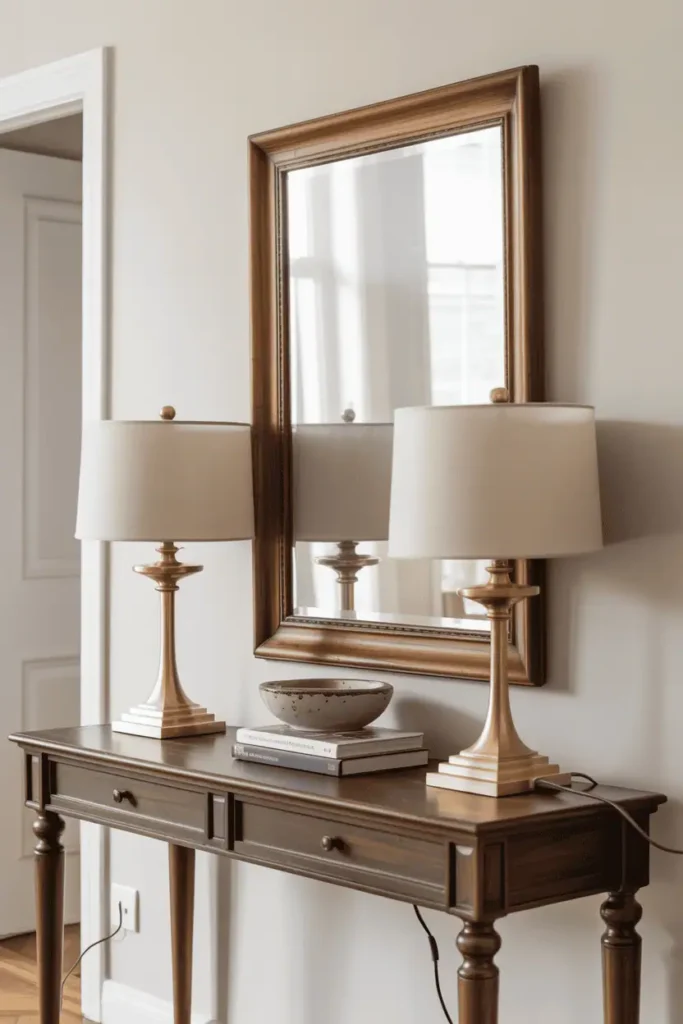
A classic approach: two matching table lamps positioned at each end of a dark walnut console, with a large rectangular mirror hung centrally above. Between the lamps, a small stack of books and a ceramic bowl. White walls, natural light from the side. The symmetry creates immediate visual calm.
This works in formal entryways and traditional homes where symmetry reads as elegance rather than stiffness. The matching lamps provide practical lighting on both sides, and the mirror reflects light into the space. This concept suits consoles that are at least 48 inches wide—anything shorter, and the symmetrical lamp placement crowds the surface. The dark walnut grounds the composition while the white walls prevent it from feeling heavy.
Design note: The lamps should be proportional—about one-third the console’s length. Oversized lamps overwhelm; undersized lamps disappear.
2. Minimal Modern: Single Sculptural Object and Task Light
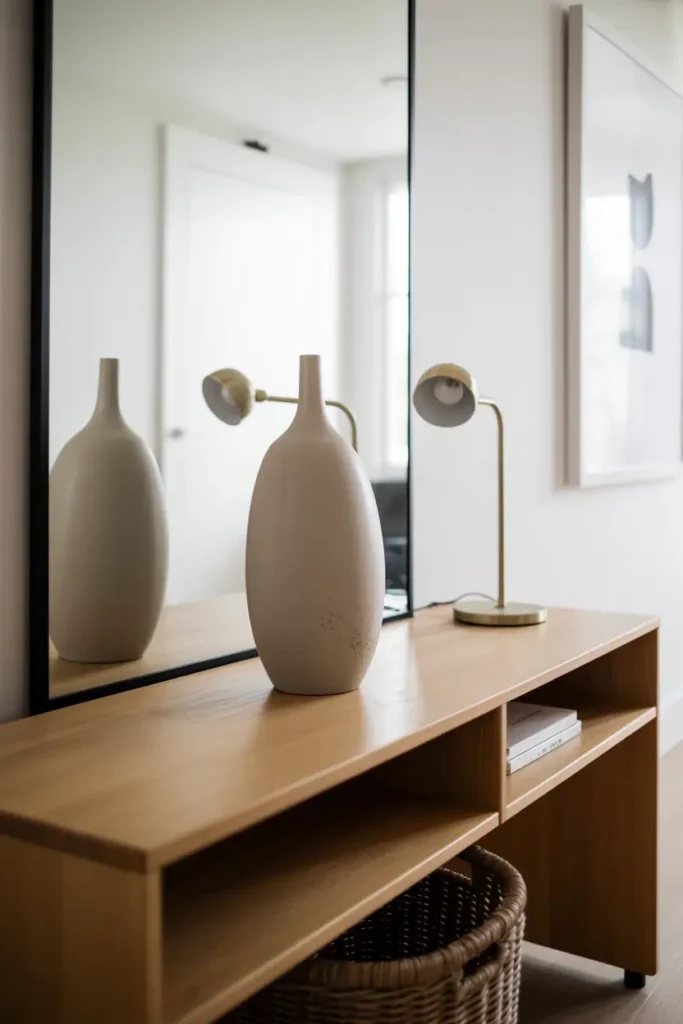
A light oak console with nearly bare surface: one substantial sculptural ceramic vase (12-15 inches tall) positioned off-center, and a sleek brass task lamp on the opposite end. Nothing else. The floor below has one woven basket tucked underneath for shoe storage. White walls, wood flooring.
This concept proves that less actually can be more. The single sculptural piece provides visual weight without clutter, and the task lamp offers function. The light oak keeps the look bright and contemporary. This approach works best in modern or Scandinavian-influenced homes where minimalism is already the aesthetic. It tends to fall flat in traditional spaces where it might read as unfinished rather than intentional.
3. Layered Casual: Books, Plants, and Organic Objects
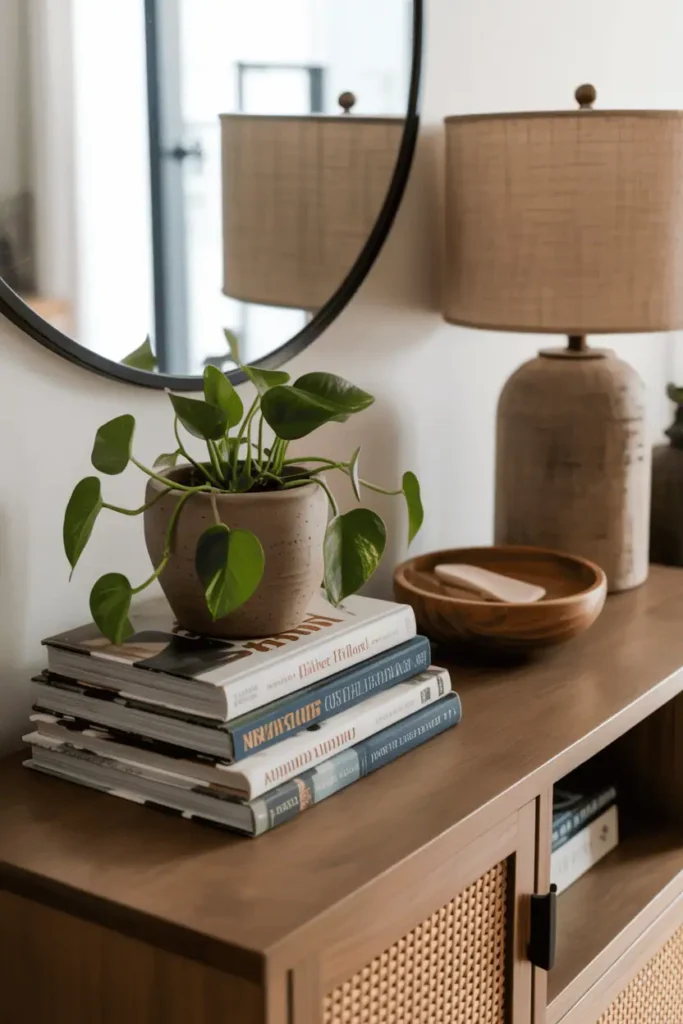
A medium-toned wooden console styled with deliberate asymmetry: a stack of 4-5 coffee table books on one side, a trailing pothos plant in a ceramic pot, a small wooden bowl, and a table lamp with a linen shade. Above, a casual lean-in mirror rests against the wall rather than hanging. The overall effect is collected and lived-in.
This feels approachable and warm, suited to young families or anyone who wants their entryway to feel more home than showroom. The books add height and color. The plant brings life. The lean-in mirror keeps things casual. This works on consoles 40-54 inches wide where there’s room for multiple objects without crowding. The medium wood tone bridges traditional and modern aesthetics.
4. Luxury Console Approach: Marble Accessories and Statement Lighting
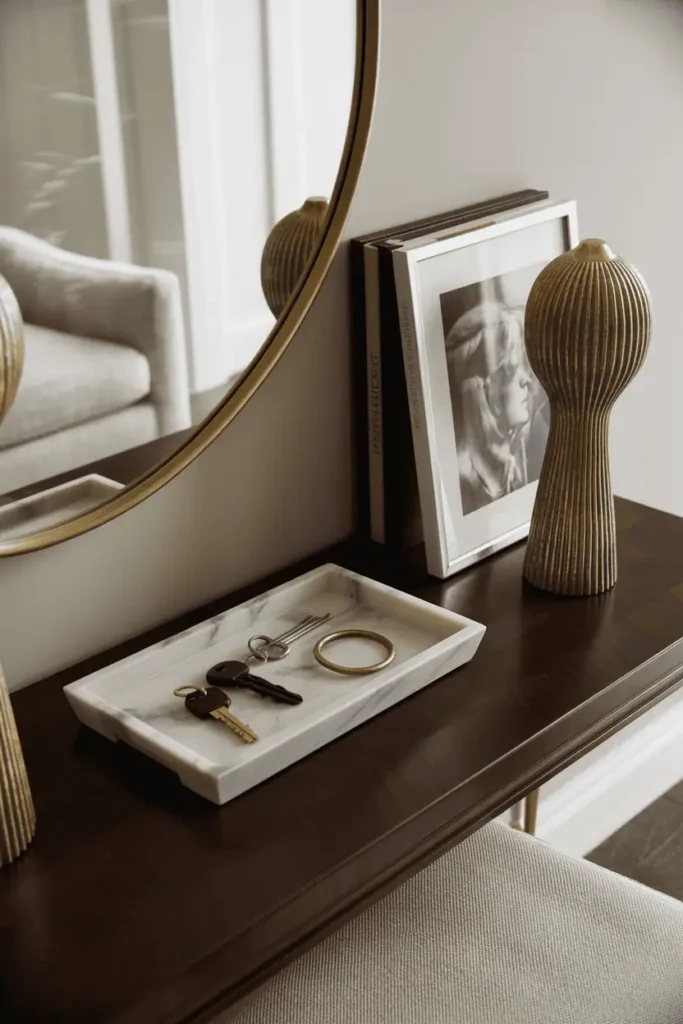
A dark mahogany console styled with elevated materials: a marble tray holding keys and small objects, a tall sculptural table lamp with aged brass base, and a single large art book standing upright. Above, an oversized round mirror in a thin brass frame. The palette stays neutral—whites, grays, brass, dark wood.
This concept creates an upscale feel through material quality rather than quantity of objects. The marble tray adds visual weight and luxury. The brass lamp and mirror frame catch light. The dark mahogany provides richness. This approach feels strongest in formal entryways or homes with traditional or transitional design. It requires investment in quality pieces—inexpensive versions of these materials rarely succeed.
The key is genuine materials; faux marble or brass-finish plastic undermines the entire concept.
5. Rustic Warm: Natural Wood Elements and Woven Textures
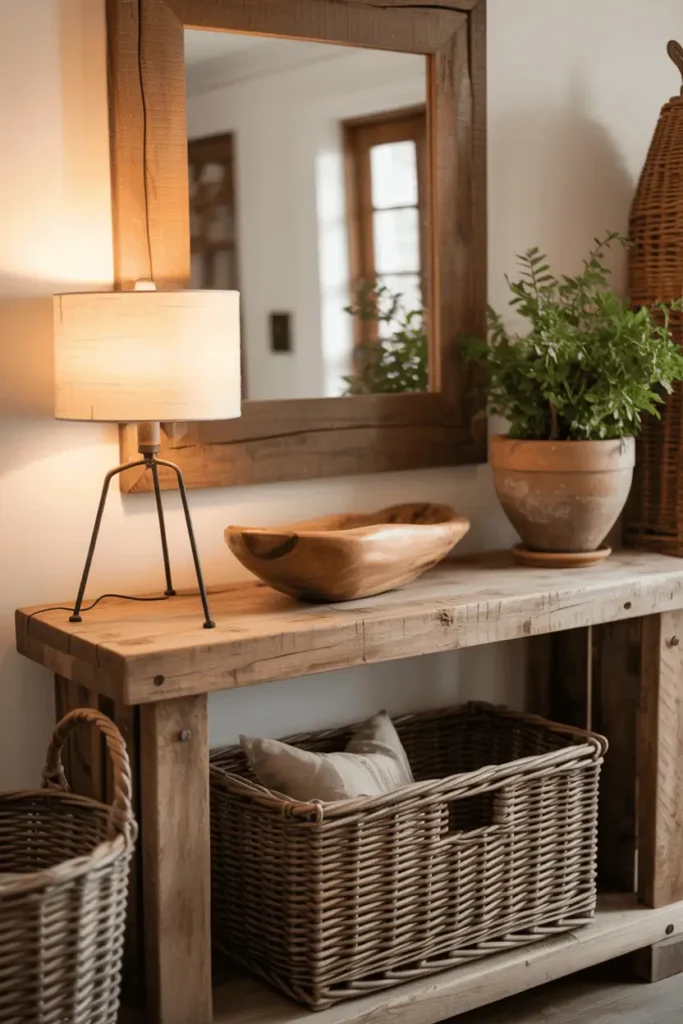
A reclaimed wood console (or new console with distressed finish) styled with natural elements: a chunky wood bowl holding keys, a terracotta pot with a hardy plant, a woven basket underneath, and a simple iron-based lamp. Above, a wood-framed mirror with visible grain. Earth tones throughout—terracotta, natural wood, cream, black iron.
This feels warm and grounded, suited to farmhouse, rustic, or casual traditional homes. The repeated wood textures create harmony—the console, bowl, and mirror frame all speak the same material language. The terracotta adds warmth without adding wood. This works when you commit fully to the natural material palette; mixing in chrome or glass would disrupt the cohesion.
At this point, the styling approaches are establishing distinct personalities—formal versus casual, minimal versus layered. Each serves different homes and different priorities.
6. Entrance Console Design with Vertical Storage
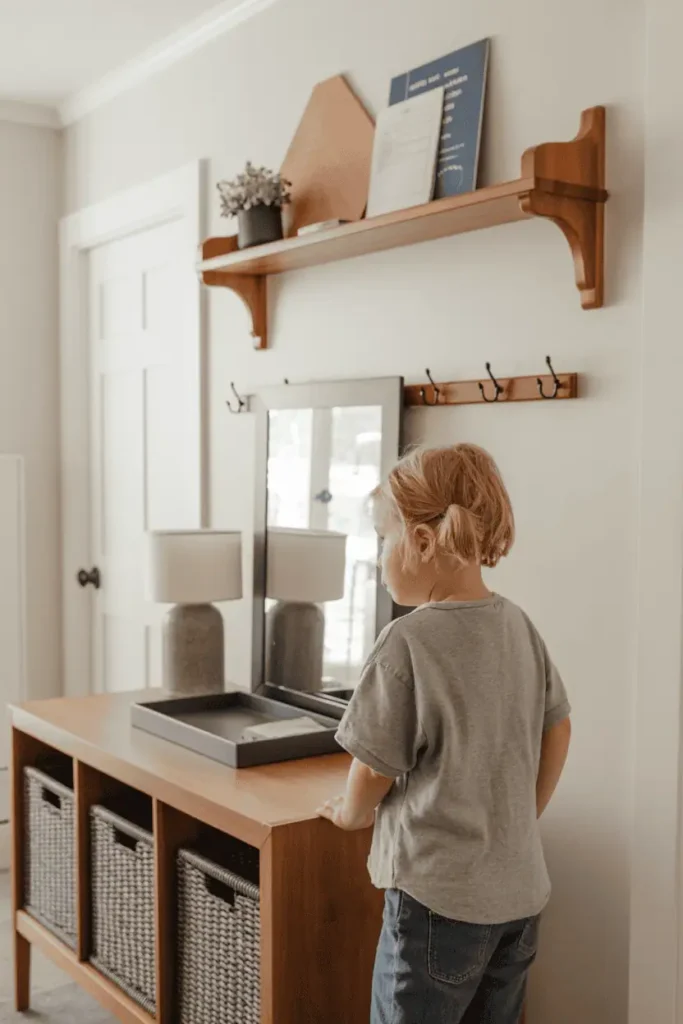
A simple wood console table paired with vertical organization above: a narrow shelf mounted on the wall behind the console at eye level, holding mail, a small plant, and decorative objects. The console surface stays relatively clear with just a lamp and a tray. Hooks mounted on the wall beside the console hold coats or bags. The vertical stacking keeps the console surface functional.
This concept prioritizes organization over pure aesthetics, suited to busy households that need their entryway to work hard. The console becomes part of a larger organizational system rather than a standalone styling moment. This works in narrow entryways where floor space is limited but wall space exists. The wood console anchors the system while the vertical elements keep daily clutter contained.
7. Hall Console Table with Seasonal Styling Rotation
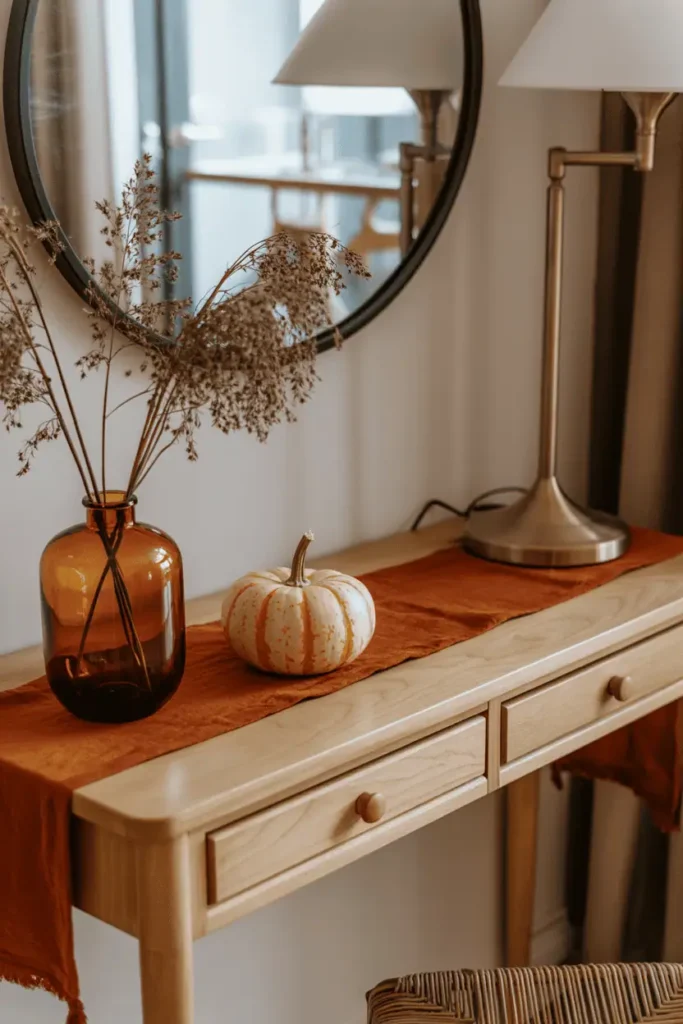
A light birch console styled to change with seasons: in this version, fall-toned elements including a small pumpkin, amber glass vase with dried grasses, and a rust-colored table runner underneath a brass lamp. The mirror above stays constant, but the console surface rotates every few months—spring brings fresh flowers, winter brings evergreen branches.
This approach suits anyone who enjoys refreshing their decor regularly. The console becomes a canvas for seasonal expression while maintaining a core structure (lamp, mirror, wood console). The light birch works across seasons without competing with changing colors. This requires storage for off-season items and a willingness to swap objects regularly, so it’s not for everyone.
8. Wood Entry Table with Gallery Wall Above
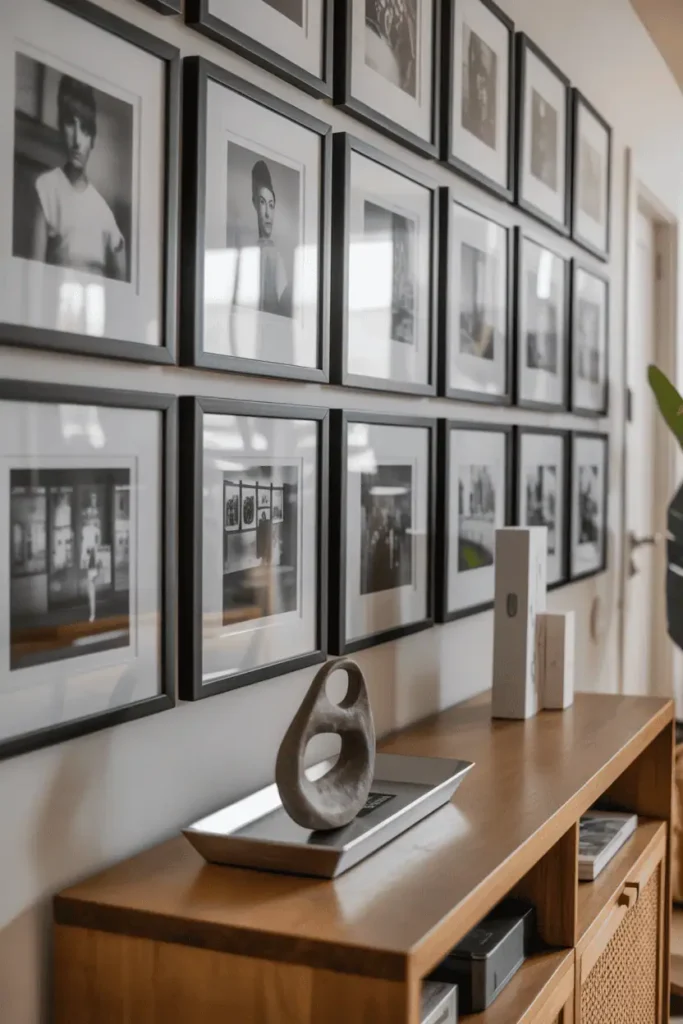
A narrow wooden console (30-36 inches) positioned below a curated gallery wall of black and white photographs in matching frames. The console surface stays minimal—just a small sculptural object and a low-profile tray—because the visual interest lives on the wall above. The gallery extends beyond the console width, making the narrow table feel intentional rather than insufficient.
This works when you have meaningful photographs or art to display and want them featured prominently. The console supports the gallery without competing. This approach feels strongest in homes with modern or eclectic aesthetics where gallery walls already appear elsewhere. Traditional homes might find the gallery wall too casual for an entryway, though it depends on the specific photos and frames chosen.
9. Simple Console Table with Single Statement Mirror
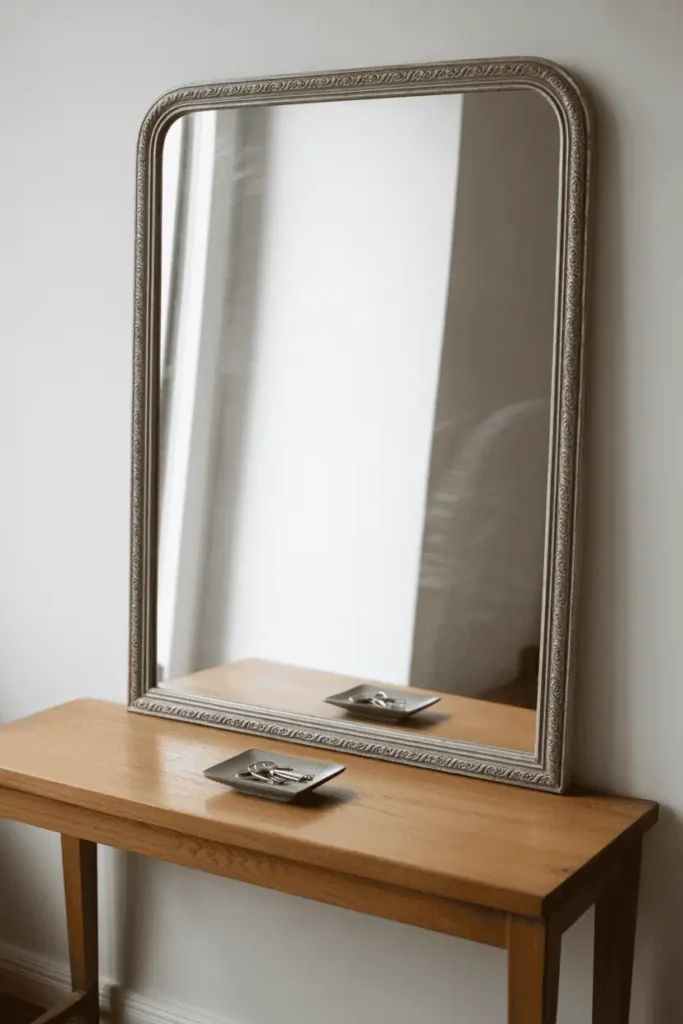
A medium-toned oak console with completely minimal surface—perhaps just a small ceramic dish for keys—paired with an oversized statement mirror above. The mirror is substantial (36-40 inches wide minimum) with an interesting frame: maybe carved wood, or gilt, or something with architectural detail. The mirror does all the decorative work; the console just supports it.
This concept inverts typical console styling where the surface carries the design load. Here, the mirror dominates and the console recedes. This works in small entryways where too many objects on the console would create visual clutter, or in homes where the mirror itself is a meaningful piece—vintage, inherited, or custom. The oak’s medium tone keeps it from disappearing but doesn’t compete with the mirror.
10. Entry Way Console Table with Dual Function Styling
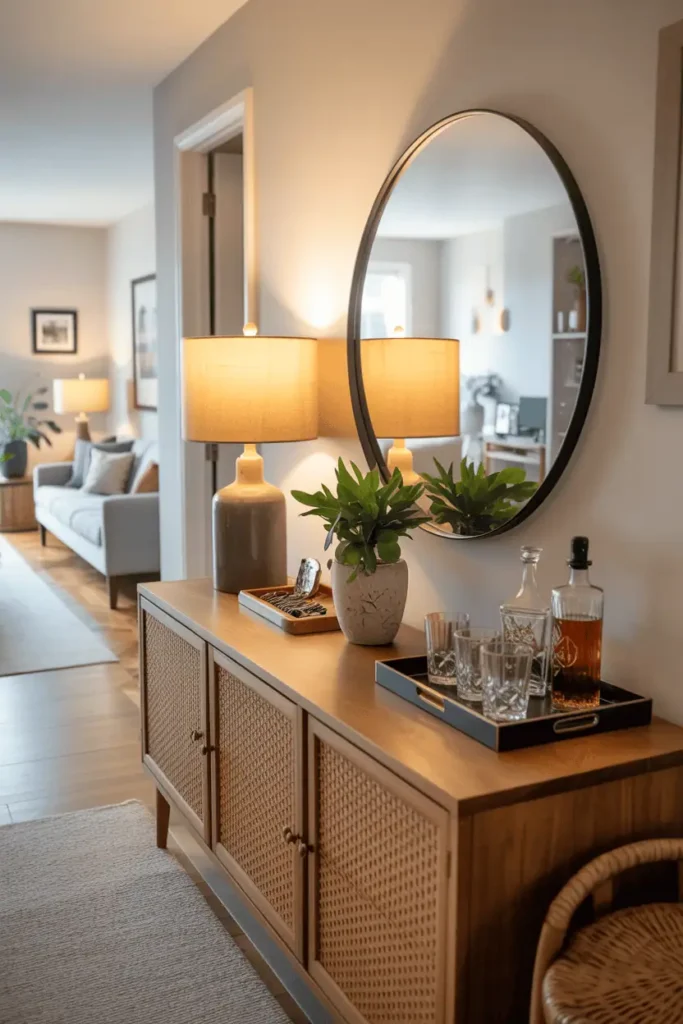
A console styled to serve two purposes: one end holds entryway essentials (lamp, tray for keys, small basket for mail), while the other end functions as a small bar or serving area with a tray holding glasses and a small decanter. The console becomes both entry station and entertaining support. Above, a simple round mirror keeps the look clean.
This works in open-plan homes where the entryway flows into living or dining space, or in smaller homes where furniture needs to work harder. The console earns its footprint by serving multiple needs. This approach requires a longer console (54+ inches) to accommodate both functions without crowding. The wood finish should be durable enough to handle glasses and occasional moisture from drinks.
The consoles are now functioning in different ways—some purely aesthetic, others balancing beauty with practical household needs. Neither is superior; they just serve different lives.
11. Wood Console Table Entryway with Low Horizontal Emphasis
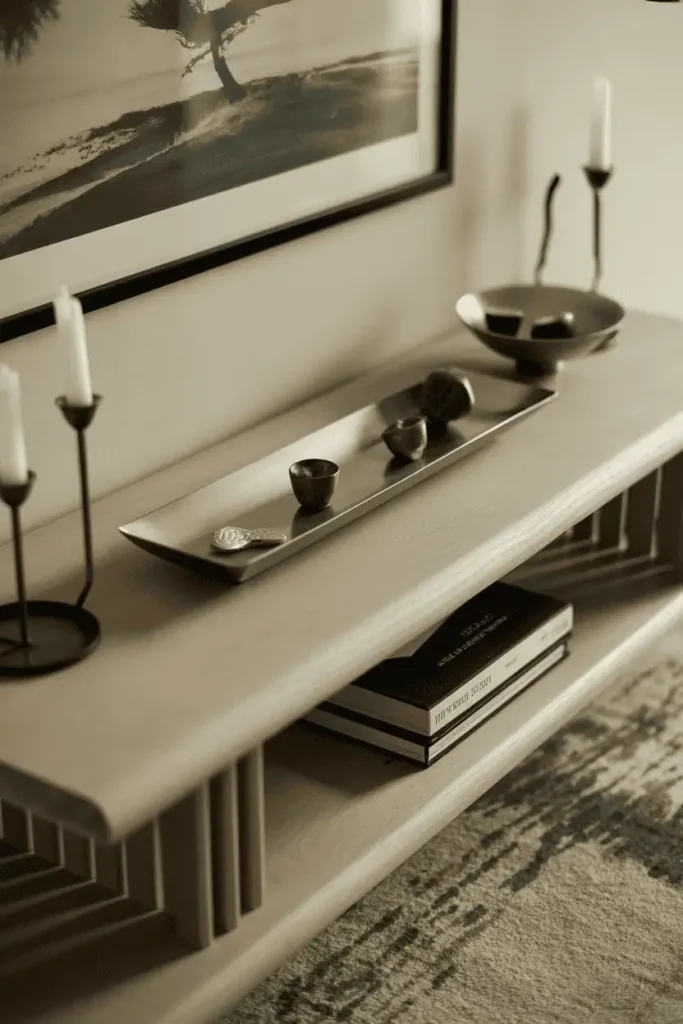
A low-profile wooden console (30-32 inches high instead of standard 36 inches) styled with objects that emphasize horizontal rather than vertical lines: a long rectangular tray holding several small objects, a wide shallow bowl, and a low candleholder. Above, artwork hung lower than typical to maintain the horizontal emphasis throughout the composition.
This creates a more relaxed, contemporary feeling than standard console height and styling. The horizontal emphasis makes the ceiling feel higher and the space more open. This works in modern or mid-century influenced homes, or in entryways with low ceilings where standard-height consoles and tall lamps would feel cramped. This tends to fall flat in traditional formal spaces where it might read as awkwardly proportioned.
12. Console Furniture as Room Divider with Double-Sided Styling
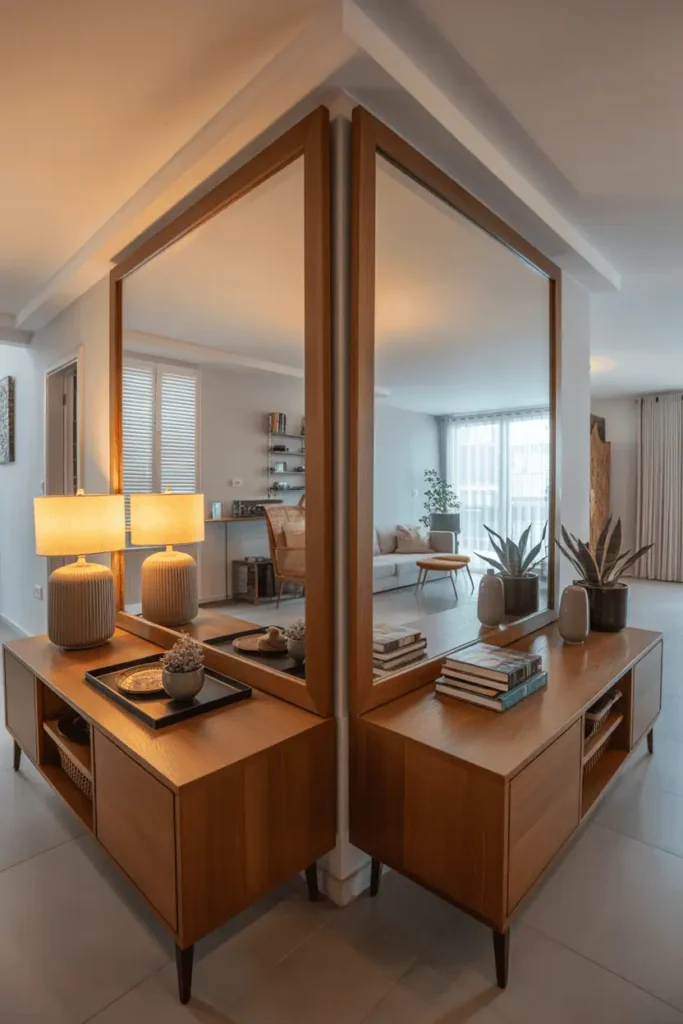
A freestanding wooden console positioned perpendicular to a wall, acting as a room divider in an open-plan space. Both sides are styled: the entryway side has a lamp, tray, and small plant; the living room side has decorative objects or books. No mirror (since it’s not against a wall). The console defines the entryway zone while remaining open and accessible from both sides.
This concept only works in specific layouts—open plans where the front door doesn’t open to a wall, or large foyers with space for floating furniture. The console must be finished on all sides (no unfinished backs). The double-sided styling needs to be balanced but not identical. This approach suits contemporary homes and anyone comfortable with unconventional furniture placement.
13. Entrance Console Design with Collected Vintage Objects
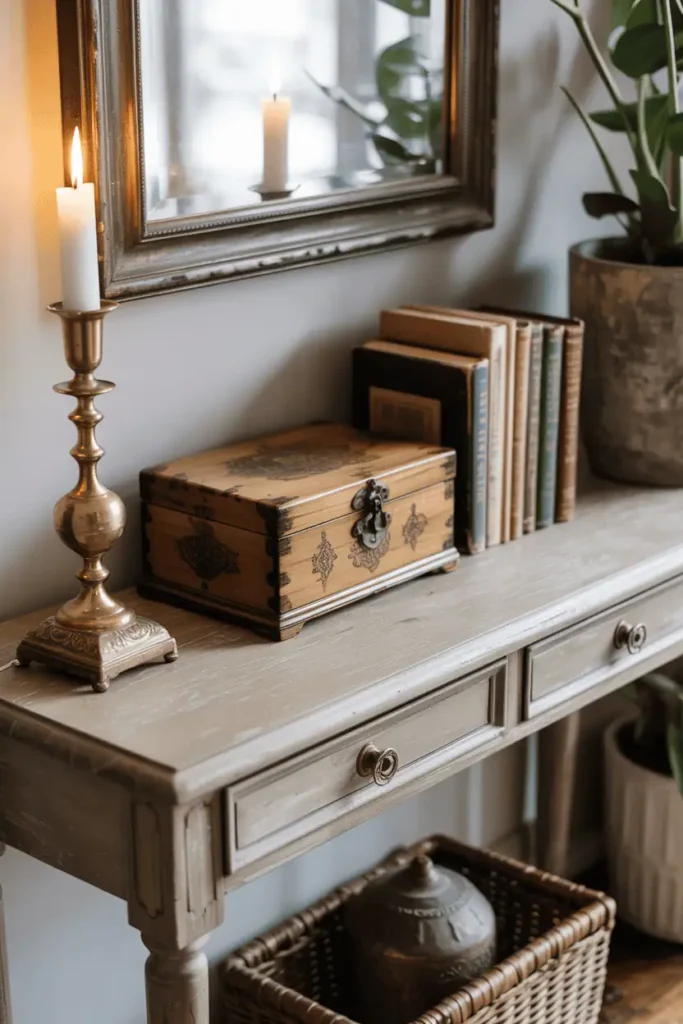
A console in any wood finish styled exclusively with vintage or antique objects: a brass candlestick, a small wooden box with patina, vintage books, an aged mirror above. Nothing new or obviously purchased-yesterday. The objects share age and character rather than matching style. The wood console anchors these disparate pieces through its material consistency.
This feels deeply personal and curated, suited to collectors or anyone with meaningful vintage objects they want displayed. The styling evolves slowly as new vintage finds enter the home. This approach requires patience and an eye for editing—too many vintage objects becomes cluttered; too few looks sparse. The vintage pieces should vary in height, material, and scale to create visual interest.
14. Hall Console Table with Built-In Lighting Solution
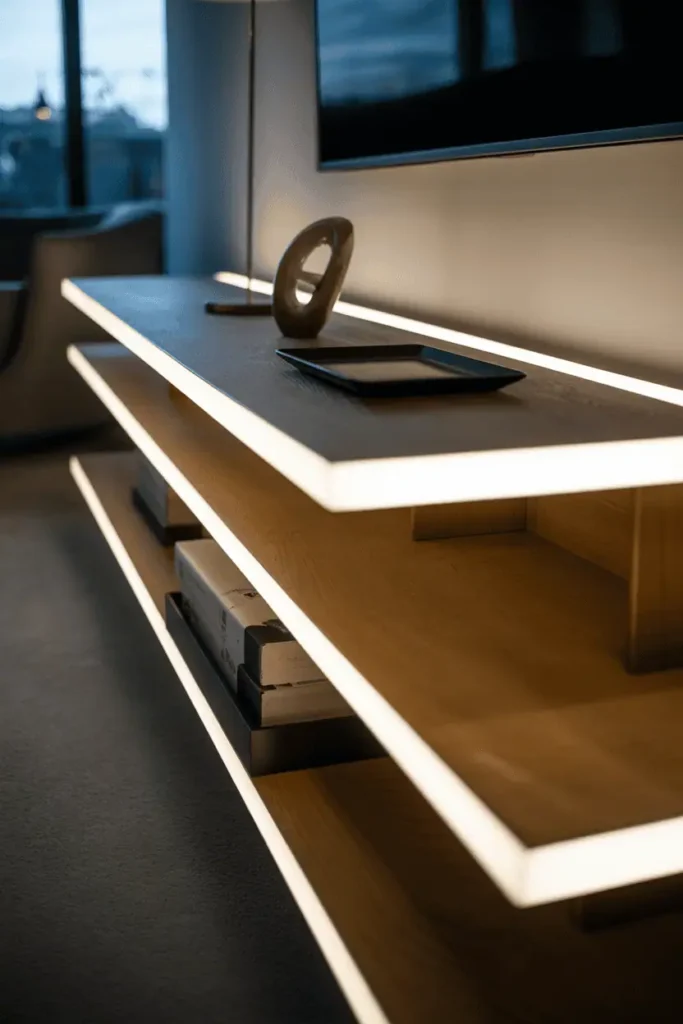
A wooden console with integrated lighting—either LED strips mounted underneath the console creating a floating effect, or back-lighting behind objects creating ambient glow, or a combination. The surface styling stays minimal because the lighting provides drama: perhaps just one sculptural object and a small tray. The lighting becomes the feature.
This creates a more architectural, designed feel than standard table lamp lighting. It works in modern or contemporary homes, or in entryways that lack natural light where ambient lighting helps. This requires electrical planning (outlets, potentially dimmer switches) so it’s often part of renovation or new build rather than added to existing spaces. The lighting should be warm-toned (2700-3000K) to complement wood rather than cool white which can feel clinical.
15. Wood Console Table with Textile Layering
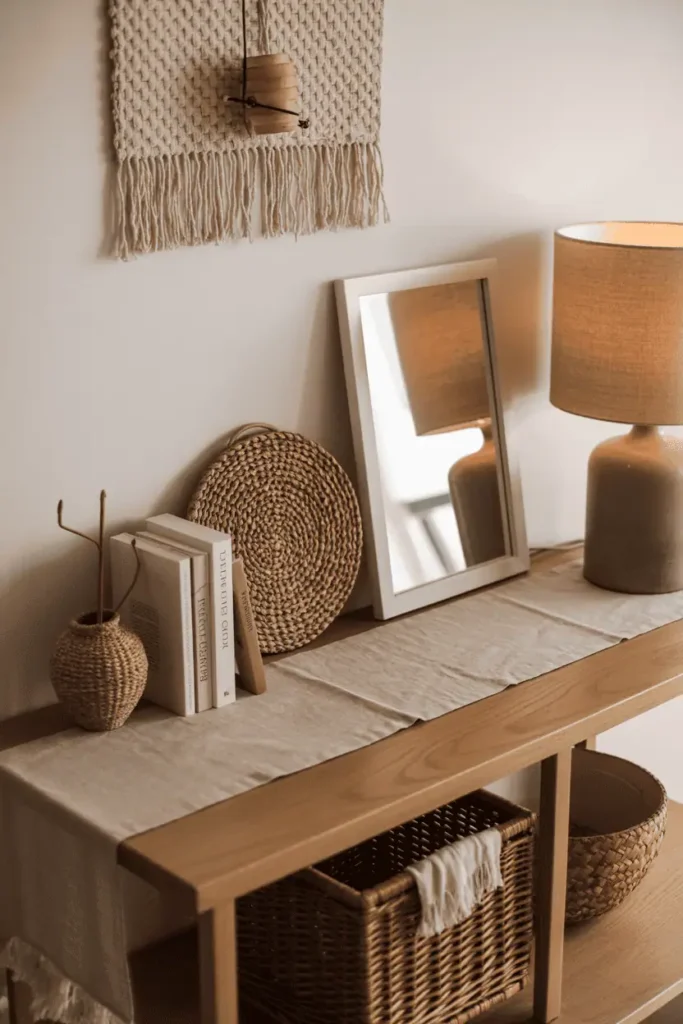
A console styled with textiles as a primary element: a table runner in linen or woven material, a small textile wall hanging above instead of a mirror, and objects on the console that incorporate fabric or fiber—a woven basket, textile-covered books, a lamp with fabric shade. The wood console provides solid structure while textiles add softness.
This approach creates warmth and tactility, particularly effective in minimalist or Scandinavian-influenced spaces that might otherwise feel too hard. The textiles soften sound and add visual warmth without adding clutter. This works best with natural fiber textiles—linen, cotton, wool, jute—that complement rather than compete with wood. Synthetic or shiny fabrics rarely succeed in this context.
16. Luxury Console Table with Art as Focal Point
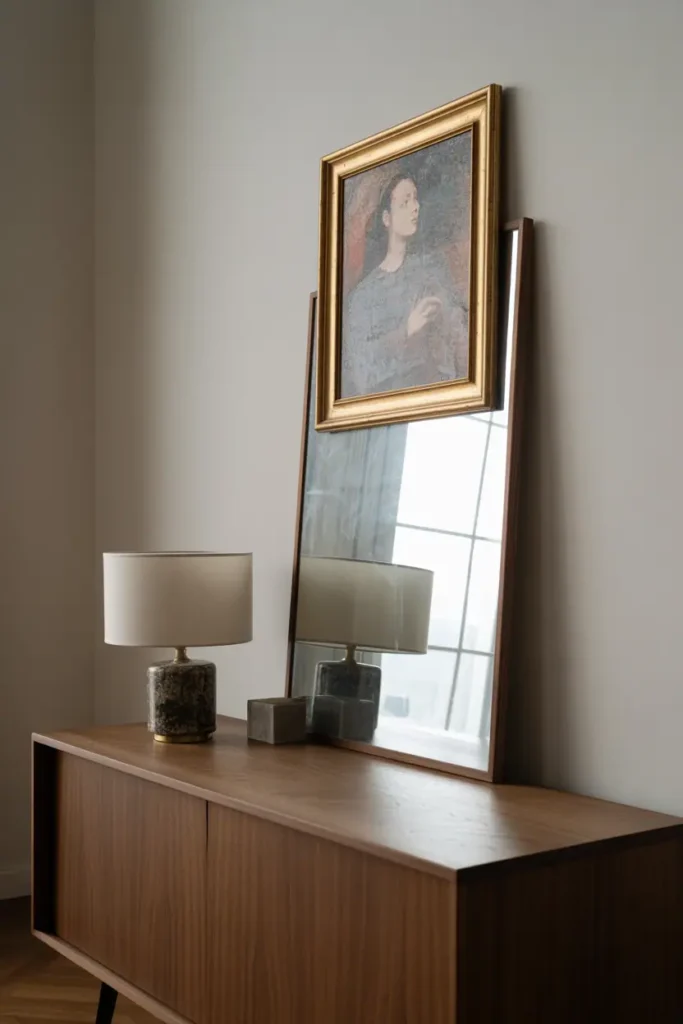
A refined wooden console (walnut or mahogany) styled to support one piece of art above it—not a mirror, but actual art: a painting, photograph, or print. The console surface stays extremely minimal: perhaps a single lamp positioned to one side, leaving the rest of the surface open. The entire composition centers on the artwork, with the console and lamp serving the art rather than competing with it.
This concept requires investing in meaningful art and having the restraint to let it dominate. It works in homes where art collection is important, or where one specific piece has significance. The console must relate to the art’s frame in tone—warm wood with warm-toned frames, cooler wood with silver or black frames. This approach feels strongest in sophisticated traditional or contemporary homes with intentional art collections.
Styling Tips to Pull the Look Together
- Limit objects on the console to 3-5 pieces maximum; more than that starts reading as cluttered regardless of how intentional the arrangement
- Include at least one light source—either a table lamp or lighting above—so the console functions practically at night
- Vary heights among objects on the console surface to create visual interest without adding more objects
- Repeat the wood tone somewhere else in the visible entryway—in flooring, a mirror frame, or a basket—to create cohesion
- Leave at least 30-40% of the console surface empty; negative space makes everything look more intentional
- Consider the view from multiple angles if the entryway is visible from other rooms; styling should look resolved from different sightlines
- Edit seasonally: remove one object for every new object added, so the console doesn’t accumulate into permanent clutter
Conclusion
Console styling improves through subtraction as often as addition. Start with the console itself and one or two essential pieces—a lamp if you need light, a tray if you need organization. Live with that minimal version for a week. Add objects only when you’ve identified a specific need or gap, not because you feel the surface looks empty.
The consoles that work best long-term are the ones that balance aesthetics with function. If you never use the lamp because it doesn’t provide adequate light, replace it with one that does. If the decorative bowl just collects dust, remove it. The styling should support how you actually move through your entryway, not exist separately from daily life.
Save the approaches that suit your console’s size, your home’s aesthetic, and your household’s practical needs. Come back to them when your current styling stops working or you’re ready for a refresh. The goal is a console that welcomes you home and sets the right tone every time you walk through the door—not one that requires constant maintenance to look right.

To bring you cozy inspiration more efficiently, we sometimes use AI to assist in content creation — but every word and idea is carefully shaped by our team. See our AI Disclosure for more info.