This post may contain affiliate links. If you click and buy, we may earn a small commission at no extra cost to you. Learn more.
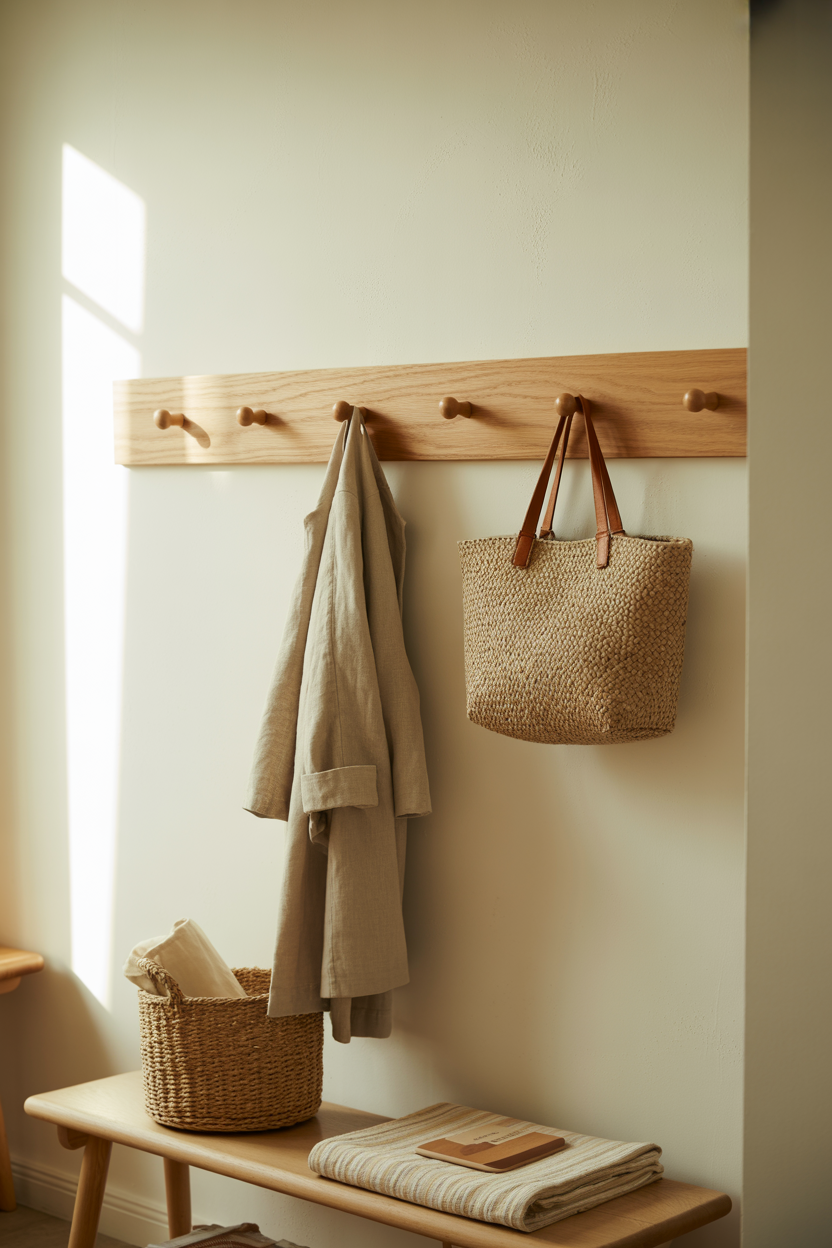
There’s something grounding about wood on a wall. Not dramatic — just present. A few hooks near the door, a slim rack in the hallway, maybe a row of pegs above a bench. These aren’t the kinds of pieces that announce themselves, but they do clarify a room. They give coats and bags a place to rest without feeling like storage solutions.
The appeal isn’t about rustic charm or farmhouse nostalgia. It’s about material honesty. Wood reads as warm and solid, even when the piece itself is minimal. It works in apartments with white walls and older homes with uneven plaster. It doesn’t demand a specific aesthetic — it adapts to one.
What makes wooden hooks and racks feel different from metal or plastic alternatives is their ability to age without looking worn. A brass hook might tarnish beautifully, but wood just settles in. It darkens slightly, picks up a few scuffs, and somehow looks more intentional for it.
What you’ll find here:
Visual inspiration rooted in real homes
Practical ideas you can apply gradually
Furniture and decor concepts that support browsing and shopping
Looks that work across room sizes and styles
Contents
- 1 1. Single Peg Strips in Light Oak
- 2 2. Reclaimed Barn Wood Mounted Ledges with Integrated Hooks
- 3 3. Shaker-Style Peg Rails in Natural Walnut
- 4 4. Floating Wooden Coat Racks with Hidden Mounting
- 5 5. Live Edge Slabs with Industrial Hook Hardware
- 6 6. Modular Wooden Peg Systems in Birch
- 7 7. Curved Wooden Hooks Mounted Individually
- 8 8. Vertical Ladder-Style Coat Racks in Ash
- 9 9. Wall-Mounted Wooden Branch Hooks
- 10 10. Horizontal Plank Shelves with Undermounted Pegs
- 11 11. Dowel Rod Racks with Leather Strap Hangers
- 12 12. Corner-Mounted Triangular Peg Boards
- 13 13. Recessed Wooden Hook Panels
- 14 14. Stained Pine Peg Rails with Antique Finish
- 15 15. Multi-Tier Vertical Racks with Adjustable Pegs
- 16 16. Carved Wooden Animal Head Hooks
- 17 17. Horizontal Log Slices with Drilled Hook Holes
- 18 18. Minimalist Dowel Pegs in Untreated Maple
- 19 19. Vintage Repurposed Tool Handle Hooks
- 20 Styling Tips to Pull the Look Together
- 21 Final Thoughts
1. Single Peg Strips in Light Oak
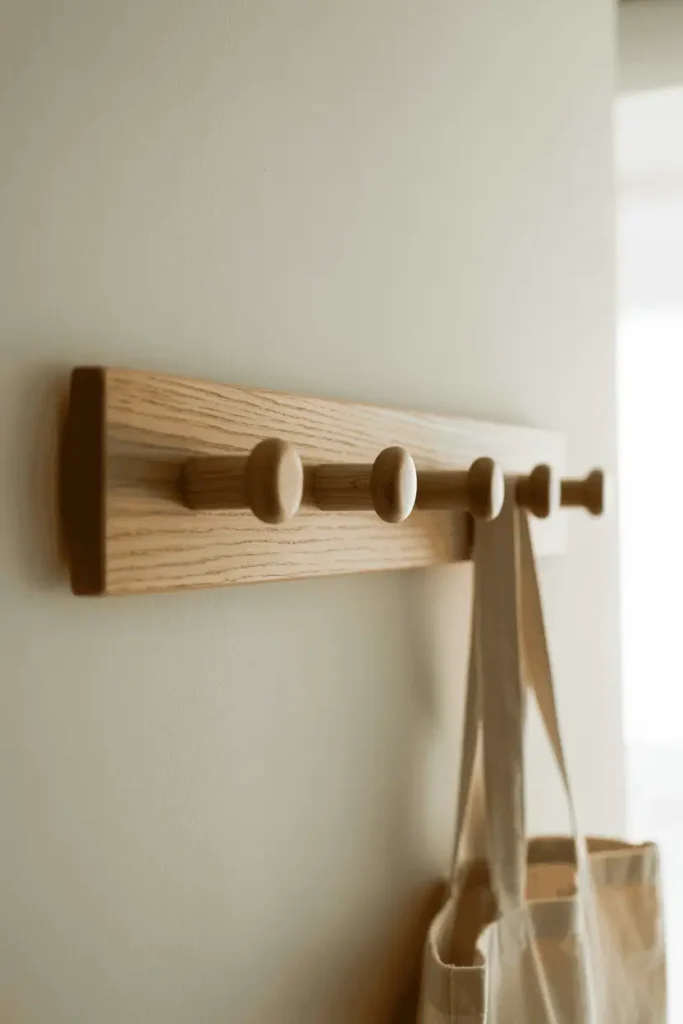
The idea here is restraint. A horizontal strip with three to five pegs, mounted at shoulder height, nothing more. Light oak keeps it neutral without reading as bland. The grain shows through but doesn’t compete with art or textiles nearby. This works best in entryways where the wall space is limited and you need function without visual weight.
Practical guidance
Mount these about 60 inches from the floor — high enough that coats don’t drag, low enough that you’re not reaching. Avoid placing them directly next to a door frame; give them at least eight inches of breathing room. If the wall is textured or painted in a deep color, the lightness of oak will stand out more than you expect. That’s often a good thing, but test the scale first.
Styling & product direction
Pair with woven baskets on the floor below for shoes or bags. A narrow console table underneath can hold keys or mail without cluttering the hook line. Look for pegs with rounded edges rather than sharp angles — they photograph better and feel less utilitarian.
Design tip: If you’re installing more than one strip in the same space, keep them at the same height and use the same wood tone. Variation here usually looks unfinished.
2. Reclaimed Barn Wood Mounted Ledges with Integrated Hooks
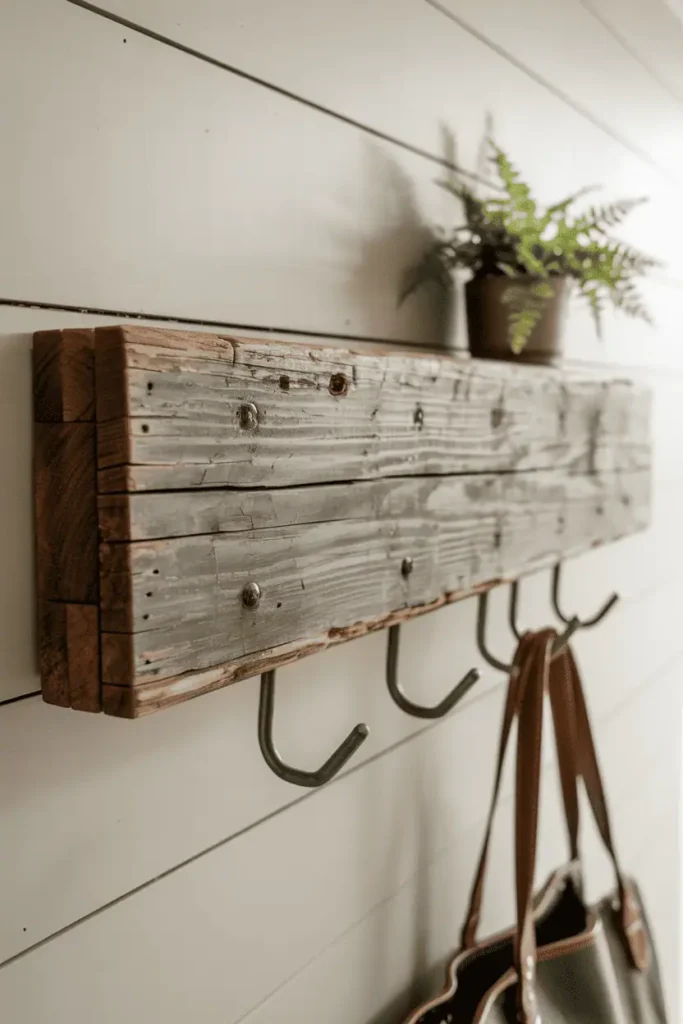
This leans heavier, both physically and visually. A thick plank of reclaimed wood — gray, weathered, sometimes with old nail holes still visible — serves as both a ledge and a hook system. The hooks drop down from the underside or emerge from the front face. It’s the kind of piece that works in rooms with higher ceilings and a bit of architectural character already in place.
The ledge portion is where this gets useful. You can rest a plant, a framed print, or a small lamp up top while coats hang below. It consolidates two functions into one horizontal line, which is helpful in narrow hallways or mudrooms where floor space is tight.
Practical guidance
These need solid wall anchors — reclaimed wood is dense and heavy, and once you add coats and bags, the load increases quickly. Mount into studs whenever possible. The ledge depth should stay around four to six inches; any deeper and it starts to jut into the room awkwardly. Consider the wall color carefully. Dark reclaimed wood disappears against charcoal or navy but creates strong contrast on white or cream.
Styling & product direction
Look for ledges with three to four hooks rather than a crowded row of six or more. Metal hooks in black or aged bronze keep the focus on the wood. Below, a jute rug or a wood bench continues the natural material thread without making the space feel too themed.
3. Shaker-Style Peg Rails in Natural Walnut
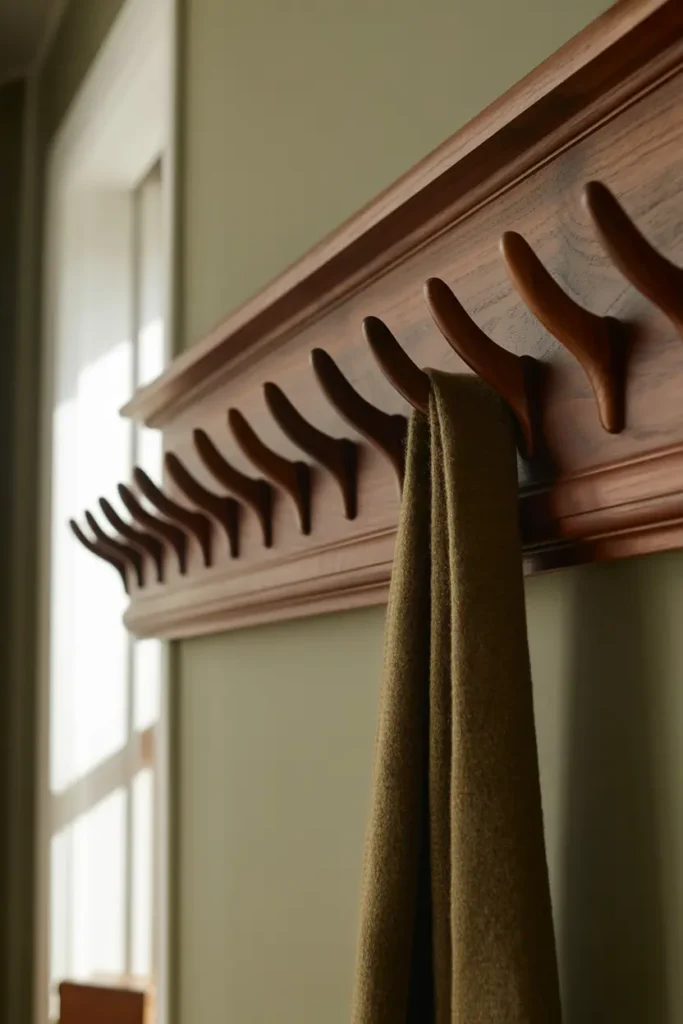
Shaker peg rails are famously simple — a long board with evenly spaced pegs angled slightly upward. In walnut, they take on a warmer, more contemporary tone than the traditional maple versions. The dark grain adds richness without ornament, and the silhouette stays clean enough to work in modern spaces.
These rails run long, sometimes spanning an entire wall. That length makes them feel architectural rather than decorative. They’re not just hooks — they’re a design element that can anchor a room.
Practical guidance
Install these lower than you think — around 54 to 58 inches from the floor works well in most rooms. The upward angle of the pegs is slight but important; it keeps items from sliding off. Space the pegs about eight to ten inches apart. Closer than that and bags start overlapping. Wider and the rhythm feels off.
Style note: Walnut darkens over time, especially in rooms with natural light. If you want the color to stay consistent, keep it out of direct sun or plan for the patina.
4. Floating Wooden Coat Racks with Hidden Mounting
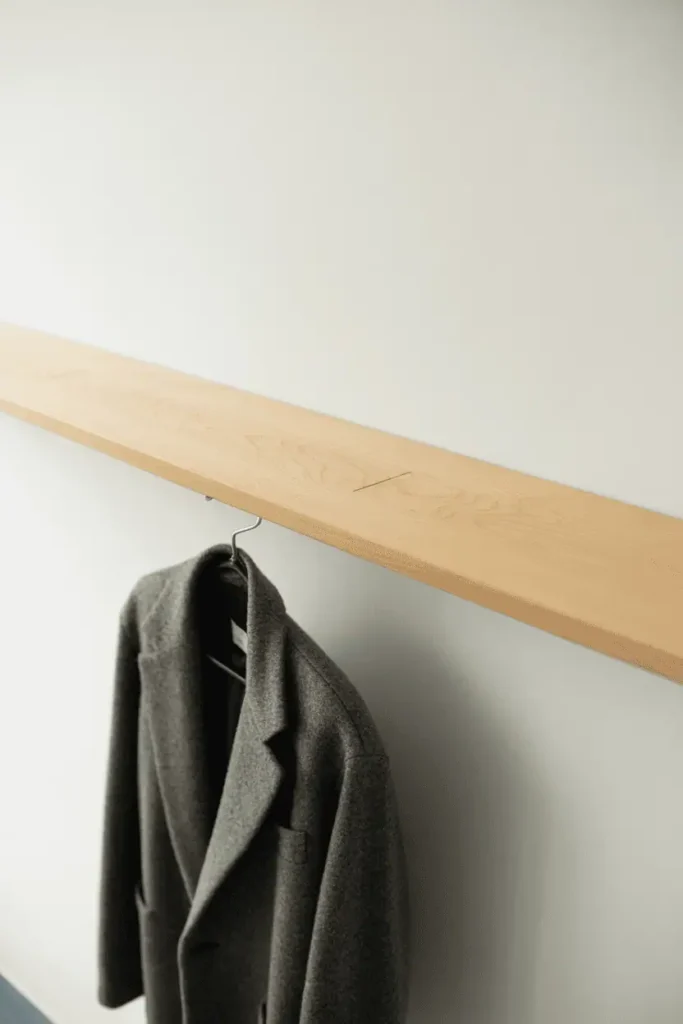
The structure here is minimal — a horizontal bar or a series of individual pegs that appear to float off the wall with no visible hardware. The mounting plates are recessed or hidden behind the wood itself, so the piece reads as light and uninterrupted. This works best in spaces where the walls are already busy or where you want storage to feel almost invisible.
Oak, ash, or maple in lighter finishes keep the floating effect convincing. Darker woods can work too, but they need more wall space around them to avoid looking heavy.
Practical guidance
Hidden mounting requires precision. The wall needs to be flat and the anchors need to be perfectly level, or the whole piece will tilt. These aren’t great for textured walls or old plaster unless you’re willing to add a backer board. Keep the projection from the wall shallow — three to four inches is plenty. Any more and coats will knock into the piece when you’re hanging them.
Styling & product direction
These pair well with slim entryway furniture — a narrow bench, a low stool, or a metal shoe rack. Avoid chunky baskets or oversized mirrors nearby. The goal is to let the floating effect stay the focus.
At this point, the room should already feel quieter — not because of one statement piece, but because the materials are beginning to relate to each other.
5. Live Edge Slabs with Industrial Hook Hardware
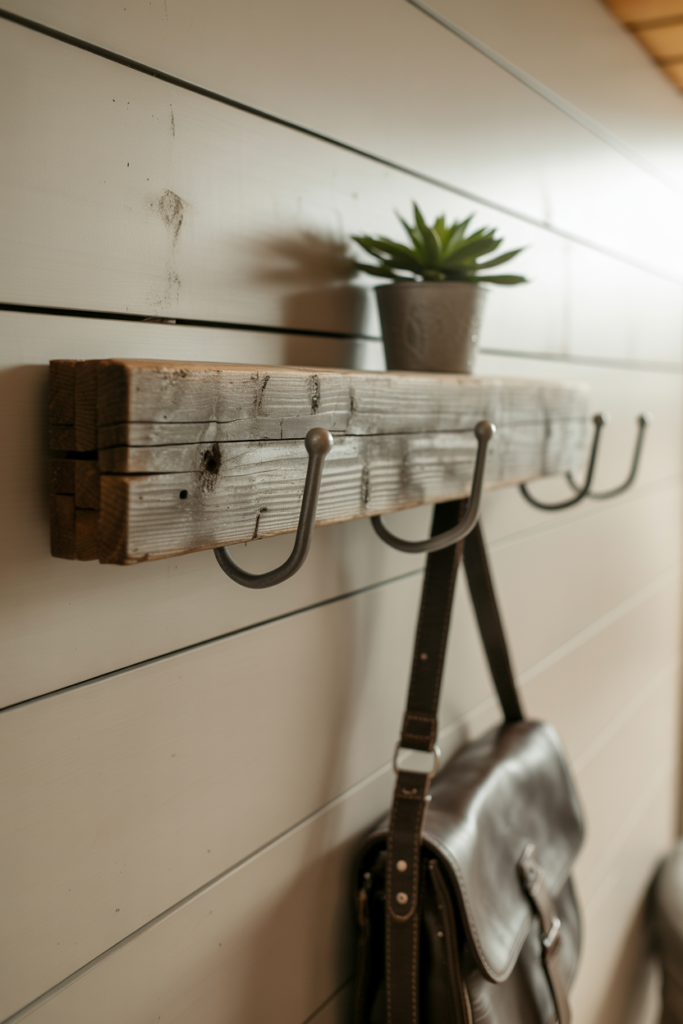
A live edge slab keeps the organic, unfinished edge of the wood intact. Paired with matte black or gunmetal hooks, it strikes a balance between natural texture and industrial function. The contrast is intentional — rough wood against smooth metal, organic shape against geometric hardware.
This works in spaces that already have some material tension: exposed brick, concrete floors, or steel-framed furniture. It’s less successful in rooms that lean fully rustic or fully minimal. The piece needs context to make sense.
The slab itself can range from two to four inches thick. Thicker slabs feel more substantial but also take up more visual space. If the wall is narrow or the room is small, stick with a thinner profile. The length can vary, but four to five feet is a good middle ground — long enough to be useful, short enough to avoid overwhelming the wall.
Practical guidance
Live edge pieces are often heavy and irregular in shape, so installation takes more effort than standard hooks. You’ll need to find the balance point and anchor into studs. The hooks should be spaced unevenly to follow the natural flow of the wood edge rather than in a rigid grid. Three to four hooks is usually enough.
Styling & product direction
Pair with leather goods, canvas bags, or wool coats — materials that echo the natural, tactile quality of the wood. Avoid synthetic or overly colorful items that clash with the organic aesthetic. A concrete planter or a steel-framed mirror nearby can reinforce the industrial contrast.
6. Modular Wooden Peg Systems in Birch
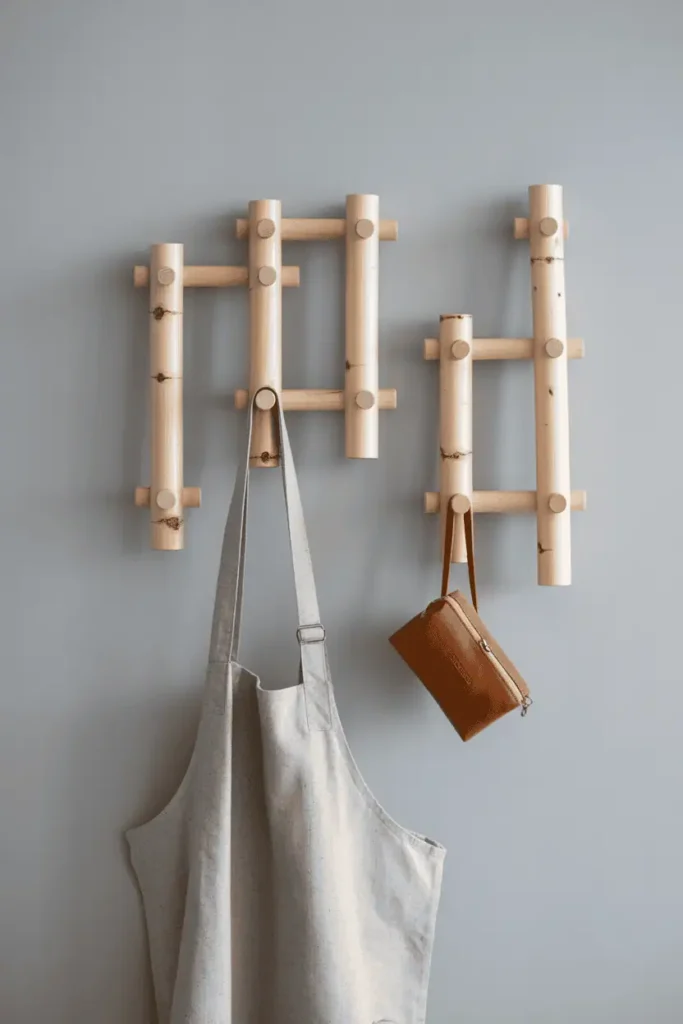
Modular peg systems let you rearrange or add pieces over time. Each peg mounts individually, and you can adjust the spacing or configuration as your needs change. Birch is a good choice here because it’s light in tone but still has visible grain — neutral enough to adapt but not so plain that it disappears.
This approach works well in kids’ rooms, entryways, or home offices where storage needs shift frequently. It’s also practical in rental spaces where you want flexibility without committing to a permanent layout.
Practical guidance
Start with a loose plan rather than a rigid grid. Cluster pegs near the door for coats, space them wider above a desk for bags or headphones, or stagger them at different heights for visual interest. Each peg needs its own anchor point, so installation takes longer than a single rail, but the flexibility is worth it.
Design tip: Keep all pegs the same diameter and finish, even if you’re varying the spacing. Consistency in the hardware keeps the modular look intentional rather than random.
7. Curved Wooden Hooks Mounted Individually
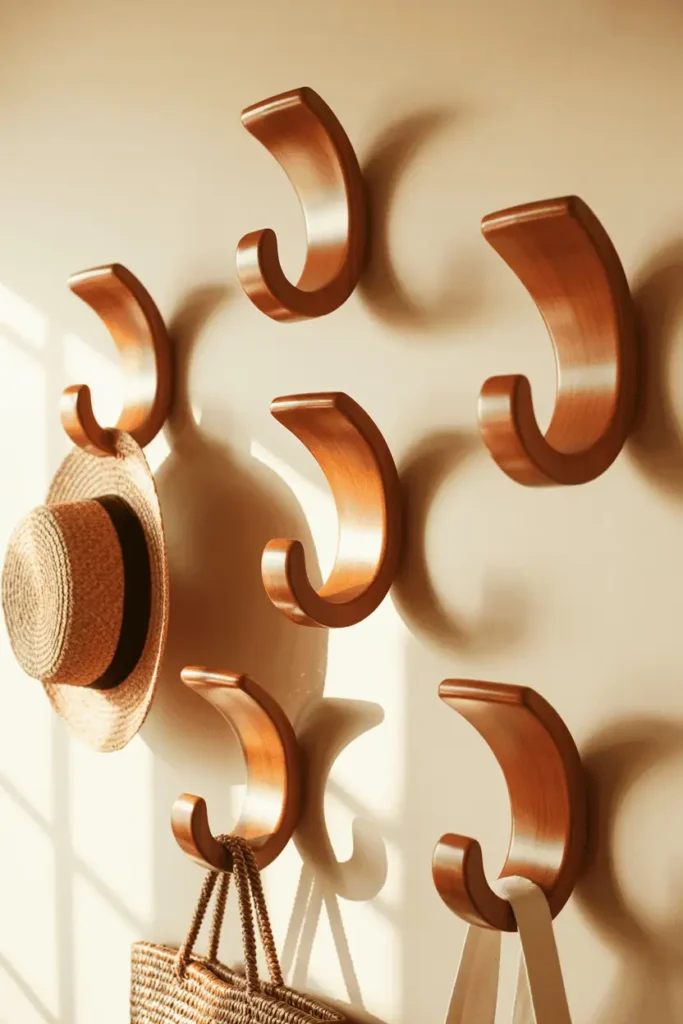
Instead of a rail or a strip, these are single hooks mounted in a loose, organic arrangement. The hooks themselves have a slight curve — not dramatic, just enough to soften the silhouette. Mounted at varying heights and intervals, they create a more relaxed, less linear look than traditional peg rails.
This works in rooms where symmetry isn’t the goal. A casual entryway, a mudroom, a bedroom corner where you need a place for a robe or a tote. The arrangement can feel spontaneous, but it still needs intention. Random placement usually just looks unfinished.
Space them unevenly but keep a loose rhythm — two hooks closer together, then a gap, then another pair. Or a vertical line of three with a single outlier to the side. The goal is movement without chaos.
Practical guidance
Mark out the arrangement on the wall with painter’s tape before drilling. Step back and look at it from across the room. Adjust until it feels balanced, then commit. Each hook needs its own anchor, so plan for more wall patching if you change your mind later.
Styling & product direction
Wood hooks in warm tones — walnut, cherry, or teak — stand out more against light walls. Lighter woods like maple or ash work better on darker walls. Metal caps or tips in brass or black can add a subtle detail without competing with the wood.
By now, the space should feel less like a collection of individual hooks and more like a system that’s quietly working together.
8. Vertical Ladder-Style Coat Racks in Ash
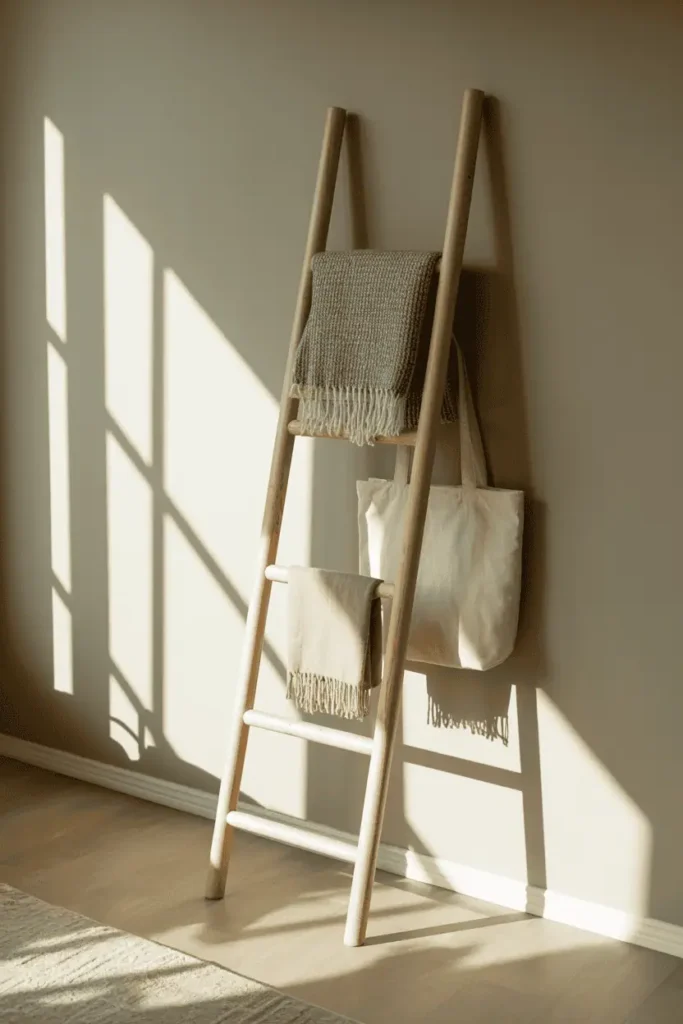
A vertical ladder leans against the wall rather than mounting to it. The rungs act as hooks for coats, scarves, or bags. Ash gives it a clean, Scandinavian feel — pale grain, smooth finish, no visible knots. The leaning angle keeps it casual, and the fact that it’s not drilled into the wall makes it flexible for renters or anyone who likes to rearrange.
This works best in corners or along walls where there’s enough clearance for the lean. It’s not ideal in high-traffic areas where it might get knocked over, but in a bedroom or a quieter hallway, it’s practical and visually light.
Practical guidance
Look for ladders with a wide base for stability. The angle should be steep enough to stay put but not so steep that items slide off the rungs. Four to five rungs is plenty — more than that and it starts to look cluttered even when empty. Avoid placing it on thick rugs or uneven floors where the base might shift.
9. Wall-Mounted Wooden Branch Hooks
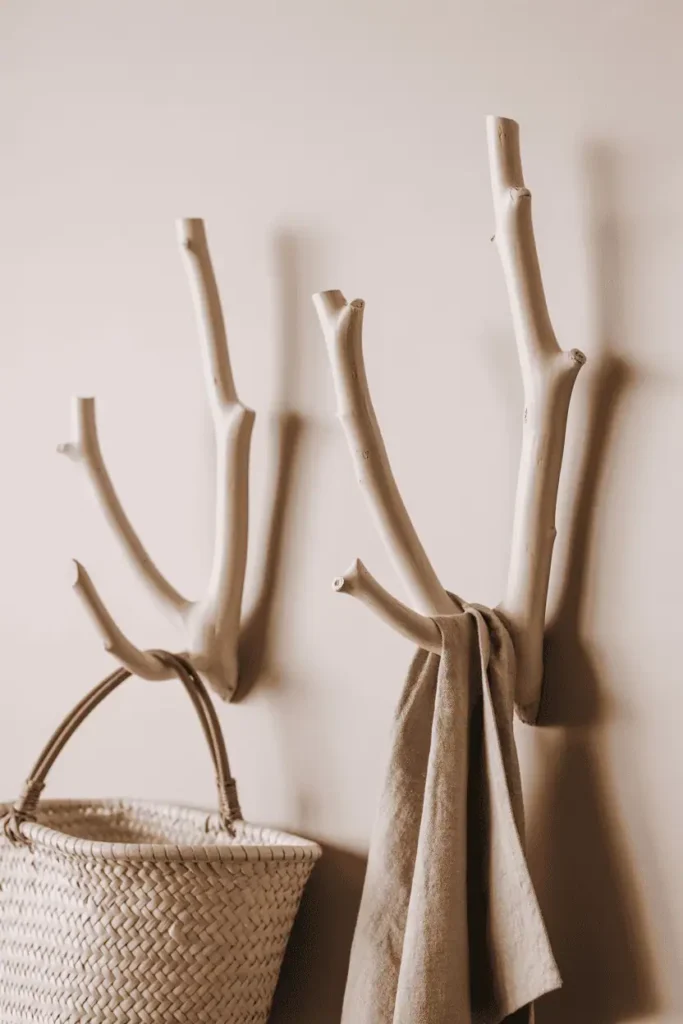
These use actual branches or branch-shaped forms as hooks. The branches are usually sanded smooth and treated but still retain their natural shape — knots, slight curves, tapered ends. Mounted horizontally or at a slight upward angle, they read as sculptural but still functional.
This works in rooms with a naturalistic or organic aesthetic. It’s less successful in minimalist or industrial spaces where the irregularity of the branches feels out of place. The key is to keep the scale in check. Thick, gnarled branches can look too rustic; slim, elegant branches with minimal branching feel more refined.
Mount them at varying lengths and angles rather than in a uniform row. The goal is to echo the randomness of nature without making the wall look chaotic.
Practical guidance
Each branch needs to be anchored securely — natural wood is heavier than it looks. Avoid mounting them too close to doorways or high-traffic areas where people might brush against them. The rough texture of bark can snag fabric, so look for branches that have been sanded smooth or treated with a clear finish.
Styling & product direction
Pair with linen textiles, stone accents, or ceramic planters. Avoid synthetic materials or bright colors that clash with the organic aesthetic. A woven basket or a wooden bench below continues the natural material thread.
10. Horizontal Plank Shelves with Undermounted Pegs
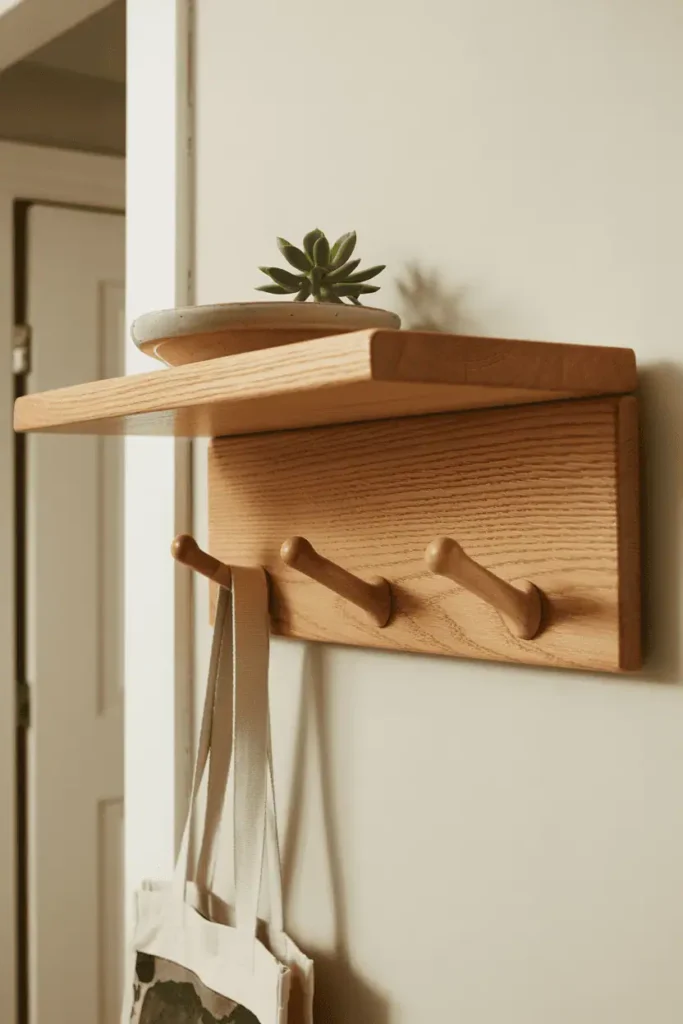
A simple plank shelf mounted to the wall with pegs dropping down from the underside. The shelf itself is shallow — just deep enough for keys, a plant, or a small tray. The pegs hang coats or bags below. It’s a clean, two-tiered approach that keeps the wall from feeling too busy.
This works in narrow hallways or entryways where you need both display and storage but don’t have room for separate pieces. The shelf and pegs share the same wood tone and finish, so they read as one unit rather than two separate elements.
Keep the shelf depth around four to six inches. Deeper than that and it starts to project too far into the room. The pegs should drop down about two to three inches from the shelf edge — enough to be functional but not so far that they look disconnected.
Practical guidance
Anchor the shelf into studs and use brackets rated for the combined weight of the shelf and whatever you plan to hang below. The pegs themselves should be spaced six to eight inches apart. Closer than that and bags start overlapping.
Style note: This setup works best with three to four pegs rather than a long row of six or more. Too many pegs and the shelf starts to look like commercial storage.
11. Dowel Rod Racks with Leather Strap Hangers
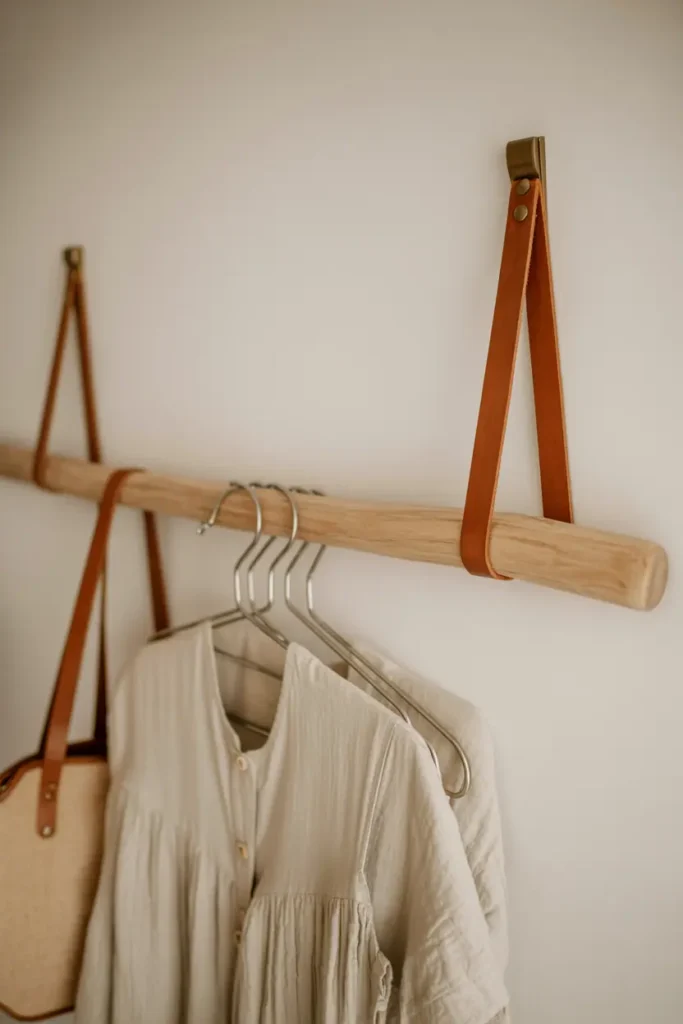
A horizontal dowel rod suspended from the wall by leather straps or metal brackets. The rod itself acts as a hanging rail for clothes or bags, and the straps add a tactile, handmade quality. The wood grain is visible but the form is simple — just a smooth, cylindrical rod with no ornament.
This works in bedrooms, walk-in closets, or mudrooms where you need open storage that doesn’t feel institutional. The leather straps soften the utilitarian function and add warmth. If leather doesn’t fit the space, canvas or woven straps work too.
Practical guidance
The dowel should be at least 1.5 inches in diameter to support the weight of coats without bowing. Thinner rods sag over time, especially with heavy items. The straps need to be anchored securely into studs or use heavy-duty drywall anchors. Test the weight before loading it fully.
Styling & product direction
Look for dowels in natural finishes — untreated wood, light oil, or clear wax. Avoid glossy finishes that make the rod look too polished. Leather straps in tan, brown, or black are the most versatile. Metal brackets in matte black or aged bronze work if you want a more industrial feel.
The rhythm here should feel intentional but not rigid — each piece building on the last without repeating the same visual beat.
12. Corner-Mounted Triangular Peg Boards
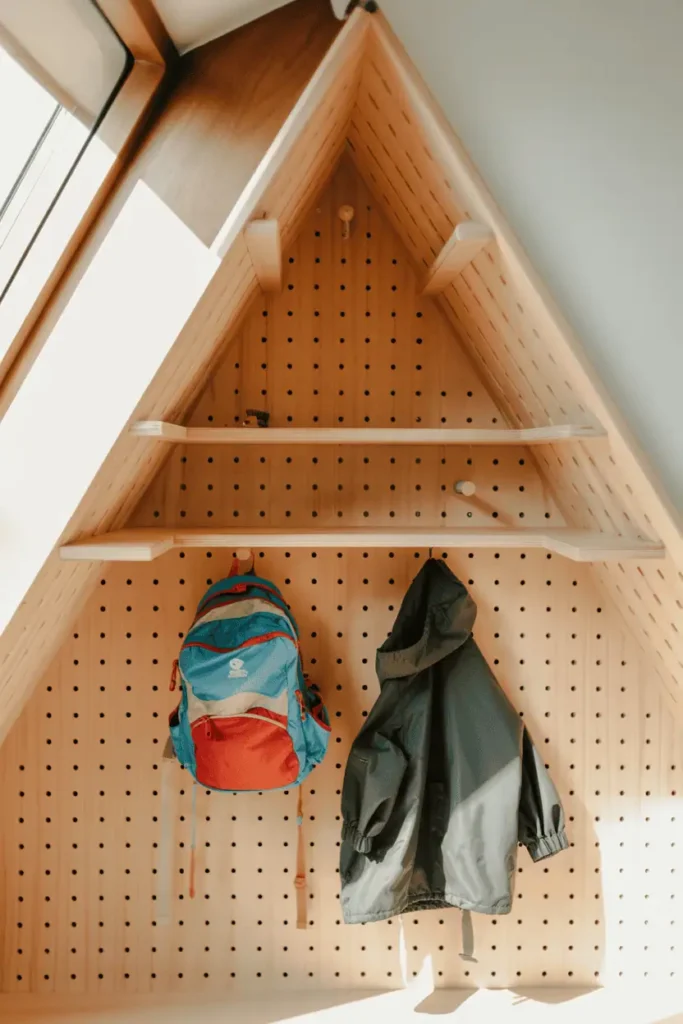
These are designed to fit into corners rather than flat walls. The triangular shape maximizes space in areas that are often underused. The pegs radiate out from the corner at angles, creating a more dynamic layout than a standard horizontal rail.
This works in small entryways, mudrooms, or awkward corners where a full wall isn’t available. It’s also practical in kids’ rooms where corner space is easier to spare than a full wall.
Practical guidance
Corner-mounted pieces need anchors on both walls, so installation takes longer. The triangular shape can look off if the corner isn’t a true 90-degree angle, which is common in older homes. Measure carefully before ordering. The pegs should angle slightly upward to keep items from sliding off.
13. Recessed Wooden Hook Panels
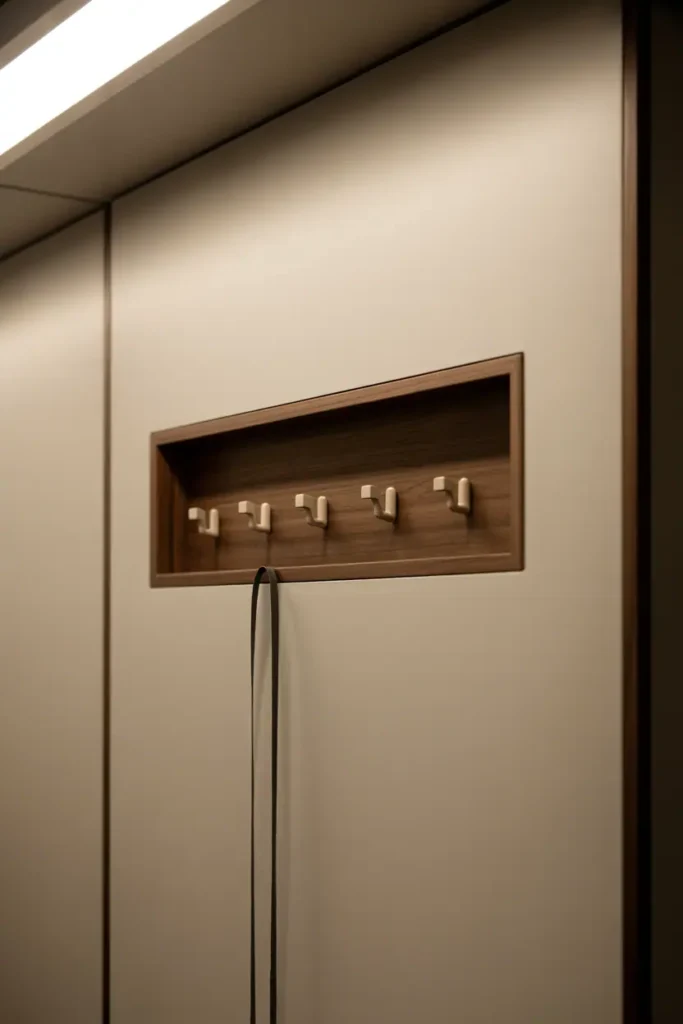
Instead of projecting out from the wall, these hooks are set into a recessed panel. The panel itself is a shallow wooden frame, and the hooks sit flush or slightly inset. The result is a cleaner, more integrated look — storage that feels like part of the wall rather than something added to it.
This works in modern or minimalist spaces where visual clutter is a concern. It’s also practical in narrow hallways where even a few inches of projection can make the space feel tight.
The panel can be painted to match the wall or stained to contrast. Either way, the goal is to make the hooks feel less like afterthoughts and more like intentional design elements.
Practical guidance
Recessed panels require more complex installation — you’re essentially cutting into the wall and building a shallow box. This is easier to do during construction or renovation than as an add-on. If you’re retrofitting, make sure the wall cavity has enough depth and isn’t packed with insulation or wiring.
Styling & product direction
Keep the panel size proportional to the wall. A large panel on a small wall feels overwhelming. A tiny panel on a large wall looks lost. Aim for about one-third to one-half of the wall width. The hooks themselves should be minimal — small pegs or slim bars rather than chunky hardware.
14. Stained Pine Peg Rails with Antique Finish
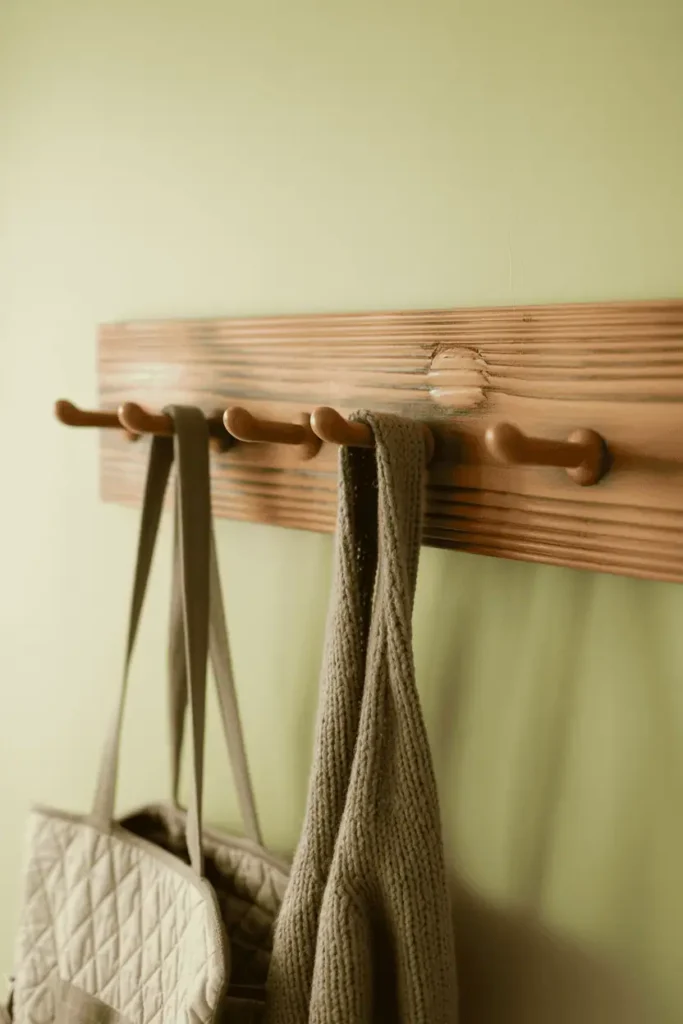
Pine is softer and more affordable than hardwoods like oak or walnut, but with the right finish, it can still look refined. An antique or distressed stain adds depth and hides the natural tendency of pine to dent or scratch over time. The result is a piece that looks aged without feeling worn.
This works in spaces with a vintage or cottage aesthetic. It’s less successful in ultra-modern or industrial rooms where the soft grain and warm tone feel out of place.
The antique finish should be subtle — a slight darkening in the grain and around the edges, not heavy distressing or artificial aging. The goal is to suggest history without faking it.
Practical guidance
Pine is prone to dings, so avoid placing these in high-traffic areas where bags and keys might bang against them. The finish helps, but it’s not a complete shield. Mount at a height where contact is minimal. The stain should be sealed with a clear topcoat to protect against moisture and wear.
15. Multi-Tier Vertical Racks with Adjustable Pegs
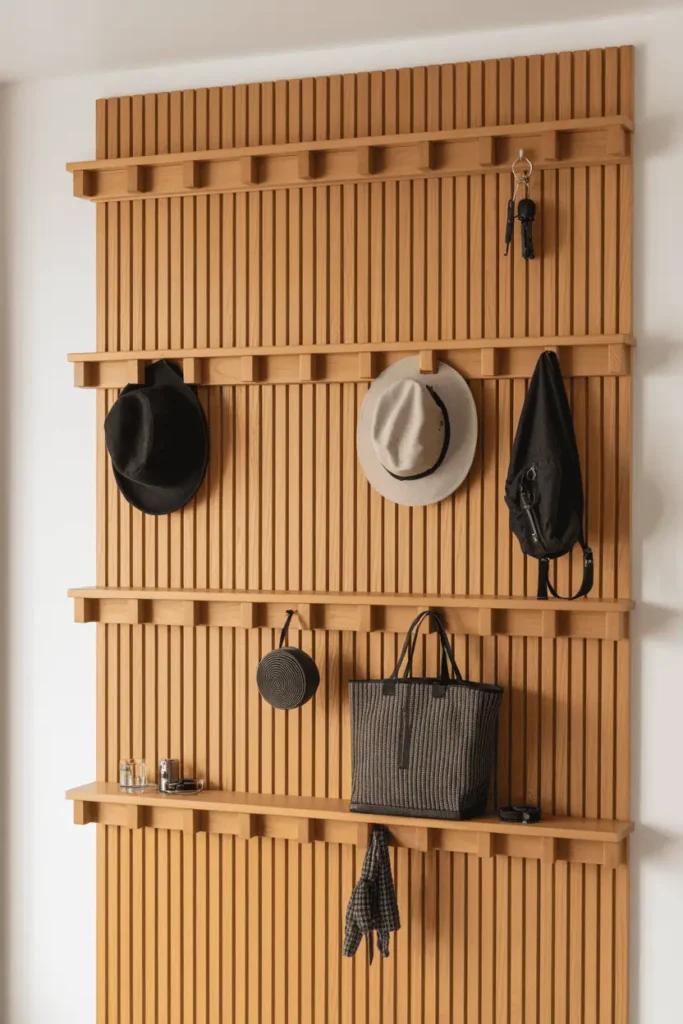
These are vertical panels with multiple rows of pegs that can be moved or removed as needed. The flexibility is the selling point — you can reconfigure the layout based on what you’re hanging or how the space is being used.
This works in mudrooms, entryways, or home offices where storage needs change seasonally or frequently. It’s also practical in shared spaces where different people have different storage preferences.
The panel itself is usually a simple rectangular board, and the pegs slot into pre-drilled holes or attach via magnetic or screw-on mounts. The finish should be neutral — natural wood, light stain, or matte paint.
Practical guidance
Start with fewer pegs than the panel can hold. You can always add more, but a crowded panel looks cluttered even when it’s organized. Space the pegs based on what you’re hanging — wider spacing for coats, tighter spacing for bags or scarves. Test the configuration before committing.
Design tip: If the panel is large, consider adding a shelf at the top or midway down. It breaks up the vertical line and adds a place for small items that don’t need to hang.
16. Carved Wooden Animal Head Hooks
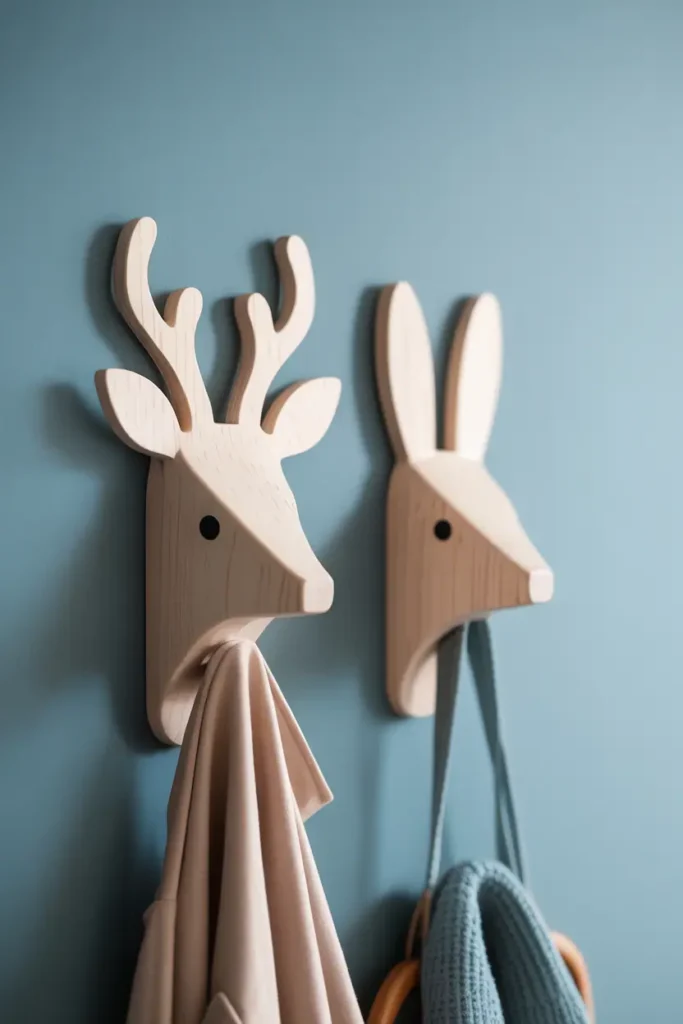
These are decorative hooks shaped like animal heads — stags, bears, birds, rabbits. The carving is usually stylized rather than realistic, with clean lines and minimal detail. The hook portion is the nose or antlers, depending on the design.
This works in kids’ rooms, playful entryways, or cabins where a bit of whimsy fits the overall tone. It’s less successful in formal or minimalist spaces where the decorative element feels forced.
The key is restraint. One or two animal hooks can be charming. A whole wall of them feels gimmicky. Keep the scale small to medium — oversized animal heads can look cartoonish.
Practical guidance
These are usually lighter-duty than standard hooks. They work for kids’ coats, lightweight bags, or towels, but not for heavy winter gear. Mount at a height appropriate for who’s using them — lower for kids, higher for adults. The carving can snag delicate fabrics, so avoid using them for silk scarves or fine knits.
17. Horizontal Log Slices with Drilled Hook Holes
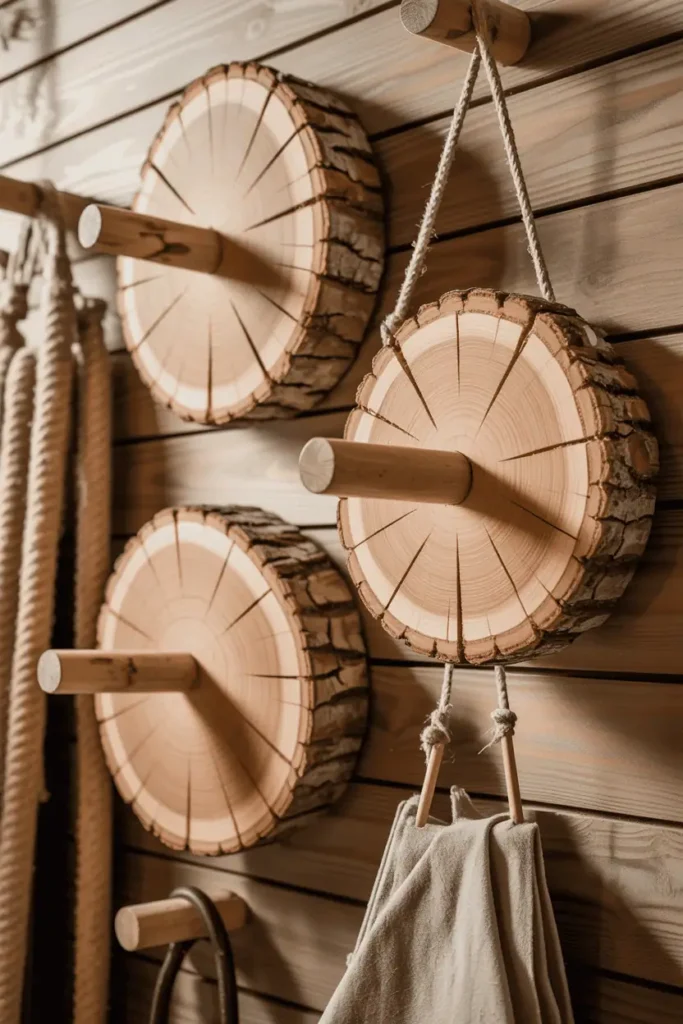
Cross-sections of logs with holes drilled through for pegs or hooks. The bark is usually left on, and the natural rings and grain are visible. Each piece is unique, which is part of the appeal. The irregularity makes it feel handmade and organic.
This works in cabins, rustic homes, or spaces with a strong natural material theme. It’s less successful in modern or minimalist rooms where the rough texture and organic shape feel out of place.
The log slices can be mounted individually or in a loose cluster. The size varies, but eight to twelve inches in diameter is common. Thicker slices feel more substantial but also take up more wall space.
Practical guidance
Make sure the bark is sealed or it will shed over time. Some shedding is inevitable, but a clear finish helps. The drilled holes need to be deep enough to hold the pegs securely — at least an inch or more. Mount the slices with heavy-duty anchors since the wood is dense and irregular.
Styling & product direction
Pair with other natural materials — stone, leather, wool. Avoid synthetic or glossy finishes that clash with the rustic aesthetic. A woven basket or a wood bench nearby continues the organic theme.
18. Minimalist Dowel Pegs in Untreated Maple
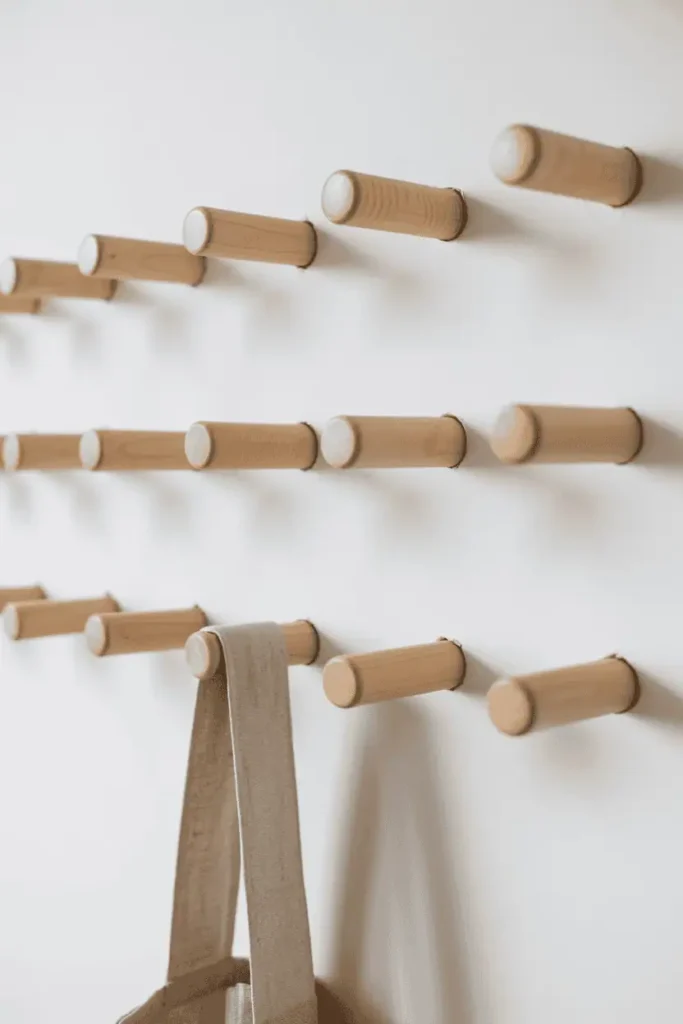
Simple cylindrical dowels mounted directly to the wall with no rail or backing board. Each peg is its own unit, and the arrangement is up to you. Untreated maple keeps the look clean and neutral — no stain, no finish, just raw wood.
This works in Scandinavian or minimalist spaces where simplicity is the goal. It’s also practical in small apartments where wall space is limited and every element needs to earn its place.
The dowels should be about one to 1.5 inches in diameter and three to four inches long. Shorter than that and they’re not functional. Longer and they start to project too far from the wall.
Practical guidance
Untreated maple will darken slightly over time, especially with regular handling. If you want to maintain the pale tone, seal it with a clear wax or oil. Otherwise, let it age naturally. Space the pegs based on what you’re hanging — closer for small items, wider for coats. Keep the arrangement loose but intentional.
19. Vintage Repurposed Tool Handle Hooks
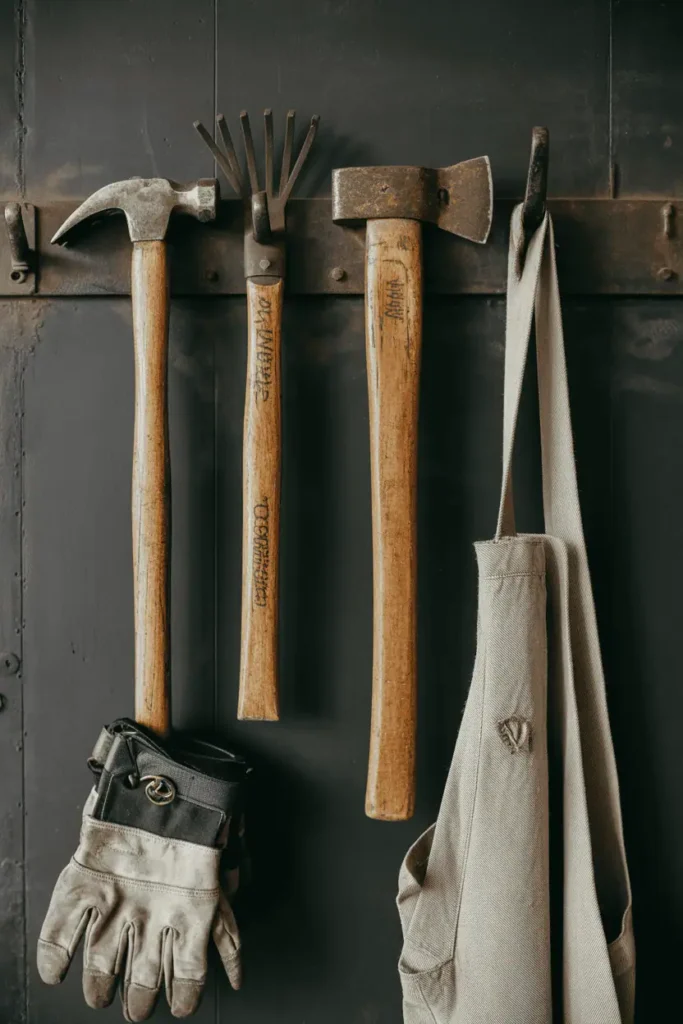
Old tool handles — hammers, axes, rakes — repurposed as wall hooks. The handles are cleaned, sanded, and mounted horizontally with the grip end projecting out as the hook. The metal tool head or a mounting plate stays flush against the wall.
This works in workshops, garages, or industrial-style homes where the utilitarian aesthetic fits. It’s less successful in formal or traditional spaces where the rough, salvaged quality feels out of place.
Each handle is unique, which means no two hooks will look exactly alike. That irregularity is part of the charm, but it also means the overall look can feel chaotic if not carefully arranged.
Practical guidance
Make sure the handles are structurally sound — no cracks, splits, or weak spots. The mounting needs to be secure since the hooks will hold weight. Test each one before installing. Arrange the handles at similar heights and intervals to maintain some visual order despite the varied shapes and sizes.
Styling & product direction
Pair with other industrial or salvaged elements — metal shelving, Edison bulbs, concrete floors. Avoid delicate or polished pieces that clash with the rough aesthetic. A metal stool or a canvas tarp nearby continues the workshop vibe.
Styling Tips to Pull the Look Together
- Use warm-toned bulbs in nearby fixtures to bring out the natural warmth of the wood
- Repeat the wood finish in other elements — a bench, a mirror frame, or a shelf
- Leave some hooks empty to avoid the cluttered look of over-storage
- Balance wood with one other natural material like leather, linen, or stone
- Avoid mixing more than two wood tones in the same sight line
- Keep the area below the hooks clear or minimal — a single basket or bench, not both
- Let the wood grain be the pattern; skip busy wallpaper or competing textures nearby
Final Thoughts
Start with one piece and see how it settles into the space. Wood has a way of clarifying what else belongs, and what doesn’t. You might find that a single peg rail is enough, or you might layer in a ladder rack and a few individual hooks over time. Either way, the goal isn’t to fill the wall — it’s to give each element room to breathe.
The best wooden hooks and racks are the ones that disappear into daily life. You stop noticing them as objects and start using them without thinking. That’s when the space is working.
Save what resonates. Come back to it when you’re ready to make a change. There’s no rush

To bring you cozy inspiration more efficiently, we sometimes use AI to assist in content creation — but every word and idea is carefully shaped by our team. See our AI Disclosure for more info.