This post may contain affiliate links. If you click and buy, we may earn a small commission at no extra cost to you. Learn more.
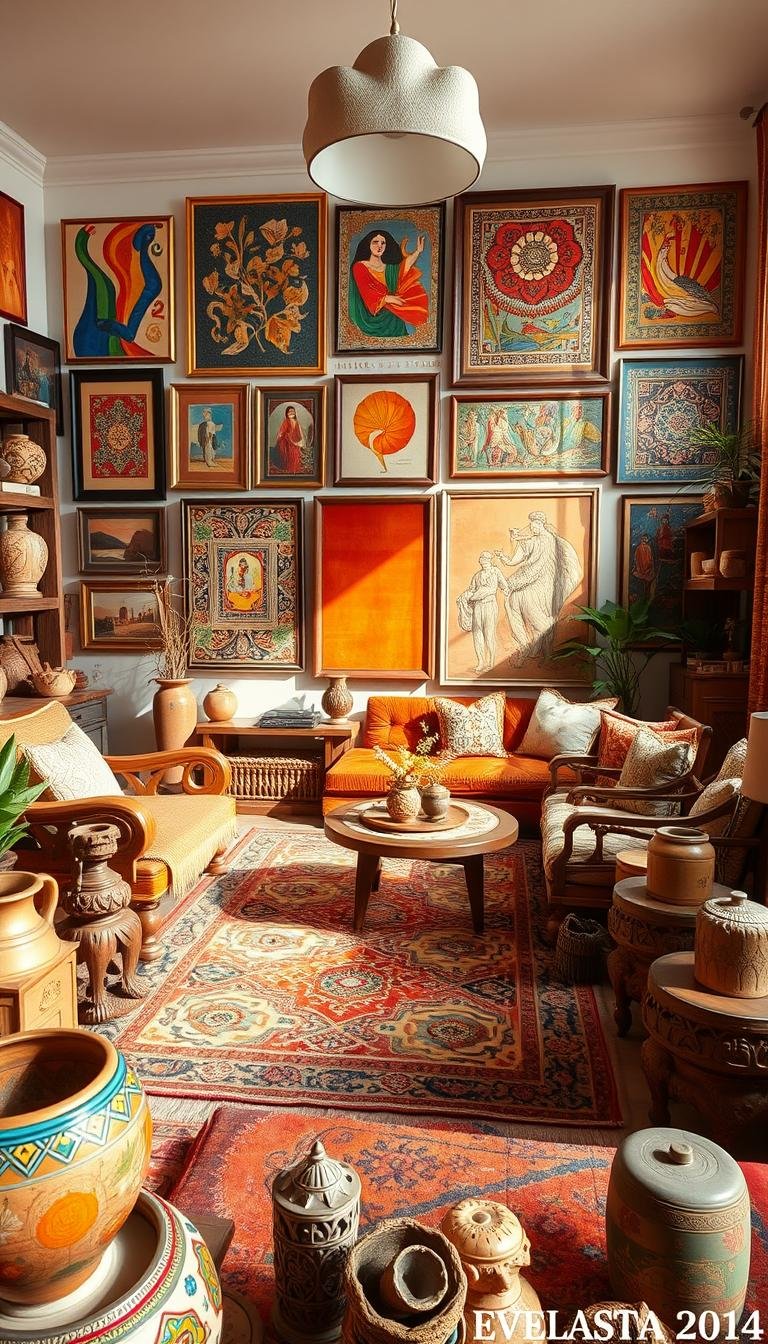
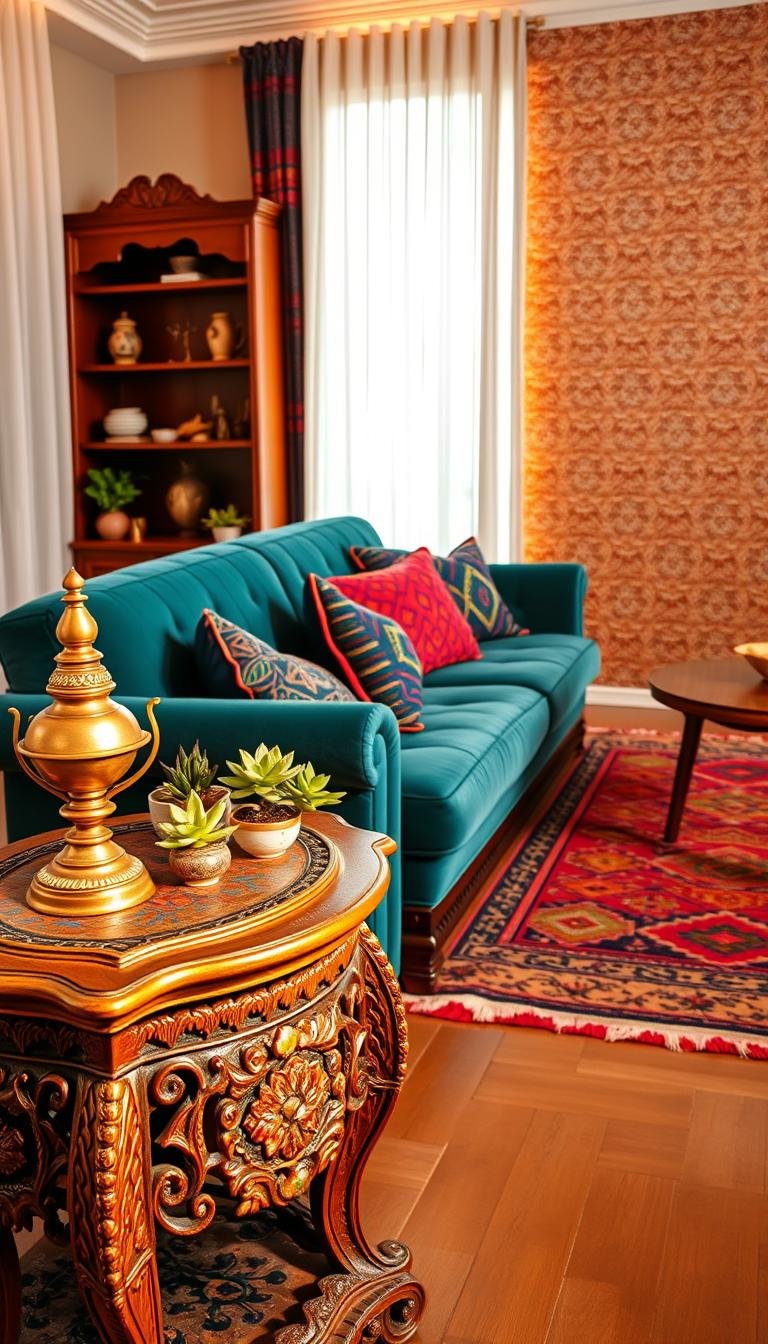
I’m excited to share my favorite tips to add color and craftsmanship to your living space! Indian interior design is known for its vibrant colors, detailed patterns, and rich textures. These elements can make any room feel more lively.
Traditional Indian decor focuses on creating a cozy and inviting atmosphere. Using iconic Indian fabrics and traditional colors can add elegance to your home.
As we dive into India home decor, I’ll show you my top tips. These will help you create a beautiful and welcoming space that shows off your personal style.
Contents
- 1 The Rich Heritage Behind Indian Design
- 2 Vibrant Color Palettes in India Home Decor
- 3 Textiles and Fabrics: The Soul of Indian Interiors
- 4 Furniture Styles and Wood Craftsmanship
- 5 Wall Treatments and Artistic Elements
- 6 Accent Pieces and Decorative Crafts
- 7 Room-by-Room Guide to Indian-Inspired Decor
- 8 DIY Indian Decor Projects for Beginners
- 9 Where to Source Authentic India Home Decor in the US
- 10 Blending Indian Elements with Other Design Styles
- 11 Conclusion: Creating Your Personal Indian-Inspired Haven
The Rich Heritage Behind Indian Design
Indian design shows the country’s rich cultural heritage. It is shaped by many regional influences, making it unique. From Rajasthan’s grand palaces to South India’s detailed temples, the design is rich and varied.
Regional Influences on Indian Aesthetics
Regional influences have greatly shaped Indian aesthetics. For example, Rajasthani design is known for bold colors and patterns. Tamil Nadu’s temples stand out with detailed carvings and sculptures. Some key regional influences include:
- The use of vibrant colors and mirror work in Rajasthani and Gujarati textiles
- The intricacy of stone carvings and sculptures in South Indian temples
- The mix of Mughal and Persian styles in North Indian architecture
Key Principles of Traditional Indian Interiors
Traditional Indian interiors follow several key principles. They use rich textiles, detailed patterns, and bright colors. Natural materials like wood and stone are also common. Some key elements include:
- The use of luxurious fabrics like silk and velvet
- The inclusion of complex patterns and motifs
- The focus on natural materials and craftsmanship
Vibrant Color Palettes in India Home Decor
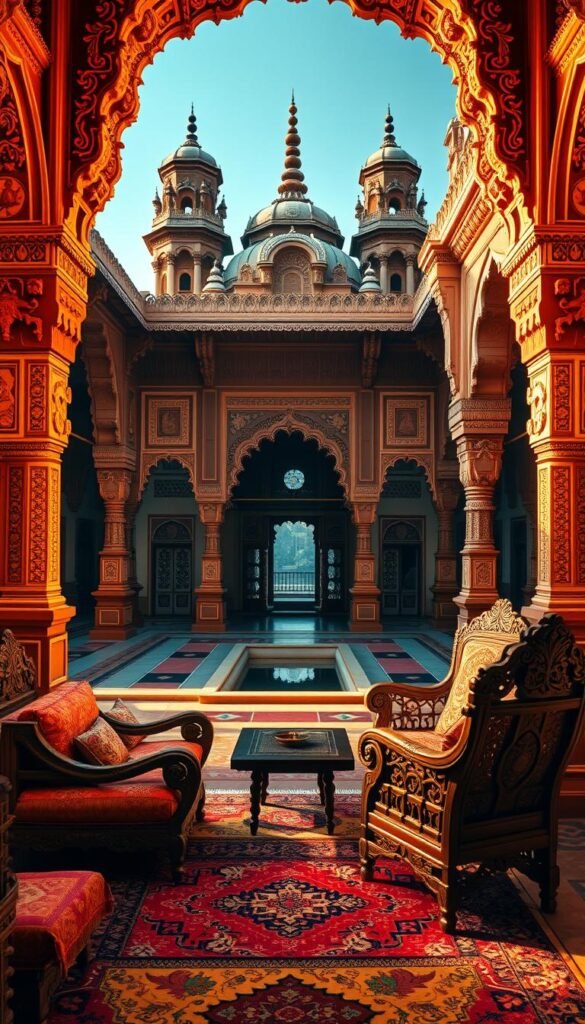
Vibrant colors are key in Indian interiors, bringing energy and warmth. Indian homes are known for their bold, bright hues. These colors are not just pretty but also carry deep cultural and spiritual meanings.
Traditional Color Combinations and Their Cultural Significance
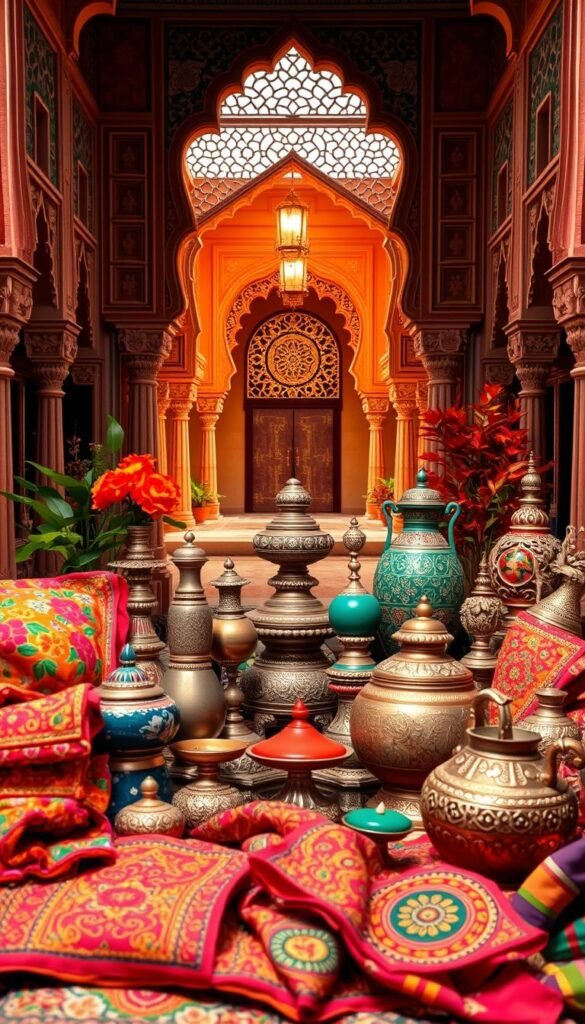
Traditional Indian colors like red and green, or blue and yellow, have deep cultural meanings. These colors are used in celebrations and rituals, showing different parts of Indian culture. For example, red is seen as lucky and is used in weddings and other big events.
How to Balance Bold Colors in Modern Homes
To mix bold colors in modern homes, start with a neutral base. Then, add vibrant hues with items like throw pillows, rugs, or wall art. This way, you can add color without making the space feel too busy.
Using natural materials like wood and plants also helps balance bold colors with nature. For instance, a bold red accent wall can work with beige furniture and green plants. This mix of bold colors and nature makes any modern home welcoming and unique.
Textiles and Fabrics: The Soul of Indian Interiors
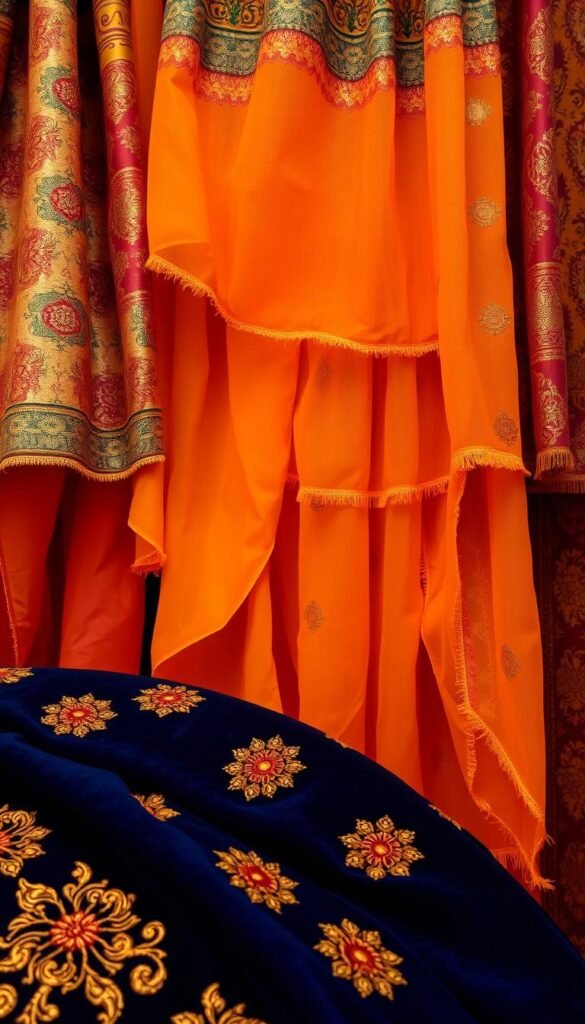
Indian textiles are the heart of Indian interiors, adding warmth and character. They can change a room with their bright colors and detailed patterns. From soft silks to bold block prints, these fabrics are key in Indian design.
Iconic Indian Fabrics: From Silk to Block Prints
Indian fabrics are known for their amazing craftsmanship. Silk fabrics like Banarasi and Kanchipuram are loved for their soft feel and detailed designs. Block-printed fabrics from Rajasthan and Gujarat stand out with their bright colors and special patterns. These fabrics are not just pretty; they also hold deep cultural value.
Embroidery Techniques: Zardozi, Kantha, and Mirrorwork
Embroidery is a big part of Indian textiles, with methods like Zardozi, Kantha, and Mirrorwork being very famous. Zardozi uses metal threads for detailed embroidery, often in gold and silver. Kantha is a traditional stitch used in quilts, telling stories through stitches. Mirrorwork, or shisha embroidery, adds sparkle with small mirrors on fabric.
Creative Ways to Incorporate Indian Textiles
There are many ways to use Indian textiles in your home. Use Indian fabrics as throw pillows, table runners, or wall hangings. You can also cover furniture with these vibrant fabrics to brighten up rooms. Think about using Indian embroidered fabrics as bedspreads or curtains for a touch of elegance.
Furniture Styles and Wood Craftsmanship
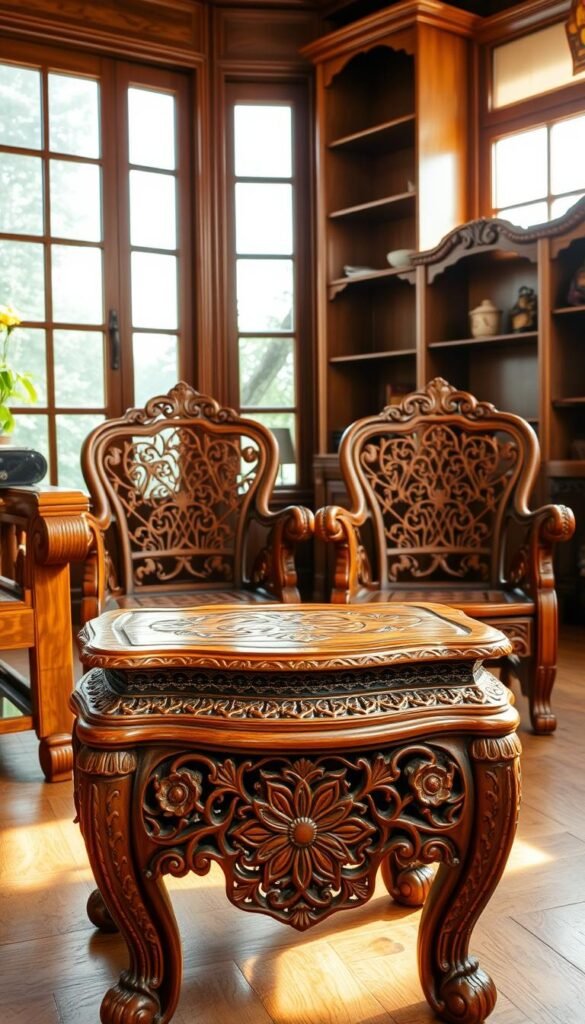
Indian furniture is famous for its detailed carvings and rich wood tones. It brings authenticity to any room. The craftsmanship shows the country’s rich cultural heritage.
Traditional Indian Furniture Designs and Techniques
Traditional Indian furniture is known for its detailed carvings and ornate details. It uses natural materials like wood and metal. Techniques like hand-carving and joinery are used to create stunning pieces.
- Intricate carvings depicting mythological scenes or floral patterns
- Use of rich, dark woods like rosewood and teak
- Incorporation of metalwork, such as brass or copper accents
These designs add beauty and tell a story of India’s cultural heritage.
Mixing Indian Wooden Pieces with Contemporary Decor
I enjoy mixing Indian wooden pieces with modern decor. This creates a unique blend of old and new. For example, a carved wooden coffee table paired with a minimalist sofa looks striking.
“The key to blending traditional Indian furniture with modern decor is to strike a balance between old and new.”
Here are some tips for blending these styles:
- Start with a statement piece, like a carved wooden door turned into a headboard
- Mix and match different textures, like wood, metal, and fabric
- Keep the color palette simple to let the furniture be the focal point
Adding Indian wooden pieces to your modern decor adds warmth and character.
Wall Treatments and Artistic Elements
Transforming your walls with Indian art forms can instantly elevate your living space. It adds warmth and character. Indian wall decor is a vibrant mix of traditional and modern elements. It offers a wide range of artistic expressions to enhance your home.
Murals, Paintings, and Traditional Art Forms
Indian traditional art forms, like murals and paintings, add cultural richness to your walls. Some popular traditional art forms include:
- Madhubani paintings, known for their vibrant colors and geometric patterns
- Pattachitra, a traditional cloth-based painting from Odisha
- Warli art, a tribal art form characterized by simple, geometric shapes
These art forms not only beautify your space but also tell stories of Indian mythology and culture.
Modern Interpretations of Indian Wall Decor
I’m excited to share how modern interpretations of Indian wall decor blend traditional techniques with contemporary styles. This creates a unique fusion. Some examples include:
- Abstract representations of traditional Indian motifs
- Modern murals incorporating traditional Indian art forms
- Contemporary paintings inspired by Indian mythology
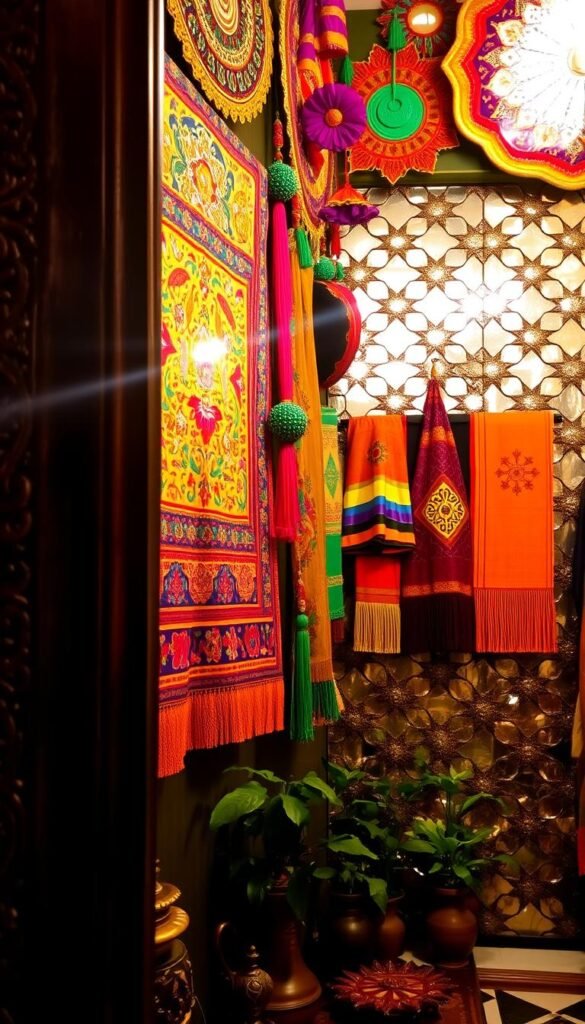
These modern interpretations allow you to incorporate the essence of Indian art into your home. They maintain a contemporary aesthetic.
Accent Pieces and Decorative Crafts
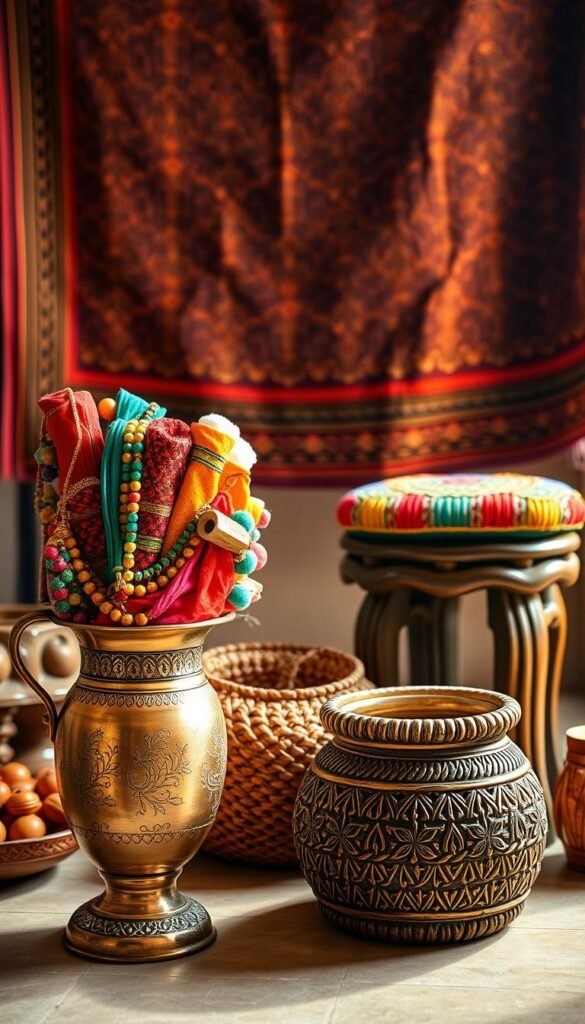
I’m excited to share my favorite Indian accent pieces and decorative crafts. They can make any room look elegant and sophisticated. Indian decorative crafts are not just beautiful; they carry cultural significance and stories.
Brass and Metalwork Traditions
Indian brass and metalwork are famous for their detailed designs and lasting quality. Items like brass vases, metal figurines, and handcrafted decorative items bring traditional Indian craftsmanship to your home. “The beauty of Indian metalwork lies in its ability to blend functionality with aesthetic appeal,” design experts say.
Pottery and Ceramic Art Forms
Indian pottery and ceramic art are vibrant and diverse, showing the country’s rich cultural heritage. From colorful terracotta pots to detailed ceramic vases, these pieces warm up your living spaces. Adding them to your decor brings an earthy, organic feel.
Spiritual and Symbolic Decor Items
Indian decor is full of spiritual and symbolic items, like Buddha statues, lotus motifs, and traditional Indian bells. These items make your home look better and connect you to it. “A home is not just a place to live; it’s a reflection of our beliefs and values,” I always say.
By choosing these Indian accent pieces and decorative crafts, you can make a home that’s both beautiful and meaningful.
Room-by-Room Guide to Indian-Inspired Decor
Turning your home into an Indian-inspired haven is simpler than you might think. I’m here to show you how. Indian decor can make any room special, adding a unique touch that shows off your style.
Living Room: Creating a Vibrant Gathering Space
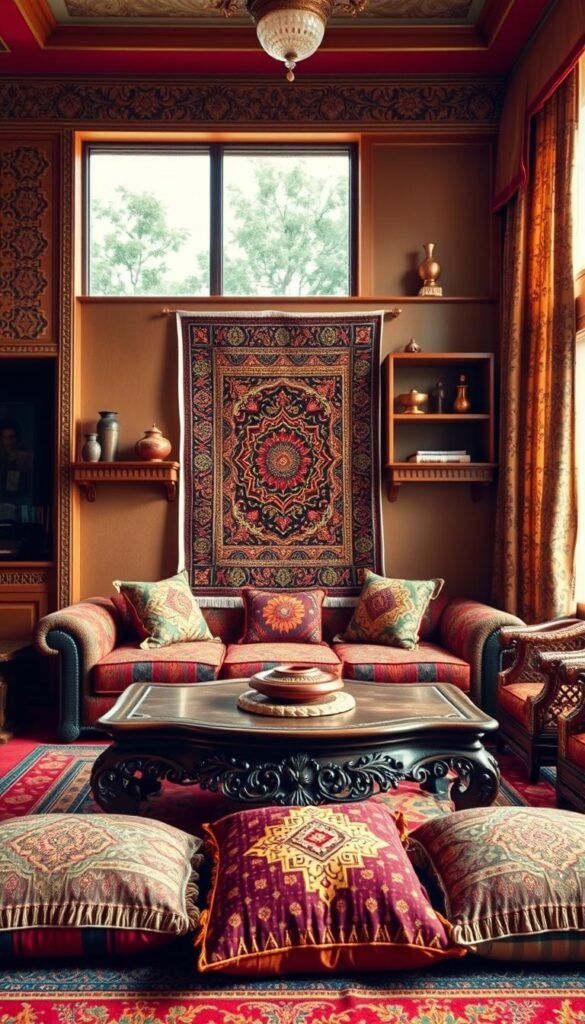
The living room is where we meet with loved ones. It’s the ideal spot for Indian-inspired decor. Use handloom fabrics and intricately embroidered cushions to add color and texture. A hand-carved wooden coffee table or a colorful Indian rug can be the room’s centerpiece.
Bedroom: Crafting a Serene Indian-Inspired Retreat
Your bedroom should be a calm oasis. Indian decor can help make it peaceful. Choose soft blues and whites for colors, and go for cotton and linen for fabrics. Decorate with hand-painted wooden headboards or delicate embroidered wall hangings for a cozy feel.
Kitchen and Dining: Spicing Up Your Culinary Spaces
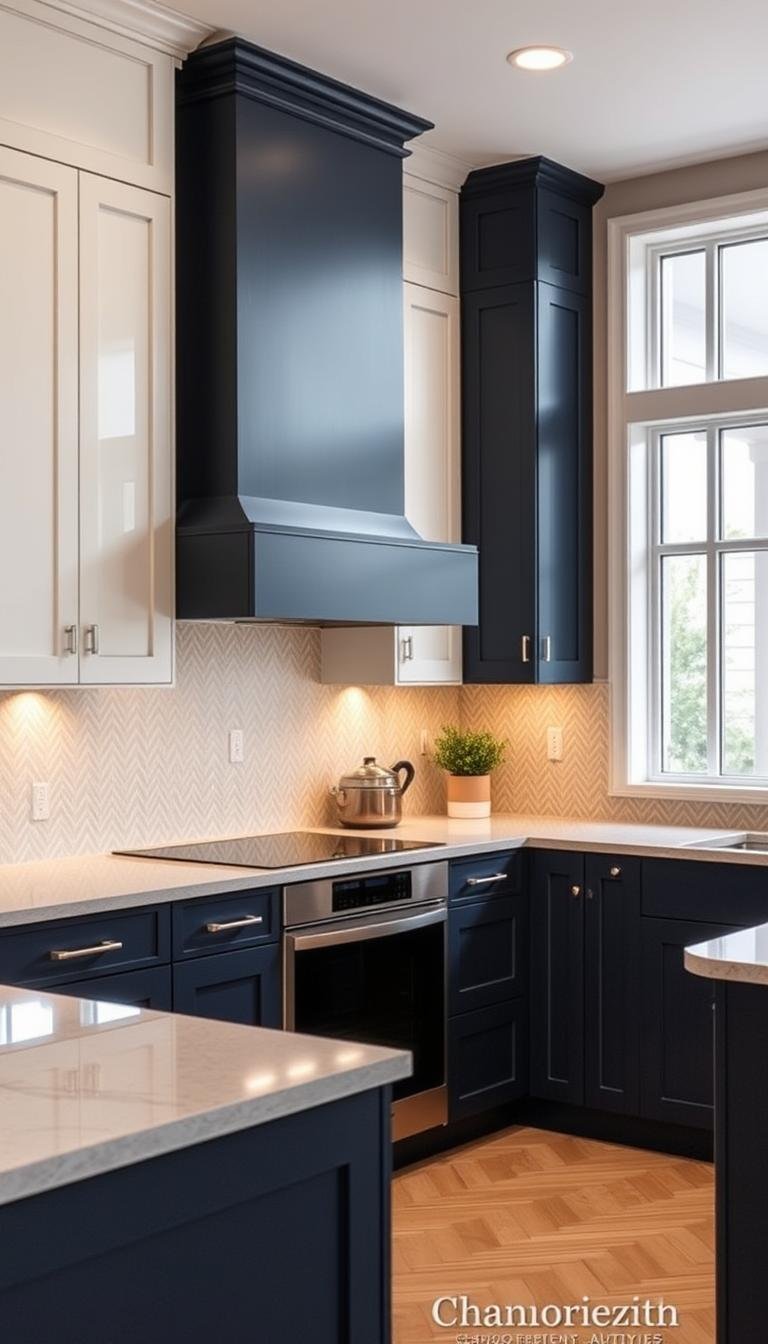
The kitchen and dining areas are great for adding Indian flair. Use vibrant colors and traditional Indian motifs to brighten these spaces. Add hand-painted ceramics or colorful textiles to your table for a pop of color.
Bathroom: Subtle Indian Touches
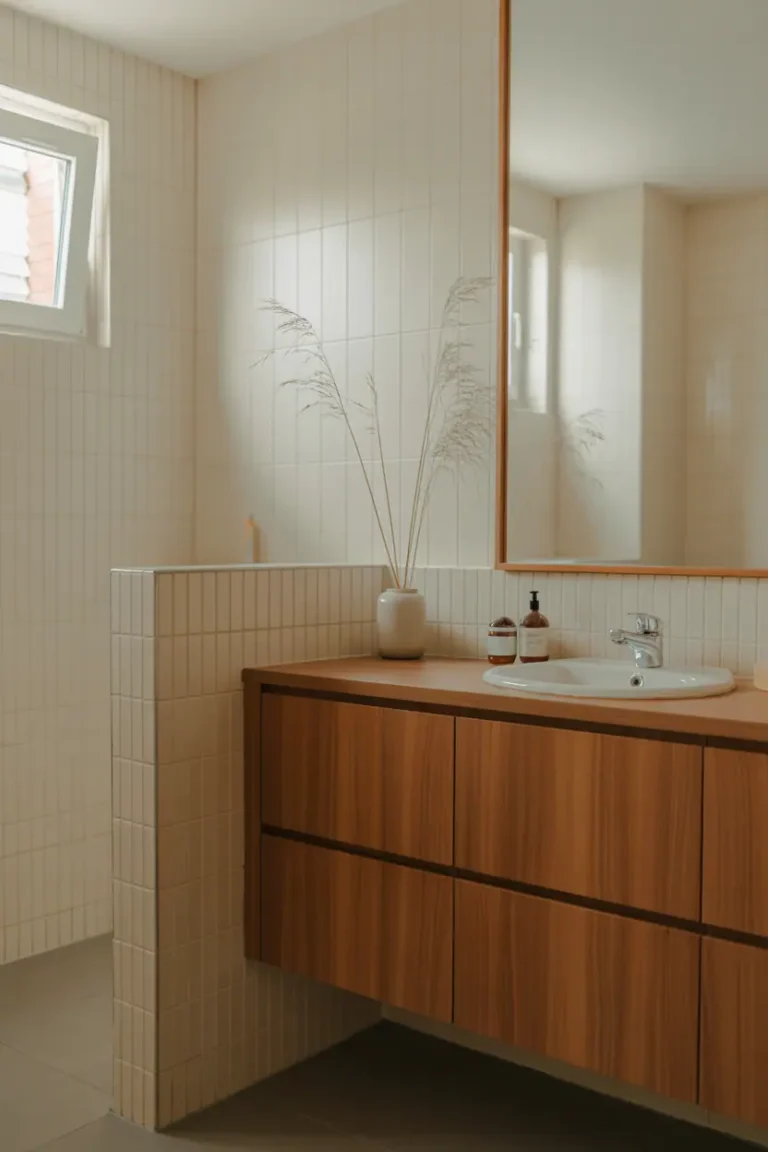
Even the bathroom can get a touch of India. Add intricately carved wooden accessories or hand-painted tiles for a spa-like feel. Natural elements like bamboo or stone can also warm up the space.
DIY Indian Decor Projects for Beginners
Starting DIY Indian decor projects is a great way to make your home more cultural and personal. I’m excited to share some easy projects to add India’s vibrant style to your space.
Hand-Painted Designs and Patterns
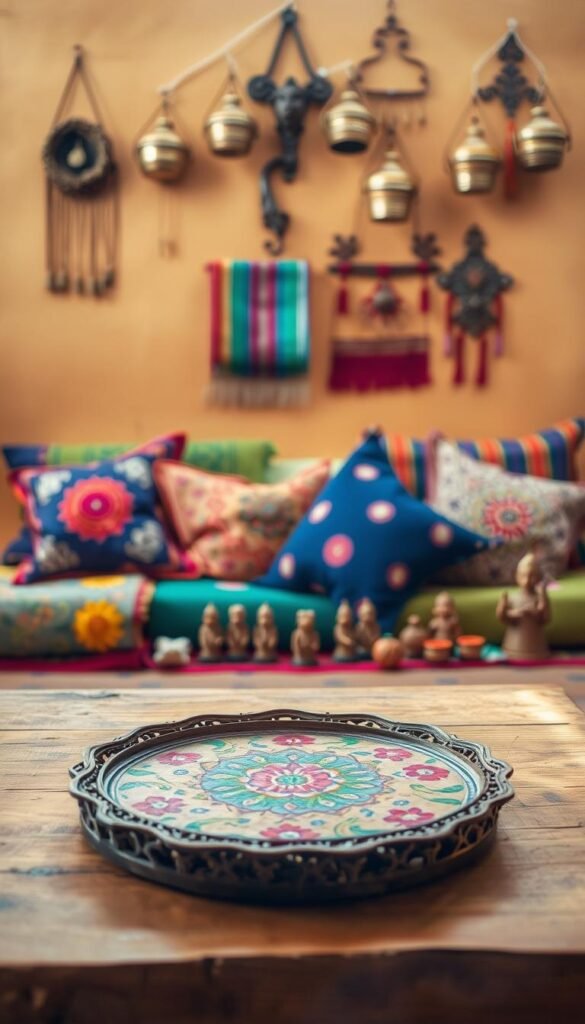
Hand-painted designs are key in Indian decor. You can use stencils or draw freehand to create detailed patterns on furniture or walls. Choose earthy tones and bold colors for a real Indian vibe. You can also use natural dyes or eco-friendly paints for a sustainable touch.
Upcycling Furniture with Indian Techniques
Upcycling old furniture is a cool way to make your home look unique. Try adding traditional Indian touches like jaisalmer-inspired mirror work or intricate carvings. You can also use bright fabrics and textiles to reupholster furniture, adding color and cultural flair.
Creating Indian-Inspired Textiles and Wall Art
Making your own Indian-inspired textiles and wall art is fun and rewarding. Use block printing, tie-dye, or embroidery to create unique fabrics that show Indian craftsmanship. You can also make wall hangings with traditional Indian motifs, like the peacock or lotus flower, to add elegance to your walls.
These DIY projects let you personalize your space and appreciate Indian craftsmanship and artistry. So, get creative and start making your own Indian-inspired decor today!
Where to Source Authentic India Home Decor in the US
I’m excited to share my favorite places to find authentic India home decor in the US. You can explore online marketplaces or visit local artisan cooperatives. Finding the perfect piece that shows India’s rich culture can be tough. But with the right help, you can bring India’s vibrant spirit into your home.
Online Marketplaces and Specialty Stores
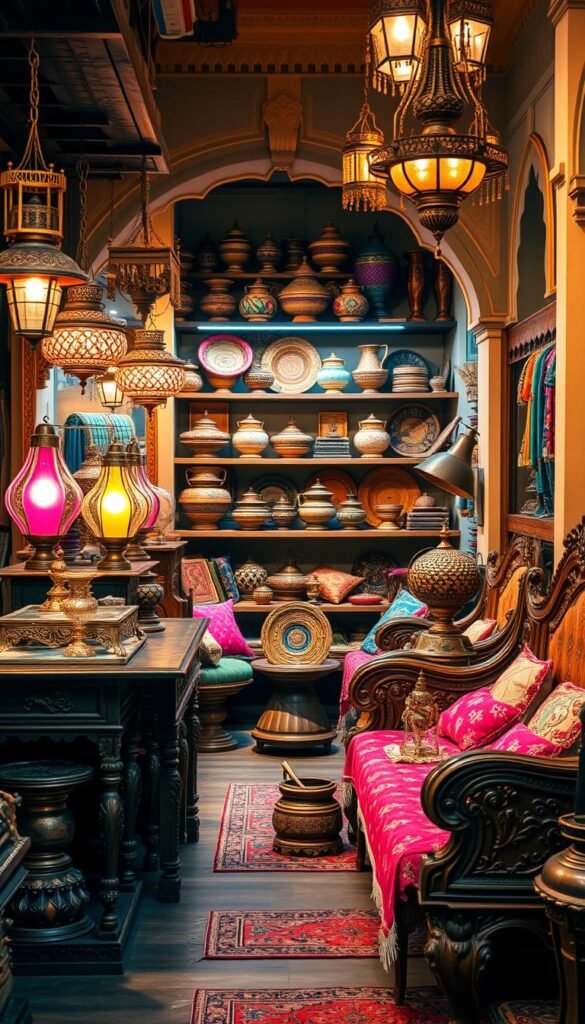
Online shopping has made it easier to find authentic India home decor. Sites like Etsy and 1stdibs have a great selection of handmade Indian items. You can find everything from beautiful textiles to wooden furniture.
Stores like World Market and Pottery Barn also have Indian-inspired decor. They make it easy to find pieces that are authentic or inspired by India.
Supporting Fair Trade and Artisan Cooperatives
If you care about sustainability and fair trade, consider supporting organizations that work with artisans. Groups like Ten Thousand Villages and Fair Trade India ensure artisans get fair pay for their work. Shopping through these groups means you’re not just getting a unique piece of India. You’re also supporting the artisans who made it.
Blending Indian Elements with Other Design Styles
I’m excited to share how Indian design can be seamlessly merged with various other styles. This creates a unique visual identity. Blending Indian elements with other design styles can result in a captivating and harmonious space that reflects your personal taste.
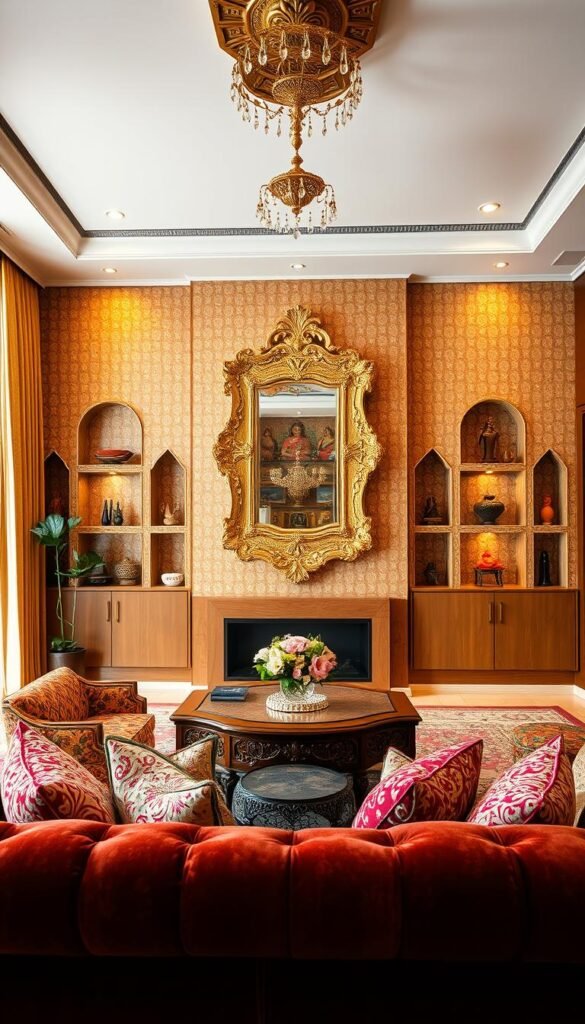
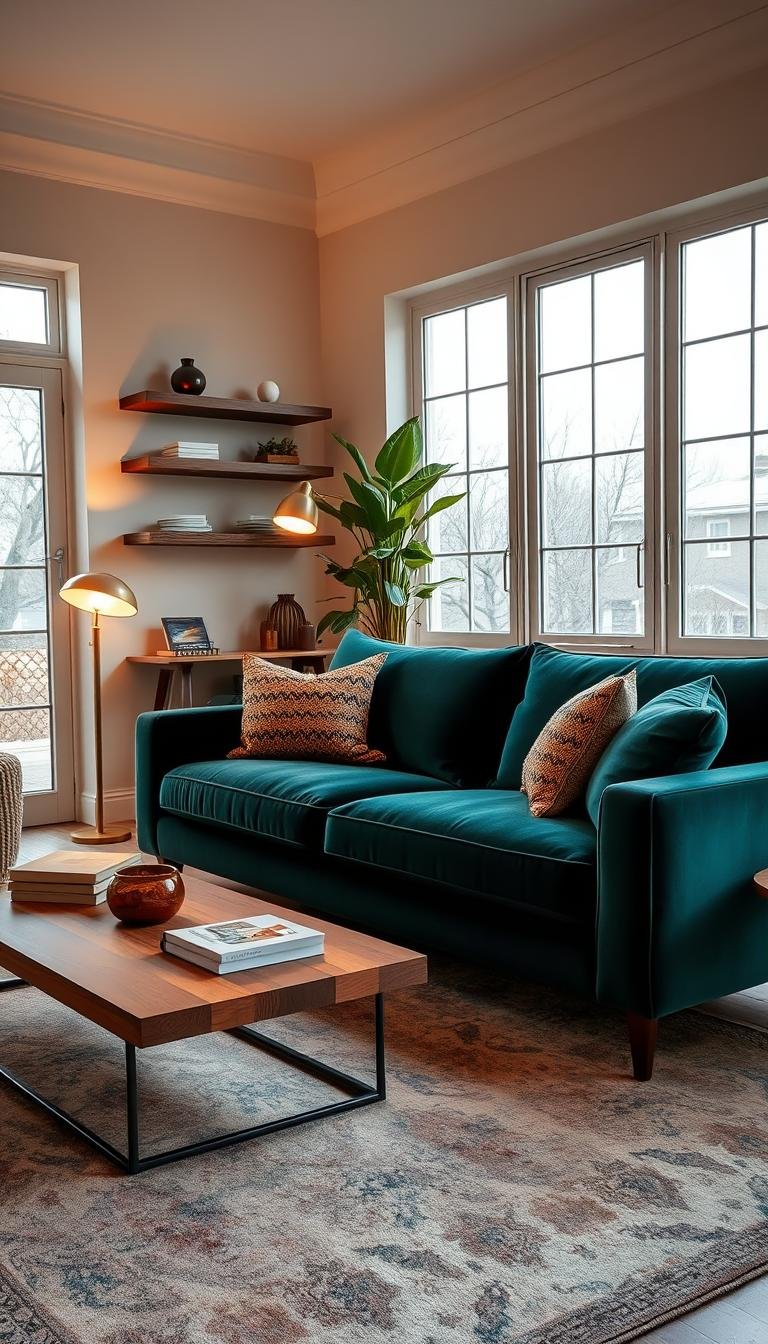
Combining Indian decor with Scandinavian minimalism creates a beautiful balance. For instance, pairing a minimalist Scandinavian sofa with Indian block-print textiles or a intricately carved wooden coffee table can add warmth to the space. This blend works well because the clean lines of Scandinavian design complement the vibrant colors and patterns of Indian decor.
Bohemian-Indian Fusion
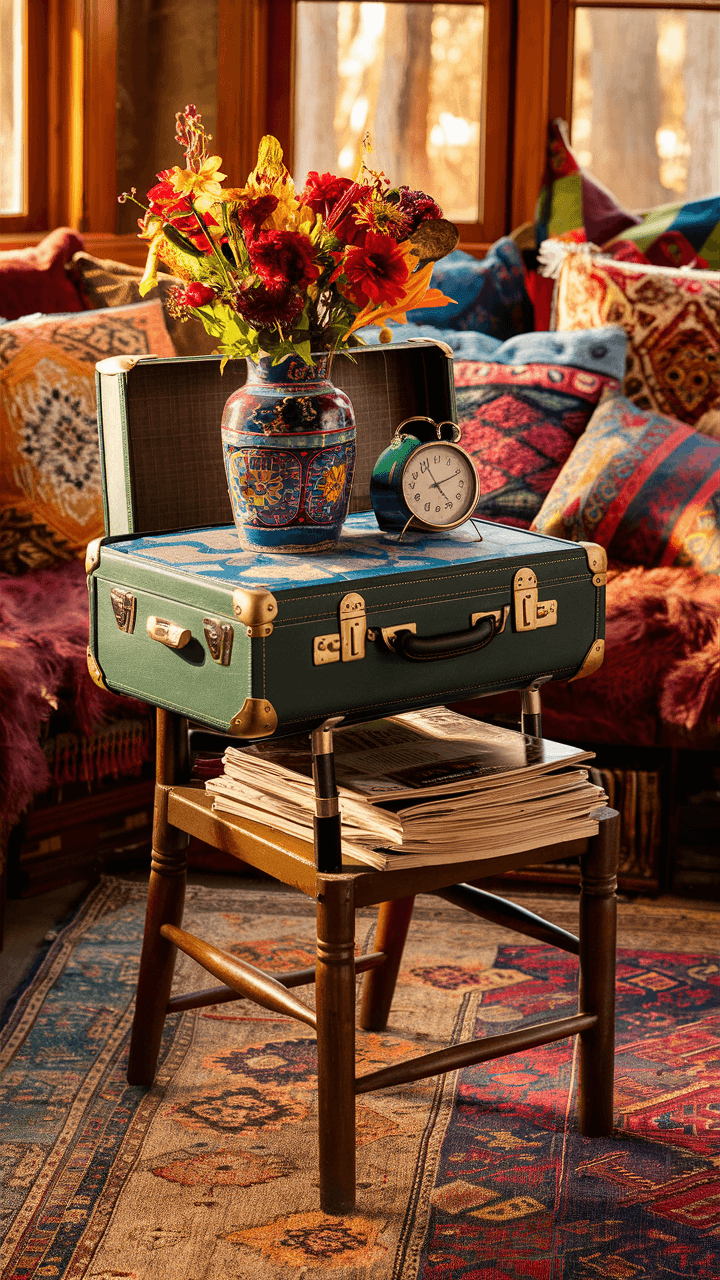
The bohemian style, with its eclectic and free-spirited nature, pairs perfectly with Indian decor. Mixing Indian textiles, such as vintage kilim rugs or embroidered fabrics, with global bohemian elements can create a cozy and inviting atmosphere. As “The fusion of cultures is what makes a space truly unique.” You can layer Indian patterns and colors with other global influences to create a rich tapestry that reflects your adventurous spirit.
Modern Indian: Contemporary Takes on Traditional Elements
Modern Indian design takes traditional elements and reinterprets them in a contemporary context. By incorporating modern materials and sleek designs, you can update classic Indian motifs, such as intricately carved metalwork or traditional patterns, to fit a modern aesthetic. This style is perfect for those who appreciate the beauty of Indian heritage but prefer a more streamlined look.
As we explore these blended styles, remember that the key to successful design fusion is balance and harmony. By thoughtfully combining Indian elements with other styles, you can create a space that is both beautiful and meaningful.
Conclusion: Creating Your Personal Indian-Inspired Haven
Indian home decor is a mix of color, craftsmanship, and culture. I’m excited to help you make a beautiful Indian-inspired space that’s yours.
Start with the vibrant colors and textiles of India. Use traditional fabrics like silk and block prints for your furniture, curtains, or pillows. This adds depth and interest.
Combine Indian wooden pieces with modern decor for a unique space. Try mixing Indian styles with Scandinavian or bohemian to make it personal and eclectic.
Embracing Indian design lets you create decor that shows your style and tells a story. Have fun exploring Indian home decor and making your haven a reality!

To bring you cozy inspiration more efficiently, we sometimes use AI to assist in content creation — but every word and idea is carefully shaped by our team. See our AI Disclosure for more info.