This post may contain affiliate links. If you click and buy, we may earn a small commission at no extra cost to you. Learn more.
Japandi living rooms have a quiet confidence. They don’t rely on contrast or decoration to feel complete. Instead, they work through material honesty, proportion, and restraint, creating spaces that feel calm without feeling empty.
Wood plays a central role here. Not as ornament, but as structure. It brings warmth to pared-back rooms and gives visual weight to otherwise minimal interiors. When done well, it makes the space feel lived-in rather than styled.
This approach works in real homes because it allows for flexibility. Pieces can be layered slowly, swapped over time, or adapted to different room sizes without breaking the overall mood.
Japandi isn’t about finishing a room—it’s about letting it settle.

What you’ll find here:
- Visual inspiration rooted in real homes
- Practical styling ideas you can apply gradually
- Furniture and decor concepts that support browsing and shopping
- Looks that work across room sizes and styles
Contents
- 1 1. Low Wooden Sofa Frames
- 2 2. Light Oak as the Dominant Wood Tone
- 3 3. Slatted Wood Accent Walls
- 4 4. Floating Wooden Shelving
- 5 5. Soft-Edged Coffee Tables
- 6 6. Minimal Wooden Media Units
- 7 7. Wood-Framed Lounge Chairs
- 8 8. Neutral Wall Colors That Let Wood Lead
- 9 9. Wood Ceiling Details
- 10 10. Thoughtful Mixing of Wood Tones
- 11 11. Wooden Room Dividers
- 12 12. Low Wooden Side Tables
- 13 13. Subtle Wood Decor Objects
- 14 14. Wood-Framed Artwork
- 15 15. Built-In Wooden Storage
- 16 16. Wooden Benches as Flexible Seating
- 17 17. Wood Paired with Linen Textiles
- 18 18. Wooden Lighting Elements
- 19 19. Intentional Empty Space
- 20 Styling Tips to Pull the Look Together
- 21 Conclusion
1. Low Wooden Sofa Frames

The idea
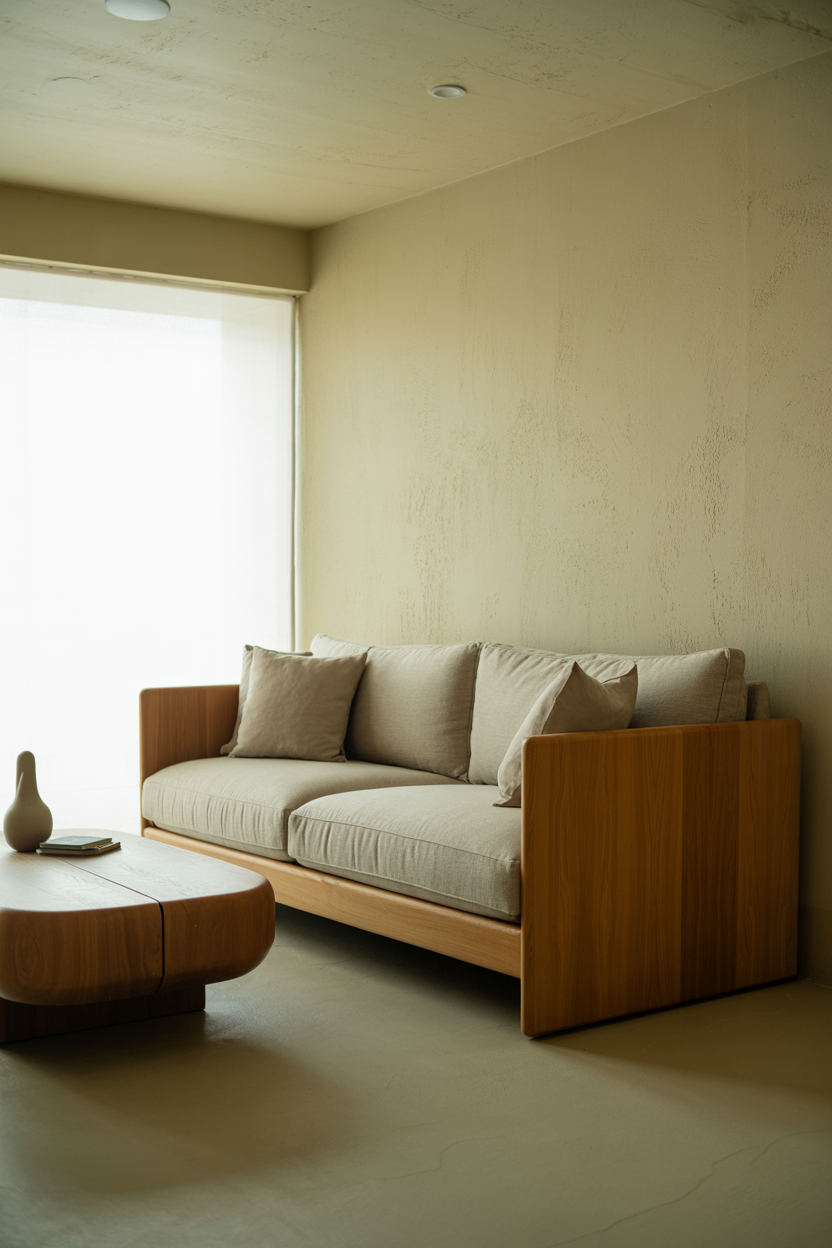
Lower seating immediately changes how a living room feels. A sofa with a visible wood frame grounds the space and encourages a slower, more relaxed posture.
Practical guidance
This works best when ceilings aren’t overly high. In taller rooms, balance the low profile with vertical elements like shelving or art.
Avoid bulky arms or thick bases—they interrupt the horizontal calm.
Styling & product direction
Sofas with exposed wood frames, neutral upholstery, matte wood finishes.
2. Light Oak as the Dominant Wood Tone

Light oak is often the quiet hero of Japandi spaces. It reflects light gently and pairs easily with neutral walls, textiles, and flooring.
Rather than mixing multiple woods early on, let oak lead. Additional tones can be introduced later, once the room has a clear foundation.
This is one of those choices that makes everything else feel easier.
Furniture in solid oak, oak veneer surfaces, natural-grain finishes.
3. Slatted Wood Accent Walls

The idea
Wood slats introduce rhythm without decoration. They add texture while keeping the palette restrained.
Practical guidance
Use slats behind a sofa or media wall where they can read as architectural. This works best when the rest of the room stays visually quiet.
Avoid pairing with busy rugs or patterned upholstery nearby.
Styling & product direction
Wall panels, vertical or horizontal slats, natural wood tones.
Design tip: Keep spacing consistent—irregular gaps break the calm.
4. Floating Wooden Shelving

The idea
Floating shelves allow wood to appear light, almost weightless, which suits Japandi interiors well.
Practical guidance
Limit what you place on them. Two or three objects per shelf is often enough. Negative space is part of the design.
Styling & product direction
Solid wood shelves, concealed brackets, pale finishes.
5. Soft-Edged Coffee Tables

Sharp corners feel abrupt in a Japandi room. A coffee table with rounded or organic edges softens the center of the space and subtly references Japanese craftsmanship.
Scale matters here. Choose a table that leaves generous walking room and sits lower than you might expect.
Low-profile wood coffee tables, rounded silhouettes, matte finishes.
Often overlooked, but this piece sets the tone for how the room is used.
At this point, the room should already feel quieter. Not because of one statement piece, but because the materials are starting to relate to each other, creating a sense of visual agreement.
6. Minimal Wooden Media Units

The idea
Technology blends into the background when housed in warm wood.
Practical guidance
Choose low units with simple fronts and hidden storage. Visible cables or glossy finishes quickly disrupt the mood.
Styling & product direction
Media consoles, slatted doors, integrated storage.
7. Wood-Framed Lounge Chairs

A single wood-framed lounge chair introduces sculptural interest without clutter. It also gives the room flexibility—extra seating without permanence.
This works especially well when the chair contrasts slightly with the sofa upholstery but shares the same wood tone.
Accent chairs, exposed frames, linen or woven seating.
8. Neutral Wall Colors That Let Wood Lead

The idea
Walls should support, not compete.
Practical guidance
Warm whites, soft greige, or muted clay tones work best. Cool whites can flatten the warmth of wood.
Styling & product direction
Interior paint, mineral finishes, limewash textures.
Style note: If the walls feel too stark, add texture before changing color.
9. Wood Ceiling Details

Exposed beams—or even subtle faux versions—add quiet architectural interest. They draw the eye upward without demanding attention.
Keep finishes light. Heavy staining can overwhelm smaller living rooms.
Ceiling beams, wood wraps, architectural accents.
10. Thoughtful Mixing of Wood Tones

The idea
Japandi allows variation, but only with intention.
Practical guidance
Stay within one warmth family. Contrast should come from grain and finish, not color shifts.
Styling & product direction
Mixed wood furniture, complementary tones, natural finishes.
Design tip: Repeat each wood tone at least twice so it feels deliberate.
Now the room begins to feel layered rather than sparse. The wood isn’t decorative—it’s structural, quietly shaping how the space is perceived.
11. Wooden Room Dividers

Wood screens define zones without closing them off. They’re especially effective in open-plan living rooms where separation needs to feel light.
Vertical slats work best. Heavy panels tend to feel too solid for this style.
Room dividers, slatted screens, folding panels.
12. Low Wooden Side Tables

Side tables should support daily use without drawing attention. Low wooden tables do this effortlessly.
Match their height closely to seating. Oversized or tall tables can feel intrusive.
Compact side tables, solid wood blocks, simple silhouettes.
13. Subtle Wood Decor Objects

Small wooden pieces reinforce the material story without adding clutter. Think texture rather than display.
One object per surface is usually enough.
Bowls, trays, carved accents, unfinished wood objects.
This is where restraint matters most.
14. Wood-Framed Artwork

Frames are part of the composition. Thin wood frames soften artwork and integrate it into the room rather than isolating it.
Avoid ornate or glossy finishes.
Wall art, minimalist prints, natural wood frames.
15. Built-In Wooden Storage

Built-ins disappear when designed well. Flush wood surfaces create calm continuity across walls.
Handles should be subtle or integrated—hardware shouldn’t compete.
Cabinetry, built-in shelving, concealed storage.
By now, the room should feel settled. Not finished, but resolved enough to breathe. Japandi interiors benefit from this pause—letting the space live before adding more.
16. Wooden Benches as Flexible Seating

A wooden bench introduces informality. It can shift roles easily—extra seating, display surface, or even a soft divider.
Add a simple cushion if comfort is needed, but keep the structure visible.
Benches, window seating, slim wood profiles.
17. Wood Paired with Linen Textiles

The idea
Texture replaces color in Japandi rooms.
Practical guidance
Washed linen works best. Crisp or shiny fabrics feel out of place.
Styling & product direction
Cushions, throws, neutral upholstery.
18. Wooden Lighting Elements

Lighting should feel integrated, not added later. Wood-accented lamps soften light and reinforce material continuity.
Warm bulbs are essential. Cool lighting undermines the entire atmosphere.
Floor lamps, table lamps, wood detailing.
19. Intentional Empty Space

The final element is absence. Empty space allows materials to be seen and felt.
Resist the urge to fill every corner. Calm requires room.
Minimal layouts, fewer furniture pieces, open floor areas.
This is where Japandi truly becomes personal.
Styling Tips to Pull the Look Together
- Use warm, layered lighting rather than a single source
- Balance wood with soft textiles and matte finishes
- Repeat materials instead of introducing new ones
- Edit regularly—remove before you add
- Prioritize comfort over perfect symmetry
- Let the room evolve slowly
Conclusion
A Japandi living room doesn’t need to arrive all at once. Often, one well-chosen wooden piece sets the tone for everything that follows.
Start small. Let materials guide decisions rather than trends. Adjust over time as the room responds to how you live in it.
Save what resonates, revisit ideas later, and allow the space to change quietly. That patience is part of what makes Japandi feel timeless.
¿Te gusta este tipo de personalidad?

To bring you cozy inspiration more efficiently, we sometimes use AI to assist in content creation — but every word and idea is carefully shaped by our team. See our AI Disclosure for more info.