This post may contain affiliate links. If you click and buy, we may earn a small commission at no extra cost to you. Learn more.
Spa-like bathrooms aren’t defined by size or luxury finishes. They’re defined by how the space makes you slow down. Light wood plays a quiet but powerful role in that feeling. It softens hard surfaces, warms cool materials, and brings a sense of ease that tile and stone alone often can’t.
In bathrooms, light wood works best when it feels intentional rather than decorative. Pale oak, ash, bamboo, or lightly washed finishes introduce warmth without heaviness. They reflect light gently, making rooms feel calmer, brighter, and more breathable—qualities that matter deeply in spaces designed for rest and routine.
This look is especially appealing because it’s realistic. You don’t need a full renovation or a hotel-sized bathroom. Light wood layers in gradually, adapts to different layouts, and ages gracefully over time. When paired with restraint, it creates bathrooms that feel cared for rather than styled.
A spa feel isn’t about adding more. It’s about choosing materials that reduce visual tension and invite stillness.
What you’ll find here:
- Visual inspiration rooted in real bathrooms
- Practical ways to use light wood without overwhelming the space
- Furniture and decor ideas that support browsing and shopping
- Spa-inspired looks that work in small and large bathrooms alike
Contents
- 1 1. Light Wood Vanities That Feel Airy
- 2 2. Pairing Light Wood with White or Stone Tile
- 3 3. Open Wood Shelving with Spa Restraint
- 4 4. Wood Used in Vertical Accents
- 5 5. Light Wood Accessories Over Dark Contrasts
- 6 6. Wood Near the Tub for Spa Warmth
- 7 7. Matte Finishes Over Gloss
- 8 8. Keeping the Palette Narrow
- 9 9. Light Wood in Small Bathrooms
- 10 10. Wood Paired with Natural Textiles
- 11 11. Subtle Grain Over Strong Pattern
- 12 12. Light Wood Storage That Blends In
- 13 13. Repeating Wood Tones Gently
- 14 14. Letting Light Shape the Wood
- 15 15. Choosing Fewer, Better Pieces
- 16 Styling Tips to Pull the Look Together
- 17 Conclusion
1. Light Wood Vanities That Feel Airy

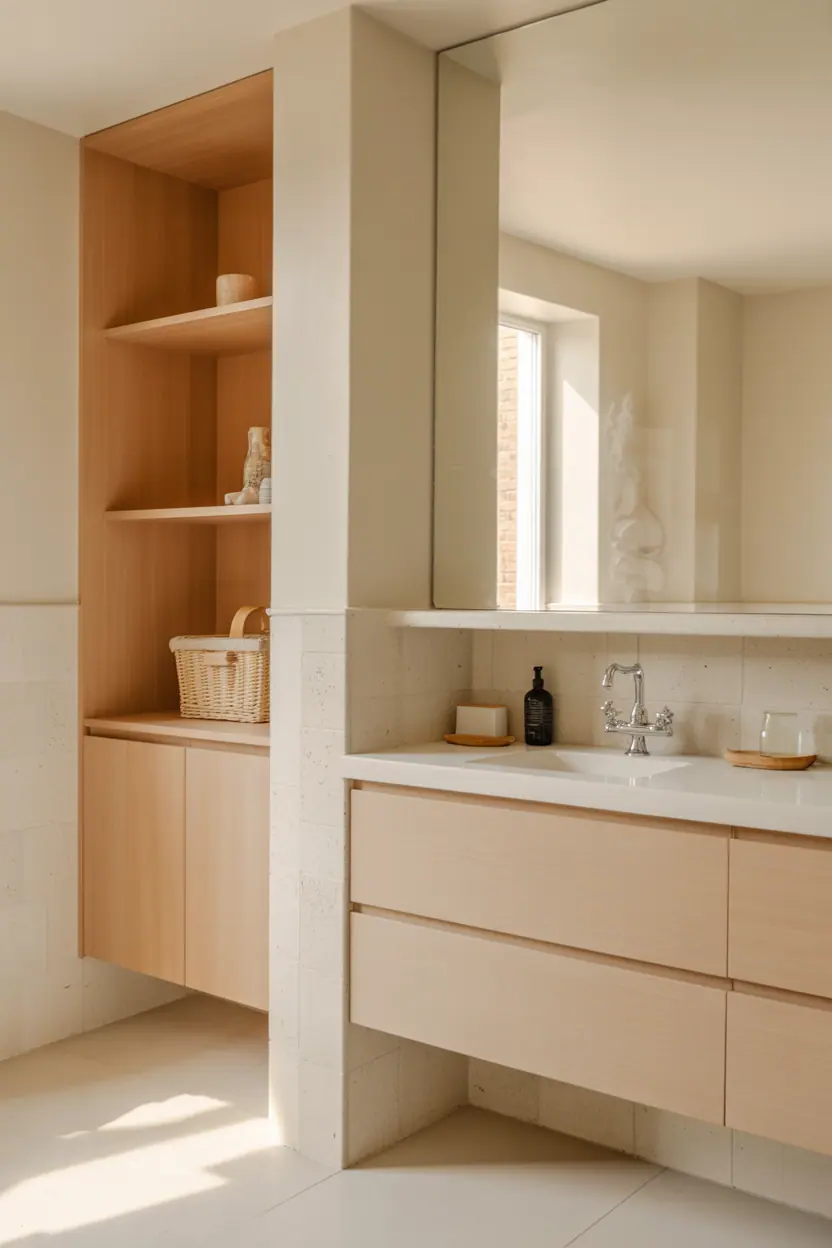
A light wood vanity immediately shifts the mood of a bathroom. It replaces the visual weight of dark cabinetry with something softer and more natural.
This works best when the vanity has clean lines and minimal hardware. Overly decorative fronts or high-contrast handles can interrupt the calm. Floating designs feel especially spa-like, allowing light and air to move underneath.
Look for simple drawer fronts, integrated pulls, and matte finishes that let the wood grain show quietly.
2. Pairing Light Wood with White or Stone Tile

Light wood feels most at home when paired with pale, neutral surfaces. White, off-white, or soft stone tiles allow the wood to warm the room without competing for attention.
This tends to fail when tiles are glossy or overly patterned. Calm bathrooms benefit from subtle texture rather than visual complexity.
Style note: the quieter the tile, the more the wood can breathe.
3. Open Wood Shelving with Spa Restraint

Open shelving introduces function without enclosure, especially when done in light wood. It keeps bathrooms feeling open and relaxed rather than boxed in.
This only works when shelves are styled with restraint. Rolled towels, a few neutral containers, and negative space are key. Overloading shelves quickly breaks the spa illusion.
Light wood shelves with slim profiles feel the most natural.
4. Wood Used in Vertical Accents

Vertical wood elements—slats, narrow panels, or ladder-style storage—add rhythm without heaviness. They guide the eye upward gently, creating a sense of quiet structure.
This approach works best when wood accents remain partial rather than full walls. Too much vertical wood can feel enclosing rather than calming.
Design tip: one vertical element is usually enough.

At this point, the bathroom should already feel lighter. Not decorated—softened. The wood isn’t performing; it’s supporting the space.
5. Light Wood Accessories Over Dark Contrasts

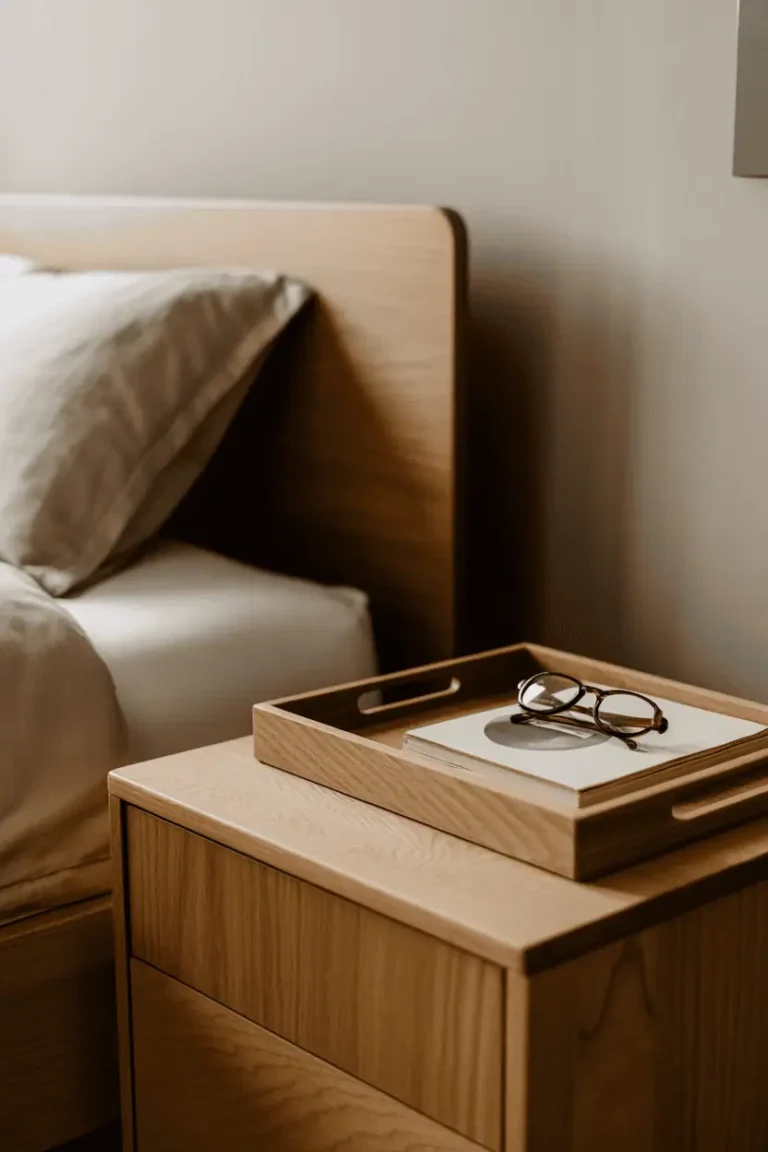
Small details matter in spa-like bathrooms. Light wood accessories—stools, trays, small shelving—maintain the calm better than dark or high-contrast pieces.
Dark accents tend to anchor the eye too strongly, pulling attention away from the overall atmosphere. Light wood keeps everything moving gently.
Think in terms of continuity rather than contrast.
6. Wood Near the Tub for Spa Warmth

Placing light wood elements near a tub instantly elevates the experience. A stool, bench, or small shelf adds warmth where the room is most exposed and vulnerable.
This works best when the wood remains functional rather than decorative. Items that hold towels or bath essentials feel natural here.
Avoid placing untreated wood too close to splashing water—finish matters.
7. Matte Finishes Over Gloss

Spa bathrooms rely on softness, and gloss works against that. Light wood with matte or satin finishes absorbs light gently, reinforcing calm.
High-gloss finishes can feel slippery and artificial in comparison. The goal is tactility, not shine.
This applies to both wood and surrounding materials.
8. Keeping the Palette Narrow

Light wood bathrooms feel most spa-like when the color palette stays limited. Whites, creams, soft grays, and pale beiges allow the wood to lead quietly.
Introducing too many colors creates visual chatter. Calm spaces benefit from repetition and restraint.
Style note: texture should replace color wherever possible.

The room should now feel cohesive, almost hushed. The materials are doing less—and achieving more.
9. Light Wood in Small Bathrooms

Light wood is especially effective in small bathrooms. It reflects light and avoids the visual compression darker finishes can create.
This works best when combined with floating furniture and open storage. Keeping the floor visible helps maintain a sense of space.
Avoid bulky cabinets that break the flow.
10. Wood Paired with Natural Textiles

Towels, bath mats, and window treatments matter. When paired with light wood, natural textiles like cotton and linen reinforce the spa mood.
Synthetic or overly plush fabrics can feel out of place. The goal is softness without excess.
Stick to neutral tones with subtle texture.
11. Subtle Grain Over Strong Pattern

Light wood grain adds movement without distraction. Strong patterns—whether in wood or tile—tend to pull focus.
This works best when the grain is visible but not dramatic. Calm bathrooms benefit from quiet surfaces.
Let the eye rest.
12. Light Wood Storage That Blends In

Storage should disappear visually in spa-like bathrooms. Light wood helps cabinets and shelving blend rather than stand apart.
Closed storage near eye level keeps the room feeling restful. Open storage works best lower down or in small doses.
Flat fronts and simple proportions support this effect.

By now, the bathroom should feel balanced—not staged. Light wood has become part of the architecture rather than an added layer.
13. Repeating Wood Tones Gently

Repeating light wood in two or three places creates cohesion. Vanity, shelving, and a small stool might share a similar tone.
Perfect matching isn’t necessary. Consistent warmth is.
Too much repetition, however, can flatten the space.
14. Letting Light Shape the Wood

Natural light changes how wood reads throughout the day. Morning light feels crisp; evening light feels softer and more enveloping.
Avoid heavy window treatments that block this shift. Light-filtering fabrics support the spa effect.
Lighting should reveal wood, not overpower it.
15. Choosing Fewer, Better Pieces

Spa-like bathrooms rely on editing. Fewer wood elements, chosen well, feel more luxurious than many average ones.
This applies to furniture, shelving, and accessories. Each piece should earn its place.
Editorial aside: calm often comes from what you choose not to include.
Styling Tips to Pull the Look Together
- Use warm, layered lighting instead of bright overhead light
- Keep wood finishes matte or lightly sealed
- Repeat light wood tones subtly, not everywhere
- Let texture replace color
- Edit accessories regularly
- Prioritize ease of use over symmetry
Conclusion
Light wood bathrooms create a spa feel not through excess, but through restraint. They soften hard materials, reflect light gently, and encourage slower routines.
You don’t need to transform everything at once. Start with one light wood element—a vanity, a shelf, a stool—and let it settle into the space. Notice how the room responds.
Save the ideas that resonate. Return to them when the bathroom feels busy or cold. Spa-like calm isn’t added in layers—it’s revealed by removing what no longer serves the space.

To bring you cozy inspiration more efficiently, we sometimes use AI to assist in content creation — but every word and idea is carefully shaped by our team. See our AI Disclosure for more info.