
This post may contain affiliate links. If you click and buy, we may earn a small commission at no extra cost to you. Learn more.
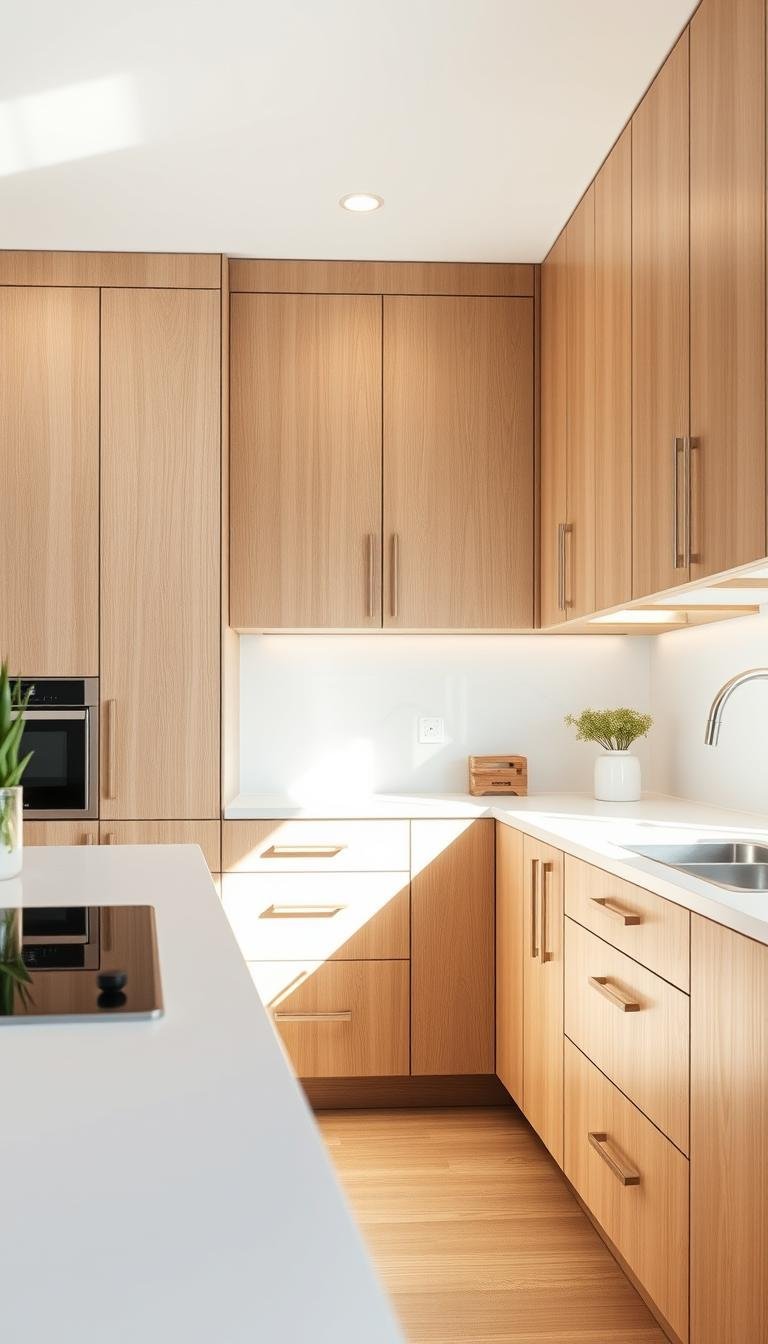
Minimalist wood decor isn’t about removing personality from a space. It’s about quieting the room enough that the materials can speak. When wood is used with restraint—allowed to show grain, tone, and age—it creates interiors that feel grounded rather than sparse.
This style works especially well in real homes because it doesn’t demand perfection. Scratches, subtle variations, and natural wear aren’t flaws here; they’re part of the atmosphere. A calm space isn’t one with nothing in it, but one where each element earns its place.
Minimalist wood decor also ages well. Instead of chasing trends, it relies on proportion, light, and material honesty. You can layer it slowly, adjust it seasonally, and live with it comfortably.
What matters most is balance: between warmth and simplicity, openness and comfort, intention and ease. When that balance is right, the room begins to slow you down.

What you’ll find here:
- Visual inspiration rooted in real homes
- Practical ideas you can apply gradually
- Furniture and decor concepts that support browsing and shopping
- Looks that work across room sizes and styles
Contents
- 1 1. Let One Wood Tone Lead the Room
- 2 2. Low Wood Furniture That Grounds the Space
- 3 3. Use Negative Space as a Design Element
- 4 4. Light Wood Against Soft, Neutral Walls
- 5 5. Fewer Pieces, Better Proportions
- 6 6. Natural Grain as the Main Texture
- 7 7. Open Shelving, Edited Ruthlessly
- 8 8. A Single Statement Wood Piece
- 9 9. Keep Hardware and Details Subtle
- 10 10. Wood Paired with Soft, Heavy Textiles
- 11 11. Avoid Perfect Matching
- 12 12. Let Light Do the Styling
- 13 13. Wood as Architecture, Not Decoration
- 14 14. Limit Decorative Objects to Functional Ones
- 15 15. Warm Wood in Small Rooms
- 16 16. Resist Over-Styling Surfaces
- 17 17. Repetition Without Obsession
- 18 18. Soft Edges Over Sharp Lines
- 19 19. Let Wood Age Naturally
- 20 20. Balance Wood with Quiet Contrast
- 21 21. Stop Before It Feels Finished
- 22 Styling Tips to Pull the Look Together
1. Let One Wood Tone Lead the Room

Minimalist spaces feel calm when the eye isn’t constantly adjusting. Allowing one dominant wood tone—light oak, soft walnut, or pale ash—to lead creates that visual steadiness.
This works best when the primary pieces share a similar finish, even if their shapes differ. Mixing too many tones too early tends to fragment the space rather than enrich it.
Style note: secondary wood accents should feel supportive, not competitive—think background texture, not focal point.
2. Low Wood Furniture That Grounds the Space

Low-profile wood furniture naturally pulls the room closer to the floor, creating a sense of ease. It encourages slower movement and makes ceilings feel higher without effort.
This tends to fail when pieces are too bulky or overly detailed. Clean edges and visible grain matter more than ornament here.
Furniture to explore includes low consoles, coffee tables, and platform-style seating with exposed wood bases.
3. Use Negative Space as a Design Element

Minimalist wood decor relies as much on what’s not there as what is. Leaving space around a wood piece allows its texture and form to register fully.
Crowding wood furniture with accessories often dulls its impact. A single table with nothing on it can feel more intentional than one carefully styled.
Design tip: if a piece feels underwhelming, remove what’s around it before adding anything new.
4. Light Wood Against Soft, Neutral Walls

Light wood finishes pair especially well with warm whites, soft clay tones, and pale greiges. The contrast is gentle, not sharp, which keeps the room feeling open.
This works best when wall colors have warmth. Cool whites can make natural wood look flat or unfinished.
Paint, wall treatments, and subtle plaster textures all support this pairing beautifully.

At this point, the room should already feel quieter—not empty, but composed. The materials are beginning to relate to each other, and nothing is asking for attention.
5. Fewer Pieces, Better Proportions

Minimalist wood decor depends heavily on proportion. A well-scaled table or bench can do the work of three smaller items.
Rooms often feel cluttered not because they’re full, but because pieces are undersized. This style benefits from fewer, more confident forms.
Consider replacing clusters of small decor with one substantial wood object.
6. Natural Grain as the Main Texture

In calm spaces, wood grain replaces pattern. The subtle movement in the surface adds depth without visual noise.
This tends to fail when paired with overly busy textiles or high-contrast patterns. Let the grain remain the most expressive surface in the room.
Wood furniture, wall panels, or shelving with visible grain works especially well here.
7. Open Shelving, Edited Ruthlessly

Open wood shelving can feel serene or chaotic—it depends entirely on editing. Minimalist spaces demand restraint.
This works best when shelves hold a mix of negative space and a few grounded objects: ceramics, books, or baskets in neutral tones. Too much symmetry can feel stiff; too much variety feels restless.
Style note: leave at least one shelf partially empty.
8. A Single Statement Wood Piece

Instead of spreading wood evenly across the room, sometimes one strong piece is enough. A sculptural chair, a thick coffee table, or a solid bench can anchor everything else.
This approach works best when surrounding elements stay quiet. Let the wood carry the visual weight.
Furniture with simple silhouettes and tactile surfaces fits naturally here.
9. Keep Hardware and Details Subtle

Handles, legs, and joints should recede, not announce themselves. In minimalist wood decor, details are felt more than seen.
Avoid high-shine metals or ornate shapes. Matte finishes and integrated pulls maintain the calm.
This is especially important for storage pieces and cabinetry.

Notice how the room isn’t becoming sparse—it’s becoming intentional. Each decision reduces noise rather than adding interest for its own sake.
10. Wood Paired with Soft, Heavy Textiles

Minimalist doesn’t mean cold. Wood needs softness nearby to feel livable.
Wool rugs, linen upholstery, and cotton throws balance the firmness of wood surfaces. The contrast keeps the room grounded and comfortable.
This pairing works best when textiles stay within a muted palette.
11. Avoid Perfect Matching

Uniform sets often feel staged. Minimalist wood decor feels more natural when pieces relate without matching exactly.
Slight variations in tone or grain add depth. The key is consistency in warmth, not sameness.
This is especially effective with tables, shelving, and seating.
12. Let Light Do the Styling

Natural light changes how wood reads throughout the day. Morning light brings out grain; evening light deepens tone.
Heavy window treatments often work against minimalist wood interiors. Lighter fabrics—or none at all—allow the material to shift naturally.
Lighting placement should highlight surfaces, not overpower them.
13. Wood as Architecture, Not Decoration

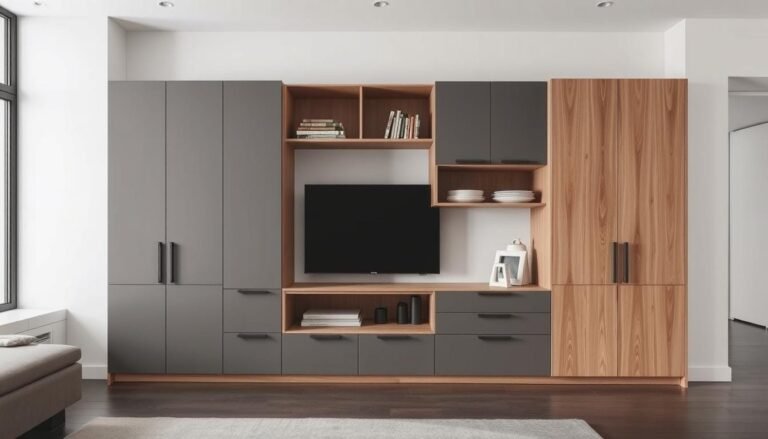
When wood becomes part of the structure—beams, slats, built-ins—it feels calmer than when used as surface decor.
This approach works best when the design is simple and repetitive. Overly complex patterns break the quiet rhythm.
Wall treatments, ceiling details, or integrated shelving suit this idea well.

By now, the space should feel settled. Not finished, but resolved. Minimalist wood decor rarely announces itself—it reveals itself over time.
14. Limit Decorative Objects to Functional Ones

In calm spaces, decoration often doubles as utility. A tray, a stool, a storage bench.
This reduces visual clutter and reinforces intention. Objects without purpose tend to feel distracting here.
Wood accessories that serve a role—holding, supporting, storing—fit best.
15. Warm Wood in Small Rooms

Minimalist wood decor works surprisingly well in small spaces when scaled correctly. Light woods keep rooms open; low furniture prevents crowding.
Avoid dark finishes in tight rooms unless balanced with strong light. The goal is warmth without compression.
Compact furniture with visible legs helps maintain airflow.
16. Resist Over-Styling Surfaces

Minimalist rooms often lose their calm when every surface is styled. Wood surfaces, in particular, benefit from restraint.
A bare console or table allows the material to breathe. Add only what’s necessary.
Design tip: if styling feels forced, remove one item.
17. Repetition Without Obsession

Repeating wood tones across a room creates cohesion, but overdoing it can feel flat.
Aim for subtle repetition: a table here, shelving there, a small accent elsewhere. The eye connects them naturally.
This works best when mixed with neutral materials like stone, fabric, or plaster.
18. Soft Edges Over Sharp Lines

Minimalist wood decor feels calmer when edges are slightly softened. Rounded corners and eased profiles invite touch and movement.
Sharp lines can feel rigid if overused. Balance them with organic shapes.
This is especially effective in seating and tables.

The calm here doesn’t come from minimalism alone—it comes from care. Care in proportion, care in restraint, care in how the room is allowed to breathe.
19. Let Wood Age Naturally

Patina adds depth to minimalist spaces. Fresh, overly polished finishes can feel sterile.
This style benefits from living with pieces over time. Wear tells a story and softens the room.
Solid wood furniture and well-made surfaces age best.
20. Balance Wood with Quiet Contrast

Wood needs contrast to stay interesting. Stone, linen, matte ceramics, or soft metals provide that counterpoint.
Avoid introducing contrast through color alone. Texture is more effective and less disruptive.
This keeps the palette calm while adding dimension.
21. Stop Before It Feels Finished

Minimalist wood decor often feels best when it’s slightly incomplete. A room that feels “done” can quickly feel static.
Leaving space for change keeps the room alive. Add slowly, remove often.
The calm comes from flexibility, not finality.
Styling Tips to Pull the Look Together
- Use layered lighting to soften wood surfaces rather than spotlight them
- Repeat wood tones subtly across the room, not everywhere
- Balance wood with textiles to avoid a rigid feel
- Edit regularly—remove before adding
- Choose comfort over symmetry
- Let natural light shape how the room feels throughout the day
Conclusion
Minimalist wood decor isn’t a formula—it’s a mindset. You don’t need to replace everything or strip a room bare. Starting with one piece, one surface, or one quieter decision is often enough.
These spaces evolve slowly. Wood changes, light shifts, needs change. That’s part of what makes the style work so well in real homes.
Save the ideas that resonate. Return to them when the room feels busy or unsettled. Calm isn’t created all at once—it’s built, gently, over time.

To bring you cozy inspiration more efficiently, we sometimes use AI to assist in content creation — but every word and idea is carefully shaped by our team. See our AI Disclosure for more info.