This post may contain affiliate links. If you click and buy, we may earn a small commission at no extra cost to you. Learn more.
Moroccan living rooms carry a particular kind of weight — not heavy, but grounded. The woodwork isn’t just decorative. It’s structural, carved, repeated across ceilings and doorways and built-in seating. The rooms feel intentional without being staged, layered without being cluttered.
What makes these spaces compelling is the balance between warmth and restraint. There’s pattern, but it doesn’t overwhelm. There’s color, but it’s often pulled from natural materials rather than imposed. The wood becomes a constant — sometimes dark and carved, sometimes pale and plain — anchoring everything else.
These rooms work because they evolved slowly. They’re not the result of a single shopping trip or a mood board translated too literally. They’re built around proportion, repetition, and a deep respect for craft. That makes them surprisingly adaptable, even outside Morocco.
The ideas here pull from traditional homes, contemporary interpretations, and hybrid approaches that mix Moroccan sensibility with modern simplicity. They’re meant to be absorbed slowly, not copied exactly.
Contents
- 1 What you’ll find here:
- 2 1. Zellige-Tiled Walls with Carved Cedar Seating
- 3 2. Pale Wood Rafters Over White Plaster Walls
- 4 3. Dark Walnut Mashrabiya Screens as Room Dividers
- 5 4. Painted Wood Paneling in Soft Blue-Gray
- 6 5. Arched Doorways Framed in Carved Wood
- 7 6. Reclaimed Wood Beams with Industrial Metal Accents
- 8 7. Built-In Alcove Seating with Tile and Wood Trim
- 9 8. Whitewashed Cedar Ceiling with Rope-Wrapped Beams
- 10 9. Lattice Wood Ceiling Panels Over Low Seating
- 11 10. Dark Stained Wood with Jewel-Toned Textiles
- 12 11. Painted Moroccan Doors as Wall Art
- 13 12. Carved Wood Coffee Table as the Central Focus
- 14 13. Exposed Brick with Cedar Trim and Iron Details
- 15 14. Light Oak Paneling with Brass Inlay
- 16 15. Rough-Hewn Beams with Soft, Organic Textiles
- 17 16. White Plaster Walls with Single Carved Door Frame
- 18 17. Stained Glass Windows with Dark Wood Frames
- 19 18. Walnut Built-In Shelving with Arched Openings
- 20 19. Bleached Wood Ceiling with Woven Pendant Lights
- 21 20. Carved Wood Panels Mounted as Headboard Alternative
- 22 21. Contemporary Sectional with Vintage Moroccan Rug and Cedar Beams
- 23 Styling Tips to Pull the Look Together
- 24 Final Thoughts
What you’ll find here:
- Distinct living room concepts rooted in real homes
- Inspiration you can adapt gradually
- Complete looks, not isolated details
- Ideas that suit different tastes and room sizes
1. Zellige-Tiled Walls with Carved Cedar Seating
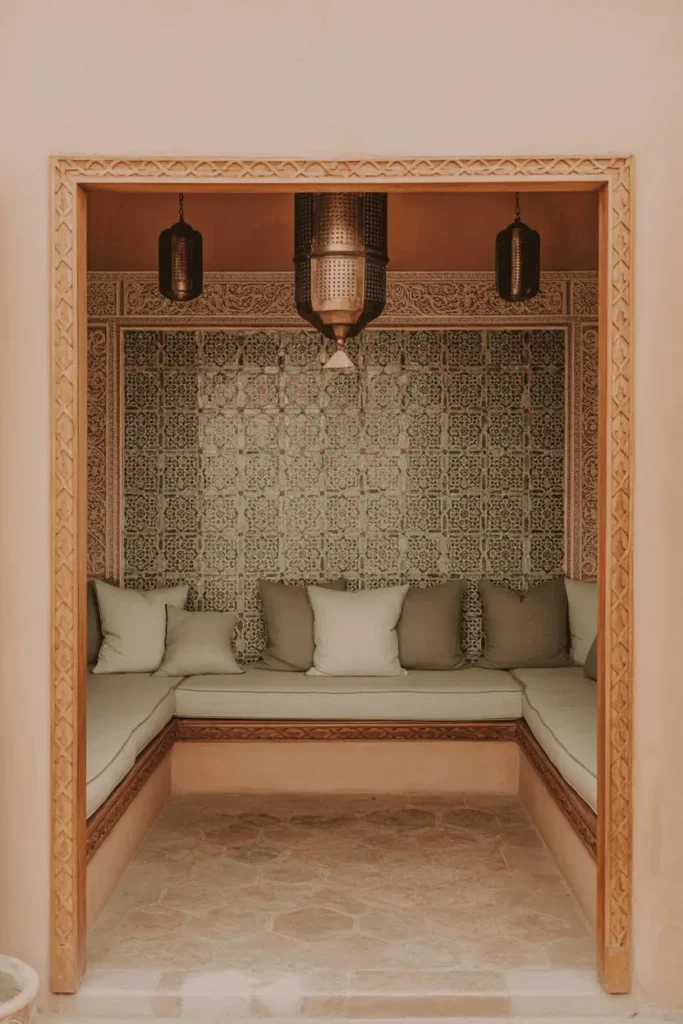
This room centers on built-in seating that runs along two walls, upholstered low and deep. The wood framing is carved cedar — intricate but not busy — and the wall behind it is covered in traditional zellige tilework in muted greens and blues. The floor is terracotta, unpolished. Light comes from pierced brass lanterns hanging at varied heights.
The effect is grounded and calm. The tilework provides visual interest without needing art or layered textiles. The cedar adds warmth without competing. This works best in rooms with strong natural light, where the tile can shift tone throughout the day.
Design note: Keep upholstery neutral — linen or cotton in cream or soft gray — so the tile and wood can hold focus.
2. Pale Wood Rafters Over White Plaster Walls
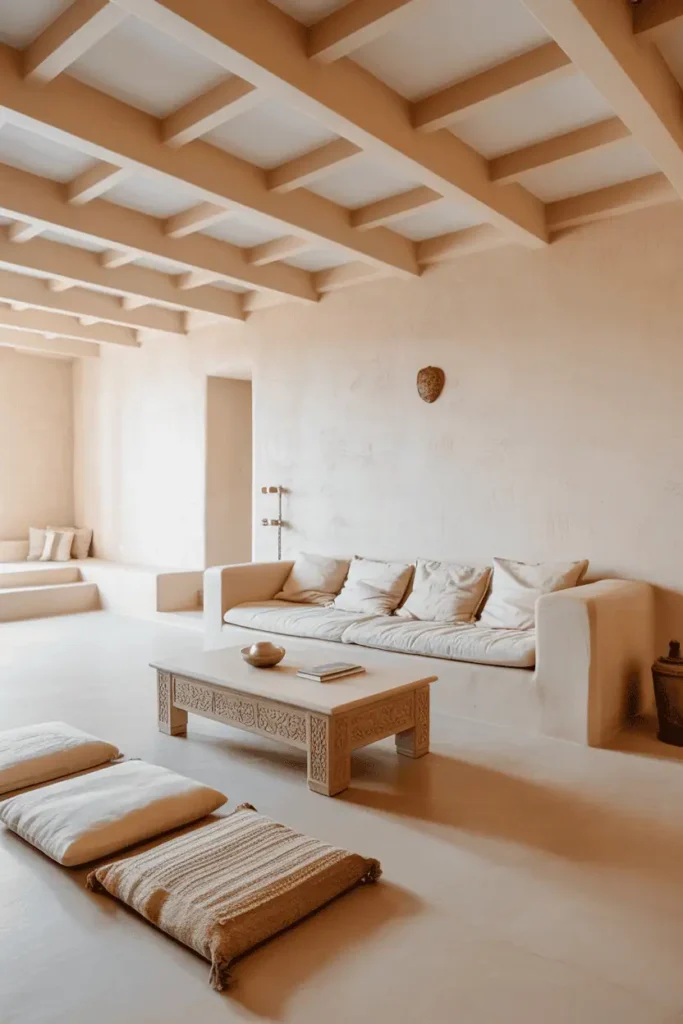
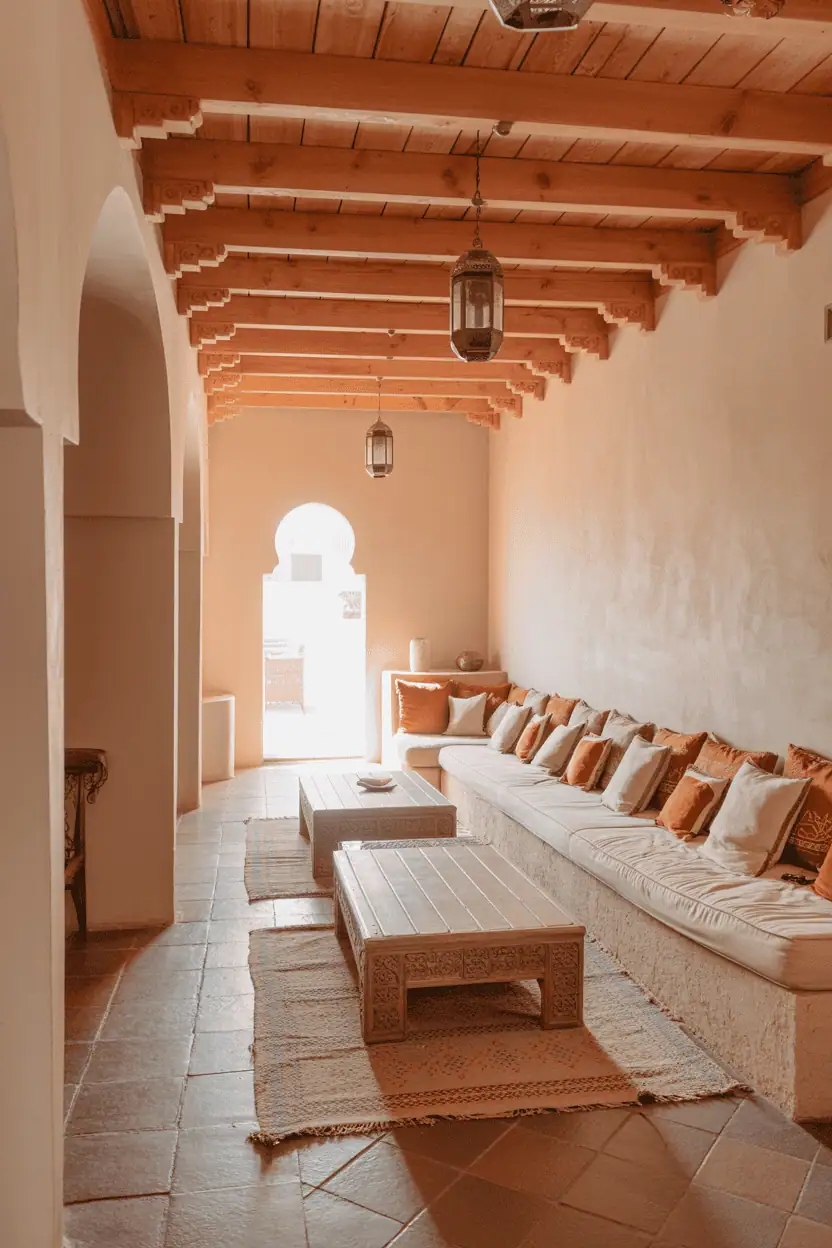
A quieter approach. The ceiling is exposed, with pale wood beams running the length of the room. The walls are white plaster, slightly textured. Furniture is minimal — a low sofa, a carved coffee table, a few floor cushions in undyed wool. The wood tones are light: beech or whitewashed cedar.
This feels like a coastal Moroccan home, where heat demands simplicity. The wood ceiling provides structure without heaviness. The white walls reflect light. The room stays cool visually and physically. It suits spaces where you want calm over drama.
3. Dark Walnut Mashrabiya Screens as Room Dividers
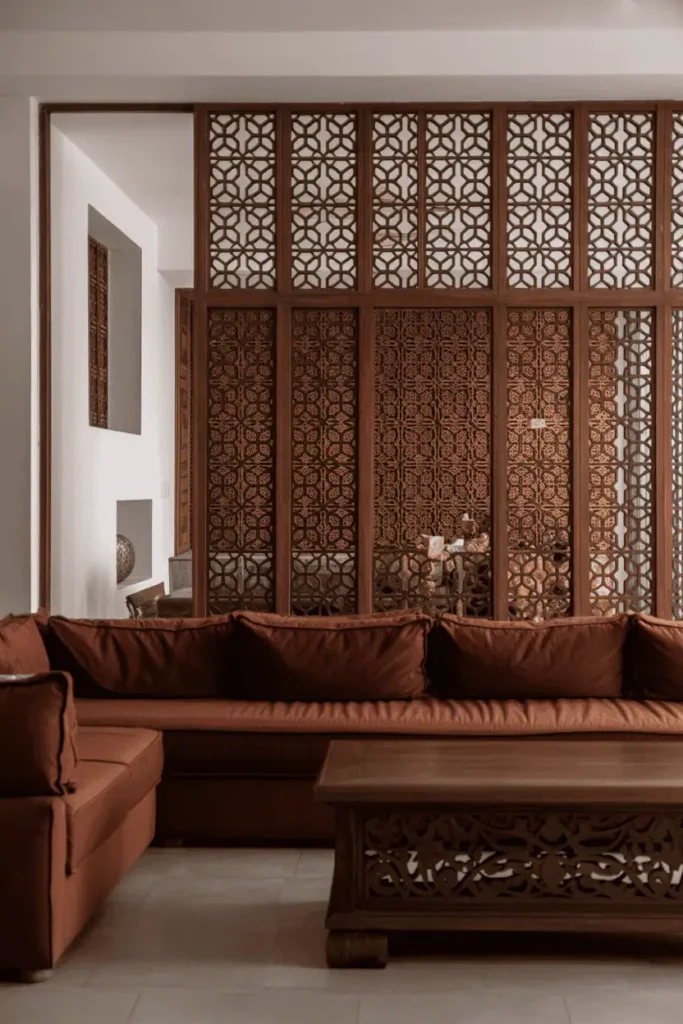
Here, the living room flows into an adjoining space — a dining area or entryway — but they’re separated by a floor-to-ceiling mashrabiya screen in dark walnut. The screen is geometric, not overly ornate, and filters light beautifully. The living room side has a sectional in deep rust velvet, paired with a carved wood media console.
The screen becomes the focal point. It adds privacy without closing off the space. The dark wood contrasts with lighter walls and creates shadow play that shifts throughout the day. This approach works in open-plan homes where you want distinction without walls.
Style note: Let the screen stand alone — minimal art, restrained accessories.
4. Painted Wood Paneling in Soft Blue-Gray
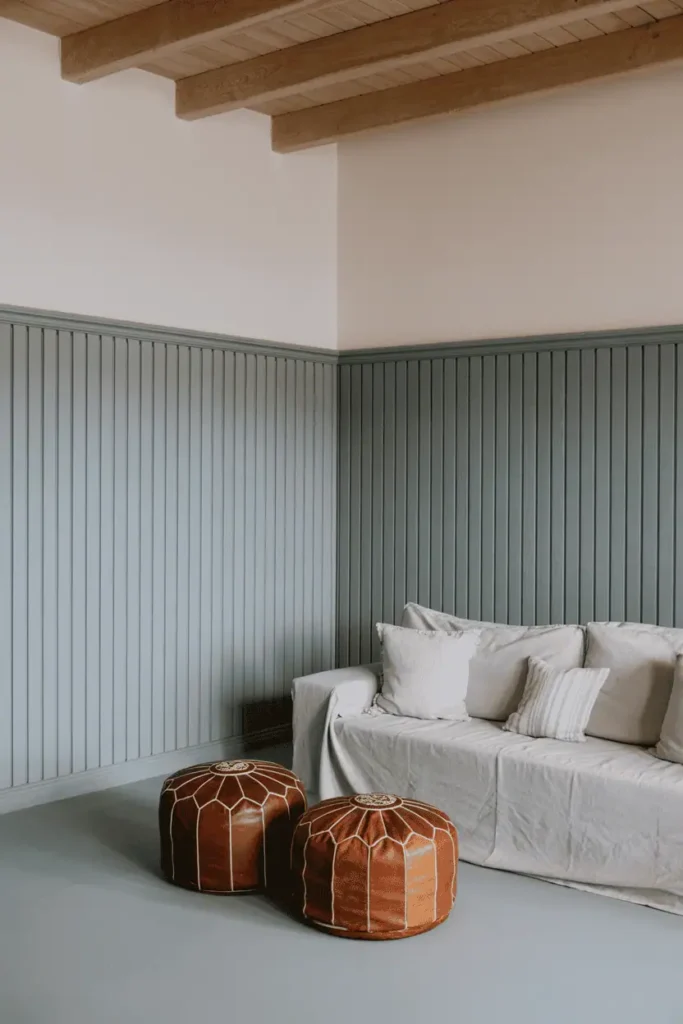
Not all Moroccan wood is bare or polished. In this room, the lower half of the walls is covered in painted wood paneling — tongue-and-groove in a soft blue-gray. The upper walls are white. The ceiling has exposed beams in natural oak. Seating is a mix of a linen sofa and woven leather poufs.
The painted wood adds color without pattern. It feels cooler and more Nordic-influenced, but the proportions and ceiling treatment keep it grounded in Moroccan tradition. This suits homes in cooler climates or rooms that feel too warm-toned naturally.
5. Arched Doorways Framed in Carved Wood
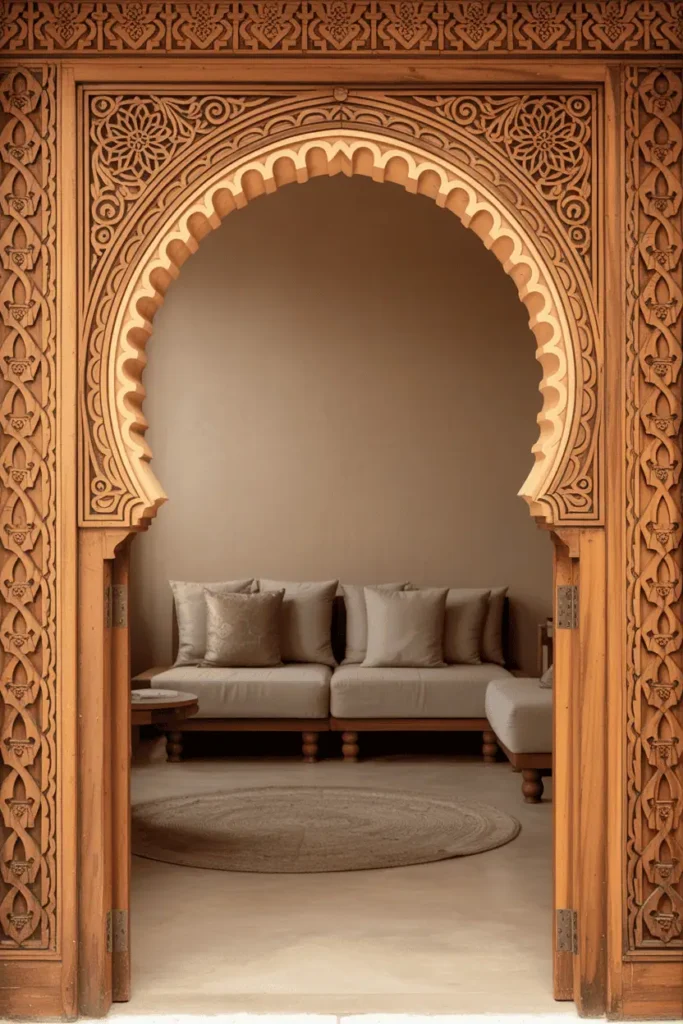
The living room opens through a wide arched doorway framed entirely in carved cedarwood. The carving is traditional — geometric with floral elements — and stained a warm amber. The room itself is simple: low seating, neutral textiles, a single large rug. The doorway becomes the statement.
This works when you have architectural features worth highlighting. The carved frame draws the eye and establishes the room’s character before you even enter. It’s a restrained way to introduce Moroccan detail without overwhelming the interior.
6. Reclaimed Wood Beams with Industrial Metal Accents
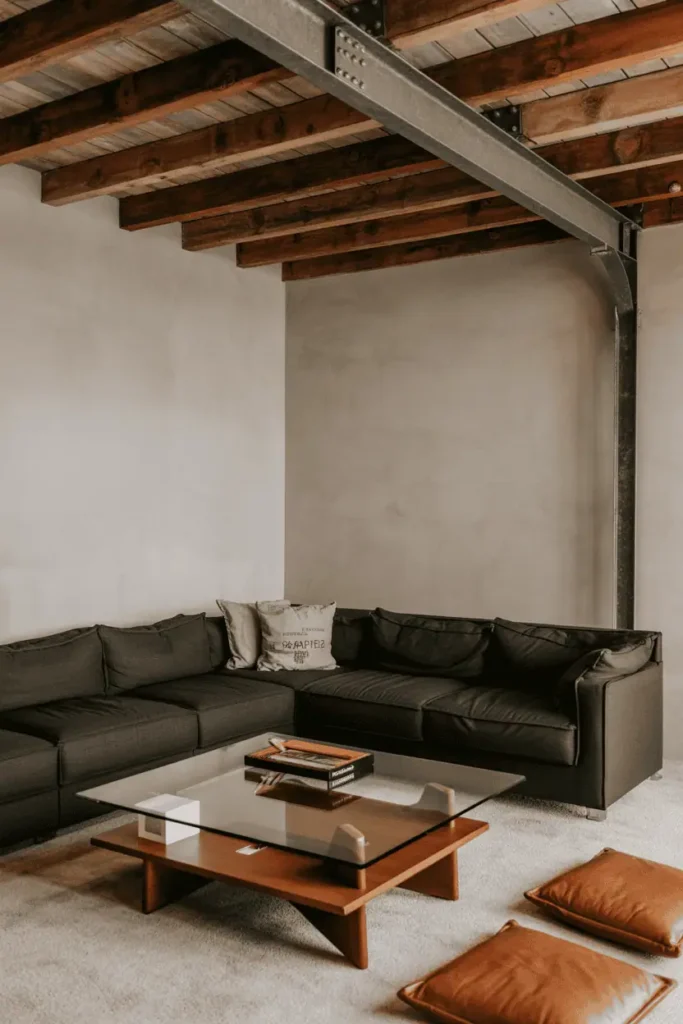
A more contemporary take. The ceiling has reclaimed wood beams — rough-hewn, varied in width — paired with exposed metal brackets and light fixtures. The walls are bare plaster. Furniture is low and modern: a charcoal sectional, a glass-topped coffee table with a wood base, leather floor cushions.
This blends Moroccan structural elements with industrial restraint. The wood provides warmth, the metal adds edge. It feels urban and grounded at once. Best suited to loft-style spaces or converted buildings where rustic and modern already coexist.
At this point, the rooms begin to shift between traditional and adapted. The wood remains constant, but its treatment — carved, painted, raw — changes the entire mood.
7. Built-In Alcove Seating with Tile and Wood Trim
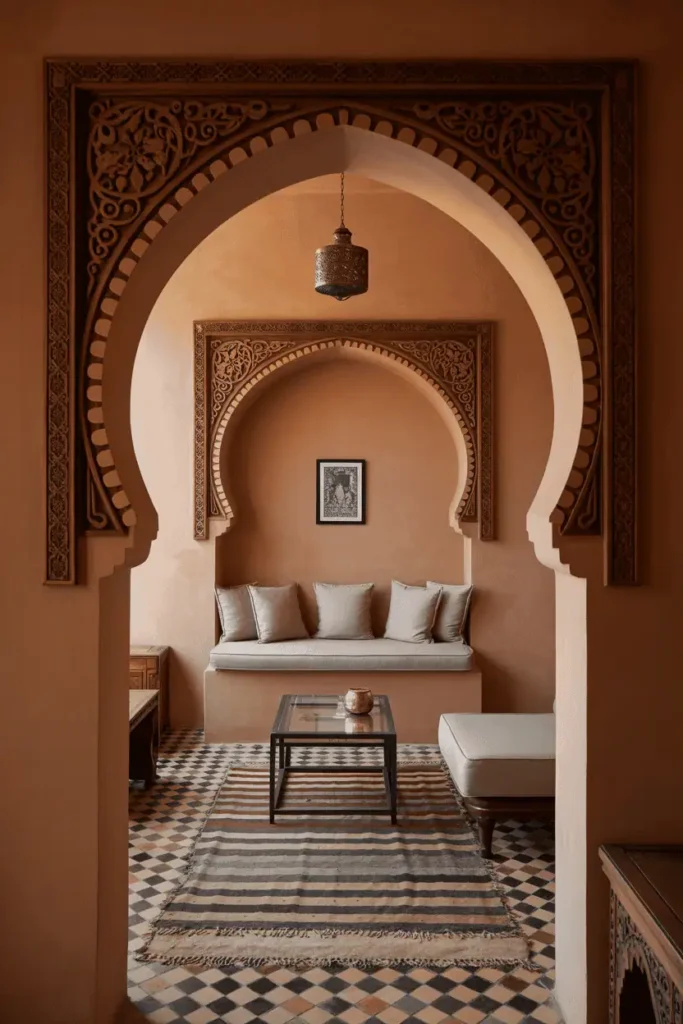
An alcove set into the wall, just deep enough for cushioned seating. The back and sides are tiled in warm terracotta zellige. The outer frame is dark wood — carved but not overly detailed. The main room has a simple sofa opposite, a low coffee table, and layered wool rugs.
The alcove creates a room within a room. It’s intimate without being closed off. The tile adds color, the wood provides structure. This approach works in larger living rooms where you want distinct zones without adding furniture.
8. Whitewashed Cedar Ceiling with Rope-Wrapped Beams
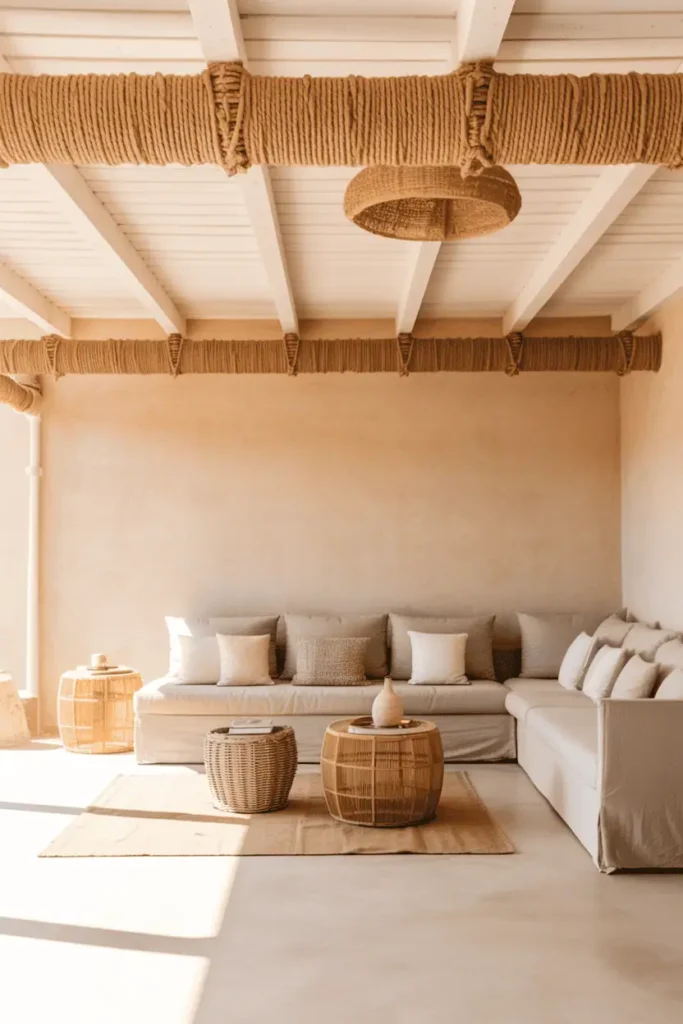
The ceiling is whitewashed cedar, with some beams left exposed and others wrapped in natural jute rope. The walls are soft ochre plaster. Furniture is pale: a linen sectional, woven rattan side tables, cotton floor cushions. The overall palette is sand, cream, and natural fiber.
This feels coastal and minimal. The rope-wrapped beams add texture without color. The whitewashed wood keeps everything light. It’s suited to homes near water or in hot climates where visual coolness matters.
9. Lattice Wood Ceiling Panels Over Low Seating
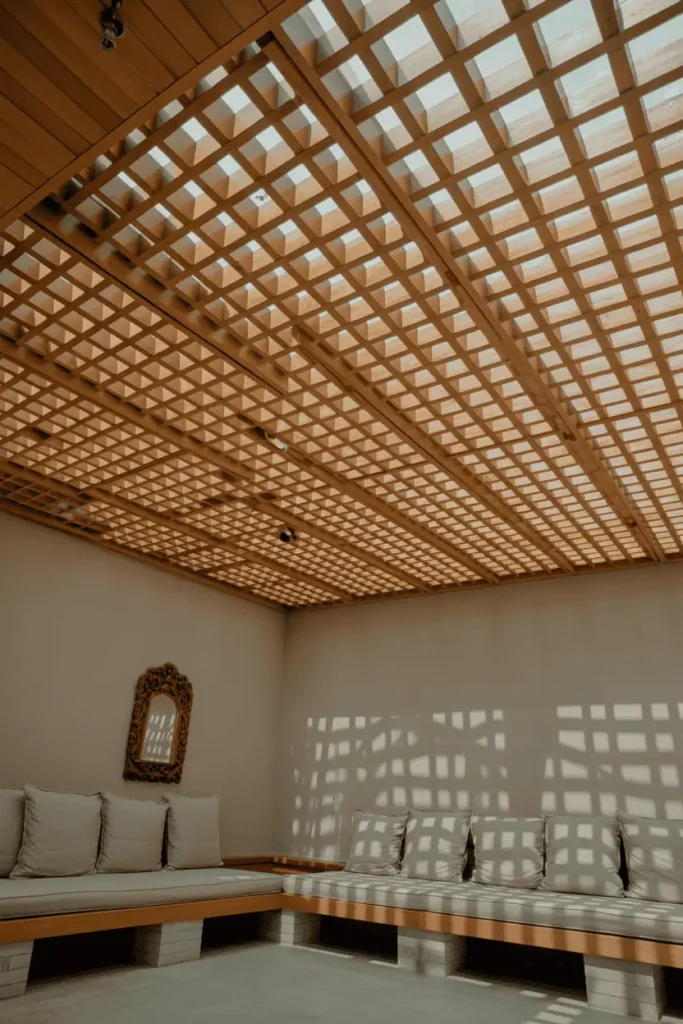
The ceiling is covered in geometric lattice panels — light-toned wood arranged in repeating patterns. Below, the seating is built into the floor: wide, cushioned platforms with low backrests. The walls are bare except for a single carved wood mirror. Lighting comes from recessed fixtures behind the lattice.
The lattice diffuses light beautifully and creates shadow patterns that shift throughout the day. The low seating emphasizes the ceiling’s height and detail. This works best in rooms with high ceilings where you want to draw the eye upward.
10. Dark Stained Wood with Jewel-Toned Textiles
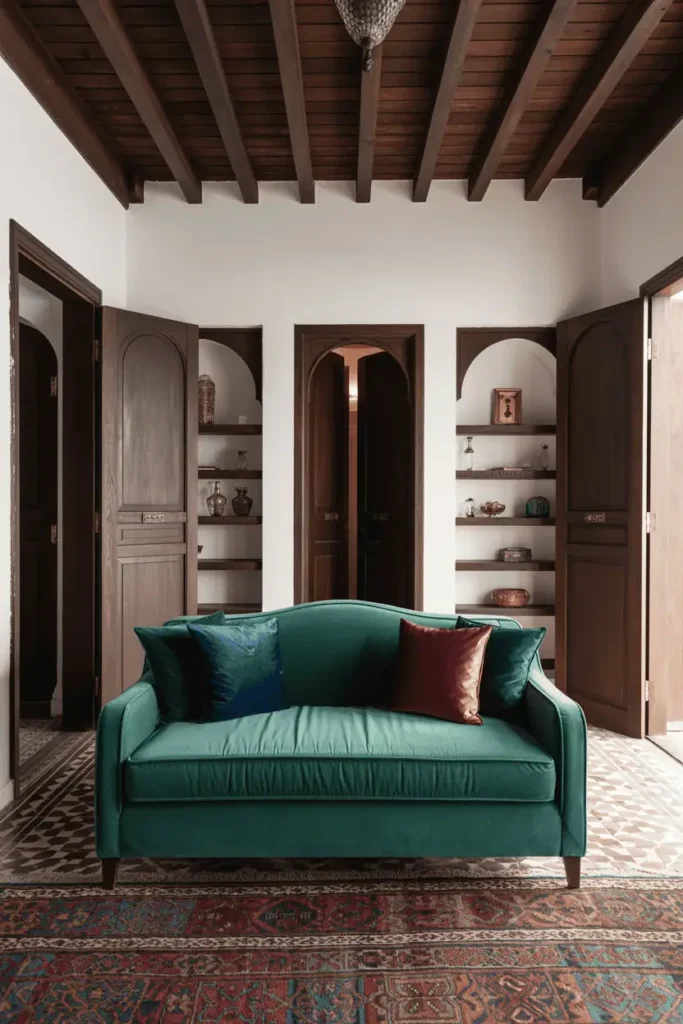
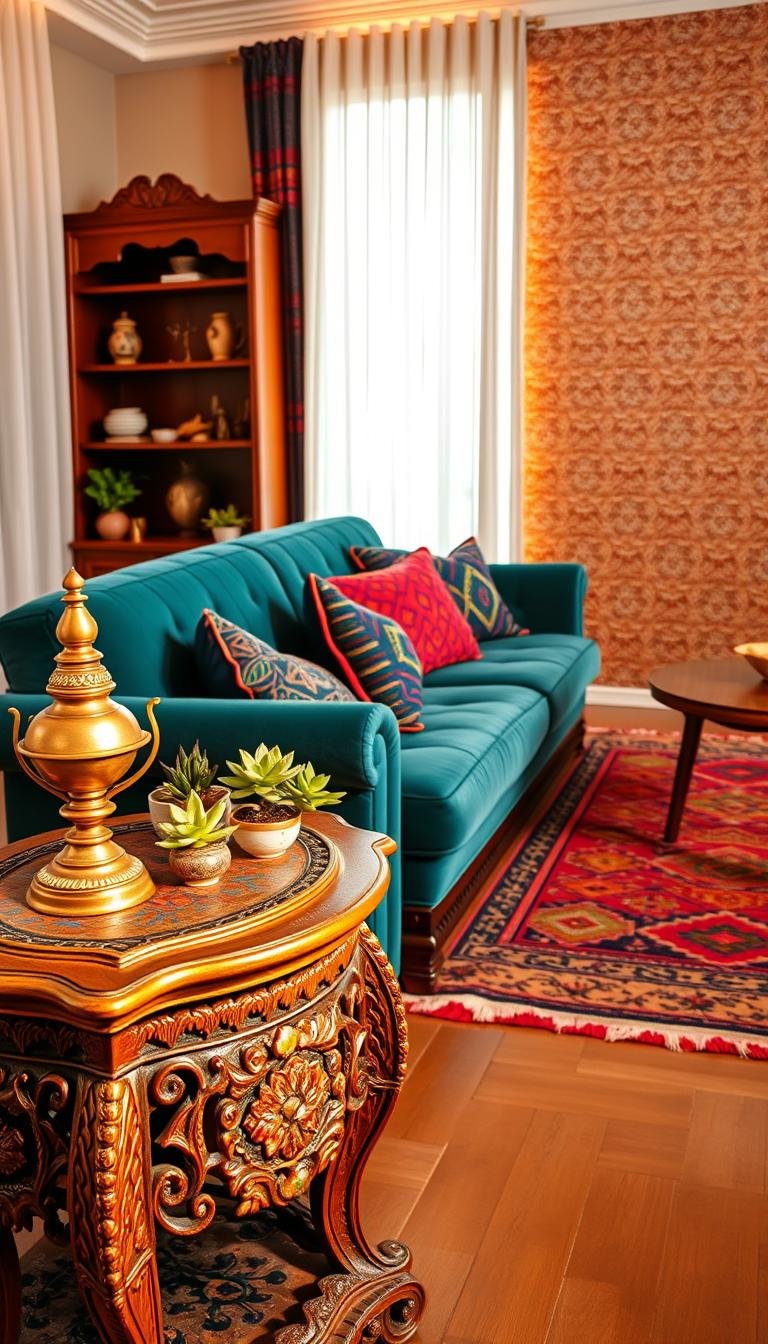
Here, all the wood — ceiling beams, doorframes, built-in shelving — is stained a deep espresso. The walls are warm white. The textiles pull in rich color: a velvet sofa in emerald, silk cushions in sapphire and ruby, a Persian-style rug with complex patterning.
The dark wood grounds the jewel tones and keeps them from feeling chaotic. It’s a bolder approach, suited to rooms with strong natural light and confident decorators. This tends to fall flat if the room is too small or poorly lit — the dark wood can make the space feel closed in.
11. Painted Moroccan Doors as Wall Art
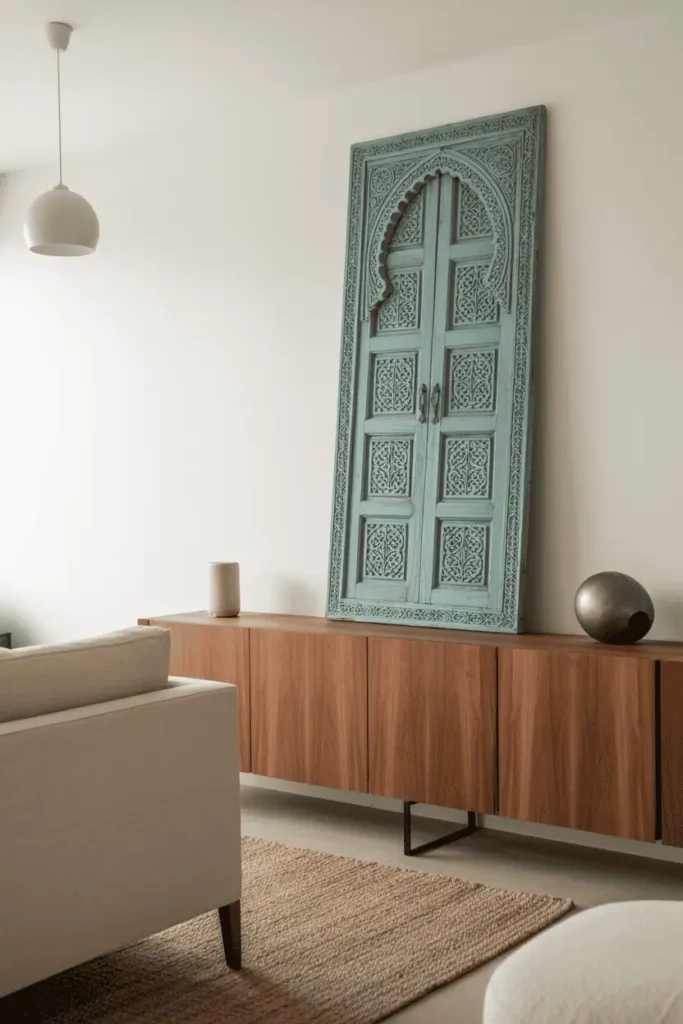
A single traditional Moroccan door — tall, intricately carved, painted in faded turquoise — mounted on the wall as sculptural art. The door leans or hangs above a low credenza in natural walnut. The rest of the room is minimal: a neutral sofa, a jute rug, simple lighting.
The door becomes the room’s anchor. It introduces color, craft, and history without requiring a full renovation. This approach works when you want Moroccan character but prefer a restrained overall aesthetic. It’s also practical for renters or temporary spaces.
The balance here is becoming clearer. The rooms that feel most successful aren’t trying to replicate a traditional Moroccan home exactly. They’re borrowing proportion, material, and restraint, then adapting.
12. Carved Wood Coffee Table as the Central Focus
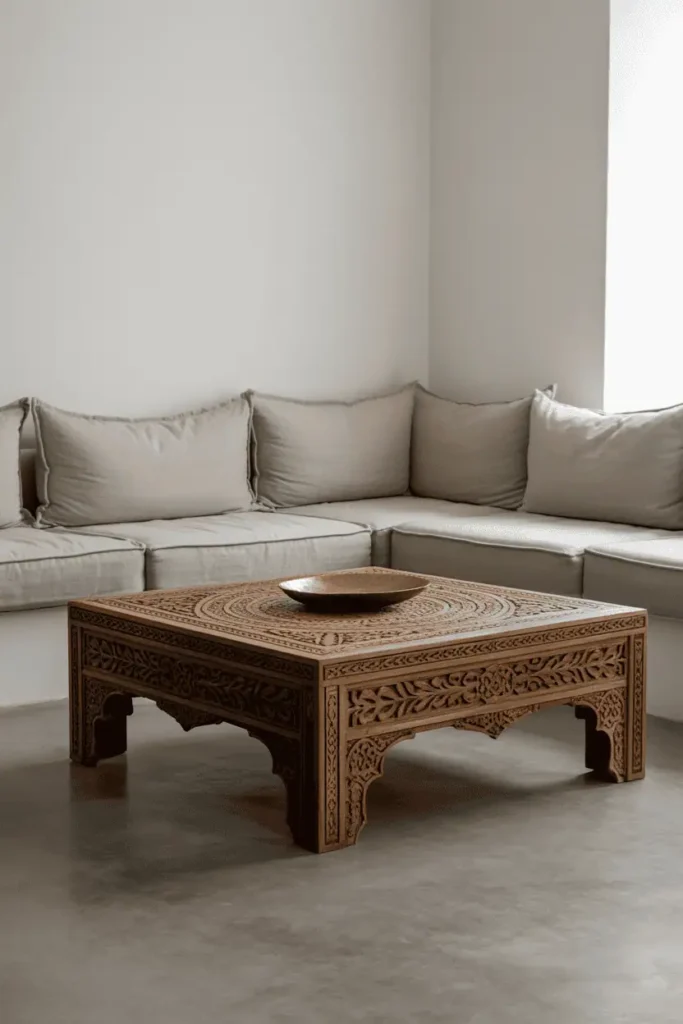
The room is kept deliberately simple so a single carved wood coffee table can hold attention. The table is large, low, and elaborately detailed — traditional geometric carving across the entire surface. It’s surrounded by a simple linen sectional and plain floor cushions. The walls are white, the floor is polished concrete.
When one piece has this much detail, everything else needs to recede. The table becomes both functional and sculptural. This works in modern homes where you want one traditional element to stand out rather than compete with other patterns and textures.
13. Exposed Brick with Cedar Trim and Iron Details
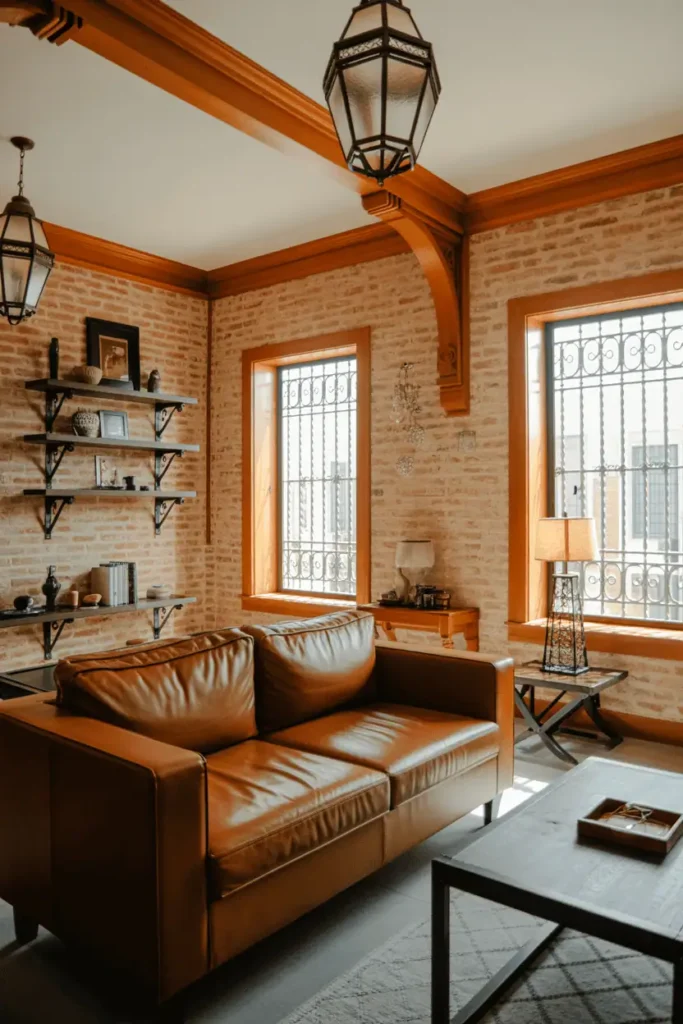
Not a typical Moroccan combination, but effective. The walls are exposed brick, and all the trim — doorframes, window frames, ceiling edges — is cedar stained warm honey. Iron brackets support floating shelves, and wrought iron lanterns hang overhead. Seating is upholstered in tobacco leather.
This feels like an adapted riyadh — traditional structure meeting industrial materials. The cedar softens the brick, the iron adds edge. It’s suited to converted spaces or homes with existing brick you don’t want to cover.
14. Light Oak Paneling with Brass Inlay
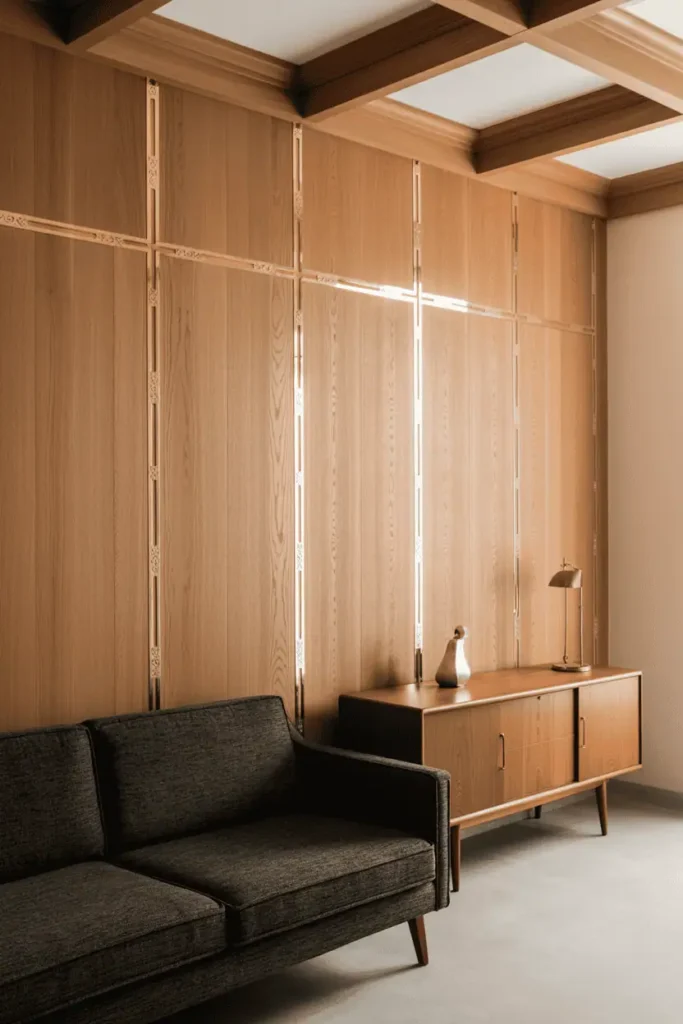
A more refined approach. The walls are covered in light oak paneling with thin brass inlay forming subtle geometric patterns. The ceiling is coffered in matching oak. Furniture is mid-century modern: a low-profile sofa in charcoal wool, a teak sideboard, minimal brass lighting.
This blends Moroccan attention to detail with Scandinavian restraint. The brass adds warmth without being heavy. The light oak keeps the room bright. It works in formal living rooms or spaces where you want polish without ornamentation.
15. Rough-Hewn Beams with Soft, Organic Textiles
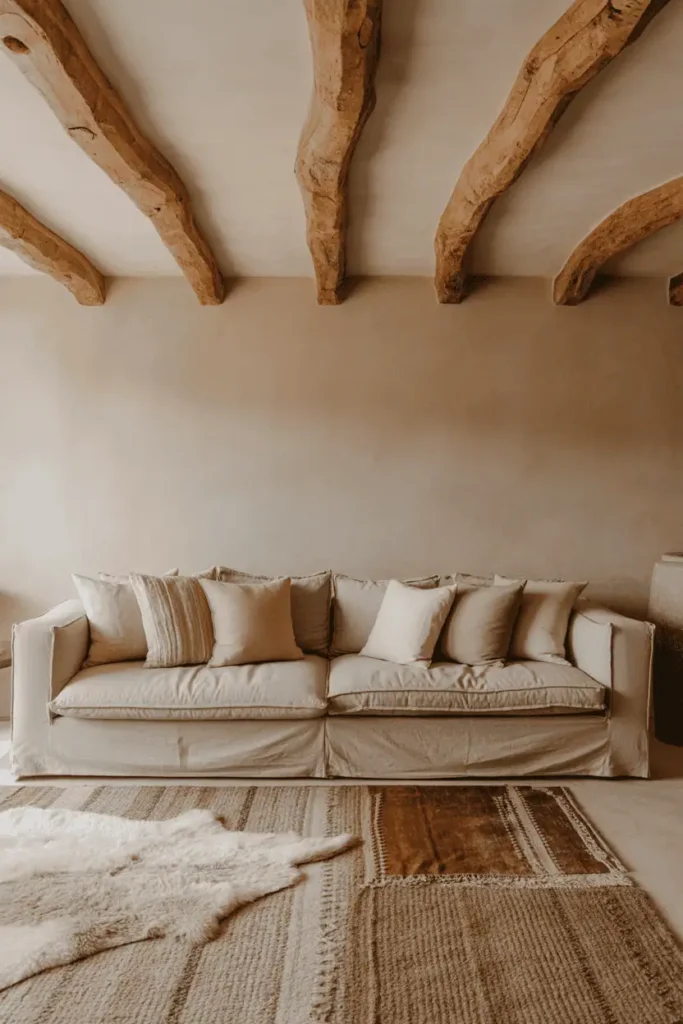
The ceiling has thick, rough-hewn beams — irregular and unfinished. Below, everything is soft: a linen sectional in natural, sheepskin throws, undyed wool rugs, cotton cushions in cream and oatmeal. The walls are smooth plaster in warm white.
The contrast between rough wood and soft textiles creates visual interest without pattern. It’s a tactile room — inviting and comfortable. Best suited to country homes or spaces where a rustic-modern blend feels natural.
The shift now is toward restraint. These next rooms prioritize one or two Moroccan elements rather than layering everything at once.
16. White Plaster Walls with Single Carved Door Frame
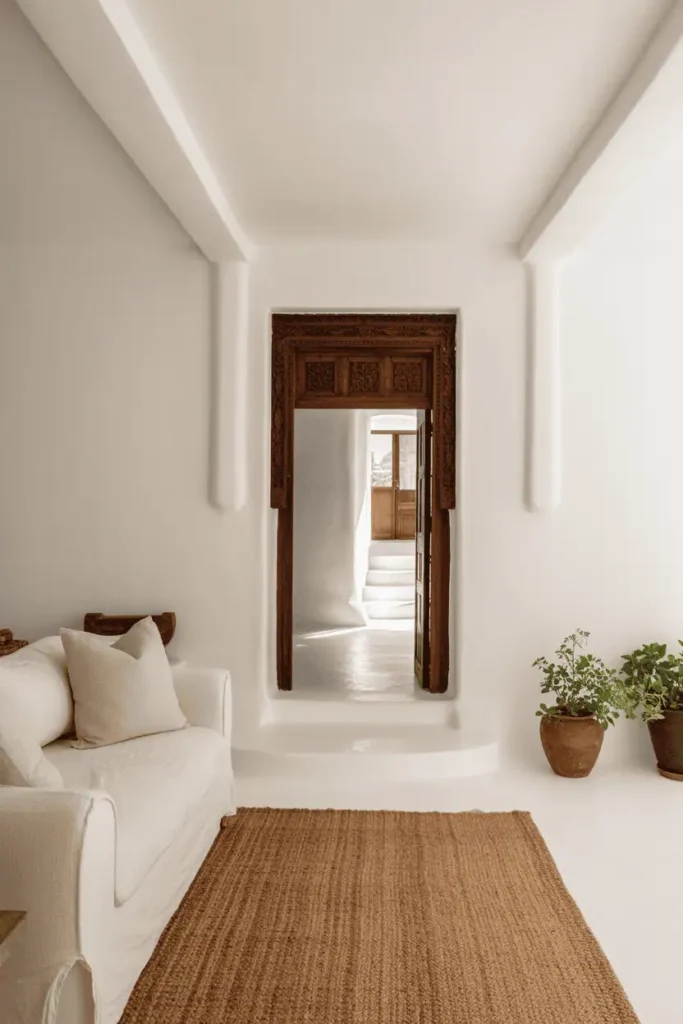
The room is almost entirely white: plaster walls, pale linen sofa, natural jute rug. The only wood detail is a single carved door frame leading to the hallway — dark walnut with traditional geometric carving. A few terracotta pots with greenery sit near the window.
This is minimalism with intention. The carved frame provides all the cultural reference needed. The rest of the room stays quiet. It works when you want a clean, modern space but still want a nod to Moroccan craft.
17. Stained Glass Windows with Dark Wood Frames
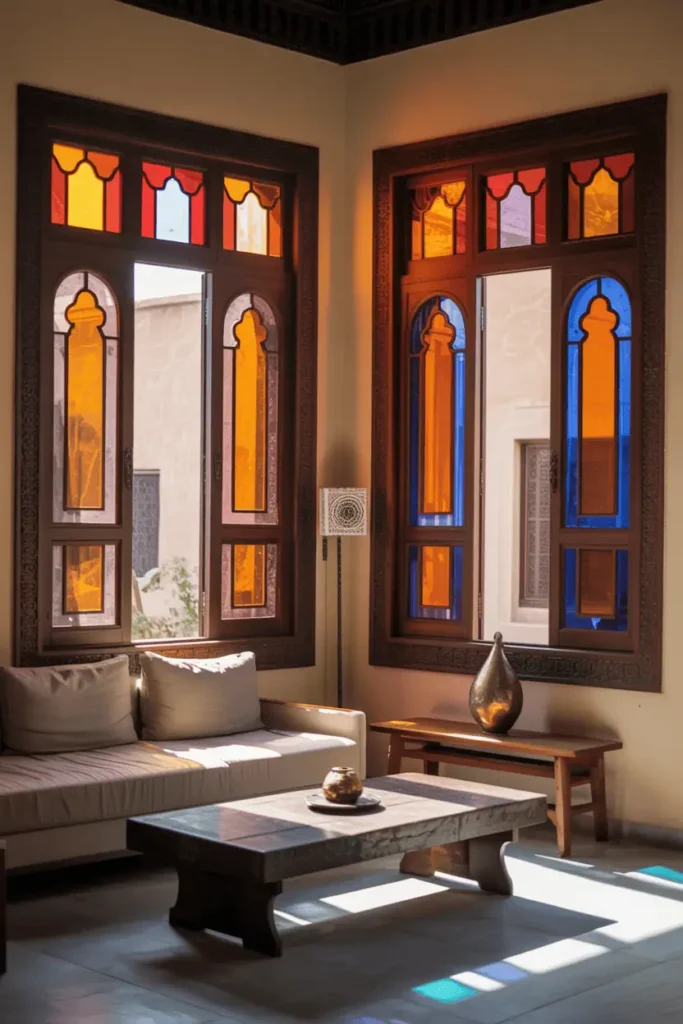
Large windows framed in dark carved wood, fitted with traditional Moroccan stained glass — amber, red, and cobalt in geometric patterns. The light filtering through is colored and shifting. Furniture is simple: a neutral sofa, a low wood coffee table, minimal accessories.
The windows do all the work. They introduce color, pattern, and cultural reference without requiring textiles or decor. This approach works in bright rooms where you can afford to filter some light. It’s also beautiful in the evening when interior lighting makes the glass glow outward.
18. Walnut Built-In Shelving with Arched Openings
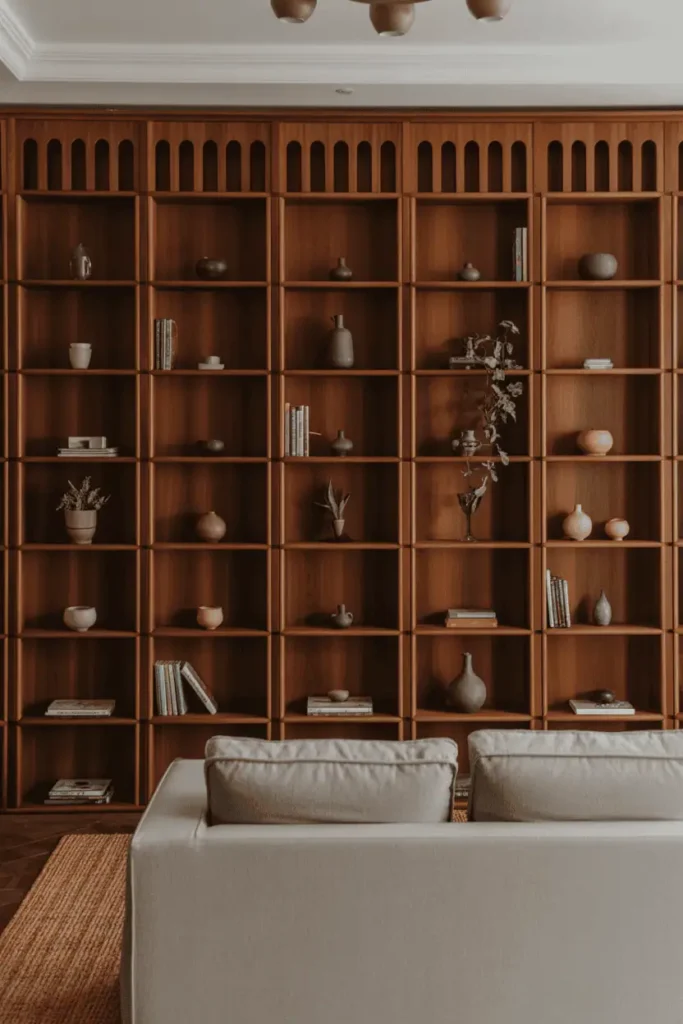
Floor-to-ceiling built-in shelving in walnut, with each section framed by a small arched opening. The shelves hold books, ceramics, and a few plants. The rest of the room is restrained: a gray linen sofa, a wool rug, simple pendant lighting.
The shelving provides both function and architectural interest. The arched openings reference traditional Moroccan doorways without being literal. This works in homes where storage is needed but you don’t want it to disappear or feel purely utilitarian.
19. Bleached Wood Ceiling with Woven Pendant Lights
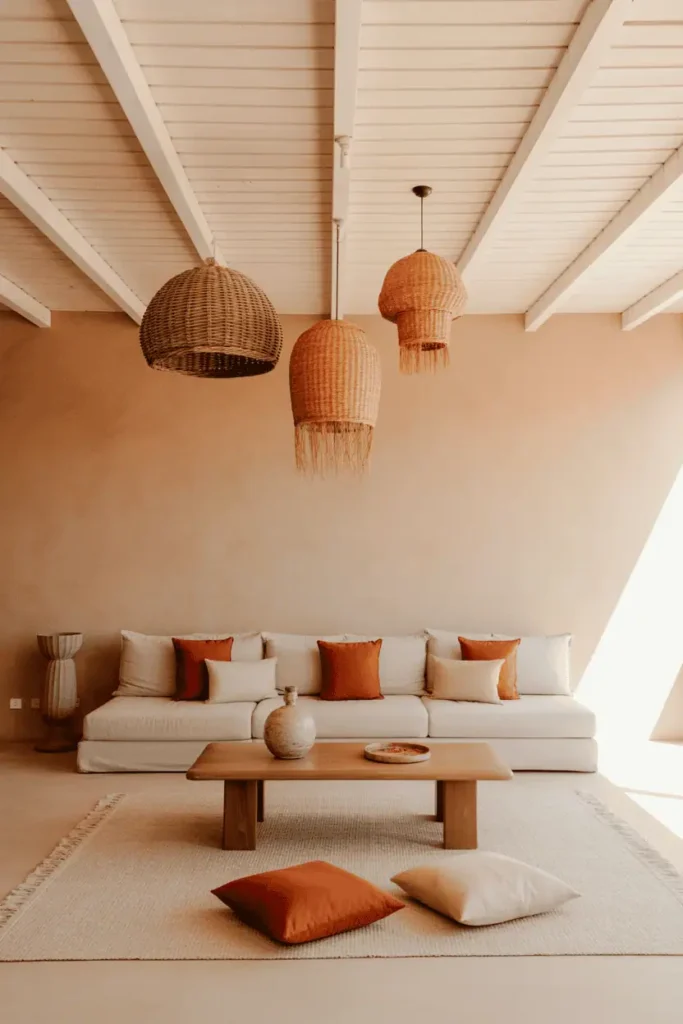
The ceiling is bleached wood — pale, almost white — with visible grain. Pendant lights made from woven palm or rattan hang at varied heights. The walls are soft terracotta. Furniture is minimal: a low sectional in natural linen, a simple wood coffee table, floor cushions in rust and cream.
This feels airy and coastal. The bleached wood keeps the ceiling from feeling heavy. The woven lights add texture without color. It’s suited to beach homes or spaces where you want warmth without visual weight.
20. Carved Wood Panels Mounted as Headboard Alternative
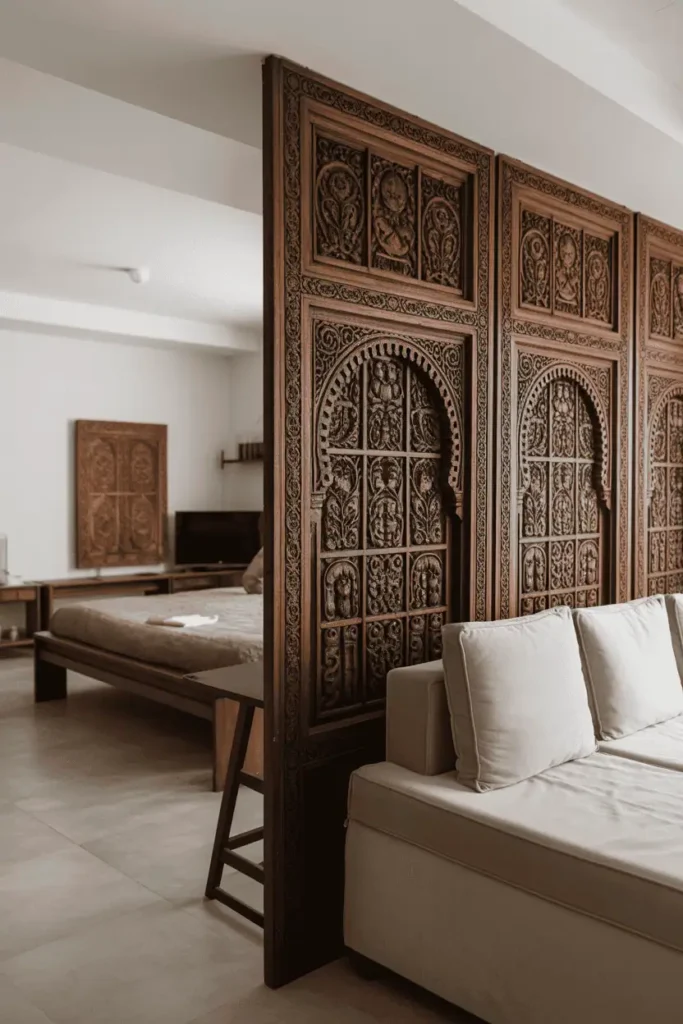
In an open-concept space where the living area flows into a sleeping zone, carved wood panels are mounted on the wall behind the sleeping area — functioning as a headboard but also visually separating the two spaces. The panels are antique or antique-style, with deep relief carving. The living area has simple seating and neutral tones.
This approach adds architectural detail while solving a functional problem. The panels create distinction without walls. It works in studios or loft-style homes where you need soft separation between zones.
21. Contemporary Sectional with Vintage Moroccan Rug and Cedar Beams
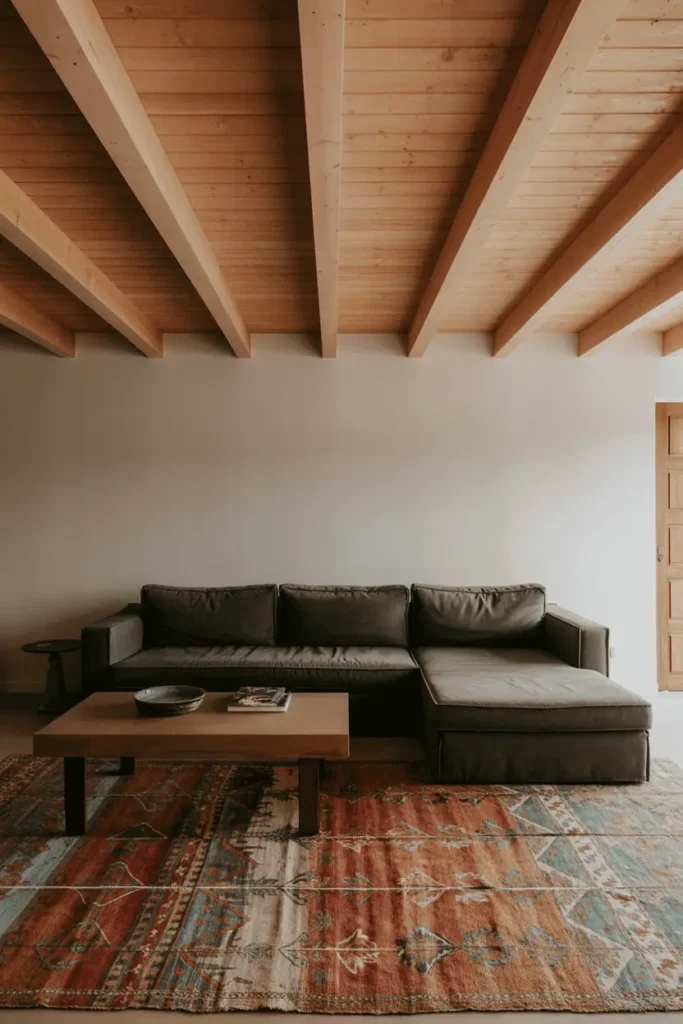
The room blends timelines. The ceiling has exposed cedar beams, original or salvaged. A large vintage Moroccan rug — faded reds and blues, traditional patterns — covers the floor. The sofa is contemporary: clean lines, charcoal upholstery, low profile. A simple wood coffee table bridges old and new.
This is where Moroccan elements support modern living rather than define it. The beams and rug provide character, the sofa provides comfort. It’s practical, livable, and doesn’t require committing fully to one aesthetic. This tends to work in most homes because it’s flexible and personal.
Styling Tips to Pull the Look Together
- Start with the wood — ceiling, trim, or furniture — and let it guide your palette
- Keep textiles simple if the wood is ornate; layer pattern if the wood is plain
- Repeat one wood tone throughout the room for cohesion
- Balance warm wood with cool-toned walls or vice versa
- Let light do some of the work — carved details look best with shifting natural light
- Don’t over-accessorize — these rooms gain strength from restraint
- Mix vintage and new rather than making everything match
Final Thoughts
These rooms don’t require starting from scratch. Most of them work by introducing one or two Moroccan elements — a carved door, a zellige wall, exposed beams — and building around them gradually. The wood becomes the constant. Everything else adapts.
You don’t need to fill the room immediately. Start with structure or one piece of carved furniture, live with it, see what it needs. These spaces evolved slowly in their original context, and they translate better when you let them build the same way.
Save the ideas that feel most aligned with your space. Come back to them when you’re ready to add, not all at once. That’s how these rooms stay grounded rather than staged.

To bring you cozy inspiration more efficiently, we sometimes use AI to assist in content creation — but every word and idea is carefully shaped by our team. See our AI Disclosure for more info.