This post may contain affiliate links. If you click and buy, we may earn a small commission at no extra cost to you. Learn more.
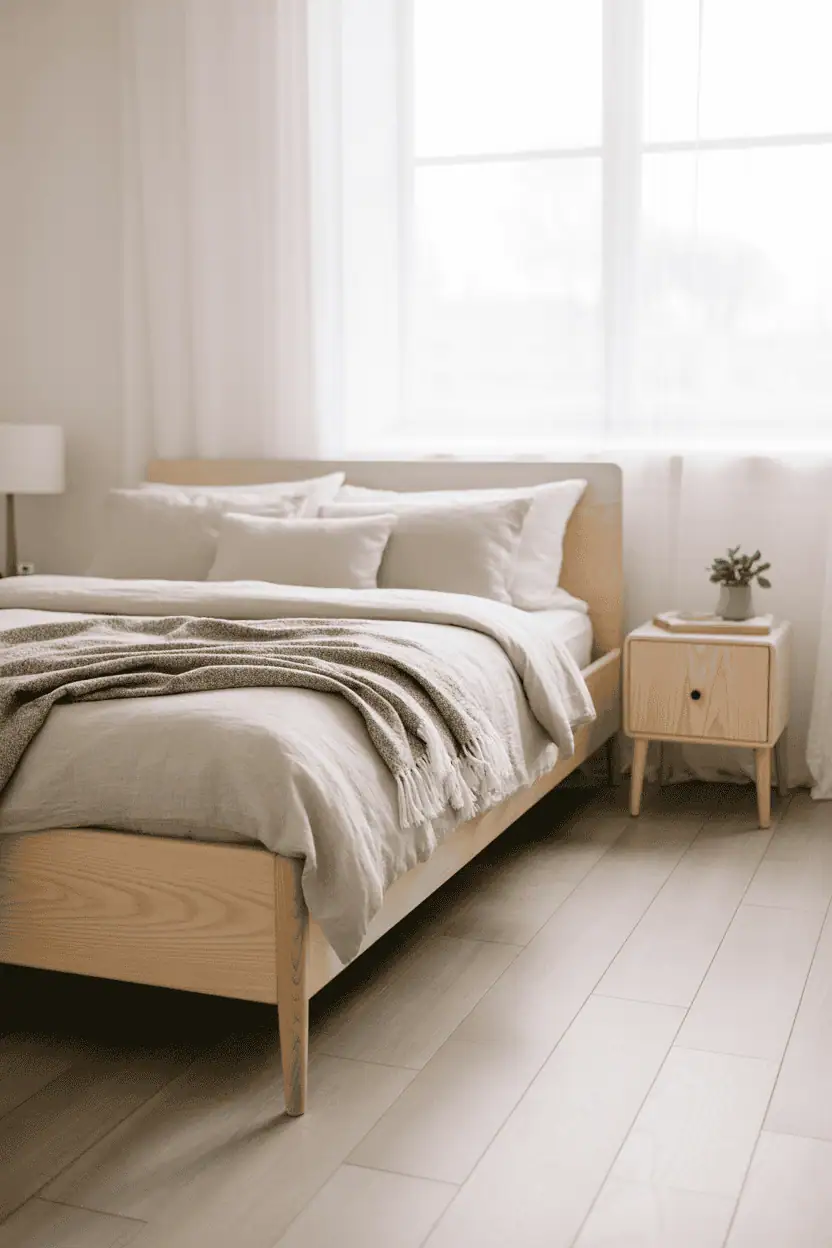
Scandinavian bedroom design has always understood something essential: that rooms need to breathe. Not in the aspirational, unlivable way some minimalism insists upon, but in a way that acknowledges real life while maintaining visual calm. Wood anchors these spaces—pale ash, birch, light oak—but it’s never heavy. The grain shows, the finish stays natural, and the overall effect is one of quiet warmth rather than rustic weight.
What makes these bedrooms compelling is their restraint without coldness. White or off-white walls meet light wood furniture. Textiles add softness through linen, wool, and cotton in muted tones. Lighting is layered and considered, never relying on a single overhead fixture. The palette stays narrow—grays, whites, soft beiges, occasional charcoal—but within that constraint, there’s room for texture, variation, and personality.
These aren’t rooms that announce themselves. They settle in gradually. The bed is low and simple. Storage is built-in or minimal. Decorative objects are few but meaningful. The goal is always functionality that doesn’t sacrifice atmosphere, and atmosphere that doesn’t ignore how people actually live.
Scandinavian wood bedrooms work in small apartments and larger homes alike. They adapt to different climates and personal needs. The core principles remain consistent: natural materials, abundant light, edited surfaces, and wood that feels warm rather than formal.
Contents
- 1 What you’ll find here:
- 2 1. All-White Walls with Pale Ash Bed and Gray Linen
- 3 2. Birch Platform Bed with Cream Wool Textiles and Minimal Shelving
- 4 3. Japandi Fusion: Low Japanese-Style Bed with Scandinavian Wood Tones
- 5 4. Whitewashed Pine Furniture with Soft Blue-Gray Accents
- 6 5. Modern Scandinavian Minimalist: Built-In Storage and Floating Bed
- 7 6. Cozy Scandinavian Bedroom with Multiple Wood Tones and Textured Textiles
- 8 7. Nordic Bedroom with Exposed Rafters and Natural Pine
- 9 8. Scandinavian Bedroom with Black Accents for Contrast
- 10 9. Warm Scandinavian Bedroom with Ochre and Rust Textiles
- 11 10. Minimalist Nordic Bedroom with Single Statement Light Fixture
- 12 11. Scandinavian Interior Design Bedroom with Gallery Wall of Black and White Prints
- 13 12. Nordic Bedroom Scandinavian Style with Sloped Ceiling and Dormer Window
- 14 13. Scandinavian Bedroom Minimalist Approach with Hidden Storage
- 15 14. Warm Bedroom with Walnut Accents Against Light Wood Base
- 16 15. Scandi Bedroom Ideas: Platform Bed with Trailing Plants
- 17 16. Modern Scandinavian Bedroom with Concrete and Wood Contrast
- 18 17. Cozy Scandinavian Bedroom with Reading Nook and Sheepskin
- 19 Styling Tips to Pull the Look Together
- 20 Conclusion
What you’ll find here:
- Distinct Scandinavian bedroom concepts rooted in Nordic design principles
- Inspiration you can adapt gradually without overhauling your entire space
- Complete looks that balance wood, textiles, and light
- Ideas that suit minimalists and those who want more warmth
1. All-White Walls with Pale Ash Bed and Gray Linen
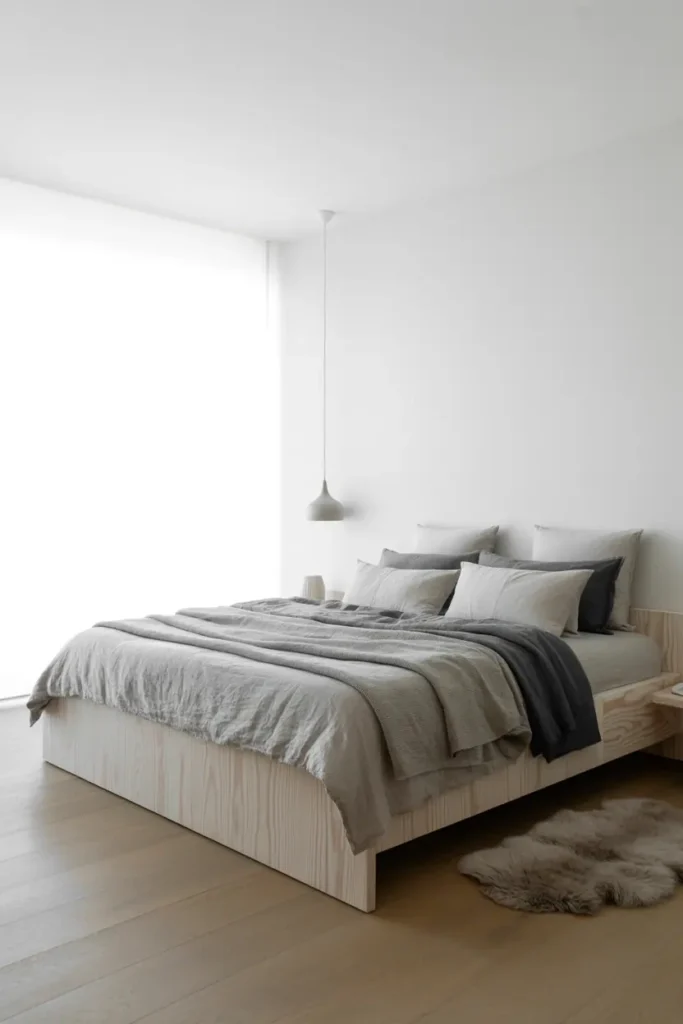
The most restrained approach: walls painted pure white, a low platform bed in pale ash with visible grain, and bedding in various shades of gray linen—light gray duvet, medium gray pillows, charcoal throw folded at the foot. The floor is light blonde oak or whitewashed pine. A single pendant light in matte white or natural paper hangs beside the bed.
This works when you let texture do the work that color usually does. The linen has weight and softness. The wood grain provides subtle pattern. A small sheepskin rug beside the bed adds warmth underfoot without introducing new colors. This concept suits someone who wants maximum light reflection and visual calm, and it feels strongest in rooms with good natural light that changes throughout the day.
Design note: Without sufficient natural light, this can read as cold rather than calm. Add warm-toned bulbs and layered lighting to compensate.
2. Birch Platform Bed with Cream Wool Textiles and Minimal Shelving

A bedroom built on birch—light, almost white wood with delicate grain patterns. The bed is a simple platform, no headboard. Textiles are cream wool: a chunky knit throw, a wool blanket, simple cotton-linen blend sheets in off-white. One floating shelf in matching birch holds three objects: a ceramic bowl, a small plant, a single book.
The mood here is warmer than the all-white concept but still restrained. The cream tones soften the white walls without adding pattern. This approach works for someone who finds pure white too stark but doesn’t want to introduce color. The birch provides just enough warmth to prevent the room from feeling clinical.
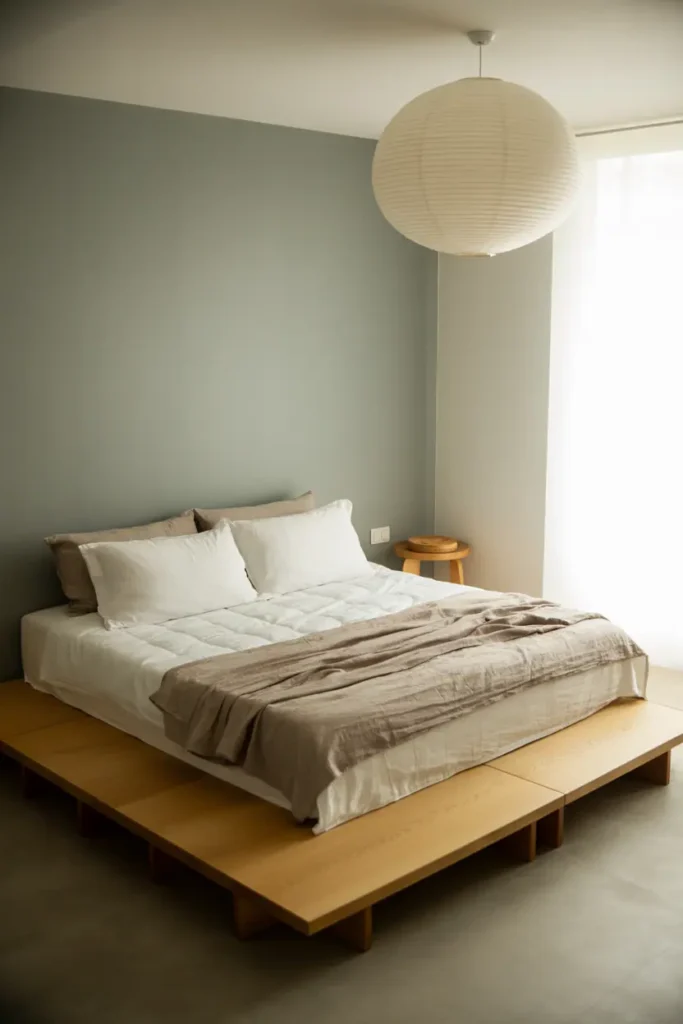
This bedroom borrows from both traditions: a very low platform bed in light oak, inspired by Japanese tatami sleeping, paired with Scandinavian textiles and lighting. The walls are white, but one accent wall is finished in light gray. Bedding is minimal—white cotton with a single linen blanket in soft taupe. A paper lantern pendant provides soft overhead light.
The fusion works because both design philosophies prioritize restraint, natural materials, and functionality. A small wooden stool serves as a nightstand. Floor space remains mostly clear. This concept suits someone drawn to minimalism but who wants the warmth of Scandinavian textiles and wood rather than the harder edge of pure Japanese design.
The key is keeping the palette consistent—warm whites, light woods, soft grays—so the fusion doesn’t read as confused.
4. Whitewashed Pine Furniture with Soft Blue-Gray Accents
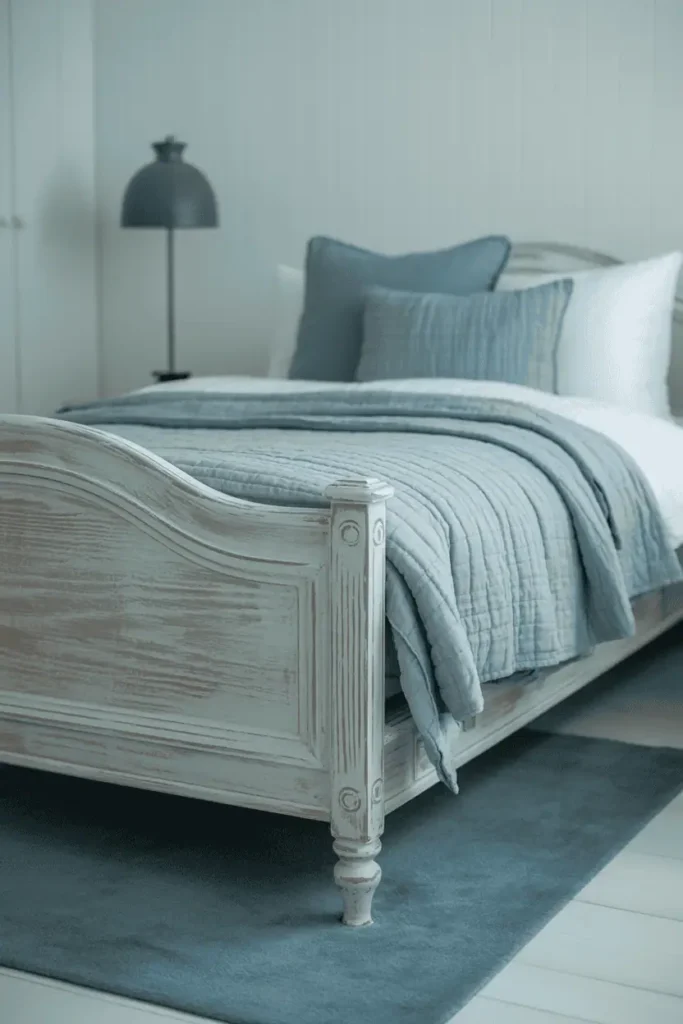
A bedroom where all wood furniture—bed frame, nightstand, small dresser—is whitewashed pine, allowing the grain to show through while keeping the tone very light. Walls are white, but textiles introduce soft blue-gray: pillows, a lightweight quilt, maybe a wool rug in slate blue. The effect is cooler than cream-based palettes but still warm enough to feel inviting.
This works in warmer climates or south-facing rooms where you want to visually cool the space without losing Scandinavian warmth. The blue-gray needs to stay muted—nothing saturated or bold. Think fog, not navy. A single piece of black iron or matte black metal (lamp, mirror frame) grounds the lighter tones and prevents the room from floating away.
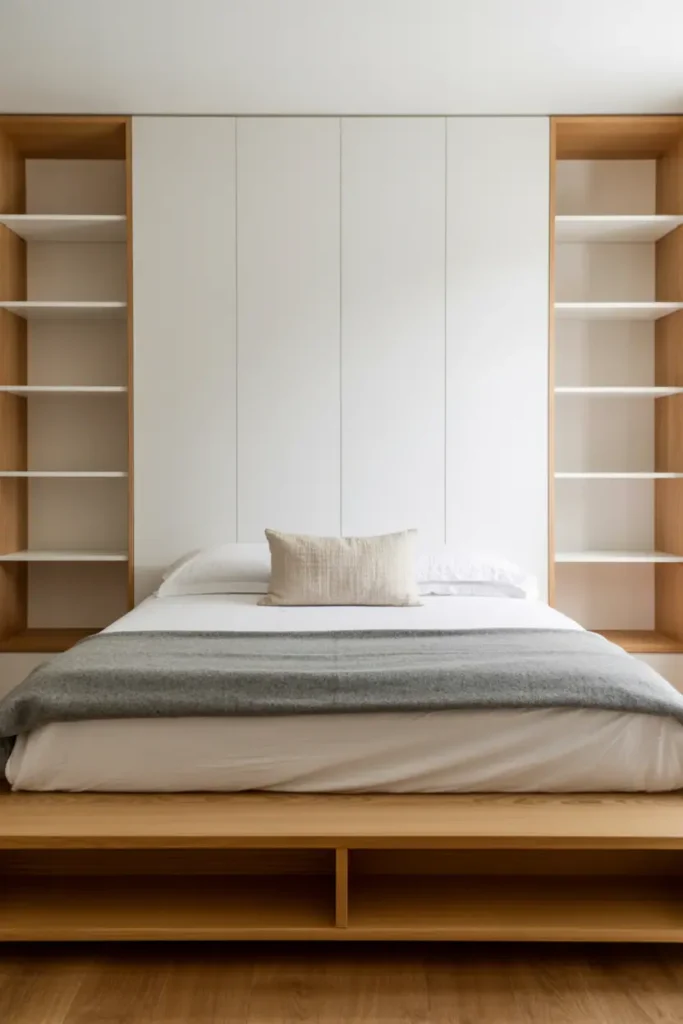
This bedroom prioritizes function through built-in solutions. The bed appears to float on a low platform with hidden storage underneath. Built-in shelving flanks the bed, painted the same white as the walls so they recede visually. All wood elements—bed frame, shelf interiors, floor—are light oak. Textiles stay neutral: white sheets, gray wool blanket, one textured pillow in natural linen.
The effect is extremely clean without feeling sterile. Everything has a place. No furniture sits on the floor except the bed platform. This concept suits small bedrooms or anyone who prioritizes storage and clean lines. It tends to fall flat if you then add too many decorative objects; the architecture itself is the design.
At this point, the pattern should be emerging: Scandinavian wood bedrooms rely on a narrow palette, natural materials, and restraint. The variation comes from which woods, which neutrals, and how much warmth versus coolness you introduce.
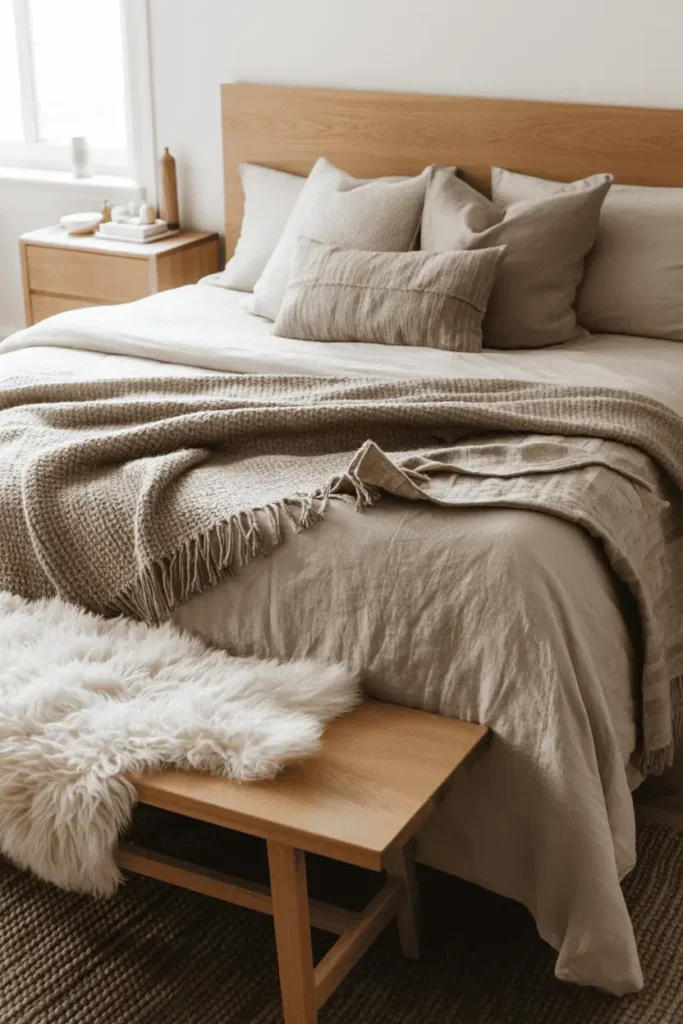
A warmer interpretation: the bed is light oak, the nightstand is birch, and a vintage wooden bench at the foot of the bed is slightly darker ash. Instead of everything matching, the woods relate through their light tones but show individual character. Textiles layer heavily: linen sheets, wool blanket, knit throw, sheepskin on the bench, multiple pillows in cream, taupe, and soft gray.
This feels lived-in and cozy while maintaining Scandinavian principles. The multiple wood tones work because they’re all light and none tries to dominate. The layered textiles prevent the room from feeling too minimal. This approach suits someone who wants Scandinavian simplicity but more hygge—the Danish concept of coziness—than stark minimalism allows.
Style note: The textiles should vary in texture, not color. Let material differences create visual interest.
7. Nordic Bedroom with Exposed Rafters and Natural Pine
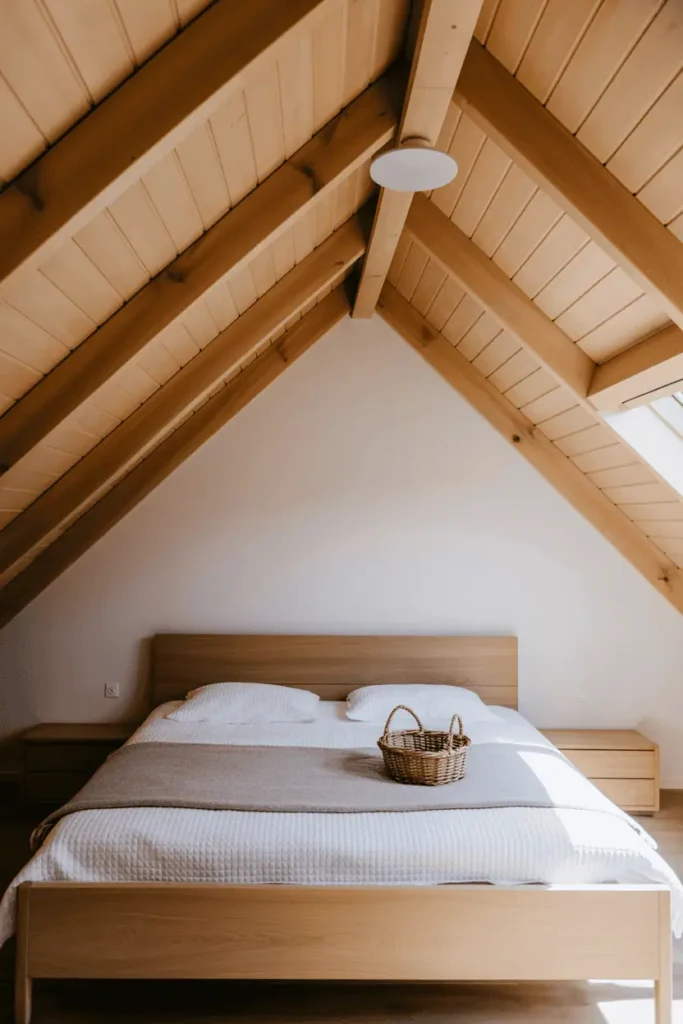
A bedroom where architectural elements do the work: exposed ceiling rafters in natural pine, white walls, and very simple furniture. The bed is a basic wood frame in light ash. Bedding is white with one gray blanket. A single woven basket holds extra blankets. The rafters add warmth and visual interest overhead, allowing the rest of the room to stay extremely simple.
This concept only works in spaces with existing or added architectural details. You can’t fake exposed beams successfully. But in the right setting—a loft, an A-frame, a renovated attic—the beams provide all the wood warmth the room needs. Everything else can recede.
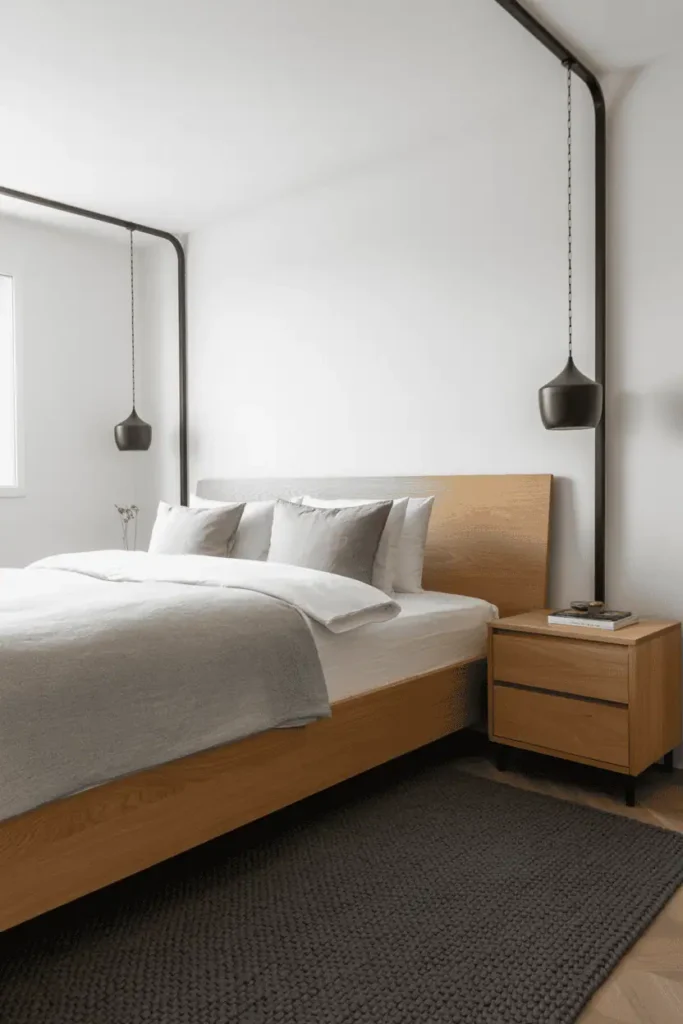
A bedroom that introduces black strategically: light oak bed and nightstand, white walls and bedding, but black metal pendant lights, a black iron curtain rod, and maybe a charcoal gray wool rug. The black provides contrast that makes the light wood and white surfaces feel more intentional rather than simply blank.
This works when the black stays minimal—just enough to anchor the eye. Too much, and it disrupts the light, airy quality Scandinavian design depends on. The black should appear in linear elements (light fixtures, frames, curtain hardware) rather than in large masses. One black accent chair could work, but a black dresser would likely overwhelm.

A bedroom that stays Scandinavian in form but introduces warmth through textiles in ochre, rust, and burnt orange. The bed is light birch, walls are white, floor is pale oak—all the structural elements stay light. But the bedding includes a rust-colored linen duvet, ochre pillows, maybe a small woven wall hanging in warm tones.
This approach works for someone drawn to Scandinavian simplicity who doesn’t want a completely neutral palette. The warm tones keep the room from feeling cold, especially in spaces with limited natural light. The key is keeping the warm colors muted and earthy—nothing bright or saturated.
10. Minimalist Nordic Bedroom with Single Statement Light Fixture
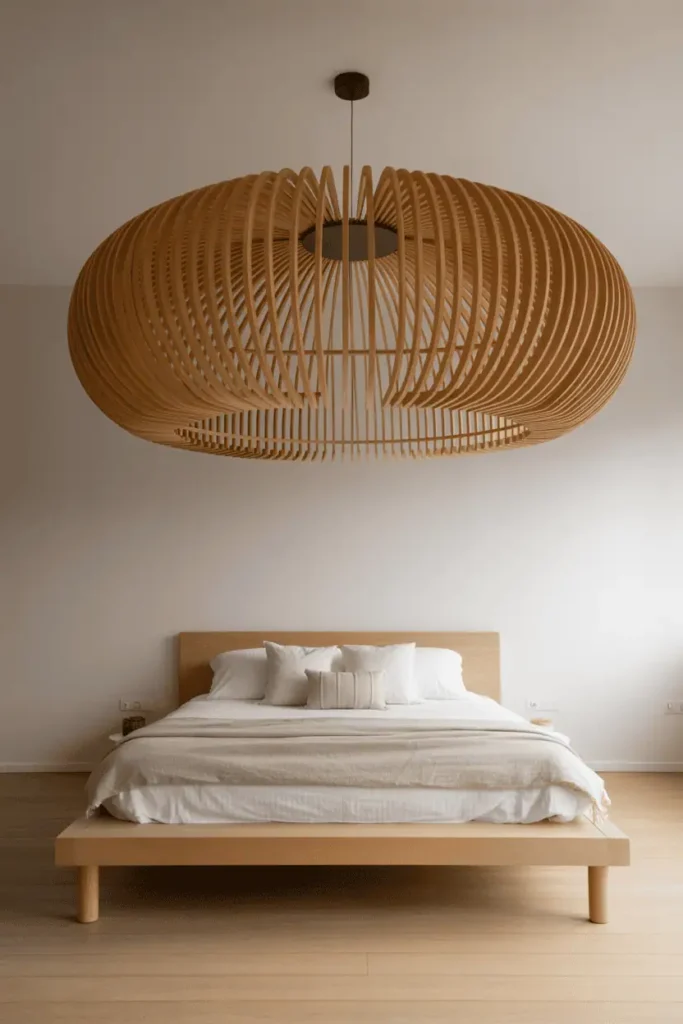
A bedroom where one oversized pendant light—something in natural paper, woven rattan, or sculptural white ceramic—becomes the focal point. The bed is a simple platform in light ash. Walls and textiles stay white and cream. The floor is bare pale oak. The light fixture provides the room’s only visual drama.
This concept proves that Scandinavian design doesn’t require eliminating all personality. One interesting object can carry the room if everything else supports it quietly. The light fixture should be proportional—large enough to make a statement but not so big it overwhelms the space. This suits someone who wants mostly minimalism with one sculptural element.
The rooms are beginning to show more personality while staying within Scandinavian principles—the balance is always between restraint and warmth, simplicity and livability.
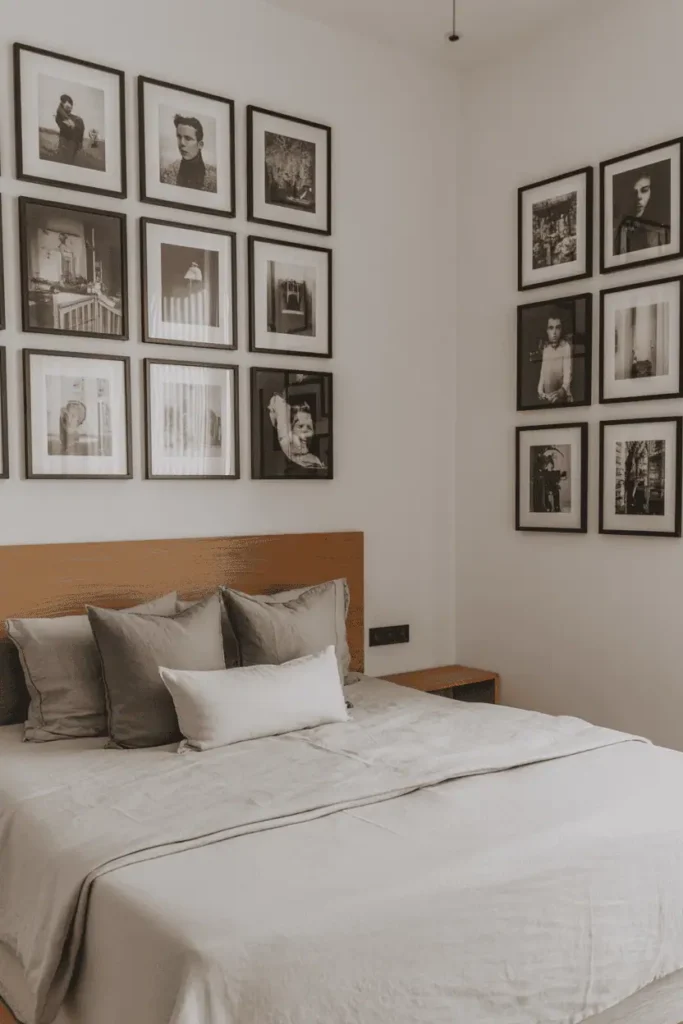
A bedroom where one wall holds a carefully curated gallery of black and white photographs or prints in matching simple frames. The bed is light oak with white linen bedding. The opposite walls stay bare. A simple wooden bench at the foot of the bed completes the furniture.
The gallery wall adds personality and visual interest without introducing color or pattern that would disrupt the calm palette. The frames should be identical—thin wood or matte black—to maintain cohesion. This works for someone with meaningful images or art they want to display prominently. The rest of the room’s simplicity gives the gallery wall space to be seen.
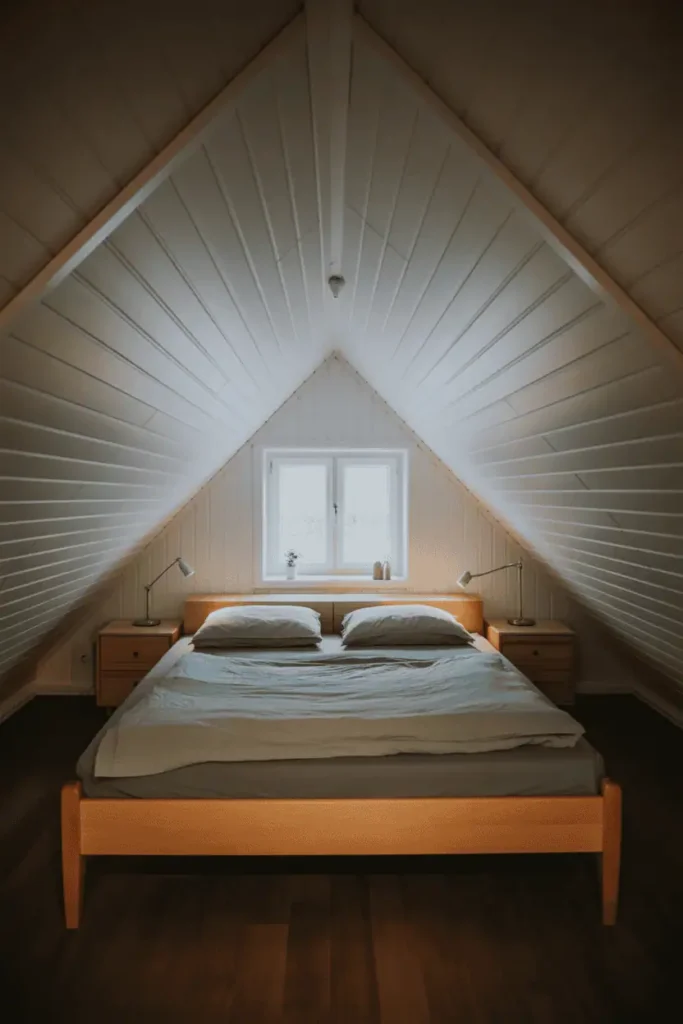
A bedroom designed for an attic or top floor space with a sloped ceiling and small dormer window. The ceiling is painted white, which helps with light reflection. The bed sits low, positioned to avoid the lowest part of the ceiling. All furniture is light pine or birch. A single reading light clamps to the bed frame.
Sloped ceilings can feel oppressive, but Scandinavian design principles—light colors, minimal furniture, natural wood—actually work better in these spaces than in standard rectangular rooms. The constraint forces simplicity. This concept suits anyone working with architectural limitations who wants to make them feel intentional rather than apologizing for them.
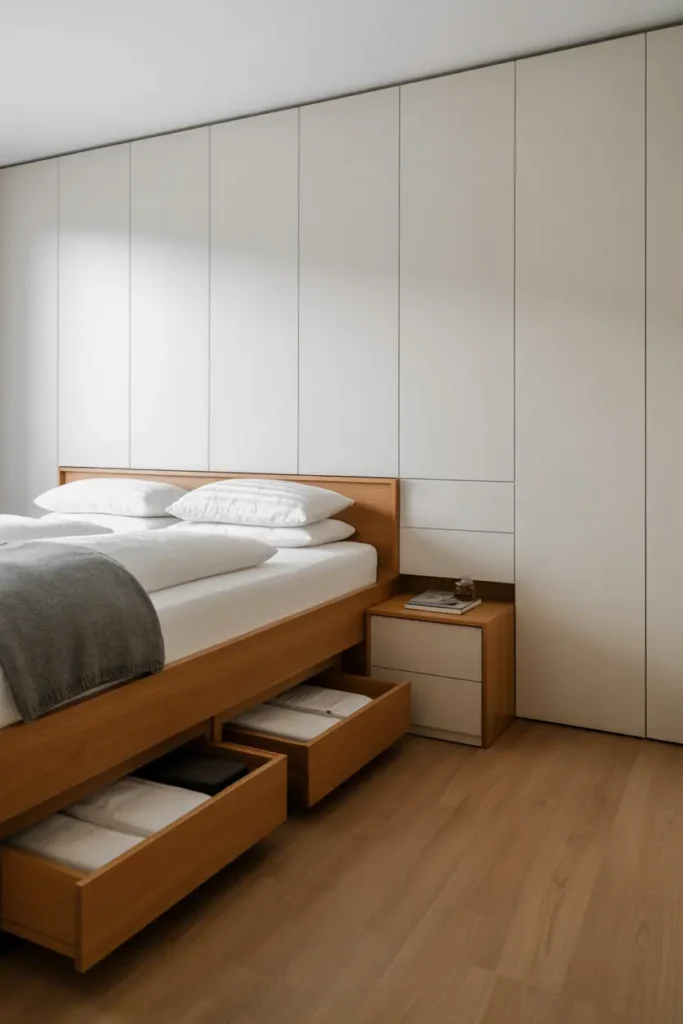
Every piece of furniture in this bedroom serves storage: the bed has drawers underneath, the nightstand has a closed cabinet, a floor-to-ceiling wardrobe is built into one wall and painted white to disappear. Visible surfaces stay clear. The wood elements—bed frame, floor—are light oak. Textiles are white and gray.
This is Scandinavian minimalism at its most functional. It works for small spaces or anyone who dislikes visual clutter. The trade-off is that the room can feel slightly hotel-like if you don’t add enough textile warmth. A few throws, several pillows, and maybe a plant prevent it from reading as too impersonal.
Design note: The success of this concept depends on discipline—if storage exists, you must use it and keep surfaces clear, or the design intent collapses.
14. Warm Bedroom with Walnut Accents Against Light Wood Base
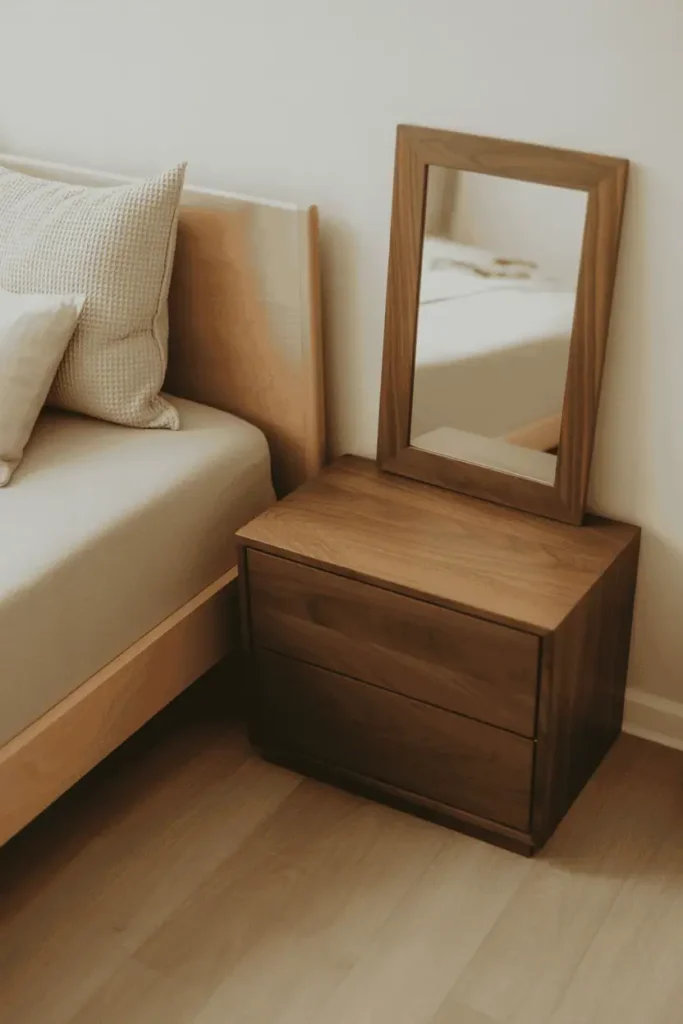
A bedroom that stays mostly light—birch bed, white walls, pale oak floor—but introduces darker walnut in small doses: a nightstand, a mirror frame, or a wooden tray on the dresser. The walnut provides just enough contrast to prevent the room from feeling washed out while maintaining overall lightness.
This works when the walnut stays minimal—maybe 10-15% of visible wood surfaces. Too much, and the room loses its Scandinavian lightness. The walnut should feel like punctuation, not competition. Textiles stay in the cream-to-gray range. This approach suits someone who wants Scandinavian simplicity but finds all-light-wood rooms too uniform.
15. Scandi Bedroom Ideas: Platform Bed with Trailing Plants

A bedroom where greenery adds life without adding clutter. The bed is a low platform in light ash. White walls. Simple bedding in cream and white. But several trailing plants—pothos or string of pearls—hang at varying heights from simple hooks or sit on a high shelf, their vines cascading down.
The plants introduce movement and organic shapes without requiring floor space or adding color beyond green (which reads as neutral in this context). This works for someone who wants their bedroom to feel alive and slightly less minimal without sacrificing Scandinavian principles. The plants need adequate light to thrive, so this concept works best in rooms with good windows.
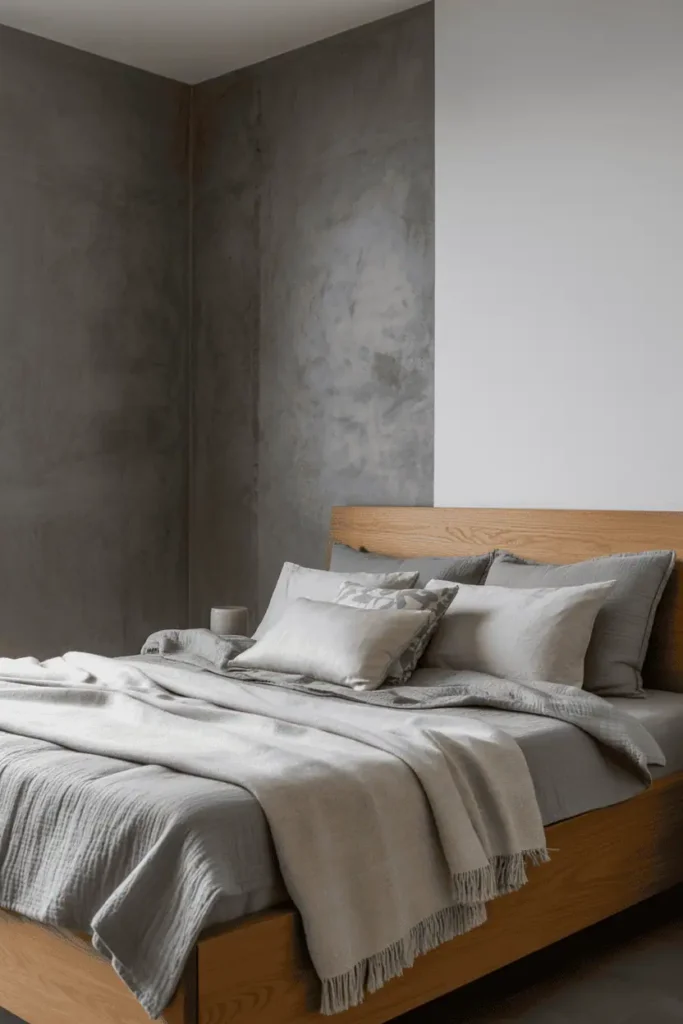
A bedroom that introduces one industrial element: polished concrete floor or one concrete accent wall, paired with light wood furniture and soft textiles. The concrete provides cool texture and tone, while the wood and textiles add necessary warmth. The bed is light oak, bedding is layered wool and linen in gray and cream, and simple white walls complete the palette.
This feels more modern and urban than traditional Scandinavian design but maintains the same principles of material honesty and restraint. The concrete needs the wood and textiles to prevent the room from feeling cold. This concept suits loft spaces or anyone drawn to industrial-Scandinavian fusion aesthetics.
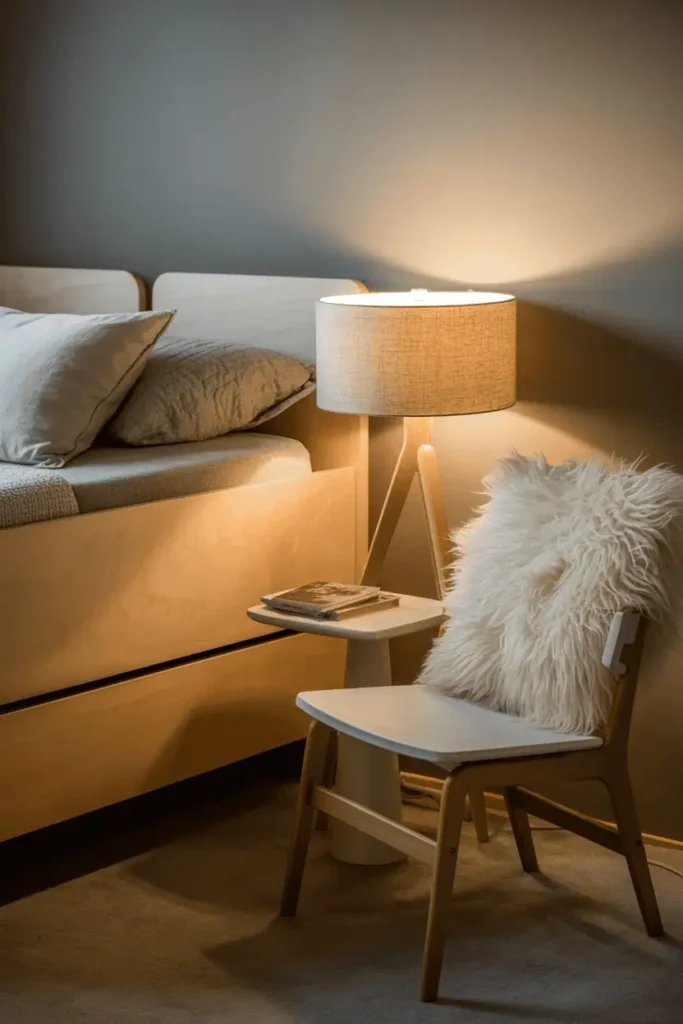
A bedroom where one corner holds a simple reading chair—something in light wood with a cream cushion—a small side table, and a floor lamp with a linen shade. A sheepskin drapes over the chair. The bed is light birch with layered neutral textiles. The reading nook makes the room feel like more than just a sleeping space without adding visual clutter.
This works for anyone who uses their bedroom for more than sleep. The chair and lamp create a secondary zone without requiring walls or dividers. The sheepskin adds tactile warmth. This concept suits slightly larger bedrooms where you have space for a corner arrangement, and it provides a template for how to add function without disrupting Scandinavian simplicity.
Styling Tips to Pull the Look Together
- Keep your wood tones within a narrow range—all light (birch, ash, pale oak) or introduce one darker accent wood but use it sparingly
- Layer lighting at different heights: overhead pendant or flush mount, bedside reading light, maybe a small accent light on a shelf
- Use textiles to add warmth—wool, linen, cotton, and sheepskin all work; synthetic materials rarely feel right
- Limit decorative objects to items that serve a function or hold personal meaning—not decoration for decoration’s sake
- Maintain clear floor space; Scandinavian design depends on rooms feeling uncluttered even when they contain adequate storage
- Choose white or very pale gray for walls to maximize light reflection, especially in northern climates or rooms with limited windows
- Add greenery through plants with simple leaves rather than busy, colorful blooms—think trailing pothos or sculptural snake plants
Conclusion
Scandinavian wood bedrooms don’t require perfection or a complete redesign. They build gradually through thoughtful choices about materials, color, and what you choose to keep visible. Start with one decision—maybe it’s painting walls white, or replacing dark furniture with lighter wood, or simply editing what sits on surfaces.
The rooms that work best are the ones that adapt Scandinavian principles to real life rather than treating them as rigid rules. You can have more textiles if you want warmth. You can introduce one darker wood tone if all-light feels too uniform. You can add personal objects if they’re meaningful. The goal is calm and functionality, not magazine perfection that no one actually lives in.
Save the ideas that resonate with how you want your bedroom to feel. Come back to them when you’re ready to make changes. The room will develop naturally over time, shaped by what works for your space, your light, and your life. That evolution is the point—not instant transformation, but gradual refinement toward something that feels both calm and genuinely yours.

To bring you cozy inspiration more efficiently, we sometimes use AI to assist in content creation — but every word and idea is carefully shaped by our team. See our AI Disclosure for more info.