This post may contain affiliate links. If you click and buy, we may earn a small commission at no extra cost to you. Learn more.
Entryways don’t ask for much space, but they ask for clarity. They’re the first room you experience when you come home and the last one you see when you leave. When they work well, you barely notice them. When they don’t, the whole house feels unsettled.
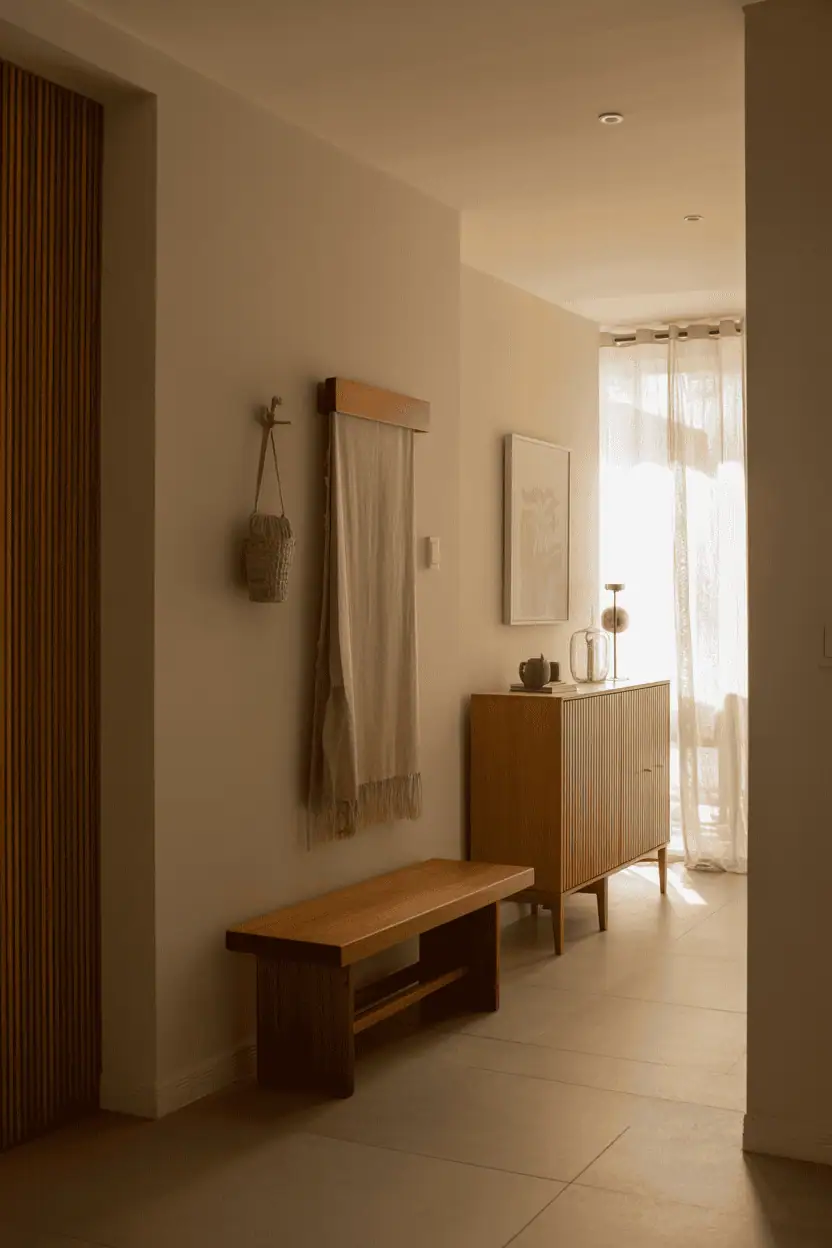
Wood is especially effective here. It brings warmth without softness, structure without heaviness, and a sense of order without feeling strict. In entryways, wood helps create calm transitions—from outside to inside, from movement to pause.
What matters most isn’t decoration. It’s proportion, placement, and restraint. A few well-chosen wooden elements can make an entryway feel intentional, even if it’s small or shared with another room. Too much, and it quickly feels cluttered. Too little, and it feels unfinished.
This guide focuses on wooden entryway decor that works in real homes. Pieces that support everyday routines, hold up to use, and still feel visually grounded.
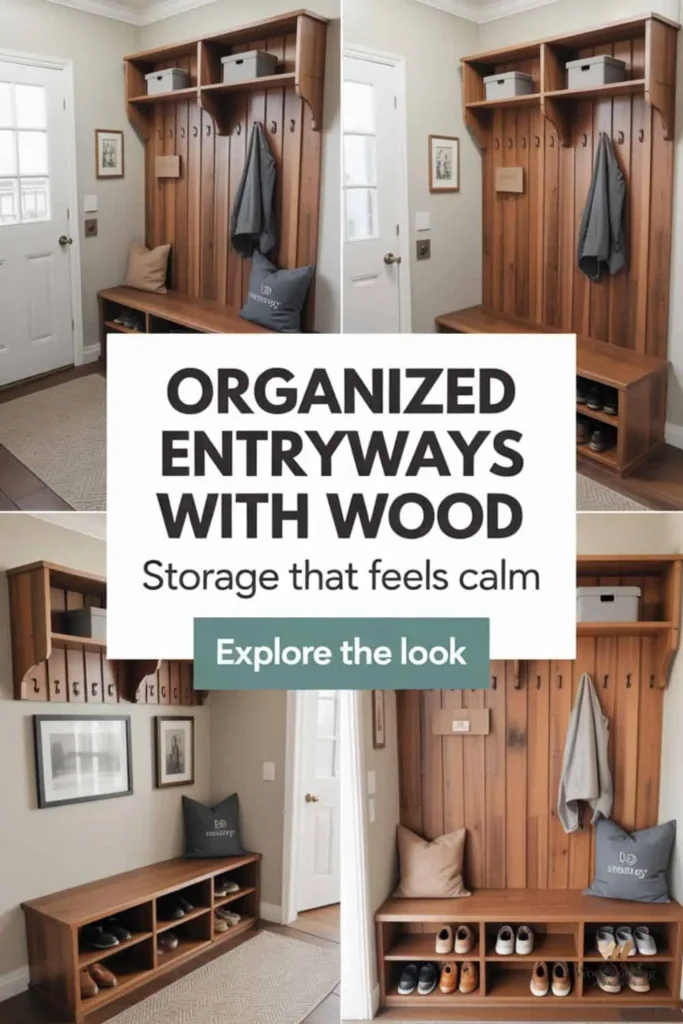
What you’ll find here:
- Wooden decor ideas that bring order and warmth to entryways
- Practical guidance for small and open layouts
- Furniture and decor that support daily use
- Calm, timeless looks that don’t rely on trends
Contents
- 1 1. A Wooden Bench That Sets the Tone
- 2 2. Wooden Consoles for Light Storage
- 3 3. Wall-Mounted Wood for Vertical Balance
- 4 4. Wood Used Close to the Floor
- 5 5. Wooden Hooks That Feel Intentional
- 6 6. Mixing Open and Closed Wood Storage
- 7 7. Narrow Wood Pieces for Small Entryways
- 8 8. Let the Wood Grain Replace Pattern
- 9 9. Wooden Storage for Shoes That Doesn’t Dominate
- 10 10. Warm Wood to Soften Hard Materials
- 11 11. Mirrors Paired with Wooden Frames
- 12 12. Keep Decorative Objects Minimal
- 13 13. Wood That Can Handle Wear
- 14 14. Repeating Wood Tones Gently
- 15 15. Leaving Space to Breathe
- 16 Styling Tips to Pull Wooden Entryway Decor Together
- 17 Conclusion
1. A Wooden Bench That Sets the Tone
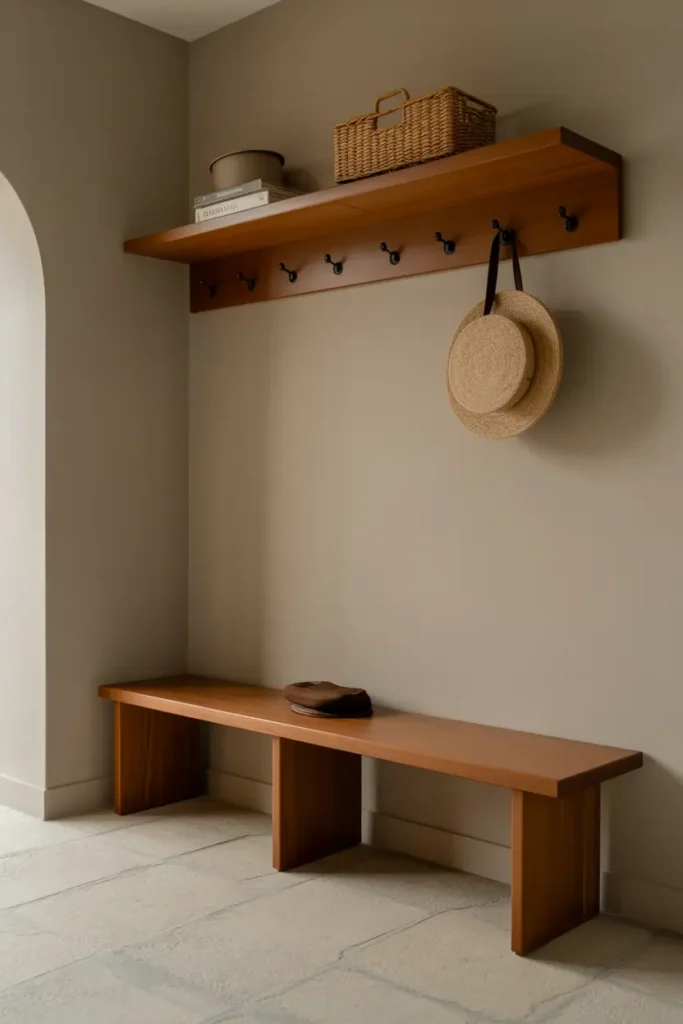
A bench immediately gives an entryway purpose. It signals pause—somewhere to sit, set things down, or transition.
This works best when the bench is simple and solid. Avoid bulky arms or heavy backs that crowd the space. A clean wooden bench with open space beneath feels lighter and more adaptable.
In smaller entryways, even a narrow bench makes a difference.
2. Wooden Consoles for Light Storage
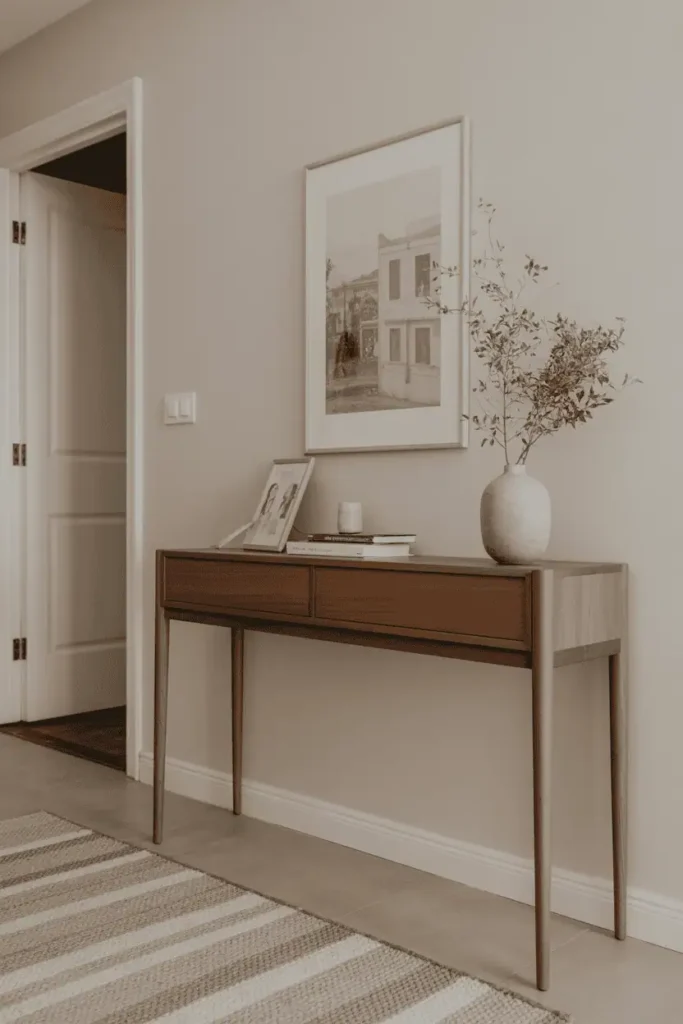
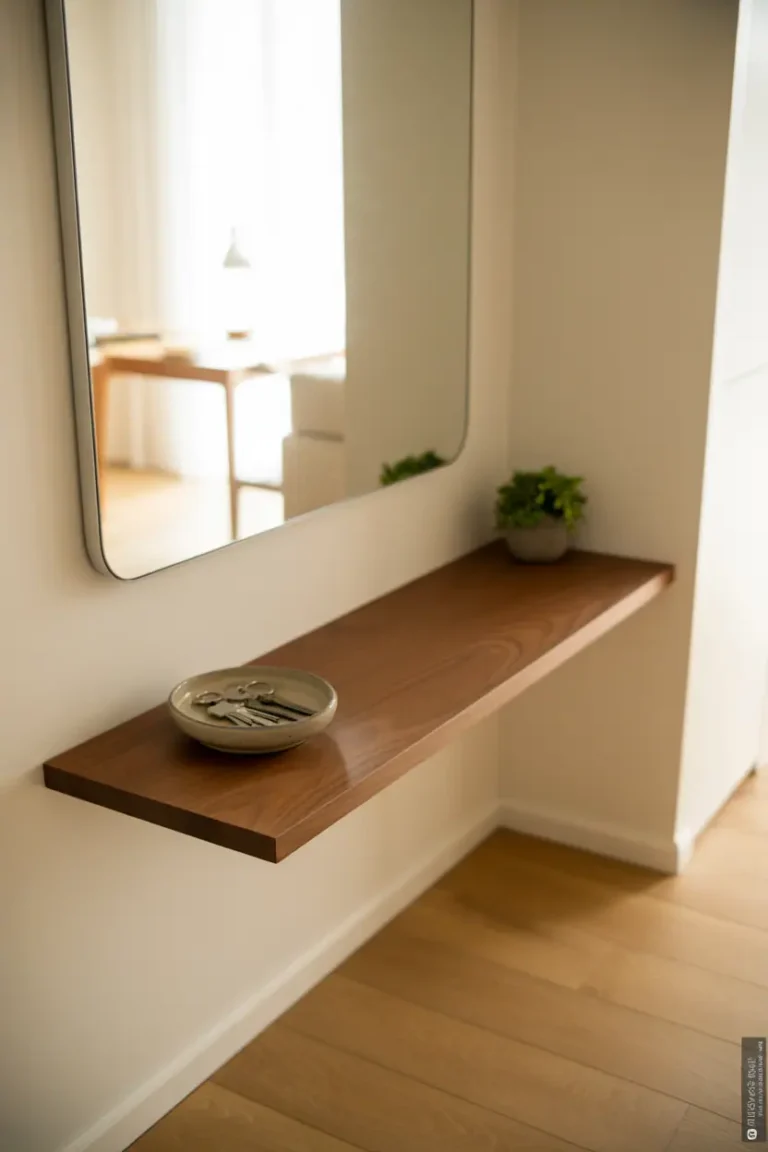
Console tables are ideal when you need surface space without depth. A wooden console keeps keys, mail, and small items contained without turning the entryway into a drop zone.
This tends to fail when consoles are too deep or overstyled. Keep the surface restrained so it doesn’t become visual clutter.
Simple lines and visible grain work best here.
3. Wall-Mounted Wood for Vertical Balance
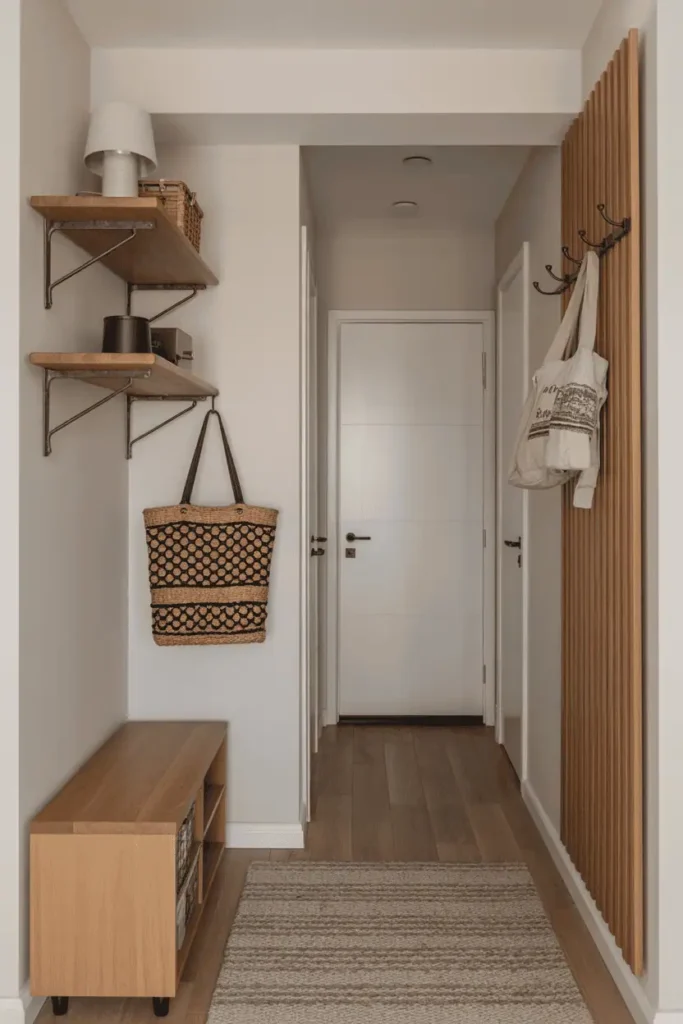
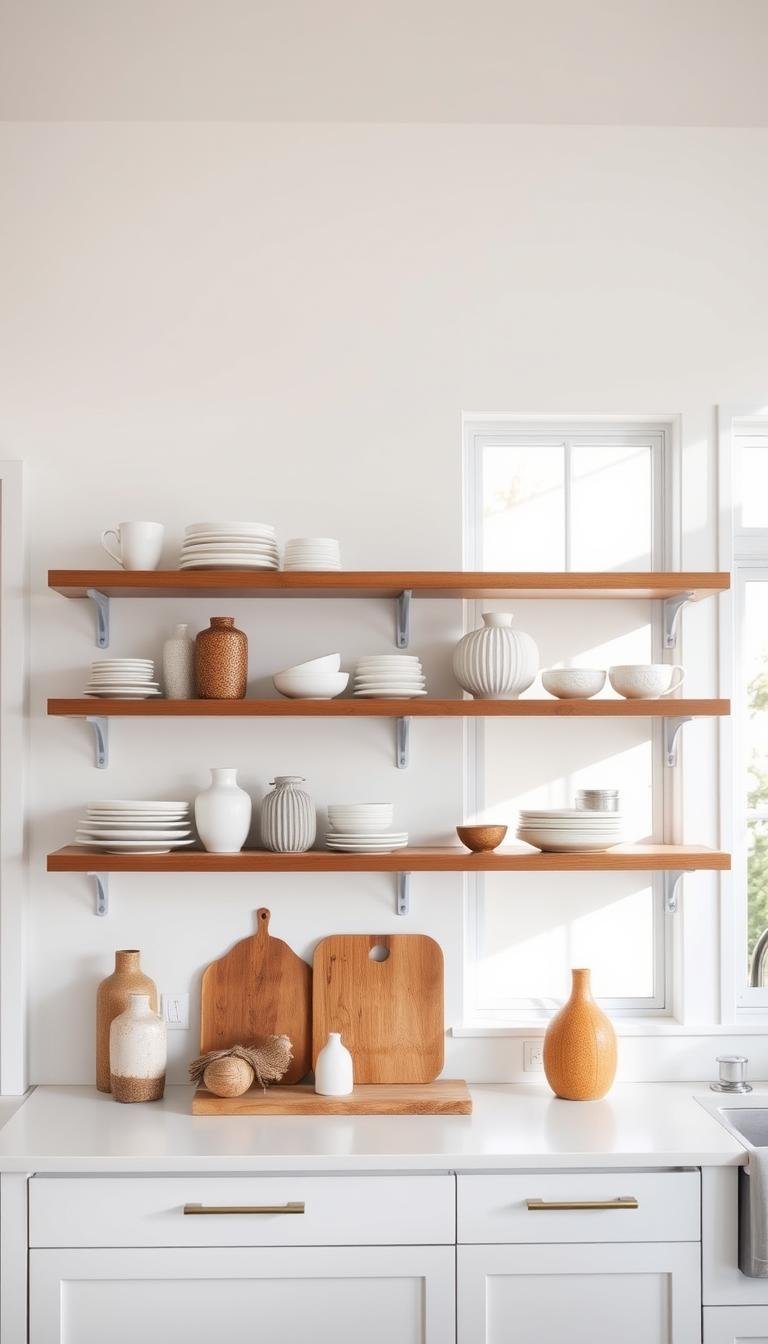
Entryways benefit from vertical elements. Wall-mounted wood shelves, peg rails, or slim cabinets draw the eye up and help balance narrow spaces.
This works especially well in tight hallways where floor space is limited. Vertical wood adds structure without taking up room.
Design tip: one strong vertical element is usually enough.
4. Wood Used Close to the Floor
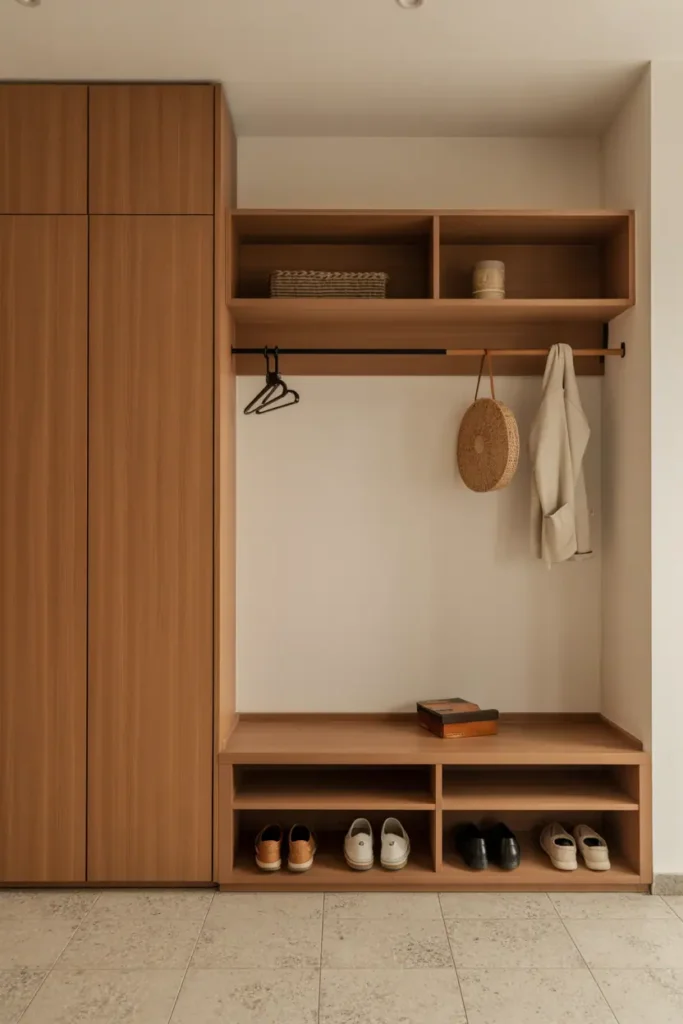
Low wooden elements—benches, shoe shelves, baskets—help entryways feel grounded.
Keeping heavier wood closer to the floor prevents the space from feeling top-heavy or crowded. It also makes daily use more intuitive.
Avoid stacking too much storage at eye level.
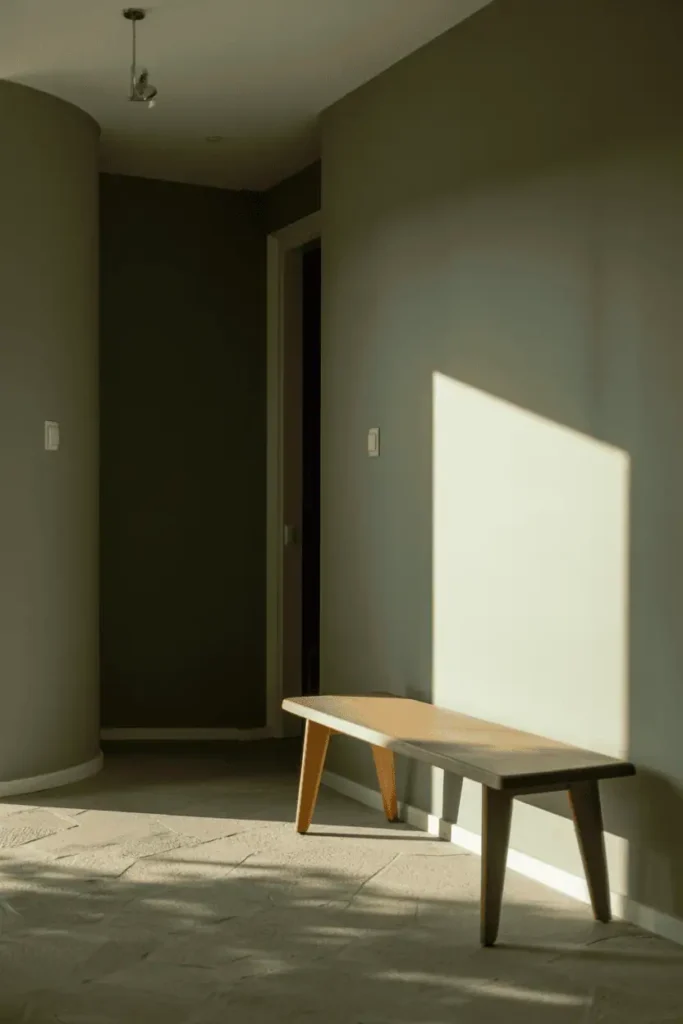
By now, the entryway should already feel calmer. Not decorated—organized.
5. Wooden Hooks That Feel Intentional
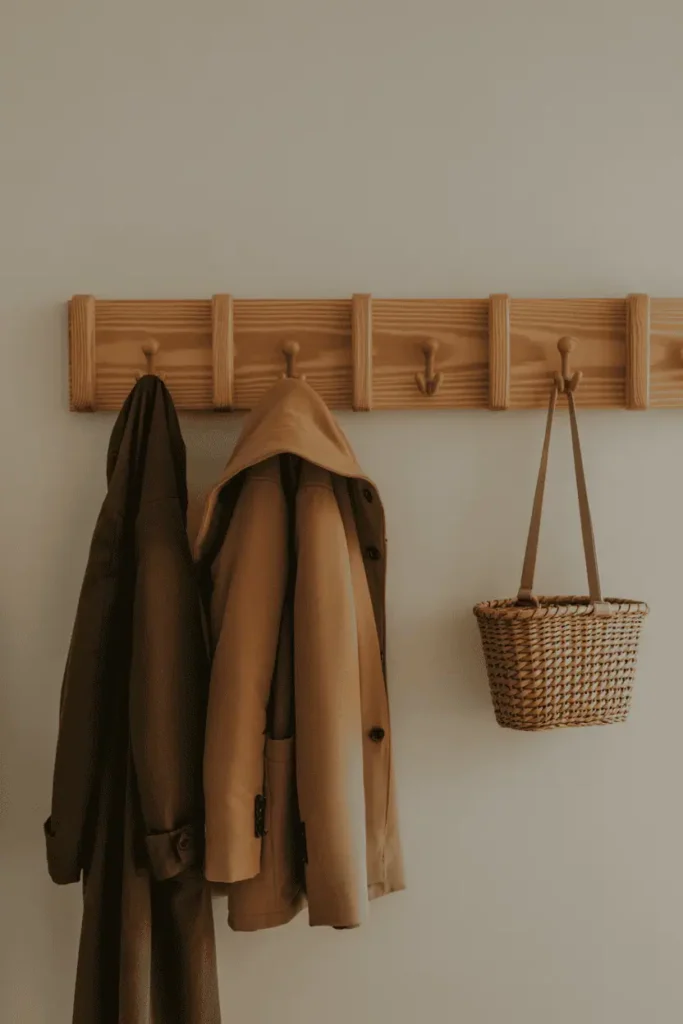
Hooks are practical, but not all hooks belong in visible spaces. Wooden hooks or peg rails soften the look and feel more intentional than exposed metal hardware.
This works best when hooks are evenly spaced and not overloaded. Fewer hooks used well look better than many used poorly.
Choose wood tones that relate to nearby furniture.
6. Mixing Open and Closed Wood Storage

Entryways work best with a balance of visibility and concealment. Open wood shelves allow easy access, while closed cabinets hide the mess.
This mix prevents the space from feeling either chaotic or too rigid. Wood ties both elements together visually.
Closed storage is especially helpful at eye level.
7. Narrow Wood Pieces for Small Entryways
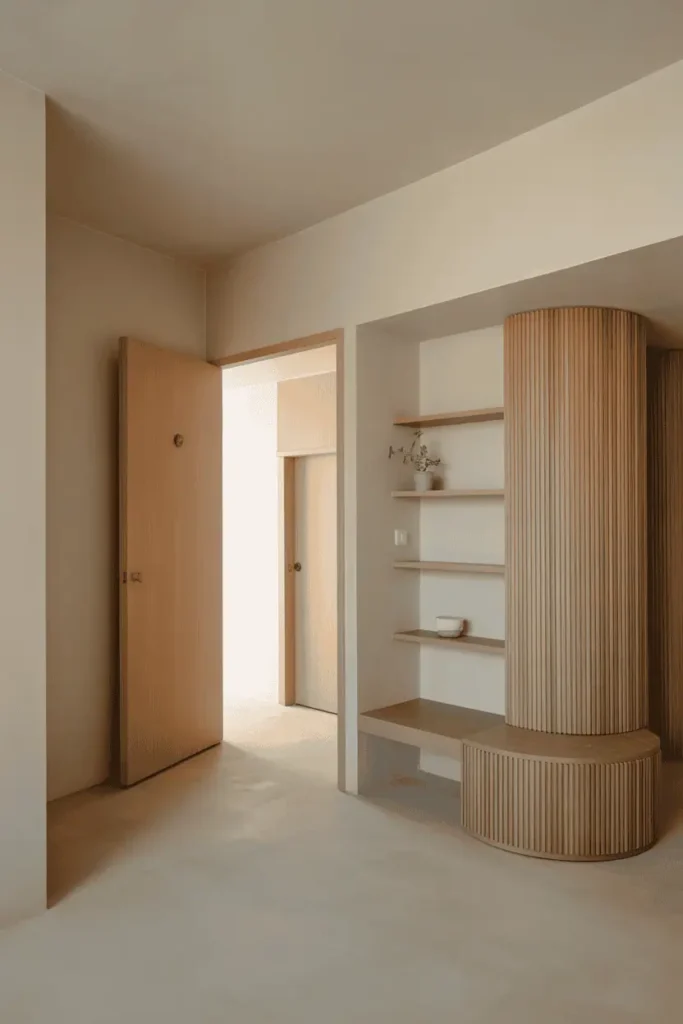
In small or shared entryways, depth matters more than width. Narrow wooden furniture keeps pathways clear while still offering function.
Slim shoe racks, shallow consoles, and wall-mounted storage work better than bulky units.
When space is tight, lighter wood finishes help keep the area feeling open.
8. Let the Wood Grain Replace Pattern
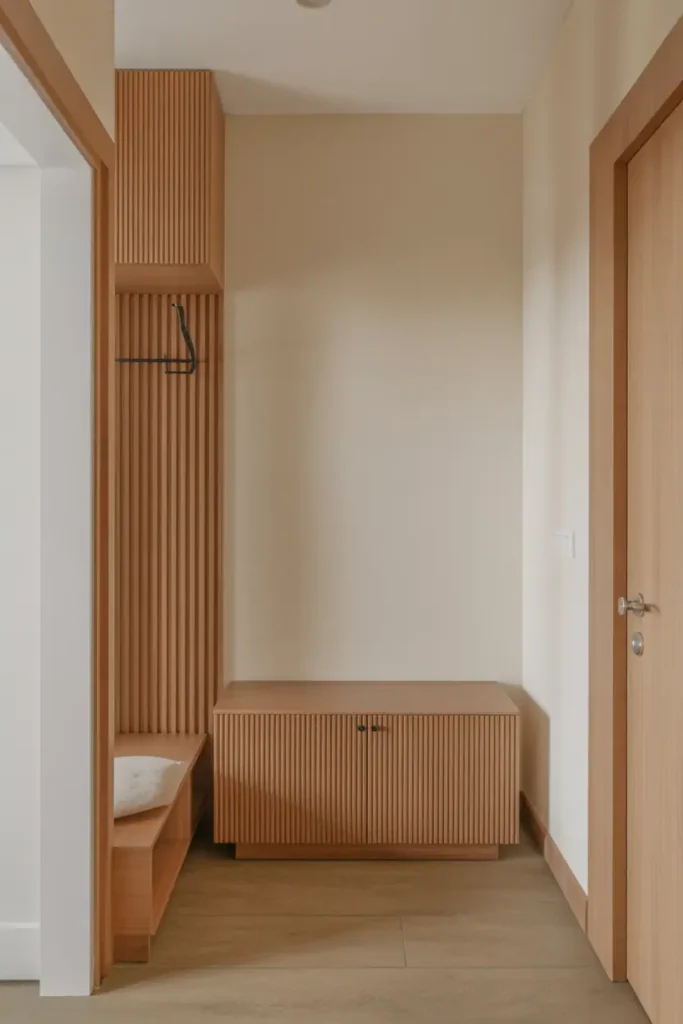
Entryways are high-traffic areas. Busy patterns add unnecessary visual noise.
Wood grain provides texture without distraction. It’s easier on the eye and more forgiving over time.
Pair it with neutral walls and simple accessories.
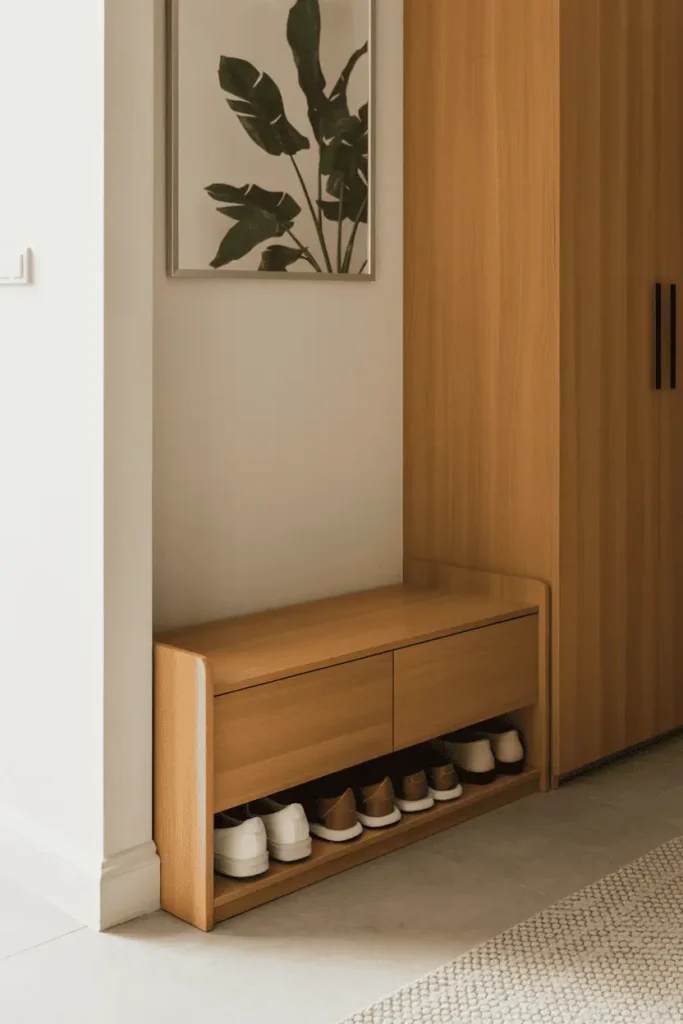
At this point, the entryway should feel easy to use. Nothing shouting for attention. Everything quietly doing its job.
9. Wooden Storage for Shoes That Doesn’t Dominate
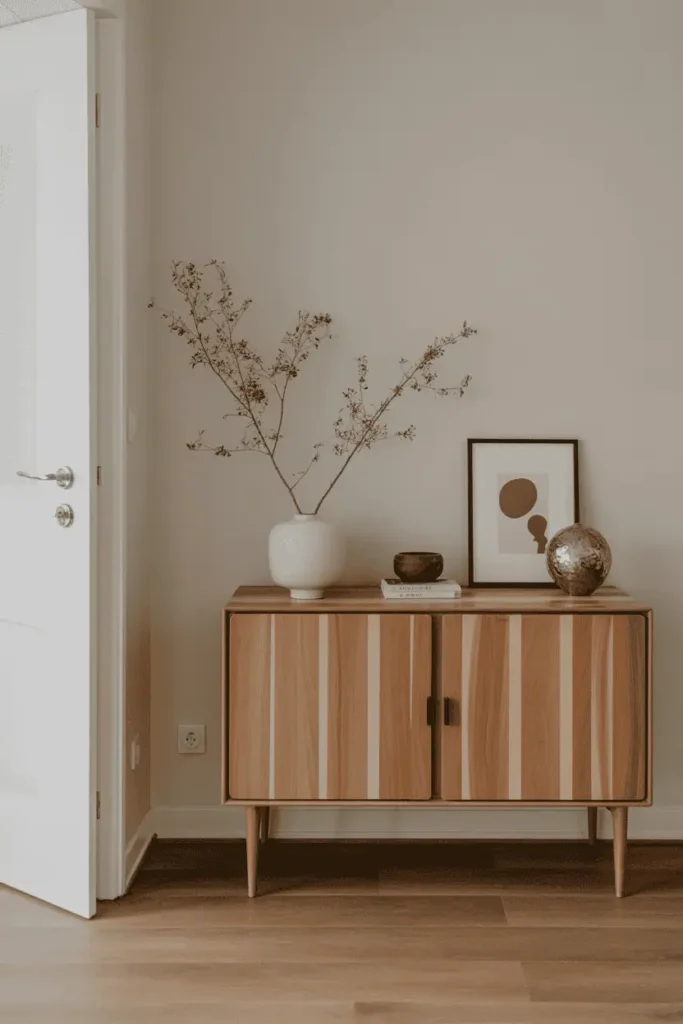
Shoe storage is essential, but it doesn’t need to lead the room. Low wooden shoe benches or cabinets keep shoes contained without becoming the focal point.
Avoid open racks that expose everything. Even partial concealment helps the space feel calmer.
Wood makes practical storage feel intentional.
10. Warm Wood to Soften Hard Materials
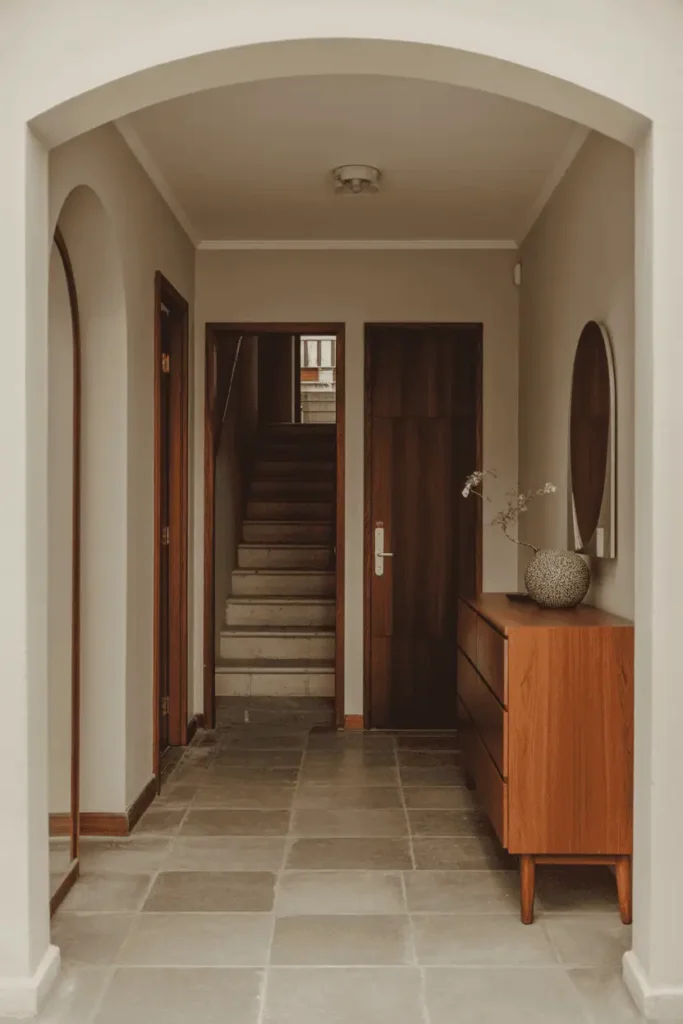
Entryways often include tile, stone, or concrete floors. Wood balances these harder surfaces and prevents the space from feeling cold.
This works especially well when wood is repeated in more than one place—bench and shelf, console and hooks.
Consistency matters more than contrast here.
11. Mirrors Paired with Wooden Frames
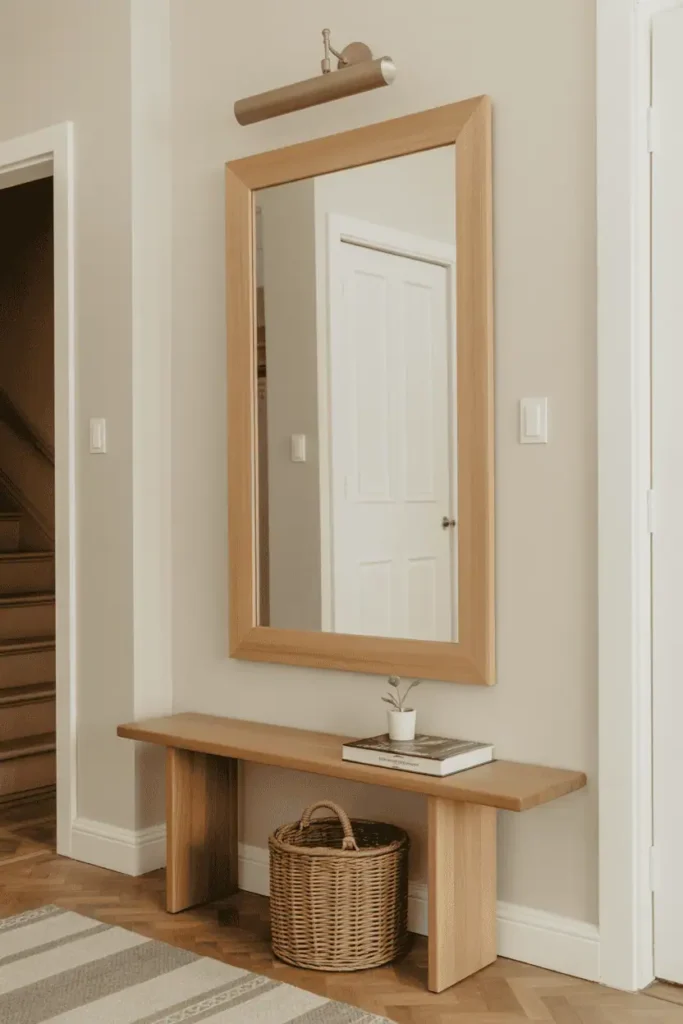
Mirrors are common in entryways, but wooden frames make them feel integrated rather than decorative.
The wood anchors the mirror and connects it to the rest of the space. Avoid overly ornate frames that distract.
Simple frames work best with visible grain.
12. Keep Decorative Objects Minimal
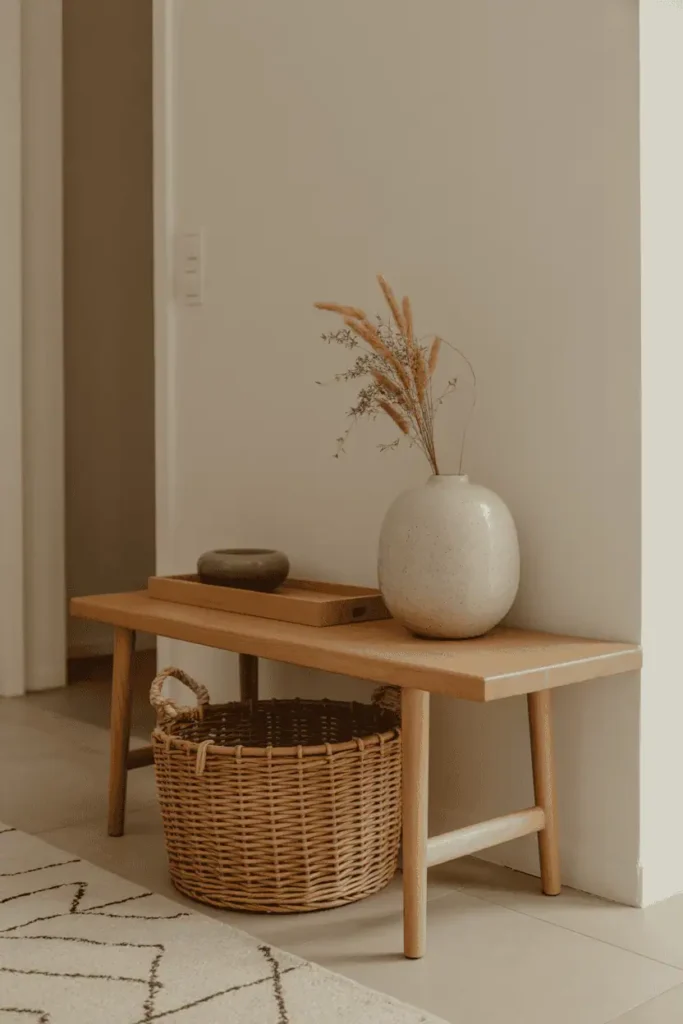
Entryways don’t need much decor. One or two objects—a bowl, a tray, a small plant—are usually enough.
Wood already provides visual interest. Too many accessories dilute its impact.
Style note: function should lead, decor should follow.
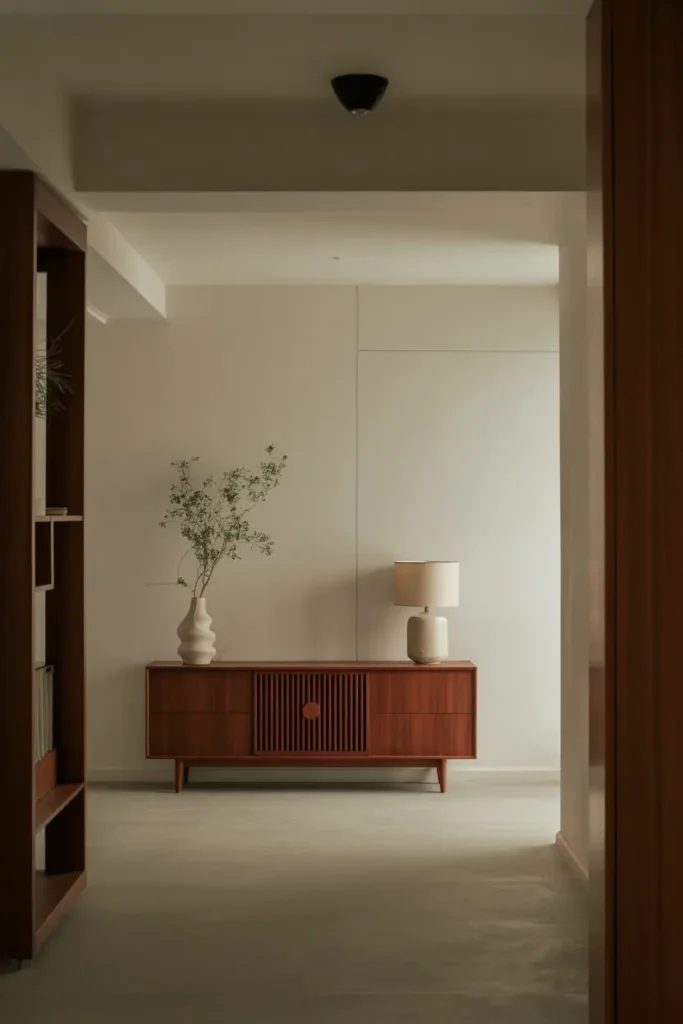
Good entryways don’t impress. They reassure.
13. Wood That Can Handle Wear
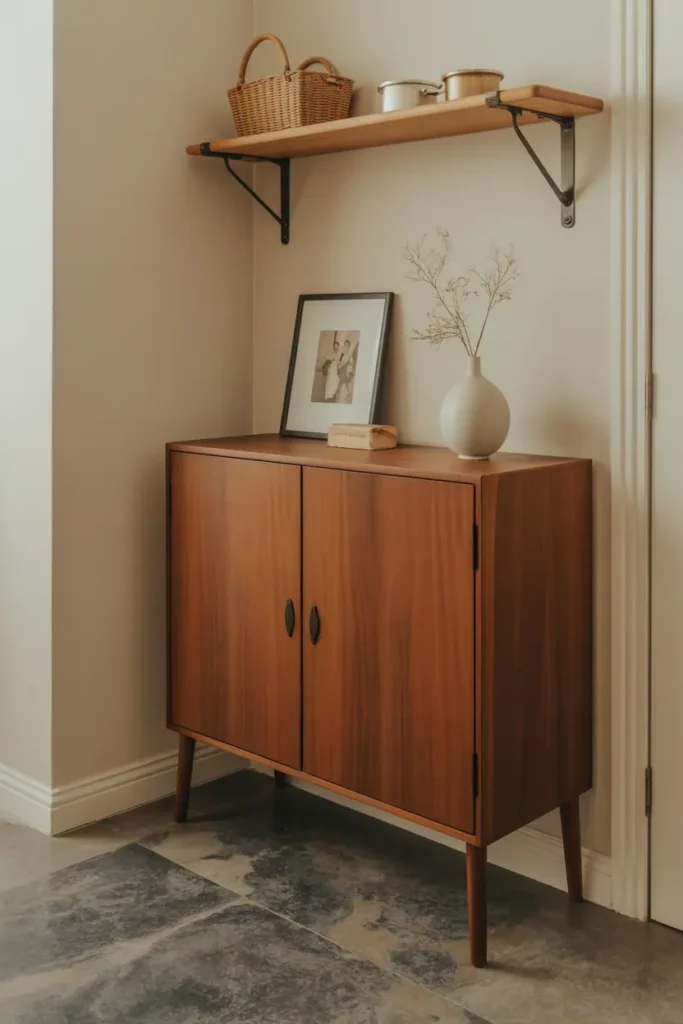
Entryways see constant use. Choose wood finishes that tolerate scuffs and marks.
Matte or lightly sealed surfaces age better than glossy ones. Small imperfections become part of the story rather than flaws.
Durability is part of the aesthetic.
14. Repeating Wood Tones Gently
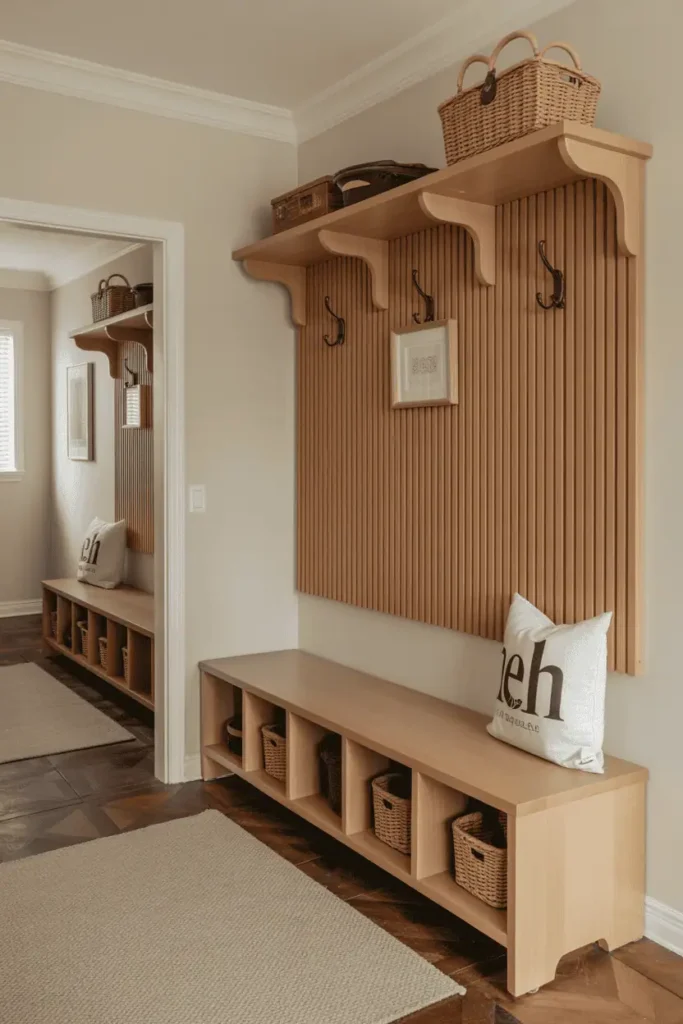
You don’t need everything to match, but repeating similar wood tones helps the space feel cohesive.
Bench, hooks, and console can vary slightly while still relating. Exact matching can feel stiff.
Aim for harmony, not uniformity.
15. Leaving Space to Breathe
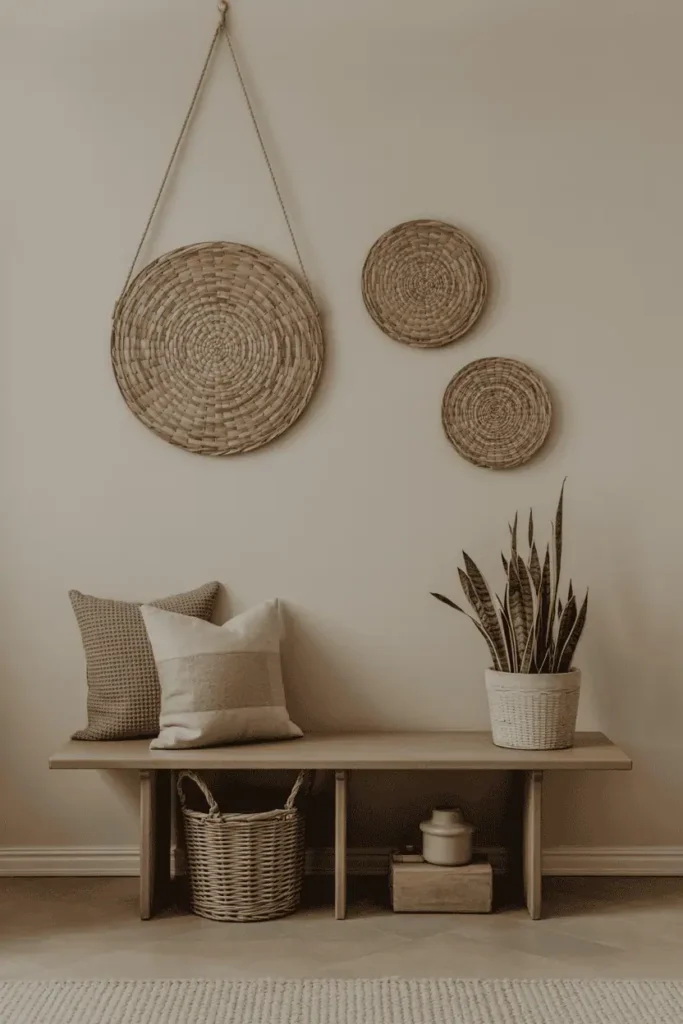
The most overlooked element in entryway design is empty space. Not every wall needs something.
Allowing space around wooden pieces helps them feel intentional rather than accidental.
Sometimes the best decision is leaving something out.
Styling Tips to Pull Wooden Entryway Decor Together
- Keep heavier wood pieces low
- Limit the number of materials used
- Repeat wood tones subtly
- Prioritize daily function over decoration
- Edit regularly to avoid clutter
Conclusion
Wooden entryway decor works best when it supports daily life quietly. It doesn’t need to impress or perform. It just needs to work—and feel good doing it.
Start with one piece that makes coming home easier: a bench, a console, a shelf. Let it settle into the space before adding more. Entryways reveal what’s missing very quickly.
Save the ideas that feel right. Return to them as your needs change. A good wooden entryway isn’t static—it evolves, one practical decision at a time.

To bring you cozy inspiration more efficiently, we sometimes use AI to assist in content creation — but every word and idea is carefully shaped by our team. See our AI Disclosure for more info.