This post may contain affiliate links. If you click and buy, we may earn a small commission at no extra cost to you. Learn more.
You open your kitchen every morning and it’s… fine. The cabinets do their job. They hold your dishes. But they don’t make you stop and smile. They don’t make guests lean in and ask where you got them. You’ve saved a hundred kitchen pins, and you know what they all have in common: they feel permanent. Not trendy. Not dated in five years. Just right.
These 20 wood cabinet ideas are that feeling. Each one brings warmth, character, and a sense of timelessness that works whether your kitchen is brand new or fifty years old. You’ll see natural grains, unexpected finishes, and styling choices that make wood cabinets feel collected, not cookie-cutter. Ready? Let’s start with the one that never goes out of style.
Contents
- 1 1. White Oak with Horizontal Grain
- 2 2. Two-Tone: Dark Lowers, Light Uppers
- 3 3. Natural Cherry That’s Actually Aged
- 4 4. Reclaimed Barn Wood Uppers Only
- 5 5. Walnut with Brass Inlay Detail
- 6 6. Cerused Oak for Scandinavian Simplicity
- 7 7. Flat-Panel Shaker in Maple
- 8 8. Rift-Sawn White Oak with No Visible Grain
- 9 9. Knotty Alder for Rustic Warmth
- 10 10. Painted White with Wood Island
- 11 11. Hickory with Wild Grain Variation
- 12 12. Beadboard Cabinet Doors in Pine
- 13 13. Quarter-Sawn Oak for Arts and Crafts Style
- 14 14. Light Ash with Minimal Hardware
- 15 15. Reclaimed Teak for Global Eclectic Vibes
- 16 16. Painted Sage with Natural Wood Shelving
- 17 17. Ebonized Oak for Dramatic Contrast
- 18 18. Pine with Whitewash Finish
- 19 19. Walnut Slab Doors with Live Edge
- 20 20. Medium-Tone Cherry with Glass-Front Uppers
1. White Oak with Horizontal Grain
This is the cabinet that whispers “expensive” without screaming it.
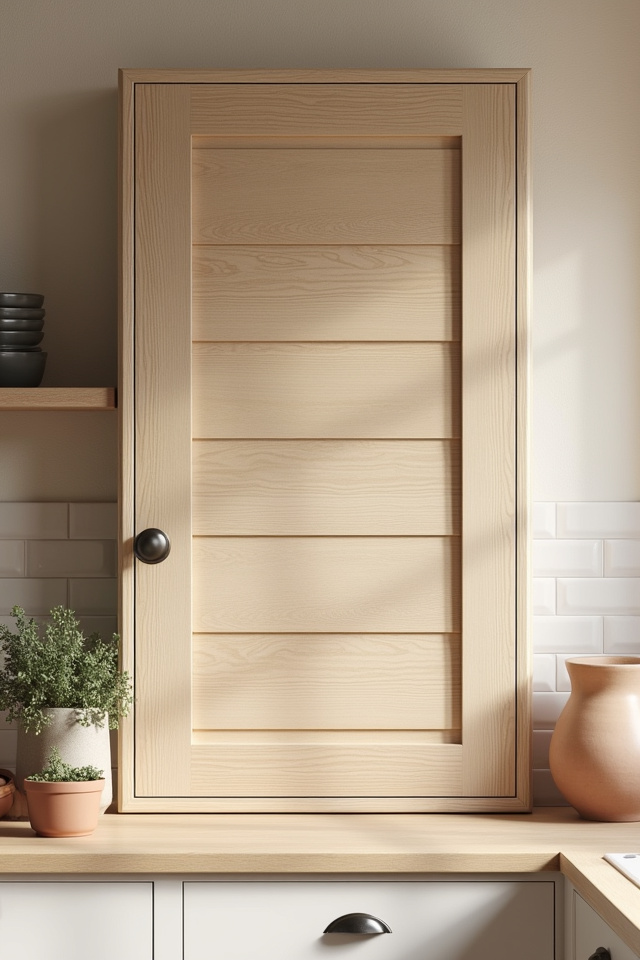
White oak cabinets with horizontal grain patterns create clean, elongated lines that make your kitchen feel wider and calmer. The grain isn’t loud—it’s just present enough to add texture without competing with anything else in the room. Pair them with matte black hardware and suddenly your whole kitchen feels intentional.
- Best with: SW Pure White walls or BM Simply White for maximum contrast
- Hardware: slim black pulls in a brushed finish
- Countertop match: white quartz or honed marble
This look works in modern farmhouse kitchens and minimalist spaces equally well. The secret is keeping everything else simple—let the grain do the talking.
2. Two-Tone: Dark Lowers, Light Uppers
Your eye needs somewhere to land, and this gives it two places at once.
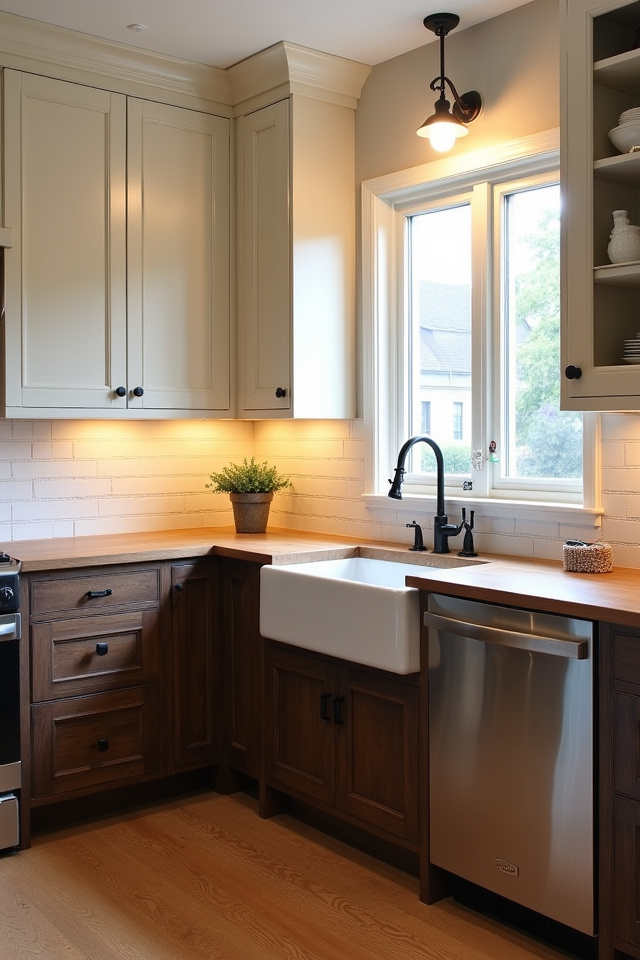
Dark walnut or espresso-stained lower cabinets grounded with white oak or painted cream uppers—this combination has visual weight at the bottom and airiness at the top. It solves the problem of all-dark kitchens feeling heavy while avoiding the sterile look of all-white spaces.
- Lower cabinet stains: espresso, dark walnut, or charcoal-stained oak
- Upper cabinet options: white oak, SW Alabaster paint, or natural ash
- Works best in kitchens with 9+ foot ceilings
The transition line between colors should hit right at countertop height. No awkward mid-cabinet split. Amazon has brass or aged bronze knobs in the $3-5 range that make this look cohesive—grab a 25-pack and you’re set.
3. Natural Cherry That’s Actually Aged
Not the orange cherry from 1997. The good kind.
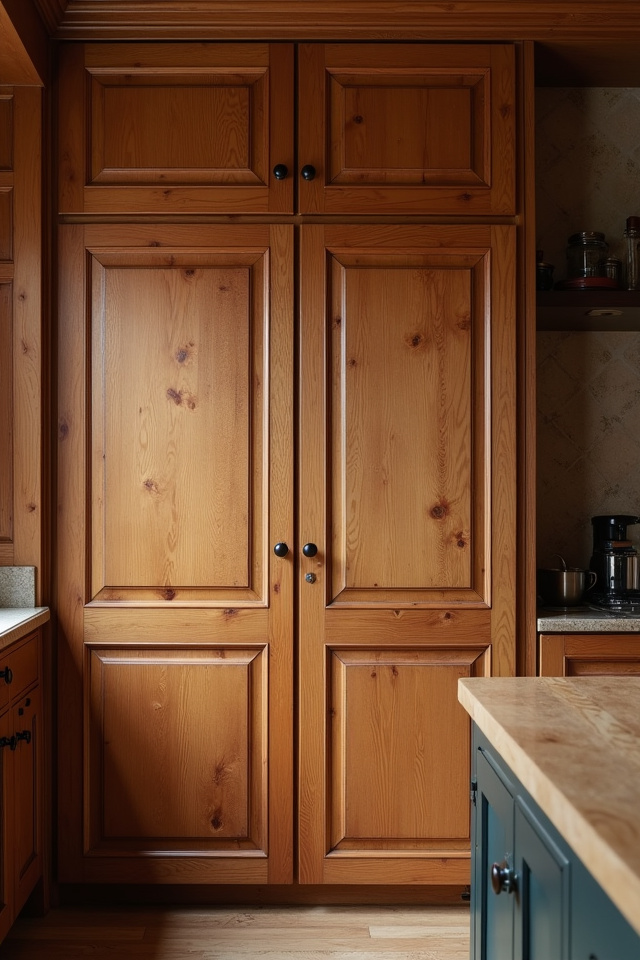
Cherry wood deepens and reddens as it ages, but starting with a natural or light stain lets you see the journey. Modern cherry cabinets skip the high-gloss finish and go matte or satin instead. The result is warm without feeling dated, rich without being heavy.
Pair cherry with warm white walls—BM White Dove or SW Creamy—and the cabinets become the hero without dominating. Avoid cool grays or stark whites; they make cherry look orange instead of sophisticated.
4. Reclaimed Barn Wood Uppers Only
Sometimes the best move is to wood just one section.
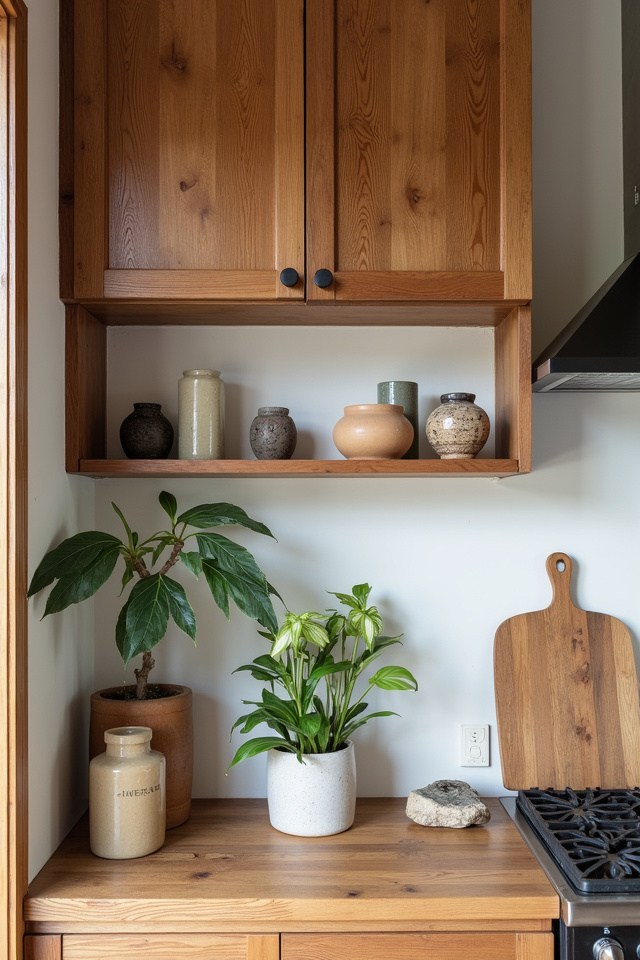
Keep lower cabinets simple—painted white or light gray—and install reclaimed barn wood upper cabinets with visible knots and weathering. The contrast keeps the rustic element from overwhelming the space. This works especially well in kitchens where you want farmhouse charm but not full-on farmhouse commitment.
- Best for: kitchens with white subway tile backsplash
- Pair with: open shelving on one wall for balance
- Finish: clear matte seal to preserve the weathered look
5. Walnut with Brass Inlay Detail
For when you want your cabinets to feel like furniture.
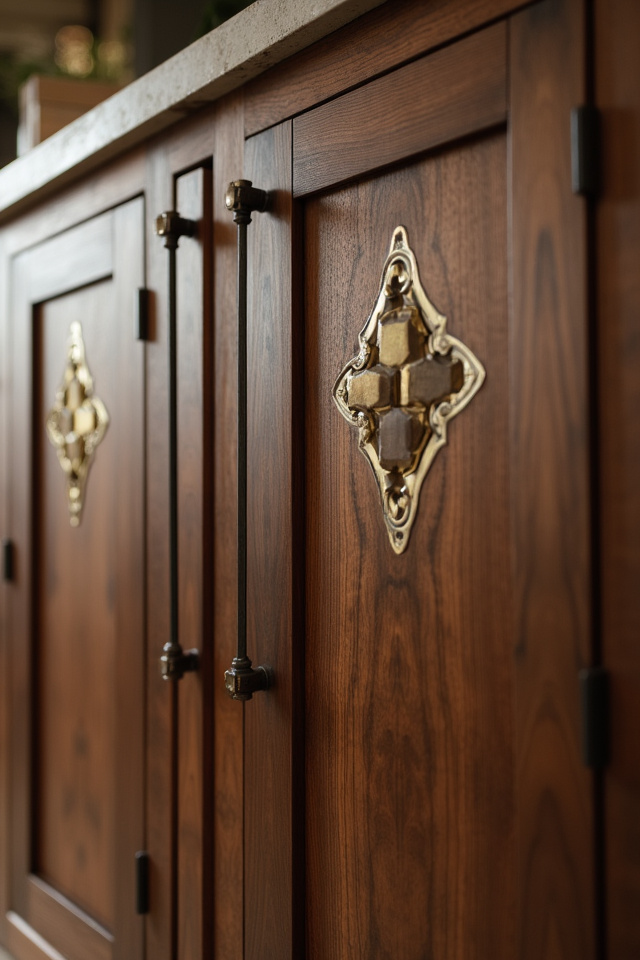
Walnut cabinets with thin brass inlay strips running vertically or horizontally turn ordinary cabinets into statement pieces. The brass catches light and adds a jewelry-like detail without being ornate. This is the cabinet choice that makes people ask who your designer was.
The inlay can be as simple as a single line running down the center of each door or more geometric with frame details. Pair with unlacquered brass hardware that will patina over time for a lived-in, collected look.
This is how you get the Scandi look without painting over wood.
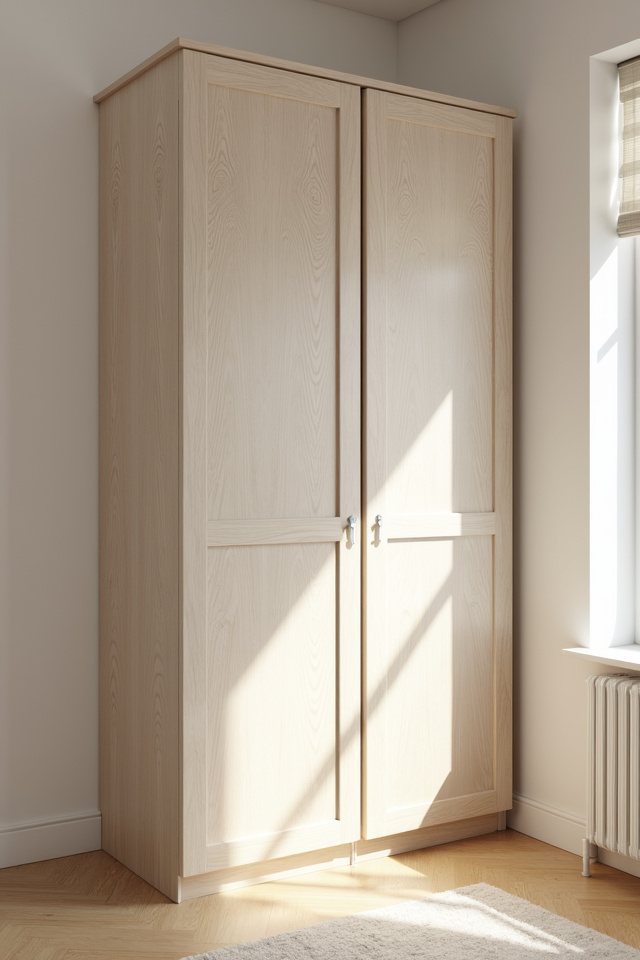
Cerusing is a technique where white or gray pigment is rubbed into the grain of oak, leaving the grain visible but lightened. The result is cabinets that feel blonde and airy but still textured. It’s the perfect middle ground between painted and natural wood.
- Best with: light gray or greige walls like SW Agreeable Gray
- Countertops: white marble or light concrete
- Hardware: matte black or polished nickel
This look is everywhere in European kitchens and finally catching on in the US. It ages beautifully and never looks too trendy.
You May Also Like
7. Flat-Panel Shaker in Maple
The cabinet style that never needs explaining.
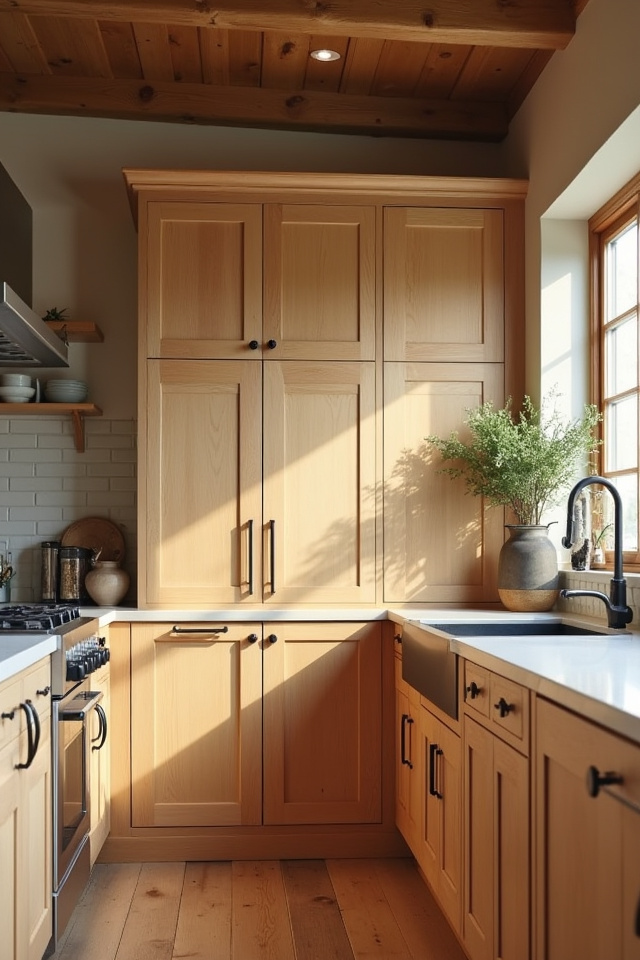
Maple shaker cabinets with a clear or honey-toned stain are the baseline for timeless kitchen design. The flat-panel shaker door is simple enough to work in any style home but detailed enough to never look builder-grade. Maple’s fine, even grain means no wild patterns—just clean, warm wood.
Keep the stain light to medium. Dark-stained maple can look muddy. Pair with marble or butcher block countertops and simple cup pulls in oil-rubbed bronze for a kitchen that could be photographed today or in twenty years.
8. Rift-Sawn White Oak with No Visible Grain
For the person who wants wood but prefers it quiet.
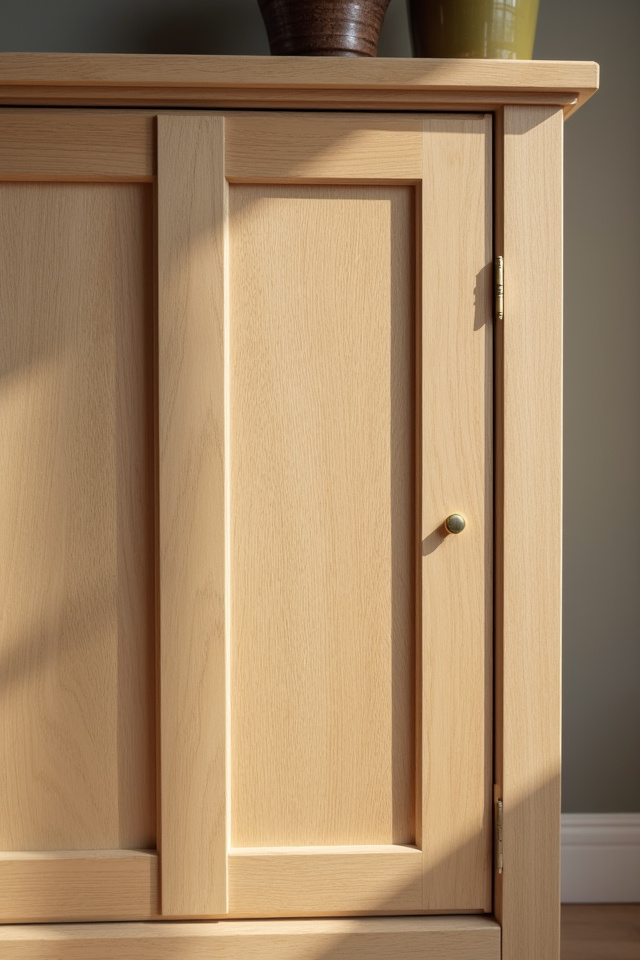
Rift-sawn oak is cut so the grain runs almost perfectly straight and subtle. The result is cabinets that look like a single continuous surface instead of planks pieced together. It’s refined, almost architectural. This is the choice for modern kitchens where wood adds warmth but doesn’t dominate.
- Finish: matte or satin clear coat
- Hardware: integrated pulls or push-to-open for a seamless look
- Pair with: concrete countertops or solid surface in a warm white
9. Knotty Alder for Rustic Warmth
Knots aren’t flaws. They’re personality.
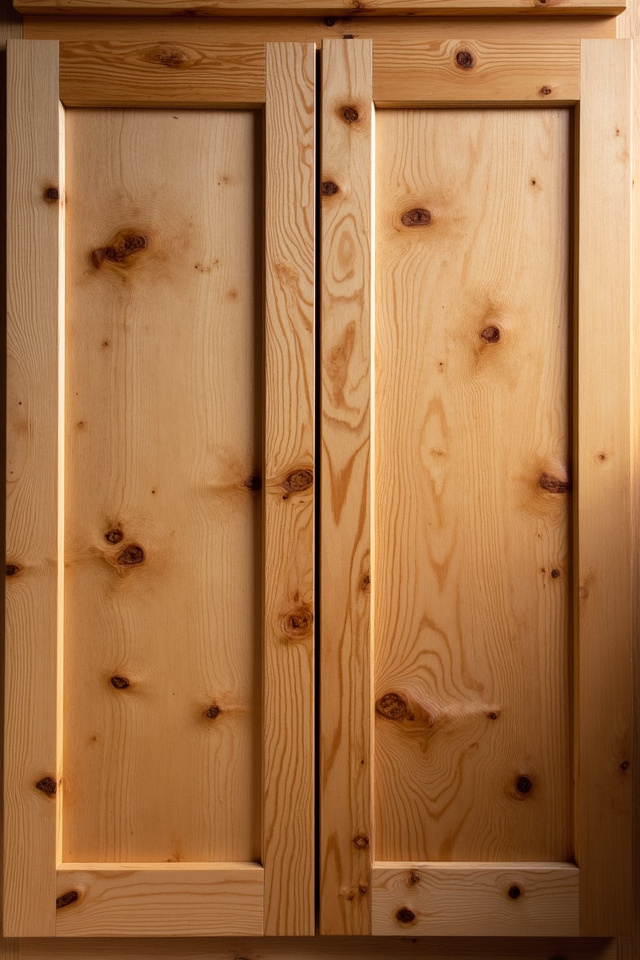
Knotty alder cabinets bring visible character without looking like a log cabin. The knots are dark and distinct, the wood is warm and slightly reddish, and the overall effect is cozy without being heavy. This works especially well in kitchens with high ceilings or lots of natural light where you need warmth to balance the space.
Stain it medium to bring out the contrast between the knots and the lighter wood. Pair with cream or warm beige walls—SW Accessible Beige is perfect—and wrought iron or black hardware.
10. Painted White with Wood Island
The classic combo that never quits.
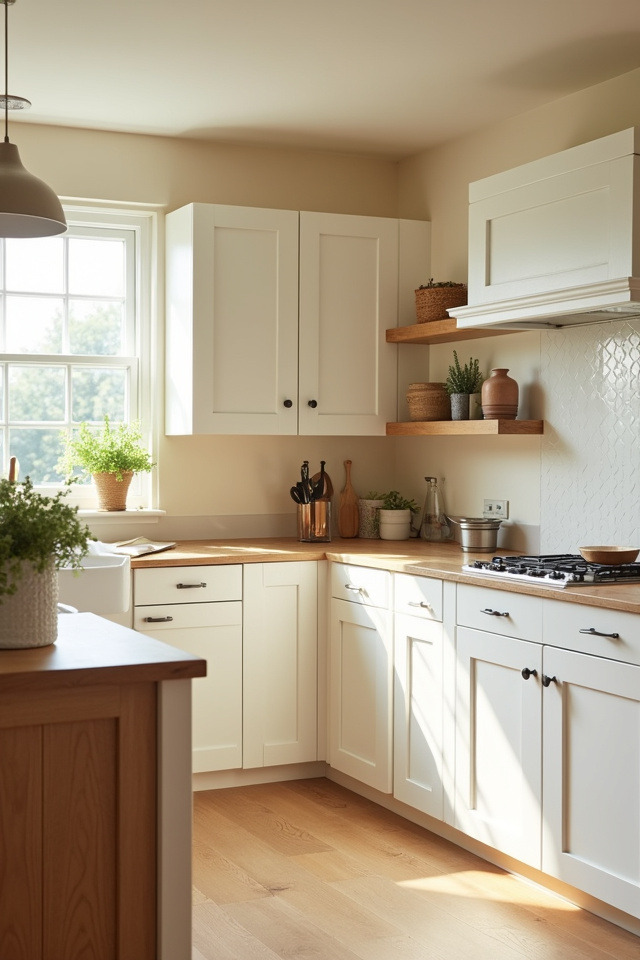
White painted perimeter cabinets with a natural wood island in walnut or oak gives you the brightness of white with a grounding element in the center. The island becomes the kitchen’s anchor—visually and functionally. This is the most pinned kitchen layout for a reason.
- Paint color: BM White Dove or SW Pure White
- Island wood: walnut for contrast, white oak for subtlety
- Countertops: white marble on perimeter, butcher block on island
You can find butcher block countertops on Amazon in walnut or maple for $200-300 depending on size. They ship fast and the warmth they add is instant.
11. Hickory with Wild Grain Variation
This is wood that refuses to be boring.
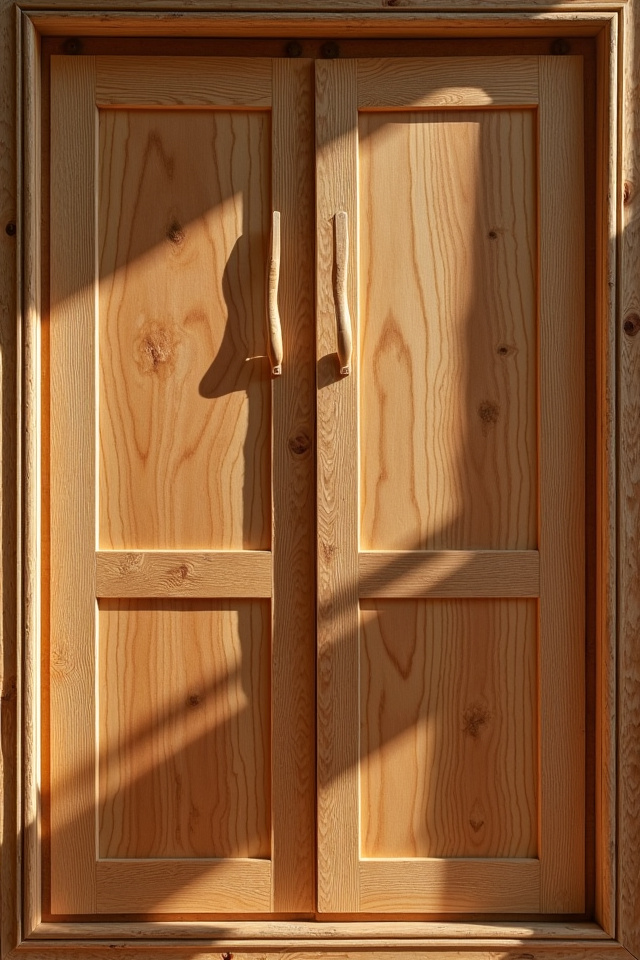
Hickory has dramatic grain variation and color shifts—some boards are pale, some are dark brown, some have streaks of both. The effect is cabinets that look handpicked and one-of-a-kind. This is not the choice for minimalists. This is for people who want their kitchen to feel alive.
Keep the stain natural or use a light honey tone. Anything darker hides the grain contrast that makes hickory special. Pair with simple white subway tile and let the cabinets be the focal point.
12. Beadboard Cabinet Doors in Pine
Cottage charm that scales up or down beautifully.
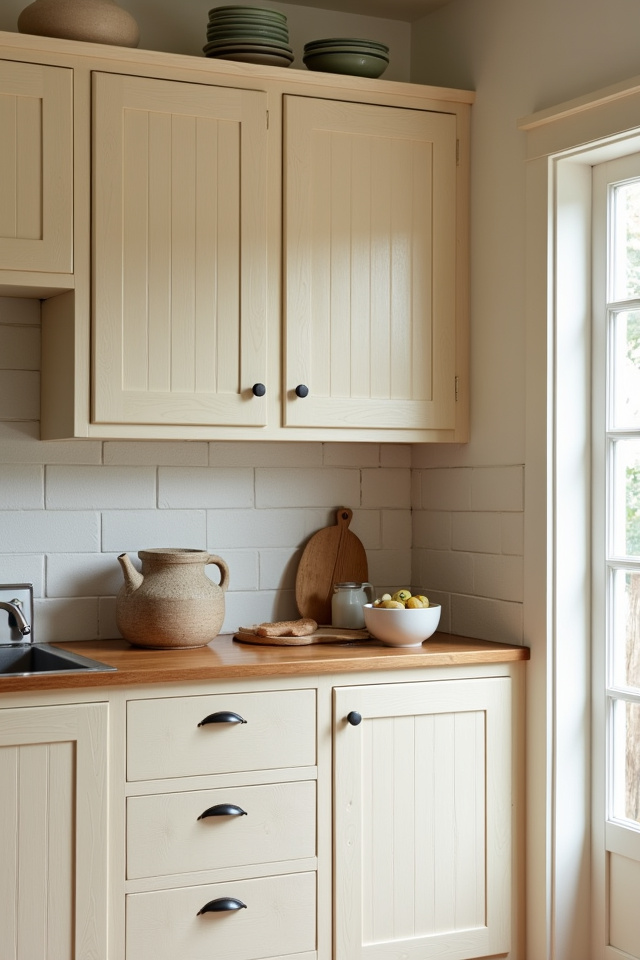
Pine cabinets with vertical beadboard detailing bring texture and a hint of vintage without feeling overly country. The beadboard adds dimension and shadow, making flat doors more interesting. Pine is soft and affordable, and it takes stain beautifully—go light for coastal vibes or medium for farmhouse warmth.
- Stain options: natural, weathered gray, or honey tone
- Hardware: bin pulls in pewter or brushed nickel
- Best with: white or soft blue walls like SW Sea Salt
13. Quarter-Sawn Oak for Arts and Crafts Style
If your home has original woodwork, match it here.
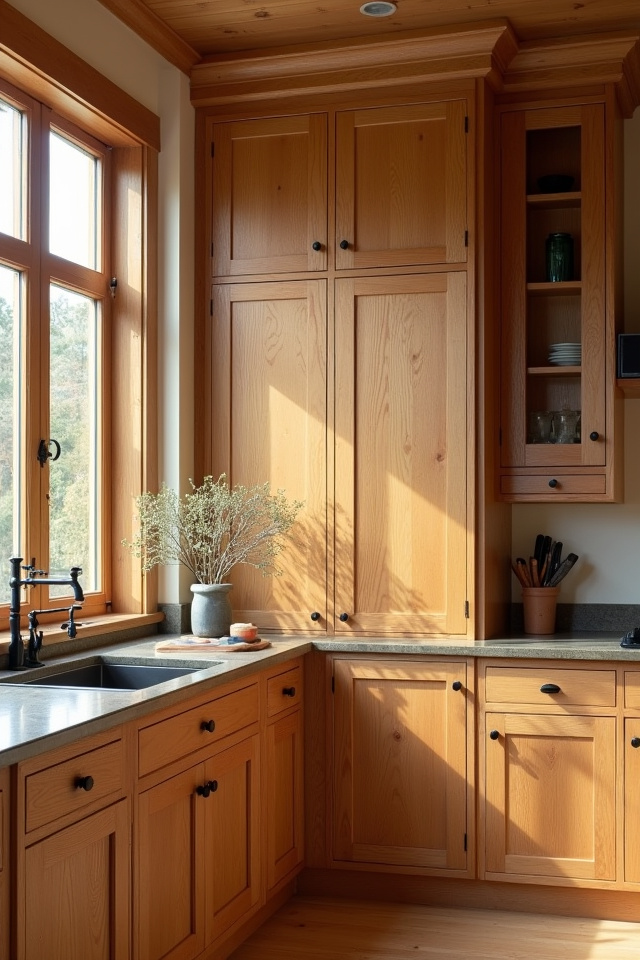
Quarter-sawn oak has a distinctive flecked grain pattern called “ray flake” that catches light and adds visual interest without being loud. It’s the wood of choice in Craftsman and Arts and Crafts homes, and using it in your kitchen ties the space to the rest of the house. Stain it medium to dark and pair with hammered copper or bronze hardware.
This style works best in homes with architectural detail—crown molding, wainscoting, built-ins. The cabinets feel like they’ve always been there.
You May Also Like
14. Light Ash with Minimal Hardware
This is what modern looks like when it’s done right.
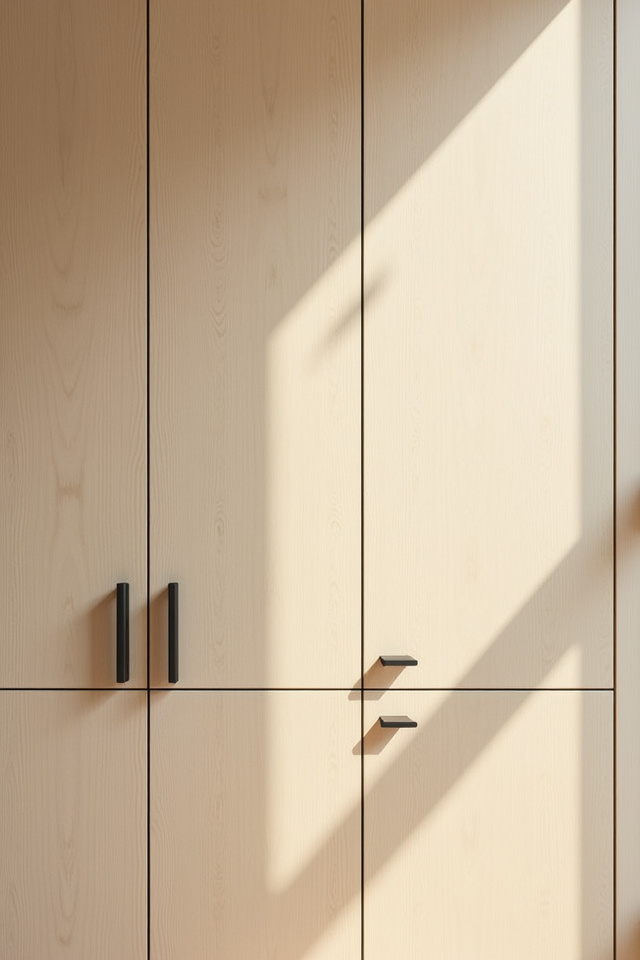
Ash wood is pale, almost blonde, with a subtle grain that reads as texture without being busy. When finished with a clear matte coat and paired with integrated handles or push-to-open mechanisms, the cabinets feel seamless and contemporary. This is the cabinet for people who want warmth but also clean lines.
- Pair with: white quartz countertops and stainless appliances
- Wall color: soft gray like BM Revere Pewter or warm white
- Backsplash: large-format white tile or polished concrete
15. Reclaimed Teak for Global Eclectic Vibes
Your kitchen doesn’t have to look like everyone else’s.
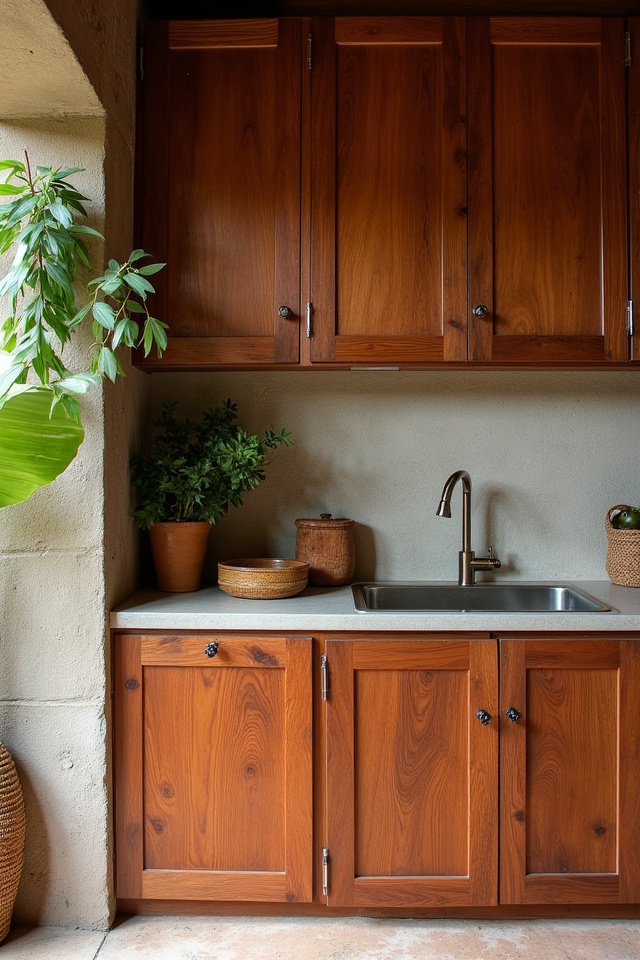
Reclaimed teak has a rich golden-brown color and often comes with nail holes, weathering, and color variation that tells a story. It’s the cabinet choice for someone who’s traveled, collected, and wants their kitchen to feel layered. Pair with colorful tile, woven textures, and brass or copper accents.
Teak is naturally water-resistant, making it practical in a kitchen. The patina only gets better with time. This is investment-level cabinetry that ages like fine furniture.
16. Painted Sage with Natural Wood Shelving
Color doesn’t have to mean no wood.
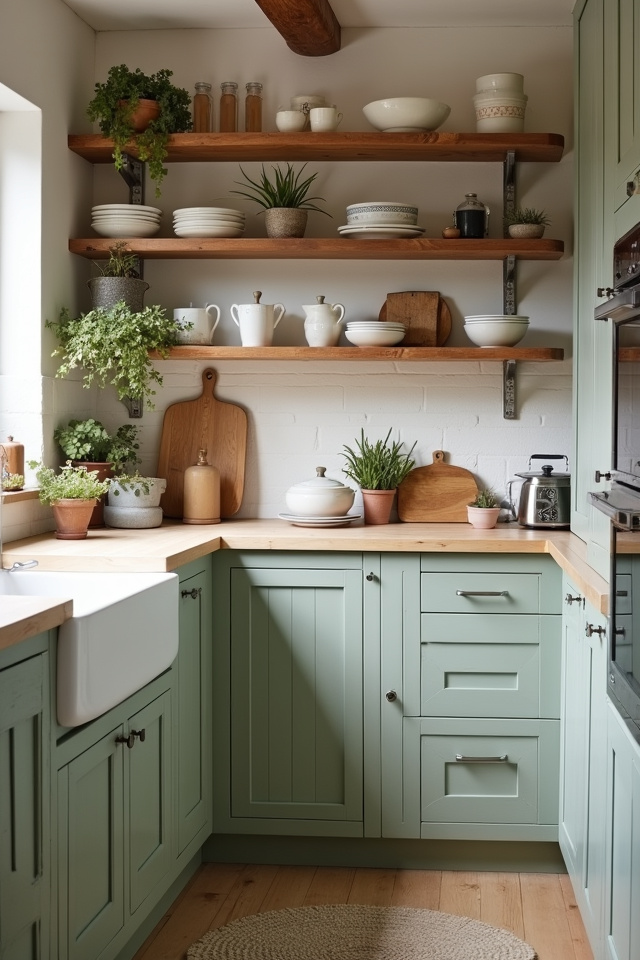
Sage green painted cabinets—try SW Softened Green or BM October Mist—paired with open shelving in natural oak or walnut gives you the best of both worlds. The green adds personality and warmth, the wood keeps it grounded. This combination feels organic, collected, and never cold.
- Best for: kitchens with white or cream walls
- Countertops: white marble or butcher block
- Hardware: unlacquered brass for warmth
Open shelving brackets in matte black or aged brass are easy to find on Amazon in the $15-25 range. They install in minutes and make the whole setup feel custom.
17. Ebonized Oak for Dramatic Contrast
Sometimes you want your kitchen to make a statement.
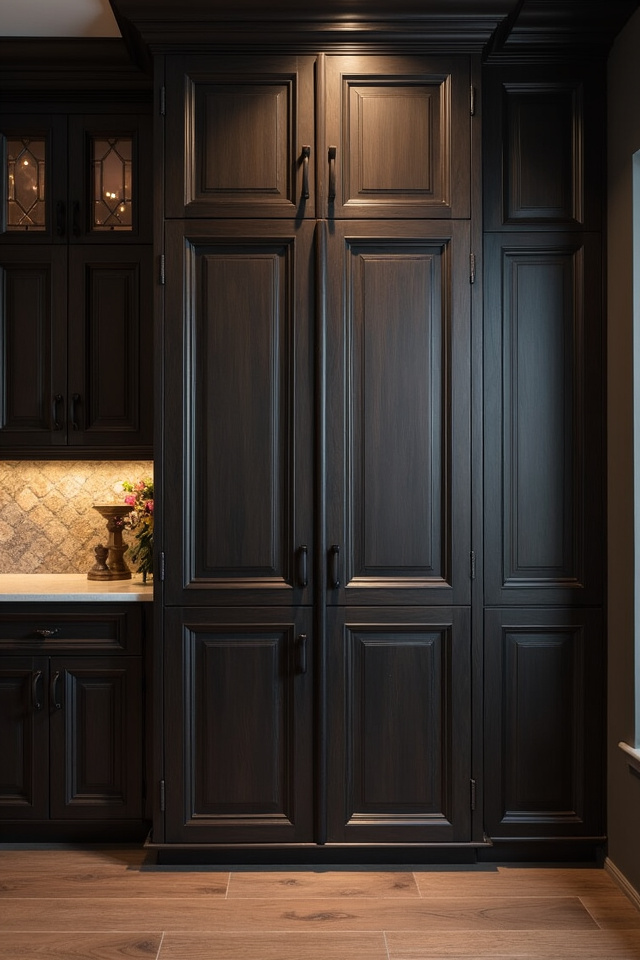
Ebonized oak is white oak stained nearly black but with the grain still visible. The result is cabinets that feel moody and dramatic without being flat or lifeless. Pair with white marble countertops, white walls, and plenty of natural light to keep the space from feeling cave-like.
This is the cabinet choice for people who aren’t afraid of bold. It works best in kitchens with large windows or glass doors where light balances the darkness. Add brass or gold hardware to warm it up.
18. Pine with Whitewash Finish
Rustic softened just enough.
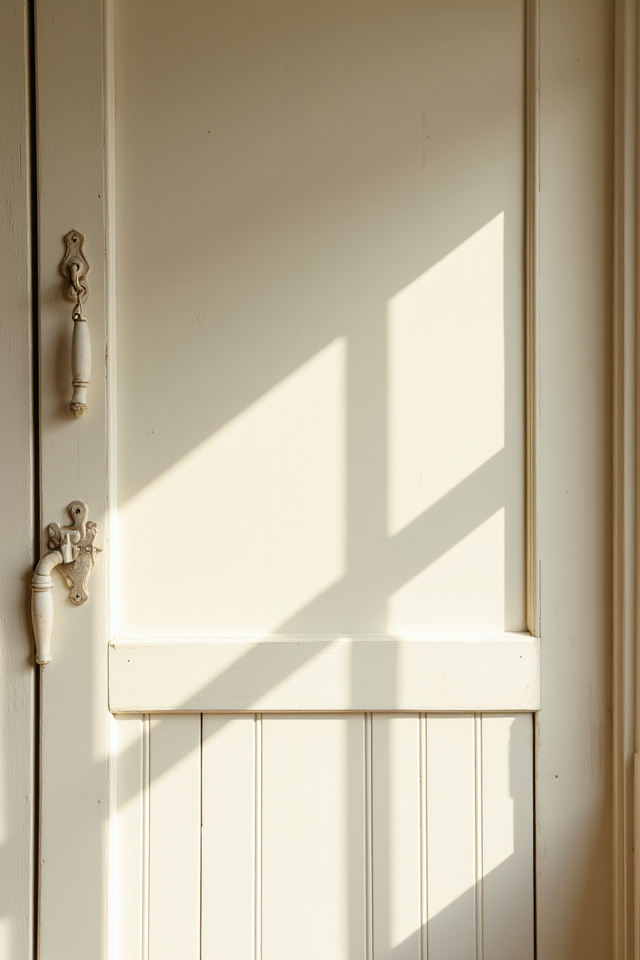
Pine cabinets with a whitewash or pickled finish let the wood grain show through a translucent white layer, creating a look that’s beachy, farmhouse-adjacent, and endlessly versatile. It’s less stark than painted white, warmer than natural wood, and works in kitchens from coastal to cottage to modern farmhouse.
- Pair with: soft blue-gray walls like SW Rainwashed
- Countertops: white quartz or honed marble
- Hardware: polished nickel or ceramic knobs
19. Walnut Slab Doors with Live Edge
For the kitchen that feels more like a gallery.
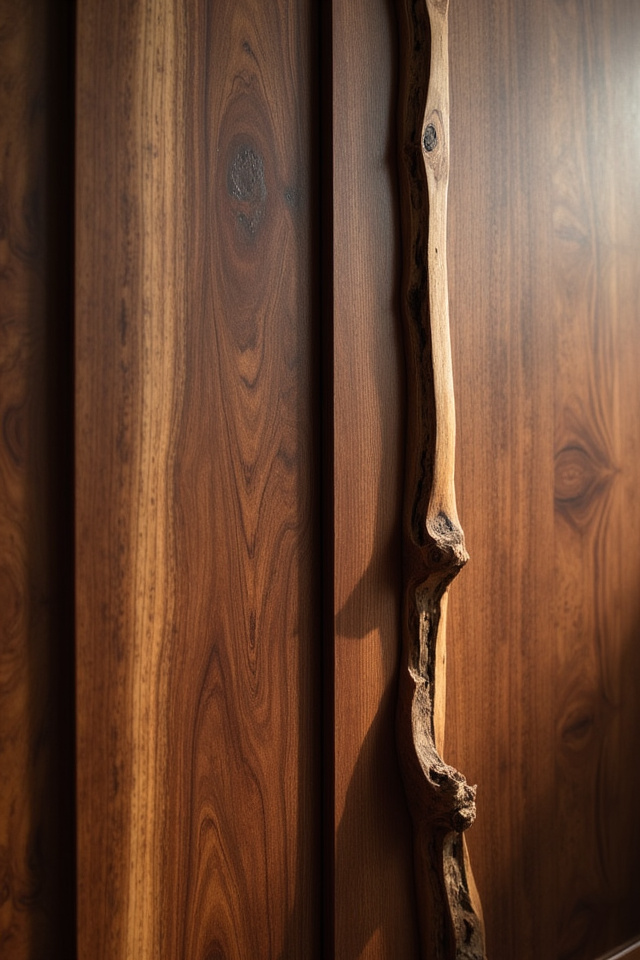
Walnut slab cabinet doors with natural live edges bring raw, organic beauty into a typically utilitarian space. Each door is slightly different, with curves and grain patterns unique to the tree it came from. This is not mass-produced. This is one-of-a-kind.
Pair with industrial elements—exposed shelving, concrete countertops, black metal fixtures—to balance the organic wood. This look works best in open-concept spaces where the kitchen is part of the living area and deserves to be stunning.
20. Medium-Tone Cherry with Glass-Front Uppers
The cabinet layout that feels collected, not installed all at once.
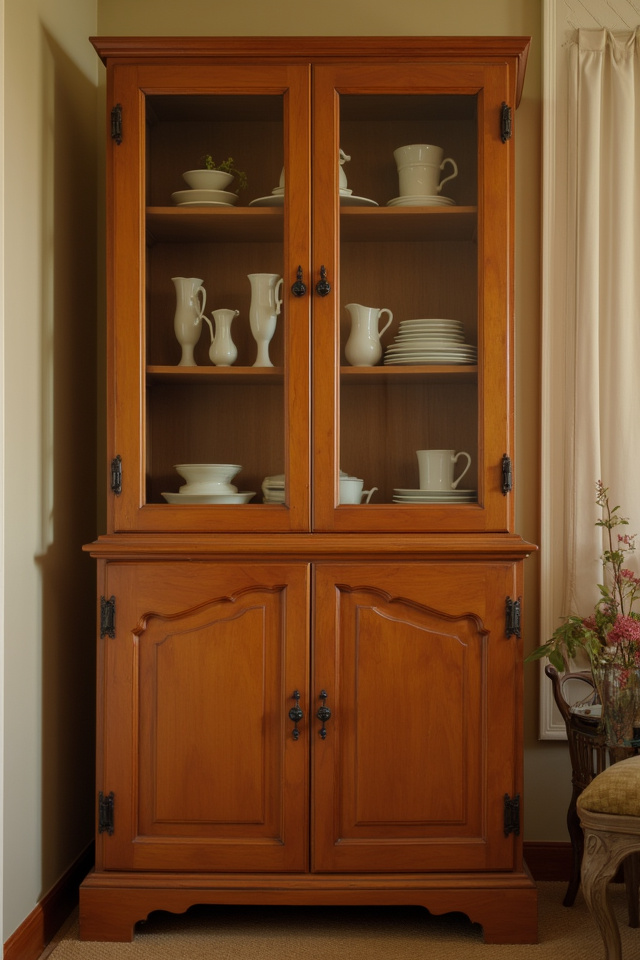
Medium cherry lower cabinets with glass-front upper cabinets in the same finish create visual variety while staying cohesive. The glass breaks up the solid wood, lets you display pretty dishes, and makes the kitchen feel less enclosed. This is the move when you want wood warmth but need to avoid a heavy, closed-in feeling.
- Glass options: clear, seeded, or frosted
- Interior paint: soft green or cream to show through glass
- Hardware: oil-rubbed bronze or antique brass
Seeded glass gives you privacy while still feeling open. You can find it through cabinet suppliers or retrofit existing doors with glass inserts—it’s easier than starting over.
The kitchen you’re imagining doesn’t need to be trendy. It needs to feel like it’s always been there. These wood cabinet ideas work because they respect the material—grain, color, character—and let it do what it does best: age beautifully. Pick the one that makes you stop scrolling. That’s your starting point.
Save this for later—and explore more at The Woodworking Wonders.

To bring you cozy inspiration more efficiently, we sometimes use AI to assist in content creation — but every word and idea is carefully shaped by our team. See our AI Disclosure for more info.