This post may contain affiliate links. If you click and buy, we may earn a small commission at no extra cost to you. Learn more.
You bought the perfect wooden coffee table. You love the grain, the weight of it, the way it anchors your living room. And now it sits there with a remote and a half-empty water glass on it.
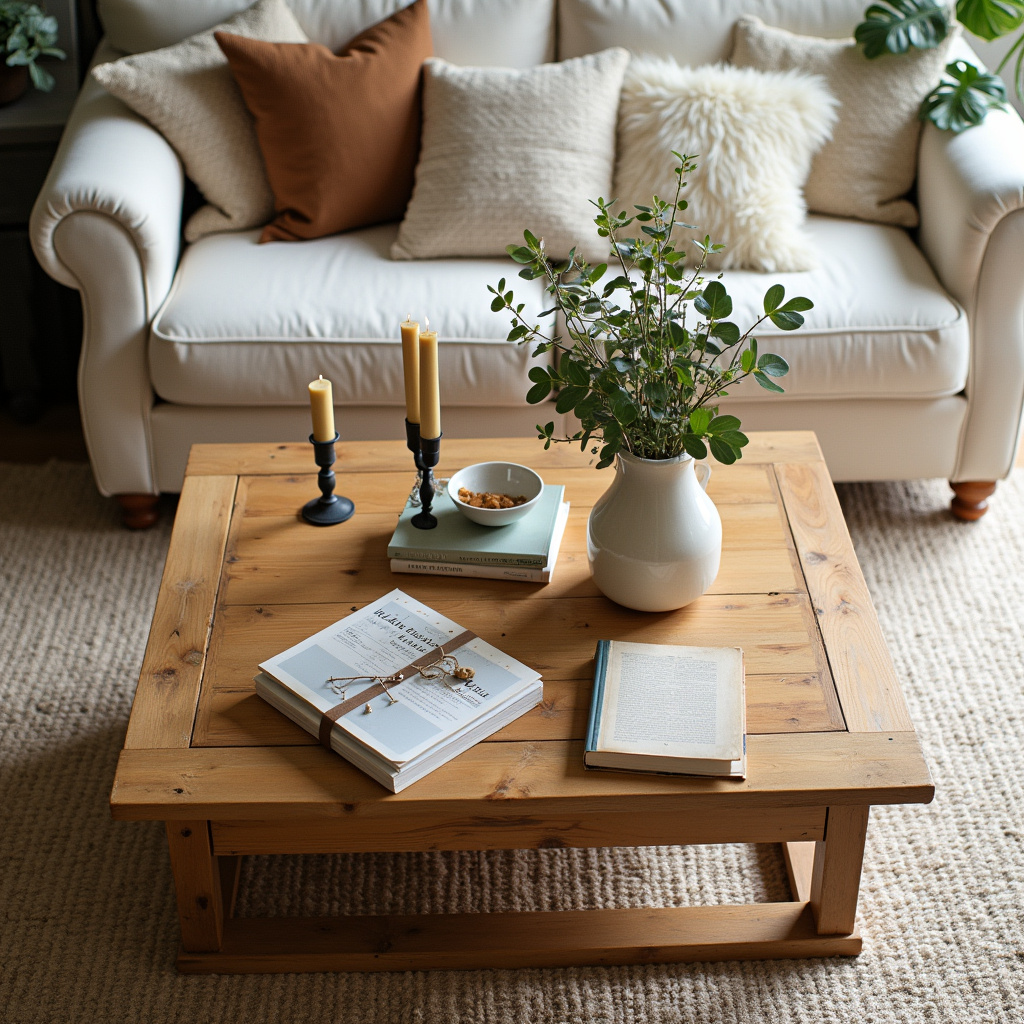
The coffee table is the hardest-working surface in your home. It needs to look intentional without looking styled to death. And when you’re working with wood—whether it’s chunky farmhouse pine or a sleek walnut slab—the styling stakes feel even higher. Wood demands the right companions.
Here’s how to style your wooden coffee table across the spectrum, from full rustic warmth to clean Japandi minimalism. Pick your lane or mix them—these styling formulas work.
Contents
- 1 1. The Rustic Farmhouse Foundation: Chunky Wood Tray
- 2 2. The Stack: Coffee Table Books with Purpose
- 3 3. Living Element: The Right Greenery Changes Everything
- 4 4. Candle Cluster: The Instant Coziness Hack
- 5 5. Texture Layer: Woven or Stone Elements
- 6 6. The Functional Object: Remotes and Coasters That Don’t Ruin the Look
- 7 7. Statement Vessel: One Large Sculptural Piece
- 8 8. Metallic Accent: The Contrast That Elevates Everything
- 9 9. The Unexpected: One Personal Object
- 10 10. Seasonal Rotation: The Styling That Keeps It Fresh
- 11 11. The Layout Rule: Triangles, Not Lines
- 12 12. Negative Space: What You Leave Off Matters Most
- 13 13. The Japandi Edge: Monochrome with Natural Texture
- 14 14. The Full Rustic Moment: Layers on Layers
- 15 15. Color Consideration: What Your Wall Color Does to Your Table Styling
- 16 16. Under-Table Storage: The Basket That Solves Everything
- 17 17. Scale and Proportion: How Big Should Your Objects Be?
- 18 18. The Morning After Test: Does It Still Work When You Actually Use It?
1. The Rustic Farmhouse Foundation: Chunky Wood Tray
Start with a large wooden tray as your anchor piece—it corrals everything else and makes the whole surface feel designed instead of random.
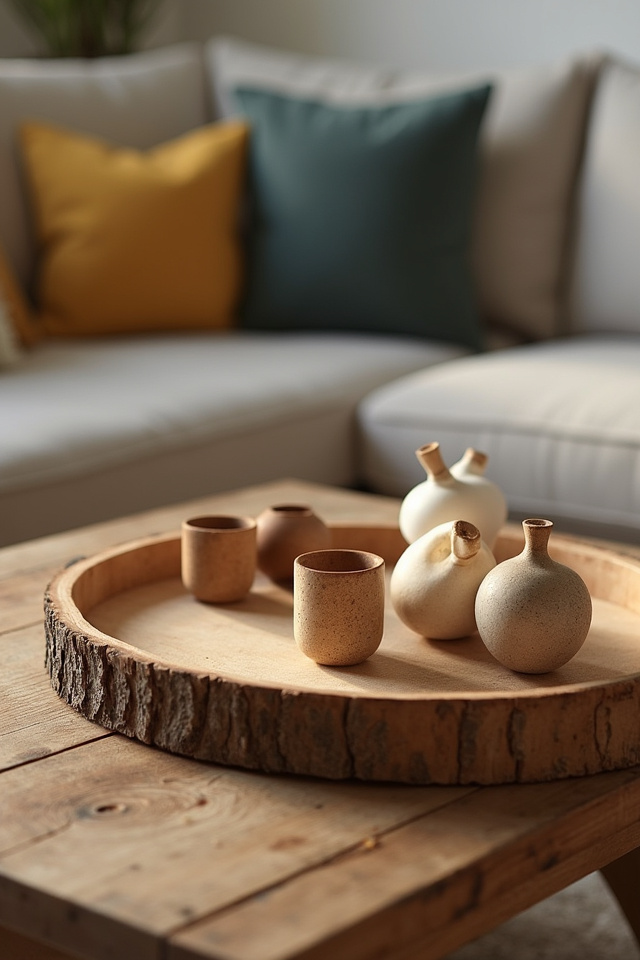
A rustic dough bowl or rectangular tray in reclaimed wood does something instant: it creates a styled zone within the larger table. Everything you place inside it looks intentional. Everything outside it can be functional.
Look for trays with handles in weathered finishes—gray-washed pine, natural mango wood with live edges, or dark walnut with visible knots. The 18-24 inch range works for most coffee tables. Amazon has incredible options in the $30-50 range, and they sell out during fall decorating season.
What Goes in the Tray
- Three white pillar candles in varying heights
- A small potted succulent or faux eucalyptus stem
- One decorative object with texture—a wooden bead garland or vintage wooden spool
2. The Stack: Coffee Table Books with Purpose
Books aren’t filler—they’re your styling secret weapon for adding height, color, and personality.
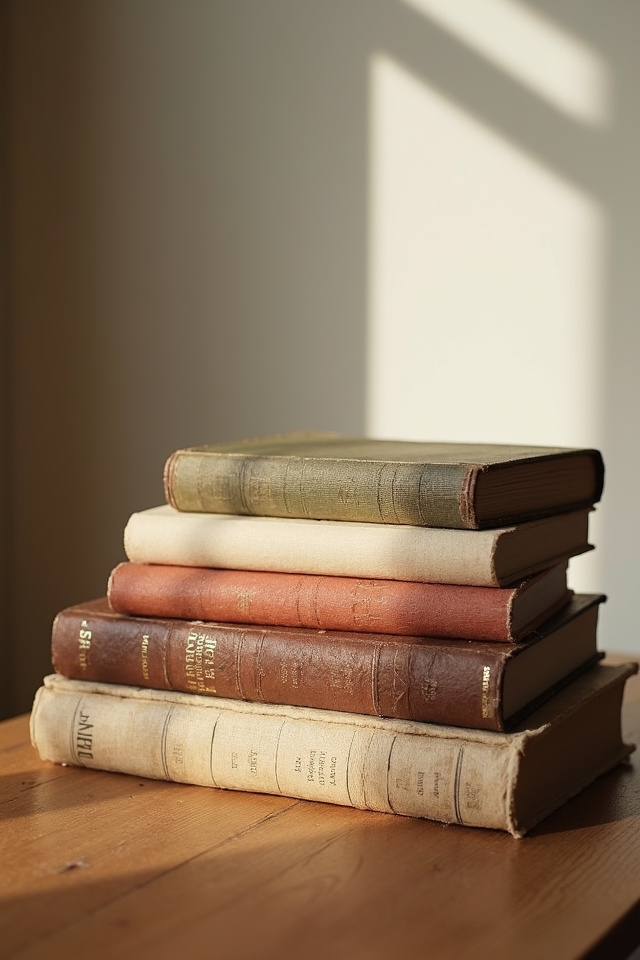
Stack two or three oversized books with covers that match your room’s palette. The top book becomes a platform for your next styling layer. For rustic spaces, look for titles with kraft paper covers, vintage botanical prints, or cream spines. For Japandi, choose books with clean white or black covers and minimal typography.
Place the stack off-center on your table—never dead center. Asymmetry feels collected, not staged. Top the stack with a small brass object, a single stem in a bud vase, or a smooth ceramic dish.
Best Book Choices by Style
- Rustic farmhouse: books about gardens, vintage home design, or nature photography
- Modern rustic: architectural photography, Scandinavian design, minimal landscapes
- Japandi: books on Japanese interiors, pottery, or minimalist living with neutral covers
3. Living Element: The Right Greenery Changes Everything
A wooden coffee table without a living element feels incomplete—but the wrong plant makes it feel cluttered.
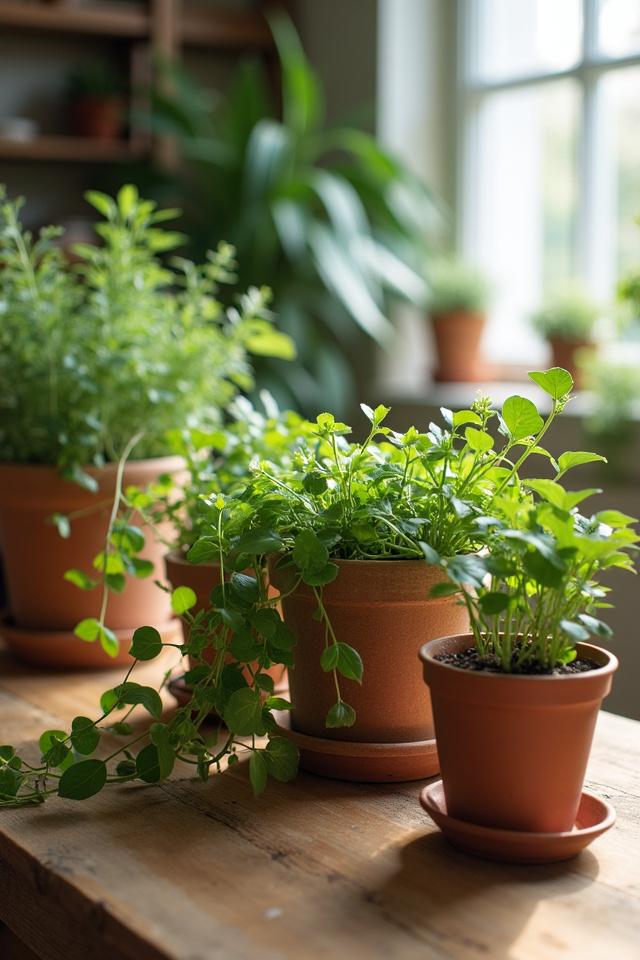
For rustic farmhouse, go full and textured: a potted fern, a trailing pothos in a ceramic planter, or a bunch of dried lavender in a short mason jar. The key is using a vessel that contrasts the wood—white ceramic against dark walnut, a galvanized metal bucket against light pine.
For Japandi styling, choose sculptural simplicity: a single monstera leaf in a cylindrical vase, a small snake plant in an unglazed terracotta pot, or three stems of pampas grass in a tall minimal vase. The plant should feel like punctuation, not decoration.
- Rustic pairs: wood table + cream ceramic planter + full green plant
- Japandi pairs: wood table + gray stoneware vessel + single dramatic stem
- Both styles love: dried pampas, eucalyptus, or olive branches
4. Candle Cluster: The Instant Coziness Hack
Three candles in varying heights create a focal point without trying too hard.
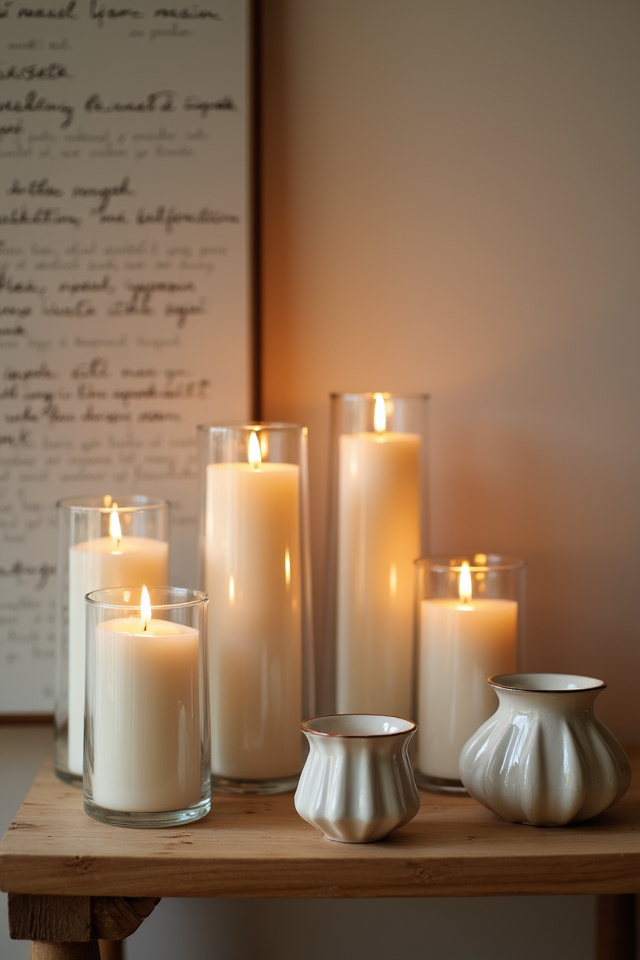
For rustic styling, use pillar candles in cream or ivory—nothing bright white. Place them directly on the wood or inside your wooden tray. Uneven heights are everything: think 4 inches, 6 inches, 9 inches. The irregular silhouette feels organic.
For Japandi, choose tapered candles in natural beeswax or slim pillars in matte black holders. The candles should be thin and elegant, not chunky. Place them on a small stone tray or directly on the wood with space around them.
Amazon’s unscented pillar candles in bulk packs are your friend here—$20 gets you a set that lasts months. Look for natural wax finishes, not glossy.
5. Texture Layer: Woven or Stone Elements
Wood needs a contrasting texture to keep the eye interested.
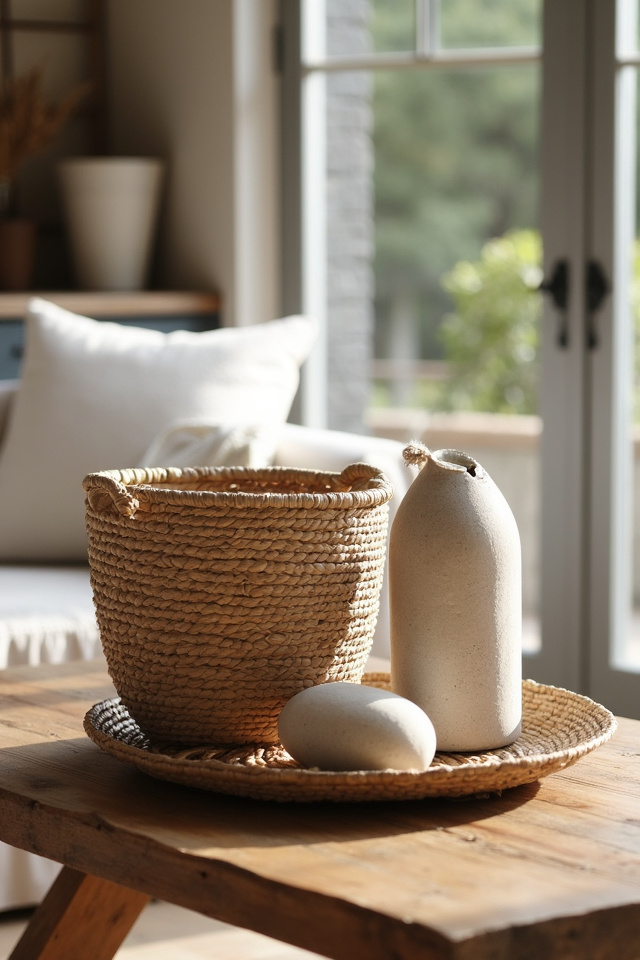
A woven element—rattan coasters, a jute table runner, a wicker basket tucked underneath—adds warmth without adding visual weight. For rustic tables, layer natural fibers freely. A jute runner down the center with your tray placed on top creates instant farmhouse appeal.
For Japandi styling, choose smooth stone or ceramic. A single marble tray, a set of slate coasters, or a small ceramic dish in matte white provides the textural contrast without the boho softness. The mix of organic wood and cool stone is peak Japandi.
Best Texture Pairings
- Rustic wood + rattan + linen = layered farmhouse
- Dark wood + woven basket + cream ceramic = modern rustic
- Light wood + stone tray + black taper candles = Japandi minimal
6. The Functional Object: Remotes and Coasters That Don’t Ruin the Look
You actually use this table—styling can’t ignore that reality.
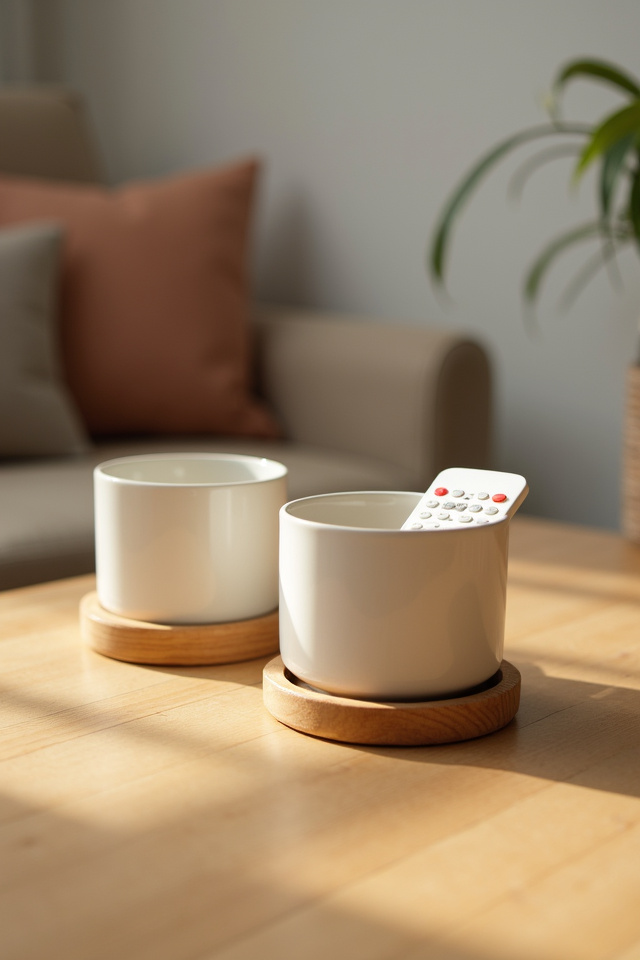
Instead of hiding the remote, give it a designated home that looks intentional. A small decorative box or woven basket corrals remotes, charging cables, and other necessities without breaking the aesthetic.
For rustic tables, use a weathered wooden box with a sliding lid or a low-profile woven basket in natural tones. For Japandi, choose a smooth ceramic box with a lid, a minimal leather tray, or a small lacquered wooden box in black or natural wood.
Coasters are non-negotiable if you love your wood finish. Look for cork-backed wooden coasters (rustic) or stone or ceramic rounds (Japandi). Keep them stacked on the table as part of the styling, not hidden in a drawer.
You May Also Like
7. Statement Vessel: One Large Sculptural Piece
A single oversized vessel can be your entire coffee table moment.
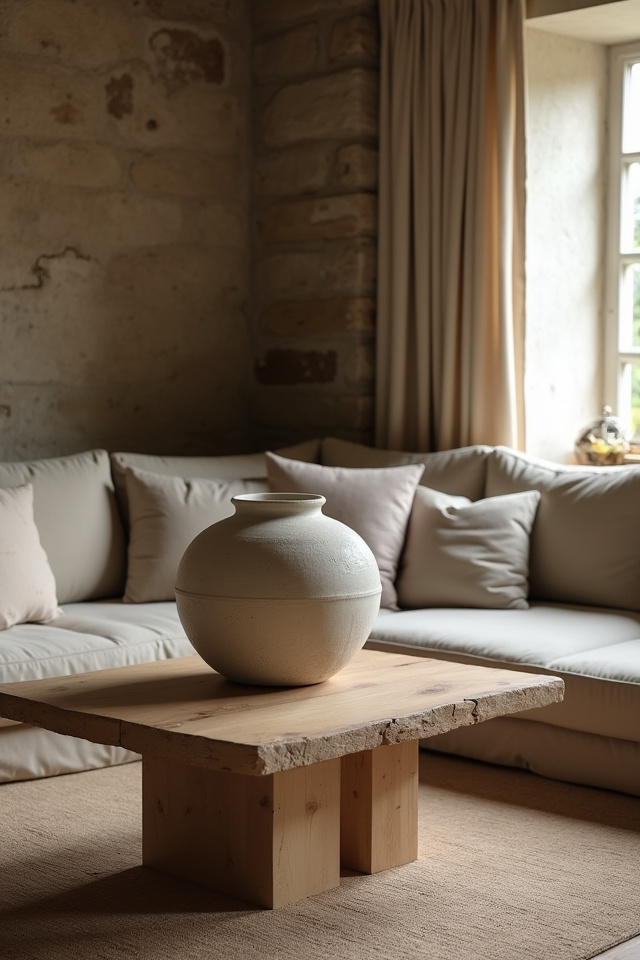
For rustic tables, think big: a wide wooden dough bowl filled with seasonal elements (pinecones in winter, lemons in summer), or a large ceramic vase with dried grasses. The scale is what makes it work—go bigger than feels comfortable.
For Japandi, choose a tall cylindrical vase in matte white or natural clay with one or two dramatic stems. Or a wide shallow bowl in stone or unglazed ceramic, left empty or filled with smooth river rocks. The vessel itself is the art.
Amazon has beautiful mango wood dough bowls in the $35-50 range that work for both styles—just adjust what you put inside them.
8. Metallic Accent: The Contrast That Elevates Everything
Wood alone can feel flat—metal wakes it up.
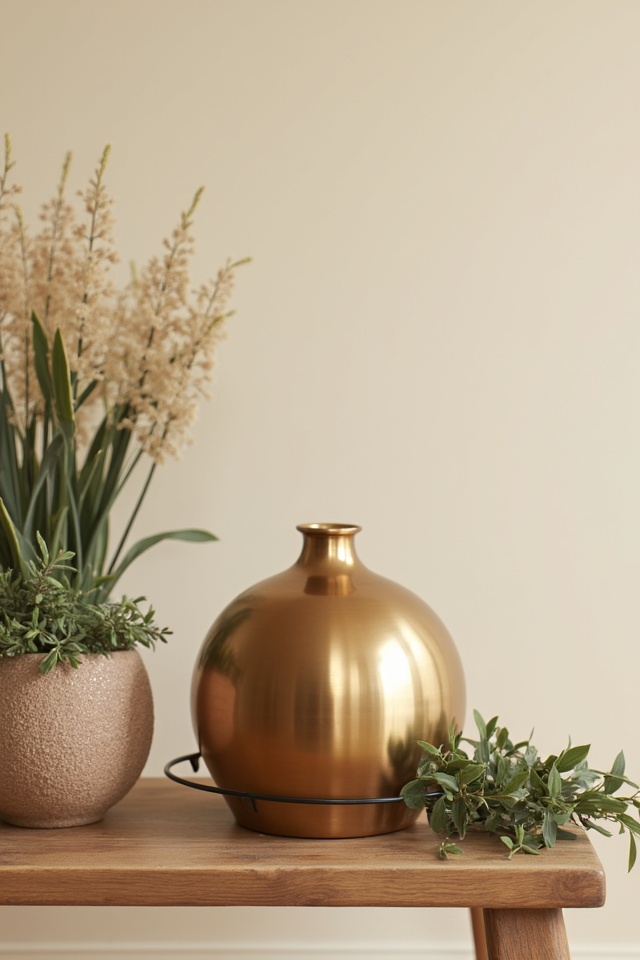
For rustic farmhouse, use warm metals: a brass candlestick, a copper tray, or an antique gold decorative object. The patina and warmth complements the wood grain instead of competing with it.
For Japandi, stick to cool metals: matte black steel, brushed nickel, or gunmetal. A single black metal candleholder or a small steel tray keeps the palette grounded and modern.
The key is restraint—one metallic element per table. Too many metals and it looks like you’re trying too hard.
Best Metal Pairings
- Pine or reclaimed wood + antique brass = rustic warmth
- Walnut or dark wood + matte black = Japandi edge
- Oak or ash + brushed nickel = modern minimal
9. The Unexpected: One Personal Object
The most interesting coffee tables have one thing that breaks the rules.
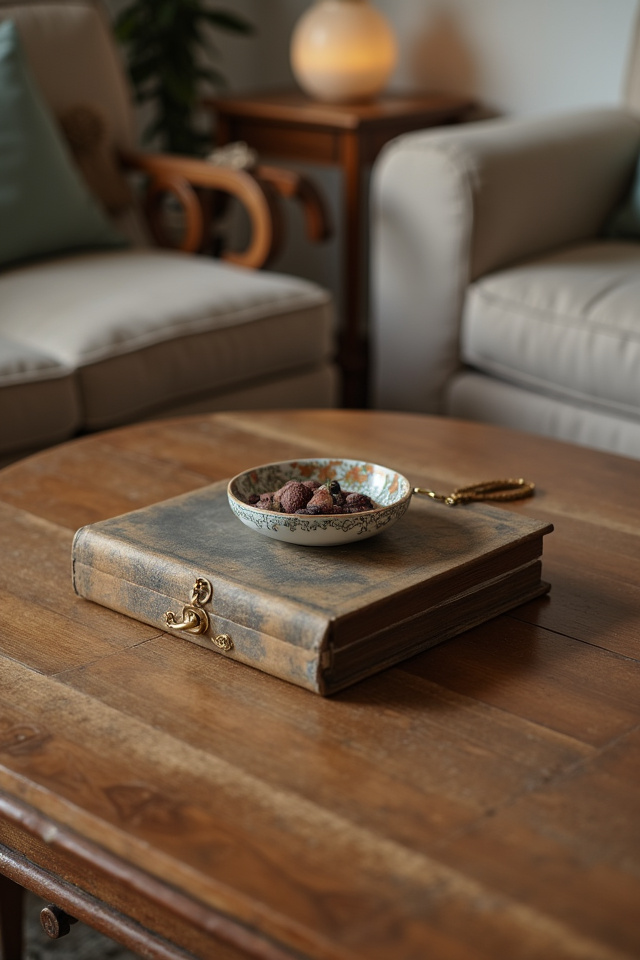
This is where you add something that’s just yours—a vintage wooden box you found at a flea market, a small framed photo in a natural wood frame, or a ceramic dish you made in a pottery class.
For rustic styling, lean into quirky vintage finds: old wooden dominoes in a bowl, a vintage rolling pin standing upright in a crock, or a weathered wooden cutting board leaning against the stack of books.
For Japandi, the personal object should still feel intentional: a handmade ceramic piece, a small black-and-white photo in a simple frame, or a smooth wooden sphere.
10. Seasonal Rotation: The Styling That Keeps It Fresh
The best-styled coffee tables don’t stay the same all year.
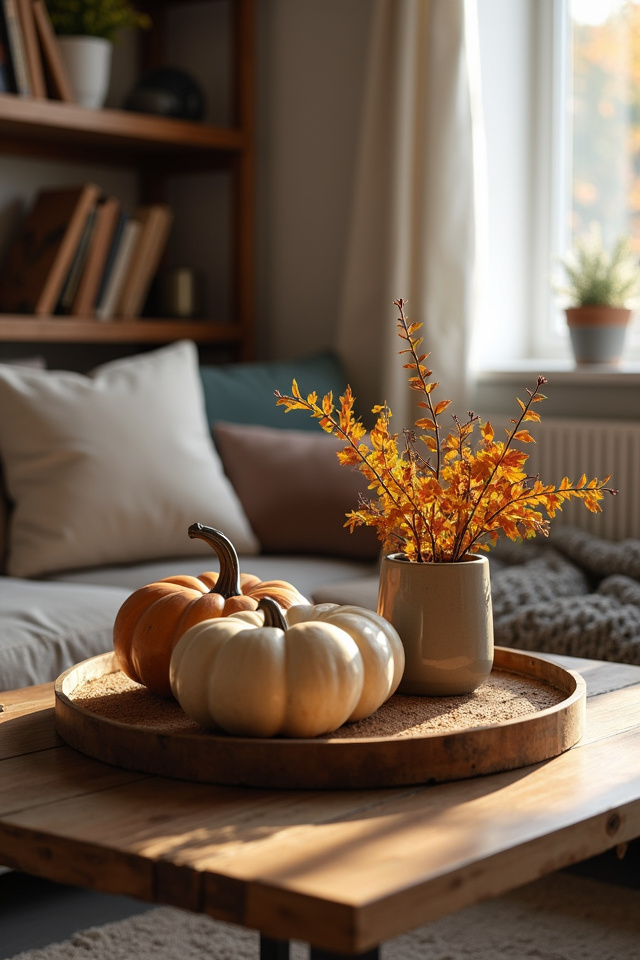
Swap one or two elements seasonally to keep your table feeling current without a full restage. The structure stays—the seasonal accent changes.
Fall and winter: add pinecones, dried orange slices, cinnamon sticks in a bowl, or a chunky knit throw draped over the table’s edge.
Spring and summer: fresh lemons in your dough bowl, a small potted succulent, or a bundle of fresh lavender in a glass jar.
For Japandi tables, seasonal shifts are subtler: switch your greenery from eucalyptus to cherry blossoms in spring, or add a small ceramic pumpkin in fall.
11. The Layout Rule: Triangles, Not Lines
Here’s the styling secret that changes everything—arrange objects in triangular groupings, not straight lines.
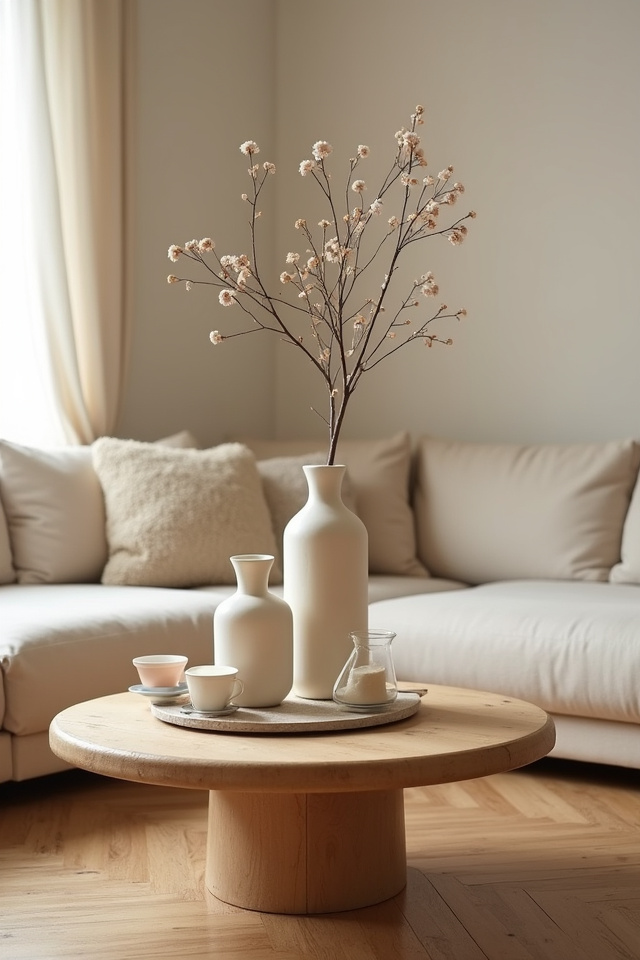
Your eye naturally finds triangle compositions more interesting than rows. Place three elements at varying heights and angles to each other: a tall vase on the left, a stack of books in the center-right, a low bowl on the front-left corner.
For rustic tables, the triangles can be loose and organic. For Japandi, keep the triangles tight and intentional with more negative space between them.
- Triangle 1: tall candle + medium plant + low tray
- Triangle 2: book stack + bowl + single stem vase
- Triangle 3: large dough bowl + candlestick + small decorative box
12. Negative Space: What You Leave Off Matters Most
The difference between a styled table and a cluttered one? Negative space.
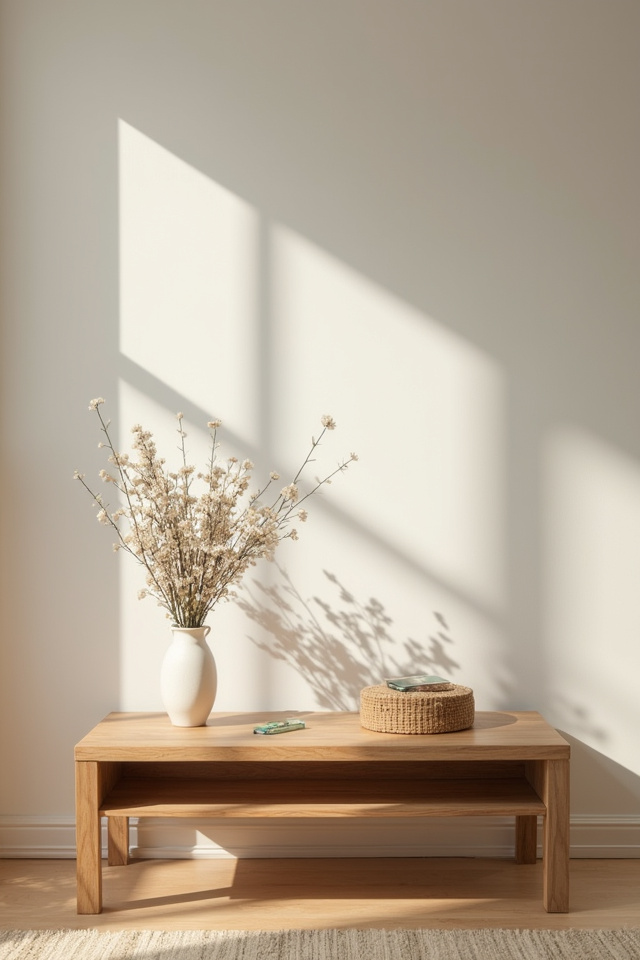
For rustic styling, you can layer more, but at least 30% of your table surface should be bare wood. Let the grain show. That’s why you bought a wood table.
For Japandi, aim for 50% or more empty space. Each object needs room to breathe. The wood itself is part of the design, not just a background.
If your table feels too busy, remove one thing. Then remove one more. The styling that remains will feel intentional instead of accidental.
13. The Japandi Edge: Monochrome with Natural Texture
Japandi styling is about restraint, but not coldness—natural texture keeps it warm.
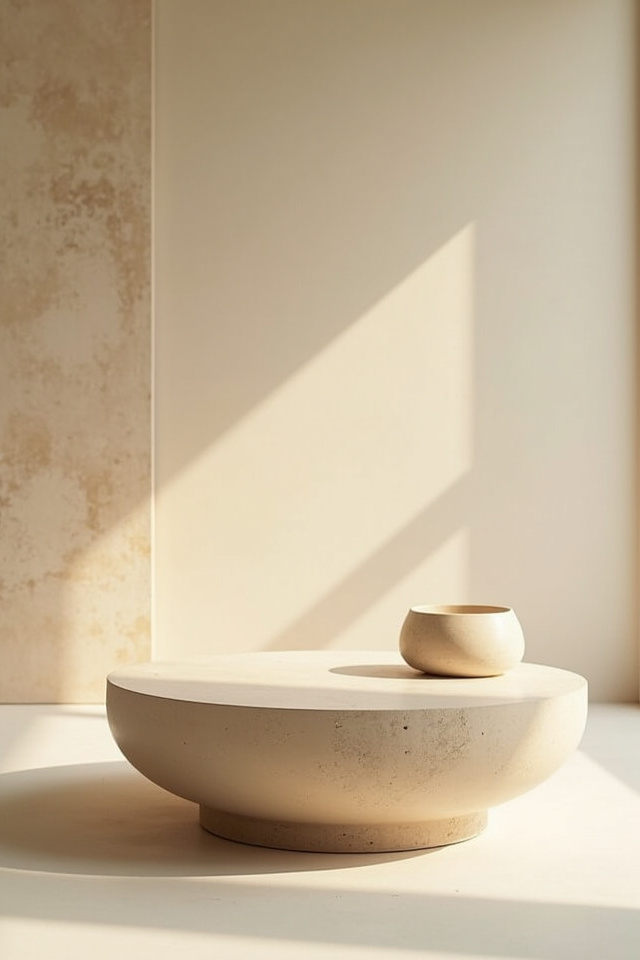
Stick to a palette of wood tones, white, black, and gray. The texture does the talking: a linen table runner, a ceramic vase with a hand-thrown texture, a wool throw draped nearby.
On a light wood table: matte black candleholders, a white ceramic vase, one green plant, and a stone coaster set. Nothing else.
On a dark wood table: cream ceramic pieces, a gray linen runner, and a sculptural wood object in a lighter tone for contrast.
Japandi Must-Haves for a Wood Table
- One tall ceramic vase in matte white or gray
- Set of stone or ceramic coasters
- Single green plant in an unglazed pot
- Low-profile wooden box or tray for hidden storage
14. The Full Rustic Moment: Layers on Layers
Rustic styling lets you have fun—pile on the texture and warmth.
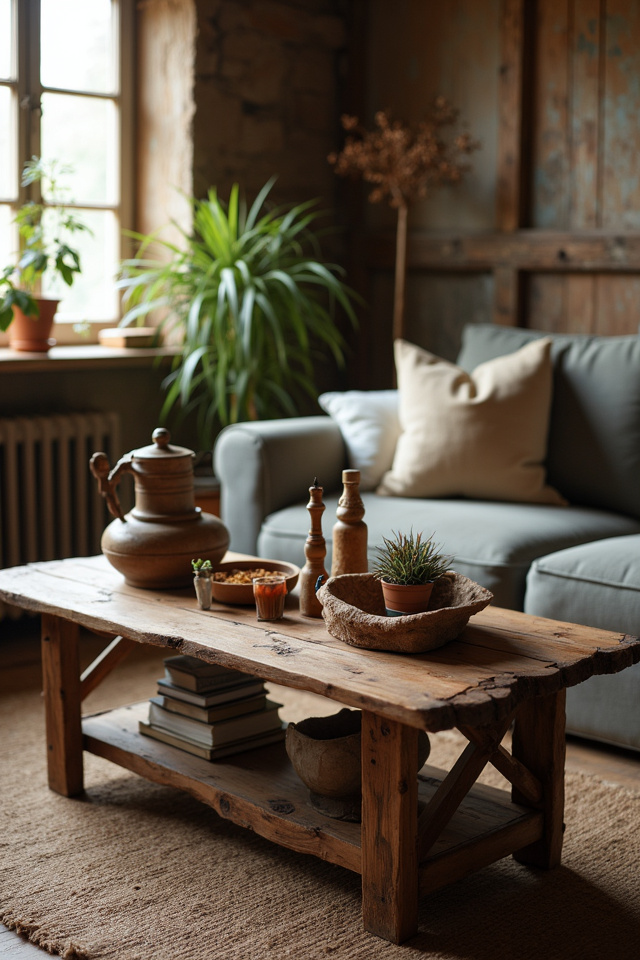
A jute runner down the center. A large dough bowl filled with natural elements. A stack of books. A chunky candle. A potted plant. A small vintage wooden crate tucked under the table for magazine storage.
The secret to making layered rustic work without looking messy: keep your color palette tight. Stick to creams, natural wood tones, greenery, and one accent color (usually rust, terracotta, or soft blue).
The more you layer, the more important it is that each piece feels organic and natural—nothing plastic, nothing shiny, nothing that fights the wood.
You May Also Like
15. Color Consideration: What Your Wall Color Does to Your Table Styling
The backdrop matters—your table styling shifts depending on what’s behind your sofa.
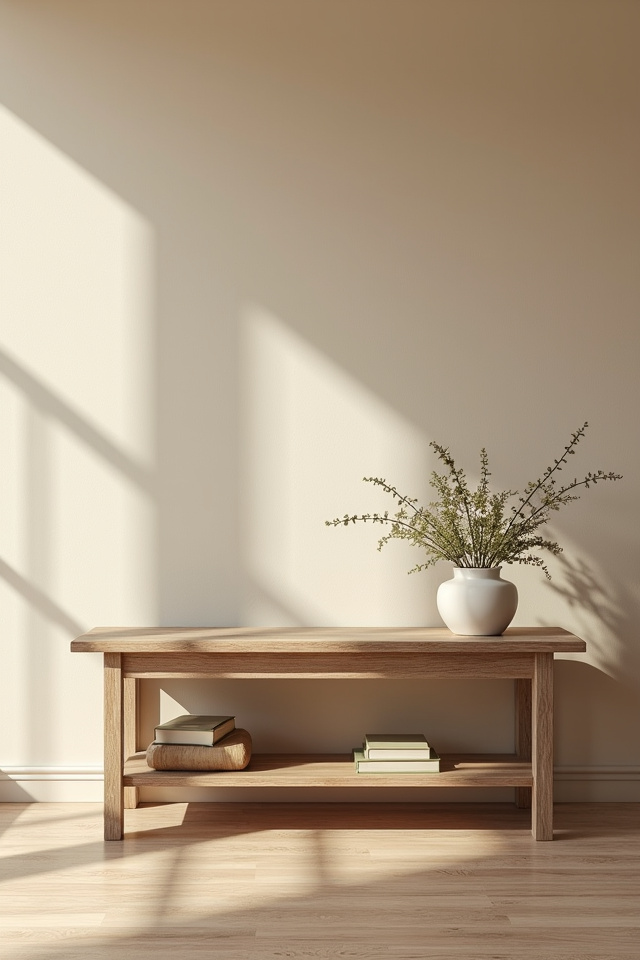
Against white walls (SW Alabaster, BM White Dove): wood tables pop and you can go bold with darker objects. Use contrast freely—black candles, dark green plants, charcoal-gray ceramics.
Against warm neutrals (SW Accessible Beige, BM Revere Pewter): keep your table styling in the same warm family. Cream ceramics, natural linens, and warm wood tones create a cohesive flow.
Against cool grays (SW Repose Gray, BM Stonington Gray): lean Japandi—cooler tones, matte finishes, and lots of white and black accents make the wood feel intentional instead of out of place.
16. Under-Table Storage: The Basket That Solves Everything
What you put under your coffee table is just as important as what’s on top.
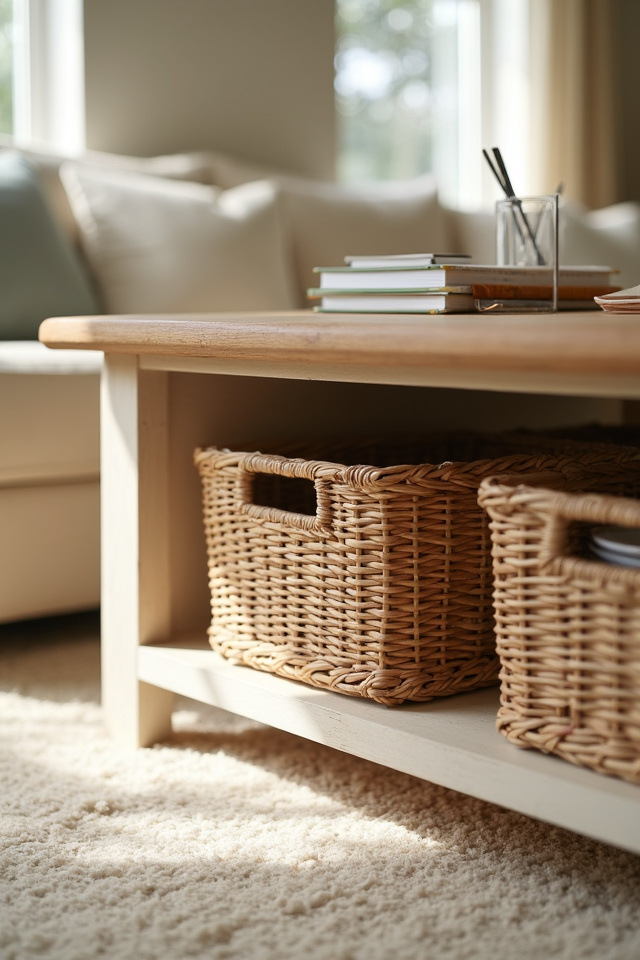
A woven basket or wooden crate tucked underneath holds throws, magazines, and remotes while adding another layer of texture to your overall coffee table moment.
For rustic tables: oversized woven baskets in seagrass, water hyacinth, or natural rattan. Look for handles and a slightly worn-in look.
For Japandi tables: choose a low-profile basket in dark rattan, a sleek wooden storage box with a lid, or a minimal wire basket in matte black.
Amazon’s 15-18 inch woven storage baskets in the $25-35 range work for both aesthetics—just choose your finish.
17. Scale and Proportion: How Big Should Your Objects Be?
This is where most coffee table styling falls apart—everything is the same size.
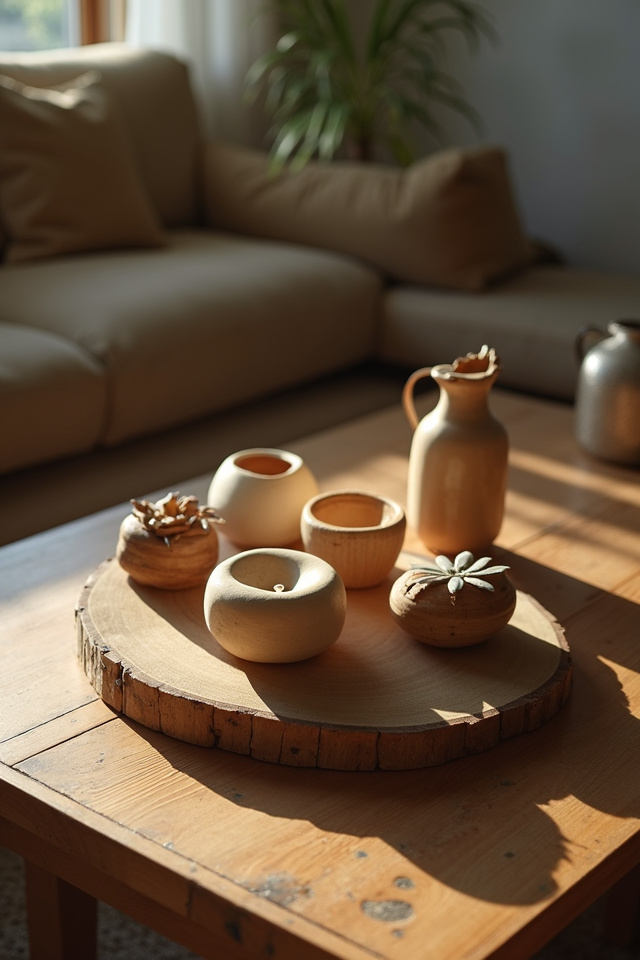
You need high, medium, and low elements. A tall vase (12-16 inches), a medium stack of books or plant (6-8 inches), and low elements like trays or bowls (2-4 inches high).
Varied height creates visual interest that keeps the eye moving across the table instead of glazing over it.
On a large coffee table (48+ inches), you can go taller and bolder. On a small table (30-36 inches), keep everything under 12 inches tall or it overwhelms the space.
Proportion Guidelines
- Small table (30-36″): 3-5 objects maximum, tallest under 12 inches
- Medium table (40-48″): 5-7 objects, tallest 14-16 inches
- Large table (50″+): 7-9 objects, tallest up to 18 inches
18. The Morning After Test: Does It Still Work When You Actually Use It?
Your coffee table has to survive real life—not just look good in a photo.
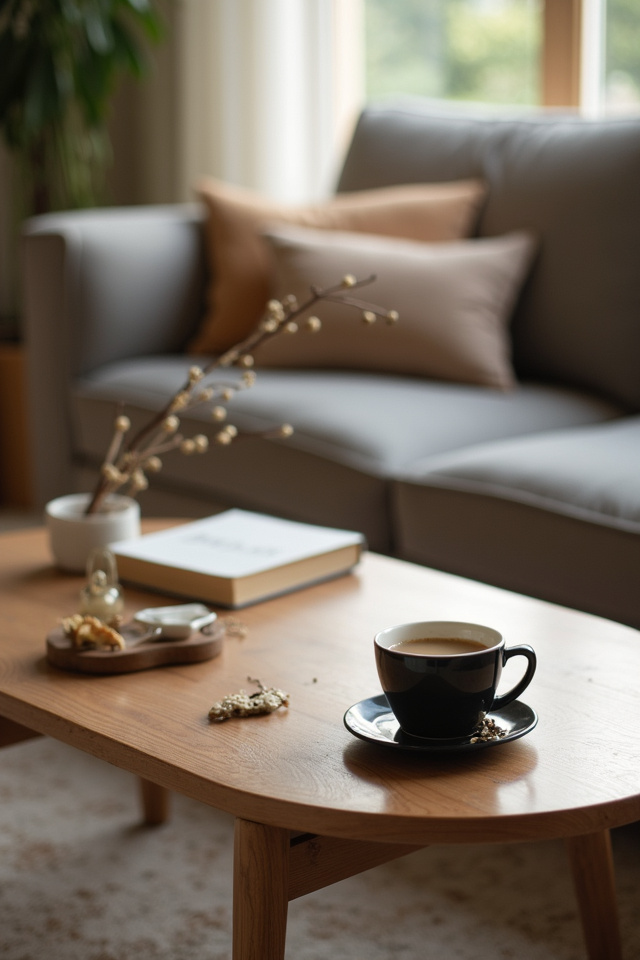
After you style it, live with it for 24 hours. Put your coffee cup down. Use the remotes. Toss the throw blanket. If you’re constantly moving objects out of the way, your styling has failed.
The best coffee table styling accommodates use. That’s why trays and low bowls work so well—they hold your functional items while looking intentional.
For rustic tables, expect a bit of lived-in messiness—that’s part of the charm. For Japandi, everything should return to its place easily. Both styles welcome use, but Japandi styling requires slightly more maintenance.

To bring you cozy inspiration more efficiently, we sometimes use AI to assist in content creation — but every word and idea is carefully shaped by our team. See our AI Disclosure for more info.